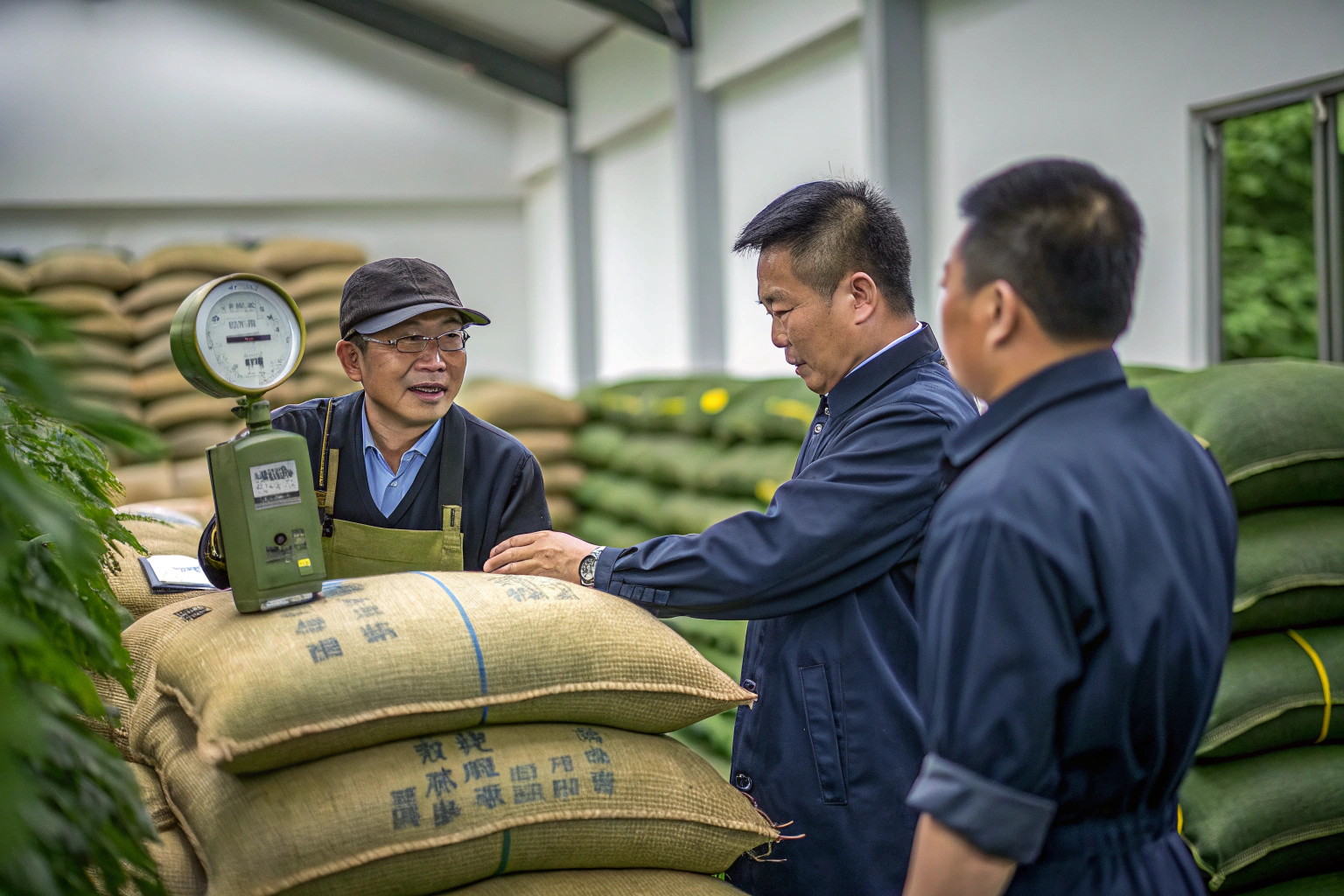
I run BeanofCoffee, a coffee exporter in Yunnan, China. We own more than 10,000 acres in Baoshan City. We sell Catimor, Arabica, and Robusta. We ship to North America, Europe, and Australia. Buyers like Ron ask me about price, quality, and shipping. They ask about certifications and tariffs. But they rarely ask about the warehouse team. That is a mistake. The warehouse team decides whether the coffee arrives clean or damaged. The driver decides whether the container is sealed on time. The port staff decide whether the paperwork matches the cargo. So logistics training is not a small topic. It is the difference between a happy buyer and a claim.
To educate your logistics team on coffee handling, you should teach five core topics: moisture control, temperature control, clean stacking, document accuracy, and container inspection. You should use short sessions, real samples, simple checklists, and repeated practice. You should also measure results with moisture readings, damage reports, and on-time numbers. Training is not one long meeting. It is a habit. A team that handles coffee well protects quality, saves money, and keeps buyers coming back.
So, what does this mean for you? It means you should not assume your team knows. You should teach them. You should show them. You should test them. At BeanofCoffee, we train our warehouse and loading teams every season. We do not do it because we are perfect. We do it because we made mistakes. A wet pallet cost us a lot one year. A wrong label cost us a delay another year. So we built a simple training system. Let me share what we learned.
Why Does Coffee Handling Training Matter?
Ron once told me he never thought about warehouse training. He thought coffee was just a bag. Then he got a container with mold on the top layer. The claim cost him thousands. He asked me how it happened. I told him the truth. It was not the farm. It was not the roast. It was the handling. A wet pallet sat on the dock. The container was loaded in the rain. The moisture rose. The mold grew. That is how quality dies. Not in a big disaster. In a small mistake.
Coffee handling training matters because green coffee is a living product. It reacts to moisture, heat, smells, and pressure. A trained team knows how to keep beans dry, clean, and stable. An untrained team can ruin a good lot without meaning to. Bad handling causes mold, off-flavors, bag damage, weight loss, and customs delays. These problems cost money and trust. So training is not a soft skill. It is a hard business need.
Another way to look at this is to compare coffee to flour. You would not store flour in a wet room. You would not stack it next to chemicals. You would not ship it in a dirty truck. Coffee is the same. It absorbs smells. It absorbs moisture. It needs care. A trained team gives that care. An untrained team does not. That is the simple truth.
What Happens When Workers Handle Coffee Wrong?
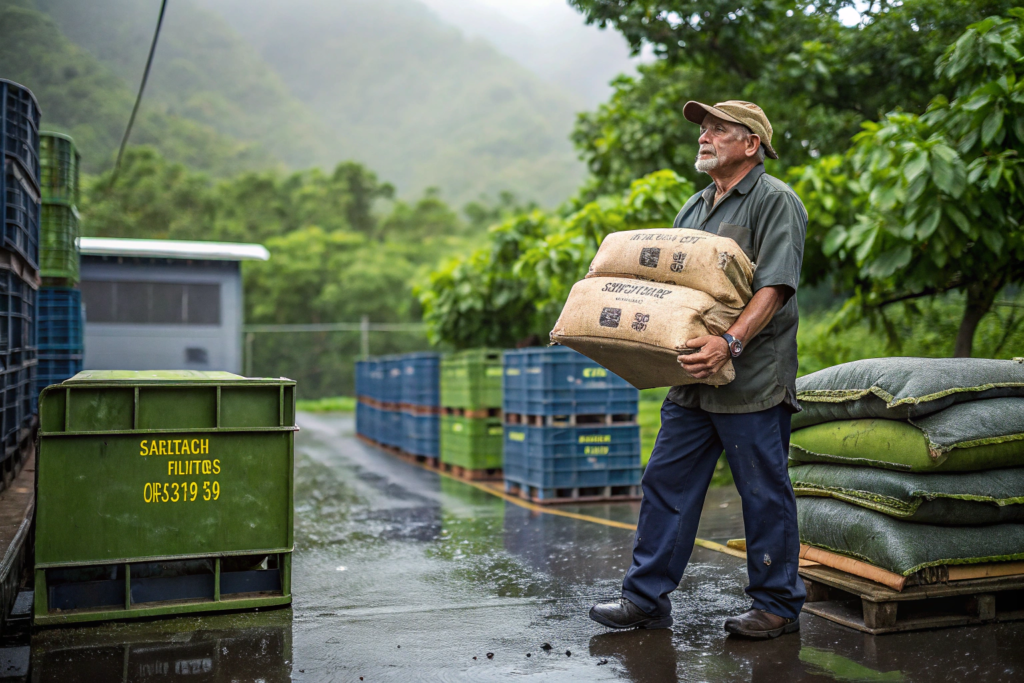
When workers handle coffee wrong, several things happen. Bags tear. Beans spill. Moisture rises. Mold grows. Flavors change. Weight drops. Customers complain. Claims rise. The Specialty Coffee Association explains how handling affects cup quality. The International Coffee Organization tracks global coffee trade and storage issues. I use these sources when I train our team. A torn bag is not just a torn bag. It is a weight loss. It is a quality risk. It is a bad look for the buyer. So small mistakes add up. A trained team prevents them. An untrained team repeats them.
I have seen a worker stack bags too high. The bottom bags crushed. The beans cracked. The cup changed. I have seen a worker leave a container door open. Rain came in. The top layer got wet. The buyer rejected the lot. These are real examples. They are not rare. They happen when no one teaches the rules. So teach the rules. Then check them. That is how you protect the coffee.
How Does Poor Handling Raise Your Landed Cost?
Poor handling raises your landed cost in hidden ways. A wet lot may need re-drying. A moldy lot may be rejected. A torn bag may need repacking. A delayed container may pay storage. A rejected shipment may pay return freight. These costs do not show up in the price quote. They show up later. The Perfect Daily Grind and Daily Coffee News cover handling and quality issues. I use them to show buyers the real cost. A claim of $5,000 is worse than a training cost of $500. So training is cheap insurance. It protects the margin. It protects the relationship.
| Handling Problem | Hidden Cost | Training Fix |
|---|---|---|
| Wet pallet | Re-drying, mold claim | Pallet check before loading |
| Dirty container | Odor absorption, rejection | Container smell test |
| Crushed bags | Weight loss, repacking | Stack height rule |
| Wrong label | Customs hold, delay | Double-check labels |
| Late sealing | Rolled cargo, storage | Seal checklist |
A simple table like this helps a team remember. It also helps a manager track problems. So use a table. Use a checklist. Use a photo. Simple tools work best.
What Should Your Logistics Team Learn First?
You cannot teach everything at once. I tried that once. It failed. The team forgot half of it. So I broke it into pieces. Now we teach five topics. Moisture. Temperature. Clean stacking. Document accuracy. Container inspection. These five cover most problems. If your team knows these five, you are ahead of most exporters. If they do not, you are exposed. So start here. Then add more later.
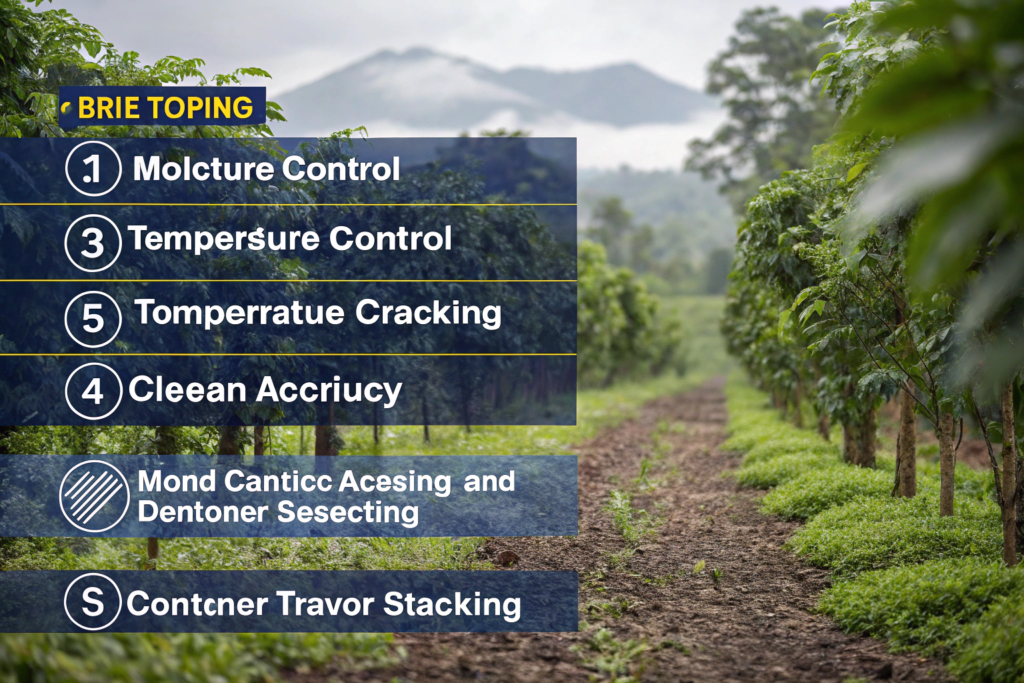
Your logistics team should learn five topics first: moisture control, temperature control, clean stacking, document accuracy, and container inspection. These five topics prevent the most common coffee handling problems. Moisture control stops mold. Temperature control protects flavor. Clean stacking prevents damage. Document accuracy prevents customs delays. Container inspection prevents contamination. Teach these five first. Then repeat them until they become habits.
So, what should you do? Build a short lesson for each topic. Use real samples. Use real photos. Use a real container. Let the team touch the beans. Let them smell the container. Let them check the meter. People learn faster when they use their hands. So make the training physical. Not just a slideshow.
How Do You Teach Moisture and Temperature Control?
You teach moisture control with a meter and a log. Show the team the target range. Show them what happens when moisture is too high. Show them a moldy sample. Let them smell it. That smell stays with them. The Roast Magazine and Barista Hustle share practical storage and handling guides. I use these when I build our lessons. For temperature, teach simple rules. Do not store coffee in direct sun. Do not load a hot container. Do not park a loaded truck in the sun for hours. These rules are easy. But they save quality.
I also teach the team to record every reading. Date. Time. Lot number. Moisture. Temperature. A log is not fancy. But it is proof. If a buyer asks a question, we can show the record. That record builds trust. It also helps us find problems fast. So teach the log. Check the log. Then use the log.
Why Do Loading and Stacking Rules Matter?
Loading and stacking rules matter because they protect the bag and the bean. Bags should not be thrown. They should not be dragged. They should not be stacked too high. They should not touch the container walls if the walls are wet. The Coffee Institute and National Coffee Association share storage and handling information. I use these to set our rules. A stack that is too high can crush the bottom bags. A stack that is too loose can shift in transit. Both cause damage. So set a height limit. Set a loading pattern. Then check it. A photo before sealing helps. It shows the load was clean and safe.
I also teach the team to use clean pallets. A dirty pallet can carry mold or chemicals. A wet pallet can raise moisture. So check every pallet. Reject the bad ones. That small step prevents a big problem. It also shows the buyer that you care. Care builds trust. Trust builds orders.
How Do You Build a Simple Training Program?
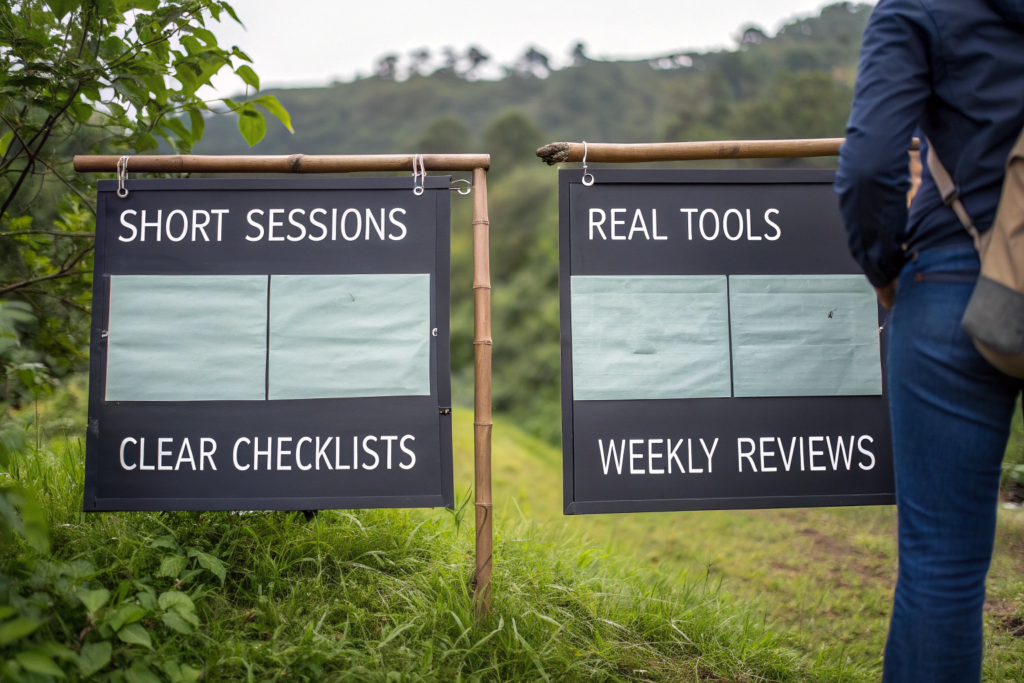
A training program does not need to be complex. I have seen companies spend thousands on fancy programs. The team still made mistakes. Why? Because the training was too long. Too abstract. Too far from the daily work. So I built a simple program. Short sessions. Real tools. Clear checklists. Weekly reviews. That is it. It works. It is not perfect. But it is practical. And practical training sticks.
You build a simple training program by using short sessions, real samples, clear checklists, and weekly reviews. Each session should cover one topic. Each session should last 30 to 60 minutes. Each session should include a hands-on task. Then follow up with a checklist and a review. A short program that repeats beats a long program that happens once. Repetition builds habit. Habit builds quality.
So, what should you do? Start with one topic. Moisture is a good first topic. Teach it this week. Then check it next week. Then add a second topic. Do not rush. Do not cover everything at once. Slow and steady wins. That is how we trained our team. It took a season. But now the habits are strong.
How Do You Train Warehouse Staff Step by Step?
You train warehouse staff step by step. First, show the task. Second, let them try. Third, correct the mistakes. Fourth, let them try again. Fifth, check the work. The SGS coffee inspection and Intertek coffee pages show how third-party inspection works. I use these to explain what buyers check. Then I connect it to the daily task. For example, if a buyer checks moisture, the warehouse team must record moisture. That link makes the task meaningful. People work better when they know why.
I also use a buddy system. A new worker pairs with an experienced worker. The experienced worker checks the new worker's work for the first month. That reduces mistakes. It also builds team culture. A good buddy corrects in private. A good buddy praises in public. That balance keeps morale high. High morale reduces errors. So the buddy system is not soft. It is practical.
How Do You Train Drivers and Port Staff?
You train drivers and port staff with simple rules and clear documents. Drivers should know how to check the container, how to seal it, and how to keep it clean. Port staff should know how to match the bill of lading, the packing list, and the container number. The Fairtrade coffee and Rainforest Alliance coffee pages explain supply chain standards. I use these to show the full chain. A driver who seals the container wrong can cause a customs problem. A port worker who matches the wrong number can delay the vessel. So train them. Then check them.
I also give drivers a one-page sheet. It lists the container number, the seal number, the delivery address, and the contact person. It also lists the rules. No smoking near the coffee. No eating in the container. No parking in direct sun. These rules are simple. But they protect the load. A one-page sheet is cheap. A damaged load is expensive. So use the sheet. Use the rules. Then follow up.
How Do You Measure Training Success?
Training without measurement is just talking. I learned that the hard way. We trained the team. We felt good. Then we had the same problem again. Why? Because we did not measure. We did not know if the training worked. So we added simple numbers. Now we track four things. Moisture readings. Damage reports. Label errors. On-time loading. These four numbers tell us the truth. If they improve, the training worked. If they do not, we change the training. That is how you improve.
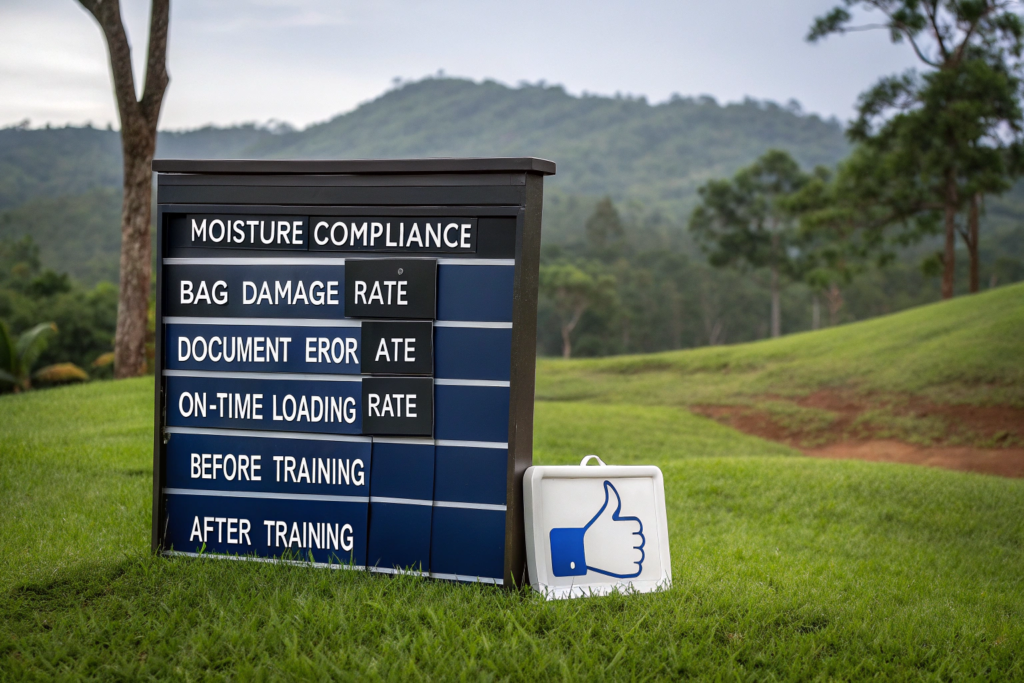
You measure training success with four simple numbers: moisture compliance, bag damage rate, document error rate, and on-time loading rate. You should also track claims and customer complaints. Compare the numbers before and after training. If the numbers improve, the training worked. If they do not, change the method. Use a simple scorecard. Share it with the team. Celebrate wins. Fix problems. This turns training into a cycle, not a one-time event.
So, what should you do? Build a scorecard. Keep it short. Four to six numbers. Review it monthly. Share it with the team. Ask for ideas. The team often knows the real problem. A worker may say the pallets are bad. A driver may say the dock is crowded. These insights help. So listen. Then act. That is how training becomes a team effort.
Which Numbers Show Your Team Is Improving?
Several numbers show improvement. Moisture compliance shows if the team keeps beans dry. Damage rate shows if the team handles bags with care. Document error rate shows if the team checks paperwork. On-time loading shows if the team meets the schedule. The Global Coffee Platform and Tea & Coffee Trade Journal share supply chain performance ideas. I use these to build our scorecard. A simple scorecard is enough. You do not need a complex system. You need four numbers and a monthly review. That is it. That is how you see progress.
I also track claims. A claim is a failure. It shows the training missed something. So review every claim. Ask what happened. Ask how to prevent it. Then update the training. A claim is not just a cost. It is a lesson. So use it. Do not hide it. Learn from it.
How Do You Keep Training Fresh After the First Session?
You keep training fresh with short refreshers, real examples, and team rewards. A monthly five-minute talk helps. A photo of a good load helps. A small reward for a clean month helps. The Trade.gov and FDA prior notice pages explain import rules and food safety. I use these to keep the team updated on rules. Rules change. So training must change too. A refresher keeps the team sharp. A reward keeps the team motivated. Both are simple. Both work.
I also rotate the trainer. One month, the warehouse manager teaches. Next month, a driver teaches. Next month, a QC staff member teaches. This keeps the sessions fresh. It also builds ownership. When a worker teaches, they learn twice. So rotate the trainer. Then watch the team grow. That is how training becomes culture. Culture is stronger than any single lesson.
Conclusion
Educating your logistics team on coffee handling is not optional. It is essential. Green coffee is a living product. It reacts to moisture, heat, smells, and pressure. A trained team protects it. An untrained team ruins it. You should teach five core topics: moisture, temperature, clean stacking, document accuracy, and container inspection. You should use short sessions, real samples, checklists, and weekly reviews. You should measure results with simple numbers. You should keep training fresh with refreshers and rewards. If you do these things, you will reduce claims, protect quality, and keep buyers happy. Training is not a cost. It is an investment. It pays back in every clean container.
At BeanofCoffee, we train our logistics team every season. We own more than 10,000 acres in Baoshan City, Yunnan. We export Catimor, Arabica, and Robusta. We work with large buyers, brand owners, distributors, and trading companies. We can share our checklists, our moisture data, and our loading photos. If you want a supplier who handles coffee with care, please contact Cathy Cai at cathy@beanofcoffee.com. She will help you with samples, pricing, specifications, and shipping plans. You can also visit BeanofCoffee to learn more. Let us handle your coffee the right way.