Let me tell you about a phone call I had last year. A roaster in Chicago was furious. He’d opened a fresh container of supposedly "specialty grade" beans, and the smell hit him first—musty, like a wet basement. A third of the bag was black beans and insect damage. He’d paid a premium, waited eight weeks, and got garbage. His pain wasn't just the lost money. It was the week of downtime scrambling for a replacement, the awkward calls to his café customers, the feeling of being cheated by a supplier half a world away. You know that sinking feeling.
Ensuring quality control for imported green beans is not about trusting a single certificate. It's a proactive, three-phase battle fought before, during, and after shipment, relying on airtight physical specifications, binding third-party inspections like SGS, and your own mandatory sample roasting upon the container's arrival.
That’s the system I wish my Chicago client had used. You see, "quality control" isn't a singular event. It's a chain. And like any chain, it only works if every single link is tested. My job as an exporter at BeanofCoffee isn't just to ship; it's to hand you a chain where we've already tested the first two links before you even pay. So, let’s stop dealing with the anxiety of hoping for the best. Let’s walk through exactly how a buyer can build a bulletproof quality firewall, starting from the very first contract we sign.
What Pre-Shipment Inspection Protocols Protect Coffee Buyers?
Imagine buying a car without a test drive. That’s what placing a container order feels like without a pre-shipment protocol. The emotional tug-of-war is brutal. You see the sample, you love it, but the voice in your head whispers, "Will the ten tons match the 200 grams?" The fear that the bulk shipment will be a bait-and-switch is the single biggest barrier to trusting a new origin or a new supplier.
A proper pre-shipment inspection protects you from the bait-and-switch. It legally ties the final payment to the physical reality of your specific, sealed, and approved coffee lot. It's your last and best chance to say "no" before the coffee hits the water.
To make this truly effective, you have to stop viewing the inspection as a passive report you receive. You need to see it as an active intervention. You’re not just asking, "Is it good?" You’re asking, "Does this specific, identifiable, tamper-proof lot match the exact profile I approved?" There are two distinct layers here: the sensory seal of approval and the physical specification check.
How Does a Pre-Shipment Sample Secure Your Coffee Order?
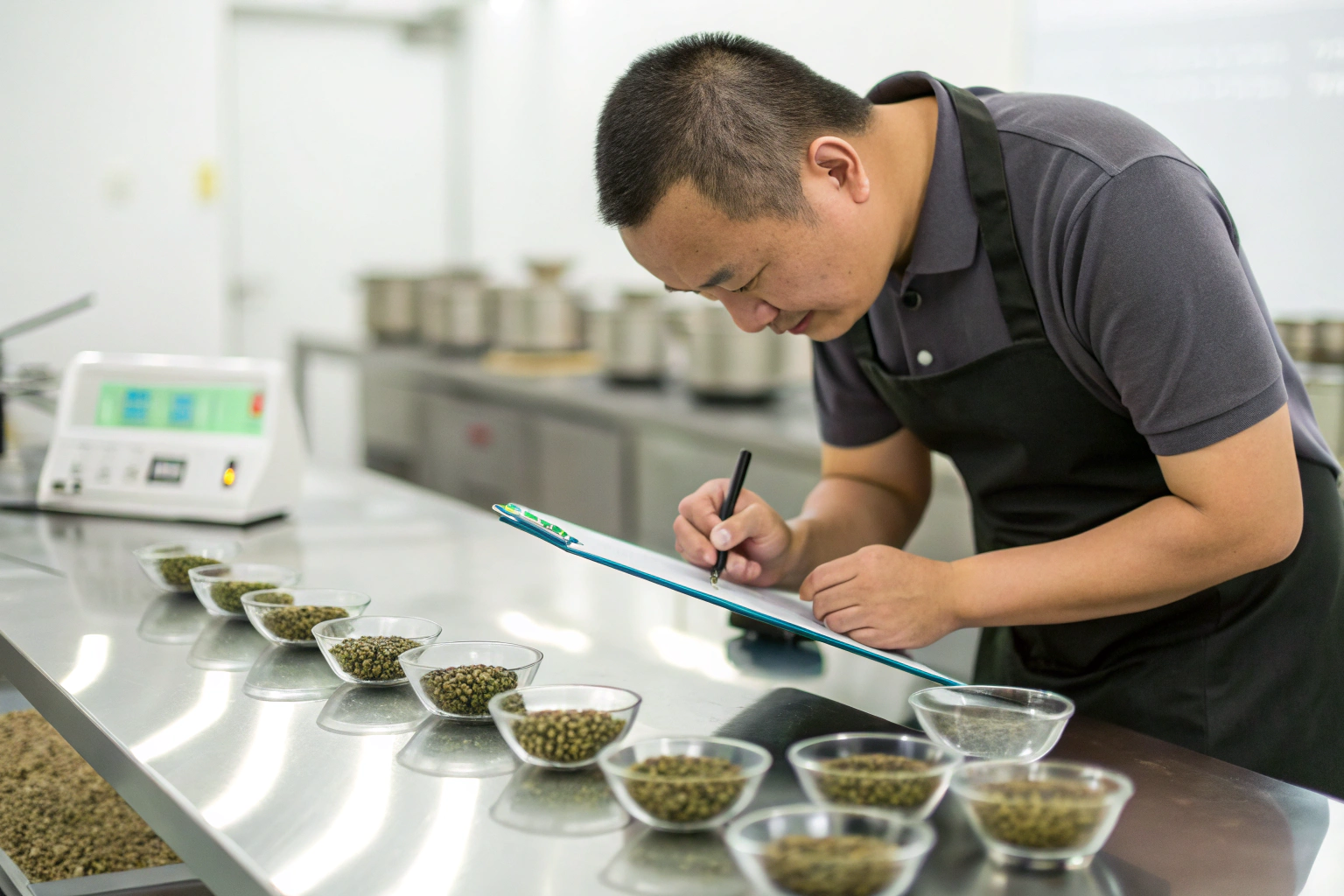
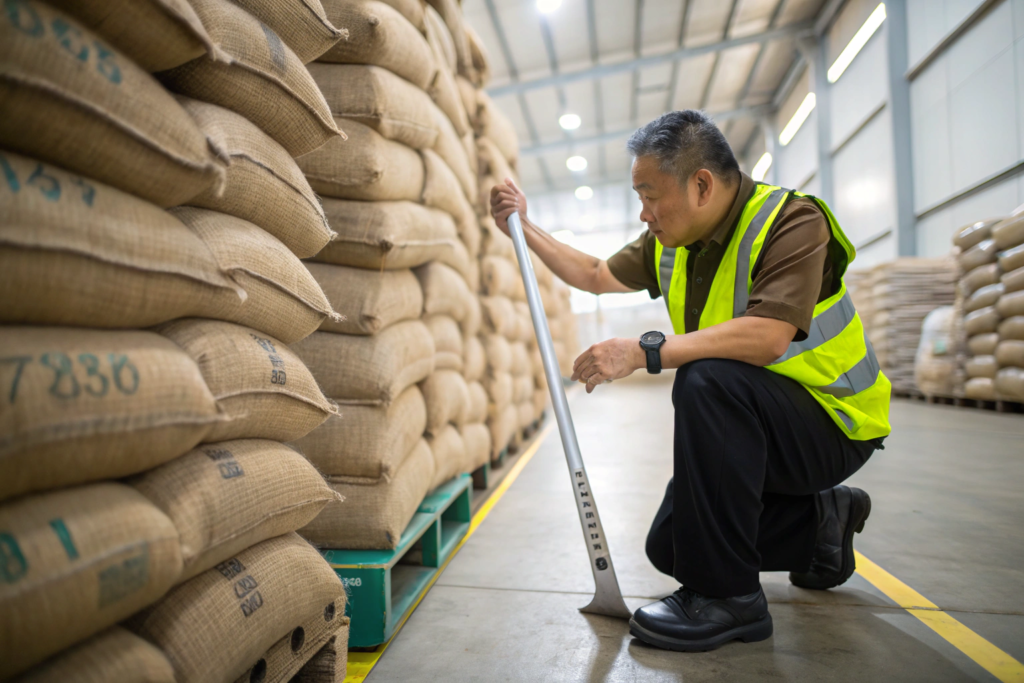
This is the sensory safety net. I will never ship a container without your approval of a pre-shipment sample, or PSS. The process is strict. A week before your container is scheduled for stuffing, I don't just wander into the warehouse and grab a handful. My QC team uses a trier to poke into no less than 20 different bags from your specific lot. We blend this composite sample, vacuum-seal 300 grams, and courier it to you via an express air service. You should have it in 3-5 days. This is your test drive. You roast it on your machine, you cup it, and you check it against the original approval sample. The rules are simple: if it’s not a match, you say no. We do not ship. I will personally hold the container until you give a written "pass." This one step eliminates 90% of the anxiety. A roaster I work with in Manchester calls this "the million-dollar cup." He says the $80 courier fee is the cheapest insurance he's ever bought. You are giving the final go-ahead on the actual coffee that will be sealed in your container. You’re not buying a fantasy; you’re approving a concrete reality.
What Certifications Matter for Clean, Safe Green Bean Imports?
Now, while you are tasting the PSS, you should also be checking the paperwork against an independent standard. Don’t just take my word. Use a global inspection company. I insist on using a firm like SGS or Bureau Veritas for new partnerships. You pay them, so they work for you. Their inspector comes to my warehouse on the day of loading. Their job is cold and objective. They pull a fresh, independent sample. They perform a physical defect count according to the SCA Green Arabica Coffee Classification standard. If the contract says maximum 8 full defects per 350 grams, the inspector counts them. If there's even one more, they flag it. They also check the moisture content and water activity with their own calibrated meters. After the bags are loaded, the inspector seals your container with a unique, numbered, tamper-proof bolt seal. The seal number is written directly into the final inspection report. This report is your objective proof. You get the report, check the seal number when the container arrives, and you know instantly if anyone opened the doors during transit. The key certification here isn't just an annual organic certificate; it's this per-shipment physical and sensory validation. It turns the transaction from a subjective, trust-based gamble into a verified, documented fact.
Why Is Moisture Content Critical for Coffee Storage and Transport?
We're talking about water—just plain water—and it can destroy a coffee business. The silent, creeping threat of excess moisture is more dangerous than a visible bug, because you can't see it with your naked eye until it's way too late. The pain of this is delayed, which makes it worse. A container arrives looking fine. You store it. A month later, you open a bag and it smells like an old ashtray. Mold. That whole pallet is now a total loss, and the supplier is blaming your warehouse.
Controlling moisture content is the single most effective, non-negotiable, scientific barrier against mold, weight loss, and flavor fade. It's the invisible number that dictates whether your investment matures gracefully or rots silently.
Now, let's get practical. It's not just about one number. It's about a balance between two critical measurements, and it's about how you measure them. Too dry, and your coffee is lifeless. Too wet, and it's a biological time bomb. An often-overlooked detail is the difference between surface moisture and internal water activity.
What Is the Ideal Moisture and Water Activity for Arabica?
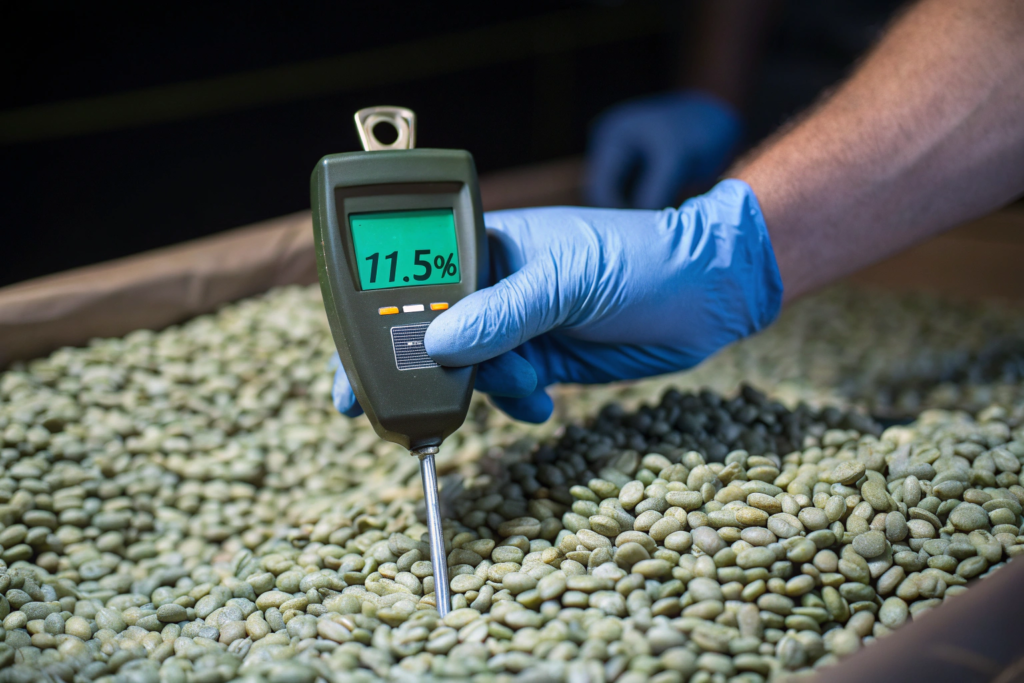
I keep this very simple. For our high-grown Arabica, I target a moisture content of 11.0% to 11.8%. But moisture content alone is just a starting point. It tells you how much water is there, but not if that water is available for mold to use. That's where water activity, or aw, comes in. This is the secret metric the best buyers watch. It measures the "free" water not bound to the bean's cellulose. I target an aw of strictly 0.53 to 0.60. Below 0.53, the bean becomes brittle, the cell structure cracks, and the volatile aromatics escape. It cups like cardboard. Above 0.60, you’re entering a danger zone where molds like Aspergillus can start to metabolize. I remember a shipment to a client in Florida, a very humid climate. We kept his beans at a tight 0.55 aw. While his other origins showed condensation damage inside the container, our bags were pristine. He called me a magician. It wasn't magic; it was just physics. The bound water in our slow-dried beans acted as a natural stabilizer. You can check this yourself with a portable aw meter. It’s a better predictor of shelf-life than the moisture number alone. When you buy, don’t just ask for the moisture percentage. Ask for the water activity reading from the lab report. A supplier who can’t give you that number isn't managing their process scientifically.
How Do You Prevent Mold and OTA in Imported Green Beans?
Mold isn't just about a bad taste. It's about a health hazard: Ochratoxin A, or OTA. This is a mycotoxin, and it’s heavily regulated, especially in the European Union. Prevention is the only cure. You can't "wash off" OTA. It's formed during bad drying and bad storage. Preventing it is a three-step system. Step one is on the farm. I use raised African drying beds, not concrete patios. The airflow from below cuts the drying time in half and prevents the fermentation that fuels mold. Step two is the mechanical drying finish. After sun-drying, our beans go into a low-temp mechanical dryer that gently brings them to that 11.5% equilibrium. This kills any remaining mold spores with clean, hot air. Step three is what we call "container hygiene." Before loading, the container is inspected. I’ve rejected containers because of a tiny unseen leak in the roof seal. We also place food-grade desiccant strips along the container floor to absorb any condensation during the ocean voyage. But you need a final check on your end. I always tell my clients to send a sample from the first bag they open to an independent lab for a basic OTA ELISA test. It’s a cheap, rapid test. It gives you final, scientific peace of mind that the coffee is clean and safe for your customers. This is how you build a brand on safety, not just flavor.
How Can a Coffee Importer Verify the Bean’s Physical Quality?
You’ve bought the coffee, and it’s arrived. The seal was intact, the paperwork looked good. Now, it's just you, a sample tray, and the truth. This is the moment of reckoning. A nagging feeling in your gut asks, "Did I really get what I paid for?" The fear here is about being a silent victim of a slow, systematic downgrade—where a grade 2 bag is quietly replaced with a grade 3 over several shipments. Maybe it's just a few more quakers per roast, but you know.
Verifying the physical quality of imported green beans is a hands-on, manual process that uses the Green Arabica Defect Handbook as its rulebook, supplemented by a sieve and a scale. It’s about objective counting, not subjective opinion.
Don’t just dump the beans in the hopper. A professional importer turns the receiving bay into a lab for one hour. You need to move beyond a casual glance and go into a structured audit mode. Let’s break down the two main categories of physical sins a bean can commit.
What Are Primary and Secondary Defects in Green Coffee?
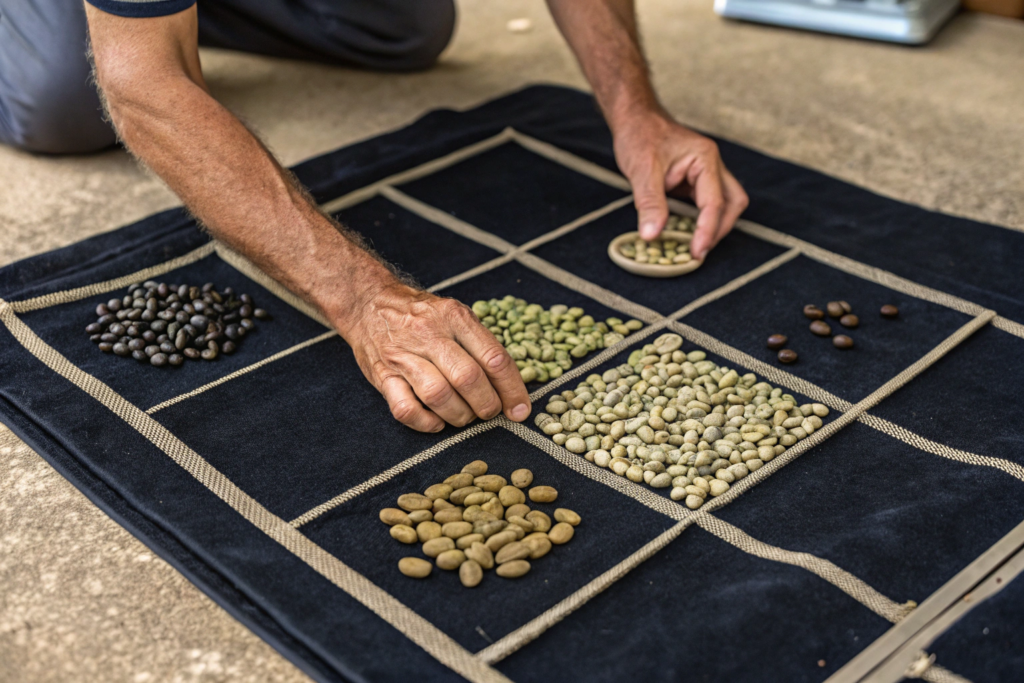
You need to speak the language of the defect count. The Specialty Coffee Association has a clear rulebook. A "primary defect" is a full defect category—these are the deal breakers. A single fully black bean. A single fully sour bean. A single large stone. One large stick. Each of these counts as one full primary defect. If your sample has one of these, you can’t call it specialty. "Secondary defects" are more minor. Broken beans, partial sours, insect damage, shells. It takes three of these secondaries to equal one full primary defect. Let me give you a concrete audit example. I once had a client question a shipment. I flew to his roastery. We laid out a 350-gram sample on a black tray. We found one full black bean. That’s one primary defect. We found one shell and one broken bean. That’s two secondary. We found one small stone—another primary. The total defect count was 2 and 2/3rd full defects. The contract allowed for a maximum of 5 full defects. We were at 2.66. The coffee was well within spec. His roaster had a grinder issue, not a bean issue. The point is, you must separate the actual defect from your own operational noise. Having a copy of the SCA Green Coffee Defect Handbook pinned on your cupping room wall is not a nice decoration; it’s a tool to prevent a false rejection of a perfectly good lot.
What Screen Size Consistency Tells You About Roasting Quality?
Screen size uniformity is the invisible flavor killer most new buyers ignore. Let’s say you buy an 18-screen coffee. This means the beans should be retained on a sieve with 7.14mm holes. If your bag contains a wild mix of 17s, 18s, and a few 15s, you have a roasting problem. A small 15-screen bean has less mass. It transfers heat much faster. It will burn on the outside while an 18-screen in the same batch is still raw on the inside. The result in the cup is a bitter, ashy note mixed with a grassy, underdeveloped note. It makes the coffee taste "baked" and hollow. You should do a quick sieve test. We use a set of calibrated brass sieves. A truly specialty lot should be at least 70% uniform to its stated screen size. I check this by shaking a 100-gram sample for one minute. Then I weigh the beans retained on the target screen. If the number is low, you’re paying for a premium grade and getting something that will never roast evenly. I once had a buyer complain about a "smoky" flavor in our beans. We traced it back to a set of screens he hadn't cleaned in years; the holes were clogged and his yield was skewed. It’s a simple, low-tech tool that reveals the deep technical truth of the coffee’s preparation. A beautifully uniform bean in size is the first step to a beautifully uniform bean in roast color and flavor.
How Do You Build a Long-Term QA System with an Exporter?
Quality Assurance with an exporter usually starts as a battle—an inspection against a suspect. But it can’t stay that way. If every shipment feels like you need a team of detectives, you’re with the wrong partner. The real pain is the exhaustion. The mental energy it takes to constantly police a supplier corrodes your ability to do your real job, which is selling amazing coffee. Over time, you just accept a little more variability because fighting it is too tiring.
A true long-term QA system transforms a transactional war into a collaborative feedback loop. It’s built not on one annual audit, but on a shared technical language and per-shipment data that is reviewed together to make the next lot even better.
This is about moving from "policing" to "co-development." I want my buyers to feel like their roastery QC lab and my farm lab are just two rooms in the same factory. It's about aligning incentives and sharing information before a problem festers.
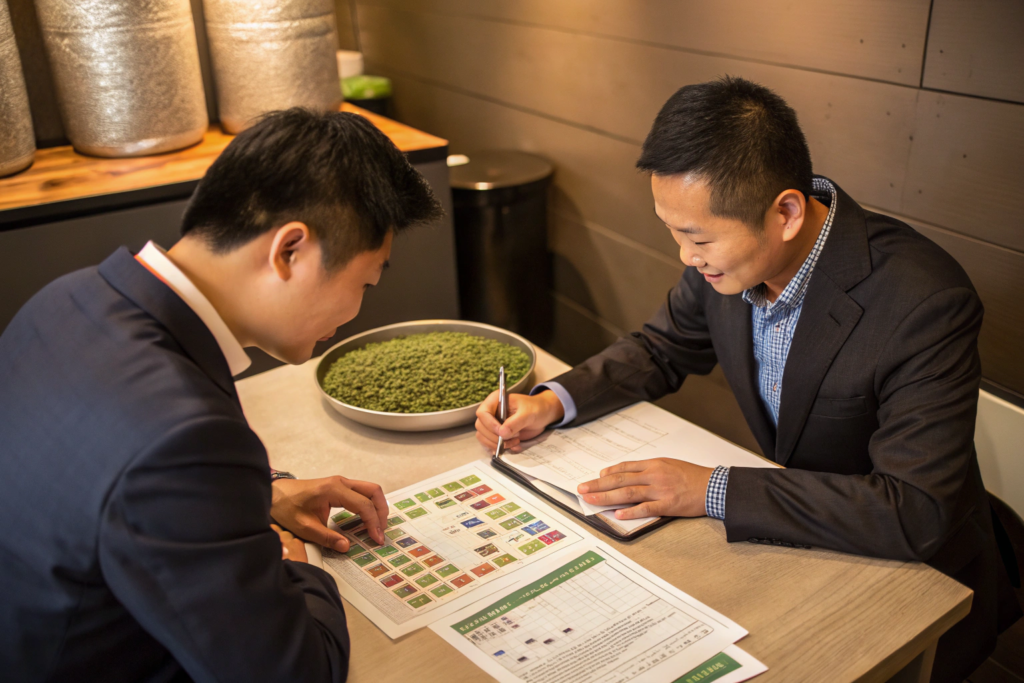
How to Use a Feedback Loop to Improve Coffee Quality Shipment Over Shipment?
This requires raw honesty and specific data. After you roast and cup each container from BeanofCoffee, I don’t just want a "it was good, thanks" email. I need your cupping scores and your roast log. If you give me numbers, I can fine-tune. For example, a partner in Sydney sends me his Cropster roast comparison graph for every single lot. Two shipments ago, he noted a slight "flick" in the roast curve at first crack that he hadn't seen before. He shared the curve. I took that data back to my processing manager. We discovered a very minor, 0.2% increase in average bean density from that particular lot, caused by a cooler-than-usual dry season. We hadn't changed anything, but nature had. For the next shipment, knowing this, we slightly altered the fermentation time to soften the bean structure. The next lot roasted perfectly for him. It’s a feedback loop. He gives me the downstream data, and I correct the upstream process. This is impossible with a middleman who never touches the coffee. This direct technical loop is the single biggest advantage of buying from a vertically integrated farm. We also use a "single lot" traceability system. If you have an issue with one bag, you can read the trace code on the bag, and I can tell you exactly which section of the mountainside it was picked from and what the weather was that week.
How Can an Annual Audit Strengthen the Buyer-Seller Relationship?
Don’t think of an audit as a punishment. Think of it as a joint strategic review. Once a year, I invite my key volume partners to come here, to Baoshan. You don't have to, but the ones who do never regret it. This visit isn't about inspecting a defect tray; it's about seeing the community and the logistics in three dimensions. You’d walk the drying patios with me, see the nursery, and cup the new experimental lots directly from the tank. A buyer from Berlin came last harvest. He observed our drying process and suggested we experiment with a longer, slower "reposo" period in parchment before hulling, a technique he loved from Costa Rica. We ran a trial on a small lot. The result was a cleaner, sweeter cup with a longer aftertaste. That lot is now branded as his exclusive micro-lot, and it commands a $2 premium. The relationship shifted from buyer/seller to co-producer. It also eliminates the fear of the unknown. Seeing the scale of our operation, the computerized dry mill, the working conditions of our staff—it moves trust from a theoretical concept to a lived experience. I always recommend a visit during the harvest, between November and February. You can also virtually audit us via a scheduled live video walkthrough. The goal is total transparency. A partner who audits you isn't suspicious; they’re serious about building a permanent, evolving quality standard. That’s the kind of partner I want to supply.
Conclusion
Quality control for imported green beans is not a mystical art, and it's definitely not a gamble you need to take. It's a structured, defensive strategy that a smart business owner deploys to protect their brand and their cash flow. We've walked through the four pillars of this defense. It starts with locking in the deal with a pre-shipment sample and a tamper-proof inspection, so you never pay for a surprise. It continues by respecting the invisible threat of water, using moisture content and water activity as your silent guardians against the mold that destroys flavor and health. Then, it's about getting your hands dirty with a defect count and a sieve, applying the objective rules of the SCA to your receiving bay. And finally, it evolves from a cold inspection into a warm, collaborative technical loop, where your roast data actively makes the next harvest better, turning your exporter into a true partner.
Building this system is the smartest investment you can make in your coffee business. It transforms the most stressful part of the job—international sourcing—into a predictable, data-backed process. At BeanofCoffee, we don't just tolerate these rigorous checks; we've built our entire export operation around supporting them. We want you to test every bean. We want you to check every seal. Because we know that every single test you run, we'll pass, and every test we pass makes your business more secure. That’s the foundation of a supply chain that lets you sleep soundly.
If you're ready to build a QA system that feels less like a fight and more like a partnership, I invite you to reach out. We take a technical, data-driven approach to every relationship. For a detailed discussion on your specific quality specs, defect tolerances, or to schedule a live virtual cupping session with one of our lots, contact my head of client partnerships, Cathy Cai. She can arrange for your pre-shipment sample and a full spec sheet immediately. Email Cathy at cathy@beanofcoffee.com. Let’s set up a quality standard that your customers will never doubt.