
The calendar flips to August. The global supply chain goes into its annual frenzy. Retailers are stocking up for Christmas. Every factory in China is running at maximum capacity. Every ship is booked solid. Your coffee needs to move, and suddenly, nothing moves. The forwarder stops answering emails. The vessel schedule shows "rolled" next to your booking. Your roastery is running on fumes, roasting the last bags of your reserve stock. This is the peak season nightmare. I have lived it from the other side, sitting in Baoshan, watching a container of our beautiful Arabica sit on a Shanghai dock for three weeks while my buyer in Melbourne sends increasingly panicked messages.
Guaranteeing on-time delivery during peak season requires three things: an early booking strategy, a premium carrier partnership, and a flexible routing plan. At BeanofCoffee, we start locking in peak season vessel space in June, not August. We pay for guaranteed loading, and we have backup routes through multiple Chinese ports.
Peak season is not a surprise. It happens every year, same time, same chaos. The difference between a smooth delivery and a logistics disaster is preparation that starts months in advance. Let me show you the system we use to protect your coffee's timeline.
Why Does Peak Season Cause Global Coffee Shipping Delays?
The peak season for ocean freight is a predictable annual event driven by consumer retail cycles. The back-to-school and Christmas shopping seasons in North America and Europe create a massive surge in demand for container shipping. The global fleet is finite. The ports are finite. The system buckles.
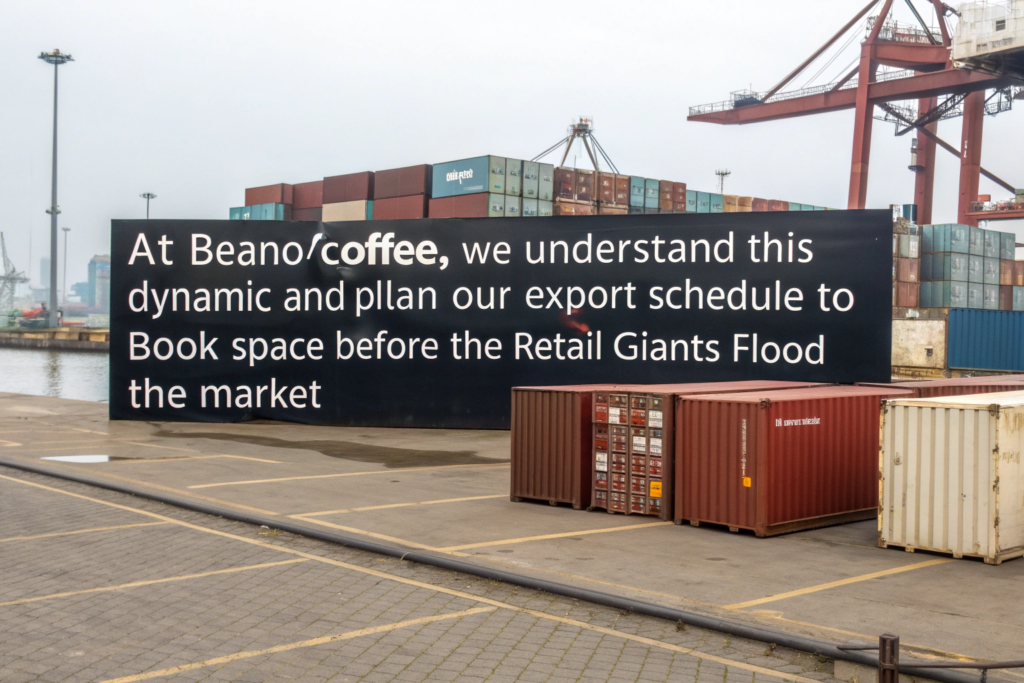
Peak season delays are caused by a systemic imbalance between a fixed supply of vessel space and a seasonal spike in cargo volume. Every shipper in Asia is competing for the same slots. At BeanofCoffee, we understand this dynamic and plan our export schedule to book space before the retail giants flood the market.
You are not just competing with other coffee shippers. You are competing with every flat-screen television, every toy, every pair of sneakers heading to the West.
How Do Holiday Retail Cycles Impact Container Availability?
The container supply chain has a heartbeat, and it beats to the rhythm of Western consumer holidays. Factories in China produce goods for Christmas in July and August. These goods must be on shelves by November. So, August through October is the absolute peak for exports from Asia to North America and Europe. Shipping lines deploy every available vessel. They pull ships from secondary routes to serve the lucrative Asia-to-US and Asia-to-Europe lanes. Container factories ramp up production of new boxes. Despite all this, demand outstrips supply. Equipment shortages develop. A container that is available in Shanghai in June might be on a three-week waiting list in September. Carriers declare "blank sailings," cancelling scheduled voyages to adjust capacity and keep freight rates high. This is the environment your coffee container enters if you wait until August to book.
Why Are "Rolled" Bookings a Systemic Problem in Coffee Logistics?
A "rolled" booking is when your container is confirmed for a specific vessel, but at the last moment, the carrier bumps it to a later sailing. This happens because carriers overbook, just like airlines. They assume a certain percentage of bookings will cancel. In peak season, the cancellation rate is near zero. Everyone wants to ship. The carrier prioritizes their highest-paying customers, often the ones with annual service contracts for thousands of containers. A single container of coffee is a small, low-priority fish in a very big, chaotic pond. Getting rolled is devastating for a coffee roaster. The lost three weeks can mean the difference between having fresh inventory and running out of coffee entirely. The only defense is to make your cargo a higher priority for the carrier.
How Early Should You Book Freight for the Christmas Coffee Rush?
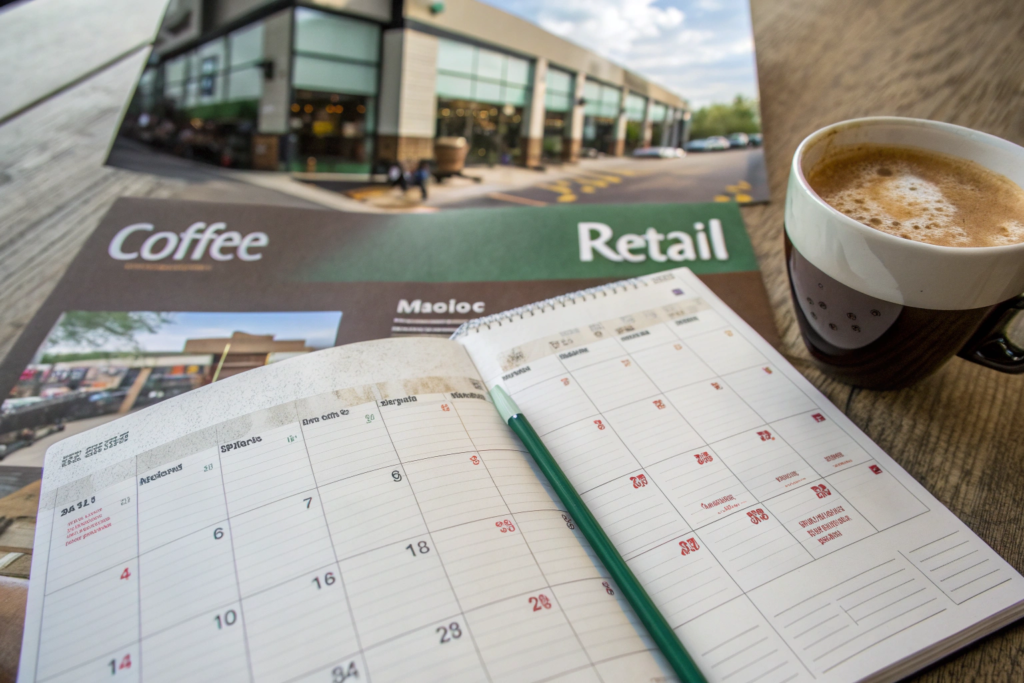
The old rule of thumb was to book four weeks in advance. That rule is dead. In the current era of supply chain volatility, a peak season booking strategy must start months in advance. You must think like a retailer, not just a coffee buyer.
You should book your Christmas coffee freight by July at the latest. At BeanofCoffee, we begin conversations with our freight forwarders in June to secure a fixed space allocation for our September and October sailings. This early commitment allows us to negotiate a guaranteed loading clause in the contract.
The early bird does not just get a worm. The early bird gets a container on a vessel.
What Is a Guaranteed Load Contract and How Does It Work?
A guaranteed load contract, or a "no-roll" clause, is an agreement with the carrier that your booked container will not be rolled, even if the vessel is overbooked. This comes at a premium, usually a surcharge on the base freight rate. It is an insurance policy. You pay an extra few hundred dollars per container for a contractual guarantee that your coffee sails on the booked vessel. For a time-sensitive shipment, this premium is a wise investment. The cost of a rolled booking—the lost sales, the idle roaster, the angry wholesale accounts—far exceeds the surcharge. We negotiate these guaranteed load terms with our core carriers well before peak season. Because we ship consistent volumes year-round, we have the relationship leverage to secure these terms. A sporadic, spot-market shipper will struggle to even get a carrier to answer their call in September, let alone offer a guarantee.
How to Align Your Coffee Harvest Schedule with Shipping Deadlines?
The Yunnan harvest is a natural advantage for peak season planning. Our main harvest runs from October to February. The coffee is milled and ready for export by January through March. This means our coffees can avoid the absolute worst of the Christmas peak, which is August to October. However, if you are buying a forward contract for delivery in October, you need us to hold that coffee in our warehouse until the shipping window opens. We do this. We store the coffee in climate-controlled conditions and then ship it in July or August to meet your October deadline. The key is the forward contract. You agree on the volume and the shipping window months in advance. This allows me to plan the milling and the storage, and it allows you to lock in the freight booking early. Synchronizing the harvest reality with the retail calendar is a conversation we have with every buyer.
How to Use Multiple Chinese Ports to Avoid Bottlenecks?
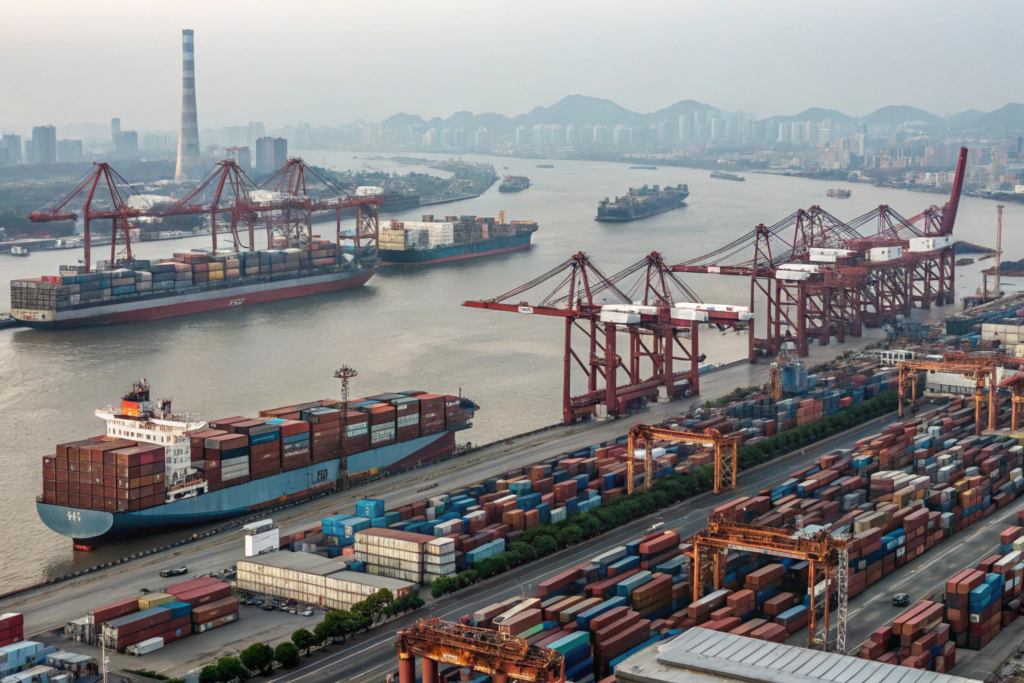
Shanghai is the world's largest container port. During peak season, it is also the most congested. Relying on a single port is a single point of failure. A typhoon, a COVID-era style lockdown, or a simple labor slowdown can paralyze the entire operation. A smart export strategy has alternatives.
Using a multi-port strategy avoids the single-point-of-failure risk of Shanghai. At BeanofCoffee, we can route coffee exports through Shenzhen, Ningbo, or Xiamen, depending on real-time port conditions. This flexibility has saved several of our clients' peak season shipments.
Baoshan is an inland city. We truck the coffee to the coast. The truck can turn left to Shanghai or right to Shenzhen.
What Are the Alternatives to Shanghai Port for Yunnan Coffee?
Shanghai is not the only gateway to the Pacific. For the US West Coast, Ningbo-Zhoushan is a massive, modern port just south of Shanghai with frequent direct sailings to Los Angeles and Long Beach. For the US East Coast and Europe, Shenzhen and Yantian in Guangdong province serve deep-water routes with large vessels. Even Xiamen, in Fujian province, offers reliable, less congested options. The trucking distance from Baoshan to these ports is longer than to Shanghai, which adds cost. But in peak season, paying a slightly higher trucking fee to bypass a gridlocked port is a simple cost-benefit decision. We monitor port congestion indices in real time. We consult with our forwarders on ground conditions. If Shanghai is showing a seven-day waiting time for truck appointments and Ningbo is at two days, we route the coffee to Ningbo.
How Does Port Diversification Reduce Your Risk of Delays?
Port diversification is a fundamental risk management strategy. It is not just about choosing a different gate. It is about spreading your total shipment volume across multiple vessels, multiple carriers, and multiple ports. If a typhoon hits the Yangtze Delta and shuts down Shanghai for a week, your Ningbo shipment is unaffected. If a carrier declares a blank sailing out of Shenzhen, your Xiamen shipment on a different carrier alliance is still moving. This strategy requires more complex logistics management. It requires a freight forwarder who can manage bookings across multiple ports. But the resilience it provides is invaluable. I use this approach for my largest clients who depend on a continuous supply of green coffee. Their coffee is not a single container. It is a flow, and the flow is protected by redundancy.
What Are the Best Payment and Penalty Terms for On-Time Delivery?
The contract is your leverage. The freight contract is not just about the rate per container. It is about the performance standards and the consequences of failure. A poorly negotiated contract leaves you with no recourse when the carrier fails to perform.
Performance clauses in the freight contract, like detention and demurrage caps and a delay penalty, align the carrier's incentives with yours. At BeanofCoffee, we negotiate these terms on behalf of our CIF buyers and guide our FOB buyers to the right contractual language.
A carrier who faces a financial penalty for a delayed delivery is far more motivated to find space on the next vessel.

What Is a Detention and Demurrage Cap and Why Does It Matter?
I discussed detention and demurrage in the context of your roastery preparation. But in peak season, the risk of these charges skyrockets. If a container is stuck at the destination port due to congestion, the free time expires quickly. The daily charges accumulate. A standard contract might have no cap on these charges. You could receive a bill for thousands of dollars for a delay that was not your fault. A well-negotiated contract includes a cap on detention and demurrage charges, with a clear clause that the shipper is not responsible for charges incurred due to port congestion or carrier-caused delays. We insist on these caps in our freight contracts. It protects you from a hidden financial blow that can wipe out the margin on an entire container of coffee.
How to Negotiate a Late Delivery Penalty Clause with Freight Carriers?
A late delivery penalty clause is a simple concept. If the container arrives at the destination port after the agreed delivery date, the carrier pays a penalty per day of delay. This is rare in standard carrier terms, which are designed to protect the carrier, not the cargo owner. But with a consistent volume commitment and a long-term partnership, it is negotiable, especially if you are paying for a premium guaranteed load service. The penalty does not need to be punitive. It is a signal of commitment. Even a modest per-diem penalty changes the carrier's internal prioritization logic. Your container moves from "generic cargo" to "cargo with a penalty clause" in their system. We push for these clauses in our annual carrier contracts. It is a marker of a serious, professional shipper.
Conclusion
On-time delivery during peak season is not a matter of luck. It is a matter of months-ahead planning, strategic relationships, and contractual intelligence. You start in June by securing a guaranteed load contract with a reliable carrier, not in August when the panic is already underway. You align your green coffee forward contracts with the shipping calendar, so we can hold your coffee in Baoshan and release it into the logistics flow at the optimal moment. You diversify your export ports, using Ningbo or Shenzhen as pressure-release valves when Shanghai is gridlocked. And you back up your operational strategy with a freight contract that includes detention caps and delay penalties, giving the carrier a financial reason to honor your schedule. This system does not eliminate peak season chaos. It routes your coffee around it.
Let's build your peak season shipping plan now, before the rush begins. Contact me, Cathy Cai, at cathy@beanofcoffee.com. I will share our projected sailing schedules, our premium carrier options, and our multi-port routing plan for the upcoming season. We will lock in your space, fix your price, and put the contractual guarantees in place. While others panic in September, your coffee will already be crossing the Pacific, on time, every time.