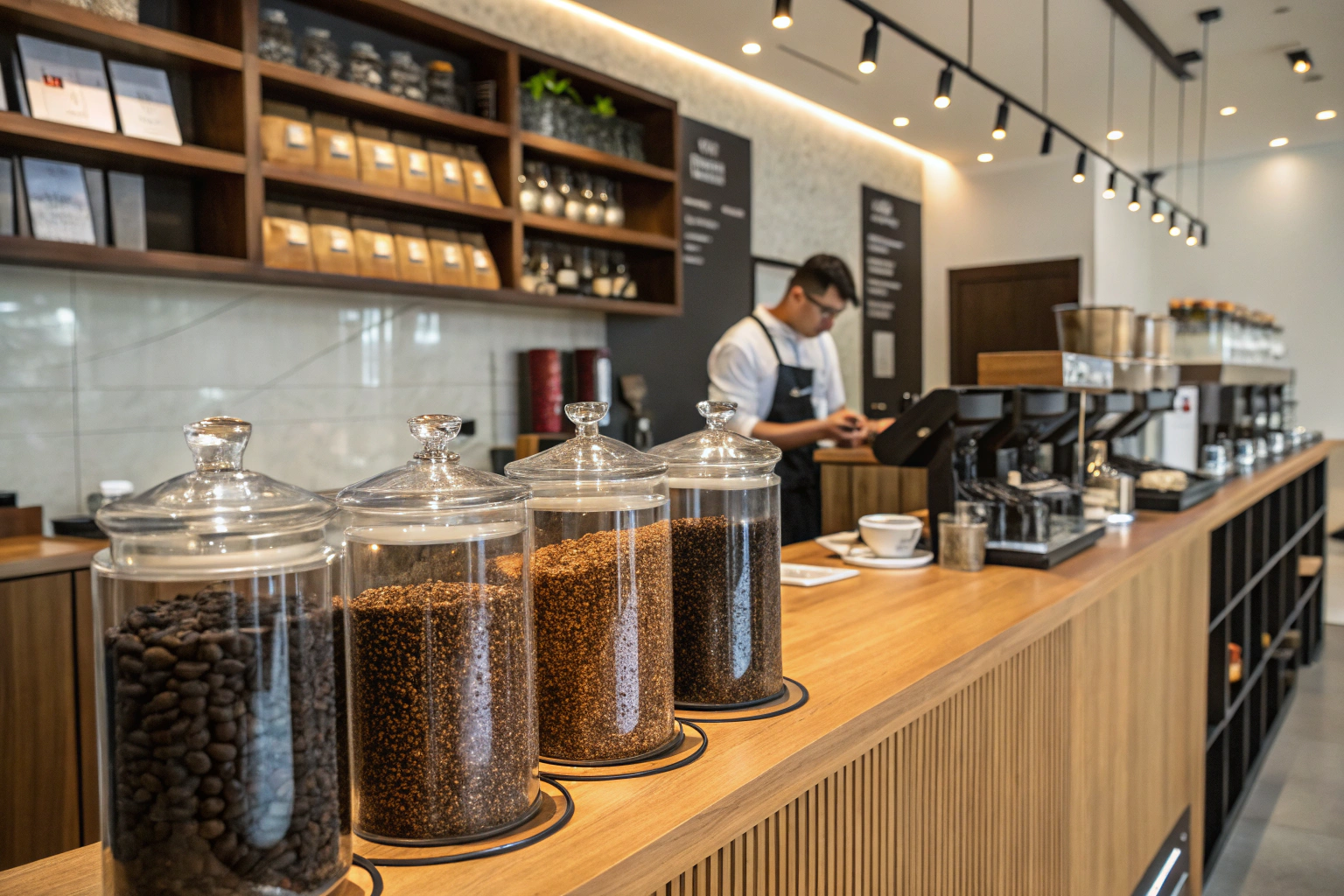
The European coffee scene has always been the tastemaker. The Italians wrote the rules of espresso. The Scandinavians pushed the boundaries of light roast. For decades, their menus were a map of the old coffee world. Colombia. Ethiopia. Kenya. Brazil. A Yunnan coffee on a Berlin cafe menu would have been unthinkable ten years ago. A curiosity, perhaps, but not a serious contender. Something has shifted. I have seen the change in the purchase orders landing on my desk in Baoshan. The volumes are growing. The names of the roasters are the ones leading the European specialty movement. They are not buying Yunnan as an experiment anymore. They are buying it as a core component of their offering.
European brands are adopting Yunnan single origins because the quality has reached the high bar of the specialty market, the flavor profile offers a genuine new experience, and the direct trade model aligns with the European consumer's demand for transparency and sustainability. At BeanofCoffee, our European partnerships are built on rigorous quality data, stable pricing, and a traceable supply chain that satisfies the sophisticated European palate and its ethical expectations.
The European adopter is not a trend-chaser. They are a calculated, quality-driven buyer. Their move to Yunnan is a signal the rest of the world should read. Let me explain the forces driving this shift.
How Has Yunnan Arabica Quality Reached European Specialty Standards?
The quality barrier for European specialty coffee is brutally high. We are not talking about an 80-point commodity score. The third-wave roasters in Copenhagen, Berlin, and Amsterdam are cupping coffees at 86, 87, 88 points. Their customers expect a distinct, clean, and memorable flavor experience. A hint of potato or a baggy, woody note is an instant rejection. Yunnan coffee, fifteen years ago, could not compete at this level. Today, it can, and it does.
Yunnan Arabica quality has been transformed by the introduction of better varieties, precise processing, and a young generation of quality-focused farmers. Our washed Catimor and Arabica lots from the high-altitude slopes of Baoshan now consistently cup at 84 to 87 points. At BeanofCoffee, our quality control lab operates to the same SCA cupping protocols used in any leading European roastery.
The transformation is not an accident. It is the result of deliberate investment and learning.
What Processing Improvements Have Closed the Quality Gap?
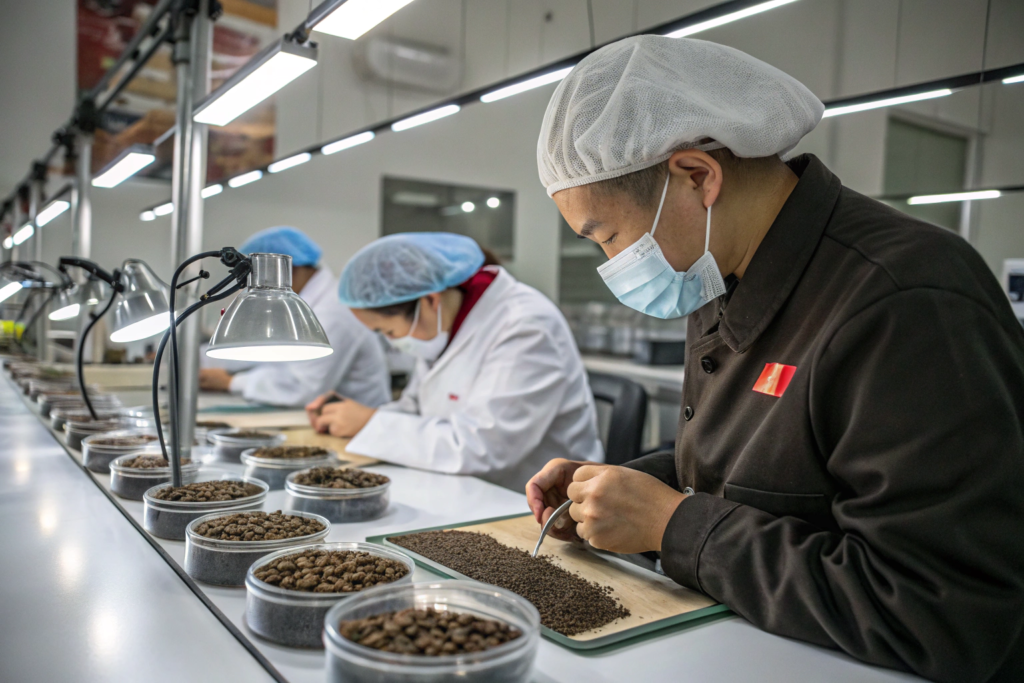
The old model in Yunnan was volume-driven. Cherries were stripped, mixed with unripe and overripe, and dried on dirt patios. The result was a dirty, fermenty cup with no clarity. That model is dying. The new model is quality-driven. Selective hand-picking of only ripe cherries is now standard on quality-focused farms like ours. The washed process is executed with controlled fermentation in clean tanks, using fresh mountain water. The drying is precise, using raised African beds and mechanical Guardiola dryers to hit the optimal moisture target quickly and evenly. The dry milling uses density tables and optical color sorters to remove every defective bean. These are the same processing technologies used in Colombia and Kenya. The result is a clean cup, free of defects, with a transparent expression of terroir. European buyers who blind-cup our lots against a lineup of Central Americans are often surprised when they discover the origin.
How Does the High-Altitude Terroir of Baoshan Compare to Other Origins?
Terroir is the final frontier of coffee quality. The combination of soil, altitude, temperature, and rainfall that gives a coffee its unique signature. Baoshan's specialty coffee zone sits at 1200 to 1600 meters above sea level. The slopes are steep. The soil is a deep, red volcanic loam, rich in minerals. The climate is defined by the monsoon, with a distinct dry season during the harvest, which is ideal for natural and honey processing. This high-altitude, cool-night environment slows cherry maturation. The bean becomes denser. The sugars develop more complexity. The resulting cup has a characteristic profile. A crisp, malic acidity reminiscent of green apple. A heavy, brown-sugar sweetness. And a clean, black tea finish. This flavor signature is distinct from a Colombian washed coffee, which might be more caramel and chocolate, or an Ethiopian, which is more floral and citrus. It is not a copy. It is a new origin with its own voice.
Why Are European Consumers Demanding Greater Origin Diversity?
The European consumer is educated. They have tasted the classic origins a hundred times. They are looking for novelty, but not novelty for its own sake. They want a new story, a new flavor, a new connection. The monoculture of familiar origins is boring the palate and the imagination of the specialty drinker.
European consumers are seeking origin diversity as a form of culinary exploration. Yunnan offers the allure of an undiscovered coffee terroir with a rich cultural history. At BeanofCoffee, our single-origin lots provide European roasters with a compelling "new origin" narrative that stands out on a crowded shelf.
Diversity is not a political statement. It is a market demand. Consumers are voting with their wallets for a wider world of coffee.
How Does the "Tea Heritage" of Yunnan Appeal to Specialty Drinkers?
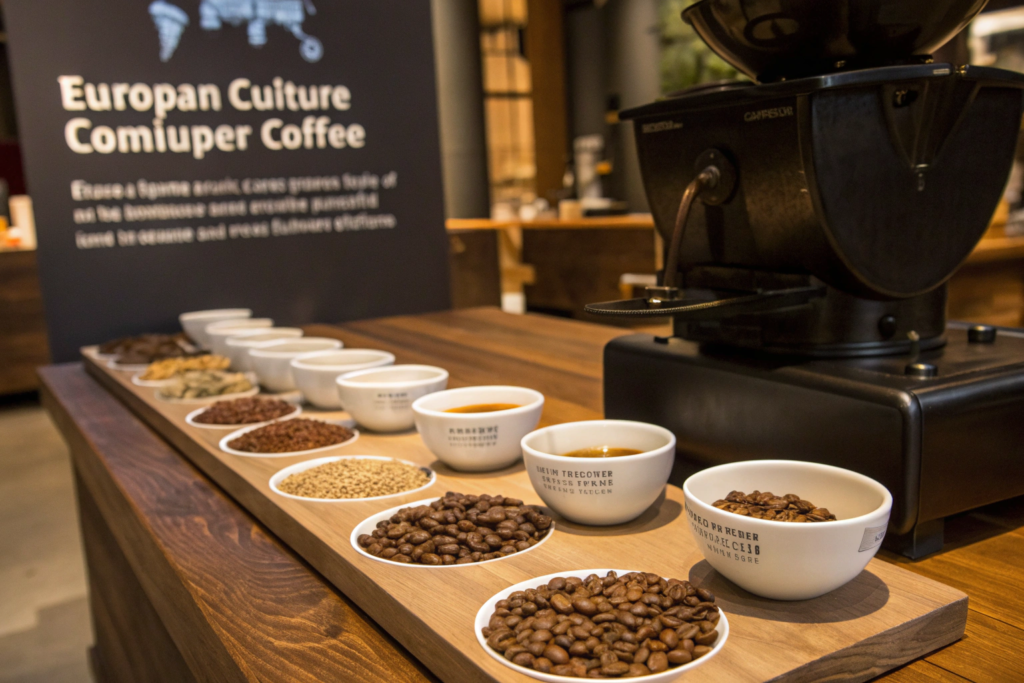
Yunnan is the birthplace of tea. The ancient tea forests and the culture of Pu'erh tea are deeply embedded in this landscape. The black tea note in our coffee is not a processing artifact. It is a whisper of the terroir that also produces some of the world's finest teas. This tea heritage is a powerful marketing narrative for a European audience that deeply appreciates both coffee and tea. It bridges two worlds. A roaster can create a product story that says, "From the birthplace of tea comes a coffee with a distinct black tea finish." This is a unique, authentic, and almost poetic connection. It cannot be replicated by any other coffee origin on earth. For the European specialty consumer, who loves a good story with their morning brew, this is an irresistible proposition.
What Role Does the "New China" Narrative Play in Branding?
There is a fascination with modern China in Europe. The story of a rising economic power, of ancient traditions meeting rapid modernization. Yunnan coffee is part of that story. It is not a relic of a colonial past. It is a product of a dynamic, entrepreneurial present. When a Berlin roaster features a Yunnan single origin, they are not just selling a coffee. They are selling a perspective on the new China. A China of young, quality-obsessed farmers. A China that is a leader in e-commerce and direct trade. A China that is writing its own coffee story, not imitating someone else's. This contemporary narrative appeals to a younger European demographic that is globally curious and tired of the old colonial narratives in coffee. They want to taste the future. Yunnan tastes like the future.
How Does Direct Trade from Yunnan Align with EU Ethical Sourcing Values?
The European Union is the world's most regulated market for ethical and sustainable products. The EU Deforestation Regulation is the latest example. European consumers and regulators demand proof that their food products are not harming people or the planet. The opaque, multi-layered supply chain of the traditional coffee trade is under immense pressure to prove its ethical credentials.
Direct trade from Yunnan offers a transparent, short supply chain that aligns perfectly with EU values. Our vertically integrated model at BeanofCoffee provides full traceability from the roaster back to the specific farm block. This transparency is not just a marketing claim. It is documented proof for EU due diligence requirements.
The middleman model is a liability in the new regulatory environment. Direct trade is a competitive advantage.
How Does Traceability Satisfy the EU Deforestation Regulation (EUDR)?
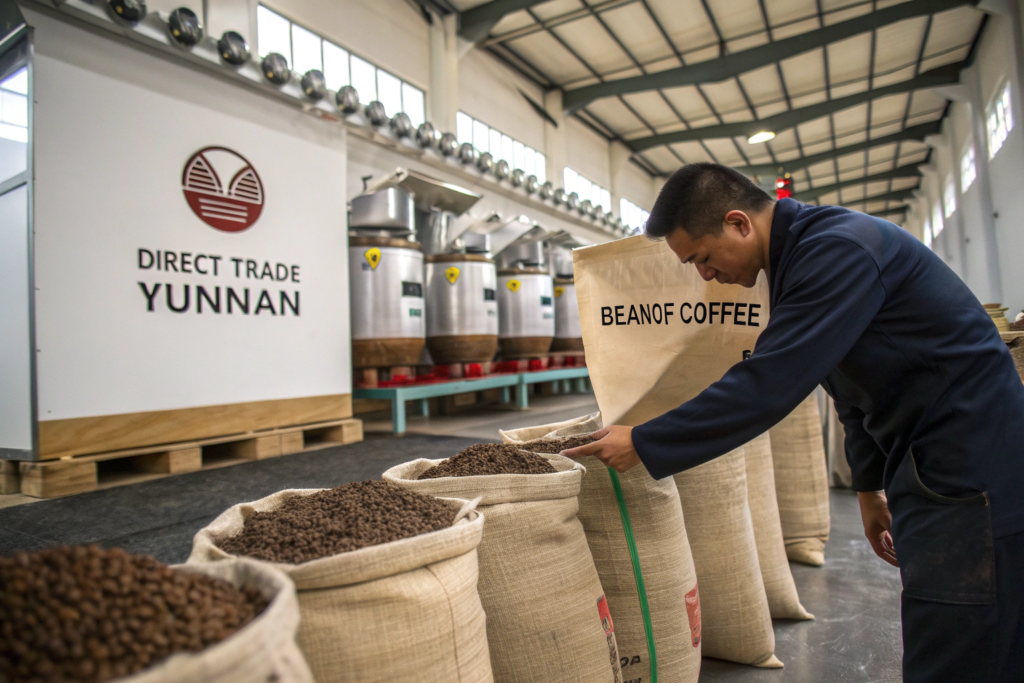
The EUDR requires companies placing coffee on the EU market to prove it was not grown on land deforested after December 31, 2020. This requires geolocation data for every plot of land the coffee came from. A traditional middleman chain struggles to provide this data. The coffee is blended at multiple points. The link to the specific farm is broken. Our farm is GPS-mapped. Every coffee lot we export is traceable to the specific polygon of land where it was grown. We provide this geolocation data to our European buyers as a standard part of the export documentation. It is a simple data transfer. It satisfies the EUDR due diligence requirement effortlessly. For a European roaster, sourcing from us is a low-risk way to comply with a high-stakes regulation.
Why Is a Short Supply Chain Valued in the European Specialty Market?
A short supply chain means fewer intermediaries between the farmer and the roaster. In the European specialty market, this is valued for several reasons. It means more of the purchase price reaches the farm, supporting the farmer's livelihood and reinvestment in quality. It means fresher coffee, as the beans move from the mill to the roastery in weeks, not months. It means clearer communication. If a roaster has a question about a lot, they ask me directly, and I answer from the cupping lab in Baoshan. This intimacy of connection is the hallmark of specialty coffee. It is what separates a $20 bag of single-origin from a $5 bag of commodity blend. Our direct trade model from Baoshan embodies this short-chain, high-touch philosophy. It is exactly what the European specialty leader is looking for.
What Logistics Advantages Does Yunnan Offer for the European Market?
Geography is destiny in logistics. Yunnan is an inland province, but it is strategically positioned for trade with Europe. The traditional route for coffee from Asia to Europe is via the Suez Canal. But a new, faster land route is emerging, and it starts where we are.
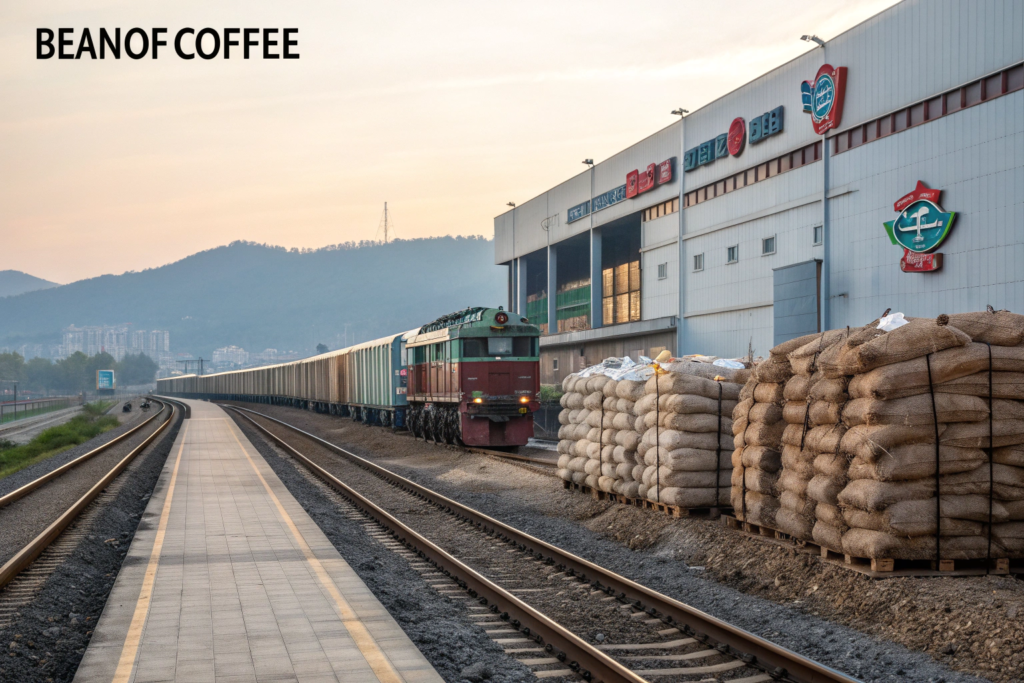
Yunnan offers a unique logistical advantage for European coffee buyers: access to the China-Europe Railway Express. This rail link can deliver coffee from our Kunming consolidation point to a European warehouse in 15 to 18 days. At BeanofCoffee, we are pioneering the use of this rail corridor for specialty coffee shipments to Germany and the Netherlands.
The ocean is not the only road to Europe anymore.
How Does the China-Europe Railway Express Reduce Transit Time?
The China-Europe Railway Express is a network of freight trains connecting major Chinese cities to European hubs like Duisburg, Hamburg, and Tilburg. The transit time from Kunming, the capital of Yunnan province, to a German warehouse is approximately two weeks. Standard ocean freight from Shanghai to Rotterdam takes 30 to 35 days. This is a radical reduction in lead time. For a European roaster, a shorter transit time means fresher coffee arriving at the roastery. It means less capital tied up in inventory on the water. It means a more responsive supply chain. The cost is higher than ocean freight, but lower than air freight. It occupies a sweet spot for high-value, time-sensitive specialty coffee lots. We shipped our first container of Yunnan Arabica to Germany by rail in 2025. The coffee arrived in pristine condition, with the GrainPro liners perfectly intact.
How Does Shipping from Yunnan Avoid the Suez Canal Bottleneck?
The Suez Canal is the choke point of global trade. A single container ship running aground, as happened in 2021, can disrupt supply chains for weeks. Geopolitical instability in the Red Sea region adds further risk. The land route from Yunnan to Europe via rail completely bypasses the Suez Canal and the Red Sea. It is an alternative corridor that is not subject to maritime chokepoints. For a risk-conscious European supply chain manager, this diversification is strategically valuable. By sourcing from Yunnan and shipping by rail, a roaster adds a resilient, independent supply line to their portfolio. It is a hedge against the maritime risks that threaten their traditional origins.
Conclusion
The European adoption of Yunnan single origins is not a passing fad. It is a structural shift driven by converging forces. The quality has arrived. Our washed Arabicas are cupping in the high 80s and expressing a unique terroir of malic acidity and black tea. The European consumer is bored with the old map and hungry for a new story, and Yunnan offers the deep, authentic narrative of a tea land reborn. The EU regulatory machine demands traceability and sustainability, which our direct trade, GPS-mapped farm model delivers cleanly. And the new rail links from Kunming to the heart of Europe offer a logistics advantage that is faster and more secure than the vulnerable Suez route. The old world of coffee is meeting the new, and the meeting point is in Yunnan.
Join the European roasters who are already building their brands with Yunnan coffee. Contact me, Cathy Cai, at cathy@beanofcoffee.com. I will send you our European cupping kit, our EUDR compliance documentation, and a sample of our rail-freighted Baoshan Arabica. Let us bring the taste of the new China to your European customers.