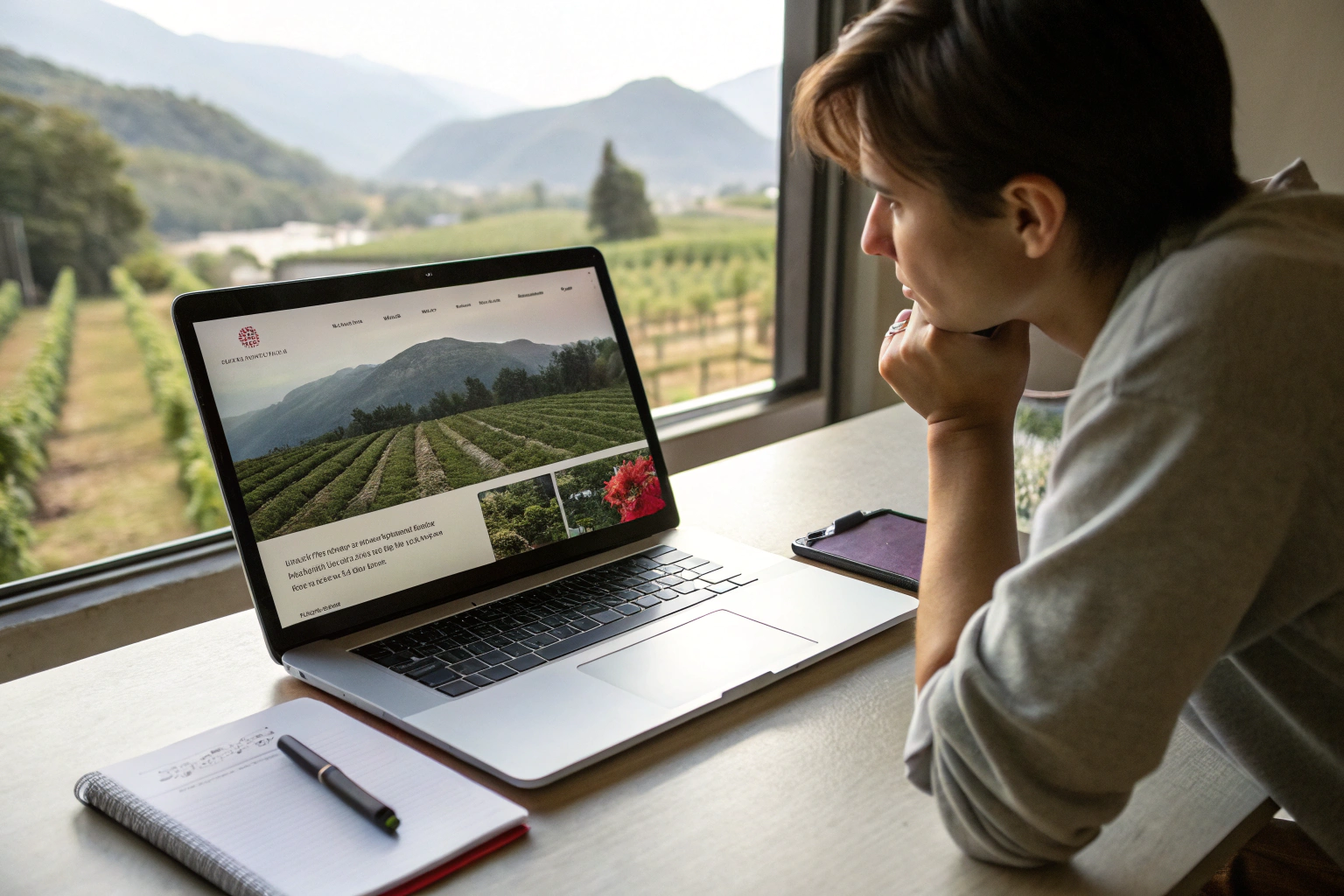
You are ready. You have done your research. You found a farm on Alibaba, or LinkedIn, or a Google search. The website looks professional. The photos show lush mountains and drying beds. You want to reach out. But you hesitate. What do you write? Do you ask for a price list immediately? Do you introduce yourself formally? What if you say the wrong thing and the supplier thinks you are not serious? This hesitation is common. I see it from the other side. I receive dozens of inquiries every week. Some are brilliant. Some are lazy. The brilliant ones get a detailed, enthusiastic response within hours. The lazy ones get a generic price list and are quickly forgotten. Your first message sets the tone for the entire business relationship.
Your first inquiry to a Chinese coffee farm should be specific, professional, and focused on building a long-term supply relationship. You should introduce your company, state your volume needs, and ask for a sample with clear quality parameters. At BeanofCoffee, I personally read every inquiry. A buyer who takes the time to write a thoughtful first message immediately signals they are a serious partner, not a price-shopping tourist.
The first inquiry is not a cold email. It is the opening move in a business partnership that could span decades. Let me give you the exact formula for getting a response that moves things forward.
What Information Should Your First Inquiry Email Include?
A vague inquiry gets a vague answer. You ask for "coffee prices." I do not know what coffee you want. Green or roasted? Washed or natural? A full container or a sample pack? The more specific you are, the more relevant my response will be. This is basic communication, but it is shocking how many buyers skip it.
A strong first inquiry includes your company name and location, your target volume, your preferred coffee grade and processing method, and your desired shipping terms. At BeanofCoffee, this information allows me to prepare a tailored offer with accurate pricing and availability, not a generic PDF that wastes your time.
Do not make me guess. You would not walk into a car dealership and say "I want a vehicle." You would say "I want a four-wheel-drive SUV with a hybrid engine." Treat coffee sourcing the same way.
How to Introduce Yourself Professionally as a Buyer?
The introduction is the foundation. Start with your name, your title, and your company. But do not just list your credentials. Give context. "I am Ron, the owner of a specialty coffee roastery in Austin, Texas. We roast 20,000 pounds of green coffee per month, and we are currently expanding our single-origin offerings." This tells me three things. Who you are. What scale you operate at. And what your goal is. It immediately separates you from the anonymous inquiry that says "I want buy coffee." The context also helps me understand your quality needs. A high-volume commercial roaster has different requirements than a small micro-roaster. The introduction is your chance to frame the conversation on your terms.
What Volume and Grade Details Should You Specify?
Volume is the most important commercial detail. It determines the price I can offer. A buyer who asks for 300 kilos gets a micro-lot price. A buyer who asks for a full container, 19 metric tons, gets a much better per-pound rate. Be honest about your volume. If you are just starting and want to test the market with a small order, say so. I work with many brands who start small and scale up. The grade is equally critical. Do you want a Grade 1 washed Arabica with a specific screen size? Do you want a honey process micro-lot? Do you want organic certified beans? Specify the process, the grade, and the certification you need. This precision tells me you know what you are doing. It earns you respect and a precise answer.
How to Ask for Samples Without Sounding Like a Freebie Hunter?
The sample is the gateway to the contract. You need to taste the coffee before you commit to a large order. But I also need to filter out the "freebie hunters," the people who collect samples from dozens of suppliers with no intention of ever buying. Your sample request must signal serious intent.
The professional way to request a sample is to offer to pay for the shipping or to provide your courier account number. State clearly that the sample is for a specific, immediate sourcing decision. At BeanofCoffee, I ship free samples to qualified buyers, but I prioritize those who demonstrate they are in an active purchasing process, not just browsing.
A free sample is not actually free to me. It costs money to prepare, package, and courier it. Respect that.
What Is the Ideal Way to Frame a Cupping Sample Request?
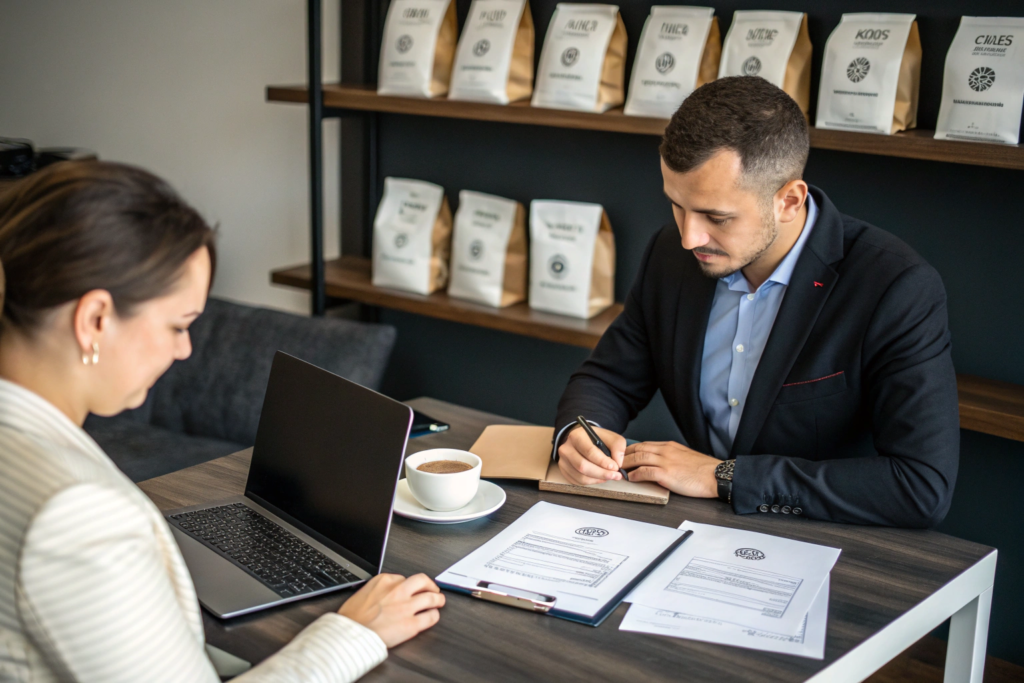
Frame the sample request around a specific decision. "We are currently reviewing washed Arabica lots for our new single-origin line, with a purchase decision expected within the next four weeks. Could you send a 200-gram sample of your current Grade 1 washed Catimor, along with the cupping scores and moisture data?" This is perfect. It tells me you have a timeline. It tells me exactly what you want to evaluate. It tells me you understand the data that matters. This is the inquiry of a professional. I will respond to this faster than to any other. I might even add a second sample, a honey process lot, as a bonus, because I see you are serious about quality. The sample becomes a conversation starter, not just a commodity exchange.
Should You Offer to Pay for International Sample Shipping?
Offering to pay for shipping is a powerful trust signal. It says, "I value your product and your time. I am not here to collect freebies." The actual cost of shipping a small sample via express courier is relatively low, often $30 to $50. For a serious buyer, this is a trivial expense. For a freebie hunter, it is a deterrent. Many suppliers, including myself, will often waive the shipping fee for a qualified buyer with a good profile. But the offer itself speaks volumes. It immediately moves you to the front of the line. If you have a DHL or FedEx account number, you can provide it and say, "Please ship on my account." This completely removes the cost burden from the supplier. It is a sign of a mature, professional buyer. Do this.
What Questions Should You Ask About the Farm's Export Experience?
The first inquiry is not just about your needs. It is also your first opportunity to vet the supplier. The farm's answers to a few key questions will reveal whether they are a legitimate, experienced exporter or a novice who will stumble through the logistics and paperwork.
You should ask about the farm's export history, their primary destination markets, and their compliance with US and EU import regulations. At BeanofCoffee, I am happy to provide references from our existing international clients and to walk you through our export documentation process step by step.
An experienced exporter makes your life easy. A novice makes every shipment an adventure you do not want.

Why Is Asking for Export References a Critical Step?
A reference is a human verification of a supplier's claims. Ask for the contact information of two or three current international buyers. A legitimate exporter will provide these without hesitation. Then, actually contact them. Ask them about their experience. "How was the quality consistency across multiple shipments?" "Did the documentation ever cause customs delays?" "How did they handle a problem when it arose?" These are questions a reference can answer, but a website cannot. I am proud of my relationships with my buyers. I know they will say good things about me. A supplier who refuses to provide references is hiding a track record of problems. Walk away.
How to Verify Their Knowledge of Destination Country Regulations?
The export process involves a maze of regulations. Phytosanitary certificates. Certificates of Origin. FDA Prior Notice for the US. EUDR compliance for Europe. An experienced exporter navigates this maze daily. A novice fumbles. Ask a specific question. "What has been your experience with FDA Prior Notice filings for US shipments?" or "How do you provide the geolocation data required for EUDR compliance?" The answer will be revealing. If they give a detailed, confident explanation, they know their business. If they respond with a vague "we handle all customs paperwork," it is a warning sign. I can walk a buyer through the entire customs entry process for their specific port. This is the depth of knowledge you want in a partner.
What Tone and Communication Style Builds Trust with Chinese Suppliers?
Cross-cultural communication can be tricky. The direct, aggressive style that works in a US negotiation might feel rude or off-putting to a Chinese supplier. Similarly, the indirect, deferential style of some cultures might be mistaken for a lack of seriousness. You need a middle path.
The ideal tone is warm, professional, and patient. Respect is paramount. Chinese business culture values long-term relationships over transactional speed. At BeanofCoffee, I appreciate buyers who are direct about their needs but also take the time to build a personal connection. A friendly line about my farm or my region goes a long way.
This is a partnership, not a vending machine.
How Does Relationship Building Differ in Chinese Business Culture?
In China, business is personal. The Western model separates the professional and the personal. The Chinese model intertwines them. A buyer who asks about my family, who comments on the weather in Baoshan, who shares a photo of their own city, is building guanxi, the network of relationships that underpins Chinese commerce. This is not small talk. It is the essential lubricant of the deal. It signals that you see me as a person, not just a supplier number. This personal warmth translates into practical benefits. A supplier who likes you will prioritize your shipment. They will give you the first call when a special micro-lot becomes available. They will be more flexible on payment terms when you hit a cash flow crunch. Invest in the relationship, not just the transaction.
How to Handle Price Negotiations Professionally in the First Conversation?
The first inquiry is not the time for hard negotiation. You are not even sure you want the coffee yet. Discussing price is fine, but keep it informational. Ask for the current price list. Ask about volume discounts. But do not start haggling before you have even cupped a sample. It is premature and it signals that price is your only concern. I use a transparent, "nett" pricing model. The price I offer is based on my real cost structure. I am happy to explain it. But I do not play the game of inflated asking prices and dramatic discounts. When the time comes to talk price, be direct, be honest, and be realistic. A buyer who tries to squeeze a rock-bottom price from the first email is often a buyer who will be a high-maintenance, low-loyalty account. The best prices are earned over time, through consistent volume and a strong relationship.
Conclusion
Your first inquiry is a test. It tests your professionalism, your seriousness, and your understanding of the coffee trade. You pass the test by being specific about your needs, by requesting samples with a clear decision timeline, by vetting the supplier's export experience, and by communicating with a tone of warm professionalism that respects the relational nature of Chinese business. You do not need to write a long, formal letter. You need to write a focused, respectful, and informed message. That message lands differently. It opens doors. It starts relationships.
Let's start our relationship the right way. Send me, Cathy Cai, an email at cathy@beanofcoffee.com. Tell me about your roastery, your target volume, and the coffee profile you are chasing. I will personally reply with a tailored offer, our export references, and a plan to get a sample into your hands. Your first inquiry could be the beginning of something strong. Make it a good one.