You have a dream. You want to build a coffee brand. You have the logo, the website, the roaster. Now you need beans. You start searching online. You find a supplier with a good price. You wire a deposit. The coffee arrives. And then the problems begin. The quality is not what the sample promised. The paperwork is a mess. The hidden fees pile up. Your dream turns into a cash-flow nightmare. I have seen this movie too many times. New importers make the same five mistakes, over and over. They are avoidable. I am going to name them, and I am going to tell you how to avoid them, based on what I see from my side of the table in Baoshan.
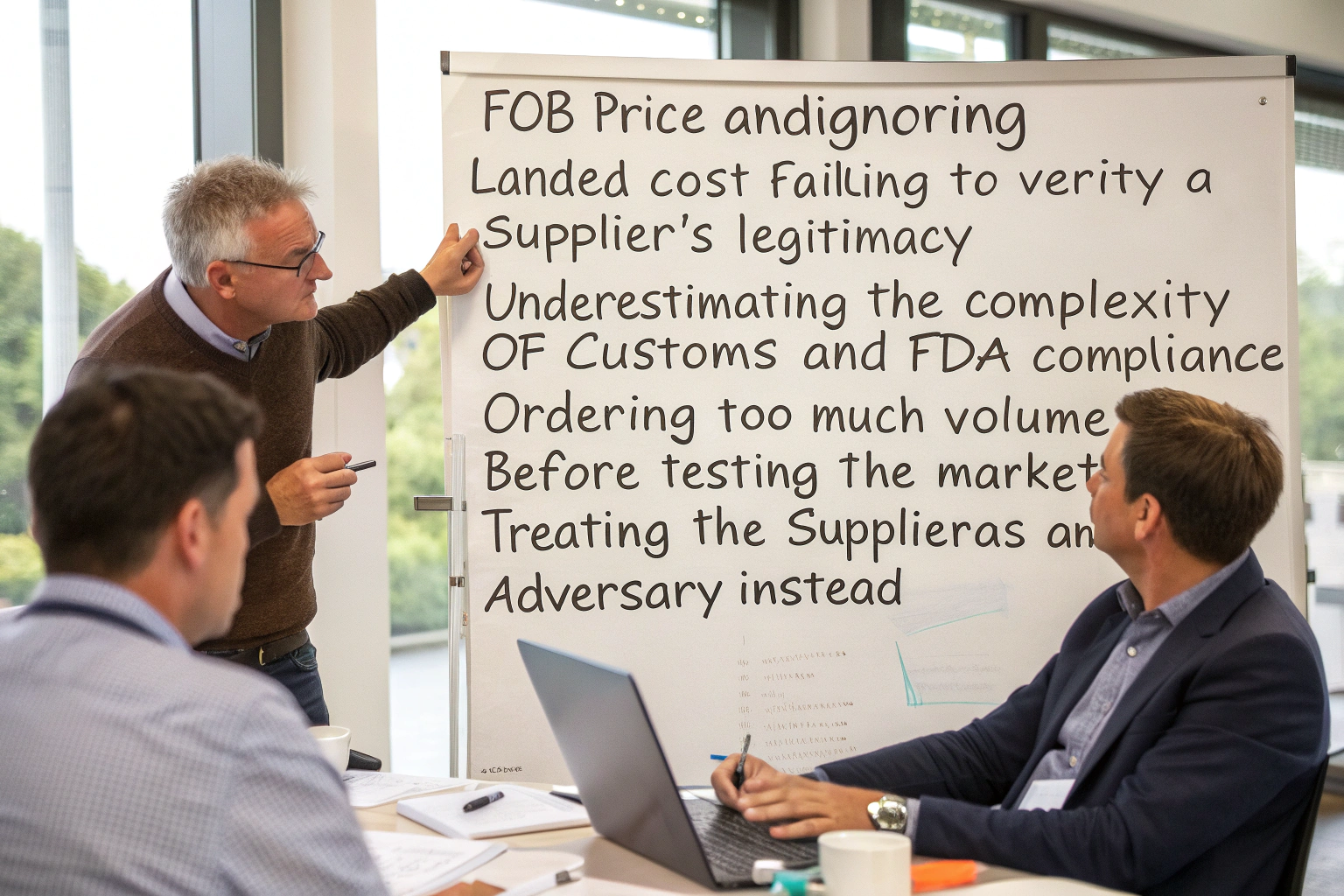
The top 5 mistakes new coffee importers make are: focusing only on the FOB price and ignoring landed cost, failing to verify a supplier's legitimacy, underestimating the complexity of customs and FDA compliance, ordering too much volume before testing the market, and treating the supplier as an adversary instead of a partner. At BeanofCoffee, I guide my new import clients through each of these pitfalls so their first container is a success, not a disaster.
You do not need to learn these lessons through pain. You can learn them through preparation. Let me walk you through the minefield.
Why Is Focusing Only on the FOB Price a Dangerous Shortcut?
You see two offers. Supplier A offers Yunnan Arabica at $3.20 per pound FOB. Supplier B offers what looks like the same coffee at $3.80 per pound FOB. Your instinct screams "take the cheaper one." You feel smart. You are saving sixty cents a pound. But the FOB price is only the starting line. It is not the finish line. The cheap offer might be the most expensive coffee you ever buy.
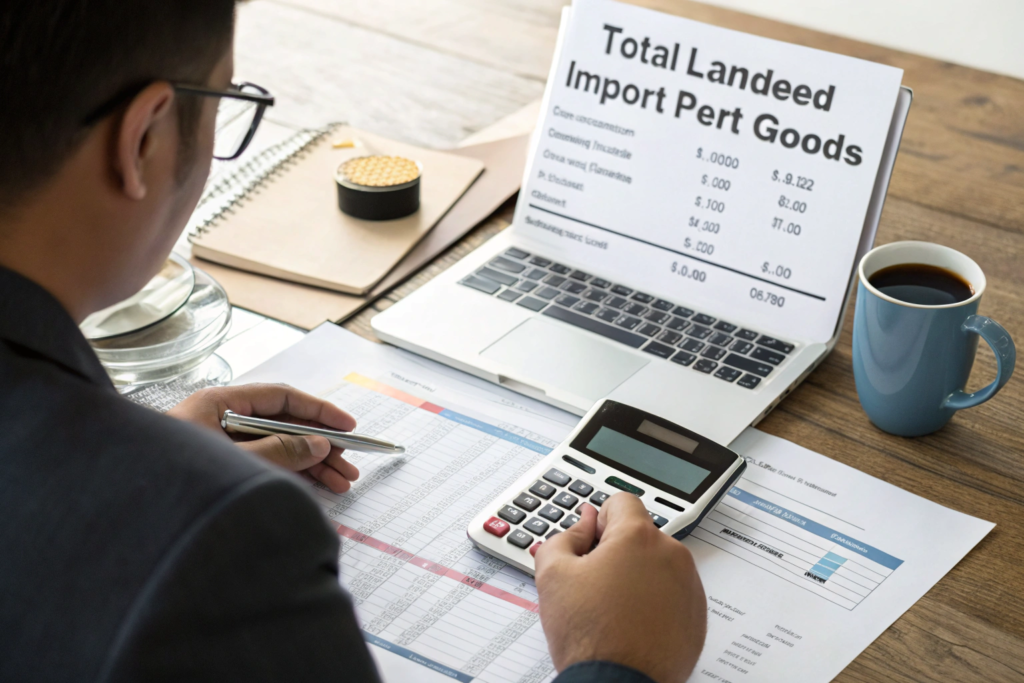
Focusing only on FOB price ignores the freight, insurance, customs brokerage, port handling, and inland trucking costs that make up the true landed cost. A low FOB price often hides a longer, riskier shipping route or a supplier who cuts corners on quality. At BeanofCoffee, I help my clients calculate the total landed cost per pound before they compare offers.
The FOB price is a single data point. The landed cost is the truth.
What Hidden Fees Can Destroy a Low FOB Price Advantage?
The hidden fees are not really hidden. They are just ignored by inexperienced buyers. The ocean freight rate can vary wildly. A cheap FOB price from a supplier who ships through a congested, inefficient port might come with a freight surcharge that erases the savings. The insurance premium for a poorly packaged container might be higher. The customs broker's fee is a fixed cost, but a messy supplier creates more broker hours, which means more billable time. Then there are the port fees at the destination. Terminal handling charges, the chassis fee, the security fee, the fuel surcharge. These add up fast. A buyer who only looked at FOB might find their "cheap" coffee is actually $0.40 more expensive per pound by the time it sits in their warehouse. I give my clients a landed cost calculator. It lists every line item from Shanghai to their door. The fog clears, and the real math appears.
How Does a Low FOB Price Sometimes Signal Quality Problems?
Sometimes a low price is just a low price. The supplier has efficient operations. The harvest was good. But often, a significantly lower price is a signal. The supplier might be using a lower grade of coffee. The beans might be past crop, old and faded. The processing might be sloppy, with more defects per bag. The supplier might be a middleman who blends cheap, low-quality beans from unknown sources. This is the old story. You get what you pay for. But in coffee, the quality difference is not always obvious from a photo. It hides in the cup. A buyer who chases the lowest price often ends up with a container of coffee that tastes like burlap and dust. Then they cannot sell it. The "savings" turned into a total loss. My advice is simple. Understand the market. Understand the cost of production. If a price is too far below the realistic cost, be very suspicious. It is probably too good to be true.
How to Avoid Falling for a Fraudulent Coffee Supplier?
The internet is full of fakes. A polished website means nothing. A LinkedIn profile with a stock photo means nothing. A smooth-talking salesperson on a video call can be sitting in a co-working space in Shanghai, not a farm in Yunnan. New importers are prime targets for these operators.
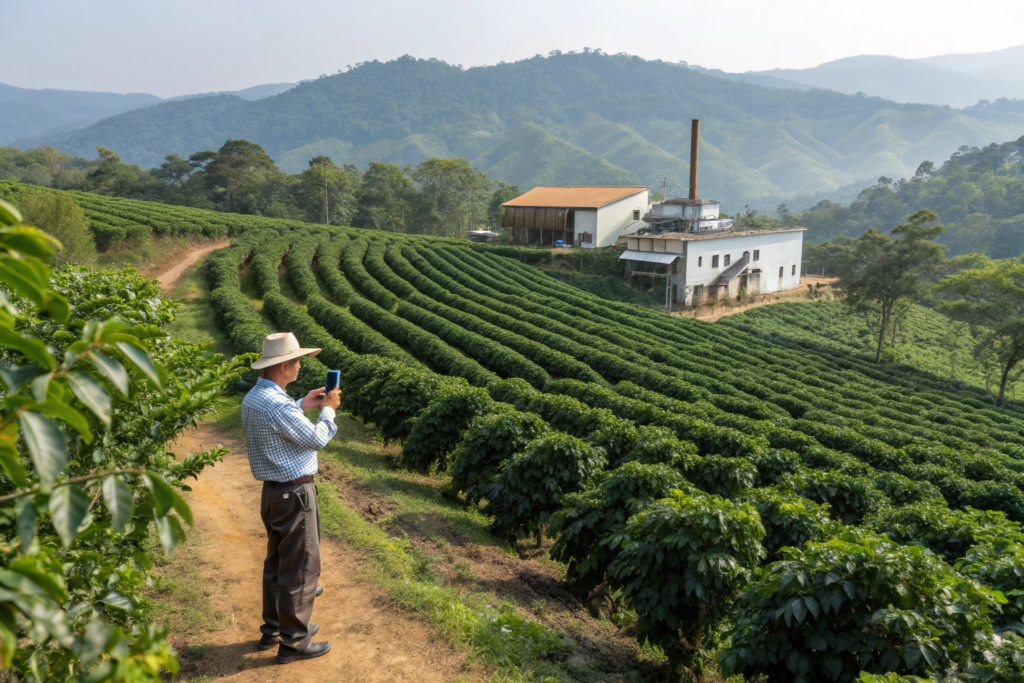
Avoiding fraud requires verifying the supplier's physical existence, their export licenses, and their track record with independent sources. At BeanofCoffee, I encourage every potential client to visit my farm in Baoshan, or at least to schedule a live video tour where I walk the fields and the mill with my phone. A fake supplier cannot do this.
You are about to wire thousands of dollars to a stranger on the other side of the planet. Do your homework.
What Are the Red Flags of a Middleman Posing as a Farm?
The middleman problem again. A trader in a city office buys coffee from a farm and resells it to you, adding a markup and destroying traceability. They often pose as the farm itself. How do you know? Ask for live, real-time proof. A photo of the farm is not proof. It is a stock image. Ask for a video call. The supplier should be able to walk outside and show you the coffee trees, the drying beds, the mill. If they make excuses, if the connection is always bad, if the tour is limited to an office and a warehouse, they are not the farmer. Ask for the GPS coordinates of the farm. Look up the location on Google Earth. Does it show coffee terraces? Does the terrain match the photos? Ask for the farm's business license and cross-check the registered address. These steps take time, but they protect your money.
How to Cross-Check a Supplier's Export History and Reputation?
A real exporter has a history. They have shipped containers before. They have relationships with shipping lines and customs brokers. Ask for the names of the shipping lines they use. Ask for a copy of a previous Bill of Lading with their company name as the shipper. This is a public document once the container is released. A fake supplier will struggle to produce a legitimate, recent Bill of Lading. Check their reviews on Alibaba if they are there. Look for buyer feedback that mentions specific details about the product and the service. Join coffee importer forums and ask if anyone has worked with this supplier. The specialty coffee world is small. Word travels fast. A supplier with a bad reputation will be known. A supplier with no reputation at all is also a risk. You want a supplier with a verifiable, positive track record.
Why Is Underestimating US Customs and FDA Compliance a Costly Error?
The coffee is on the water. You are excited. Then your customs broker calls. The FDA has placed a hold on your container. There is a problem with the Prior Notice. Or the label is wrong. Or a random sample was taken and is now in a lab queue. The container sits. The storage fees accrue daily. Your excitement turns to anxiety. This is the hidden cost of compliance failure.
Customs and FDA compliance is not a simple formality. It is a complex, data-driven process with strict deadlines and severe penalties for errors. At BeanofCoffee, my export team prepares all US-bound documentation to exactly match FDA requirements, minimizing the risk of a costly hold.
You cannot wing this. You need a supplier who has done it hundreds of times.
What Is the Role of the FSVP in Your First Import?
I discussed the FSVP rule earlier. It is the Foreign Supplier Verification Program. It requires you, the US importer, to have a written plan for verifying your foreign supplier's food safety. It is not optional. It is a legal requirement. If you do not have an FSVP for your supplier, your coffee can be detained. The FDA will ask for your FSVP documents. If you cannot produce them, you are out of compliance. This is a shock to many new importers. They think the supplier's paperwork is enough. It is not. You are the one on the hook. The good news is that a professional supplier provides an FSVP kit. Our kit includes our food safety plan, our third-party audit certificate, and our sample Certificate of Analysis. You file it. You are covered. This is another reason to choose a supplier who understands the US system.
How to Prepare for a Random FDA Inspection at the Port?
The FDA inspects a percentage of all coffee imports. The selection is risk-based. A new importer with no history is more likely to be flagged. The inspection involves a physical sample of the coffee being taken and sent to a lab for analysis. The container is held until the results come back. This can take one to three weeks. You cannot speed it up. You can only be prepared. The preparation means having all your documentation in order. The Prior Notice confirmation. The commercial invoice. The packing list. The FSVP file. The supplier's food safety certification. If the coffee is organic, the transaction certificate. Having these ready means the inspection proceeds smoothly once it begins. Our documentation package is designed to make an FDA inspection a non-event. The agent checks the papers, the lab runs the tests, the coffee is released. Panic is replaced by process.
Why Does Ordering Too Much Inventory Backfire for New Importers?
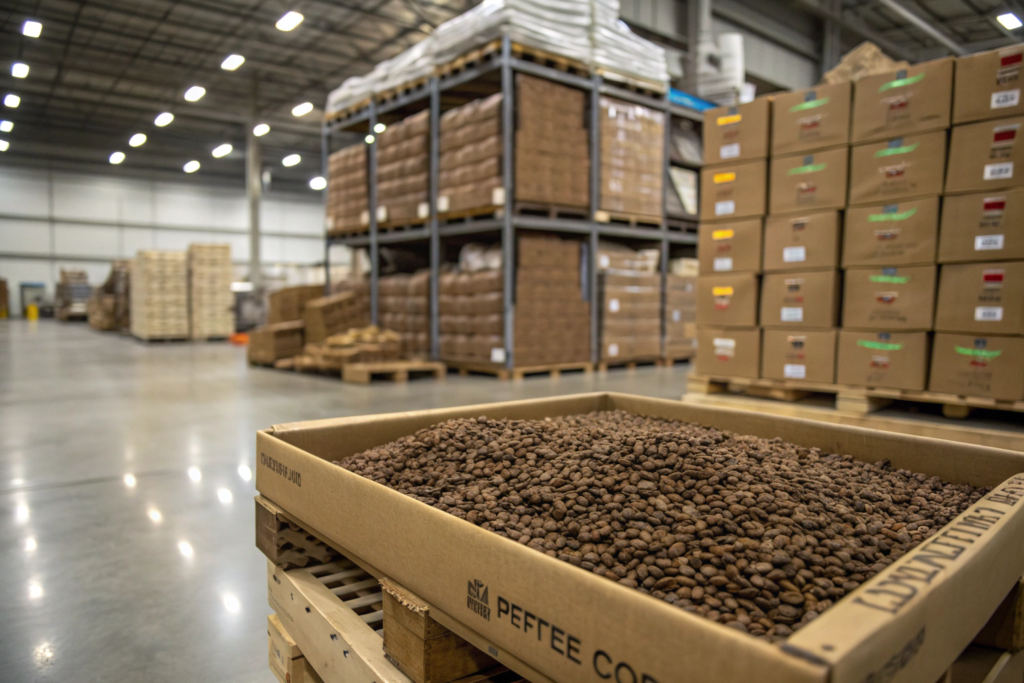
You are confident. The sample tasted great. You want to get the best price. You order a full container, 19 metric tons. It arrives. And then reality hits. You cannot sell it all. It sits in your warehouse, aging. The bright, lively acidity fades. The coffee becomes a financial burden, not an asset. Your cash is locked up in a slowly dying product.
Ordering too much inventory before you have proven market demand is a classic new-importer mistake. It ties up cash, accelerates quality degradation, and creates pressure to sell at a discount. At BeanofCoffee, I advise new clients to start with a smaller pallet-sized order, test their customers' response, and scale up gradually.
Start small. Learn fast. Grow from a base of knowledge, not from a warehouse of unsold beans.
What Is the Right First Order Volume for a New Coffee Brand?
The right volume depends on your sales channels. If you are a micro-roaster selling at farmers markets and online, a 5 to 10 bag order, roughly 300 to 600 kilos, is plenty to start. You can offer it as a limited release. You can test your packaging, your pricing, and your marketing. If you are a larger operation with established wholesale accounts, a few pallets might be the right starting point. The key is to avoid the "container trap." A container is a commitment. It only makes sense when you have confirmed, recurring demand. I work with many new brands. We discuss their current sales volume, their growth projections, and their cash flow. Together, we land on a starting volume that is ambitious but not reckless. The goal is to give you the quality story of Yunnan coffee without the financial stress of a giant inventory.
How to Scale Your Orders Based on Customer Feedback?
Customer feedback is your best market research. Your first small batch of Yunnan coffee goes out. The responses come back. "Love the black tea note." "It is a bit too bright for my espresso." "Can you get this in a honey process?" Listen. This feedback tells you what to buy next. If the bright acidity is a hit, order more of the washed lot. If customers want more sweetness, ask me about our honey process options. Scaling based on feedback is a cycle. Small order. Feedback. Adjust. Slightly larger order. More feedback. This iterative approach builds a brand that is responsive to its market. It also builds a track record with your supplier. Each successful order makes the next one smoother, with better terms. At BeanofCoffee, I love watching a new brand grow this way. It is the natural rhythm of a healthy coffee business.
Conclusion
The path to becoming a successful coffee importer is paved with the mistakes of those who came before. They chased the low FOB price and forgot the landed cost. They trusted a slick website and forgot to verify the farm. They ignored the FDA until the container was on hold. They overbought and watched their inventory age into mediocrity. They treated their supplier as a vendor to be squeezed, not a partner to be cultivated. You can avoid all five. You can calculate your true costs, do your due diligence, master your compliance, start small, and build a partnership based on mutual respect. This is the smarter path. It is the path that leads to a sustainable, profitable coffee importing business.
Do not make the avoidable mistakes. Let me help you get it right from the first shipment. Contact me, Cathy Cai, at cathy@beanofcoffee.com. I will send you a new importer starter guide, our FSVP compliance kit, and a landed cost calculator. We will start with a sample, then a manageable first order, and build from there. Your coffee dream deserves a solid foundation. Let's build it together.