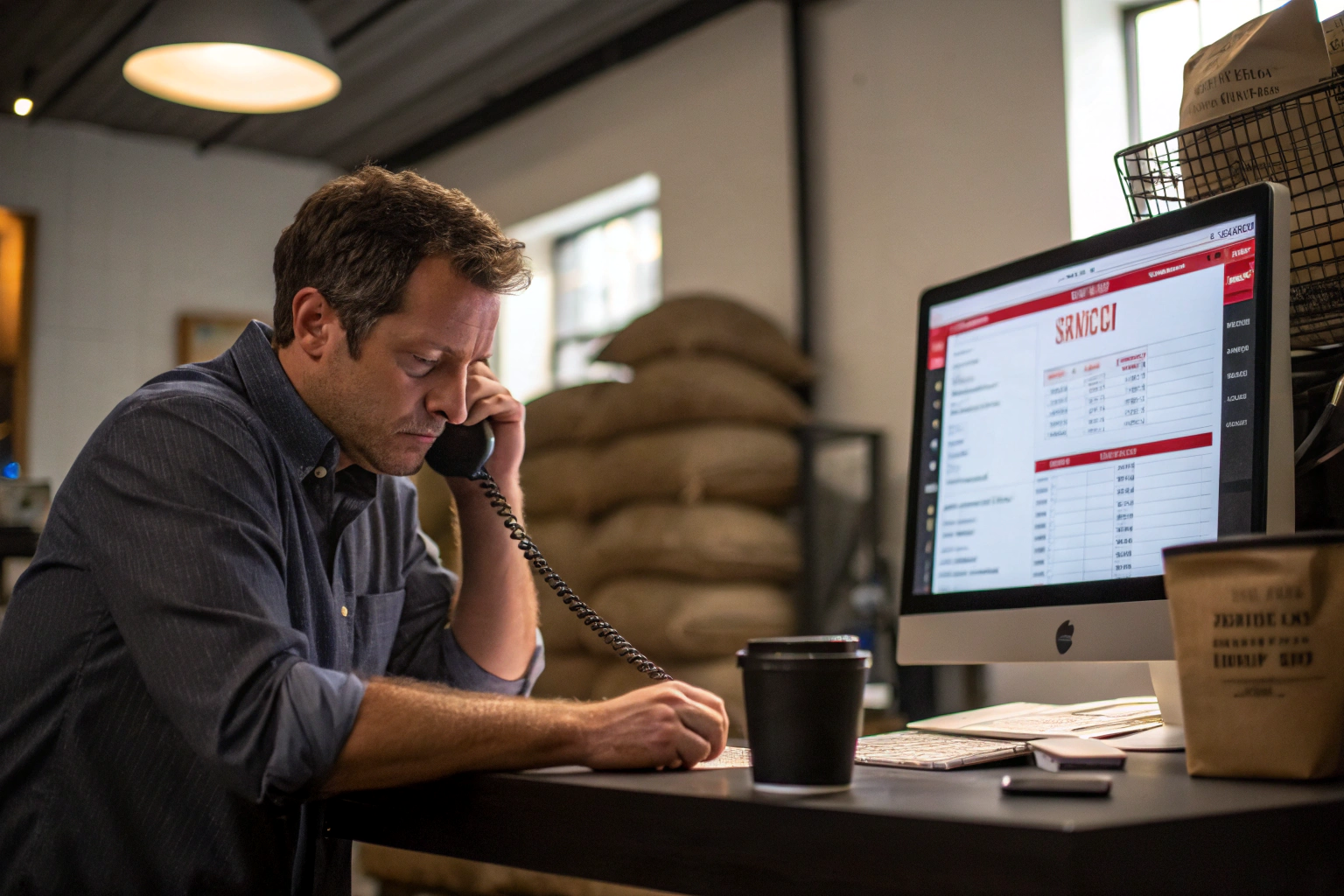
The moment you see that email—"Your container has been delayed"—a cold feeling hits your stomach. I know it well. Not as a buyer, but as the person on the other end of the phone who has to make that call. Last winter, one of our containers heading to Long Beach got stuck for eleven days because a vessel broke down in the Panama Canal. My buyer was a small roaster in Texas. He had just launched a new single-origin bag using our Yunnan Arabica. The launch date was set. The marketing emails were already sent. And the coffee was floating, motionless, on a broken ship. He called me, and honestly, his voice was shaky. That moment wasn't about whose fault it was. It was about one question: what do we do right now to save his business from this mess?
Handling a delayed coffee container shipment starts with three immediate actions: verifying the new estimated arrival date with the shipping line, auditing your current inventory to calculate your real "zero-stock" date, and activating a pre-negotiated backup supply plan with your supplier or a local partner to cover the gap. The worst thing you can do is wait. Wait for an update. Wait for the problem to fix itself. Delays in global shipping are a certainty, not a possibility. A confident buyer like Ron, who values timeliness above almost everything, needs a system, not just hope. You need to know exactly who to call, what to negotiate, and how to turn a disaster into a manageable inconvenience without burning through your cash.
What I want to share with you here is the exact playbook I've built from the supplier's side. This isn't a generic guide about "staying calm." This is a step-by-step process for the first 48 hours of a delay, the tough financial decisions that come next, and the long-term moves to make sure one late container doesn't push your whole business to the edge. Let’s start with the moment the news hits your inbox.
What Are the First Steps When Your Green Coffee Shipment Is Delayed?
When the delay notification lands, your brain wants to solve everything at once. Don't. The first four hours are purely about information gathering. I once had a buyer who immediately fired off an angry email to me, demanding a refund, before we even knew the vessel's mechanical issue was going to be fixed in two days. He wasted energy and damaged the relationship over a problem that ended up being minor. The smarter move is to treat this like a triage. You need to separate the hard facts from the shipping line's vague reassurances. "Weather delay" means nothing. "Vessel waiting for berth at transshipment port, currently 4th in queue" means something. You need the second one.
The essential first steps are to obtain the official delay notice with the vessel's exact GPS position, calculate your precise stock-out date based on your current roasting schedule, and immediately trigger a transparent communication protocol with the supplier to explore emergency replenishment options. These steps don't just fix the problem; they contain the damage. You move from a victim of a global supply chain hiccup to a manager who is actively controlling the variables you can touch. Because here's the hard truth: the shipping line won't care about your launch party. The terminal won't care about your angry customers. Only you and your supplier care. So, let's look at the very first thing you need to know: exactly how much coffee you have left to roast.
How to Audit Your True Inventory Buffer During a Crisis?
When a container is late, your warehouse stock is your lifeline. But a quick glance at the pallet rack can fool you. You might see a dozen bags of green coffee and think you have two weeks of breathing room. But your roasting schedule might be chewing through a bag every single day. Suddenly, that twelve-day buffer shrinks to six if you have a big wholesale order to fill. I've seen roasters miscalculate this and run completely out of coffee two days before the delayed container finally cleared customs. It’s a terrifying, completely avoidable crisis.
Right now, pull your last week's roasting logs. Don't guess. Look at the exact kilos of green coffee you consumed per day. Then, physically count the bags you have. Divide the total kilos by your average daily consumption. That's your real deadline. This number tells you if you need to take drastic action or just explain a brief delay to your clients. You also need to check the physical condition of your buffer stock. Is it an old lot? If you need to blend it, check the standard green coffee storage guidelines for how aging affects flavor so you can be honest with your customers about any temporary profile shift. This knowledge, this real inventory data, is the only thing that will help you sleep during the crisis.
Why Should You Request the Vessel's Real-Time GPS Data Immediately?
Never settle for a vague status update. "Delayed in transit" is useless. You need to see the ship on a map. When my buyer’s container was stuck in Panama, the first thing I did was pull up the vessel's live GPS location from the public maritime tracking data. I could see the ship was not moving, anchored in a holding zone. This information is power. It told me the delay wasn't just a paperwork error; it was a physical breakdown. That shaped the entire backup plan.
You need to request the vessel name and voyage number directly from your freight forwarder, right now. Then, plug it into a public tracking platform. You can see exactly where the ship is, its speed, and if it's just drifting or actually docked. This transparency takes away the shipping line's ability to blur the timeline. A reliable supplier, someone like a good freight forwarder, will give you this data without hesitation. You can use a tool like MarineTraffic to do this yourself. Seeing the ship’s position also helps you coordinate with the port terminal schedule at the destination to predict the real, not the estimated, berthing time. An accurate prediction lets you rebook your trucking and warehouse labor before the rush, saving hundreds in last-minute fees.
Now you have the facts. You know when you'll run out of coffee, and you know roughly when the ship will actually arrive. These two numbers rarely match up perfectly. There's a gap. A hole in your production schedule. Filling that hole without bankrupting your profit margin on this shipment is the next battle. It requires a difficult conversation with the supplier—me—and a clear-headed look at the money.
Should You Demand a Price Reduction for a Late Coffee Shipment?
A delay makes you angry. It feels personal, even when it's just a mechanical failure on a ship the supplier doesn't own. That anger often leads to a demand for a price reduction. "Give me a 10% discount because you're ruining my schedule." I've heard this call before, and I understand the instinct. But a blanket demand for a discount is often a negotiation dead-end that ignores the real financial pain. The question shouldn't be "can I get money off?" but rather, "where is the real, calculable financial damage, and who was contractually responsible for the coffee when the damage occurred?"
Whether you should demand a price reduction for a late shipment depends entirely on where the delay occurred—before or after the Incoterms-defined risk transfer point—and whether the delay caused a measurable, documented financial loss like spoilage or missed penalty fees from your own clients. If the coffee was sold FOB Yunnan, the risk transferred to you the moment the container crossed the ship's rail in China. The supplier fulfilled their obligation. A delay in international waters is your insurance problem, not theirs. Asking for a price cut here damages a good relationship because you're asking the farm to pay for the ocean carrier's mistake. It's not fair. But if the delay happened because the supplier missed the initial ship date due to poor planning, that's a completely different story. That's a failure to perform.
This conversation is easier when you separate the emotional frustration from the contractual reality. A partnership isn't about punishing a bad luck event; it's about how we both respond to it. The real financial leverage isn't in arbitrary price cuts; it's in a pre-arranged logistics guarantee and a shared approach to solving the immediate crisis.

How Can a Shared Emergency Freight Cost Save the Relationship?
Instead of demanding a penalty, flip the conversation to a shared solution. If the delay is going to cause you a catastrophic stock-out, the immediate need isn't a refund on the invoice; it's coffee on your roastery floor. Right now. I’ve done this before. I suggested to a delayed buyer that we split the cost of sending a small emergency pallet via air freight. Yes, air freight is astronomically expensive, maybe $4 per kilo more, but splitting the cost of a 200-kilo emergency shipment kept his business running and kept my customer.
This approach changes the conversation from "you owe me" to "let's survive this together." It shows you're serious about the partnership, not just the transaction. The supplier sees you're not looking for a windfall from their misfortune. You're looking for a practical fix. This shared sacrifice often builds a much stronger, more loyal supply chain than a one-time enforced discount ever could. You can check the real-time air freight rate index to see if this route is even financially viable for the volume you need. A reliable long-term partner will almost always prefer to pay a little now to keep the container business flowing for the next ten years.
What Financial Damages Are Actually Recoverable From a Delay?
Now, let's talk about the hard, recoverable money. You can't claim for "stress." You can claim for physical loss. If the delayed container arrives and the coffee is musty, moldy, or shows signs of water damage from sitting too long in a humid port, that's a cargo insurance claim. You need a surveyor to inspect the container at the destination and issue a formal report. This is a rigid, document-heavy process. The insurance company will want the original survey report, the bill of lading, and the supplier's packing list to cross-reference the condition.
This is where your pre-shipment sample becomes gold. If the pre-shipment sample was a clean 85-point coffee and the arrived lot is a 78 with a baggy defect, the drop in value is quantifiable. The financial damages are the difference in market value plus the cost of disposal if it's unsellable. This is a claim against the insurance, not necessarily the supplier. The terms of marine cargo insurance define this recovery path. Also, if your contract with your own client included a late-delivery penalty fee, this is a direct, documented loss that can sometimes be recovered, though it's often limited to the value of the goods under standard carriage of goods by sea acts. The key is the paper trail. Without it, you have no claim.
A claim covers the money you lost. But it doesn't cover the trust you lost with your own customers. While you're fighting with insurance adjusters, you still have to answer the phone calls from your wholesale accounts. Managing that external communication, the narrative around why their coffee is late, is a separate skill that determines if they stay with you after the crisis is over.
How to Communicate a Coffee Supply Delay to Your Wholesale Clients?
The coffee is late. You're panicking. Your instinct is to go silent, to wait for a firm new date before you tell anyone. You want to have all the answers before you speak. That instinct is wrong. Silence kills trust faster than a delay ever will. Your wholesale client, the café owner, has a chalkboard menu. They have a line of customers every morning. If your coffee doesn't show up, they can't just apologize to their customers with silence. They need a story, an honest one, to tell. If you give them nothing, they'll assume the worst: you're disorganized, you're hiding something, or you're going out of business.
Effective communication of a coffee supply delay to wholesale clients requires a direct, honest phone call before an email, a clear explanation of the physical cause of the delay without jargon, and an immediate offer of a concrete, temporary substitute solution that keeps their business operational. You need to frame the crisis as a shared challenge you're solving together, not a failure you're apologizing for alone. For a business owner who values reliability and security, like Ron, the way a supplier handles the communication of a delay reveals more about their character than a hundred on-time deliveries. A late container is a problem. A late container met with silent, confusing emails is a relationship-ending event.
This communication dance isn't just about the bad news. It's about the immediate, practical solution you can offer to fill the gap. You need to walk into that conversation with a physical answer, not just a heartfelt apology. What can they sell right now, today, while your main coffee is stuck on a boat?

When Should You Offer a Temporary Substitute Coffee Blend?
The moment you know the delay is longer than your client's stock buffer, you call them. Don't email. Call. And the first thing out of your mouth, after you explain the situation, should be, "I have a blend that will tide you over." You should already have a plan. A temporary substitute isn't just a random bean you have in the back; it's a specific, thoughtfully chosen profile that you can vouch for. I've seen a roaster lose a café account because he offered a substitute that was completely wrong—a bright, acidic African coffee to replace a chocolatey, nutty Yunnan profile. The café's regular customers complained.
The substitute needs to be a functional match, even if the story is different. If your Yunnan Catimor was the base of their espresso, your emergency substitute must also be a heavy-bodied, low-acidity bean. You deliver a small batch, maybe 50 kilos, and you extend their payment terms on that emergency lot by 15 days as a gesture of goodwill. This transforms you from a supplier who failed into a partner who had a backup plan. This personal, solution-first approach is exactly what builds loyalty that outlasts any shipping delay. Understanding basic supply chain disruption communication strategies can help you frame this call correctly.
How to Turn a Logistics Nightmare Into a Trust-Building Story?
Once the immediate fire is out and the substitute coffee is delivered, you have a rare opportunity. A crisis, handled well, is the strongest form of marketing. People are bored of perfection. They trust vulnerability. When the main container finally arrives, you can launch it not with a generic "new arrival" post, but with a story about the journey. "This coffee survived a broken ship in the Panama Canal to reach your cup." That's a narrative. It's memorable.
Share the real tracking map screenshot, the GPS data we talked about earlier. Show your customers the complexity of what you do. This honesty elevates your brand from a faceless commodity roaster to a transparent, globe-spanning business that fights for quality. It’s an authenticity that money can't buy. By walking your customers through the supply chain transparency process you navigated, you give them a reason to stick with you when the next roaster promises a lower price. The problem that almost broke you becomes the story that builds your brand’s identity.
That story buys you loyalty, and loyalty buys you time to build something more permanent. A single delayed container is a test you can pass. But passing that test gets expensive and exhausting if you have to do it every six months. The real goal is to look at the system that caused the delay and fix the root issue, so this high-stakes communication dance becomes a rare event, not a quarterly routine.
How to Build a Delay-Proof Direct Trade Coffee Supply Chain?
You've handled the immediate crisis. You've recovered. Now, the real work begins. A one-time delay is bad luck. A second delay is a pattern. A pattern means you're buying from a supply chain that is fundamentally fragile, not just unlucky. A delay-proof supply chain doesn't happen by accident. It's deliberately engineered, and it starts with the uncomfortable realization that the lowest FOB price usually buys you the lowest priority on the ocean. A ship has limited space. When it's full, the cheapest containers get rolled. It's a brutal, predictable part of global trade. The only way to escape that cycle is to move from a transactional relationship to a committed, volume-based partnership.
A truly delay-proof direct trade supply chain relies on a pre-booked, guaranteed vessel space contract negotiated months in advance, a dual-coast U.S. warehousing strategy to bypass single-point port congestion, and a collaborative demand forecasting agreement between roaster and producer that aligns harvest schedules with roasting needs. This isn't about finding a magical shipping line that never breaks down. That doesn't exist. It’s about building a system with so much redundancy and forward planning that a single broken ship or a single congested port can't touch your primary production line. For a buyer like Ron, who needs both a good price and cast-iron timeliness, this is the only sourcing strategy that delivers both without a contradiction.
This isn't a small change. It's a fundamental shift in how you think about inventory and geography. It requires placing coffee in a physical location before you even need it, and it requires trusting your supplier enough to plan a season ahead instead of shopping container by container.
Can a U.S. Warehouse Partner Protect You From Port Congestion?
This is the single most effective structural fix I recommend to my regular U.S. buyers. Instead of shipping a full container directly to your roastery door every three months, you ship to a trusted third-party logistics warehouse near the port. The container goes there immediately upon clearance, avoiding port demurrage entirely. Then, the coffee sits in a clean, climate-controlled bay, and you pull down 5 or 6 pallets at a time on a Just-In-Time basis to your roastery.
This model kills two risks at once. First, you avoid the demurrage clock. The drayage truck grabs the container fast. Second, you build a physical buffer stock inside the country. If the next ship is delayed, you just pull a little more from the warehouse stock. You don't even need to call me in a panic. The warehouse becomes your shock absorber. You can look at the costs of a reliable West Coast coffee warehouse that specializes in food-grade storage. Yes, there's a monthly storage fee, but compare it to the cost of one demurrage event and one emergency air freight shipment. The warehouse is cheaper.
Why Does Pre-Booking Container Space Change the Entire Pricing Model?
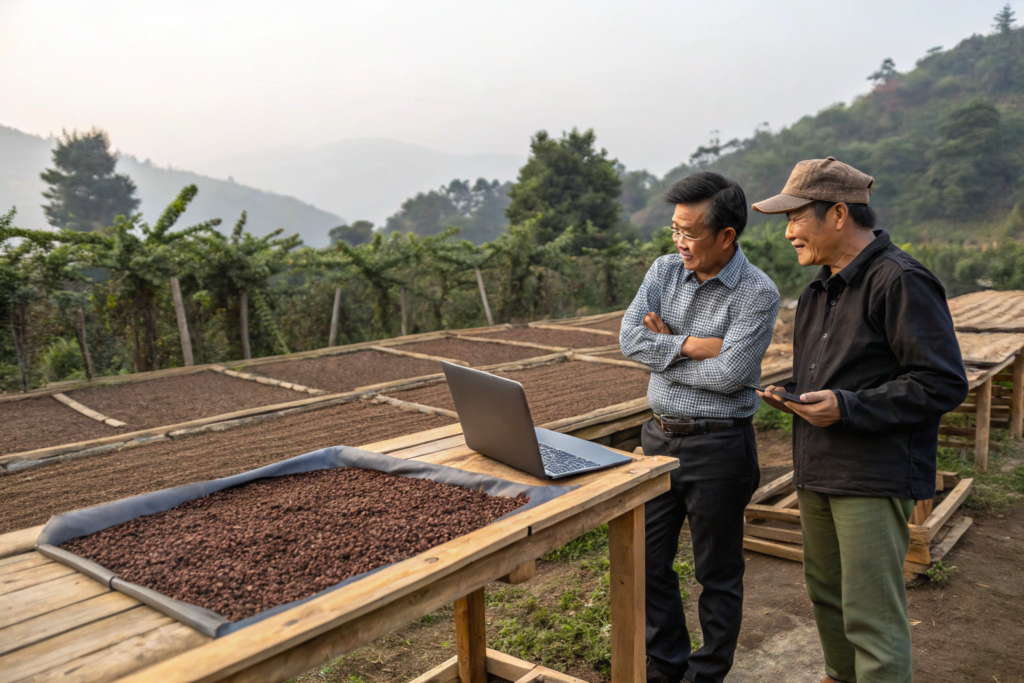
Every year, before the coffee cherries even turn red on our bushes in Yunnan, I sit down with my freight forwarder and book a specific allocation of vessel space for the next 12 months. I guarantee a volume of containers, and in return, I get a guaranteed slot and a fixed, predictable freight rate. This is the core secret to a delay-proof supply chain: a committed freight contract, not a spot market gamble.
When you, as a buyer, commit to a seasonal volume contract with BeanofCoffee, you tap into this pre-booked space. Your container isn't waiting in line behind fifty cheaper shipments. It has a reserved seat. This changes the entire cost model. The ocean freight is not a volatile monthly surprise; it's a fixed cost line in your annual budget. This allows you to calculate your true landed cost a year in advance. A global shipping contract isn't just a piece of paper. It’s a priority pass. It shifts your supply chain from "hope it ships" to "it ships on this specific Tuesday." That's the rhythm a profitable coffee business is built on.
Conclusion
A delayed coffee container is a brutal test of your business, your relationships, and your nerve. But it’s not a mystery. It’s a mechanical problem with a mechanical solution. We've walked through the immediate triage: auditing your real buffer stock and tracking the ship on a map to get the truth. We've talked about the hard money conversation—knowing when a discount is fair and when splitting an air freight cost is smarter. And we've looked at the trust game with your own clients, where an honest phone call and a smart substitute blend can turn a disaster into a loyalty-builder.
The goal isn't to survive a delay once. It's to build a supply chain that makes the next one feel like a minor schedule adjustment instead of a financial crisis. That's the kind of partnership we've tried to create at BeanofCoffee with our Yunnan farm-direct supply. We pre-book vessel space. We share real-time tracking data. And when things break—because sometimes they do—we have a shared disruption plan ready. If you're tired of the cold panic of a delayed ship and want to discuss a volume contract that actually puts your cargo on a guaranteed vessel, my export partner Cathy Cai can show you the forward booking calendar. Reach out to her directly at cathy@beanofcoffee.com. Let's make the next shipment boringly on time.