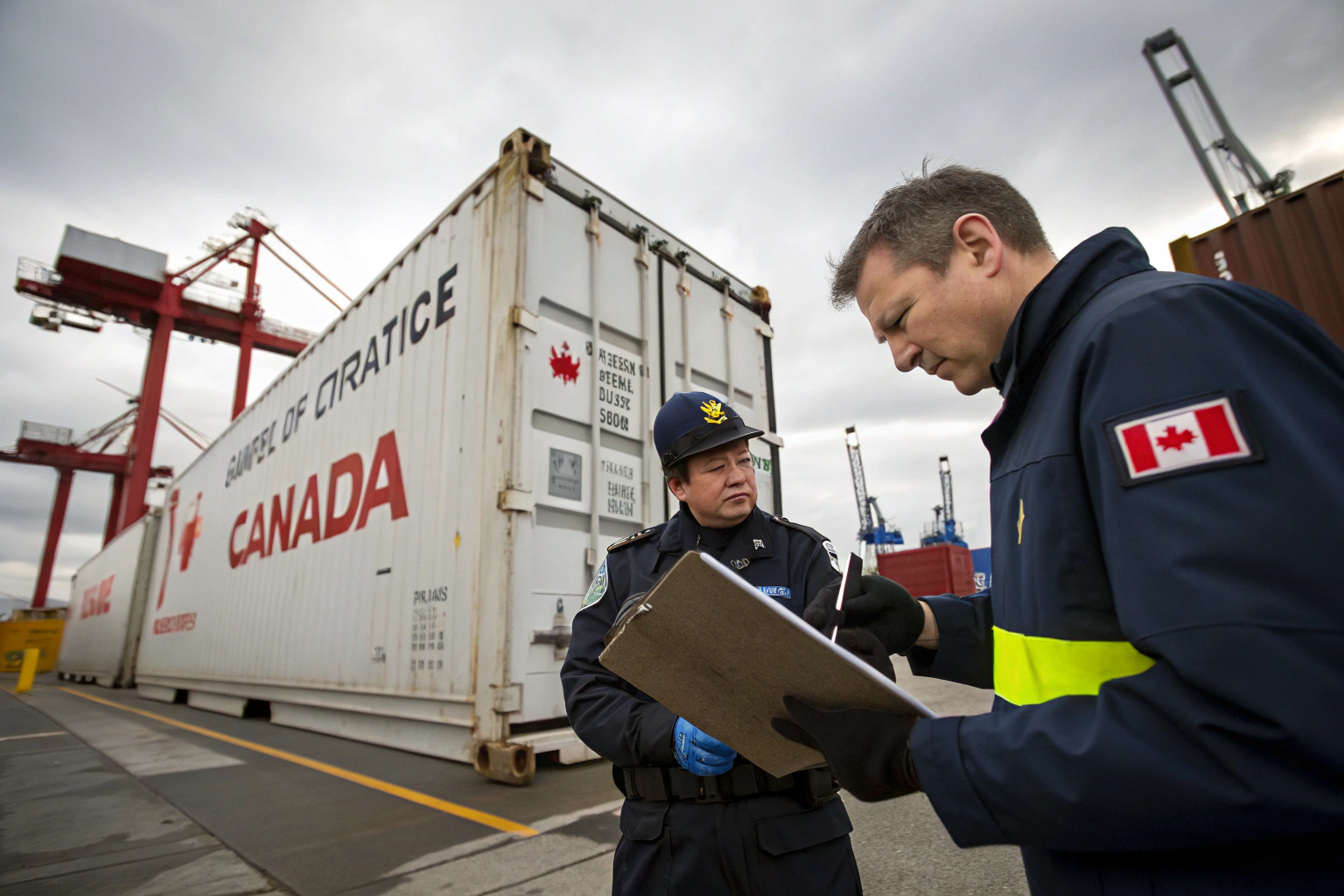
I received a panicked call from a buyer in Toronto last spring. He had a container of our Yunnan Arabica sitting at the port of Vancouver. The customs broker told him he owed thousands of dollars in duties. He was furious. He thought coffee was automatically duty-free. He didn't have the right paperwork. The delay cost him two weeks and a late delivery penalty from his own customer. I walked him through the fix in an hour, but the stress was already done.
You can legally import green coffee beans into Canada duty-free by claiming the Most-Favoured-Nation zero tariff rate under HS code 0901.11, provided you submit a valid Certificate of Origin and meet the requirements of the Canada Food Inspection Agency. The duty-free access is the rule, not the exception.
Here is the good news. Canada is one of the easiest markets for green coffee imports. Unlike some countries that slap a 5% or 7% tariff on agricultural goods, Canada applies a 0% tariff to raw coffee beans from practically everywhere, including China. But duty-free does not mean paperwork-free. The taxman may not want a slice, but the food safety inspector definitely wants a look.
What Is the Correct HS Code for Duty-Free Green Coffee in Canada?
The Harmonized System is the universal language of customs. If you speak it wrong, you pay. I've seen importers accidentally classify their green coffee under the roasted coffee code, and customs hits them with a retroactive bill. That is a simple error that costs money and time.
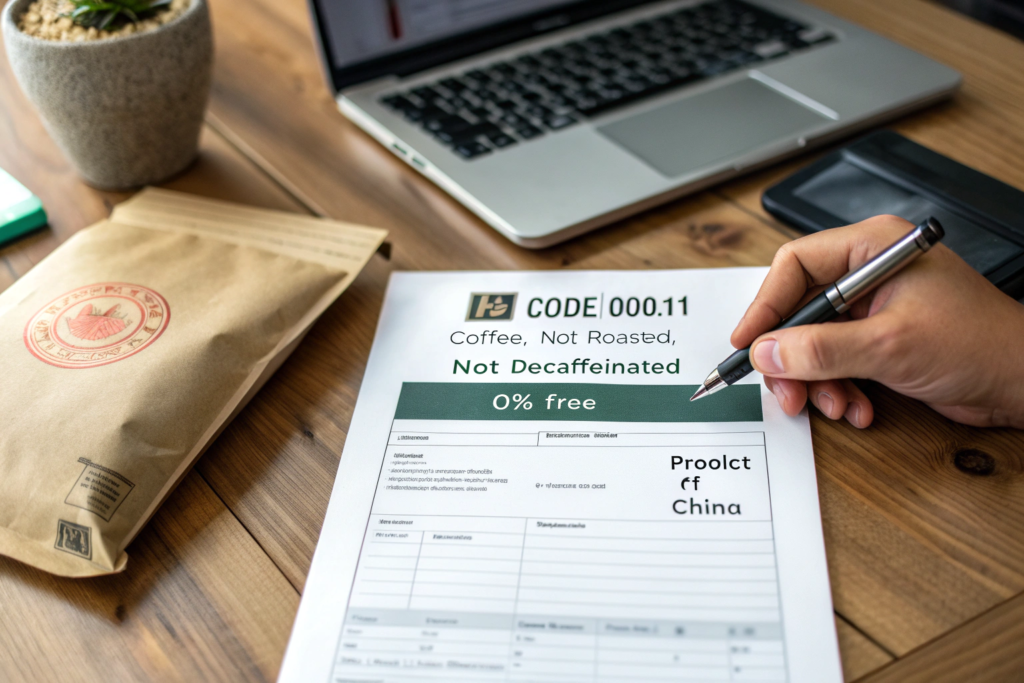
The correct HS code for importing duty-free green coffee beans into Canada is 0901.11. This code specifically covers "Coffee, not roasted, not decaffeinated." Under Canada's Customs Tariff Schedule, this code carries a Most-Favoured-Nation tariff rate of "Free" for all countries of origin.
The sub-classification matters too. 0901.11.10 is for organic green coffee certified under the Canada Organic Regime. 0901.11.90 is the general category. If your beans are organic and you fail to claim the specific sub-code, you miss the marketing benefit but don't trigger a duty. What triggers a duty is lazily picking 0901.21, which is roasted coffee. Roasted coffee sometimes faces a tariff depending on the trade agreement specifics. Always double-check the sixth digit. An often overlooked detail is that decaffeinated green coffee falls under a completely different code, 0901.12, and the duty-free status still applies, but the paperwork trail for the decaffeination process is heavier.
Why Does the HS Code Classification Matter for Your Bottom Line?
It matters because a misclassification is not just a small fine. It flags your importer profile with the Canada Border Services Agency. If they think you are sloppy or, worse, trying to evade a tariff, they will scrutinize every future shipment. Your containers will sit for examination. Demurrage fees at the Vancouver port run about $150 to $200 per day after the free window closes. A three-day exam kills your margin.
Also, your restaurant or cafe customers expect a specific landed cost. If you budget for zero duty and get hit with a 3% tariff because of a code error, you either eat the loss or pass it to your customer. Neither is good. When I send a shipment to a Canadian partner, I double-check the code on the commercial invoice and the Bill of Lading. They must match. If the invoice says 0901.11 and the carrier accidentally inputs 0901.21, the automated system flags it. You fix it with a post-entry amendment, but that is a headache you do not need.
How Does the Canada-UK Trade Continuity Agreement Affect Coffee Tariffs?
Honestly, this is where buyers get confused by trade blocs. The Canada-United Kingdom Trade Continuity Agreement preserves the zero tariff on green coffee that existed under CETA. But here is the practical point: it doesn't change anything for Chinese origin coffee. We already have zero tariff under the general Most-Favoured-Nation rate.
Where this matters is if you are a Canadian roaster buying from a British broker who is re-exporting our Baoshan coffee. The origin is still China. The certificate of origin must state China, not the UK. If the UK broker tries to issue a UK origin certificate, that is fraud. The customs officer will check the markings on the bags. If the bag says "Product of China" but the paper says "UK Origin," the container is seized. Always insist on the genuine origin certificate from the actual country of harvest. That document is your golden ticket to the 0% rate.
What CFIA Regulations Must Green Coffee Importers Follow?
The zero duty rate is the easy part. The regulatory side is where things get real. The Canadian Food Inspection Agency does not care about your tariff code. They care about whether your beans contain live insects, mold, or pesticide residues above the Maximum Residue Limit.
Under the Safe Food for Canadians Regulations, green coffee importers must hold a valid Safe Food for Canadians license, ensure the shipment is free of pests and soil, and maintain a Preventive Control Plan that traces the beans from the port to the roastery.
You cannot just order a container from Alibaba and expect it to sail through CFIA. If you do not have your license ready before the ship docks, the beans sit in a bonded warehouse. I had a customer in Calgary who forgot to renew his license. His license expired three days before the container arrived. The warehouse held the coffee for ten days until the renewal processed. He paid storage fees that wiped out the savings on that batch.

Do You Need a Preventive Control Plan for Raw Coffee Beans?
Yes, you do. The Safe Food for Canadians Act requires importers to have a written Preventive Control Plan. This sounds intimidating, but it is basically a hazard analysis. You identify the risks—mycotoxin from mold, metal fragments from the dry mill, insect infestation during transit—and you describe how you control them.
For raw green coffee destined for roasting, the "kill step" for biological hazards is the roasting process itself. You document that you roast above 200 degrees Celsius, which destroys pathogens. But you still need controls for physical hazards. Ask your supplier for a magnetic separation certificate from the milling stage. And you need a supplier approval program. You cannot just buy from a random guy on Facebook Marketplace. You must document your supplier's food safety credentials. At BeanofCoffee, we provide our CFIA-licensed buyers with a full technical data sheet, a moisture analysis, and an aflatoxin test result from an independent lab. This fills their PCP requirements directly.
How to Handle a CFIA Inspection Without Delays?
The CFIA can show up at your roastery or warehouse unannounced. Do not panic. If your paperwork is in order, the inspection takes twenty minutes. The inspector asks three things: "Where did this come from? Show me the lot traceability. Show me your receiving temperature checks."
Keep a digital folder for every container. Inside, store the phytosanitary certificate, the fumigation certificate, the bill of lading, and the lab analysis. When the inspector asks, you hand them the tablet or the binder. Do not fumble through a messy desk drawer. The fastest way to trigger a deeper investigation is to look like you are hiding something. I advise all my Canadian buyers to print the "Product of China" label clearly on the bag. A missing country-of-origin label is a common reason for a CFIA stop order. It's such a simple fix that costs nothing.
How to Leverage Trade Documentation for Smooth Customs Clearance?
Customs clearance is a documentary transaction. The physical beans almost don't matter until the paper is approved. The officer sitting in the CBSA booth doesn't taste your coffee. They look at the stamps and the signatures. If a signature is missing, your coffee doesn't clear.
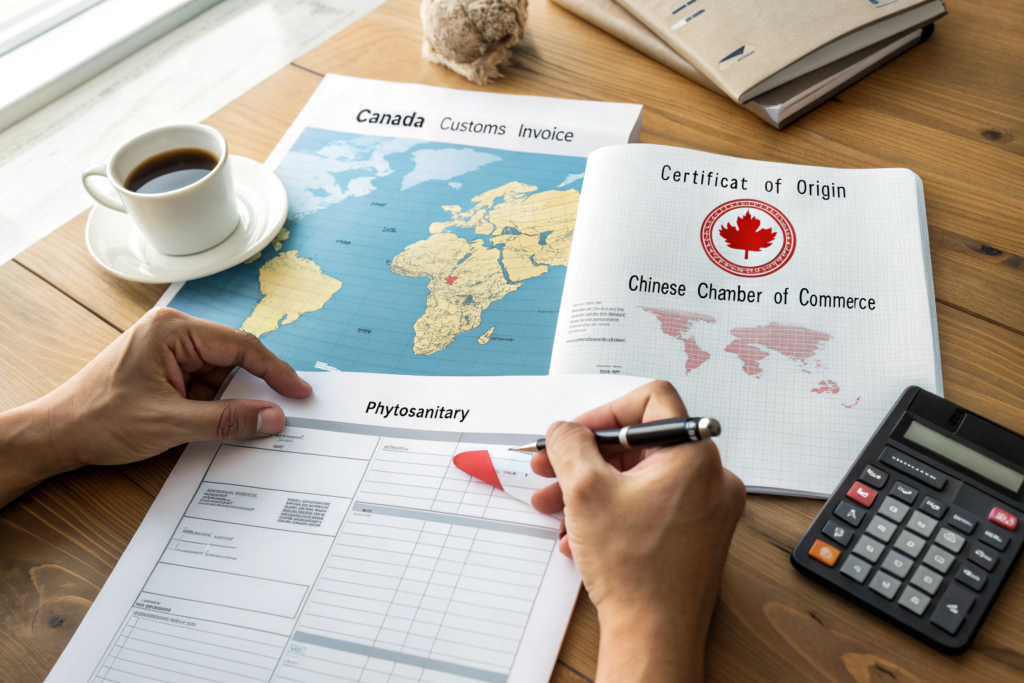
To clear a green coffee shipment duty-free into Canada, you need four core documents: a Canada Customs Invoice, a Certificate of Origin, a Bill of Lading, and a Phytosanitary Certificate. Presenting these accurately and consistently prevents holds and verifies the zero tariff claim.
The Certificate of Origin is the star of the show for duty-free access. Without it, the officer defaults to the general rate, which for green coffee is technically still free under MFN, but the system still needs the declaration. You fill out Form A or the specific trade agreement form, have it stamped by the local chamber of commerce in China, and submit it. The exporter handles this. If your exporter doesn't know how to get a chamber stamp, find a new exporter.
What Is a Phytosanitary Certificate and Why Does It Matter?
A phytosanitary certificate is a plant health passport. It is issued by the China Customs department after an inspection of the beans. It declares that the shipment is free of quarantine pests and conforms to Canada's plant health requirements. This document is legally required. Not optional.
Canada has strict rules about bark, soil, and live insects. The phyto cert proves an official inspector looked at the beans before they were stuffed into the container. If the container arrives in Vancouver and the CBSA officer finds a live beetle inside, but the phyto cert declared zero pests, you have a problem. The whole load might need fumigation at the port, which costs a fortune and stinks up the coffee. I ensure our Yunnan facility does a final visual inspection and a nitrogen flush before the doors seal. The nitrogen kills any hidden eggs without chemicals. The phyto cert is my promise to you, backed by a government stamp.
How to Fill Out a Canada Customs Invoice for Green Coffee?
This invoice is not the same as your commercial invoice. It has specific fields. The most important field for a duty-free transaction is the "Country of Origin" field. You must write "China" clearly. Not "N/A." Not "Asia." For tariff classification, write "0901.11.90" (or the organic sub-code if applicable). For the "Tariff Treatment" field, write "MFN" or "2."
Declare the value accurately. This is the price you paid us, the exporter. Do not under-declare to save on GST. CBSA can seize goods for valuation fraud. GST is 5% on the declared value, and you can claim it back as an Input Tax Credit if you are a registered business anyway. So, faking the value is pointless and dangerous. A common mistake is forgetting to sign the invoice. An unsigned Canada Customs Invoice is invalid. The broker will email you at 8 PM to get a digital signature. It delays release by 24 hours. Check the signature box twice before sending the documents to your forwarder.
What Logistics Strategies Minimize Shipping Costs to Canada?
Sea freight is volatile. I've seen the spot rate from Shanghai to Vancouver swing from $2,000 to $15,000 per container in the last few years. For a buyer who cares about price, like Ron, the logistics tail cannot wag the quality dog. A cheap bean becomes an expensive bean if the freight is mismanaged.
Minimizing shipping costs to Canada involves using consolidation services for smaller volumes, booking direct with carriers during slack season, and routing through the port of Vancouver with a pre-arranged rail intermodal transfer to Eastern destinations.
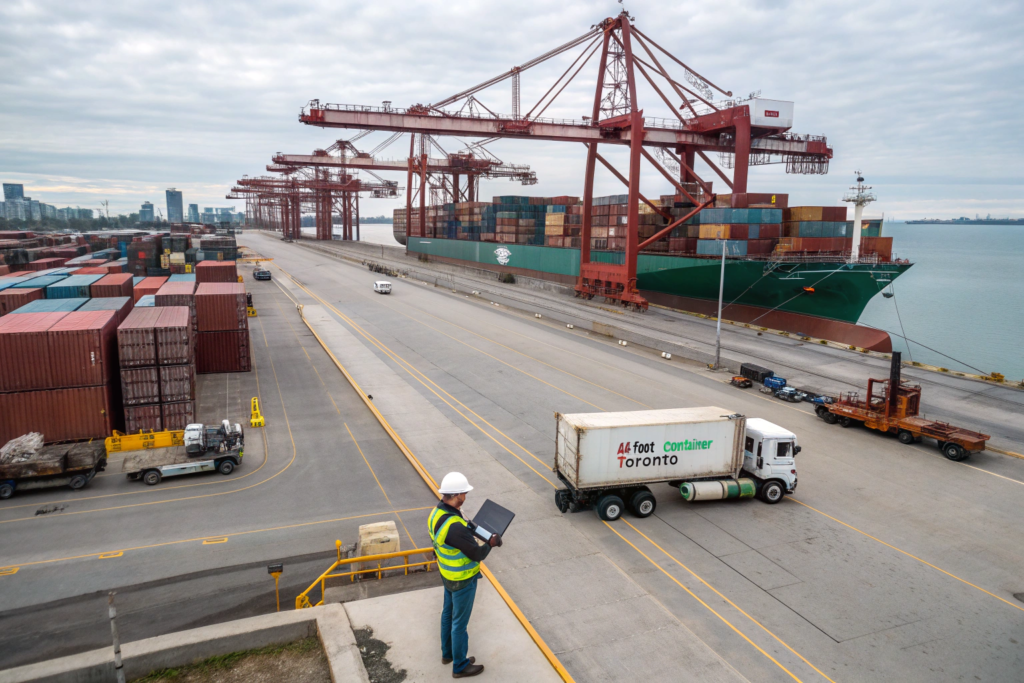
Vancouver is your best entry point for Chinese coffee. It is the closest major Canadian port to Asia. Transit time from Shanghai to Vancouver is roughly 14 to 18 days. If you are in Toronto or Montreal, don't ship all-water to Halifax. It takes 40 days. Ship to Vancouver, then put the container on the Canadian Pacific Railway. The intermodal leg adds a few days and about $1,200 to $1,800, but you save on inventory holding cost. You get the beans three weeks sooner.
Is LCL or FCL Better for Small Coffee Roasters?
If you are buying fewer than 250 bags, a full container load is not your friend. You are paying for empty space. Less than Container Load consolidation is the answer. Your five pallets share a container with other cargo. You split the ocean freight cost proportionally.
The downside? Transloading risk. More handling means more chance of bag damage or cross-contamination. I once saw a consolidated container where a broken barrel of fish sauce leaked onto bags of specialty coffee. The insurance claim took months. So, if you use LCL, use a reputable freight forwarder who specializes in food-grade consolidation. Ask your forwarder: "Who is my container mate?" If they cannot tell you, find someone else. The savings on LCL can be 30% to 40% versus a half-empty FCL, so it's worth the diligence.
How to Avoid Demurrage and Detention at the Port?
Demurrage is the rent you pay on the container while it sits at the terminal after arrival. Detention is the fee for keeping the container outside the terminal too long. These fees are pure waste. They don't improve the coffee. They just punish bad planning.
Here is my rule: submit your customs entry documents 72 hours before the vessel arrives. Don't wait for the arrival notice. As soon as you have the Bill of Lading draft, send it to your customs broker. They can pre-clear the shipment. The container hits the ground, the system shows a "green light" for release, and the trucker pulls it off the dock on day one. If you wait until arrival to submit, you burn 2-3 days of the free storage window. At $150 a day, that adds up fast. Also, have a chassis reservation ready. A container stuck at the port because no truck chassis is available still accrues demurrage. Logistics is a chain of linked events. One broken link stalls everything.
Conclusion
Importing coffee into Canada duty-free is not a loophole or a secret. It is the standard policy. But policy is only as good as the paperwork that activates it. You need the right HS code, a stamped certificate of origin, a valid CFIA license, and a logistics plan that respects the timeline. Miss one piece, and the zero percent tariff means nothing because the late fees and storage costs will eat you alive.
For a buyer who values predictability above all, the Canadian import path from China is actually one of the smoothest in the world. You just need a supplier who understands the documentary rhythm and packs the container like the paperwork depends on it, because it does.
If you are ready to test the Canadian market with a reliable supply of Yunnan Arabica, we ship there regularly. We know the phyto protocols. We know the labelling requirements. We can work directly with your broker to ensure a clean, duty-free entry. Contact our export director, Cathy Cai, at cathy@beanofcoffee.com. Tell her your target port and volume, and she will put together a landed cost estimate that includes all the hidden fees, so there are no surprises.