I once sent a 60-kilo sample of our finest washed Arabica to a potential buyer in Melbourne. He emailed me back a single line: "This is good, but is it specialty?" That question stung. I knew my coffee tasted incredible. I knew the cherries were hand-picked at peak ripeness. But I had not given him the specific language or the physical proof to confirm what his taste buds were telling him. He needed a standard. He needed a definition.
Specialty grade Arabica coffee is the highest quality classification awarded by certified Q-graders, signifying a green coffee free of primary defects, possessing a distinct cupping score of 80 points or above, and exhibiting unique flavor attributes traceable to a specific microclimate.
It is not a marketing slogan. You cannot just print "specialty" on a bag because it sounds fancy. The Specialty Coffee Association (SCA) has a strict protocol. If a single bag in a container fails the grading, the whole lot fails. That is how serious this is. This rigid standard protects buyers like Ron, who cannot afford to gamble on a container that tastes flat or defective upon arrival.
What Are the Physical Grading Standards for Green Arabica Beans?
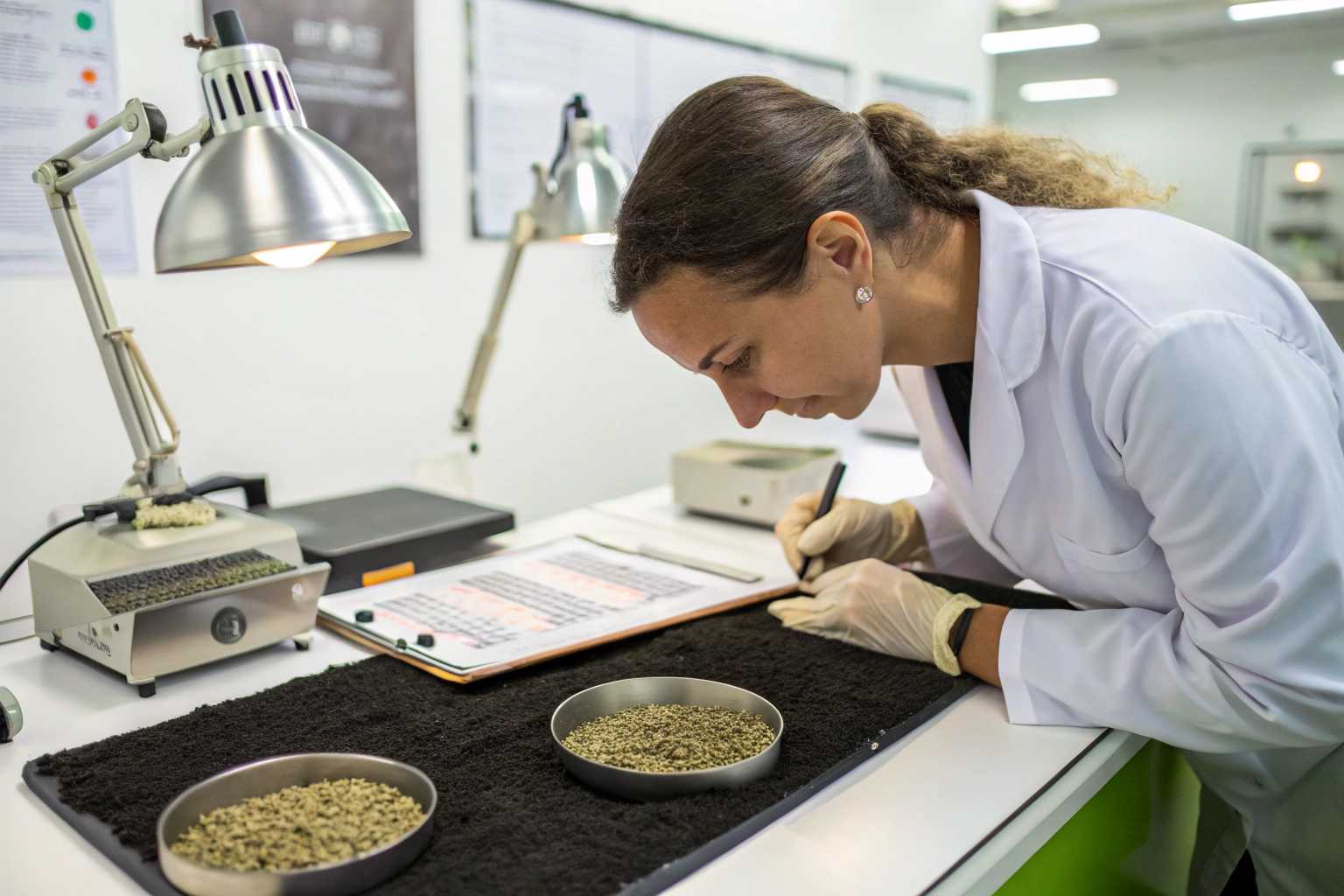
Before we even boil the water, we count. It's tedious work. A 350-gram sample of our export green coffee goes onto a black velvet mat under a 5000K lamp. We are looking for what the SCA calls "Category 1" and "Category 2" defects. It feels like a forensic investigation. And honestly, it is.
To pass the physical grading, a specialty grade Arabica lot must contain zero Category 1 defects and no more than five Category 2 defects in a 350-gram sample. This visual inspection ensures the beans are physically sound before sensory evaluation even begins.
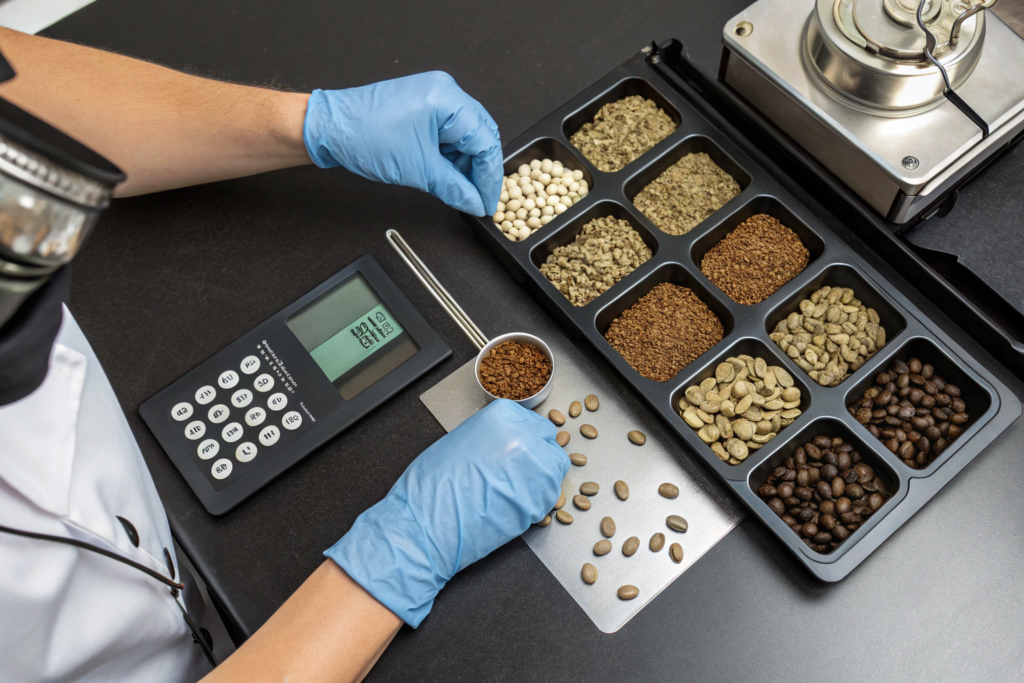
What is a Category 1 defect? A full black bean. That is a dead cherry. Or a severe insect damage hole. These beans taste like rubbery ash. If I see even one, I stop the grading. The lot is rejected. Category 2 defects are partial sours or slightly chipped beans. A few are allowed. But here is the kicker: the beans must also be uniform in size. You cannot have a mix of large screen 18 beans and tiny peaberries. Inconsistent size means an uneven roast.
How Do Defects Affect the Longevity of Green Coffee?
This is something buyers miss. A defect is not just a visual blemish. It is a biological time bomb. A bean with a tiny crack or a mold spore will absorb moisture faster than a solid bean. When that container hits the warm waters of the equator, water activity spikes inside that defective bean. It starts to rot. You know, it goes "baggy."
If you have a clean specialty lot, the water activity is uniformly low, around 0.53. The fats are stable. The coffee stays fresh for up to a year in a GrainPro bag. But if your lot is borderline commercial, with 10 or 12 sour beans scattered in there, those few beans will taint the whole bag over a month-long sea voyage. An often overlooked detail is that the musty smell from those few defects permeates the jute and the surrounding healthy beans. You open the container expecting jasmine and chocolate. You get damp cellar. That ruined lot costs you thousands.
Why Is Screen Size Sorting Crucial for Roasters?
I'm a farmer, but I'm also a bit of a roaster at heart. If you dump beans of 15 different screen sizes into a drum, physics works against you. The tiny 14-screen beans are dense and small. They roll to the outside and burn. The big 18-screen beans are less dense and sit in the middle, cooking slower. You cannot win.
Specialty grade coffee mandates a tight screen size range. We typically sort our Baoshan Arabica to a 17/18 screen. That uniformity means the heat transfer in the roaster is predictable. For a high-volume roaster, predictability is profit. You set your profile once. You hit the button. Every batch comes out tasting the same. You don't have to tweak the gas pressure mid-roast. This saves gas, saves time, and saves the sanity of your head roaster. This is why I always tell buyers, "Don't just ask for the score. Ask for the screen size distribution printout."
| Defect Category | SCA Standard for Specialty | Impact on Roasting | Impact on Shelf Life |
|---|---|---|---|
| Category 1 (Primary) | Zero tolerance in 350g | Causes severe tipping, scorching, and toxic flavors | Creates mold hotspots, ruins entire bag quickly |
| Category 2 (Secondary) | Maximum 5 in 350g | Leads to uneven heat absorption, flat acidity | Accelerates staling and "baggy" off-notes |
| Screen Size Variance | 5% maximum deviation | Guarantees perfect temperature transfer uniformity | Maintains consistent moisture content across lot |
| Moisture Content | 10-12% | Ideal for Maillard reaction and caramelization | Prevents mold growth and structural breakdown |
How Does the Cupping Score Define True Specialty Quality?
Physical grading is the bouncer at the club door. If the beans are ugly, they don't get in. But cupping is the actual party. This is where flavor decides the value. The SCA cupping form uses a 100-point scale. It evaluates ten specific attributes: fragrance/aroma, flavor, aftertaste, acidity, body, balance, uniformity, clean cup, sweetness, and overall impression.
A coffee must score 80 points or higher on the SCA 100-point scale to be classified as specialty grade. This score is a composite of sensory evaluations that confirm the coffee is free of taints, has a distinct positive character, and delivers a pleasurable drinking experience.
I remember cupping a batch of our high-altitude Catimor with an international jury. We hit the dry fragrance, and it smelled like brown sugar. We broke the crust, and there was a burst of stone fruit. When the coffee cooled, the acidity was like a crisp malic apple. The final score was 84.25. That number meant we could sell it for double the commercial price.
Can a Coffee Score 85 and Still Not "Taste Specialty"?
Absolutely. And this is where things get subjective. The SCA form has a box for "Uniformity" and "Clean Cup." If a coffee has a brilliant, explosive blueberry note but fails uniformity—meaning one cup tastes fruity and the next cup tastes flat—we deduct points. A lot needs consistency across five cups.
Also, a coffee can score 85 mathematically but have a bad "aftertaste" that lingers like ash. A good Q-grader catches this. But I've seen some producers chase high scores by bombarding the jury with intense fermentation tricks. The coffee scores an 86 on the table, but six months later, that flavor has faded to a boring woody note. True specialty quality has staying power. You know, it's not just a flash in the pan. When you taste our washed Arabica from Baoshan, the cleanliness is what anchors the experience. The chocolate note is there, but the lack of dirty processing flavors is what makes it specialty.
What Is the Difference Between 80 Points and 90 Points?
The gap between an 80 and a 90 is massive. It's like comparing a reliable sedan to a supercar. An 80-point coffee is "Very Good." It has distinct acidity and body. It has no defects. But it might be a bit simple. A one-note song. You usually find this as the base of a high-volume cafe's house blend.
A 90-point coffee is "Outstanding." It is complex. It has layers. You sip it, and you get honey sweetness. You sip again, and you detect jasmine. As it cools, a hint of bergamot appears. It is an experience. For a roaster, an 80-point lot keeps your hoppers full and your customers satisfied. A 90-point lot, that one you put in a small batch, charge $30 for a bag, and sell out in an hour. It builds your brand's prestige. As a farmer, I chase the 80+ level for our main crop consistently, and we reserve the 90-point micro-lots for our best customers who visit the farm.
What Certifications Align with Specialty Grade Standards?
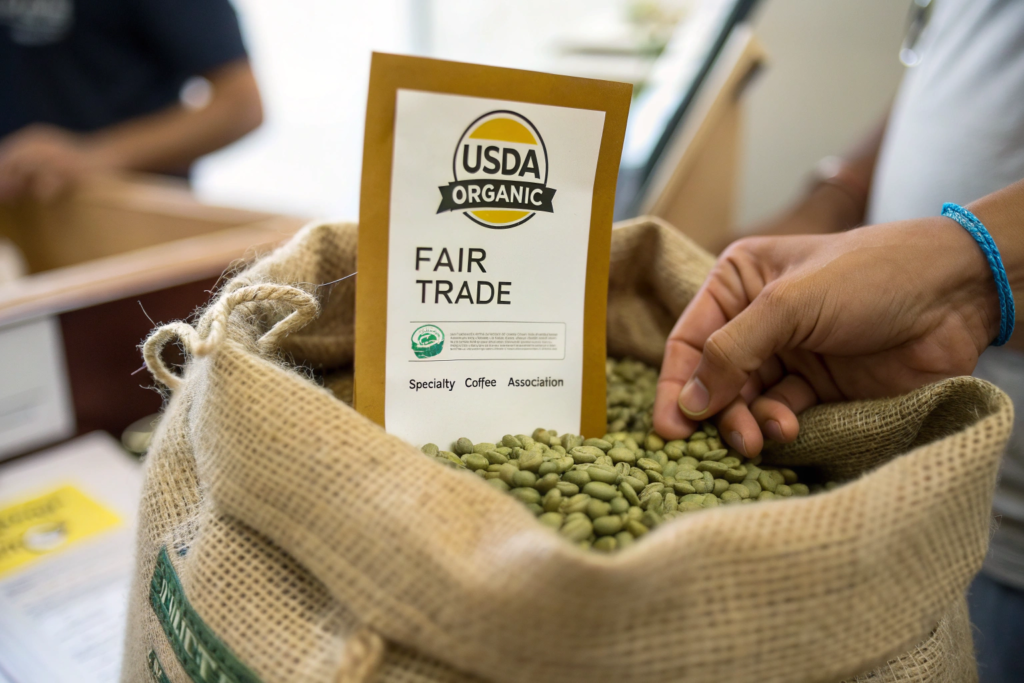
Specialty coffee is a quality term. Certifications are proof of ethics and safety. Often, a buyer assumes that a specialty lot automatically means it's organic or fair trade. That is not the case. These are separate audits. But in the premium market, they overlap heavily. A buyer like Ron wants the quality of specialty but might also need the organic seal to clear his niche retail shelf.
While not legally required for specialty classification, certifications like USDA Organic, Fair Trade, and Rainforest Alliance often align with specialty grade production because they demand the meticulous farm management and traceability that naturally produces higher quality beans.
You cannot spray pesticides on a weak, diseased plant and suddenly get an 85-point bean. To get that score, the plant has to be healthy. Healthy soil makes healthy plants. Organic farming forces you to compost and shade-grow, which slows down the cherry maturation. Slow maturation concentrates sugar. Bingo. You just raised your cup score without even trying to.
Does Organic Certification Guarantee a Higher Cup Score?
No, it guarantees a cleaner input. But it does not guarantee taste. I have tasted certified organic coffees that scored 78. They were flat, papery, and boring. How is that possible? The farmer did everything right, but maybe the varietal was just low-quality, or the drying patio was dirty.
However, in our experience in Baoshan, organic cultivation creates the potential for a higher score. Because we do not use synthetic nitrogen, the yield per tree is lower, maybe 15% less. But the cherries that do grow are packed with flavor. The struggle for survival in the organic soil profile seems to trigger a stress response. An often overlooked detail is the certification's impact on the milling process. We have to clean the entire dry mill to organic standards, flushing out any conventional beans. That flush run proves that the organic beans you get are uncontaminated. That purity of process gives you a purity of cup that you can taste.
How Does Direct Trade Overlap with Specialty Grading?
Direct Trade is not a stamp; it's a relationship. It's the promise that I, the farmer, am dealing directly with you, the roaster. We cut out the exporter middleman. Why does this overlap with specialty? Because quality information travels instantly.
When I send a sample to a direct trade partner, they email me feedback within 24 hours. "Bring the fermentation down by two hours next year, and it will be a 90." I can act on that. If I sold through a generic commodity chain, my coffee gets mixed into a massive container with a hundred other farms. My feedback is lost. The incentive to improve is lost. Direct trade with a buyer who values specialty grade creates a feedback loop. You pay me a premium based on the score. I reinvest that cash into better drying beds. You get a better cup next year. That tight loop is the engine of specialty coffee. That's how we operate with our partners from our website.
Why Is Traceability Essential for Specialty Arabica Buyers?
Traceability is the difference between a story and a lie. Anyone can type "100% Arabica" on a website. But if I can't show you the GPS pin of the mountain where that cherry was picked, the picking date, and the drying bed number, it's just words. For specialty coffee, traceability is the backbone. It proves the premium is real.
Traceability is essential for specialty Arabica buyers because it verifies the authenticity of the product, prevents fraud in the supply chain, and allows roasters to market a genuine farm-to-cup narrative that commands higher retail prices.
I had a buyer from Europe who used our traceability data to create a specific page for our farm on his web shop. His customers could zoom in on the satellite map of Baoshan. He told me his sales conversion rate jumped 8% just by adding that map. People want to know where their stuff comes from. They want to trust it.
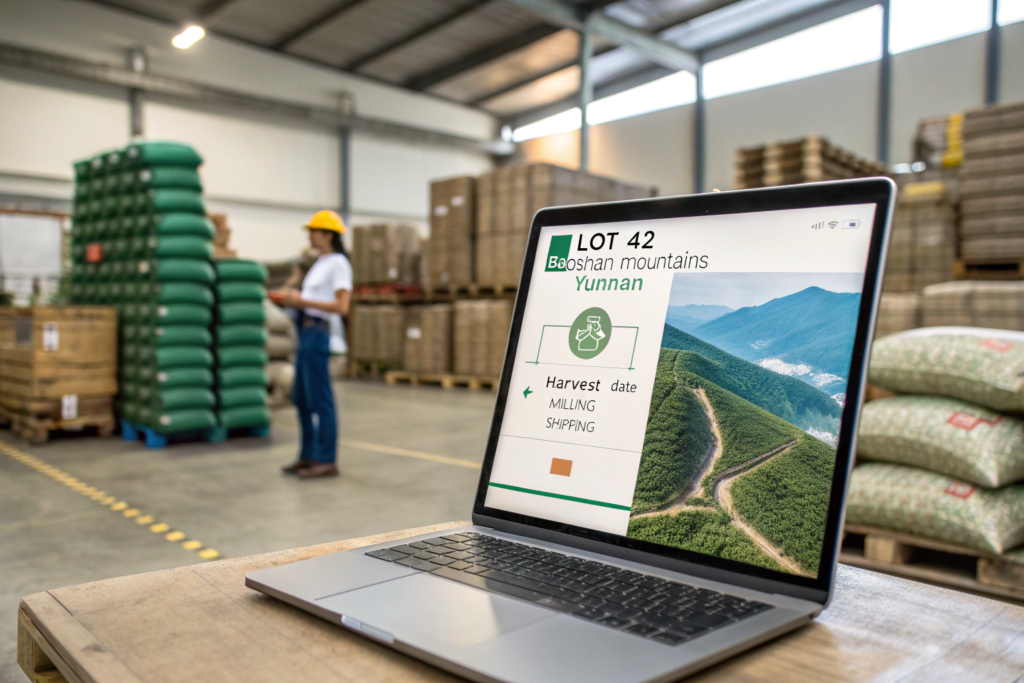
How to Verify a Lot Number Back to the Farm?
It sounds technical, but it's simple. We label every vacuum-packed bag with a lot number. That number corresponds to a specific day of harvest and a specific section of our estate. If you are a buyer, ask your supplier to break the lot down. Don't accept "Yunnan Province" as the origin.
Ask for the specific village. Ask for the altitude range. A good supplier will send you a "Traceability Document" along with the Bill of Lading. This document shows the picking date, the dry milling date, and the container stuffing date. If they hesitate to give you the picking date, something is wrong. Maybe the coffee is old. Maybe it's mixed. Demand that paper trail. It is your right as a specialty buyer. At BeanofCoffee, we attach this sheet to every export file without being asked.
Can Blockchain Solve the Trust Issue in Green Coffee?
Technology is creeping into the farm. We are testing a system where a picker logs their cherry weight on a tablet, and that data goes onto a blockchain ledger. You, the roaster, get a QR code. You scan it, and you see an unchangeable record.
Can it solve trust? Partly. It's incredible for proving that I didn't tamper with the documents. However, a blockchain cannot taste the coffee. It can't tell you if the cherry was overripe. It only records human input. If a farmer enters false data at the first step, the blockchain just immortalizes that lie. So, it's a tool, not a replacement for cupping. But for a buyer on the other side of the planet, that immutable digital trail, combined with a known Q-grader score, is a near-perfect safety system. It cuts out the risk of a middleman swapping my 84-point lot with a 78-point lot from an anonymous farm.
Conclusion
So, what is specialty grade Arabica coffee? It is not just a high score on a piece of paper. It is a triangle of safety, science, and story. The physical grading protects you from defects that ruin your roast. The cupping score guarantees the flavor experience your customers pay for. The traceability and certifications give you the truth.
For a pragmatic buyer focused on price and timeliness, specialty grade is actually the safest financial bet. It eliminates the hidden costs of waste, inconsistency, and customer churn that come with buying lower commercial grades. You pay more on the invoice, but you keep more in your pocket at the end of the year.
If you are looking for a genuine specialty grade Arabica that ticks all these boxes—from zero defects to a clean 84+ cup—we should talk. We manage the whole process here in Baoshan, ensuring the lot you approve is the lot you receive. Contact our export director, Cathy Cai, at cathy@beanofcoffee.com. She can walk you through our current availability and send you a pre-shipment sample so you can taste the specialty difference yourself.