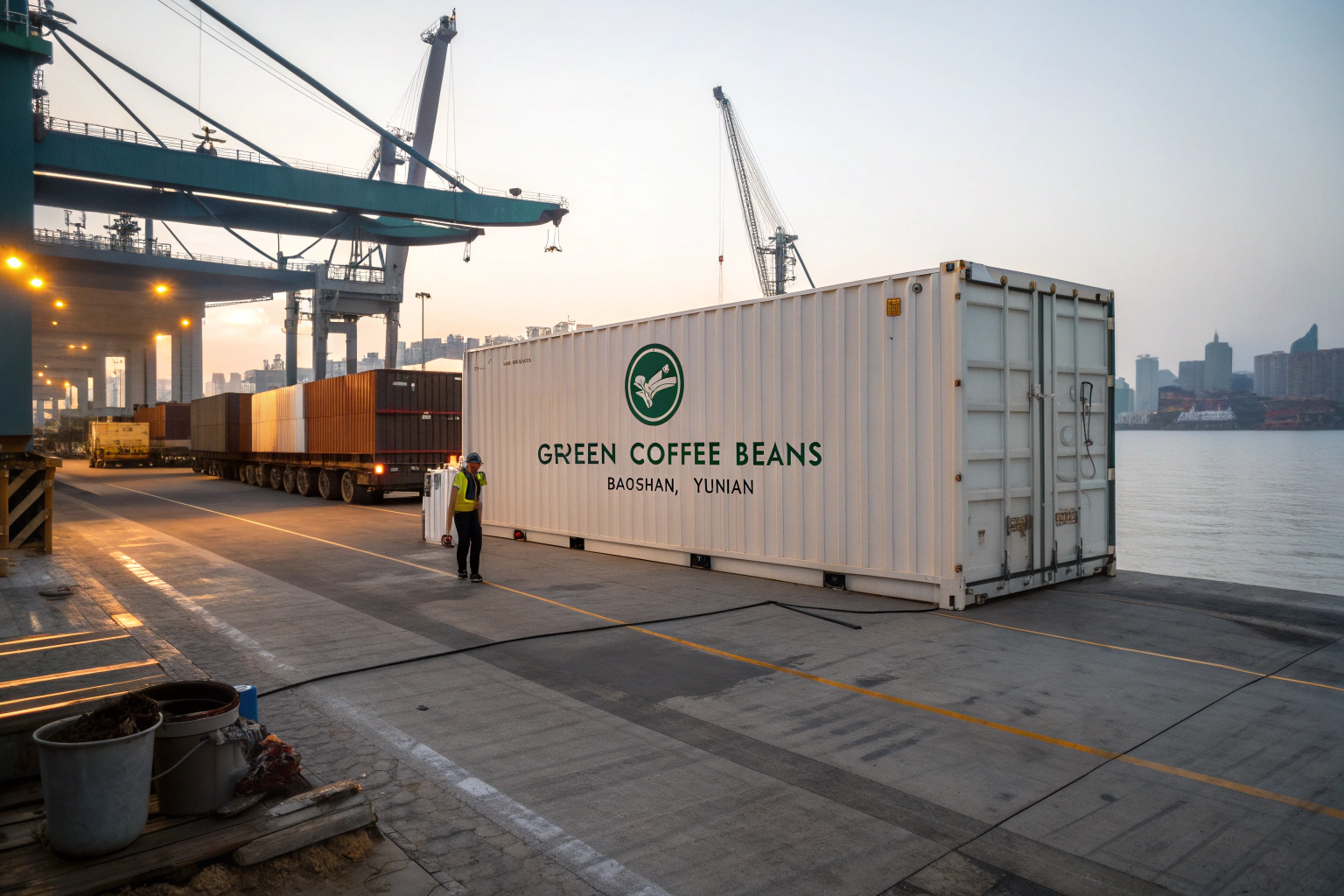
I got a panicked call from a roaster in Portland last year. His first container of green coffee from Asia had just been flagged by the FDA at the port of Oakland. He had no prior notice filed. No bond. No idea what the customs broker was asking for. The coffee sat in a refrigerated warehouse for three weeks, racking up demurrage fees that ate his entire profit margin on the shipment. He called me asking, "Why didn't anyone tell me the paperwork would be this brutal?" The pain is that nobody explains the sequence clearly. You find a supplier, you negotiate a price, you wire the money... and then you hit a wall of acronyms.
Importing green coffee beans to the USA requires filing FDA prior notice, securing a customs bond, clearing USDA-APHIS phytosanitary checks, and working with a licensed customs broker who understands that unroasted coffee under HS code 0901.11 enters duty-free. The physical shipment needs food-grade containers, proper documentation, and a pre-arranged logistics chain from the foreign port to your roastery door.
The good news? Green coffee is one of the easiest food products to import, once you know the steps. It's not subject to the same quota restrictions as sugar or the same rigorous inspections as meat. It's generally duty-free for unroasted beans. The process is logical. It's sequential. And if you do it right, your container glides through customs in 48 hours. I ship containers from our 10,000-acre farm in Baoshan, Yunnan to ports all over the US every month. I've seen every mistake. Let me walk you through the exact sequence so your first import isn't a crisis, but a routine business transaction.
What Are the Legal Requirements for Importing Coffee into the USA?
The US government does not require a special license to import coffee. That's the first thing to relax about. You don't need an importer's license in the way you might for alcohol or firearms. But "no license" does not mean "no rules." There's a series of mandatory registrations and filings that act as your legal entry ticket. Miss one, and your container doesn't get past the gate.
The core legal requirements are: an FDA food facility registration for the foreign manufacturer, an FDA prior notice filed before the shipment arrives, a customs bond posted through a licensed broker, and a phytosanitary certificate from the origin country's agricultural authority. The coffee must also be free of prohibited pests and contaminants as defined by USDA-APHIS and FDA regulations.
Let's break this down sequentially. First, the FDA registration. The facility where the coffee is processed and packed—in my case, our dry mill in Baoshan—must be registered with the US Food and Drug Administration. This is a one-time registration, renewed every even-numbered year. You, as the importer, don't register. I, as the foreign manufacturer, do. When you're vetting a supplier, ask for their FDA Food Facility Registration number. If they don't have one, they can't legally ship food to the US. It's a basic filter. Second, the customs bond. This is an insurance policy for the government that guarantees customs duties and fees will be paid. You purchase it through your customs broker. It's an annual cost, and it's modest—often a few hundred dollars for a small importer. Third, the phytosanitary certificate. This is issued by the agricultural authority in the exporting country. For China, that's the General Administration of Customs of China (GACC). It certifies that the coffee has been inspected and is free of specified pests. At BeanofCoffee, we include the phyto certificate as a standard part of our export documentation package. It's not optional. Without it, USDA-APHIS can hold your shipment for fumigation or re-export.
How Does the FDA Prior Notice System Work?
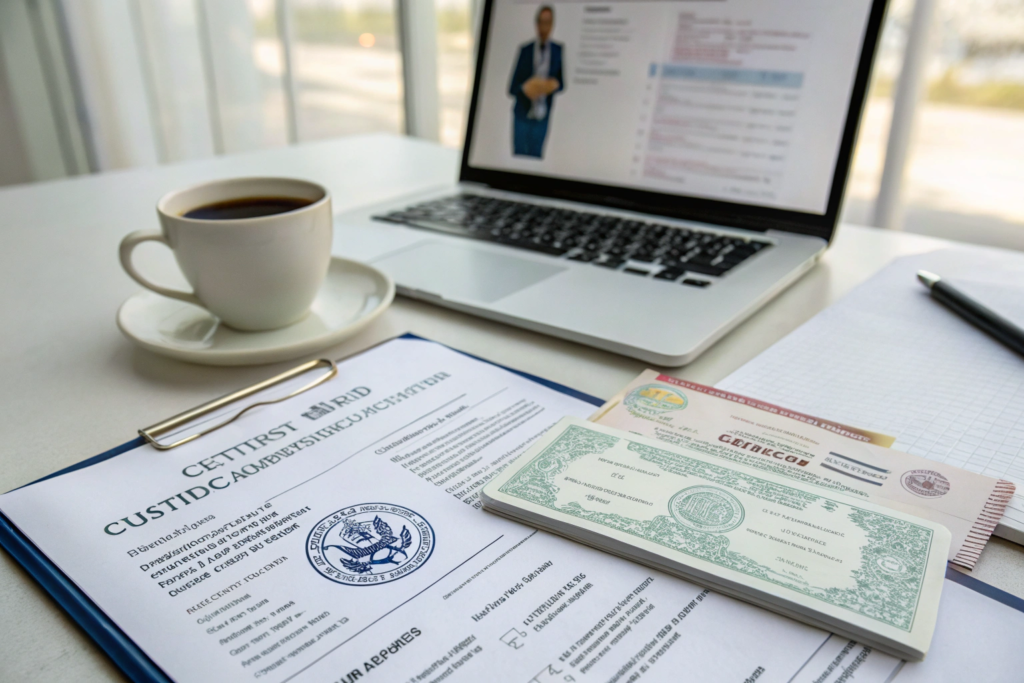
FDA Prior Notice is the single most common failure point for first-time coffee importers. It's an electronic filing that must be submitted to the FDA before the shipment physically arrives at a US port. The rule is specific: the notice must be received by the FDA no less than 2 hours before arrival by road, 4 hours before arrival by air, and 8 hours before arrival by water. For ocean freight, which is how bulk coffee moves, the 8-hour rule applies.
The prior notice includes detailed information: the FDA registration number of the foreign manufacturer, the identity of the product (green coffee, HS code 0901.11), the quantity, the manufacturer and shipper details, the container number, and the anticipated arrival information. Your customs broker files this electronically through the FDA's system. The purpose is biosecurity. The FDA wants to know what's coming before it lands, so they can flag high-risk shipments for inspection. Green coffee is generally considered low-risk. But if your prior notice is incomplete or filed late, the shipment is automatically held. The system is binary: compliant or held. There's no partial credit. I always advise my buyers to have their broker file the prior notice as soon as the vessel departs the origin port. Don't wait until the ship is approaching the US coast. File early. Correct any errors while there's time. A rejected prior notice can be refiled, but only if the ship hasn't yet arrived. Once the container is on the dock, a rejected notice means the coffee sits and accrues storage fees. The broker needs the exact bill of lading number, the container seal number, and the scheduled arrival date. We provide all of this to the buyer the moment the container is loaded onto the vessel in Shenzhen or Shanghai. The buyer forwards it to their broker. The broker files. That's the clean chain of custody. The FDA prior notice system has all the technical details and updates.
What Role Does USDA-APHIS Play in Coffee Imports?
The USDA's Animal and Plant Health Inspection Service (APHIS) is the agricultural gatekeeper. While the FDA cares about food safety for humans (mycotoxins, pesticides, filth), APHIS cares about plant safety for American agriculture. They are looking for hitchhikers: the coffee berry borer, coffee leaf rust spores, other exotic pests that could devastate US crops if they escaped into the environment.
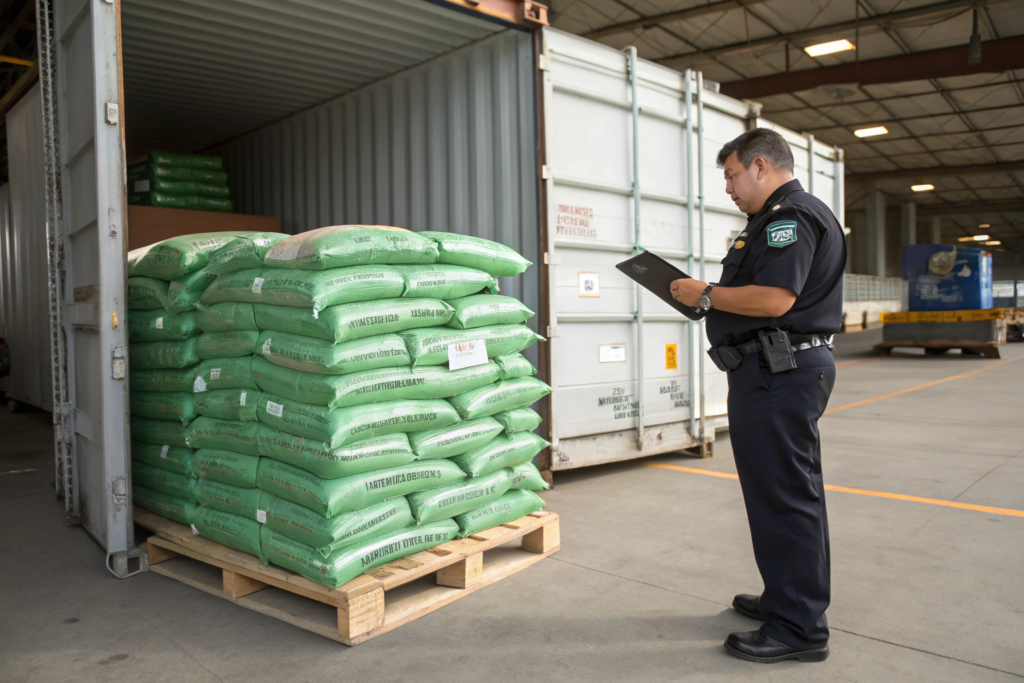
Green coffee is a raw agricultural product. It enters the US with the possibility, however small, of carrying live insects or fungal spores. APHIS inspects a percentage of coffee shipments, focusing on origins with known pest issues. A shipment from China will be inspected under the same rules as any other origin. The phytosanitary certificate is the key APHIS document. It's a government-to-government assurance. The Chinese plant health authority inspects the coffee before export, certifies it's free of quarantine pests, and stamps the certificate. APHIS at the US port reviews the certificate. If it's valid and the coffee doesn't show obvious signs of infestation on physical inspection, the shipment clears. If the inspector finds a live pest, or if the phyto certificate is missing or fraudulent, the coffee can be ordered for fumigation, cleaning, re-export, or destruction—all at your expense. This is why sourcing from a supplier with rigorous pest control is not just about cup quality. It's about import clearance. At our mill, we double-sort the green beans, we use optical sorters, we seal the container immediately after loading, and we fumigate the container itself if the buyer requests it. We've never had an APHIS rejection because we treat pest prevention as an export requirement, not an afterthought. The USDA-APHIS coffee import page outlines the specific pest risks and phytosanitary requirements for coffee from different origins.
How to Prepare Your Coffee Shipment for US Customs Clearance?
Customs clearance is not a single event. It's a chain of documents, each one triggering the next. If you think of it like a recipe, the ingredients are your paperwork. Miss one ingredient, and the dish fails. The good news is that the ingredients are standardized. Once you've done it once, you can replicate the process for every subsequent container.
Preparing for US customs clearance requires assembling a complete document package: the commercial invoice, packing list, bill of lading, phytosanitary certificate, fumigation certificate (if wood pallets are used), and the FDA prior notice confirmation. Your customs broker uses these to file the CBP entry summary (Form 7501), which determines duty rates and releases the shipment.
The document package starts with us, the exporter. When the container sails, I send the buyer a scanned document package. The commercial invoice states the seller, the buyer, the product description (Green Arabica Coffee Beans, HS Code 0901.11), the quantity in bags and kilos, the FOB or CIF value, and the payment terms. The packing list breaks down the container contents: how many bags, what type of bag (GrainPro, jute), the weight per bag, and the container number. The bill of lading is the proof of ownership issued by the shipping line. The original is sometimes mailed, but usually we do a telex release, meaning the original is surrendered at the origin port, and the buyer can claim the container at the destination with a copy. The phyto certificate and any organic or certification documents round out the package. Your broker takes all of this and files the CBP entry. The entry declares the value, classifies the goods under the correct HS code, and calculates any duties. For green coffee, under HS 0901.11, the duty rate is generally zero for unroasted, non-decaffeinated coffee. That's a huge advantage. Your broker also files the ISF (Importer Security Filing), also known as 10+2, which must be filed 24 hours before the vessel departs the origin port. This filing tells CBP about the cargo before it even leaves China. I work with the buyer to provide the ISF data (seller, buyer, manufacturer, ship-to party, country of origin, HTS code) well in advance. The sequence is: ISF before departure, prior notice before arrival, entry upon arrival. Done right, the container is released within a day or two.
What Is the Correct HS Code for Green Coffee?
The Harmonized System (HS) code is the universal product classification used by customs authorities worldwide. Using the wrong HS code is like mailing a letter with the wrong address. It goes to the wrong department, gets delayed, and may incur penalties. For green coffee, the code is precise and favorable.
HS code 0901.11 covers "Coffee, not roasted, not decaffeinated." That's what green coffee is. There are sub-codes under this. 0901.11.00 is the general code for unroasted, non-decaf coffee. For Arabica specifically, some countries use 0901.11.10. For Robusta, 0901.11.20. But at the 6-digit level, which is what matters for US import duty, it's all 0901.11, and it's all duty-free. If your broker accidentally classifies your green coffee as roasted (0901.21) or decaffeinated (0901.12), you could be charged duties that you don't actually owe. Roasted coffee is also generally duty-free under HS 0901.21, but the classification matters for FDA tracking and statistical purposes. Check your entry summary when the broker sends it. Look at the HS code field. It should say 0901.11. If it says anything else, question it immediately. The duty rate should show "FREE." This duty-free status is a massive advantage for coffee importers compared to other food products. It's one of the reasons specialty coffee can be a viable import business with manageable overhead. The USITC Harmonized Tariff Schedule is the official source for US tariff codes and rates. You can search "coffee" and see the exact classification tree. Familiarize yourself with it.
How to Work with a Customs Broker Effectively?
A good customs broker is worth their weight in green coffee. They are your legal representative at the border, the person who translates your commercial documents into government filings. A bad broker is a liability—slow, unresponsive, error-prone. Choosing and managing your broker is a critical business decision.
Start by finding a broker who has experience with food imports, specifically coffee. Not all brokers know the nuances of FDA prior notice for coffee, APHIS phytosanitary requirements for coffee, or the zero-duty status of green coffee. A broker who primarily handles textiles or electronics will have a learning curve. Ask them directly: "How many coffee containers have you cleared this year?" Look for brokers in port cities with high coffee traffic—Newark, Oakland, Seattle, Houston, Savannah. These brokers have coffee-specific experience. Once you've hired a broker, communication is everything. Send them the document package as soon as the vessel sails. Don't wait until the container is two days from the port. Give them time to review, catch errors, and file early. A common mistake is providing incomplete documents. The broker needs the commercial invoice with a detailed product description, not just "coffee." It should say "Green unroasted Arabica coffee beans, 60kg GrainPro bags, HS 0901.11." The broker also needs the FDA registration number of the manufacturer, the container number, the seal number, and the vessel name and voyage number. I provide all of this to my buyers in a single PDF package, labeled clearly. It saves their broker time and reduces errors. Also, discuss the bond. Your broker can arrange a continuous bond, which covers all your imports for a year, or a single-entry bond for one shipment. If you're planning to import regularly, the continuous bond is cheaper per shipment. Finally, ask your broker about any port-specific fees or requirements. Some ports have additional inspection protocols. The NCBFAA broker directory can help you find a licensed customs broker. Interview a few before committing.
How to Handle Shipping and Logistics from Origin to US Port?
Shipping green coffee is a physical process with a predictable rhythm. The more you understand that rhythm, the less anxiety you'll feel when your container is somewhere in the middle of the Pacific. It's not lost. It's just in transit. The key is setting up the logistics chain so that every handoff—from farm to truck, truck to port, port to ship, ship to port, port to truck, truck to your roastery—is accounted for.
Shipping green coffee from China to the USA involves trucking the container from the mill to the departure port, booking space on a vessel 4-6 weeks in advance, loading the container onto the ship under an FOB or CIF contract, and coordinating with a destination trucking company to move the container from the US port to your roastery. Total transit time from Yunnan to a West Coast port is typically 25-35 days door-to-door.
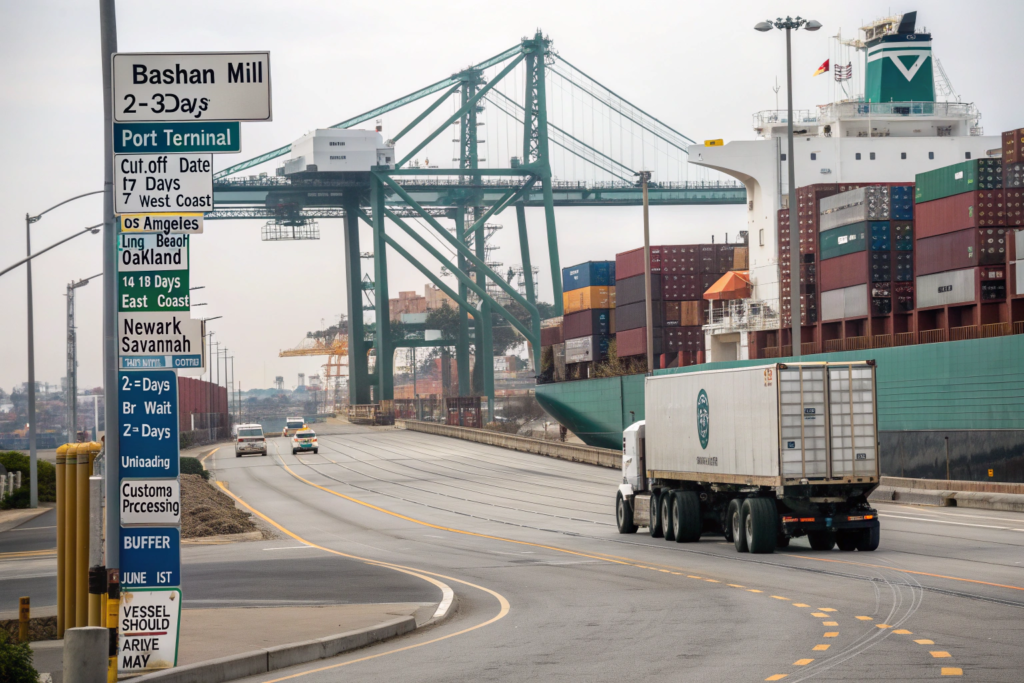
The first leg is the truck from our Baoshan mill to the port. Shenzhen is a common choice because it's close and has frequent sailings to the US. Shanghai is also viable. The truck journey is 2-3 days. The container needs to be delivered to the terminal before the "cut-off date"—the deadline for that specific vessel. We usually aim to deliver 5-7 days before sailing. Once the container is at the terminal and the ship is loaded, the vessel departs. Transit to the US West Coast (Los Angeles/Long Beach, Oakland) is 14-18 days. Transit to the East Coast (Newark, Savannah) via the Panama Canal is 25-30 days. Then comes the port wait. Even after arrival, the container isn't immediately available. It has to be unloaded from the ship, processed through customs, and made available for pickup. This can take 2-5 days in a smooth port, longer if there's congestion. I always recommend building a buffer. If you need the coffee by June 1st, the vessel should arrive by May 15th. The final leg is the truck from the port to your roastery. You can arrange this yourself with a local trucking company, or your customs broker can arrange it. The trucker needs the delivery order from the shipping line and a pickup appointment at the terminal. At BeanofCoffee, we ship CIF to the buyer's preferred US port as a standard option. That means I handle the China-side logistics, the ocean freight, and the insurance. The buyer handles the US-side customs clearance and trucking. It's a clean split of responsibility that works well for most roasters.
What Are the Best Incoterms for Green Coffee Importers?
Incoterms define the handoff point between seller and buyer. Choosing the right one determines who pays for what and when the risk of loss or damage transfers. For green coffee from China to the USA, three Incoterms dominate: FOB, CIF, and FCA.
FOB is Free On Board. The seller loads the container onto the ship at the named port of departure. Risk transfers to the buyer the moment the container is on the vessel. The buyer pays the ocean freight and insurance. Choose FOB if you have a strong freight forwarder relationship and want to control the shipping line and schedule. You might get a better rate if you consolidate with other importers. CIF is Cost, Insurance, and Freight. The seller pays for the goods, the insurance, and the freight to the named US port. Risk transfers to the buyer once the container is on the ship (same as FOB), but the seller is paying the freight costs and has arranged the insurance. This is the "easy button" for most small to mid-size roasters. You get one price per pound, delivered to Long Beach or Oakland. You don't negotiate with shipping lines. You don't worry about freight rate fluctuations. I handle all of that on my end, and because I ship containers weekly, I have volume leverage with the carriers. CIF is what I recommend for first-time importers. FCA is Free Carrier. The seller delivers the container to a carrier nominated by the buyer at a named place (usually the port terminal). Risk transfers earlier than FOB. It's useful if the buyer wants to control the export clearance process, but for coffee, it's less common. What about DAP or DDP? Delivered at Place (DAP) means the seller delivers to the buyer's roastery door. I rarely recommend this for US-bound shipments. I don't know your local trucking market. I'd be marking up a service that you can probably arrange more cheaply yourself. The ICC Incoterms 2020 guide explains each term in detail. Learn FOB and CIF first. They cover 90% of coffee import scenarios.
How to Avoid Container Condensation and Coffee Damage in Transit?
This is a physics problem with a few simple engineering solutions. A container of green coffee traveling from a warm port in Asia to a US port experiences wild temperature and humidity swings. Warm air holds moisture. When the container exterior cools—at night, or sailing through a cold current—the moisture condenses on the inside of the roof and walls. This "container rain" drips down onto the top bags of coffee. It can ruin the top layer. I've seen it happen. The bags arrive with moldy, stained tops, and the coffee inside smells musty.
The defense has four layers. Layer one: GrainPro bags. These are airtight, multi-layer plastic liners that seal each bag of coffee from the external environment. Even if the container rains, the coffee inside a properly sealed GrainPro bag stays dry. This is the single most important investment. At BeanofCoffee, we pack all our specialty Arabica in GrainPro as standard. Layer two: container desiccants. We hang large, industrial moisture-absorbing poles along the interior walls of the container before loading. These capture ambient humidity before it can condense. For a 20-foot container, we use 8-10 desiccant poles. Layer three: proper container stuffing. We don't pack the coffee bags directly against the metal walls or the corrugated floor. We use a layer of cardboard or plastic sheeting as a vapor barrier, and we leave a small air gap between the bags and the walls. This prevents the bags from touching the cold metal where condensation forms. Layer four: inspect the container before loading. We reject any container that has a damaged roof, door seals, or floor. A container with a pinhole in the roof will leak in rain or sea spray. We also check the container for odors. Coffee absorbs smells. A container that previously carried garlic, chemicals, or leather will transfer those odors. We only load into food-grade containers that have been cleaned and inspected. These steps add a small cost per container, but they prevent a catastrophic loss. The GrainPro container loading guide explains the science in more detail. It's required reading for any serious coffee importer.
How to Manage Costs and Payment When Importing Coffee?
The price per pound you negotiate with the supplier is only one piece of the total cost. The "landed cost"—what that coffee actually costs you when it's sitting on your roastery floor—includes freight, insurance, customs fees, port charges, trucking, and financing. If you don't calculate the landed cost accurately, you don't know your true margin.
The total landed cost of imported green coffee includes the FOB or CIF price, customs broker fees (typically $150-300 per entry), customs bond costs ($300-600 annually for a continuous bond), port terminal handling charges, FDA inspection fees (if applicable), and domestic trucking to your roastery. Payment terms with suppliers are usually 30% deposit against proforma invoice, 70% against the scanned bill of lading copy.
Let's build a realistic cost model. Assume you're buying a 20-foot container of green coffee from BeanofCoffee, roughly 320 bags of 60 kilos each, or about 19,200 kilos. The FOB price is $3.00 per pound ($6.61 per kilo). The coffee cost is about $127,000. Ocean freight to the US West Coast: around $3,000-4,000 per container at current rates. Insurance: about $200-300. Broker fees: $200 per entry. Port fees: $400-600. Trucking from the port to your roastery (assuming a 300-mile haul): $800-1,200. The landed cost per pound, adding all these, might be $3.25-$3.35. That's your real cost. Understanding this allows you to price your roasted coffee correctly. A common mistake is forgetting the port and trucking costs and under-pricing the roasted product. Payment terms are the other half of the financial picture. The standard structure for Chinese coffee exports is Telegraphic Transfer with a 30/70 split. You pay 30% when you place the order, and we begin allocating and milling your specific lot. You pay the remaining 70% when we send you a scanned copy of the bill of lading, proving the container is on the vessel and the coffee is on its way. This structure balances risk. You're not paying 100% upfront, and I'm not shipping without any payment. For first-time transactions, I often recommend using Alibaba Trade Assurance. The platform holds the payment in escrow and releases it to me only after you confirm the shipment details. It adds a layer of platform-mediated trust that's useful when you're testing a new supplier. A Letter of Credit at sight is another option, though bank fees are higher and the process is more bureaucratic.
How to Calculate Your True Landed Cost Per Pound?
Most roasters think in dollars per pound. You buy green at $3.00/lb, roast it, and sell it for $12.00/lb. But the gap between the FOB price and what you actually paid is hidden in the logistics. Let's walk through a specific calculation.
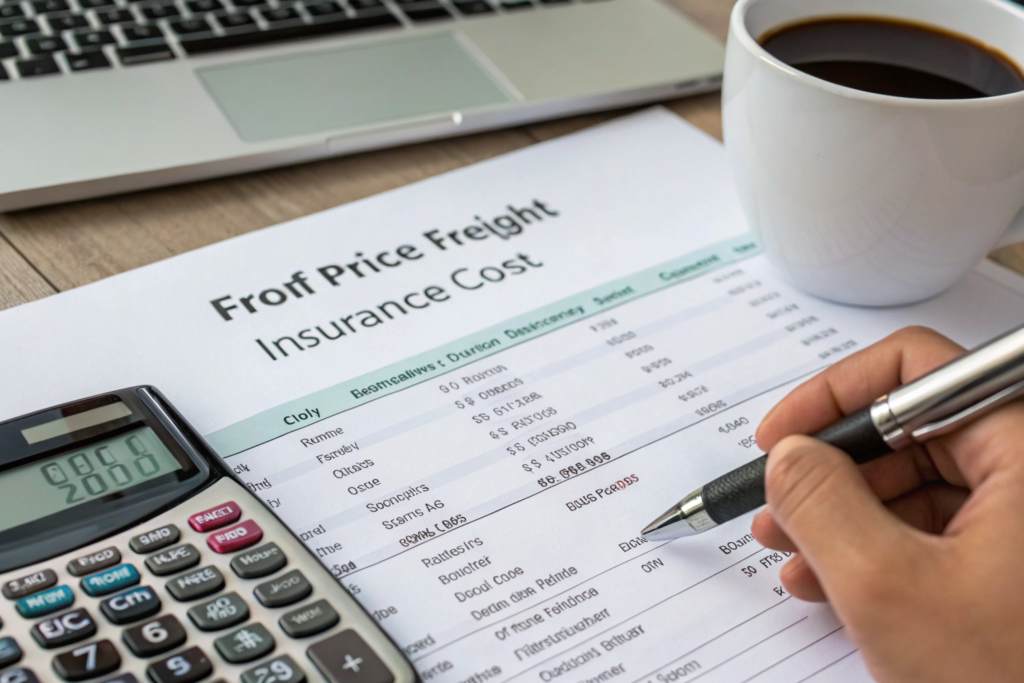
Start with the FOB price. That's the price per pound of the coffee, loaded onto the ship. Add the ocean freight. If the container costs $3,500 and holds 42,000 pounds (roughly 320 bags at 132 lbs each), the freight adds about $0.08 per pound. Add insurance—about $0.01 per pound. Now you have the CIF price, which is the coffee delivered to the US port. Next, the port and customs costs. Terminal handling, customs broker, bond (annualized per shipment), and potential FDA inspection—allocate about $0.03-0.05 per pound. Then domestic trucking. A $1,000 truck haul for 42,000 pounds adds about $0.02 per pound. Add any warehouse storage if you can't receive the full container immediately. Suddenly, your $3.00/lb FOB coffee is $3.18/lb landed. That's still a manageable gap. But if your coffee is $1.80/lb FOB, the fixed logistics costs (freight, trucking, broker) are the same dollar amount. They become a larger percentage of the total. A $1.80 coffee might land at $2.10—a $0.30 gap, or a 17% logistics overhead. A more expensive coffee has a lower logistics overhead as a percentage. This is why buying the cheapest possible coffee isn't always the best financial decision. The fixed costs eat a larger share. I encourage all my buyers to build a simple spreadsheet: line items for FOB price per pound, estimated freight per pound, insurance, broker, port, and trucking. Update it with real quotes from your forwarder and broker. This spreadsheet becomes your pricing bible. You know exactly what each blend costs you, and you can set your roasted price to guarantee your target margin. The SCA Green Coffee Buyer's Guide includes tools for landed cost calculation. It's a discipline, not a one-time exercise.
What Are the Risks of Currency Fluctuation and How to Mitigate Them?
Coffee is traded in US dollars globally. When you buy from China, our prices are quoted in USD. So, if you're a US-based roaster, there's no direct currency risk on the coffee purchase itself. The invoice is in your home currency. But there's an indirect risk: if the US dollar weakens significantly against the Chinese RMB, our internal costs (labor, fertilizer, local transport) increase relative to the dollar. Over time, that puts upward pressure on FOB prices.
For US buyers, the more immediate currency risk is on the freight side. Ocean freight rates are often quoted and paid in dollars, but if you're buying from a European shipping line or a Chinese carrier, underlying costs may fluctuate with currency. This is mostly absorbed by the freight rate you're quoted. The bigger mitigation strategy isn't hedging currencies—it's hedging prices through fixed contracts. As discussed in the negotiation section, a fixed differential contract with a price cap protects you from C-market volatility, which is far more significant than currency fluctuation for coffee. A spike in the C-market of $0.50 per pound dwarfs a 5% currency move. So, focus your risk management energy on the commodity price, not the forex. The other practical mitigation is to negotiate payment terms that don't leave you exposed. If you pay a 30% deposit and the market moves against you, you've only committed 30% of the capital. If you're holding a large open contract at a floating price, you're fully exposed. Price-fix as early as you can. Lock in the cost so you can plan your roasted pricing with confidence. Some large importers use futures contracts to hedge directly on the ICE exchange, but that's a sophisticated strategy that requires a brokerage account and margin management. For most specialty roasters, a fixed-price or capped-price contract with a reliable supplier is the safest and simplest path. The ICE Coffee Futures contract specifications explain the mechanics of the C-market, but you don't need to trade futures to understand how they affect your invoice.
Conclusion
Importing green coffee into the USA is a structured process. FDA registration, prior notice, and a phytosanitary certificate open the legal door. A solid customs broker files the entry, classifies the coffee under the duty-free HS code 0901.11, and manages the bond. Your logistics chain—from the mill in Baoshan to a food-grade container with GrainPro liners and desiccants—protects the physical cargo across the Pacific. And a clear landed cost spreadsheet, built on CIF terms with a 30/70 payment structure, protects your financial margin. The horror stories you hear about containers stuck at port, moldy bags, hidden fees, and rejected shipments are almost always the result of skipping one of these steps. A supplier who provides complete documentation, a broker who knows coffee, and a buffer in your inventory plan solve the vast majority of import headaches.
At BeanofCoffee, we've shipped enough containers to American ports to have this process refined to a routine. We provide the full document package the day the vessel sails. We use food-grade containers with GrainPro and desiccants as standard. And we work with your broker to ensure the FDA prior notice and ISF filing are submitted with accurate data, well before deadlines.
If you're ready to import your first container, or if you want to streamline an existing supply chain, contact my export director, Cathy Cai. She can provide a detailed landed cost estimate for your specific port and walk you through the documentation process step by step. Reach her at: cathy@beanofcoffee.com.