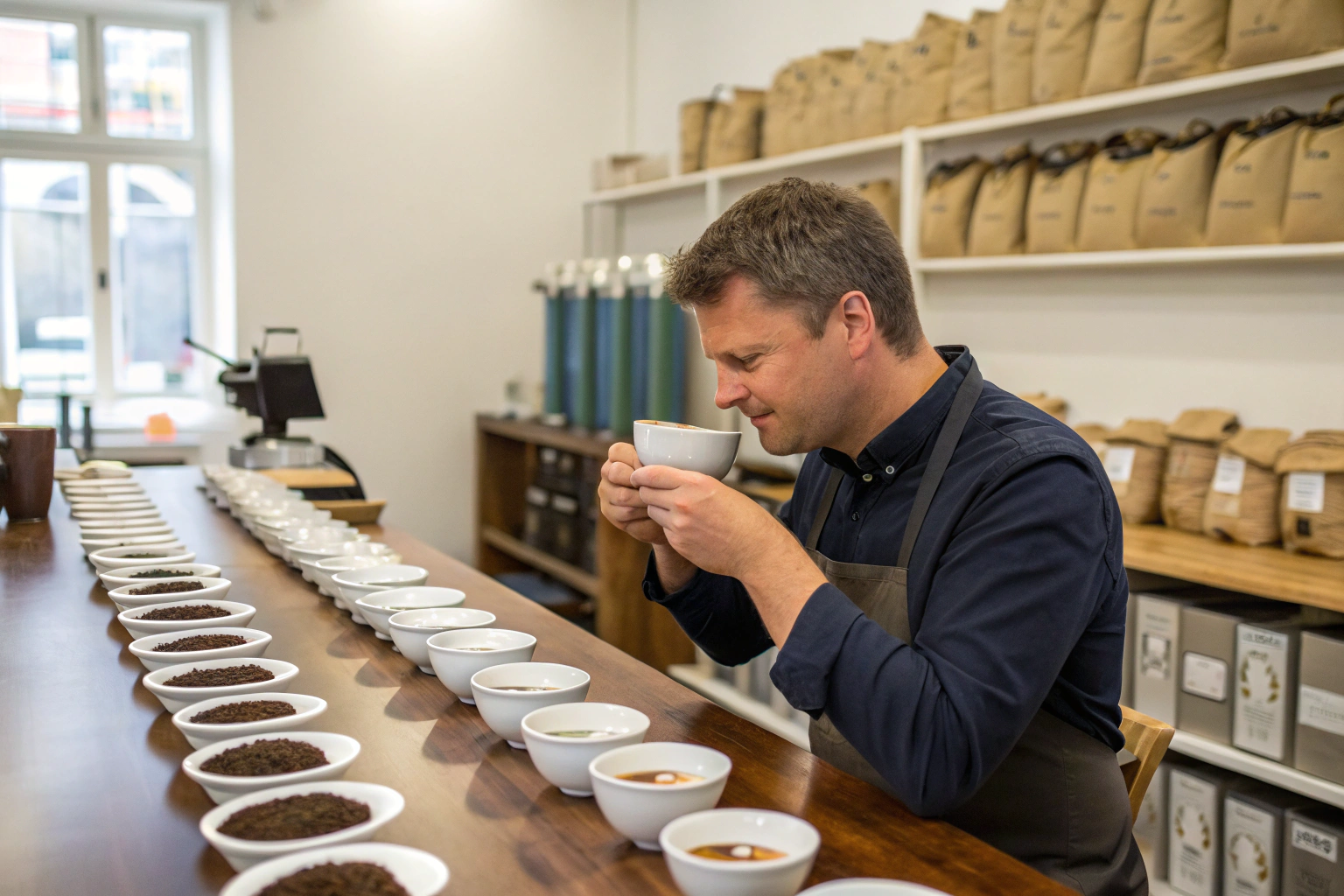
I was standing at a cupping table in Hamburg two years ago. A German importer, a guy who'd been in the business for thirty years, had just tasted our Baoshan Catimor. He put down his spoon, looked at me, and said, "I didn't know China could do this." That's the reaction I still get, and frankly, it's both a compliment and a frustration. The compliment is obvious. The frustration is that for most of the coffee world, China is still a blank spot on the quality map—or worse, a punchline. The pain for a roaster like you is that the old origins are getting expensive, crowded, and unreliable. Colombia had a wet harvest. Brazil got hit with frost. The C-market is a rollercoaster. You need a stable, high-quality source that doesn't force you to compete against a hundred other roasters for the same few containers.
Chinese Arabica coffee, specifically high-altitude Yunnan Catimor, offers your business a unique combination of specialty-grade cup quality, competitive and stable pricing, massive production scale backed by 10,000+ acre farms, and a modern export infrastructure that rivals the best in the world. It's the new origin that delivers old-world flavor with new-world reliability.
Choosing a coffee origin is a business decision, not a romantic gesture. You need beans that taste great, cost right, and show up on time. I own 10,000 acres in Baoshan, Yunnan. I'm not a trader. I'm a farmer who exports. And I'm going to walk you through why Chinese Arabica is no longer a curiosity—it's a competitive advantage for your roastery, your brand, and your bottom line. Let's look at the facts.
How Does Yunnan Arabica Compare to Traditional Origins in Quality?
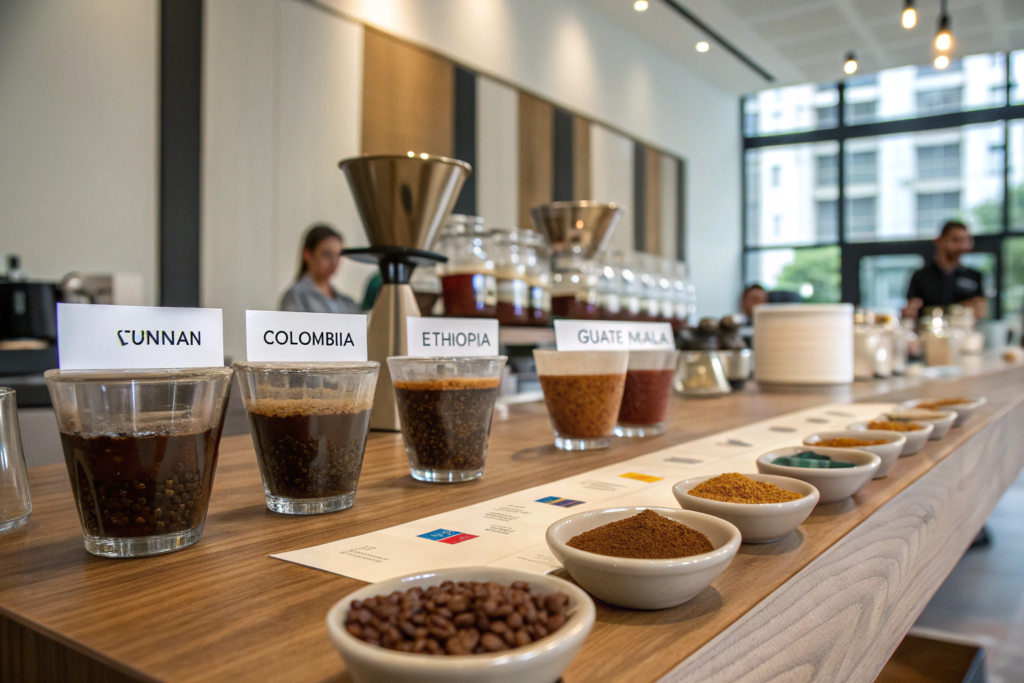
Let's be honest. When you think of great Arabica, you think of Colombia, Ethiopia, Guatemala. Those origins have built their reputations over a century. Yunnan has been exporting specialty coffee seriously for about two decades. That's a fraction of the time. But in blind cuppings, our best lots are now scoring alongside those traditional heavyweights. The gap has closed.
Yunnan Arabica, especially the Catimor varietal grown above 1,400 meters, now cups at 84-87 points consistently—matching or exceeding mid-range Colombian and Guatemalan lots. The profile is distinct: malic acidity reminiscent of green apple, rich brown sugar sweetness, a black tea-like body, and a clean, lingering finish. It's not an imitation of Ethiopia or Colombia. It's a unique terroir expression.
I send samples to roasters without telling them the origin. I just put a code number on the bag. After they cup, I ask them to guess. Common guesses: "Somewhere in Central America?" "A clean washed Ethiopian?" Almost nobody guesses China. The bias is that strong. The reality is that Baoshan's terroir—1,500 meters of altitude, laterite-rich red soil, cool nights, distinct dry season—produces a bean with a genuinely lovely profile. It's not as wildly floral as a Yirgacheffe. It's not as classically chocolatey as a Colombian Supremo. It's in between. It has the malic acidity of a good Central American but with a tea-like, almost oolong body that is uniquely Yunnan. The processing at our mill is done to international specialty standards. We pick only ripe cherry. We float to remove floaters. We ferment with temperature control. We dry on raised African beds. We sort with optical sorters. The result is a clean, uniform, high-scoring cup. If you're blending, it adds brightness and structure without dominating. If you're doing a single-origin offering, it's a compelling story—a high-quality coffee from an unexpected place. The Specialty Coffee Association cupping protocol is how we benchmark. Our lots are routinely Q-graded and the scores are public. This isn't marketing fluff. It's data from a standardized protocol.
What Are the Dominant Flavor Notes of High-Altitude Yunnan Catimor?
Catimor gets a bad rap in some circles, and I understand why. A low-grown, poorly processed Catimor can taste earthy, vegetal, even a bit like peanut skins. It's a hybrid of Arabica and Robusta (the Timor hybrid), so it carries genetic baggage. But at high altitude, with meticulous processing, that genetic baggage becomes an asset. The Robusta heritage gives it disease resistance and body. The Arabica heritage gives it sweetness and acidity.
The dominant flavor notes we consistently hit in our Baoshan Catimor are: malic acid (green apple, sometimes unripe pear), brown sugar, black tea, and a hint of stone fruit like apricot or plum. The body is medium to full, with a silky, almost oily texture—that's the Catimor density talking. The finish is clean, with a lingering sweetness that reminds me of a good Taiwanese high-mountain oolong tea. That tea-like quality is something you don't often find in Colombian or Brazilian Arabica. It's a Yunnan signature. The key to unlocking these notes is altitude and harvest timing. We only pick when the cherry Brix reading is above 18. That sugar content is what converts during roasting into the brown sugar and caramel notes. A Brix below 15, and the coffee tastes hollow and grassy. We reject under-ripe lots. They go to a lower commercial grade. The specialty lots are the ones that hit the sugar target. The washed process amplifies the clarity. A natural process Catimor from our farm is a different beast—funkier, fruitier, with notes of dried mango and a heavier body. But the washed is our flagship: clean, structured, and versatile. It works beautifully as a single-origin pour-over. It holds its own in a 4-bag espresso blend. It's a chameleon in the best sense. If you're curating a menu, this coffee gives you a lot of options without forcing a specific palate on your customer.
Can Yunnan Arabica Compete in Blind Cuppings with Guatemala or Costa Rica?
Yes. I've seen it too many times to doubt it. We've entered lots into international competitions—not the prestige auctions, but the blind-judged quality contests—and placed in the top ranks against lots from Antigua and Tarrazu. The judges don't know the origin. They just cup the coffee. And our best microlots are scoring 87, 88 points. That's solidly in the "Excellent" category on the SCA scale.
The difference between an 87-point Yunnan Catimor and an 87-point Guatemalan Bourbon is not in quality. It's in style. The Guatemalan might be more chocolate-forward, with a heavier, rounder body. The Yunnan might be more acid-driven, with a lighter, more tea-like body. Neither is better. They're just different. The question for you, the buyer, is what fits your blend or your menu. If you want a bright, clean coffee to add lift to a darker-roasted blend, Yunnan is perfect. If you want a single-origin that challenges your customer's expectations in a positive way, Yunnan is a story. "Coffee from China? I didn't know they grew coffee." That's a conversation starter at the counter. The quality bar is met. The barrier now is just awareness. The roasters who buy from us year after year are the ones who cupped the sample and trusted their palate over their preconceptions. The World Coffee Research sensory lexicon documents the specific flavor attributes of different origins. Yunnan is in there, and its profile is distinctive and positive.
What Are the Cost Advantages of Sourcing Arabica from China?
Price is where Yunnan gets really interesting. I'm not going to pretend our coffee is the cheapest Arabica in the world. It's not. Vietnamese Arabica might be cheaper, but the quality is generally much lower. Brazilian Arabica might be cheaper in bulk, but the logistics and quality variance are different challenges. Yunnan's cost advantage is in the value equation: what you pay versus what you get in the cup, in the bag, and in the reliability of supply.
Sourcing Arabica from China offers a 10-20% cost advantage compared to equivalent scoring Colombian or Central American lots, with far greater price stability due to lower exposure to the C-market speculation that drives Latin American pricing. Additionally, China's modern port infrastructure and streamlined export procedures reduce hidden logistics costs and delays.
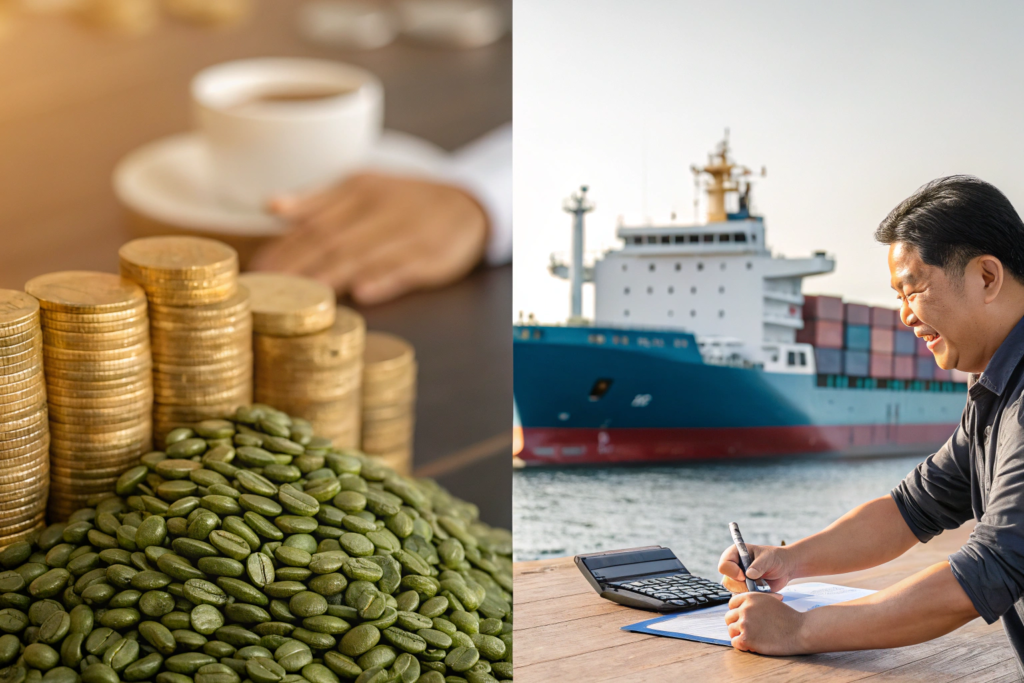
Here's the reality. A Colombian 85-point coffee might cost you $3.80-$4.20 per pound FOB. Our 85-point Baoshan Catimor is often $3.00-$3.50 per pound FOB. That's a savings of $0.50 to $1.00 per pound. On a container of 42,000 pounds, that's $21,000 to $42,000 in your pocket. That's not pocket change. That's a new roaster, a marketing campaign, or a fatter margin. Why the price gap? It's not because the quality is lower. It's because Yunnan hasn't yet acquired the "romance tax" that Colombia and Guatemala command. The market hasn't fully priced in the quality because the awareness hasn't caught up. That's an arbitrage opportunity for you. The other cost advantage is stability. Chinese Arabica is not tightly coupled to the C-market. We price based on our production cost plus a fair margin. We offer fixed-price contracts. The wild speculative swings that hit Brazilian or Colombian prices are muted here. You can budget with confidence. And the infrastructure advantage is real. China's ports don't strike. The roads don't wash out. The power grid is stable. The export process is digitized and efficient. These intangibles—predictability, on-time shipping, consistent quality—save you money by preventing crises. At BeanofCoffee, we pass these structural advantages directly to our buyers.
How Does Direct Farm Sourcing Eliminate Middleman Markups?
The coffee supply chain is infamous for its layers. Farmer sells to a local trader. Trader sells to a regional aggregator. Aggregator sells to an exporter. Exporter sells to an importer. Importer sells to a distributor. Distributor sells to you. Each layer takes a cut. The coffee gets more expensive, and you get further from its origin.
Our model is different. We are the farmer. We are the processor. We are the exporter. When you buy from BeanofCoffee, you're buying from the company that owns the trees. There are exactly two parties in the transaction: us and you. That vertical integration eliminates three or four middleman layers that a typical Colombian or Ethiopian coffee passes through. Those layers aren't free. Each one adds cents per pound. By cutting them out, we can offer a lower FOB price at the same cup quality. Or, put another way, we can invest more into the farm—better picking, better sorting, better processing—and still be competitive on price. A detail most people miss: traceability is a direct financial benefit. If there's a quality issue with a lot, I can trace it to a specific day's picking on a specific terrace. I don't have to argue with a middleman who's pointing fingers at another middleman. The problem gets solved faster, and the cost of the solution isn't passed through three layers of margin. Direct sourcing is not just a marketing term. It's a cost-control mechanism. You're paying for coffee, not for a supply chain's overhead. The Direct Trade principles articulate this model, though we've been practicing it on our own farm long before it had a label.
Why Are Chinese Arabica Prices Less Volatile Than Latin American Origins?
Volatility in coffee prices comes from two main sources: the C-market (the ICE futures exchange) and local production shocks (frost, drought, disease). Latin American Arabica is heavily referenced to the C-market. When a hedge fund decides to go long on soft commodities, the C-price spikes. When Brazil has a bumper crop, the C-price crashes. Your contract price, if it's floating on the C, spikes and crashes with it.
Chinese Arabica is somewhat insulated from both of these forces. First, China's coffee production is primarily consumed domestically, or sold through direct export contracts. It's not a massive commodity flow that feeds the speculative futures market. The pricing is more grounded in the actual cost of production plus a negotiated margin. Second, Yunnan's climate is distinct from Latin America's. We don't get Brazilian frosts. We don't get Central American hurricanes. Our main climate risk is an occasional cold snap, which is manageable with site selection and variety choice. The result is that our FOB prices move in a narrow, predictable band year over year. I can offer a fixed price for 12 months. A Colombian supplier might hesitate to do that because a sudden frost could double their replacement cost. For you, the buyer, this stability is a superpower. You can set your roasted coffee prices, print your menus, and sign your wholesale contracts knowing your green coffee cost won't suddenly spike 30% mid-year. That predictability is worth real money to a business owner. It allows you to plan, to invest, to grow, without the constant anxiety of the commodities ticker. The ICE coffee futures data shows the historical volatility. Compare that to the stability of a direct Chinese farm contract. The difference is stark.
How Does China's Export Infrastructure Ensure Reliable Delivery?
A great coffee at a great price is worthless if it doesn't arrive. I've heard the horror stories from other origins: containers sitting at port for three weeks because a strike shut down the terminal, or a mudslide washed out the only road to the mill. Reliability is a form of quality. And in this category, China's infrastructure is a decisive advantage.
China's export infrastructure offers coffee buyers unmatched reliability: deep-water ports with frequent sailings to the US and Europe, a highly developed road and rail network connecting Yunnan to the coast, digitized customs procedures that speed clearance, and no history of port strikes or major logistical disruptions. Your container sails on schedule, period.
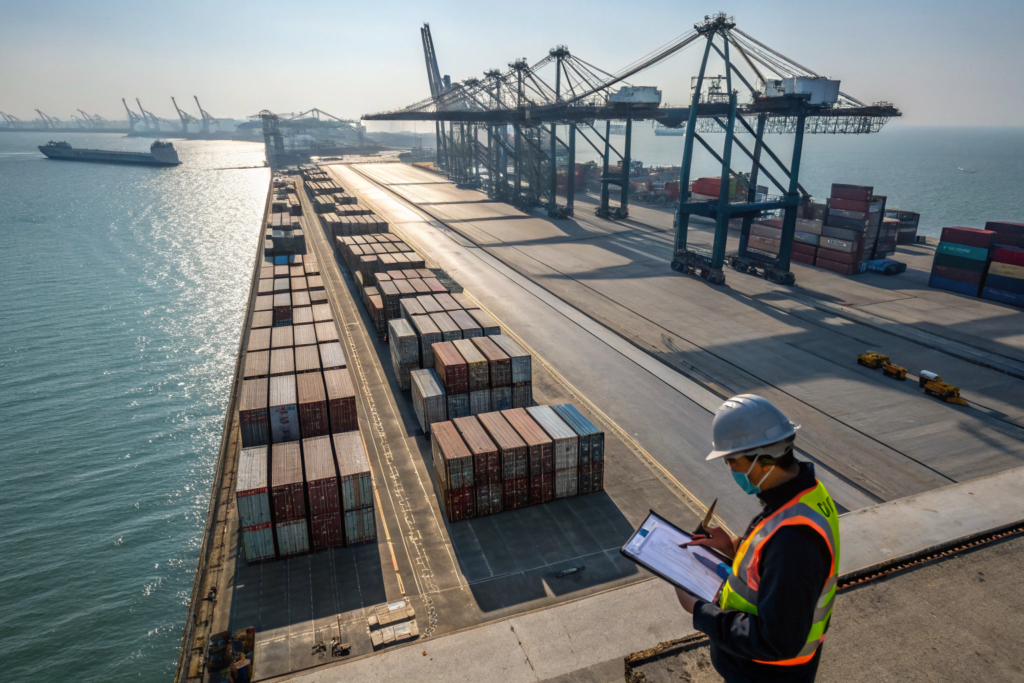
Let's talk specifics. Our farm is in Baoshan, in western Yunnan. The coffee is milled, bagged, and containerized on-site. The container is trucked to Shenzhen or Shanghai port. The highways are modern, well-maintained, and rarely disrupted by weather. The journey is 2-3 days, predictable to the hour. At the port, the container enters a streamlined terminal system. The customs clearance for export is digital. Documents are filed electronically. Inspections are scheduled and efficient. The container is loaded onto a vessel. The major shipping alliances—Maersk, MSC, CMA CGM, COSCO—all operate frequent services from Chinese ports to the US West Coast, East Coast, and Europe. The sailing schedules are dense. If you miss one vessel by a day, there's another one in three days, not three weeks. This density of options means your coffee doesn't wait. Contrast this with an origin where one road connects the farm to a small port with infrequent sailings. A single broken truck can delay a container by a week. That's a cost you absorb in lost roasting time. China's infrastructure is built for volume and speed. Coffee is a small cargo compared to electronics or furniture, but it benefits from the same world-class logistics backbone. At BeanofCoffee, we track every container with GPS. You get real-time updates: "Truck departed mill," "Container gated at terminal," "Vessel departed," "ETA updated." This transparency removes the anxiety of the unknown. You know where your coffee is, always.
How Does the Shipping Frequency from China Compare to Other Origins?
Shipping frequency is a hidden cost factor. If you can only get a container from a particular origin every three weeks, you have to order further in advance, hold more inventory, and risk running out if a shipment is delayed. Frequent sailings reduce your working capital needs.
Chinese ports offer some of the most frequent sailings in the world. Shanghai to Los Angeles/Long Beach has multiple daily departures across various shipping alliances. Shenzhen to Oakland has several per week. To the East Coast, via the Panama Canal, there are weekly sailings from all major Chinese ports. This frequency means you can order a container and have it on the water within a week of the coffee being ready. You don't have to wait for a bi-weekly sailing window. You don't have to consolidate with other cargo to make a minimum volume. Your container gets a slot quickly. For a roaster practicing just-in-time inventory, this is powerful. You can keep lower stock levels and rely on the supply chain to replenish quickly. The transit times themselves are competitive. China to the US West Coast: 14-18 days. That's similar to Colombia or Brazil to the US East Coast. China to Europe: 25-30 days, comparable to East African origins. The difference is not so much the time on the water, but the frequency and reliability of the schedules. Fewer delays, fewer skipped port calls, fewer roll-overs (where your container gets bumped to a later ship because the current one is overbooked). The shipping lines prioritize their high-volume routes. China-US and China-Europe are the highest-volume container routes in the world. Your coffee container is riding on the same reliable backbone as every other major import. The Freightos transit time calculator lets you compare routes and frequencies from different origins.
What Food Safety and Traceability Systems Are in Place?
Food safety is non-negotiable for the US and EU markets. A recall can destroy a brand. The FDA's Food Safety Modernization Act (FSMA) and the EU's stringent contaminant limits mean that your coffee has to be clean—not just in the cup, but chemically and microbiologically. China's top coffee exporters have invested heavily in meeting these standards.
At our facility, we operate under FSSC 22000 certification, a GFSI-benchmarked food safety standard. That means our entire process—from cherry reception to dry milling to container stuffing—is documented, controlled, and audited. We test every lot for moisture, water activity, and ochratoxin A before it ships. Ochratoxin A is a mycotoxin that can develop in poorly dried coffee. Our raised bed drying and sealed GrainPro storage keep it well below the EU's strict 5 ppb limit. The traceability system is digital. Every bag is barcoded. That barcode links to a database entry that includes the harvest date, the specific terrace block, the processing date, the drying duration, the moisture readings, the cupping score, and the container number. If a buyer finds a defect in a single bag, I can trace it back to a specific day's picking on a specific hectare. That's pharmaceutical-level traceability applied to agriculture. This isn't just for show. It's a legal requirement for the EU's upcoming deforestation regulations, and it's increasingly demanded by large US buyers who need to verify ethical and sustainable sourcing. A supplier who can't provide a paper trail from farm to container is a compliance risk. China's top coffee farms have the technological and managerial capability to meet these standards. We're not a cottage industry. We're modern agricultural enterprises. The FSSC 22000 scheme details the requirements for food safety management. Our certificate is public and verifiable.
How to Market Chinese Arabica to Your Customers?
You've cupped the coffee. You've done the landed cost math. You're convinced. Now comes the real test: selling it to your customers. Chinese Arabica comes with a perception problem. Some customers will see "China" on the label and think "cheap" or "low quality." Your job is to reframe that perception. The good news is that the story is compelling and the quality backs it up.
Marketing Chinese Arabica requires leading with quality and story, not apology. Position it as a discovery origin—a high-altitude specialty coffee from an ancient tea-growing region, produced to exacting modern standards. Use blind tastings, origin stories, and transparent sourcing narratives to turn customer skepticism into curiosity and loyalty.
The worst thing you can do is market it as "Chinese coffee" with a shrug, as if you're embarrassed. Lead with the cup quality. "This Yunnan single-origin cupped 86 points. It has notes of green apple, brown sugar, and black tea." Then add the origin context: "Grown at 1,500 meters in the Gaoligong Mountains of Yunnan, a region better known for its ancient tea trees. The same soil and climate that produce world-class oolong also produce this remarkable Arabica." That framing shifts the narrative from "coffee from a non-traditional origin" to "coffee from a region with a deep agricultural heritage, now applying that expertise to coffee." I've seen roasters do blind tasting events: three coffees, unlabeled. The Yunnan often wins or places second. When they reveal the origin, the reaction is always the same: "Really? Wow." That wow moment is marketing gold. It converts a skeptic into an advocate. The story is also appealing to a younger demographic that values discovery and authenticity over tradition. "I discovered this amazing coffee from China" is a more interesting social media post than "I bought another bag of Colombian." The novelty, backed by genuine quality, drives word-of-mouth. At BeanofCoffee, we support our buyers with origin photos, farm videos, and technical data they can use in their marketing. We're not just selling beans; we're co-creating the narrative.
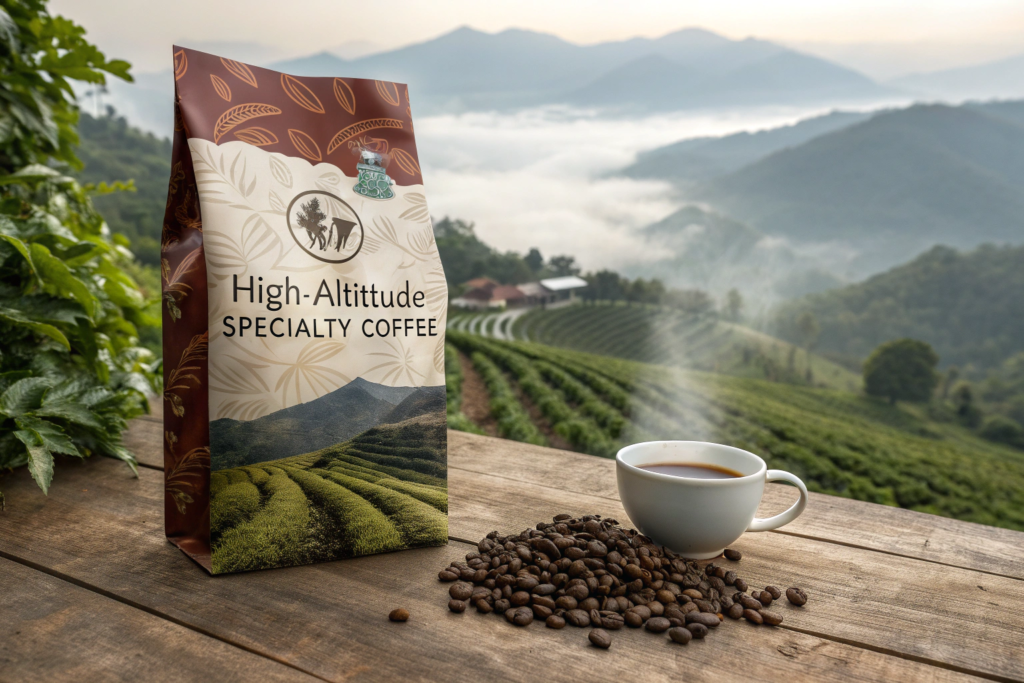
What Origin Story Resonates with Specialty Coffee Consumers?
The specialty coffee consumer is a storyteller at heart. They don't just drink coffee; they consume the narrative of where it came from, who grew it, and how. The Yunnan story has several powerful hooks that resonate with this audience.
The first hook is the "ancient land, new craft" narrative. Yunnan is the birthplace of tea. The same mountains that have produced pu'erh and oolong for millennia are now producing specialty coffee. This isn't a commodity factory farm. It's a region with a deep, almost spiritual relationship with cultivated plants. The transition from tea to coffee is a fascinating story of agricultural adaptation. The second hook is the "quality surprise" angle. Consumers love discovering something that defies their expectations. A Chinese coffee that cups like a high-end Central American is a genuine surprise. It's a talking point. It makes the drinker feel like they're in on a secret before the rest of the world catches on. The third hook is the "modern precision" story. Our farm uses drone monitoring, Brix meters, optical sorters, and pharmaceutical-grade traceability. This isn't a rustic, romanticized farm where a donkey carries the cherries. It's a high-tech agricultural operation. For a consumer who values transparency and data, this is appealing. You can tell the story of a specific lot: "Harvested on October 12th at Block 7A, Brix reading 20.2, dried for 18 days on raised beds, cupped at 86.25 by a Q-grader." That level of detail makes the coffee feel special, curated, worthy of a premium price. The farmer story is also powerful. I'm a real person, not a faceless commodity aggregator. I've walked every terrace. I cup every lot. I answer emails personally. That human connection, even across an ocean, matters to consumers who want to know that their coffee was grown by someone who cares. The SCA's consumer research shows that origin story and farmer connection are key drivers of specialty coffee purchasing decisions.
How to Position Yunnan Arabica on Your Menu?
Menu placement is a strategic decision. Yunnan Arabica can fill several roles, depending on your lineup. The most common approaches are: a featured single-origin, a blend workhorse, or an espresso base.
As a single-origin, Yunnan Catimor shines as a pour-over or drip offering. Its clean, tea-like body and malic acidity make it an excellent afternoon coffee—bright, refreshing, and not too heavy. Position it as "Yunnan Gaoligong" or "Baoshan Single Origin." The tasting notes should highlight green apple, brown sugar, and black tea. The price point should be premium, in line with your Guatemalan or Colombian single origins. The quality justifies it. As a blend workhorse, Yunnan Arabica provides brightness and structure at a competitive cost. A roaster I work with in Texas uses our Catimor as 70% of his house blend. He adds 20% Brazilian for body and 10% Indian Robusta for crema. The result is a complex, balanced espresso that costs him less than a Colombian-based blend would. His customers love it, and his margin improved. As an espresso base, a slightly darker roast of Yunnan Catimor brings out chocolate and caramel notes while retaining enough acidity to keep the shot lively. It pairs beautifully with milk, standing up to the fat and sweetness without getting lost. If you're nervous about customer reaction, start by featuring it as a limited-time "Discovery Series" offering. Gauge the feedback. I've seen roasters do this and then add Yunnan as a permanent offering within a few months because the customer response was so positive. The Barista Guild resources can help your staff tell the story effectively at the point of sale.
Conclusion
Choosing Chinese Arabica is no longer a gamble. It's a calculated business decision based on cup quality, cost stability, infrastructure reliability, and marketing differentiation. Yunnan Catimor, grown at 1,500 meters in Baoshan's ancient tea mountains, is now scoring 84-87 points in blind cuppings—matching the traditional origins you've relied on for years. It arrives on time, in food-grade containers, with full traceability and international food safety certifications. And it costs less per pound than an equivalent Colombian or Guatemalan lot, not because it's inferior, but because the market hasn't yet applied the "romance tax" that those origins command. That window of opportunity won't stay open forever. As more roasters discover Yunnan, the price gap will narrow.
At BeanofCoffee, we're not just exporting a commodity. We're building an origin. Our 10,000-acre farm in Baoshan is a fully integrated operation—from nursery to dry mill to container loading. We control every variable that affects quality and reliability. And we offer fixed-price contracts that let you plan your business without anxiety about the C-market.
If you want to cup our current harvest, discuss blend options, or get a landed cost quote for your specific port, contact my export director, Cathy Cai. She'll send you samples and a detailed offer. Email her at: cathy@beanofcoffee.com.