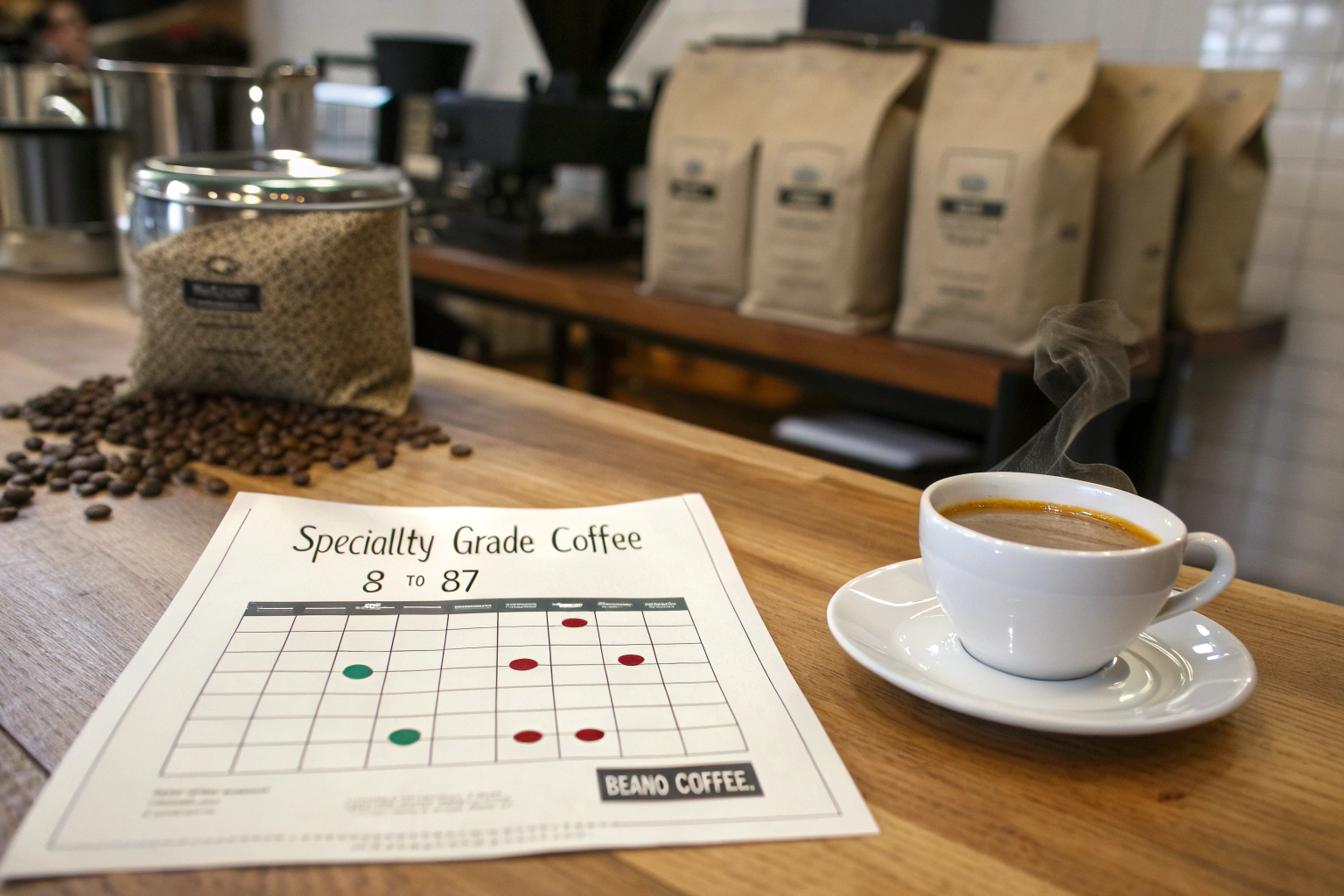
You see the number on the offer sheet. "Cupping Score: 84.5." You nod, as if you understand. But do you? What does an 84.5 actually mean? Is it good? Is it great? Is it worth the price? The specialty coffee world is obsessed with numbers. Scores drive prices. Scores sell bags. But a score without context is just a number. A buyer who does not understand the architecture of a cupping score is a buyer who cannot make informed decisions. I have sat on cupping panels and assigned these scores. I know what lies behind the decimal point. It is not a mystery. It is a system.
A cupping score over 80 points is the threshold of specialty grade coffee. It signifies a clean, sweet cup with no primary defects and a distinctive, pleasant character. At BeanofCoffee, our export lots consistently score between 83 and 87 points. This range places them firmly in the specialty category, competing with quality coffees from any origin in the world.
The score is a summary of a detailed sensory evaluation. Let me decode it for you, so the next time you see an 85 on a spec sheet, you know exactly what you are buying.
What Does the 80-Point Threshold Actually Signify?
The 80-point mark is not arbitrary. It is the formal boundary defined by the Specialty Coffee Association, or SCA. A coffee that scores 80 or above on the SCA 100-point scale is classified as "specialty." A coffee below 80 is classified as "commodity." The difference is profound.
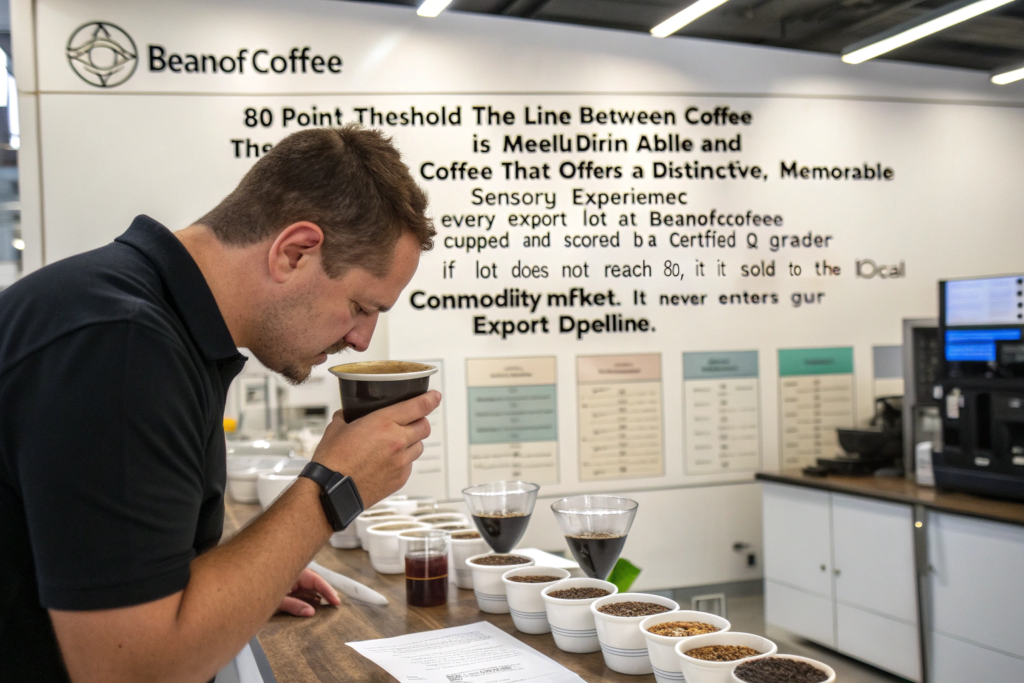
The 80-point threshold is the line between coffee that is merely drinkable and coffee that offers a distinctive, memorable sensory experience. At BeanofCoffee, every export lot is cupped and scored by a certified Q Grader. If a lot does not reach 80, it is sold to the local commodity market. It never enters our export pipeline.
The threshold is a quality gate. It protects the integrity of the specialty label.
How Is the SCA Cupping Form Structured to Reward Quality?
The SCA cupping form is a structured evaluation of ten specific attributes. Each attribute is scored on a 16-point scale, in quarter-point increments. The attributes are: fragrance/aroma, flavor, aftertaste, acidity, body, balance, uniformity, clean cup, sweetness, and overall impression. The scores for these ten attributes are added together, and then 36 points are added to bring the total to a 100-point scale. The categories of fragrance/aroma, flavor, aftertaste, acidity, body, and balance are each worth up to 8 points in the final score. Uniformity, clean cup, and sweetness are each worth up to 2 points. Overall impression is worth up to 8 points. This weighting system reflects the priorities of specialty coffee. Flavor, acidity, and balance are the heavy hitters. A defect in any category drags the score down.
Why Is a "Clean Cup" a Non-Negotiable Foundation?
The "clean cup" attribute is a pass-fail test disguised as a score. It measures the absence of defects. A defect is any sensory taint. A ferment note from over-fermentation. A moldy note from poor drying. A phenolic note from a bad cherry. If a cup has any detectable defect, the clean cup score drops below 6, and the overall score is capped below 80, regardless of how good the other attributes are. This is because a defect is a fundamental flaw. It cannot be masked by a nice acidity or a sweet body. For our export lots, the clean cup score is almost always a 10, which translates to a perfect 2 points in the final calculation. This is the result of our obsessive sorting and processing control. It is the foundation on which the other flavors are built.
How to Use the Score Breakdown to Predict Roasting Behavior?
The total score is a headline. The breakdown is the article. A coffee can score 85 in two very different ways. One might have a 9.0 acidity and a 7.0 body. Another might have a 7.0 acidity and a 9.0 body. Both are 85s, but they will roast and taste very differently.
The attribute breakdown tells you how the coffee will behave in your roaster. A high acidity score predicts a bright, lively cup that shines at a light roast. A high body score predicts a heavy, syrupy mouthfeel that performs well at a medium or dark roast. At BeanofCoffee, I provide the full cupping breakdown, not just the total score, so my clients can match the coffee to their roast profile and their customer base.
The score is a data set. Learn to read the data.
What Does a High Acidity Score Indicate for a Washed Yunnan?
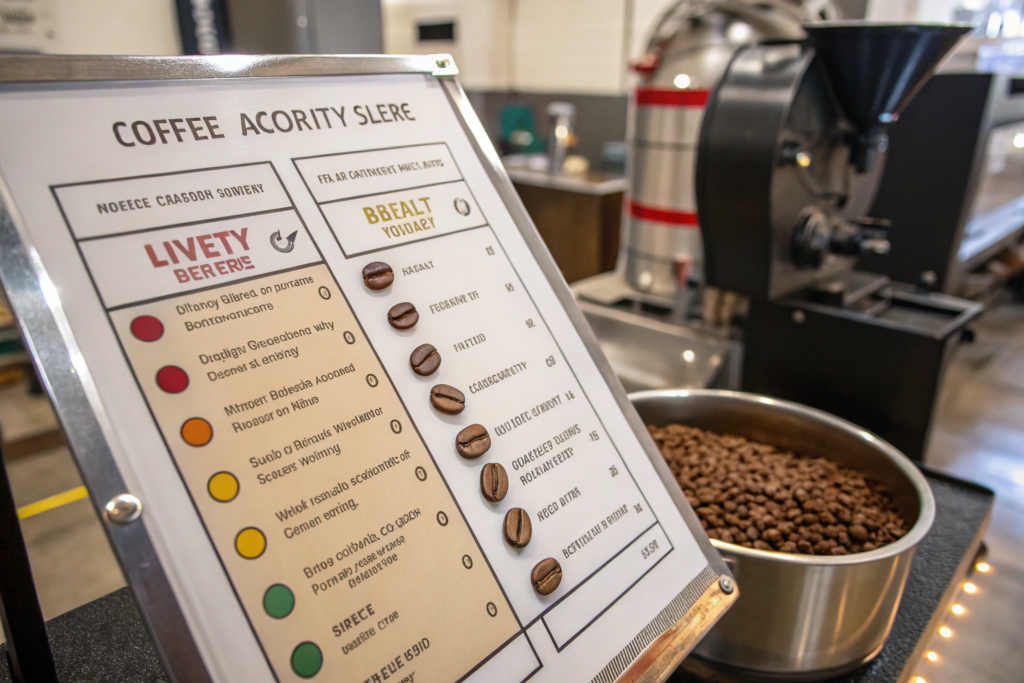
A high acidity score, say an 8.5 or 9.0, on a washed Yunnan Arabica indicates a vibrant, complex acidity. On our Baoshan coffees, this is often a malic acidity, reminiscent of green apple or crisp pear. This acidity is volatile. It is the first thing to fade with age. It is also the first thing to be destroyed by a dark roast. If you see a high acidity score, it is a signal. This coffee is meant for a light or medium roast. It is meant to be consumed fresh. It will shine as a pour-over or a filter coffee, where the brightness can be showcased. If you take this coffee and roast it dark for an espresso blend, you will lose the very attribute that gave it the high score. The score guides your roasting decision.
How Does the Body Score Influence Your Espresso Blend Choice?
The body score measures the weight and texture of the coffee on your tongue. A high body score, an 8.5 or 9.0, indicates a heavy, syrupy, coating mouthfeel. This is a prized attribute for espresso. It creates the rich, creamy sensation that espresso drinkers love. A coffee with a high body and a moderate acidity is an ideal base for an espresso blend. It provides the foundation. Our natural processed lots from Baoshan often score very high on body. They have a jammy, heavy character. A washed lot might score slightly lower on body but higher on acidity and cleanliness. By understanding the body score, you can choose the right building blocks for your blend. The score tells you the physical experience of the cup.
How Do Scores Between 83 and 87 Differ in Real-World Quality?
The difference between an 83 and an 87 might seem small. Four points. But on the SCA scale, those points represent a significant jump in sensory quality and rarity. An 83 is a solid, everyday specialty coffee. An 87 is a coffee that could compete in a national barista competition.
An 83-point coffee is clean, sweet, and balanced, with a clear origin character. An 87-point coffee is more intense, more complex, and more memorable, often with distinctive or unusual flavor notes. At BeanofCoffee, our core export volumes sit in the 83 to 85 range, while our micro-lots and special selections reach 86 and 87, when the harvest and processing align perfectly.
The price difference between an 83 and an 87 is real. The quality difference is real. You need to know which one fits your product.

What Flavor Clarity Can You Expect at the 85-Point Level?
An 85-point coffee is a well-executed specialty coffee. The flavor notes on the cupping form are clear and easily identifiable. A washed Yunnan at 85 points might show notes of "brown sugar, green apple, black tea, and a hint of cocoa." These are not vague suggestions. They are recognizable flavors that a trained cupper can consistently identify. The acidity is balanced and pleasant. The body is medium and smooth. The finish is clean. There are no off-flavors. This is a coffee that will please a broad audience. It is complex enough to be interesting, but not so exotic that it alienates the average drinker. It is the ideal flagship single-origin for a growing roastery.
When Does the "Overall Impression" Category Push a Score Past 85?
The "overall impression" category is the subjective judgment of the cupper. It is their holistic assessment of the cup. It is the category that answers the question, "How good is this coffee, really?" A coffee can score well on all the individual attributes, but if it does not come together into a coherent, satisfying whole, the overall impression score will be low. A coffee that scores an 87 or 88 has a high overall impression. It is more than the sum of its parts. It has a "wow" factor. The flavor is not just good. It is memorable. It lingers. It makes you want another sip. This is the point where a coffee transcends the technical scores and becomes an experience. It is rare. It is what we chase every harvest. A lot that scores 87 is a treasure.
How to Use Cupping Scores to Build a Profitable Product Line?
The cupping score is not just a bragging right. It is a market positioning tool. The score you buy should match the product you are trying to sell. Buying an 87-point coffee for a house espresso blend is a waste of money. Buying an 83-point coffee and trying to market it as a competition micro-lot is a recipe for disappointment.
Cupping scores should guide your product segmentation. You can use an 83 to 85 as a high-volume, everyday specialty offering. You reserve 86 and above for limited releases and premium pricing. At BeanofCoffee, I help my clients select lots that fit their specific market tier, maximizing their return on every pound of green coffee.
The score is a tool for pricing and positioning. Use it strategically.
Why Is an 84-Point Coffee Often the "Workhorse" for a Roaster?
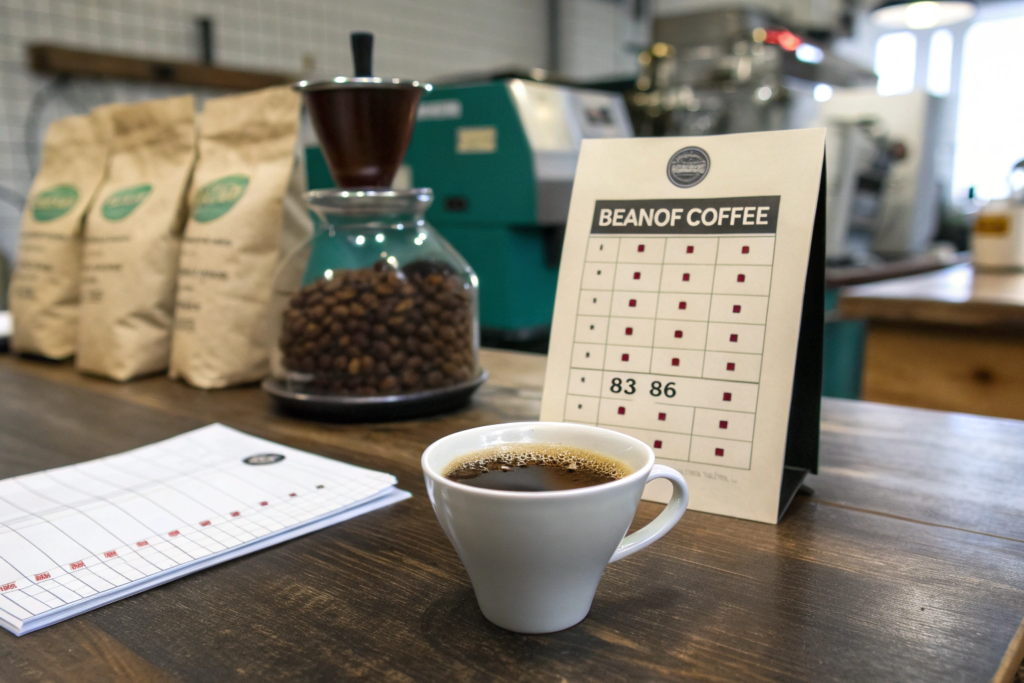
The 84-point coffee is the backbone of a specialty roastery. It is good enough to carry the specialty label and command a premium price, but it is affordable enough to be used in high volume. It is versatile. It can be sold as a single-origin. It can be the base of an espresso blend. It can be used in cold brew. It is forgiving to roast. It has a long shelf life. It is the reliable, profitable product that pays the bills. Our washed Yunnan Catimor at 84 points is exactly this kind of coffee. It is not the rarest thing on our menu, but it might be the most valuable to a growing roaster. It allows you to offer a genuine specialty product at a price that your customers can afford every day.
How to Market a Lot Scoring 86 or 87 as a Limited Release?
A lot scoring 86 or 87 is special. It deserves special treatment. Do not mix it into a blend. Do not sell it in a generic bag. Create a limited release. Give it a name. Tell its story. It comes from a specific block on our farm. It was processed in a specific way. It was harvested on a specific date. The cupping score is the headline, but the story is the soul. Price it as a premium product. It should be the most expensive coffee on your menu. This creates a halo effect. It elevates the perception of your entire brand. A customer who cannot afford the $28 limited release might still buy your $18 everyday coffee, feeling that they are buying from a brand that knows quality. The limited release is not just a profit center. It is a marketing asset.
Conclusion
A cupping score is not a mystery. It is a precise, structured, and extremely useful piece of information. The 80-point threshold is the gate that separates specialty from commodity. The attribute breakdown tells you how the coffee will roast and what kind of cup it will produce. The difference between an 83 and an 87 is a real, tangible difference in sensory quality and market positioning. By understanding the score, you stop being a passive buyer who just reads a number. You become an informed partner who can select the right coffee for the right product at the right price. This is the expertise that separates a successful roaster from a struggling one.
Let's decode the numbers together. Contact me, Cathy Cai, at cathy@beanofcoffee.com. I will send you the full cupping breakdowns for our current Baoshan lots, along with samples. We can cup them together on a video call. I will show you the data behind the scores and help you find the perfect lot for your next product. The score is the key to unlocking the cup. Let's use it.