You find a promising new lot. Maybe it's our washed Catimor from Baoshan. You want to taste it before you commit to a full container. Makes sense. So you ask for a sample. But then the fear creeps in. Do you need an FDA registration? A customs broker? Some expensive import license? You've heard horror stories of samples getting seized, destroyed, or stuck in a bureaucratic black hole for weeks. The whole point of a sample is speed and low cost. If the legal headache is bigger than the potential deal, you might just walk away. I've lost count of how many buyers hesitated at this exact step. They overestimate the barrier. They think importing a 2-kilo bag of beans is the same as importing a 20-ton container. It is not.
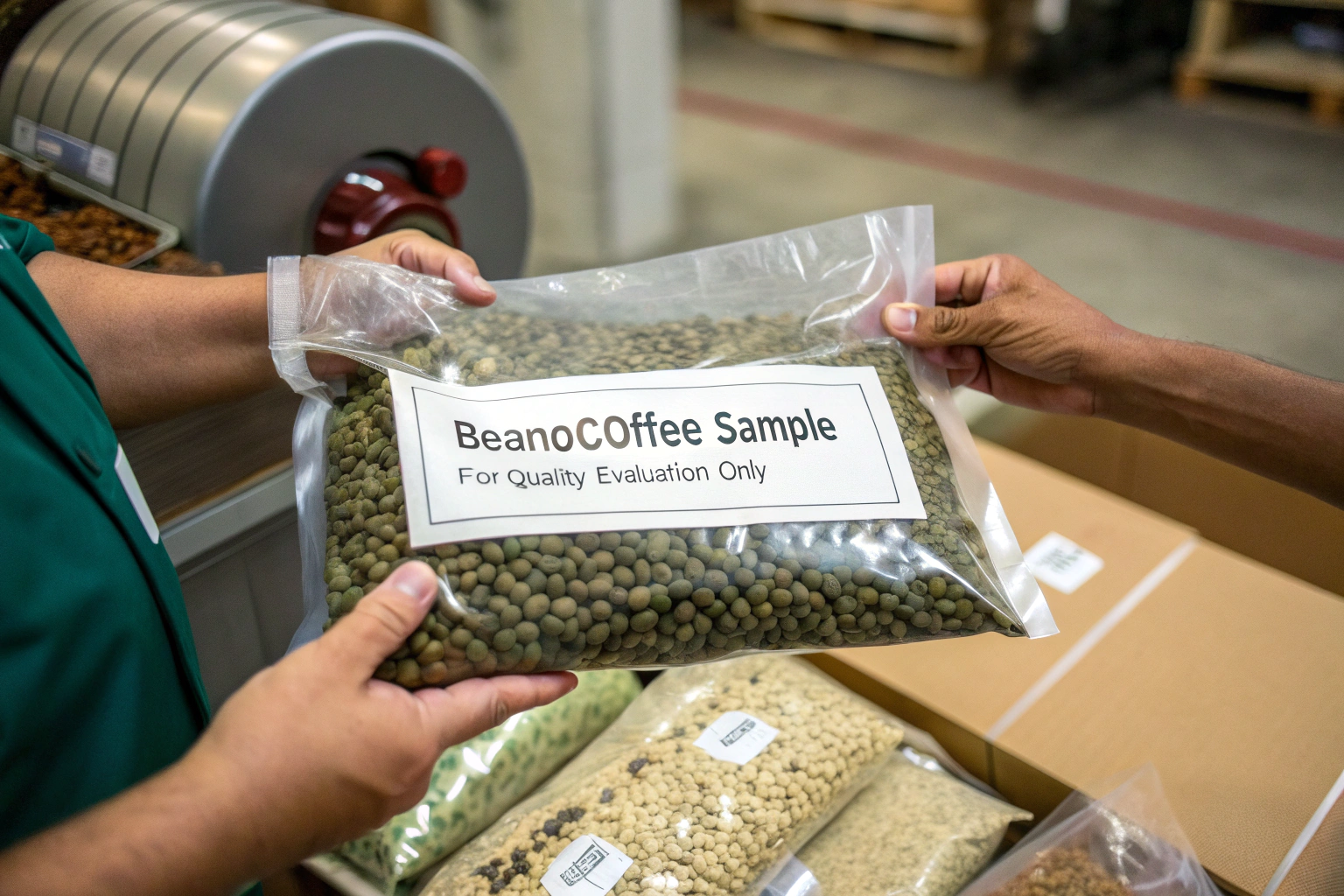
You can legally import roasted or green coffee samples into the U.S. without a commercial import license. The FDA and CBP have specific exemptions for low-value, non-commercial samples intended for quality evaluation. As long as the shipment is properly labeled, under a certain weight, and clearly marked as a sample, you can receive our BeanofCoffee test batches at your roastery doorstep with minimal paperwork.
So, what exactly are those rules? What do you write on the box? And how do you make sure the package doesn't get flagged and delayed? Let me break down the exact, practical steps. I ship samples from Yunnan to the U.S. and Europe every single week. This is our routine.
What Are the U.S. Customs Exemptions for Unlicensed Coffee Samples?
The key phrase here is "informal entry." Most commercial coffee imports go through "formal entry," which requires a bond, a broker, and a ton of paperwork. Samples can slide through a much simpler door. The U.S. Customs and Border Protection has a de minimis threshold and specific commodity exemptions for food samples. You just need to know the magic numbers.
The main exemption is Section 321 entry for shipments valued under $800. Coffee samples sent via courier, with zero commercial value for resale, fall cleanly under this. Additionally, the FDA's Prior Notice rule has exemptions for food samples that are for "quality assurance" purposes only. At BeanofCoffee, we prepare all sample documentation to precisely match these federal exemption criteria.
The law isn't trying to trap you. It just wants clarity. Give it clarity.
What Is a Section 321 Entry and How Does It Apply to Coffee?
Section 321 is your best friend. It's a U.S. customs rule that allows goods valued at $800 or less to enter the country duty-free and with minimal paperwork. Your sample shipment of 2 kilos of green coffee, valued maybe at $20, absolutely qualifies. You don't need a formal entry. You don't need a customs bond. The courier company, like DHL or FedEx, will usually handle the clearance under their own blanket bond. They'll charge you a small disbursement fee, maybe $15 to $25, and that's it. The package hits your door in 3 to 5 days. The critical detail on the commercial invoice we attach is the value declaration. We must state the actual cost of the beans, not a fictitious zero. But we also add a statement: "Samples for testing only. No commercial value. Value stated for customs purposes only." This phrase triggers the Section 321 informal entry. The officer sees it, checks the value, and waves it through. If you try to claim the value is $0, the system gets suspicious. A zero-value food item raises a red flag. A low, realistic value does not. Honesty is the lubricant of customs.
How Does the FDA Prior Notice Exemption Work for Taste Samples?
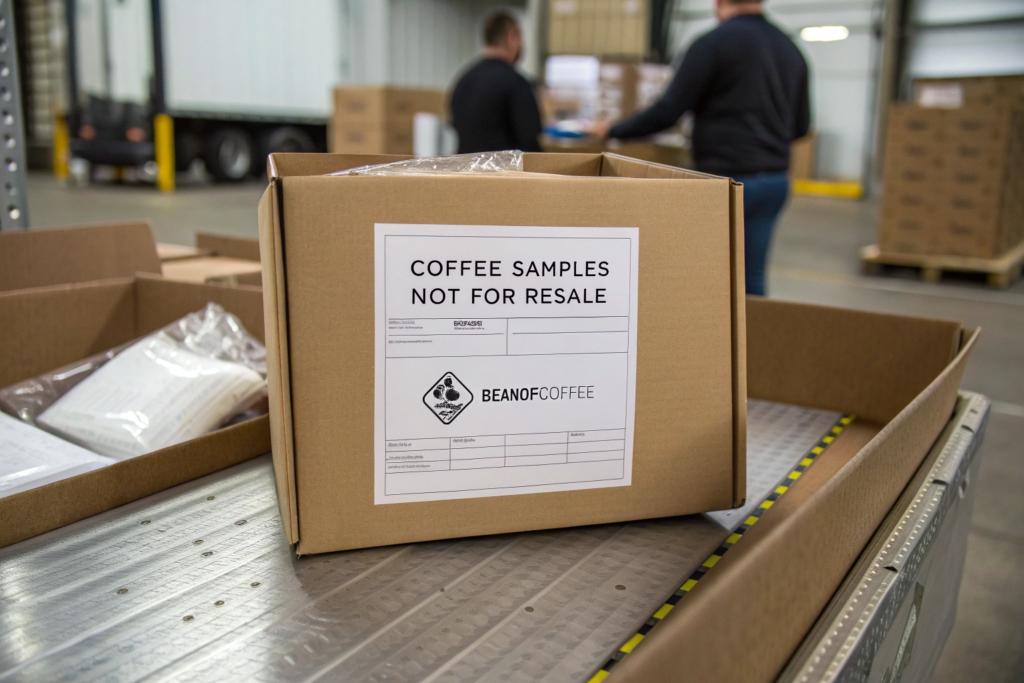
The FDA requires prior notice for all food shipments entering the U.S. But there is a sample exemption. If the coffee is for "quality assurance, research, or analysis," and not for retail sale, you can be exempt from the full prior notice filing. The key is that the sample is non-consumptive in a commercial sense. You are not selling the roasted coffee to a customer. You are cupping it. You are evaluating it. The box should be clearly marked "SAMPLES - NOT FOR RESALE." On the commercial invoice, we always include the FDA product code for coffee, which is 21 A 99, and the intended use code for "samples for testing." This pre-answers the FDA's question before they ask it. A common mistake is to send a 10-kilo box and still call it a "sample." That looks like a small commercial shipment trying to dodge duties. Keep it small. A truly reasonable sample size—1 to 3 kilos of green, maybe 500 grams of roasted—is believable. An unreasonable "sample" triggers a manual review. That review eats time. So, stay within the spirit of the rule, and the rule protects you.
How to Properly Label and Document a Coffee Sample Shipment?
The label on the box is a dialogue with a busy customs officer. They scan hundreds of packages an hour. Your label needs to answer their silent questions in the two seconds they look at it. A poorly labeled sample gets pulled aside. It sits in a warehouse. The coffee stales. The opportunity fades.
Proper labeling is your first line of defense. The outer box must clearly state "COFFEE SAMPLES - NOT FOR RESALE." Inside, a detailed commercial invoice and a packing list must mirror this. Our shipping team at BeanofCoffee uses a standardized sample documentation pack that has never been rejected by U.S. FDA or EU customs authorities.
It's not about fancy documents. It's about documents that match the physical reality of the box.
What Must a Sample Commercial Invoice Include to Clear Customs Smoothly?
A sample invoice is not optional. It's a legal declaration. It must include our company name, your company name, and a detailed description. Don't write "coffee." Write "Green coffee beans, Arabica, unroasted, not decaffeinated, country of origin China, for quality sampling purposes only." Be tedious. The HS code for green coffee is 0901.11. Use it. Include the quantity, the unit price, and the total value, even if it's small. Include the weight in kilograms. And finally, include two declarative statements in bold. First, "These commodities are samples for testing only. No commercial value." Second, "We certify that this shipment contains no prohibited or restricted agricultural products." Sign it. Date it. This invoice travels on the outside of the box in a clear plastic pouch. The courier scans it. If the invoice is missing or vague, the courier generates a default description, which is often wrong. Then the FDA stops it for a manual entry. The 15 minutes I spend on a perfect invoice saves the 15 days of a customs hold.
How Should the Physical Packaging Protect the Sample's Integrity?
Customs might open the box. They have the right. If they open it and see a messy, stained, unlabeled bag of beans, they might question its origin and safety. The packaging needs to look professional and food-safe. We vacuum-seal green samples in a clear, food-grade plastic bag. We then seal that bag inside a sturdy, opaque GrainPro liner. The outer box is a double-walled cardboard box. Inside, we include a printed cupping sheet, a copy of the invoice, and a simple one-page letter. The letter says, "Dear Customs Officer, This package contains green coffee samples for cupping evaluation by [Your Company Name]. These beans are raw agricultural products, not roasted, and are not for direct human consumption in this form. Please handle with care." This letter is a psychological tool. It respects the officer's role. It answers their concerns before they escalate. The total package weight is usually under 3 kilos. It's clean, it's dry, and it has no odor leakage. A tidy, well-documented package signals legitimacy. A shabby package signals risk. Legitimacy moves fast. Risk sits in the inspection queue.
How Do Roasted Samples Differ from Green Samples in Import Rules?
Roasted coffee and green coffee are different beasts in the eyes of the law. Green coffee is an agricultural raw material. Roasted coffee is a processed food product. The regulatory bar is slightly higher for roasted because it's closer to the consumer's mouth. But the sample exemptions still apply. You just need to adjust the paperwork.
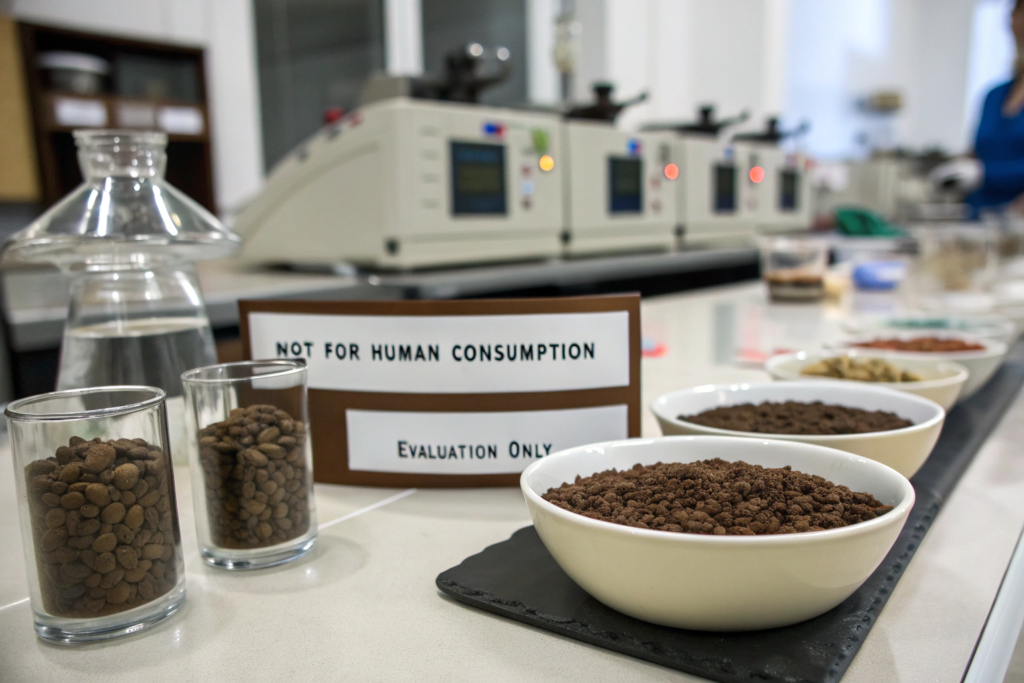
Roasted coffee samples face a slightly stricter FDA scrutiny because they are a ready-to-eat product. However, the same Section 321 and quality-assurance exemptions still hold. We label our roasted samples from BeanofCoffee with a "not for human consumption - evaluation only" statement, which keeps them in the testing category and out of the retail category.
The key distinction is intent. Are you eating this, or are you cupping it?
Why Does the FDA Treat Roasted Coffee Differently?
Roasting is processing. Processing introduces microbiological control points. The FDA cares about the sanitation of the roastery. For a commercial shipment of roasted beans, you'd need the roastery's FDA registration number. But for a sample? Not usually. The exemption hinges on the non-commercial intent. We still include the roastery's basic food safety certification on our side, just in case. But the declaration on the box shifts slightly. It reads: "Roasted coffee samples for sensory evaluation. Not for retail sale or public consumption." This phrase "sensory evaluation" is a term of art in the food industry. It means professional tasting. It signals that the recipient is a qualified professional, not a random consumer. The package must still be small, under a kilo typically. A 10-kilo box of roasted coffee looks like you're supplying a cafe without a license. That will get flagged and possibly destroyed. Keep it small, keep it clearly for evaluation, and the FDA exemption logic should apply. If you have a specific concern, you can always ask us to ship the green sample and you roast it yourself. That eliminates the roasted complexity entirely. Many of our pros do exactly that.
What Are the Best Practices for Shipping Roasted Samples Internationally?
Speed is the essence. Roasted coffee stales fast. A sample that sits in a customs shed for two weeks is useless by the time you taste it. We ship roasted samples via express air courier, never standard post. The premium cost is worth the speed. We also flush the bag with nitrogen before sealing. This pushes out the oxygen and buys you a few extra days of freshness. The customs declaration for roasted coffee uses HS code 0901.21. The description must still say "roasted coffee samples for evaluation." We also add a small note on the cupping card inside: "Roasted on [Date]. Best evaluated within 10 days." This practice also demonstrates to any inspecting officer that the product is highly perishable and time-sensitive. Some agencies will accelerate the inspection if they know the product's utility is decaying. It's a subtle nudge, but it works.
What Are the Risks of Ordering Samples from Unverified Suppliers?
You get an unsolicited offer on LinkedIn. "Premium Yunnan Arabica samples, free shipping." Sounds great. You give them your address. The package arrives. You cup it. It's mediocre, but you move on. Three weeks later, you get a bill from the courier for customs duties, brokerage fees, and a warehouse storage charge. The "free" sample just cost you $200. This is a classic sting from unverified middlemen who don't understand export protocols.
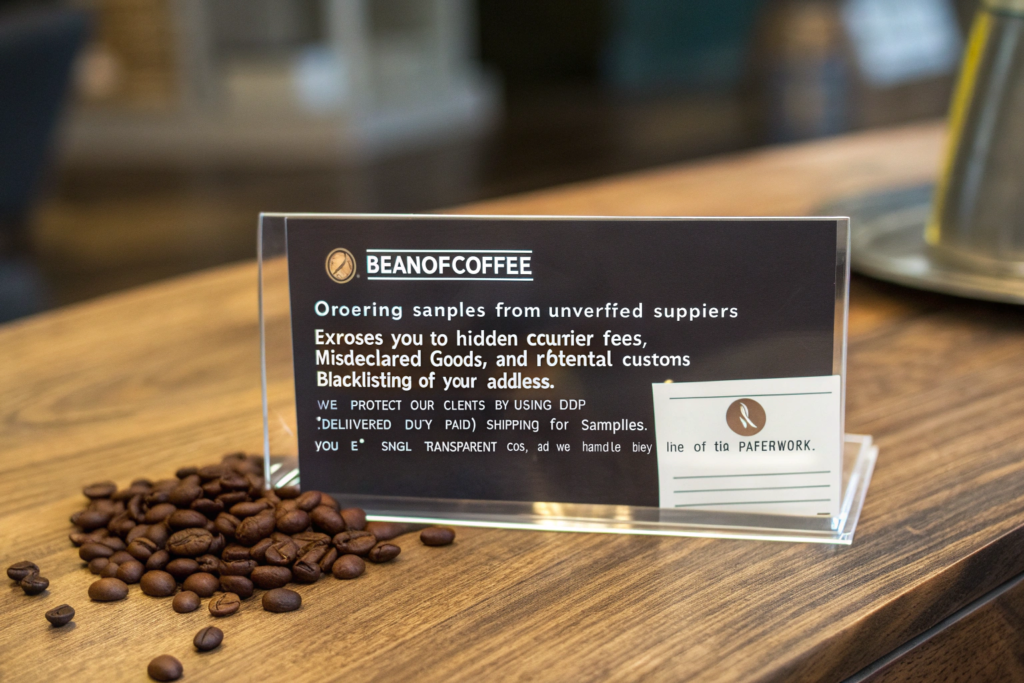
Ordering samples from unverified suppliers exposes you to hidden courier fees, misdeclared goods, and potential customs blacklisting of your address. We protect our clients at BeanofCoffee by using DDP (Delivered Duty Paid) shipping for samples. You get a single transparent cost, and we handle every line of the paperwork.
Your address is an asset. Don't let a sloppy shipper ruin it.
What Happens If a Sample Is Misdeclared at Customs?
Misdeclaration is the biggest risk. A supplier who writes "gift" or "no commercial value" on a 5-kilo box is lying. Customs sees the weight. They know coffee. They open it. They find a commercial invoice tucked inside with different numbers. Now you, the recipient, are flagged. Your name and address go into a watch list. Future shipments, even legitimate ones, get extra scrutiny. Delays become the norm. In a worst-case scenario, U.S. CBP issues a penalty for aiding a false declaration, even if you didn't know the sender lied. To protect yourself, always instruct the supplier to use your company's formal legal name on the address. Don't use a nickname or a residential address if it looks like a business shipment. Insist on seeing the airway bill and the commercial invoice before the package leaves. If they hesitate, cancel the request. A legitimate exporter will have no problem with this transparency. We send the documents to you for pre-approval as a standard practice. You correct any errors. You confirm the HS code. You sign off. Then we ship. It's a two-minute check that prevents months of headaches.
How to Vet a Supplier's Sample Shipping Protocol?
Ask three questions before giving your address. One, "Do you ship samples DDP or DAP?" DDP means they pay all duties and taxes upfront. You just receive. DAP means you pay the import fees on arrival. Know which one it is. Two, "What courier do you use and can I have the tracking number?" A professional uses DHL, FedEx, or UPS and provides the tracking instantly. A broker using a slow postal service is a red flag. Three, "Can I see a photo of the shipping label and invoice before dispatch?" This one question filters out 90% of the bad actors. If they can't produce a clean label with proper harmonized codes, they aren't a serious export business. At BeanofCoffee, we do all three automatically. It's not special treatment. It's just the minimum standard for international trade. Your sample is your first physical touchpoint with us. It should arrive fast, fresh, and legally clean, with zero surprise bills. That's how you build a supply relationship that scales.
Conclusion
Importing coffee samples without a license is not a loophole. It's a built-in feature of international trade law, designed exactly for your situation. You are a professional buyer evaluating a product. The rules support you, as long as you respect the three pillars of sample entry. First, stay within the spirit of "small and non-commercial." Second, document everything with brutal honesty. Third, use a supplier who knows the difference between a DDP courier packet and a misdeclared postal box. When these pillars are in place, the FDA and CBP become a quiet background process, not a scary barrier. You get to focus on what matters: roasting the sample, cupping the profile, and deciding if this is the next feature on your menu.
Let's start with a sample that proves our quality and our professionalism in the same package. Contact me, Cathy Cai, at cathy@beanofcoffee.com. I'll personally arrange a DDP sample shipment from our Baoshan mill to your door. I'll send you the invoice for approval before it leaves. You taste the coffee, risk-free and paperwork-free. That's how a direct trade partnership begins.