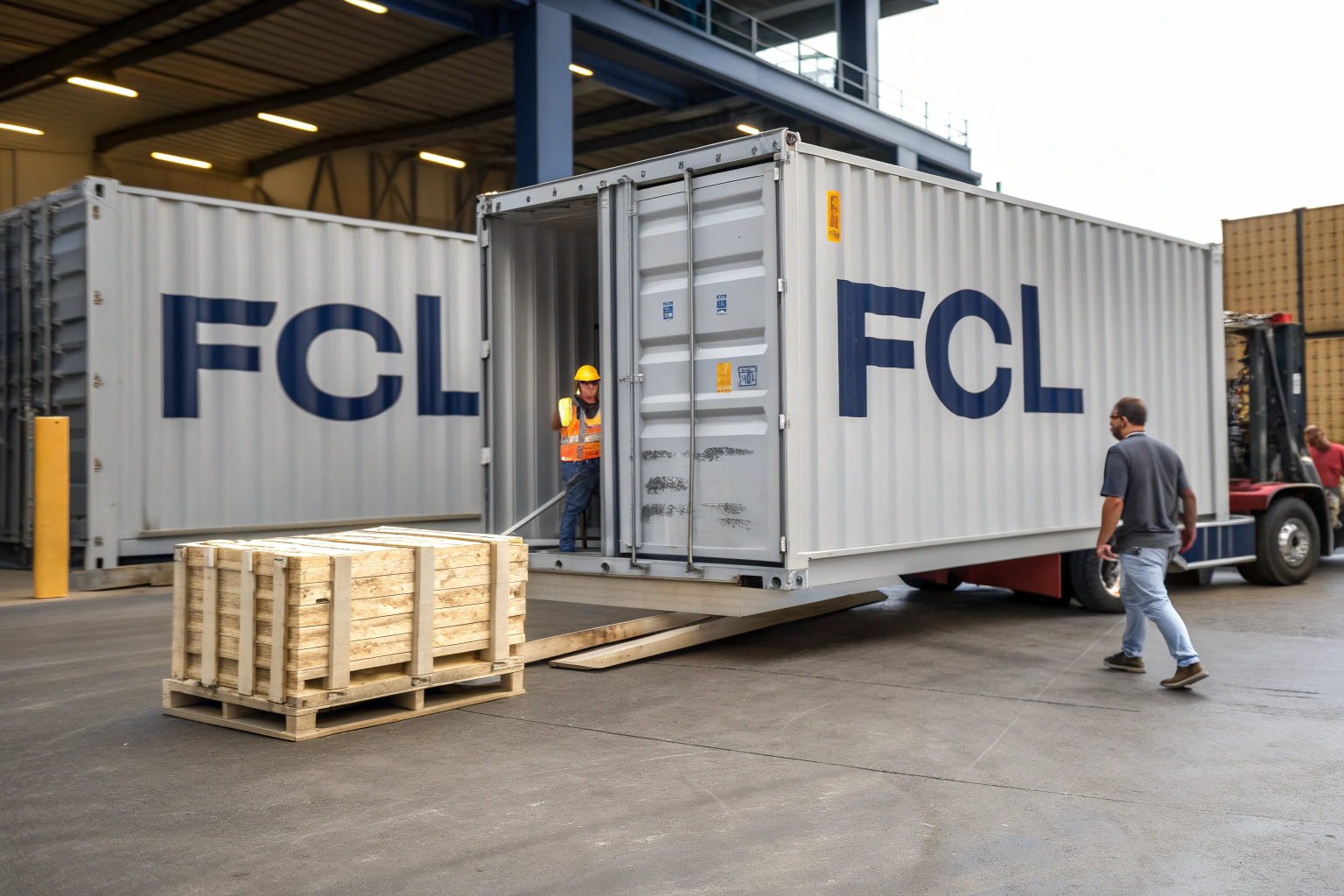
You have a decision. Your coffee is ready in our Baoshan warehouse. You need to move it. You look at the freight options. FCL. LCL. Three letters each. Big implications. You run a quick mental calculation. Your volume this quarter is 12 pallets. A full container is 20 pallets. So you think, "LCL. Easy. I only pay for what I use." But then the shipment arrives. The bags look scuffed. One has a small tear. The coffee cups with a faint cardboard note. The delay was three days longer than quoted. Was the saving really worth it? I have guided hundreds of containers across the ocean. I've seen the hidden math of both choices.
FCL, or Full Container Load, gives you a sealed, exclusive box that moves faster and protects quality. LCL, or Less than Container Load, shares space with other cargo and saves money on smaller volumes. For coffee, FCL is the safer, more reliable choice. At BeanofCoffee, I recommend FCL for any shipment over 10 pallets because the quality protection and speed outweigh the small premium.
The right answer is not a slogan. It's a calculation of your volume, your quality tolerance, and your urgency. Let's break down the real, on-the-ground differences.
How Does FCL Protect Green Coffee Quality Better Than LCL?
Coffee is a sensor. It absorbs smells. It breathes moisture. It is fragile in ways that steel or plastic are not. The physical journey of the container is a test of packaging and environment. FCL passes this test more cleanly than LCL almost every time. The reason is simple. A sealed box versus a shared warehouse.
FCL protects coffee quality by sealing the entire container at our Baoshan dry mill. Nobody opens it until it reaches your warehouse. LCL breaks this seal. The pallets are unloaded, stored in a transit shed, and consolidated with other goods. This exposes the beans to humidity swings, odors, and physical handling damage. At BeanofCoffee, we use FCL for all our premium Arabica exports to safeguard the cup score.
You are not shipping bricks. You are shipping a living seed.
Why Is Container Sealing Critical for Moisture Control?
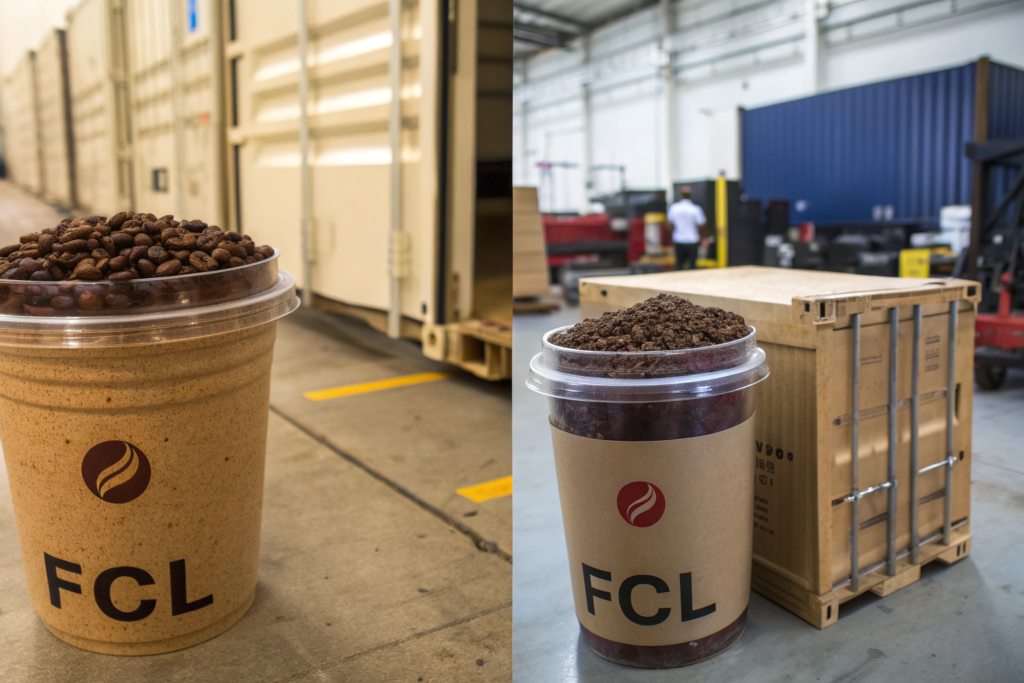
The sea is a wet place. A container at sea breathes. Day heats it. Night cools it. The air inside expands and contracts. If the container is sealed at origin with dry, cool mountain air inside, the internal climate stays fairly stable. The GrainPro bags manage the micro-environment. With FCL, the container doors are bolted shut and a tamper-proof seal is applied at our loading dock. The next time those doors open, it's your dock. With LCL, the pallets are pulled out at a Container Freight Station. They sit in an open warehouse. Maybe it's raining outside. The humidity spikes. The cardboard boxes absorb it. The green beans start to edge up in moisture content. We have measured this. An LCL consolidated shipment can show a 0.5% to 1% moisture increase compared to an FCL shipment on the same route. A 1% moisture gain doesn't sound like much. But it pushes the water activity dangerously close to the mold threshold. It steals shelf life. It mutes acidity. The seal is not just a piece of metal. It is a climate envelope.
How Does Physical Handling Damage Differ Between FCL and LCL?
Every time a bag is touched, it risks damage. FCL is touched twice. Forklift on at origin. Forklift off at destination. LCL is touched many more times. Forklift off the truck at the consolidation warehouse. Stored on a rack. Forklifted to a staging area. Loaded into a shared container with a pallet of machinery parts. Unloaded at a deconsolidation warehouse. Reloaded onto your truck. Each touch is a chance for a fork tine to puncture a bag. For the grain to shift. For a corner to get crushed. We had a client who insisted on LCL for a 10-pallet order to save $600. The container was consolidated with industrial rubber mats. The rubber odor infused the jute bags. The coffee smelled like a tire shop. The entire lot was ruined. The $600 saving evaporated in a $35,000 insurance claim. FCL avoids this random adjacency. Your coffee rides alone. The only smells in the container are the smells you packed.
When Does LCL Make More Financial Sense for Small Roasters?
I don't hate LCL. It has a place. Cash is oxygen for a small business. If you are a micro-roaster ordering 3 pallets, you cannot afford to pay for 20 pallets of empty space. The per-unit freight cost on FCL would destroy your margin. In this scenario, LCL is not a choice. It is a necessity.
LCL makes financial sense when your volume is below 8 to 10 pallets. You only pay for the cubic meters you occupy. For a small roaster testing the Yunnan origin for the first time, LCL through BeanofCoffee offers a low-commitment entry point. The freight premium per bag is higher, but the total cash outlay is much lower.
You trade risk for accessibility. That can be a smart trade when you are small.
What Is the Break-Even Point for FCL vs LCL in Coffee Logistics?
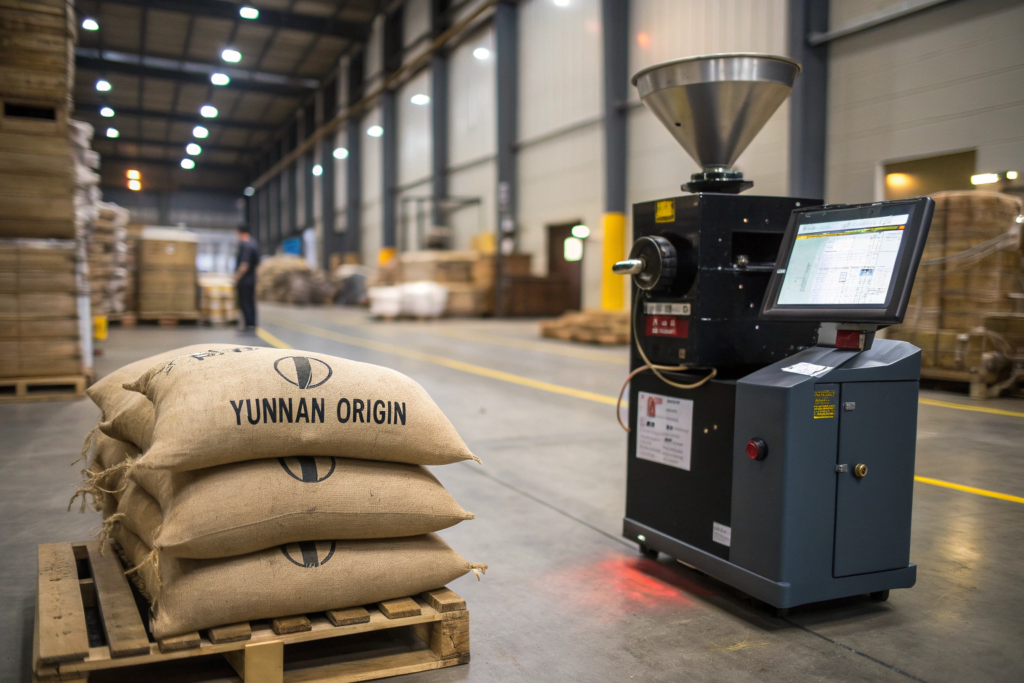
Let's talk numbers. The magic threshold is usually around 10 standard pallets. A 20-foot container holds 20 pallets of green coffee, roughly 19 metric tons. An LCL rate is quoted per cubic meter or per 100 kilos. On a per-bag basis, LCL is always more expensive. For example, LCL might cost $0.25 per pound. FCL might cost $0.15 per pound. But FCL charges for the full 42,000 pounds, even if you only ship 20,000. You do the math. At 20,000 pounds, LCL costs you $5,000. FCL costs you $6,300 for the whole box. LCL wins in absolute cash. But at 30,000 pounds, LCL costs $7,500. FCL is still $6,300. FCL wins. The crossover is somewhere around 10 to 12 pallets. Below that, LCL is a necessary cost. Above that, LCL is a waste of money and quality. We run this calculation for every client at BeanofCoffee. We don't push you to FCL if your volume doesn't justify it. We push you to be honest about the numbers.
How Can Consolidated FCL Programs Help Smaller Buyers?
Here is a creative solution we use. You are a small buyer. You need 5 pallets. Another small buyer in your city needs 6 pallets. You both buy from us. We consolidate both orders into one 20-foot FCL container. The container ships to a single destination warehouse. You each arrange your own local pickup. You share the FCL freight cost. You get FCL security and speed at an effective rate close to LCL. This requires coordination. It requires trust. But it works beautifully. We've set up several of these "buddy shipments" for roasters in Portland, Melbourne, and London. The container moves as an FCL unit. The seal stays intact. The quality stays high. The only split happens on local soil, after customs clearance. This is a strategic advantage of working with a supplier who has multiple clients in the same region. Ask us if we have another partner near you.
How Do FCL and LCL Affect Shipping Speed and Customs Clearance?
Time is the enemy of freshness. And time kills your ability to respond to market demand. The shipping speed difference between FCL and LCL is not about the vessel. The vessel crosses the ocean at the same speed. The difference is the days lost in port, before the ship and after the ship.
FCL is consistently faster because it bypasses the consolidation and deconsolidation processes. LCL adds 5 to 10 extra days to your total transit time. For buyers running lean inventories, this delay can force expensive spot purchases. Our logistics team at BeanofCoffee prioritizes FCL for just-in-time delivery contracts.
You can't sell coffee that is sitting in a shed waiting to be sorted.
Why Does LCL Require Extra Time at Origin and Destination?
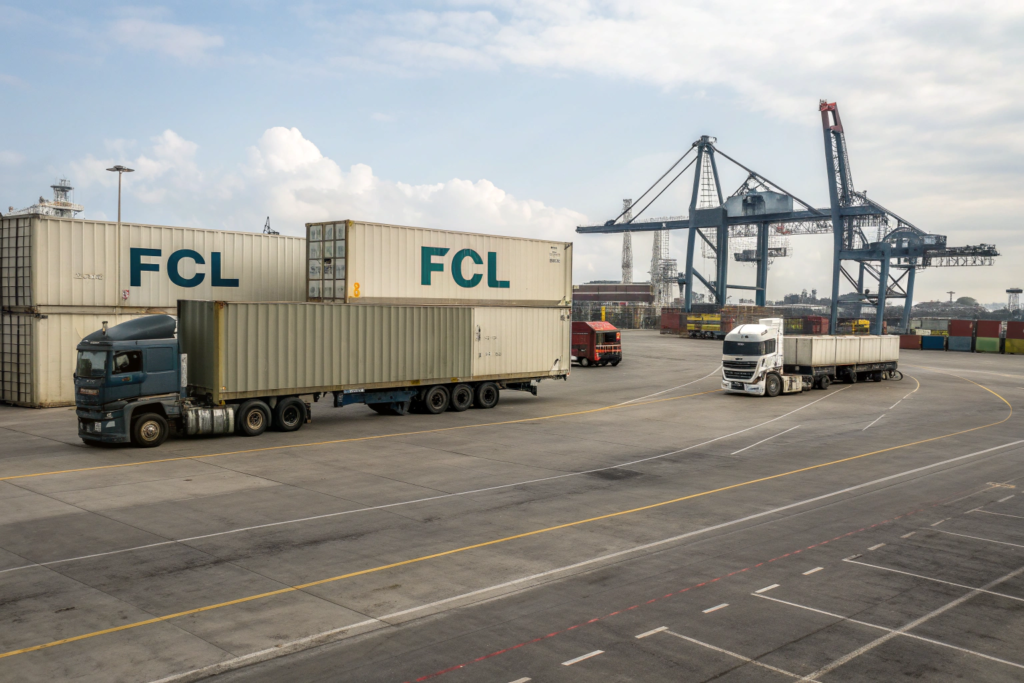
LCL has a hidden clock. At origin, the forwarder needs to collect your 3 pallets. Then they wait. They wait for other cargo to fill the rest of the container. The container only moves when it's economically full. This waiting game can take 3 to 7 days. Then at the destination port, the container is unloaded into a Container Freight Station. Your pallets are separated. The CFS is a busy, chaotic place. It takes another 2 to 5 days to process, sort, and make your pallets available for pickup. FCL has none of this. The truck picks up the full container from our warehouse. It goes straight to the port. It lands. Your trucker grabs it. The customs exam, if any, is a single exam on a sealed unit. With LCL, if one other consignee in your shared container gets flagged for a customs exam, the entire container is held. Your perfectly clean coffee sits in limbo because someone else's cargo is suspicious. This loss of control is the worst part of LCL. You are chained to strangers.
How Does FCL Simplify the Customs Entry Process?
A single consignee. A single bill of lading. A single entry. FCL customs clearance is a straight line. Your broker files one set of documents. The harmonized code is one code. The FDA prior notice is for one product. The customs bond covers one shipment. It's clean. LCL complicates this. The master bill of lading covers the whole container. Your goods are on a house bill of lading. The broker must link the two. Paperwork errors multiply. If the master bill has a typo, your house bill is delayed. If the container is selected for a VACIS X-ray scan, your boxes are in the image alongside boxes of unknown cargo. The officer might ask more questions. Simplicity equals speed in customs. FCL is the simplest possible scenario. It clears faster. You get your beans sooner.
What Are the Insurance and Liability Differences to Consider?
Something goes wrong. A container falls overboard. A fire in the warehouse. A reefers malfunction. In these nightmare moments, the insurance policy language is all that matters. FCL and LCL have very different liability chains. Knowing who is responsible is half the battle.
FCL insurance is straightforward single-risk coverage. LCL insurance involves multiple parties and shared liability, which can delay or complicate claims. For valuable specialty coffee, FCL gives you cleaner recourse. At BeanofCoffee, we always insure FCL shipments under an all-risk cargo policy with a single beneficiary: you.
Liability is a chain. LCL adds more links.
Why Is Subrogation More Complex in an LCL Claim?
Subrogation. Big word, simple meaning. It's the insurance company's right to recover money from the responsible party after paying your claim. In an FCL claim, the chain is short. Your insurer pays you. They sue the ocean carrier or the trucker. It's a two-party fight. In an LCL claim, it's a mess. Your coffee was damaged. Was it the origin consolidator? The destination CFS? A forklift driver in a middle warehouse? The carrier? The claim bounces between insurers. Each party blames the other. The investigation takes months. Meanwhile, your cash is tied up. You are waiting for a reimbursement check while buying replacement coffee. This liquidity crunch can hurt a small roaster. With FCL, the container seal log is the primary evidence. If the seal is intact at arrival, the damage happened before loading and the shipper is liable. If the seal is broken, the carrier is liable. It's a binary logic. LCL doesn't have this. The seal is broken at the CFS. The chain of custody is fragmented. Evidence is lost.
How to Structure a Cargo Insurance Policy for Both Modes?
You must have cargo insurance. Don't rely on the carrier's liability limit. The carrier pays by weight, not by value. A $5 per kilo payout on a $10 per kilo specialty coffee is a terrible deal. Buy an all-risk marine cargo insurance policy. For FCL, insure the full container value. It's simple. For LCL, insist that the policy covers "from warehouse to warehouse" under the Institute Cargo Clauses. Ensure the policy specifically covers "consolidation and deconsolidation risks." This clause covers the extra handling. It costs a small premium increase, maybe 0.1% of the cargo value. It's worth it. Also, photograph your pallets before they leave our warehouse. We do this as standard practice. Those photos are your proof of condition at origin. In an LCL dispute, they are the only thing that separates your clean stack of bags from the mess that arrives. Documentation is your weapon. Use it.
Conclusion
FCL and LCL are not rivals. They are two different tools for two different scales. FCL is the premium tool. It seals your coffee in a mobile vault, moves it fast, keeps it dry, and gives you a simple, enforceable insurance contract. It's the choice for volumes over 10 pallets, or for any coffee where the cupping score is your brand's promise. LCL is the access tool. It lets a small roaster buy small and stay liquid. The per-unit cost is higher, the time is slower, and the quality risk is real. But it opens the door. The smartest buyers use both strategically. They ship LCL when testing a new origin. They switch to FCL the moment the volume justifies it. They explore buddy consolidations to get FCL protection at LCL prices.
Let's figure out which mode fits your current order. Contact me, Cathy Cai, at cathy@beanofcoffee.com. I'll run a side-by-side freight calculation for your exact volume and destination. I'll show you the cost, the transit time, and the risk profile for both FCL and LCL. No bias. Just the numbers and a recommendation that protects your coffee and your cash.