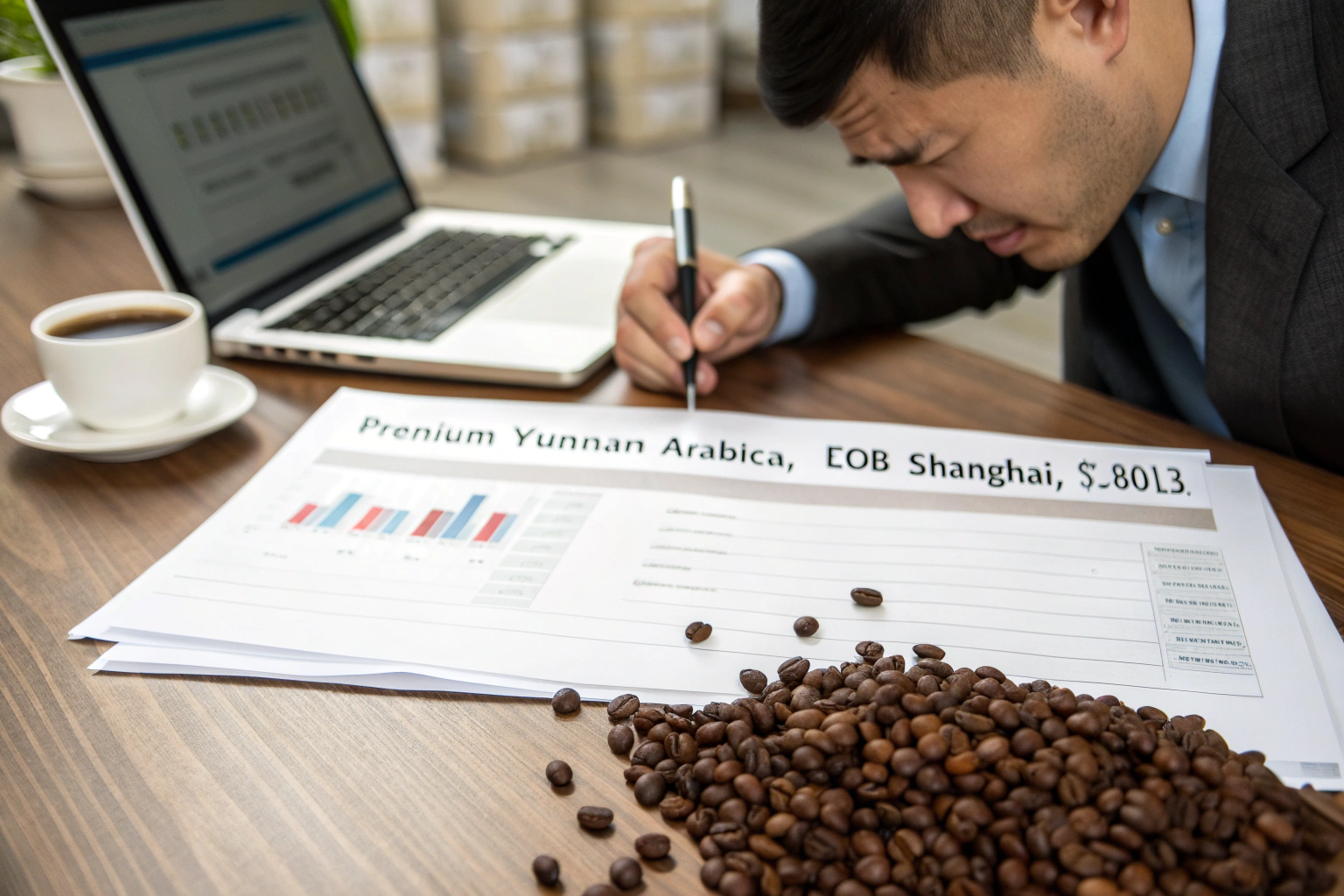
You get the offer. "Premium Yunnan Arabica, FOB Shanghai, $3.80/lb." Looks decent. You sign the contract. The coffee arrives. It cups okay. Then you do some digging. You find out the exporter you bought from doesn't own a single tree. They bought that lot from a trader in Kunming. That trader bought it from a processor in Baoshan. That processor bought cherry from a smallholder. Your $3.80 coffee passed through three hands before it touched your purchase order. Every hand took a cut. Every cut degraded the transparency. You overpaid. You just don't know by how much. I've watched this chain operate for years from inside the farm gate. And I'm telling you, it's a system built to keep you in the dark.
Direct sourcing from Baoshan cuts out middlemen by connecting your roastery straight to our farm gate at BeanofCoffee. You buy from the people who plant, grow, and process the beans. This eliminates the trader margins, the broker fees, and the quality dilution that happens when multiple consolidators mix lots. You get a better price and a cleaner traceability story.
So, what does "cutting out the middleman" actually mean for your bank account and your cupping table? It's not just a slogan. It's a structural change in how money and information flow. Let me take you behind the curtain of the traditional chain. I'll show you where the value leaks out. And I'll show you how a direct line to our Baoshan plantation plugs those leaks for good.
How Do Traditional Middleman Layers Inflate Your Green Coffee Price?
Let's walk through a real scenario. A smallholder family on the slopes of Gaoligong Mountain picks ripe Catimor cherry. They sell it to a local collector for cash that day. The collector trucks it to a wet mill. The wet mill processes it, dries it, and sells the parchment to a dry mill exporter in Kunming. The exporter mills it, sorts it, bags it, and sells it to an international trader. That trader sells it to your importer. Your importer sells it to you. That's six transactions. Six margins. Six sets of paperwork.
Every middleman layer adds a markup of 5% to 15% to the green coffee price without adding any value to the bean itself. The coffee doesn't get better because a trader in a city office re-bags it. At BeanofCoffee, we own the land, the wet mill, and the dry mill. We collapse six margins into one. You pay for the coffee and the processing, not a chain of commissions.
The price you pay isn't just the cost of production. It's the cost of the story someone tells you.
What Is the Real Cost of a Wet Mill Consolidator?
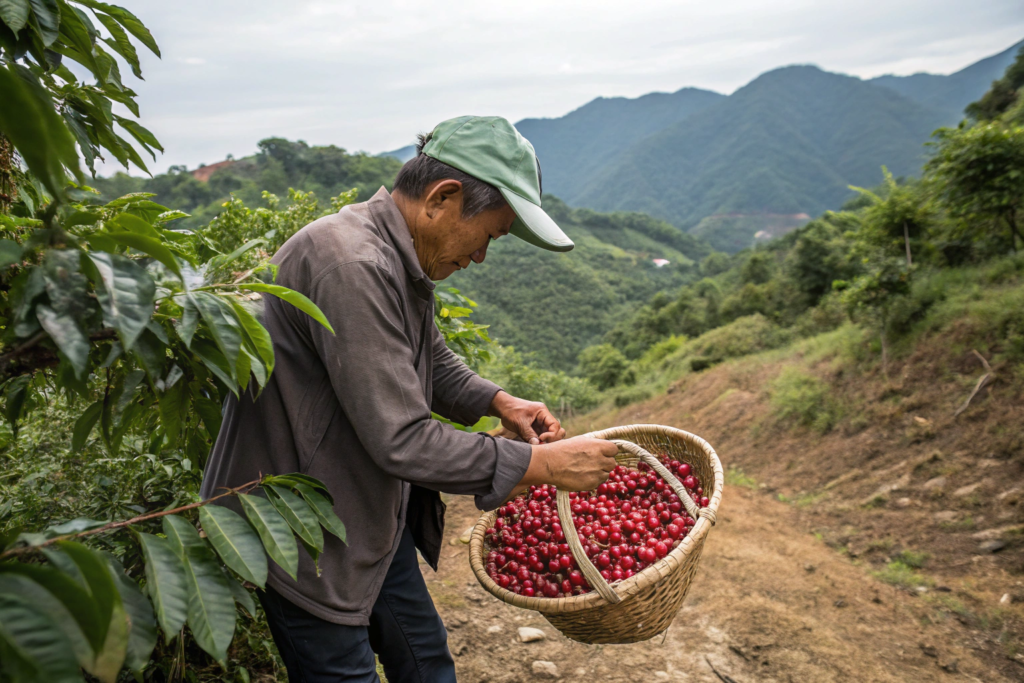
The wet mill consolidator is the first middleman. He buys wet parchment from dozens of small farmers. His business model is volume and blending. He dumps all the parchment into a big tank. Farmer A's pristine, high-altitude, fully ripe lot gets mixed with Farmer B's lower-elevation, partially unripe lot. The consolidated lot becomes average. The quality ceiling is destroyed. The consolidator pays the farmer a base cherry price, maybe $0.50 per kilo. He then sells the dried parchment to the next link for $1.80. His margin covers his truck, his labor, and his risk. But that margin is baked into your FOB price. And here's the real kicker. Because he blends, the traceability ends at his mill. You can't put a single-farm story on your bag. You can't verify the farming practices. You can't claim a unique micro-lot. You're paying a premium price for a commodity blend. By going direct to our single-origin estate, you bypass the consolidator entirely. You know the exact plot. You know the exact harvest date. You pay the farmer-processor directly.
How Does the Export Broker Fee Eat Into Your Margin?
After the dry mill, the coffee enters the export channel. Often, an export broker sits between the mill and the overseas buyer. The broker doesn't touch a bag. They send emails. They arrange shipping. They take a 2% to 4% commission on the FOB value. On a container worth $40,000, that's $800 to $1,600 for what is essentially a logistical coordination service. When you deal directly with BeanofCoffee, I am the export broker. My team handles the booking, the customs clearance, the phytosanitary certificate. But we don't charge an extra line item for that. It's included. Because we are the producer, the logistics cost is just part of our overhead, not a profit center. That savings either drops your landed price or stays as a bonus for your business. This is where the "good price" comes from. It's not a discount. It's just the absence of an unnecessary hand in your pocket.
Why Does the Middleman Model Destroy Farm-to-Cup Traceability?
Traceability is the currency of modern coffee. Your customers want a story. They want a QR code on the bag that shows the farmer's face. They want to know the altitude and the varietal. The middleman chain is a story-killer. Information gets lost at every transfer point. The consolidator doesn't pass on the farmer's name. The exporter labels the bag "Yunnan Grade 1." The romance evaporates.
The middleman model destroys traceability by design. Consolidation pools coffee from dozens of sources into generic lots. Direct sourcing from BeanofCoffee preserves the single-estate identity. Your lot can be traced back to a specific harvest block on our Baoshan plantation, giving you a genuine, marketable story that stands out on a crowded retail shelf.
Traceability isn't just marketing fluff. It's quality control.
How Does Lot Consolidation Obscure Quality Issues?
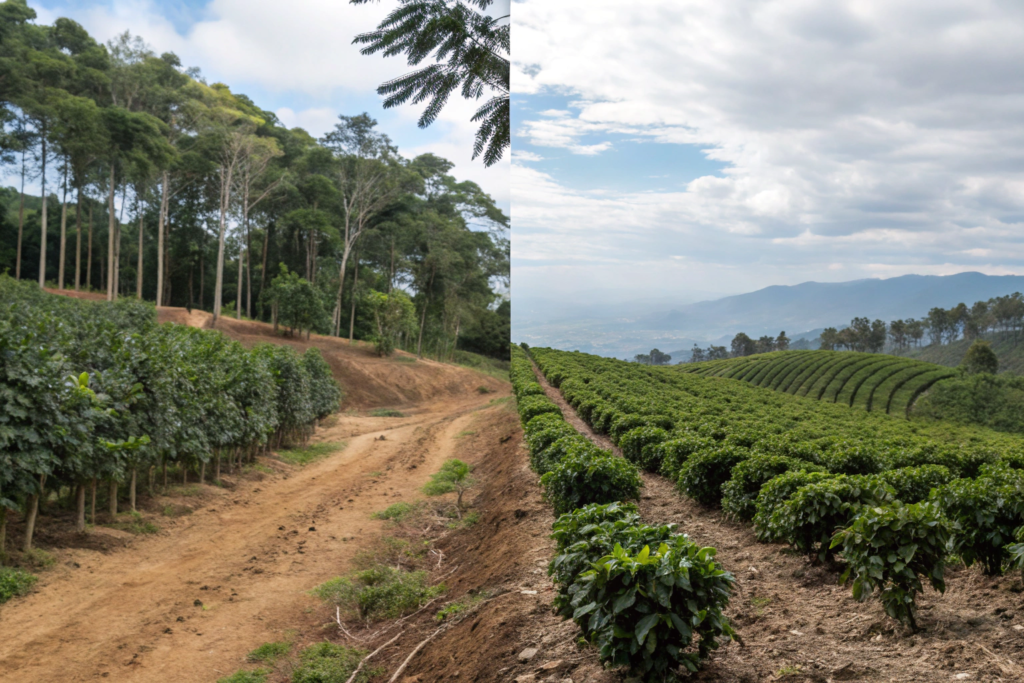
When a problem happens in a consolidated lot, you can't solve it. Say you find a few bags with a slight ferment taint. Your cupping team flags it. You go back to the exporter. The exporter goes back to the dry mill. The dry mill checks their records. They got parchment from four different wet mills that month. Which wet mill had the bad fermentation tank? No one knows. The evidence is blended. The responsible party is invisible. The problem doesn't get fixed. It repeats next season. With direct sourcing, the feedback loop is instant. I cup a lot with you via video call. You detect a faint earthy note. I walk to Block 7, check the drying beds, check the water source. I find a clogged drainage channel that caused a moisture spike. I fix it the next day. You saved the current lot from further damage. You improved the next lot. This is a living quality management system. It's only possible when the seller is also the farmer.
Why Can't Brokers Guarantee a Single-Origin Claim?
A broker can call anything a single origin. In the coffee world, "single origin" often just means one country. Yunnan is an origin. But you want single estate. Single lot. A broker selling consolidated Yunnan coffee cannot honestly claim that every bean in the bag came from the same mountain slope. They don't know. The physical paper trail is weak. I've seen brokers sell "Baoshan single origin" that was actually a blend of Baoshan, Pu'er, and even some cheaper Myanmar border coffee smuggled in. The price was low. The broker's margin was high. The buyer's trust was broken. When you source directly from our estate, I can send you GPS coordinates. I can send you soil samples. I can send you a video of the exact trees your coffee came from. That's a single-origin guarantee a middleman can't fake. For a brand buyer targeting the high-end market, this authenticity justifies a much higher retail price point.
How Does Direct Trade Improve the Pricing Stability for Roasters?
The C-market is a fever chart. It spikes on Brazilian frost rumors. It crashes on fund selling. A middleman's FOB price floats on this volatility, plus their own margin padding. You get whiplash. One quarter your blend cost is manageable. The next quarter it's blown your budget. You can't plan. You can't lock in retail contracts.
Direct trade decouples your coffee price from the speculative C-market noise. We set our farm-gate price based on our actual cost of production plus a fair margin. This price is stable across a season or even a year. For roasters sourcing from BeanofCoffee, this means you can forecast your Cost of Goods Sold with real accuracy, not just guesswork.
A stable price lets you build stable relationships with your own customers.
What Is a Farm-Gate Pricing Model and How Does It Work?
Farm-gate pricing is simple. It's a conversation, not a ticker symbol. I calculate what it costs to grow, harvest, process, and mill one pound of export-ready green coffee. That includes labor, fertilizer, water, electricity, depreciation on the mechanical dryer, certification audits, and packaging. That number is my floor. Then we add a negotiated margin that reflects the quality level of the lot. An 85-point washed Arabica has a different margin than an 80-point Robusta. We agree on a price. We sign a contract. That price holds for the contract period, usually 6 to 12 months. The C-market can do backflips. Your price doesn't move. Why? Because I'm not speculating on coffee futures. I'm selling you the physical product of my farm. The speculative paper market is a different game entirely. You get off that roller coaster. You pay a price that reflects the real economy, not the fear and greed of fund managers.
How Does a Long-Term Direct Contract Shield You From Tariff Surprises?
Tariffs are a political risk that middlemen use as an excuse to renegotiate. A broker might call you and say, "The tariff situation changed, I need a 10% surcharge." Is it real? Maybe. Maybe not. You have no way to verify. A direct trade partnership handles this differently. Our contract spells out the Incoterm. If you're on a FOB basis, the tariff is your cost, but we work together to manage it. We provide the exact harmonized code documentation. We explore duty-drawback schemes on the Chinese side. We even help you find a U.S. customs broker who specializes in food exemptions. We sit on the same side of the table. The middleman stands between two tables. We mitigate the tariff impact through logistics, not through price hikes. This collaborative approach to political risk is only possible when the producer and the roaster speak directly. Trust replaces the contract addendum.
How Does Bypassing Traders Speed Up the Supply Chain Timeline?
You wait. And you wait. The broker says the coffee is at the mill. Then it's delayed at the warehouse. Then the documents are stuck in approval. Every extra link in the chain adds a week. A traditional chain from a smallholder in Yunnan to a U.S. port can take 4 months of just paperwork and consolidation before the ship even leaves.
Bypassing traders cuts the supply chain timeline dramatically. Because BeanofCoffee controls the entire chain from cherry to container, we can move from a signed contract to a loaded vessel in as little as three weeks. This speed is a competitive weapon for roasters who need to respond to market trends fast.
Time is the hidden cost of middlemen. You pay it in inventory drag.

How Fast Can a Directly Sourced Container Leave Baoshan?
Here is our real-world timeline. You sign a contract on Monday. Our dry mill schedules your lot for processing on Tuesday. We grade, sort, and bag by Friday. The container is trucked to the stuffing warehouse over the weekend. We load it Monday. Customs clearance is submitted electronically that same day. The truck reaches Shanghai port in three days. The vessel sails within the week. End to end, from handshake to sail, is about 14 to 21 days. Compare this to the broker model. The broker needs to aggregate enough orders to buy a full lot from the mill. That wait can be weeks. Then they need to arrange transport from the mill to a third-party warehouse. More waiting. Then documentation from multiple sources needs to be collated. Our speed comes from integration. The mill, the warehouse, and the export office are all under one roof. We don't wait for anyone. We just execute. For a buyer like Ron, who is obsessed with timeliness, this reduction in lead time is pure gold.
Why Does a Shorter Chain Mean Fresher Beans on Your Dock?
Coffee is a fresh product. The clock is ticking. Every month of delay, the volatile aromatics fade. The acidity mellows into flatness. A middleman chain stores coffee in generic, non-climate-controlled warehouses. It sits there while the trader waits for the market to tick up. I've seen brokers hold coffee for six months just to squeeze an extra 20 cents per pound. You receive a 10-month-old "new crop." At BeanofCoffee, we don't store coffee to speculate. We store coffee to meet contracted delivery dates. That's a totally different mindset. Your container is loaded with coffee that was milled that month. It hits the ocean within weeks of being a living seed. It arrives at your roastery with the maximum remaining shelf life. The difference in the cup is undeniable. The bloom is bigger. The sweetness is more vibrant. This is the final gift of cutting out the middleman. You aren't just saving money. You're tasting time.
Conclusion
The middleman model is a relic. It was built in an era when communication was slow and roasters couldn't easily reach farmers on the other side of the planet. That era is dead. Today, a container of coffee that passed through four hands is just a container of lost value. Lost money to commissions. Lost quality to consolidation. Lost time to waiting. Lost stories to generic labeling. Direct sourcing from our Baoshan plantation is not a romantic idea. It's a hard-nosed business decision. It's a financial formula that compresses the supply chain into a straight line from our soil to your roaster. You pay one fair, stable price. You get one traceable, single-estate product. You move at a speed that keeps your blends fresh and your inventory lean.
Cut the extra hands out of your supply chain. Let's build a direct pipeline from our farm to your hopper. Reach out to me, Cathy Cai, at cathy@beanofcoffee.com. Tell me your volume needs and your target flavor profile. I'll give you a transparent, farm-gate price quote that no middleman can beat. No brokers. No consolidators. Just your roastery and our trees.