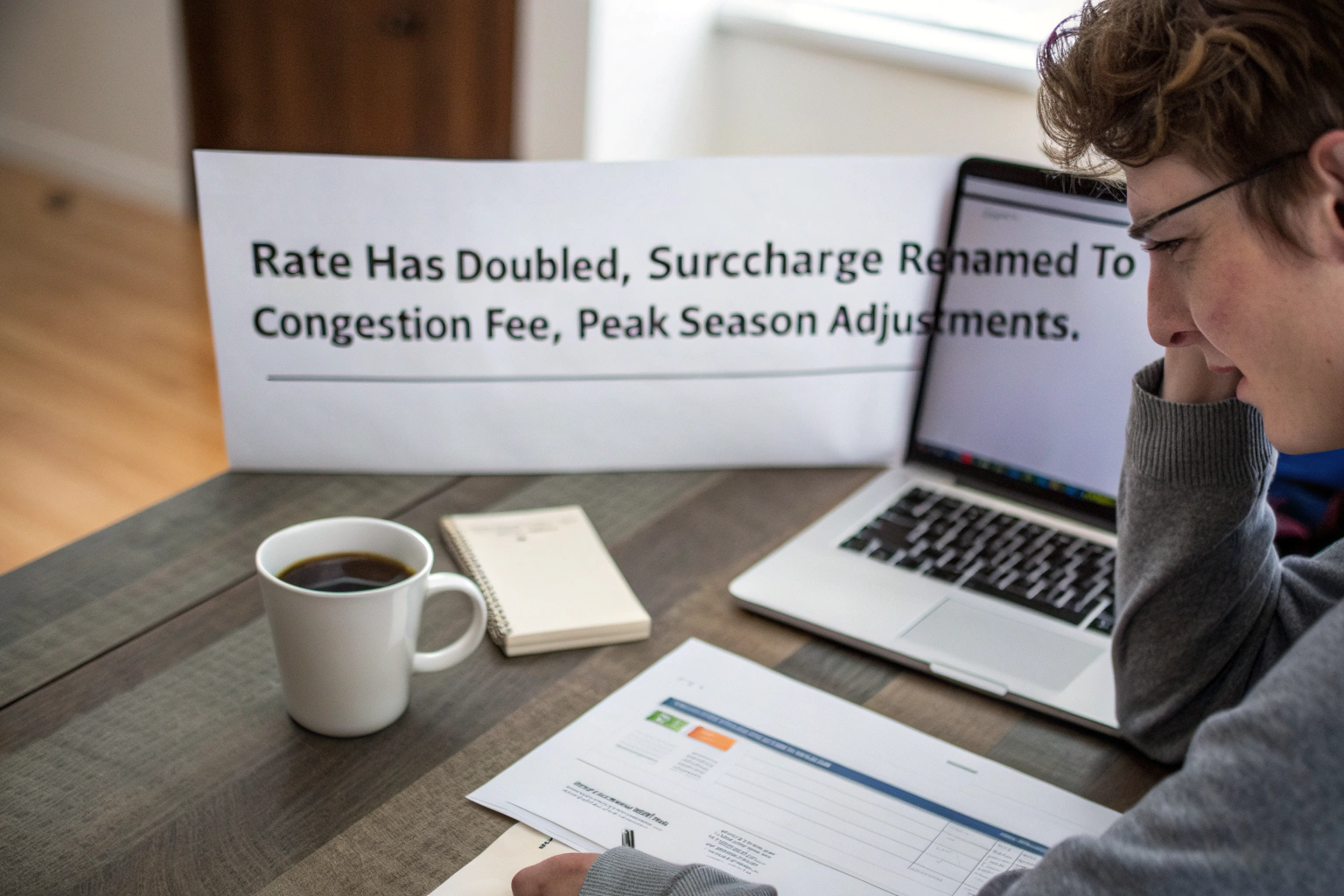
You get the email from your forwarder. The rate has doubled. The surcharge has a new name. Congestion fee. Bunker adjustment. Peak season whack-a-mole. You feel the blood drain from your face. Your coffee is already on the water, or maybe it's about to be loaded. Either way, you're stuck. You sign the rate sheet because you have no choice. I know that feeling. I used to get those emails too. Then I realized something. I was treating ocean freight like a tax, a fixed cost I just had to swallow. But it's not a tax. It's a negotiation, and it's one you can actually win if you change your posture from victim to pro.
Negotiating ocean freight contracts like a pro means shifting from spot quotes to quarterly or annual service contracts, and bundling your volume with a trusted forwarder. For our partners at BeanofCoffee, we often leverage our collective shipping volume from Yunnan to negotiate much lower container rates than an individual roaster could ever get alone.
So, how do you actually play this game? What levers can you pull? And how do you stop the forwarder from treating you like a random shipper off the street? Let's walk into the negotiation room together. I'll show you the tactics that have saved my clients thousands of dollars per container.
Why Should You Ditch Spot Quotes for Long-Term Freight Contracts?
Spot quotes are a trap. They seem convenient. You get a price for this one container, this one time. Easy. But the market is a roller coaster. A hurricane hits the Gulf. A canal gets blocked. Suddenly, your "easy" spot price is 300% higher than last month. You have no leverage. You're a price-taker, not a price-maker.
Long-term contracts turn freight from a volatile variable into a predictable fixed cost. When you sign a 12-month deal with a carrier, you lock in a base rate and a guaranteed space allocation. This stability is crucial for a CEO like Ron, who needs to forecast landed costs accurately. We always advise our BeanofCoffee clients to contract their freight alongside their green bean contracts.
A contract changes the relationship. You stop being a customer and start being a partner.

What Is a Guaranteed Space Allocation and Why Does It Matter?
Here is a nightmare. You have a container of premium washed Yunnan Arabica ready at Shanghai port. It's booked. The ship arrives. But the vessel is overbooked. Your container gets "rolled." It sits on the dock for two more weeks. Your buyer is screaming. Your coffee is sitting in a hot, humid container, degrading. A guaranteed space allocation in your contract prevents this. You pay a slightly higher base rate, maybe $50 more per container, but you get a slot on the ship, no matter what. Think of it as a priority pass. In peak season, when everyone is fighting for space, your container gets on the boat. The rolled-container cost isn't just the delay. It's the quality risk. It's the missed retail slot. It's the penalty clause your buyer might enforce. A pro negotiator pays for certainty. They don't gamble with their supply chain timeliness. The forwarder might push back and say allocations are tight. But if you commit a steady volume—say, two containers a month—they suddenly find space. It's about predictable business for them too.
How Does Contracting Help You Dodge Peak Season Surcharges?
Peak season surcharge. PSS. Three little letters that can add $1,000 to your bill overnight. It kicks in around August for the Christmas rush. Everyone knows it's coming. But a long-term contract can cap it. In your negotiation, you agree on a base rate. Then you specifically list the surcharges that are included. You can write a clause that says "PSS capped at $200" or "PSS waived for contract holders." The forwarder will scream. They'll say it's impossible. But it's not. They price risk into their deals. If your volume is consistent and your bookings are stable, they can absorb a small PSS hit to keep a good client. The key is to negotiate the contract in the off-season, in February or March. That's when carriers are hungry. Their ships are sailing half-empty. They want locked-in revenue. That's your power moment. You ask for the PSS waiver. They grumble, but they often agree because a bird in the hand is worth twenty on the spot market. This single clause can save a mid-sized roaster $8,000 to $12,000 a year.
How to Read a Freight Invoice and Cut Out Hidden Junk Fees?
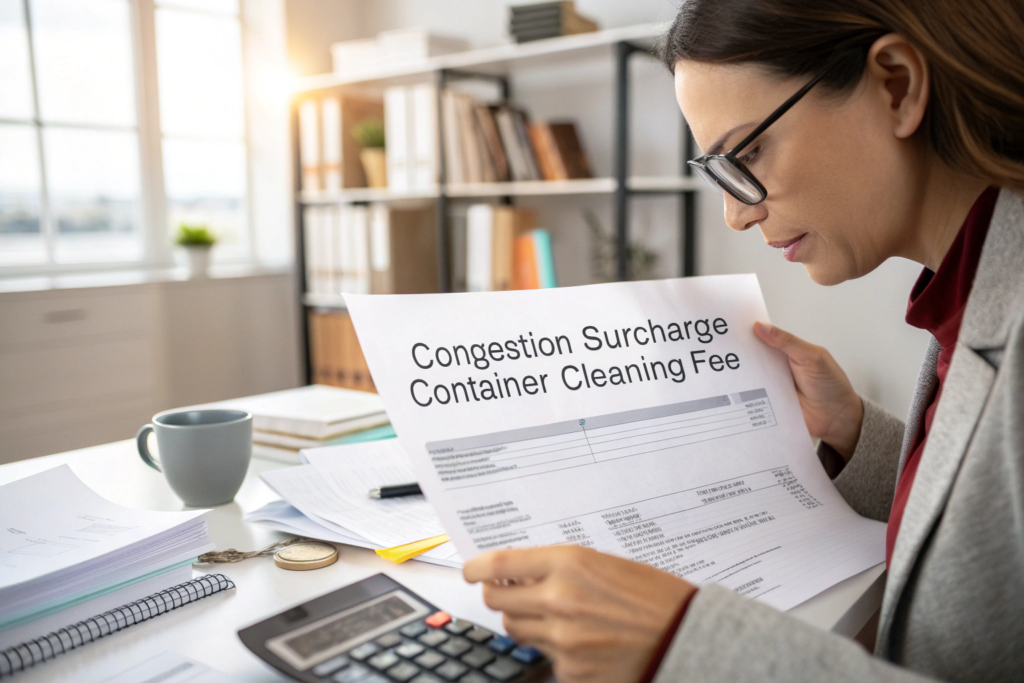
You get the final invoice. It has a dozen line items. Terminal handling. Documentation fee. Chassis fee. Fuel surcharge. It feels like a restaurant bill in a tourist trap. You just want to pay it and forget it. But a pro reads every line. A pro treats the invoice like an audit, not a receipt. Because sometimes, those fees are just made-up profit centers.
Reading an invoice like a pro means questioning every single line that isn't the base ocean rate and the bunker fuel. Charges like "congestion surcharge" or "container cleaning fee" are often negotiable or entirely removable. Our team at BeanofCoffee regularly audits freight invoices for our FOB clients to ensure they aren't being overcharged on the back end.
Don't be polite. Be precise. Your money is being wasted on acronyms.
What Is the Difference Between a Legitimate Bunker Charge and a Hidden Markup?
Bunker fuel is real. Ships burn heavy fuel oil, and the price fluctuates. A legitimate Bunker Adjustment Factor, or BAF, is tied to a global index, usually the World Container Index. You can Google it. The forwarder should be able to show you the exact calculation. A hidden markup happens when they charge you a flat "fuel fee" that never goes down, even when oil prices crash. I've seen invoices where the fuel surcharge doubled during a period when oil prices were actually falling. When you question it, they mumble about "contractual formulas." That's nonsense. Tell them you will only pay a floating BAF, adjusted quarterly, based on a public index. No index, no payment. Also, watch for "Currency Adjustment Factor." This is an old fee from the 1980s. Most major carriers abolished it. But some small forwarders still slip it in. A 3% charge here, a 2% charge there—it adds up. Your freight cost should be transparent. Base rate. BAF. Terminal handling at origin. Terminal handling at destination. That's it. Everything else is a conversation. You want to talk like you know this. Because once they realize you can decode the invoice, the junk fees magically disappear.
How Can You Avoid Detention and Demurrage Charges at the Port?
Detention is when you hold the container outside the port too long. Demurrage is when the container sits inside the port too long. Both are cash-burning machines. The clock is ticking from the moment the ship unloads. You have about 4 to 5 "free days." After that, it's a daily charge. Maybe $150 a day. It can reach $300 if the port is congested. The trick here isn't just negotiation. It's logistics planning. You negotiate more free time upfront. Ask for 7 free days instead of 4. Give them a reason. Say your warehouse is inland. Say your trucker needs a longer window. A long-term partner will grant this because it costs them nothing. The real pro move, though, is to have your customs broker and drayage trucker pre-booked the moment the vessel departs Shanghai. At BeanofCoffee, we supply the shipping documents 72 hours before the vessel arrives. This means the U.S. customs entry can be filed early. The trucker is waiting at the terminal. The container is out the gate in 2 days. No demurrage. No detention. It's a clockwork operation that keeps your landed cost predictable.
How to Leverage Your Coffee Supplier's Shipping Power for Better Rates?
There is a giant loophole in freight negotiation that most small roasters miss. It's the supplier's volume. I ship dozens of containers a month. You ship two. My freight bill is a thousand times bigger than yours. I have a dedicated logistics team. You have a phone and a headache. Why are you negotiating on your own?
You should leverage your coffee supplier's shipping power. A large exporter like BeanofCoffee has massive volume with carriers and can offer a CIF (Cost, Insurance, Freight) price that is often cheaper than your best FOB plus self-arranged freight. We simply pass our bulk discount down to you because it makes our coffee more competitive on your dock.
It's a simple math equation. Group buying is always cheaper.
What Is the Advantage of Buying CIF vs. FOB for a Smaller Roaster?
FOB means you own the freight from the port of origin. You pick the forwarder. You pay them. You take the risk. For a large multinational, this makes sense. They have a global logistics department. For a small or medium roaster, it's a burden. CIF means the supplier arranges and pays for the main ocean freight to your destination port. The price is all-in. The advantage for you is our buying power. Because we commit to moving 50 containers a month with a carrier, our rate is, let's say, $2,000 per container. Your rate, as a one-off shipper, is $3,500. We can sell you the coffee on a CIF basis at $3,000 per container. We make a small margin on the freight, you save $500, and you have zero headaches. The insurance is also handled. You don't have to chase a trucker in a foreign port. One contact. One price. One point of blame if something goes wrong. For a buyer who values simplicity and security, CIF is a brain-dead easy decision. You just wait for the truck to show up at your roastery.
How Does Consolidated Shipping Reduce Costs for Multiple Clients?
Another trick we use is consolidation. You might not need a full container. You might need only 5 pallets of Yunnan Arabica. A full container is 20 pallets. If you ship 5 pallets as LCL, Less than Container Load, your per-unit freight cost is astronomical. Plus, your coffee gets shuffled around in a warehouse, increasing damage risk. So, what do we do? We consolidate. We put your 5 pallets in a container with another roaster's 5 pallets heading to the same region. The container ships full. The cost per bag drops to the FCL rate. You share the space, you split the savings. This requires a supplier who has multiple customers in your area. That's us. We have enough volume going to the U.S. West Coast and Europe to build consolidated loads almost every week. It's a logistics community. You benefit from the network. It's one of those efficiencies that a solo buyer can never achieve. It's also more environmentally sound. A full container is a more efficient container. Less dead air. Less carbon per bean.
How to Build a Long-Term Carrier Partnership for Coffee Seasonality?
Coffee is seasonal. Our harvest in Yunnan hits peak shipping between January and March. That's our crunch time. If we just called a random carrier in January, they'd laugh at us. Or they'd charge a fortune. But we don't call randomly. We date our carriers. We build a partnership that understands the rhythm of the coffee trade.
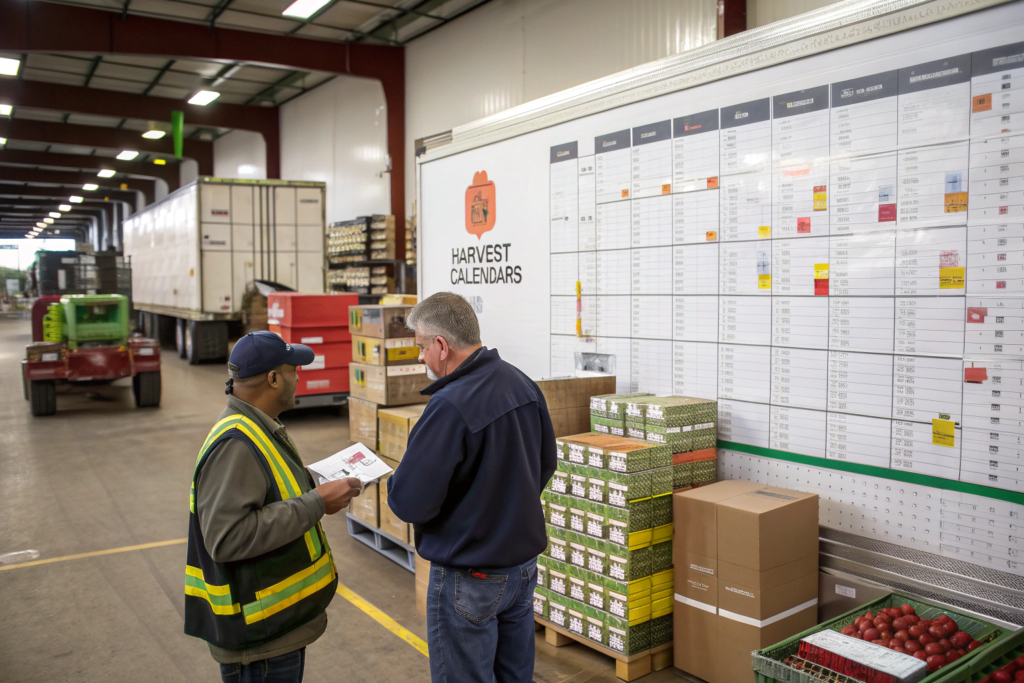
Building a carrier partnership means syncing your shipping calendar with the harvest seasons and giving your carrier a rolling six-month forecast. At BeanofCoffee, we share our harvest schedule directly with our logistics partners. This transparency allows them to reserve vessel space for our coffee in advance, which keeps rates low and reliability high for your shipments.
A carrier hates surprises. They love a steady date. Give them the pattern.
Why Is a Rolling Six-Month Forecast Your Best Negotiating Tool?
I send an email to my carrier rep every quarter. It's simple. A spreadsheet. Month 1: 4 containers. Month 2: 6 containers. Month 3: 2 containers. It's a forecast. It's not a binding contract for that exact number, but it's a commitment to an ongoing relationship. The carrier sees the volume coming. They allocate space on the back-haul from China to the U.S. They know they won't have an empty slot. Because we gave them the heads-up, they can offer a lower "volume incentive rate." This is a real thing. If you guarantee a certain volume over a year, you get a rebate or a lower base tariff. The forecast also protects you during the harvest rush. If you surprise a carrier in January with a booking request for 10 containers, you'll get spot-priced into oblivion. But if they've seen your forecast since July, they've already planned the vessel space. It's a stable, calm transaction. This is a very basic principle. Give information, get better pricing. Secrecy is expensive.
How Does a Strong Carrier Relationship Protect Your Coffee's Quality?
The quality link is indirect but critical. A good carrier partner knows your cargo is sensitive. Coffee beans are food. They absorb odor. They mold. A partner carrier won't stick your container on deck, exposed to salt spray and extreme heat. They'll give you below-deck stowage. They'll make sure it's not next to a container of raw hides or chemicals. They'll prioritize your container for a fast discharge at Long Beach because they know a delay could cook the beans in the summer heat. This level of care doesn't come from a spot rate. It comes from a relationship. You can negotiate service-level clauses in your contract. "No on-deck stowage." "Away from heat sources." "Priority discharge." These soft terms are worth more than a $50 discount. Because a single spoiled container of coffee is a total loss—$40,000 or more. Protecting that cargo with a carrier who respects the product is a negotiation win that doesn't show up on the rate sheet, but it absolutely shows up in your cupping scores.
Conclusion
You don't need to be a shipping magnate to negotiate like one. You just need to stop reacting and start planning. Ditch the spot-market panic and lock in a long-term contract that gives you a guaranteed slot on the ship and a cap on the junk fees. Learn to read an invoice like a detective, hunting for phantom charges that bleed your margin. And use the biggest weapon in your arsenal—your supplier's shipping scale. A CIF contract through a big exporter like BeanofCoffee turns our massive volume into your tiny price tag. When you finally sync your shipping forecast with the coffee harvest calendar and build a true partnership with a carrier, the ocean changes from a barrier into a bridge.
You focus on roasting a great Yunnan single-origin. Let me handle the chaos of the water. Reach out to me, Cathy Cai, at cathy@beanofcoffee.com. I'll walk you through our upcoming shipping schedule from Baoshan to your port. We'll calculate a CIF price that makes your accounting team smile and keeps your inventory flowing. No more junk fees. No more rolled containers. Just a steady stream of fresh green coffee, delivered like clockwork.