You sign a freight contract in March. You lock the rate. You feel safe. Then June comes. Spot rates drop. Your competitor ships for less. You are stuck paying more. That is the problem. Or the opposite happens. Rates spike. Your carrier rolls your container. Your coffee sits at the port. Your buyer calls every day. Both scenarios hurt. In 2026, the market is giving buyers more power than usual. But power only helps if you use it. Let me show you how.
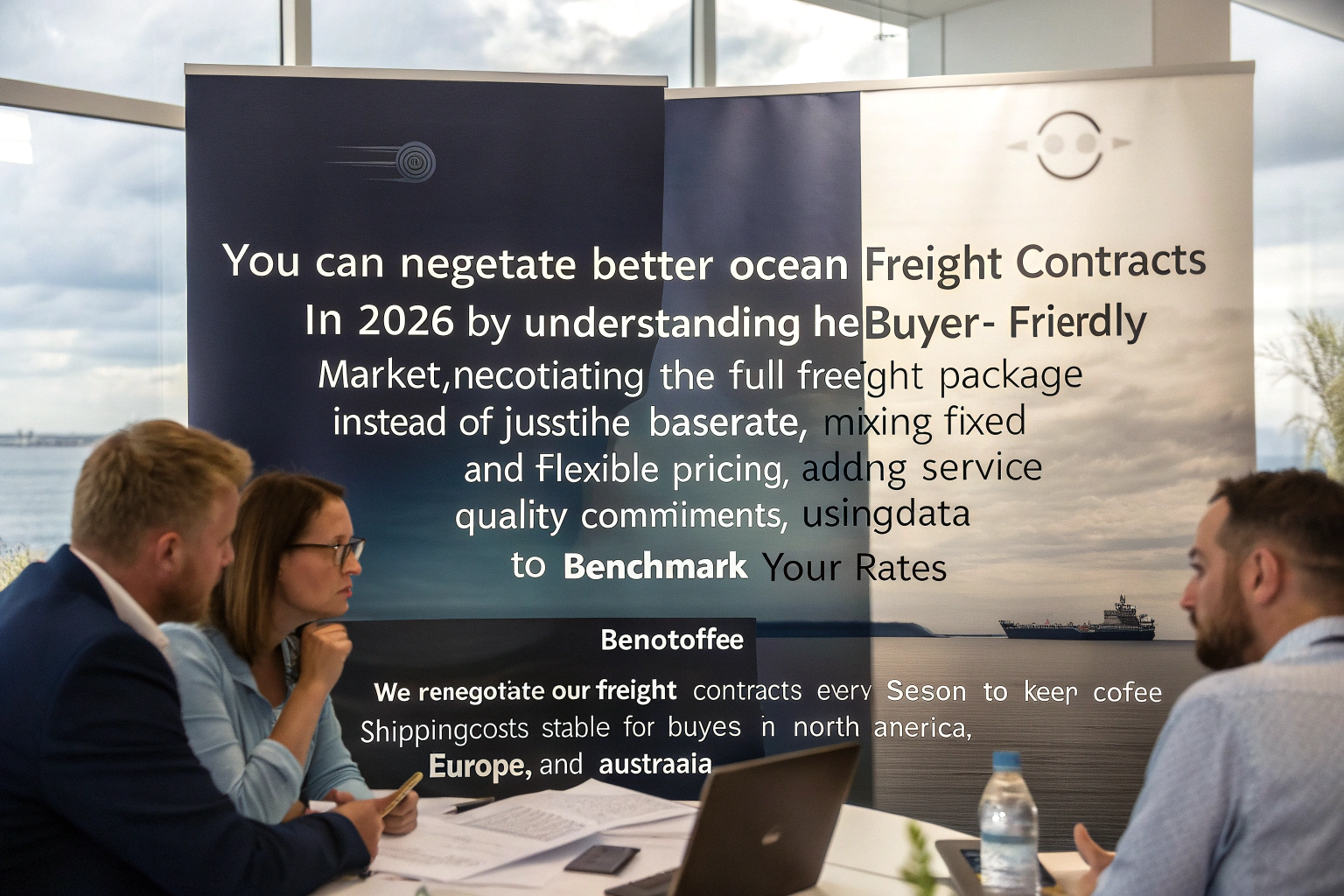
You can negotiate better ocean freight contracts in 2026 by understanding the buyer-friendly market, negotiating the full freight package instead of just the base rate, mixing fixed and flexible pricing, adding service quality commitments, and using data to benchmark your rates. At BeanofCoffee, we renegotiate our freight contracts every season to keep coffee shipping costs stable for buyers in North America, Europe, and Australia.
So, what is happening in the market right now? And what should you ask for? Let me walk you through the details.
What Does the 2026 Ocean Freight Market Look Like?
You need to know the market before you negotiate. If you do not, you negotiate blind. In 2026, the market is mixed. Some routes are high. Some are falling. That creates opportunity. But you must know where you ship.
The 2026 ocean freight market favors shippers on most major routes. Fleet overcapacity is growing faster than demand. New vessels keep entering service. This puts downward pressure on contract rates. But geopolitics and route changes create volatility. Rates on Asia-Europe routes have fallen sharply since July 2026. Rates on Asia-US routes remain elevated but show early signs of softening.
Let me give you the numbers. As of October 2026, spot rates from the Far East to the US West Coast were about USD 8,336 per FEU. To the US East Coast, they were about USD 11,512 per FEU. To North Europe, they were about USD 3,645 per FEU. These are high numbers compared to earlier in the year. But the direction is changing.
The Drewry Container Freight Rate Insight tracks contract rates across 17 major ocean routes. Its East-West Contract Rate Index saw its first year-on-year decline since July 2024. The drop was just 3%. But Drewry expects bigger reductions as 2026 contracts are negotiated. So, what does this mean? It means you have leverage. But you need to use it well.
| Route | Spot Rate (Oct 2026) | Direction |
|---|---|---|
| Far East to US West Coast | ~$8,336/FEU | Slight softening |
| Far East to US East Coast | ~$11,512/FEU | Slight softening |
| Far East to North Europe | ~$3,645/FEU | Falling sharply |
| Far East to Mediterranean | ~$4,007/FEU | Falling sharply |
Why Is Fleet Overcapacity Helping Shippers?
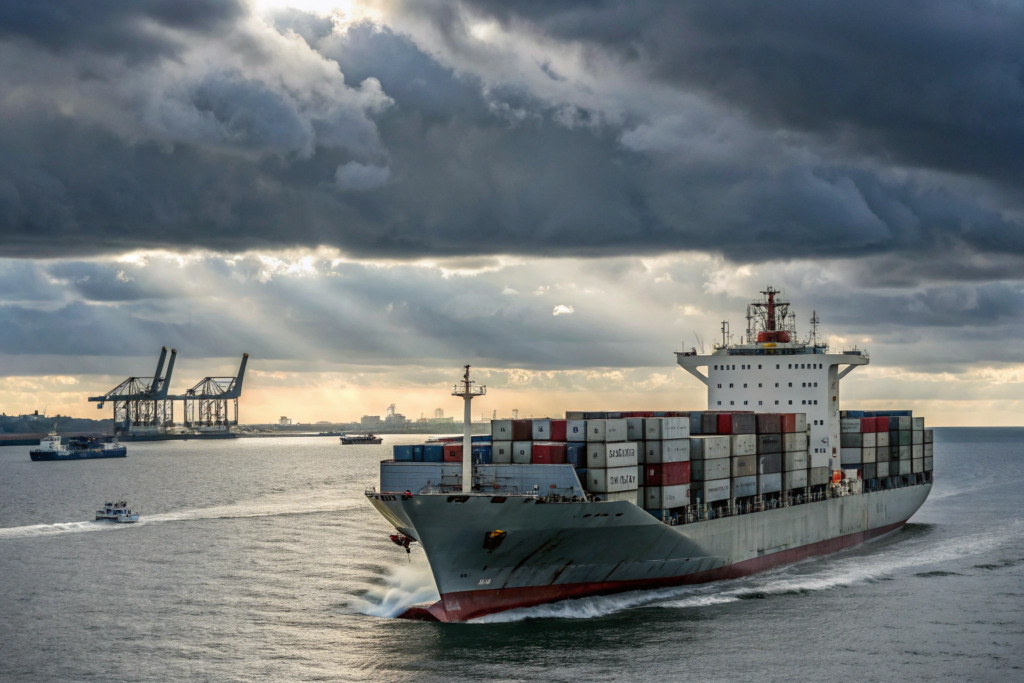
Fleet overcapacity means there are more ships than cargo. Around 55 new vessels were delivered in the first seven months of 2026. Another 40 to 45 are expected by year-end. Roughly 95 more are coming in 2027. At the same time, demand growth is slowing. The World Ports Organization reports that freight rates are forecast to decline by about 32% on average as supply outpaces demand. This gives shippers a strong hand. Carriers need your volume. They will compete for it. So, what does this mean? It means you should not accept the first offer. Shop around. Compare. Negotiate.
How Do Geopolitical Risks Affect Your Negotiation?
Geopolitics still matters. The Red Sea situation is not resolved. Some carriers are returning to the Suez Canal. Others still sail around the Cape of Good Hope. This split creates different transit times and different costs. War risk premiums and bunker fuel surcharges have surged on some routes. Bunker fuel costs remain 40% to 50% above late February levels.
So, what does this mean for your contract? It means you need clauses that handle sudden cost changes. You need a clear fuel surcharge formula. You need a force majeure clause that covers route disruptions. Do not assume the situation will stay the same. It will not. Plan for change.
How Do You Prepare Before You Negotiate?
You would not buy coffee without cupping it first. You should not sign a freight contract without preparation. Preparation is where you win or lose. Let me show you what to do before you talk to any carrier.
You prepare for freight negotiation by knowing your shipping volume, understanding your trade lanes, benchmarking current market rates, and deciding which lanes should be fixed and which should stay flexible. Drewry advises shippers to start planning four to six months before the contract season. Good preparation gives you data to support your requests and confidence to walk away from bad offers.
I start planning in August for the following year. I pull my shipping data. I check how many containers I moved. I check which routes I used. Then I compare my rates to market benchmarks. The Xeneta platform and Freightos offer real-time rate data. The Drewry World Container Index gives weekly rate snapshots. I use these tools to see if my rates are high or low. So, what does this mean? It means you should never negotiate without data. Data is your leverage.
| Preparation Step | What You Need |
|---|---|
| Volume analysis | Containers per route per year |
| Route analysis | Main lanes and transit times |
| Rate benchmarking | Current spot and contract rates |
| Service review | On-time performance history |
| Risk assessment | Geopolitical and seasonal risks |

How Do You Benchmark Your Freight Rates?
Benchmarking means comparing your rates to the market. If you pay $5,000 per container and the market average is $4,500, you are overpaying. The Drewry Container Freight Rate Insight provides contract rate benchmarks. Xeneta offers spot and contract rate data. Freightos also provides rate comparison tools.
I benchmark every quarter. I look at three things. First, my contract rate. Second, the current spot rate. Third, the rate my competitors might be paying. The Mordor Intelligence reports on shipping market trends that help with this. When I see a gap, I ask my carrier why. Sometimes they explain. Sometimes they adjust. Either way, I learn something. So, benchmark before you negotiate. It gives you facts. Facts win arguments.
What Should You Know About Your Cargo?
Know your cargo. Coffee is not the same as electronics. Coffee is a food product. It needs clean containers. It needs moisture control. It needs fast handling. The Specialty Coffee Association shares green coffee handling standards. The FDA sets food safety rules for U.S. imports. I always tell carriers that my cargo is food-grade. That means the container must be clean and dry. It means no chemical residues. It means no pests. These requirements affect the contract. A carrier that understands food cargo gives better service. So, tell them what you ship. Do not let them treat your coffee like furniture.
What Contract Terms Should You Negotiate?
You have the data. You know the market. Now you sit down to negotiate. What should you ask for? Most people only talk about the rate. That is a mistake. The rate is just one part. The terms around it matter just as much. Sometimes more.
You should negotiate longer payment terms, clear service quality commitments, caps on detention and demurrage, a fair fuel surcharge formula, and a rate review clause. Drewry specifically recommends these terms for 2026 contracts. These clauses protect you when the market moves or when service fails. They are often worth more than a small rate discount.
Let me break down each term. I will explain why it matters and what to ask for.
| Clause | What to Ask | Why It Matters |
|---|---|---|
| Payment terms | 30-60 days | Better cash flow |
| Service commitments | On-time %, space guarantee | Reliable delivery |
| Detention/Demurrage | Free time, caps | Avoid surprise fees |
| Fuel surcharge | Transparent formula | Fair cost sharing |
| Rate review | Trigger if market drops | Stay competitive |
| Force majeure | Clear definition | Protect both sides |

How Do You Negotiate Detention and Demurrage?
Detention and demurrage are fees you pay when containers sit too long. Detention is when you keep the container outside the port. Demurrage is when the container sits inside the port. These fees can add up fast. They are also one of the biggest sources of unexpected cost.
The Drewry analysis recommends contract language that controls these surcharges. I ask for three things. First, more free days. Standard is 5 to 7 days. I ask for 10 to 14. Second, a cap on daily fees. Third, a clear process for disputes. The U.S. Customs and Border Protection explains how port delays affect imports. When a port is congested, you cannot always pick up your container on time. A good contract protects you from fees you cannot control. So, negotiate this clause. It saves real money.
What Service Quality Commitments Should You Ask For?
Service quality is not just about speed. It is about reliability. A cheap rate means nothing if your container gets rolled every month. Drewry advises shippers to add more service quality commitments to 2026 contracts. I ask for three specific commitments. First, a minimum on-time performance percentage. Second, a space guarantee for my committed volume. Third, a notification requirement if the carrier plans to roll my cargo.
The Global Shippers' Association advocates for these protections. When a carrier agrees to a space guarantee, they cannot bump your container for a higher-paying customer. That matters in peak season. So, ask for it. Put it in writing. A verbal promise is not enough.
How Do You Negotiate Fuel Surcharges Fairly?
Fuel surcharges are tricky. Carriers add them when fuel prices rise. Sometimes they add them twice. The industry calls this “double-dipping.” One shipper described negotiating emergency bunker surcharges by engaging carriers proactively. They reached agreements with clearly defined end dates tied to fuel price resets in Q3.
I ask for a transparent formula. It should link the surcharge to a published fuel index. It should have a clear start and end date. It should not allow the carrier to charge extra for the same fuel cost event. The U.S. Federal Maritime Commission regulates carrier practices. I also check if my contract has a cap on emergency surcharges. If it does not, I add one. So, do not accept a vague fuel clause. Make it specific. Make it fair.
How Do You Mix Fixed and Flexible Pricing?
You may think a fixed rate is always safe. It is not. A fixed rate protects you when rates rise. But it hurts you when rates fall. In 2026, rates are expected to fall on many routes. So, a 100% fixed contract may not be the best choice.
You should mix fixed and flexible pricing. Put 70% to 80% of your volume on a fixed contract for stability. Put 20% to 30% on the spot market or an index-linked contract for flexibility. This strategy, recommended by Flexport and other experts, lets you lock in predictable costs while benefiting from market drops.
Flexport advises shippers not to jump on the first fixed-rate offer. They recommend a mix of fixed, floating, and index-linked agreements. The Journal of Commerce also covers this strategy. Here is why it works. Your fixed contract covers your base volume. You know your cost. Your spot volume lets you test the market. If rates drop, you ship more on spot. If rates rise, you rely on your fixed contract. You are covered either way. So, do not put all your eggs in one basket.
| Pricing Mix | Percentage | Purpose |
|---|---|---|
| Fixed contract | 70-80% | Cost stability |
| Spot market | 10-20% | Flexibility |
| Index-linked | 10-20% | Market alignment |

What Is an Index-Linked Contract?
An index-linked contract ties your rate to a published index. The Freightos Baltic Index is a common reference. When the index goes up, your rate goes up. When it goes down, your rate goes down. This creates fairness. You do not overpay when the market drops. The carrier does not lose money when the market spikes.
Index-linked contracts work well for routes with high volatility. They also reduce disputes. The Journal of Commerce reports that index-linked contracts are growing in popularity. I use them for some of my Asia-Europe lanes. The rates move with the market. Both sides stay happy. So, ask your carrier about index-linked options. They may not offer it first. But they can usually do it.
When Should You Use the Spot Market?
Use the spot market for overflow volume. If you normally ship 10 containers per month, put 8 on contract and 2 on spot. The spot market lets you take advantage of short-term price drops. It also gives you a backup option if your contract carrier cannot provide space.
The Alibaba platform and digital freight platforms like Freightos make spot booking easy. You can compare rates from multiple carriers in minutes. But do not rely too much on spot. Rates can spike suddenly. Space can disappear. So, keep your base volume on contract. Use spot for flexibility. That is the balance.
How Do You Handle Risks and Disruptions?
Even the best contract cannot prevent every problem. A storm hits. A port closes. A carrier goes bankrupt. You need a plan for disruptions. You also need contract language that protects you when things go wrong.
You handle risks by including a clear force majeure clause, diversifying your carriers, building buffer time into your schedule, and using digital tools to track shipments and market changes. Drewry calls 2026 a year for “risk management and resilience,” not just rate negotiation. A contract without risk protection is not a complete contract.
The World Ports Organization reports that geopolitical volatility remains high. The Red Sea situation could change again. Fuel costs could spike. A contract that does not address these risks leaves you exposed. So, build protection into your agreement. It is not pessimistic. It is professional.

What Should a Force Majeure Clause Cover?
A force majeure clause covers events outside your control. It should include natural disasters, wars, strikes, pandemics, and government actions. For coffee shipping, it should also cover port closures, route changes, and carrier bankruptcy. The International Coffee Organization uses standard contract terms that include force majeure provisions. The European Coffee Federation also publishes contract guidelines.
I always check three things in a force majeure clause. First, is the definition clear? Vague definitions lead to disputes. Second, does it cover both parties? It should protect you and the carrier. Third, what happens if it is triggered? The contract should say whether you get a refund, a credit, or a replacement shipment. So, do not skim this clause. Read it carefully. Ask a lawyer if needed. It is worth the time.
How Do You Diversify Carriers and Routes?
Do not rely on one carrier. Do not rely on one route. If your main carrier has a problem, you need a backup. If your main route is blocked, you need an alternative. The Drewry analysis recommends contract language that allows shippers to trigger a rate review if market prices collapse. It also recommends flexibility in routing.
I work with two to three carriers on my main lanes. I also have backup routes. For example, if the West Coast is congested, I can ship to the East Coast. It costs more. But it keeps coffee moving. The USDA Foreign Agricultural Service publishes trade data that helps with route planning. So, build redundancy into your supply chain. It is insurance. You hope you never need it. But you are glad it is there.
Conclusion
Negotiating better ocean freight contracts in 2026 is possible. The market favors shippers. But you must prepare. Know the market. Benchmark your rates. Negotiate the full package, not just the base rate. Ask for service commitments. Control detention and demurrage. Mix fixed and flexible pricing. Protect yourself with force majeure clauses. Diversify your carriers. These steps lower your cost. They also lower your risk.
If you want a supplier who understands freight and keeps shipping costs stable, contact us. BeanofCoffee owns over 10,000 acres in Baoshan, Yunnan. We export Catimor, Arabica, and Robusta to North America, Europe, and Australia. We negotiate freight contracts every season to keep your landed cost predictable. For orders or questions, email Cathy Cai at cathy@beanofcoffee.com. She will help you plan your next shipment.