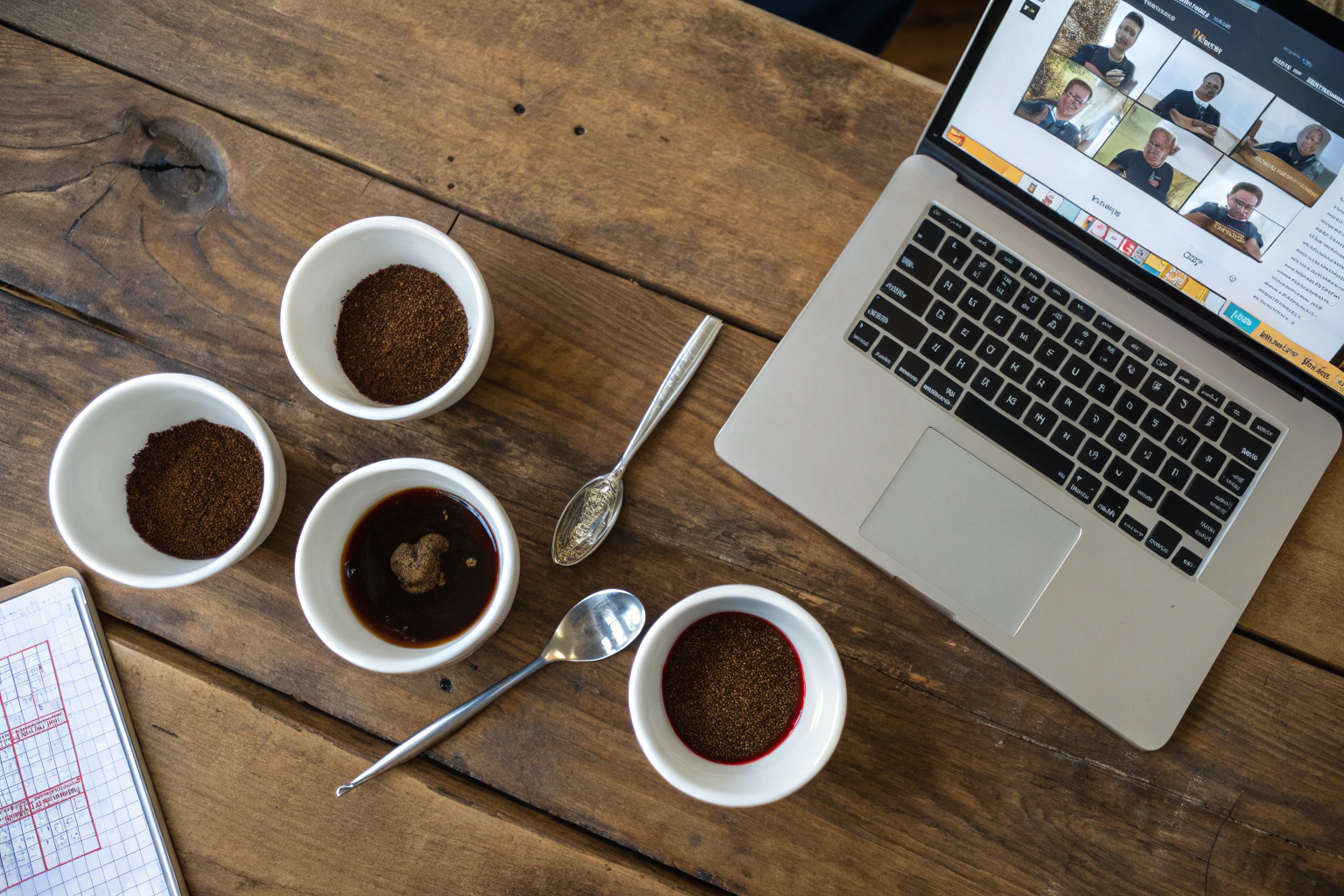
My phone buzzed twice before 7 a.m. last Tuesday. It was Ron, a roaster from Austin I’d been talking with for weeks. He liked our samples, he liked the price. But he couldn’t pull the trigger. “I need to taste it fresh,” he said. “But I can’t fly to China right now. How do we make this work?” That’s the wall many of us hit. You have a great product. You have a serious buyer. But a sample mailed three weeks ago doesn't tell the same story as a fresh roast. The question hangs in the air—can you really trust a supplier if you can’t cup the coffee together?
Yes, you absolutely can organize a highly effective remote coffee cupping session. The key is to mirror the professional lab environment in two locations simultaneously. It requires strict protocol, identical equipment, and real-time communication. At BeanofCoffee, we don't just send out random beans. When we do a remote cupping, we ship a sealed, date-stamped cupping kit from our current lot. This kit includes roasted and green samples from the exact same batch we are offering. You then brew them on a video call with our Q-grader, breaking the crust at the exact same minute. This shared, live experience builds the trust that a static sample never can.
But knowing it works and knowing how to pull it off are two very different things. This isn’t just a casual tasting. It’s a technical evaluation that decides the fate of a 20-ton container heading to Long Beach. You need a system that eliminates variables. Because if your water is off by 5 degrees or your grind size is wrong, you aren't tasting the coffee—you're tasting a mistake. Let’s break down exactly how I do this with my clients, so you can see the process is solid, safe, and worth your time.
How to Set Up a Remote Coffee Cupping Kit?
Getting the kit right is actually the whole game. A few years ago, I made a big mistake. I just threw some roasted beans in a standard vented bag and rushed them to FedEx. By the time the buyer got them in Chicago—ten days later—the coffee was flat. Lifeless. He told me, "This tastes like paper." I lost that deal. And honestly, I deserved to. Now, we treat the shipping kit like a controlled experiment. It’s not just coffee. It’s a snapshot of our work frozen in time.
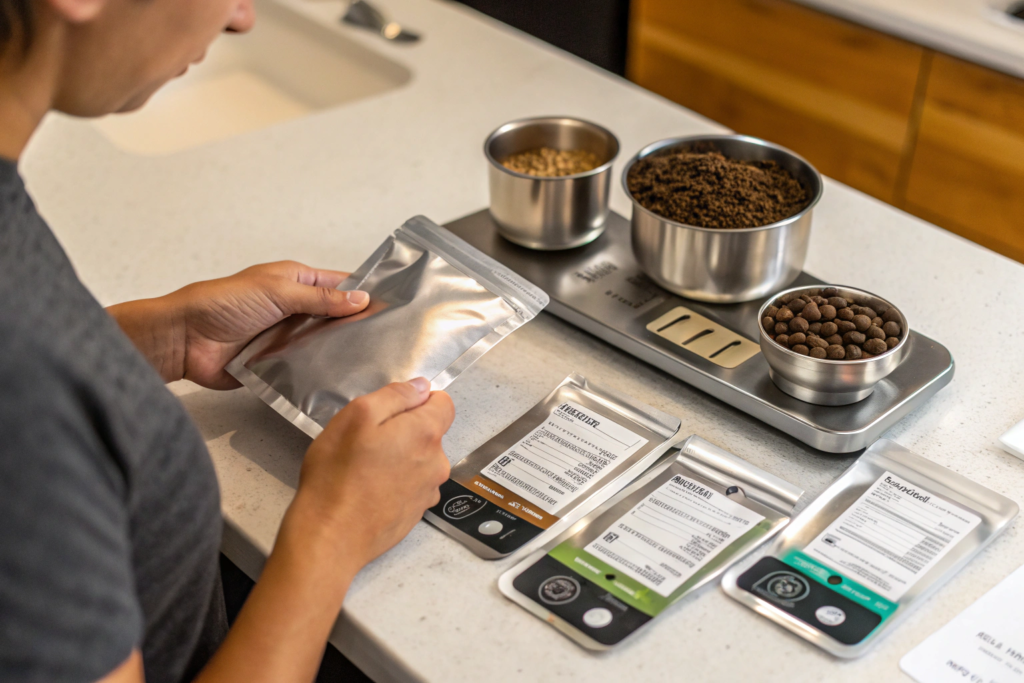
A proper remote cupping kit must use nitrogen-flushed, heat-sealed packaging to lock in the roast freshness for transit. It needs to contain both whole bean roasted coffee and a matching 50-gram sample of the exact green coffee. You also need to include a spec sheet with the roast date, moisture readings, and density. At BeanofCoffee, we double-bag everything. The outer bag is vacuum-sealed. This stops air exchange completely, ensuring the coffee in your hands is chemically identical to the coffee in our lab, even two weeks later.
Think about what happens during shipping. A plane flies at 35,000 feet. The cargo hold isn't pressurized like the cabin. Temperature swings wild. If oxygen hits those beans, oxidation starts immediately. The volatile aromatics that make our Yunnan Catimor taste like brown sugar and black tea? They vanish. You end up cupping a shadow of the product. So, the packaging matters more than the coffee itself at this stage. If the seal fails, the session fails.
Why Does Nitrogen Flushing Matter for Sample Freshness?
You are spending money on a sample. Probably $50 to $80 in shipping alone for a small package. You want that sample to taste like it just came out of the cooling tray. We use a method called Modified Atmosphere Packaging. After roasting the sample specifically for you—often the day before shipping—we put it into a foil-lined bag. Then, we flush out the normal air and inject nitrogen.
Normal air has about 21% oxygen. Oxygen steals flavor. It attaches to the oils on the bean surface and breaks them down. It’s a slow chemical burn. Nitrogen is inert. It doesn't react with the coffee. It just sits there, holding the aromatics hostage until you cut the bag open on your counter in Austin. I’ve had clients wait three weeks to open a nitrogen-flushed bag. When they finally break the seal, the smell hits them instantly. "Whoa, that's fresh," they say. That’s the moment I know the technical stuff paid off.
What Should a Sealed Cupping Specification Sheet Include?
Data kills doubt. In a remote setting, you can't look over my shoulder to see the color meter reading. So, I have to bring the data to you. We include a sealed, waterproof sheet in every kit. Don't roll your eyes at the paperwork. This sheet answers half the questions you’re going to ask before you even taste the coffee.
First, we note the exact screen size. If you buy an 18-screen Arabica, you need to see it's actually 18, not 17 mixed in. Second, the moisture content. If the coffee is too dry (below 10%), it ages fast. If it’s too wet (above 13%), you’re paying for water weight and risking mold. We like to ship at 11.5% or close to it. Third, the water activity reading. That’s a number between 0 and 1. You want it under 0.55 for long-term transport. A detail people sometimes overlook: I include the exact roast degree from our color meter on the sheet. Not just "Medium"—but a number, say "Agtron 65." That way, you can compare my roast to your reference without guessing.
What Equipment Do You Need for a Virtual Tasting Session?
Let me be blunt. You cannot fake this. I’ve joined a video call where a buyer tried to cup using a blade grinder and a saucepan. Honestly, it was a waste of time. The grounds were all different sizes. Some like dust, some like pebbles. The extraction was chaos. You can’t tell if the bitterness is from our farm or from their fine particles over-extracting. If you are buying a container of premium Arabica from BeanofCoffee, you need to invest a few hundred dollars in the right gear. Or borrow it. But don’t improvise.
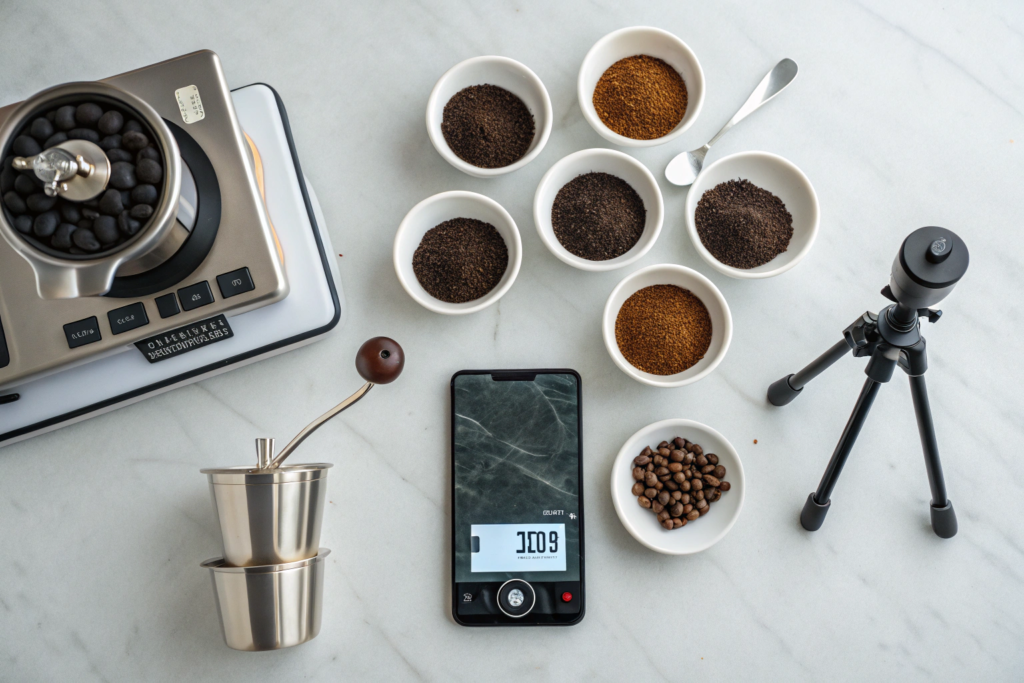
To run a valid remote cupping session, you need a burr grinder that produces uniform particles, a digital scale accurate to 0.1 grams, a temperature-controlled kettle to hit exactly 200°F, and standardized 8oz cupping bowls. The consistency of these tools ensures that the extraction in your lab is identical to ours. A cheap setup introduces flavor variables that can make a sweet, complex Catimor taste dull or astringent. This isn't about snobbery. It's about physics.
Here’s the real problem I see with US buyers. Water. People forget the water. Coffee is 98% water. If your tap water tastes like chlorine or has a high mineral hardness, you will assassinate the flavor. The Specialty Coffee Association has a standard for water. You can make it by adding specific minerals to distilled water. Or, you can use specific bottled water brands that I’ve found to work well. We usually figure out the water chemistry before the call. Because if you use soft water, the coffee is hollow. Hard water, it’s chalky. You need it right in the middle to taste the origin character of our Baoshan mountain beans.
How Do You Calibrate a Grinder Without a Lab?
So, you don't own a Mahlkonig or a Ditting. Most roasters do, but maybe you don't have one at home. No problem. We can calibrate. The target for cupping is a "coarse sand" texture. Think of it as just a little coarser than typical drip grind. We target a specific micron size, usually around 800 to 900 microns.
Here is a simple, practical trick. You send me a picture of your grind on a plain white piece of paper, with a US dime for scale. I can actually judge the consistency of the particle distribution visually better than you think. Another way to look at this is to use a standardized sieve. You can buy a simple Kruve sieve for $20. Shake your 10 grams of grounds. We’re aiming for 70% of the coffee to fall through an 800-micron screen but stay on a 400-micron screen. If you have too many boulders—big chunks on top—tighten your grinder up a click. Too much dust on the bottom? Go coarser. It’s fast. It takes two minutes. But it saves us from a 30-minute argument about whether the coffee is actually earthy or just ground wrong.
Why Is Pour Technique Important for Consistency?
Even how you pour the water changes the cup. This is a small thing. But small things add up. When you start the cupping, you pour water right onto the dry grounds. You don't stir. You fill the bowl to the brim.
But here is the critical part: the pour must be aggressive enough to wet all the coffee immediately. If you pour too slow, the coffee at the bottom gets wet first and starts extracting. The top stays dry. Then you get a split extraction. I teach my clients a simple method: keep the spout low and circle once. It should take about 5 seconds. Don't stop. Don't hesitate. Just cover the crust and walk away. This ensures the crust forms evenly across the entire bowl. If there are dry spots, the crust breaks unevenly later. That’s when scoring goes haywire. You’d mark it down for "uneven extraction" thinking it was the bean’s fault. But it was the pour.
How to Manage a Live Video Cupping Protocol?
The timing has to be ruthless. You know, in our Yunnan tasting lab, we run a stopwatch. If the protocol says we break the crust at 4 minutes, we don't do it at 4:05. The difference in aromatic release between 3:45 and 4:15 is huge. When I do a remote session with a client in Europe or the US, we pick a specific clock time. Not "in 4 minutes," because latency can mess that up. We say, "We will break the crust exactly at 10:04 AM Eastern Time." We use a synchronized clock online. That way, the video lag doesn’t ruin the sequence.
The live protocol must have a shared digital timer that both parties can see. The sequence should strictly follow the SCA standard: smell the dry grounds, pour with a specific technique, break the crust at 4 minutes while smelling the burst, and skim the foam immediately. Do not talk while you are smelling. Describe your sensations only after you have broken and skimmed all 5 bowls. This prevents "anchoring" bias—where my description of "honey" makes you suddenly find honey in the cup, even if you were tasting lemon two seconds ago.
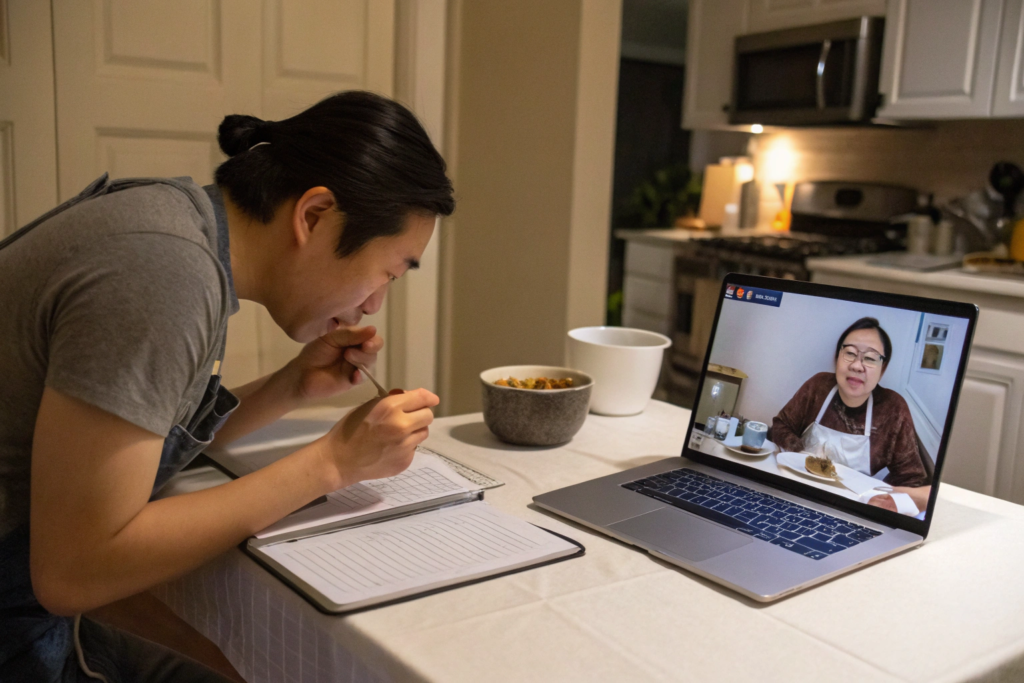
A weird thing happens on video calls. The speaker’s voice colors the taste. If I say, "Wow, that's a bright acidity," your brain automatically primes itself to look for acid. You might confuse a clean, dry finish for acidity. So, we write down our scores for fragrance, aroma, flavor, aftertaste, acidity, body, and balance in complete silence. We hold up the scorecards to the camera at the exact same time. It’s like a game show reveal. It’s the only way to see if we are genuinely tasting the same bean. If I hold up a "7.5" for acidity and you hold up a "6.0," we have a real talk. Did you under-extract? Or is my roast masking the origin character? It’s data. Not just opinion.
How Do You Compare Scoring Sheets Across Time Zones?
We don't use pen and paper anymore. I mean, we do, but we digitize it instantly. I always recommend my clients use a shared Google Sheet that we can both edit in real time. Or, if they prefer, we use a digital SCA scorecard app. The second we flip up our physical cards, we enter them into the shared digital sheet. This becomes the permanent record for the lot.
You need to watch the calibration of the scale. Some people are "easy graders." They give everything an 8. Some are "hard graders" and never go above 7.5. That’s okay. What matters is the relative score. If I scored this Catimor an 84 and the Colombian next to it a 79, but you scored mine a 79 and the Colombian an 80—we just flipped the preference. That’s a huge problem. That means you are tasting something different, or we didn't send the right sample. That digital sheet forces you to look at the gap between scores, not just the number.
What Is the Best Way to Calibrate Aroma Vocabulary?
Describing smell is personal. To me, the Yunnan Arabica has a distinct "black tea and apricot" note. But maybe you’ve never eaten dried apricots. Or maybe your memory of apricot is actually peach. We need a shared reference.
I keep a small box of reference scents in the lab—the Le Nez du Café kit. It’s expensive, but it works. However, I don't expect a client to buy that. Instead, we use common grocery items. On the pre-call, I ask, "Do you have a raisin box? Slice an almond? Freshly cut grass?" We put these items into separate cupping bowls during the call. We smell the reference, then the coffee. It’s primitive but brutally effective. If I say "molasses," we both smell molasses. This synchronizes our language. It stops that lonely feeling where I’m using a word and you’re nodding but thinking of something completely different.
How to Evaluate Green Coffee Quality from a Screen?
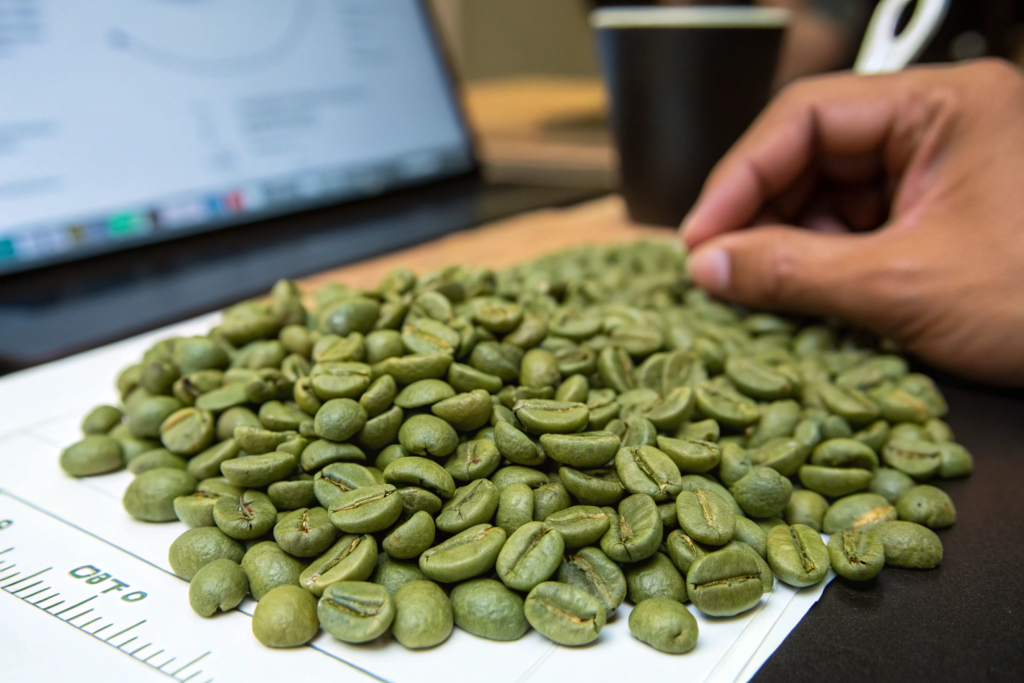
Tasting the roasted sample tells you what the roaster did. But tasting the green—metaphorically, by looking at it—tells you what the farmer did. You can’t see the future of a coffee just by looking at the roast. You have to go backward. I always insist that a remote cupping session includes a 30-minute green coffee analysis. We use a separate camera, sometimes just a high-res phone pointed at a light table. The first thing I show is the raw green sample.
Evaluating green coffee visually requires a 350-gram sample spread under natural or balanced LED light. You look for primary defects like full black beans, sours, or mold, which cause a ferment taste. Then, you check the screen size uniformity. Inconsistent sizes roast unevenly, leading to a mix of scorched and underdeveloped beans in the roaster. At BeanofCoffee, our washed Yunnan lots pass a strict density table sort before final gravity sorting, ensuring less than 1% defect count by weight.
Here is the hard truth. Screen size is a promise. If I sell you a bag marked "Screen 17/18," it means 95% of the beans are exactly that size. But in some countries, they let a 15% tolerance slide. You end up with small, peaberry-sized beans mixed in with large flatbeans. The small beans burn while the large beans are still pale. You can't fix that with a profile change. You just get smoky, bitter coffee. So, on the call, we literally count beans. We pull a 100-gram sample and sort them by hand on camera. You see me or the buyer pulling out the discolored ones. It’s the most honest part of the business. You can’t hide a defect on a good webcam.
Why Does Moisture Content Matter for Ocean Freight?
The moisture content inside that green bean is like a ticking clock. It determines if the container is going to "sweat" when it crosses the equator. You ship a container from Shanghai to Long Beach. The ocean air is humid. The metal container heats up during the day and cools at night. If the coffee water activity is too high, the moisture migrates. It creates a tiny micro-climate inside the GrainPro bag.
We look at a number: water activity, or Aw. Think of it as "free water" available for mold. You want this below 0.55. If it’s 0.60, you are playing with fire. The coffee might arrive looking okay on the outside, but when you crack it, the center cut will be slightly musty. You can’t roast that out. A detail people sometimes overlook is the jute bag and GrainPro combination. We show the packing on the call. We demonstrate how we seal the inner plastic liner with cable ties. It looks simple, but if there is a 2-millimeter gap in the seal, damp air rushes in like a vacuum leak. The moisture meter doesn't lie, and we read it live on camera. That’s real accountability.
How Can You Spot Insect Damage in Remote Inspections?
An insect hole looks like a perfect little circle, usually the size of a pinprick. Sometimes it’s got a little dark ring around it. The worst one is the coffee borer beetle. If you crack open a green bean and you see a white, powdery residue inside—that’s frass. It’s bug poop. It completely ruins the cup.
We use ultraviolet light. On a video call, it’s dramatic. You turn off the room light and shine a UV flashlight on the green sample. If there are insect fragments or mold spots, they fluoresce. They glow. It’s a fantastic trick to show a remote buyer that the coffee is clean. Because you can’t smell bugs through a screen. But you can see the fluorescence. I always pass a magnet through the beans too, just to check for metal fragments from the hulling machinery. It’s a small gesture. But it puts the buyer at ease. It’s physical proof that our processing is safe and the Yunnan green coffee is ready for food-grade production.
Conclusion
Running a remote cupping session isn't a compromise. In some ways, it’s better. It forces us to document everything. It stops me from using fancy jargon to hide a mediocre cup. It puts the power back in the hands of the data and the beans. You see the green. You calibrate the roast. You break the crust in silence. You hold up your score. It is raw, honest, and efficient. For a buyer like you, who doesn't have time to fly 16 hours for a tasting, this process cuts the risk. It gives you certainty before that big wire transfer leaves your account. We’ve closed containers of Catimor and specialty Arabica with clients from Germany to Australia without ever shaking their hand—until the coffee arrived perfectly and they came to visit the farm the next year.
So, if you are tired of flat samples and empty promises, let's do this for real. Let's schedule a remote cupping. I’ll ship the kit, you grab the grinder and the spoons, and we’ll block out an hour. It’s low cost, zero risk, and you get the truth about the coffee. You can reach our export manager, Cathy Cai, directly at cathy@beanofcoffee.com. She can lock in a cupping slot and get the paperwork started. Don't just buy coffee. Audit it. Taste it. Let’s find out if our Baoshan mountain beans are right for your roastery. I’ll see you on the call.