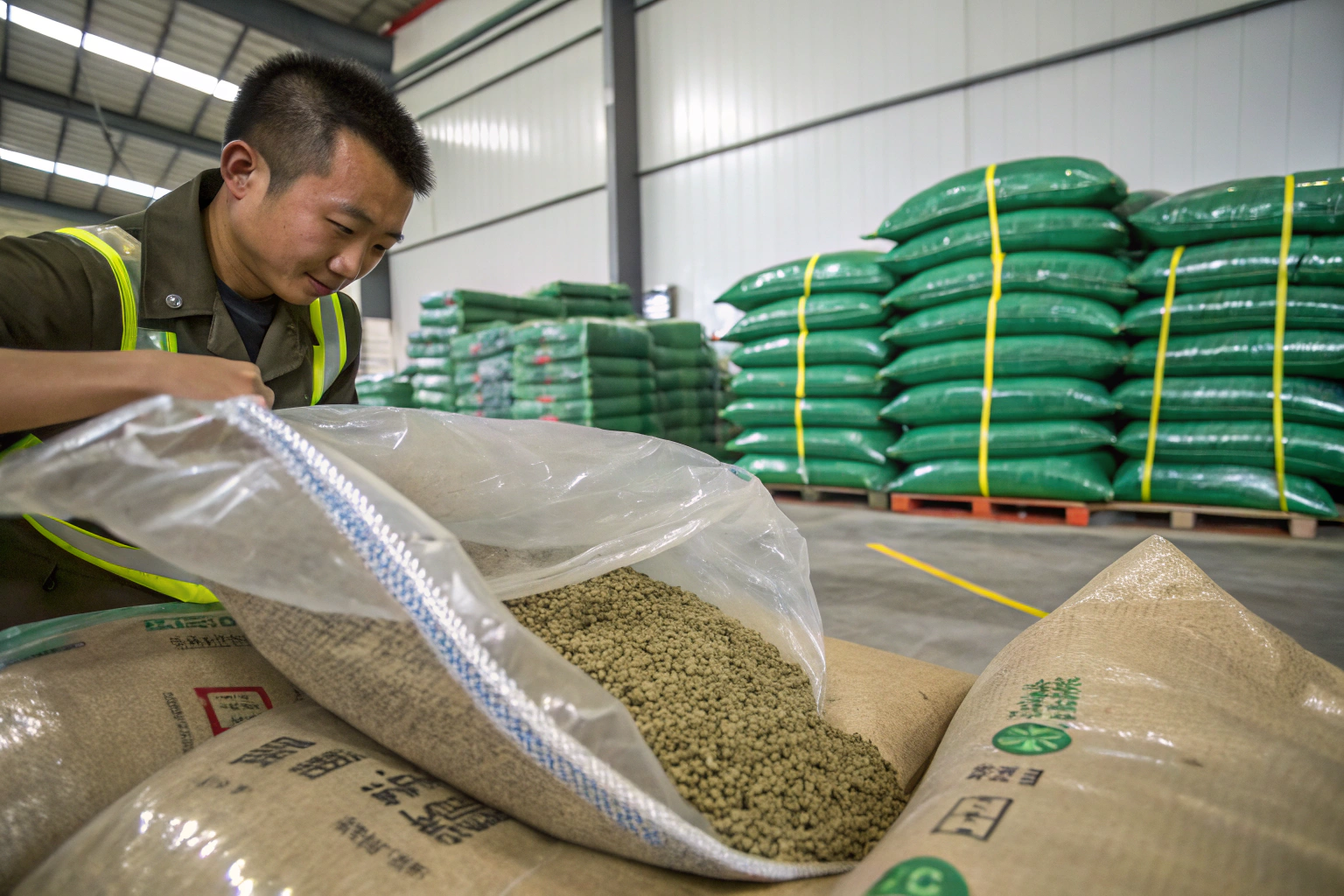
Last monsoon season, we lost a small lot to a stupid mistake. A liner slipped during loading. The bag wasn't sealed tight. By the time the container hit the Panama Canal, the humidity had crept in. The coffee arrived with a musty edge—still saleable, but not specialty. The buyer rejected it. I had to eat the cost. And that's when I realized packing isn't just about wrapping something up. It’s about surviving a 30-day war against heat, moisture, and physical abuse. So, if you’re a buyer like Ron, worried about security and quality, I get it. You don’t just ask, "What's the price?" You ask, "How will it arrive?"
The best packaging for exporting green coffee is a multi-layer system. Start with a high-barrier GrainPro bag or a thick polyethylene liner tightly sealed inside a durable jute sack. This combination locks out moisture, blocks oxygen, and maintains the exact moisture content the coffee had when it left the dry mill. At BeanofCoffee, we use food-grade 4-mil liners and 70-kilo burlap bags. This setup is cheap, effective, and proven across thousands of shipments from our Yunnan warehouses to ports in North America and Europe.
But here's the thing. "Best" doesn't mean the most expensive. It means the right tool for the job. Are you shipping a full container load of Robusta for instant coffee production? Or are you shipping 10 bags of micro-lot Catimor for a competition roaster? The logistics change. The risks change. I want to walk you through exactly what we use here in Baoshan, and why this simple combination of plastic, jute, and steel is still the smartest way to move coffee across an ocean.
What Are the Standard Bags for Green Coffee Export?
Most people think a coffee bag is just a sack. It’s not. It’s a breathing apparatus. Jute is the traditional choice. It comes from the skin of a jute plant. It smells earthy. It’s strong enough to be dragged, thrown, and stacked. In the old days, we just filled the jute and stitched it shut. That was fine when coffee was a cheap commodity and a little "baggy" taste was considered normal. But you’re not buying cheap commodity. You’re buying premium Arabica.
The standard for specialty export is a 70-kilo jute bag containing a separate airtight inner liner. The jute provides the mechanical strength to survive forklift tines and rough handling. The inner liner provides the barrier against moisture vapor and oxygen. Without the jute, the plastic tears. Without the plastic, the coffee goes flat. At BeanofCoffee, this is our default spec for any buyer unless they specifically request vacuum-sealed cartons or bulk liner bags.
Let me give you the weights and measures. A standard coffee bag holds 60 to 70 kilos, depending on the origin. In Brazil, they prefer 60-kilo bags. In Africa, it’s often 60. In Yunnan, we pack 70-kilo bags because it maximizes container weight. A 20-foot container fits about 320 of these bags. That’s roughly 21 to 22 metric tons. The math is tight. If you switch to a heavier bag material, you lose coffee weight. If the bag is too light, it bursts. The jute-plus-liner combo sits right in the sweet spot. It’s been the industry standard for 50 years for a reason.
What Are the Differences Between GrainPro, Jute, and Poly Bags?
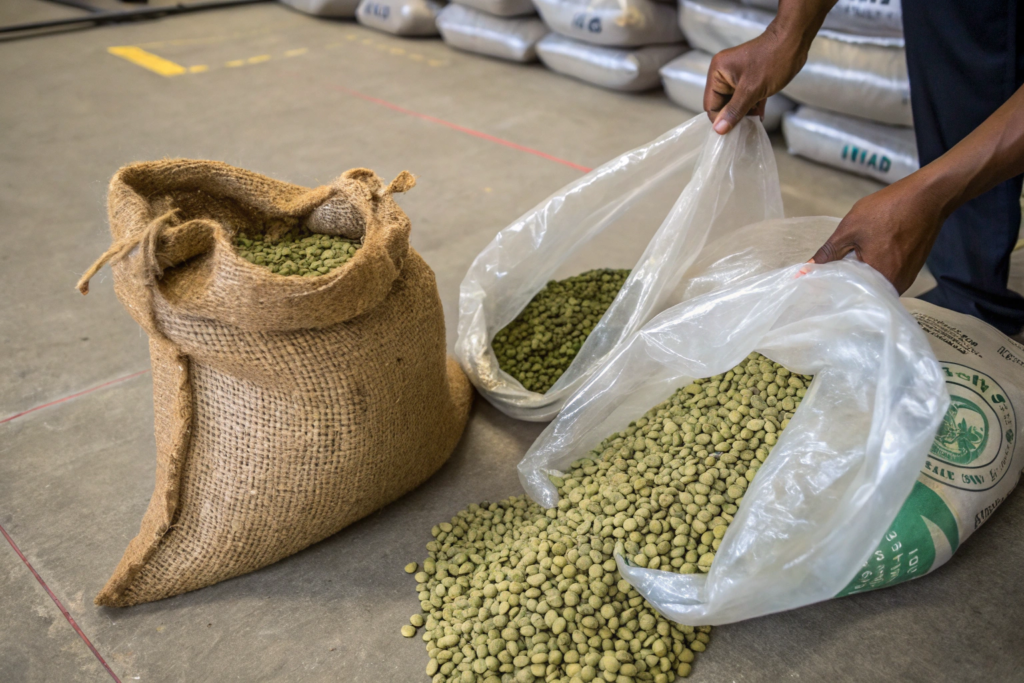
You’ve probably seen three options on a spec sheet. Jute. GrainPro. Polypropylene. They are not the same. Jute breathes. That’s its weakness and its strength. If coffee is packed too wet, jute lets the heat escape. But in a humid sea container, jute sucks up water like a sponge. It can wick moisture right into the beans.
GrainPro is a brand name. It’s a specific type of plastic liner. It’s thick. It’s hermetic. It’s scientifically designed to stop vapor transmission. I use GrainPro for my highest-scoring lots—the 85-plus points Catimor. But for Robusta or bulk commercial Arabica, a 4-mil food-grade polyethylene liner from a trusted factory works just as well and costs less. Then you have woven polypropylene bags. These are white, plastic-looking sacks. Some Vietnamese and Indonesian coffee ships in these. They are clean, they don't shed fibers, but they are slick. They slide around on pallets. Forklift drivers hate them. And they aren't as breathable during sudden temperature drops, meaning condensation builds up on the inside. So, I stick to jute with a plastic liner. It's old school, but it works.
How Do You Choose the Right Bag Weight for Shipping?
This is a money decision. A 70-kilo bag is the max weight for a single person to reasonably handle. Over that, you need two guys or a machine to lift it, which slows down stuffing and unstuffing. In China, the port laborers are built for speed. They toss 70-kilo bags like pillows. But in some smaller roasteries in the US, the receiving dock doesn’t have a forklift. They might ask for 30-kilo bags or even 25-kilo boxes.
I learned this the hard way. A micro-roaster in Oregon asked for 50 bags. I sent my standard 70-kilo sacks. He called me, furious. "I can't lift this. I had to cut the bags open on the truck and scoop the coffee out in buckets." It ruined his workflow. Now, I always ask: "Do you have a loading dock or a driveway?" If it’s a smaller operation, I ship in 30-kilo vacuum-packed boxes. It costs more per kilo in packing, but it saves their back and saves the relationship. The bag weight isn't just about tradition. It's about the infrastructure on the other end.
How Do GrainPro and Vacuum Packs Preserve Coffee Quality in Transit?
The boat ride is brutal. You’re not just parking the coffee. You’re aging it. A container sitting on the deck of a ship in the South China Sea can hit 50 degrees Celsius inside. Then at night, it drops to 20. That swing makes the beans sweat. If the coffee is naked in that jute, it breathes. It inhales the salty air, the diesel fumes, the humidity. I’ve cupped coffee that tasted like a ship’s engine room. You don't forget that taste.
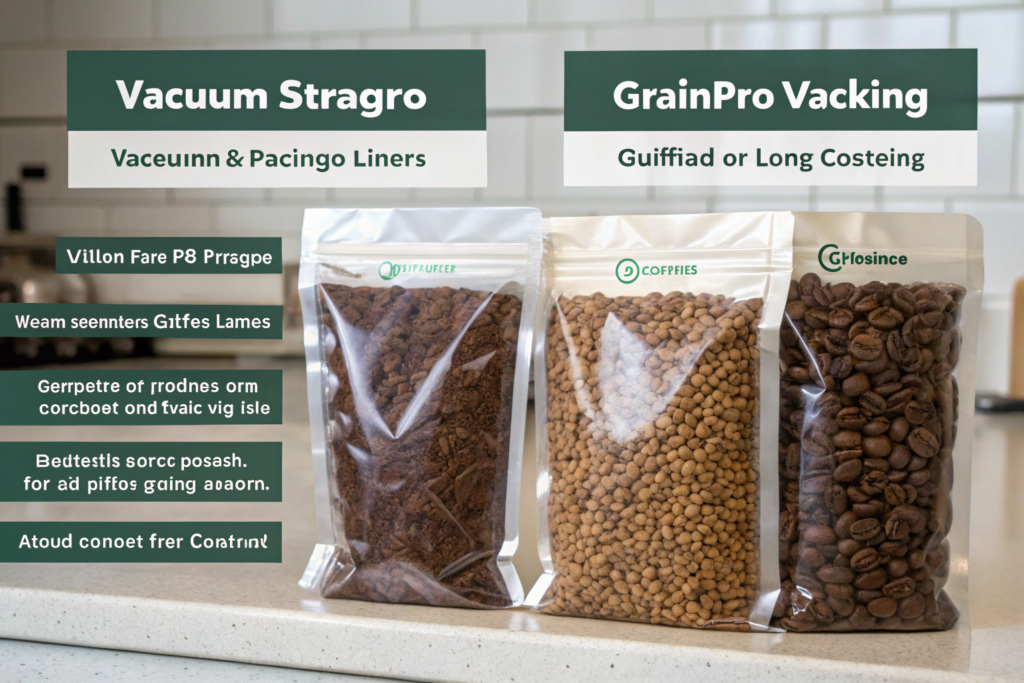
Vacuum packing removes the oxygen completely, stopping oxidation and killing any insect life inside. GrainPro liners create a modified atmosphere—the coffee breathes out CO2 and pushes out the oxygen naturally, creating a stable, low-oxygen microclimate. Both methods work. Vacuum is best for absolute freshness and pest control. GrainPro is best for cost-efficiency over long durations. I use both. It depends on how much you’re paying. If the green is $4.50 per pound FOB, I recommend the GrainPro. If it’s $2.00 Robusta, a thick PE liner handles the job.
Here’s a reality check. Insects. The coffee borer beetle egg can sit inside a bean for weeks. If the container gets hot and humid, those eggs hatch. You end up with a load full of live pests. US Customs finds that, and you’re looking at a fumigation bill or a total rejection. Vacuum packing suffocates them. It crushes the eggs. It’s the only sure way to kill bugs without chemicals. A detail people sometimes overlook is that vacuum-packing green coffee also prevents color fading. The beans stay that vibrant jade green much longer than they would in a jute sack. And the visual counts when you open that box in front of your customer.
Why Is the One-Way Valve Important for Roasted Samples but Not for Green?
You see one-way valves on roasted coffee bags all the time. Fresh roasted coffee pumps out CO2 like crazy. If you vacuum seal fresh roasted beans, the bag inflates and pops. The valve lets the gas out but keeps oxygen out. So, why don't we put valves on green coffee bags?
Green coffee is alive. But it breathes slowly. It doesn't generate enough positive pressure in a big 70-kilo bag to need a valve. In fact, if you put a valve on a green bag, you’re creating a potential leak point. The GrainPro bag gets tied off. It’s airtight, but not rigid. The coffee inside enters a state of equilibrium. The CO2 that is released builds up just slightly, but the barrier holds it in. It doesn't balloon up like a roasted bean bag would. The only time I worry about gas is with fresh-picked, semi-washed coffee that wasn’t rested. It’s still fermenting a little. You can smell it immediately when you open the bag. It smells like fruit and alcohol. That’s why we rest our parchment for 60 days before milling. By the time it hits the bag, it's stable. No valve needed.
What Is the Cost-Benefit Analysis of Vacuum Sealing Containers?
This is where the math gets real. To vacuum pack a container load, you need a huge machine, special heavy-duty bags, and usually, you pack them into cardboard cartons. The cartons take up more space than a jute bag. A 20-foot container that usually holds 21 tons of jute-bagged coffee might only hold 18 tons of vacuum-boxed coffee. You lose 3 tons of freight space. At current ocean freight rates from Shanghai to the US West Coast, that lost space is expensive.
But—the quality gain is real. A vacuum-packed box can sit in your California warehouse for 12 months with zero change. Zero. I’ve done the test. I opened a vacuum box from 14 months ago. It tasted like the day it was milled. A jute-and-liner bag at 12 months? It’s still good, but you start to lose the high floral notes. So, I tell my clients: if you’re buying a fresh crop and you’ll roast it within 6 months, don’t waste money on full vacuum boxes. Buy GrainPro. It’s 95% as good for 60% of the packaging cost. But if you want to stockpile an award-winning lot for long-term blending, go vacuum. The packaging cost pays for itself in shelf-life stability. You just have to pick which game you're playing.
What Are the Best Practices for Labeling and Palletizing?
You can get the beans right and still mess up the delivery. I’ve seen containers stuck in US customs for two weeks because the markings were wrong. The officer can’t read them, so he stops the line. Time burns. Demurrage charges pile up. The buyer gets panicked, and suddenly my safe, reliable coffee becomes a headache. Labeling is the silent language of logistics. It screams at a forklift driver in a noisy port whether this pallet goes to Seattle or Miami.
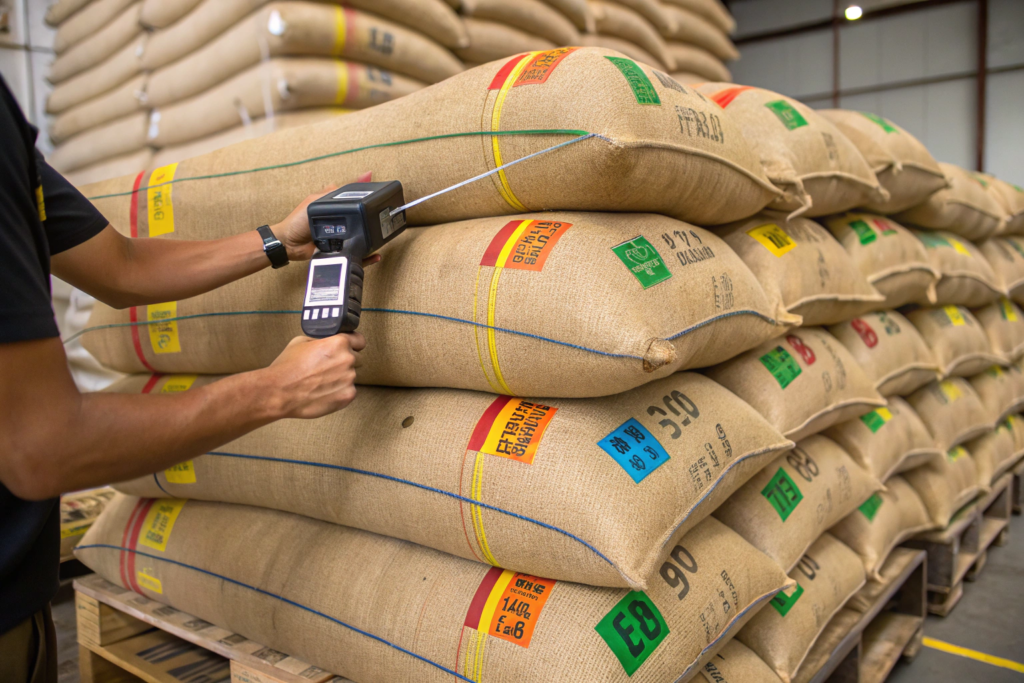
Best practice demands a clear, waterproof label on two sides of every jute bag. The label must specify the ICO lot number, net weight, gross weight, origin country, and destination. At BeanofCoffee, we print on synthetic paper. It doesn't tear if it gets wet. We also palletize with 4-way entry wooden pallets that are heat-treated and stamped with the ISPM-15 mark. This prevents pests in the wood and ensures the pallet jack can grab it from any side, which speeds up unloading and protects the bags from tearing.
You also need to think about how the bags sit. If you cross-stack the bags on the pallet, they interlock like bricks. They don't shift when the ship rocks. If you just stack them in straight columns, the whole pallet wobbles. I’ve seen a container arrive with a collapsed pile of bags because the shipper used cheap pallets and no corner boards. The corner boards are just heavy cardboard triangles. They cost pennies. But they keep the straps from biting into the jute and bursting the bags. These details are boring until they cost you $5,000 in damaged coffee. Then they become very interesting.
How Can Traceability Labels Reduce Tariff Issues?
Tariffs are a moving target. One day there’s a 10% tax. Next day it’s 25%. The customs officer needs to know exactly what this product is. If the label just says "Coffee," you’re in trouble. You need the Harmonized System code. For green coffee, it's usually 0901.11.00.
I put the HS code right on the label. I also put the ICO mark. The International Coffee Organization number is a unique code that tracks this specific bag back to my farm in Baoshan, the picking date, and the processing method. It proves origin. If US Customs questions whether this is transshipped from a country with high duties, the ICO code on the bag is matched to the certificate of origin instantly. It stops the argument. Another way to look at this is the batch traceability inside the container. I map the pallet layout on a one-pager taped to the door. "Pallet 1: lot YN-24-01. Pallet 2: lot YN-24-02." The receiver doesn’t have to unload the whole truck to find the lot they need to test. They cut the wrap, grab the bag, and scan it.
What Is the ISPM-15 Standard for Wooden Pallets?
Bugs don't just travel in coffee. They travel in the wood that holds the coffee. The ISPM-15 is an international treaty for wood packaging. It requires that all solid wood pallets and crates are either heat-treated or fumigated with methyl bromide. You then stamp the pallet with a specific logo—a wheat symbol with a code.
If your pallet doesn't have that stamp, the whole container gets quarantined. I use heat-treated pallets. Fumigation is nasty. It leaves a chemical residue. While it doesn't usually touch the coffee inside a sealed GrainPro, I just don't trust it. Heat treatment is cleaner. It bakes the core of the wood to 56 degrees Celsius for 30 minutes. That kills the larvae of the Asian long-horned beetle and the pinewood nematode. I buy these pallets in bulk here in Yunnan. They cost about $2 more per pallet than non-treated wood. It’s a no-brainer. Without that stamp, the shipment is dead on arrival in Australia, the US, or Europe. The customs authorities are looking for it specifically. Don’t try to skip it.
How Do You Manage Moisture and Mold During Ocean Freight?
You can pack it perfectly and still open the doors in Los Angeles to a disaster. The enemy is "container sweat." The science is simple. Warm air holds more water than cold air. When the ship moves from the tropics to the cold California current, the metal walls cool down. The air inside hits the dew point. It starts to rain—inside the container. That water drips onto the top layer of bags. If the bags are just jute, the water soaks in. The coffee on top becomes a breeding ground for mold.
Managing moisture requires a two-pronged attack: load the coffee at a stable, low moisture content (10-12%), and use container desiccants to trap airborne humidity. We pre-condition our warehouse in Baoshan. The coffee rests there for weeks to stabilize. Before loading, we check the water activity of every batch. If it’s above 0.55 Aw, we don't ship it. We also hang calcium chloride desiccant strips inside the container to absorb the moisture swing. This combination has stopped our mold claims entirely for the last three years.
A detail people sometimes overlook is the floor of the container. A wooden container floor can be a sponge. If the trucker picked up the empty container in the rain, that floor is wet. We lay a heavy kraft paper layer down first. Then a plastic sheet. Then the pallets. This creates a break between the wet wood and the coffee. We also never load during rain. We close the warehouse door. It sounds paranoid. But moisture is patient. It waits. The damage might not show up for 20 days. You open the bag in Chicago, the beans look fine, but they smell like a basement. By then, it’s too late to argue with the insurance company. The prevention is cheaper than the cure.
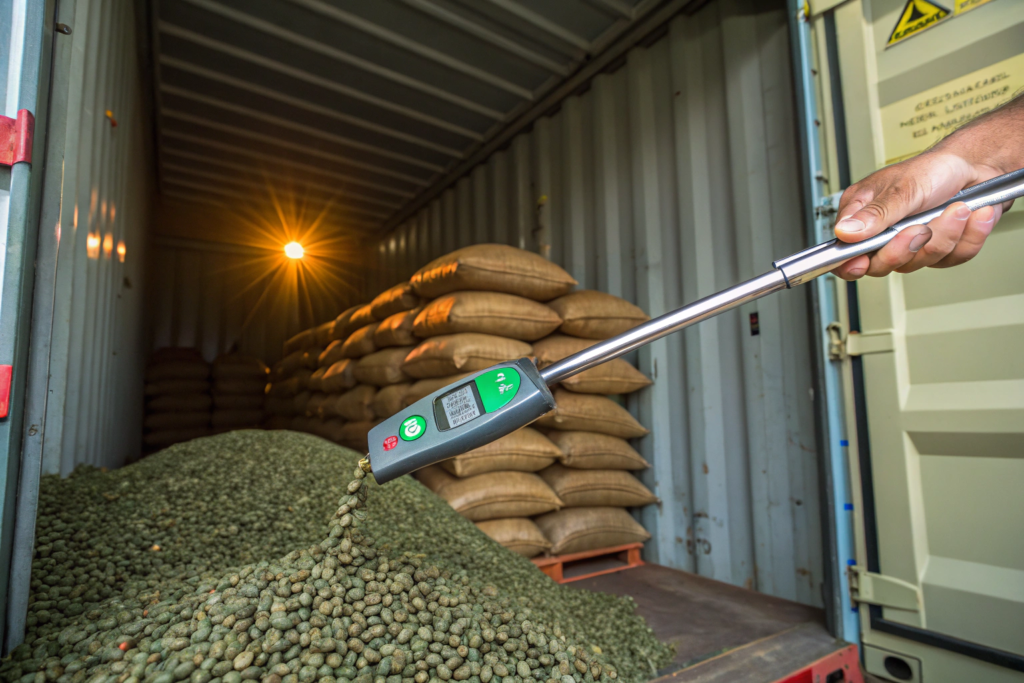
How Do Silica Gel and Container Desiccants Work?
Think of desiccants as dehumidifiers with no moving parts. They suck water out of the air. Silica gel is the granular stuff in the little paper packets. It’s great for a shoe box. For a 40-foot container, you need industrial-grade desiccants. We use calcium chloride-based strips that mount on the container ceiling.
Calcium chloride reacts with water vapor and turns into a salty gel. It drips down into a sealed bag. One 1-kilo strip can absorb its own weight in water over 30 days. We hang about 8 to 12 of these strips, depending on the route. If the ship transits the hot equator for two weeks, we use more. The strips don't stop the temperature change, but they stop the dew from forming on the ceiling. The air stays dry enough that the jute never feels damp. When the container arrives, the bottom of the desiccant bag is full of water. That’s the water that didn't go into your coffee. It’s visual proof.
Why Is Container Loading Crucial for Airflow?
Don't pack the container like a brick. Air needs to move. If you stuff bags floor-to-ceiling and back-to-door, the air in the center gets hot and stays hot. The moisture migrates to the coldest point—usually the roof at night. We load with a "chimney" effect.
We leave a 6 to 8-inch gap between the top of the cargo and the container roof. We also leave a little space near the door. This allows the air to circulate along the length of the container. It’s a passive airflow system. The desiccants are hung in the roof space, working best there. Some big exporters use "lay flat" bulk liners that fill the whole container with no pallets. This is efficient but risky. If the liner tears, you lose the whole container to moisture. I prefer pallets and bags. It’s slower to load and unload, but the air moves around each pallet. Air movement is the cheapest insurance policy you can buy.
Conclusion
So, what is the best packaging? It’s jute and a thick, sealed inner liner. It’s a heat-treated, stamped pallet. It’s a waterproof label with a traceable ICO code. It’s a few calcium chloride strips hanging from the roof. You don’t need a fancy vacuum chamber for every lot, but you do need a system. A system that respects the heat of the tropics, the cold of the Pacific, and the rough hands of a dockworker. When the container is opened, the proof is in the silence. No mold smell. No burst bags. Just clean, bright green coffee that looks and tastes like it just came off the drying patio in Baoshan.
If you’re tired of playing roulette with your import quality, let’s talk specifics. I can walk you through our standard spec sheet, or we can design a custom packing solution for your warehouse needs. You need coffee that arrives safe, stable, and ready to roast. Reach out to our export manager, Cathy Cai, at cathy@beanofcoffee.com. She can send you photos of our current packing setup and get a quote started. Let’s make sure your next load doesn't just survive the trip—it thrives.