
Last October, I watched the C-market jump 20 cents in two days. My phone lit up. Buyers panicked. Ron from Austin called me first. "Are you honoring the price we talked about?" he asked. His voice was tight. I could hear the stress—the fear that his margin had just evaporated. On my side, I was staring at a spreadsheet that looked completely broken. The numbers didn't work anymore. But panic is a luxury a business owner can't afford. You need a plan. A boring, practical, stress-tested plan.
The only smart way to respond to a coffee price spike is to slow down, not speed up. Immediately shift your buying from long-term fixed-price contracts to short-term floating differentials. Lock in the differential—the quality premium—with your trusted supplier like BeanofCoffee, but let the futures market float until it stabilizes. Simultaneously, audit your current inventory to sell through your lowest-cost stock first. Do not buy a full year's supply at the peak. That's gambling. That's not business.
When the market goes vertical, your instinct screams "Buy now before it goes higher!" That's the lizard brain talking. I've been in coffee export for over a decade here in Yunnan. I've survived the frost spikes, the drought spikes, the speculation spikes. The buyers who survive are the ones who treat price volatility not as a crisis, but as a math problem. You need to manage your price exposure, protect your shipping cash flow, and get creative with the blend. Let's walk through it, step by boring, money-saving step.
Why Do Coffee Prices Suddenly Spike So High?
Before you react, you have to understand the monster you're fighting. A coffee price spike doesn't come out of nowhere. It builds. Sometimes it's obvious—a truckers' strike in Colombia, a frost in Brazil. Sometimes it's hidden—a hedge fund in New York deciding coffee is undervalued and buying 10,000 futures contracts in an afternoon. I've seen both. The Arabica market, which is the global benchmark, trades on the ICE exchange. It's a piece of paper. But that piece of paper determines whether my Yunnan Catimor is profitable or whether Ron cancels his order.
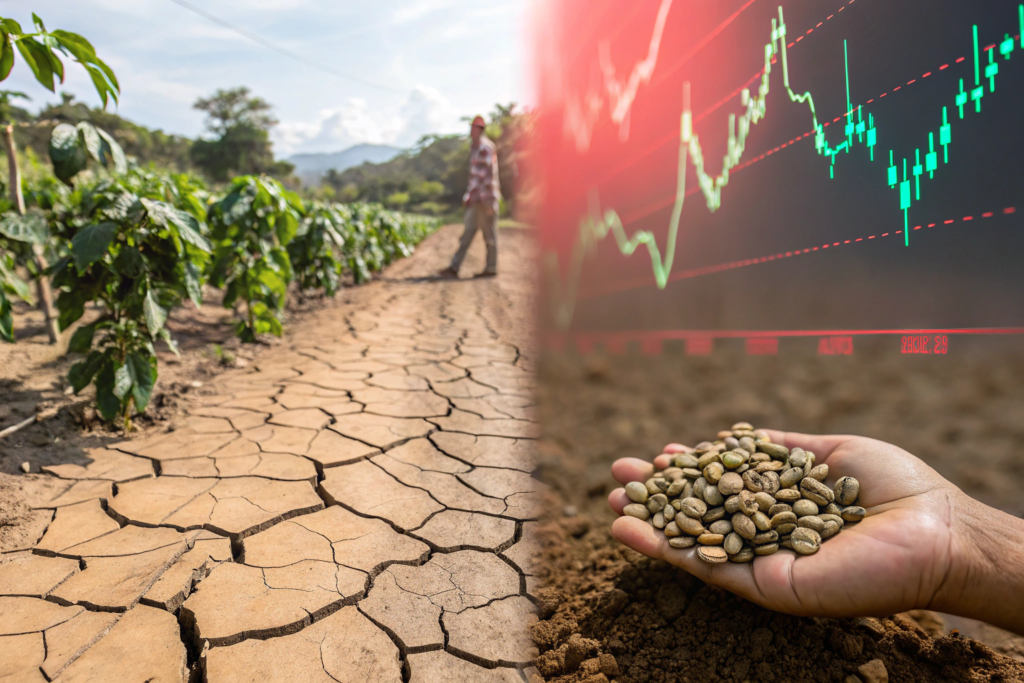
Coffee prices spike because of a sudden imbalance between supply and demand, amplified by speculative trading. Physical causes include severe weather in Brazil or Vietnam, shipping container shortages, or political unrest blocking ports. Financial causes are equally powerful—a weakening US Dollar, high inflation, or algorithmic trading bots that pile in when a price threshold is broken. Often, it's a poisonous mix of both. A drought rumor hits the news, the bots push the price up 5%, and suddenly every roaster scrambles to cover their needs, pushing the price up another 10% in a week.
Here's the hard truth. At the farm level in Baoshan, we don't always feel the spike immediately. The C-market is a New York price. The local Yunnan cherry price moves slower, driven by local supply and demand. Sometimes, the C-market is up 15% but my internal costs—fertilizer, picking labor, milling—haven't changed yet. That window is your opportunity. A smart buyer uses that lag. They call me and say, "Hey, what's your differential this week?" Not "What's the C-price?" The C-price is the weather. The differential is the climate. You can't control the weather, but you can build a stable climate with a good supplier.
What Role Does the Brazilian Real Play in Coffee Volatility?
Brazil is the 800-pound gorilla. They produce about 40% of the world's Arabica. Their currency is the Real. When the Brazilian Real strengthens against the US Dollar, Brazilian exporters get paid in Dollars but spend in Reais. Their margin shrinks. So they raise their Dollar price to compensate. That pushes the global C-market up.
It's a weird chain. A politician says something in Brasília. The currency traders react. The coffee market reacts. And my phone in Baoshan rings because a roaster in Germany wants to renegotiate his contract. You don't need to be a currency expert. But you need to watch the Real-to-Dollar exchange rate. It's a leading indicator. If the Real suddenly appreciates 5%, expect upward pressure on coffee. Another way to look at this is to track the Bovespa stock index and the USD/BRL pair. It's not direct coffee news. But it predicts coffee price movement better than a weather report sometimes.
How Do Speculative Funds Influence Your Coffee Cost?
Funds don't drink coffee. They don't even know what Catimor tastes like. They see numbers. The Commitment of Traders report, which comes out every Friday in the US, shows how many "non-commercial" contracts are held. These are the speculators.
When the net long position of these funds gets historically high, the market is a powder keg. Any bit of good news—rain in Minas Gerais—pops the bubble. Any bit of bad news—container shortage in Asia—ignites a rally. I track this report religiously. When I see the funds are massively long, I get cautious. I know the market is not trading on real coffee. It's trading on momentum. For a buyer, this means you cannot trust the sustainability of the price level. The spike might evaporate next Thursday. So you don't make a 12-month bet based on fund-driven noise. You adjust your contract structure instead.
How Can You Shield Your Budget from Volatile Markets?
You can't stop the spike. But you can build a boat that doesn't sink. I learned this from an old Swiss trader who bought coffee from my father. He said, "A fixed price is a bet. A differential is a fee." If you bet on the price direction, you're a gambler. If you pay a differential over the market for quality, you're a roaster. The difference is huge. When prices are calm, a fixed-price contract feels safe. You know exactly what you'll pay. But when prices spike 30%, that same fixed-price contract can bankrupt you if you haven't bought green coffee yet to cover it.
The most effective shield is a "price-to-be-fixed" contract. You agree with your supplier on the differential over the futures market. For example, C-price plus 30 cents. At BeanofCoffee, we can hold the coffee for you and fix the futures price later, on your instruction. You watch the market. If it dips on a Tuesday morning, you call me and say, "Fix 10 lots at 180." It's locked. The risk shifts from the supplier to you, but you control the timing. This prevents you from having to swallow the peak price just to secure supply.
Another tool is the simple "cap" contract. You don't fix the price at today's high. You buy a ceiling. You pay a small premium for the right to never pay more than, say, 200 cents. If the market drops to 160, you pay 160 plus differential. If it rockets to 250, you still pay 200. It's insurance. Not free. But it gives you sleep. During the COVID shipping crisis, my clients who used caps survived. Those on pure fixed-price contracts either cancelled or got buried by the freight costs on top of the bean cost. Don't confuse the price of the coffee with the cost of the coffee. The cost includes the risk.

What Is the Difference Between Fixing and Hedging?
Fixing is a one-time action. You watch the screen, you call me, we lock the futures leg. Hedging is a strategy. It's what I do on my side to protect my inventory. If I have 500 bags of green coffee in my warehouse, I might sell futures contracts against it. If the market drops, my coffee loses value, but my futures contract makes money. It cancels out.
You don't need to be a hedge fund manager. But you need to understand the fix. Say you need coffee in January. It's October. The market is spiking. You don't fix the whole container now. You fix one-third now, because you must. You wait on the other two-thirds. Maybe you fix the second third in November on a 5% pullback. You fix the last third in December. It's called dollar-cost averaging for coffee. It's boring. It works. It stops you from kicking yourself for "missing the bottom." You won't catch the bottom. Neither will I. But averaging your entry price over time is the adult move.
How Does a Price-to-Be-Fixed Contract Work in Practice?
Here's the email flow. You email me: "Cathy, send me your offer for washed Yunnan Arabica, screen 18, for Jan shipment. PTBF." PTBF means price to be fixed. I reply: "Basis C plus 28 cents FOB." You agree on the differential—the 28 cents. That covers my cost, quality, and margin. The coffee is now yours. I'll put your label on the bags and move them to my export warehouse.
For the next few weeks, you monitor the C-market. Let's say the market is 190 cents right now. You don't like it. You wait. One morning, the market drops to 175. You email: "Fix 10 lots at 175." I execute a hedge on the ICE exchange or with my broker. The final price is 175 plus 28, so 203 cents per pound. If the market shoots to 220 the next day, you're safe. You paid 203. The key is discipline. Don't wait for 150 if the market is at 175 and trending up. Greed kills. If you're comfortable at 175, fix it. Even if it drops to 165 later, you were comfortable. You budgeted for it. That's a win. Not a loss.
Why Origin Diversification Matters During a Crisis?
When Brazil sneezes, the world catches a cold. But it doesn't have to be that way. If you're 100% dependent on one origin for your blends, a spike in that origin kills you. I've seen roasters who only buy Colombian. One wet harvest, one washed-out bridge, and their main SKU is underwater. They can't swap. Their branding is tied to the origin. That's a dangerous game.
Diversifying your origin portfolio is the cheapest form of insurance. Don't dump your Brazil contract. But start adding 20% of a similar cup profile from a different continent. Asia, specifically Yunnan, China, is emerging as a stable, high-quality alternative. Our washed Catimor at BeanofCoffee cups at 84 points with a clean, chocolaty, nutty profile. It can easily substitute for a Central American base in a blend. When Brazilian prices spike due to a Real rally or a frost, your Yunnan supply acts as a shock absorber. The price correlation is not 100%. That's the whole point.
This isn't just about price. It's about shipping. During the Suez Canal blockage, coffee from East Africa sat for weeks. The European roasters who also had a Yunnan container on the water looked smart. They diverted their Asia supply and kept roasting. The single-origin guys shut down. You need geographic arbitrage in your supply chain. Yunnan is close to major Asian ports. Freight time to the US West Coast is competitive. The security of having a second supplier who knows your spec and can ramp up volume is priceless.
What Cup Profiles Can Replace Traditional Origins?
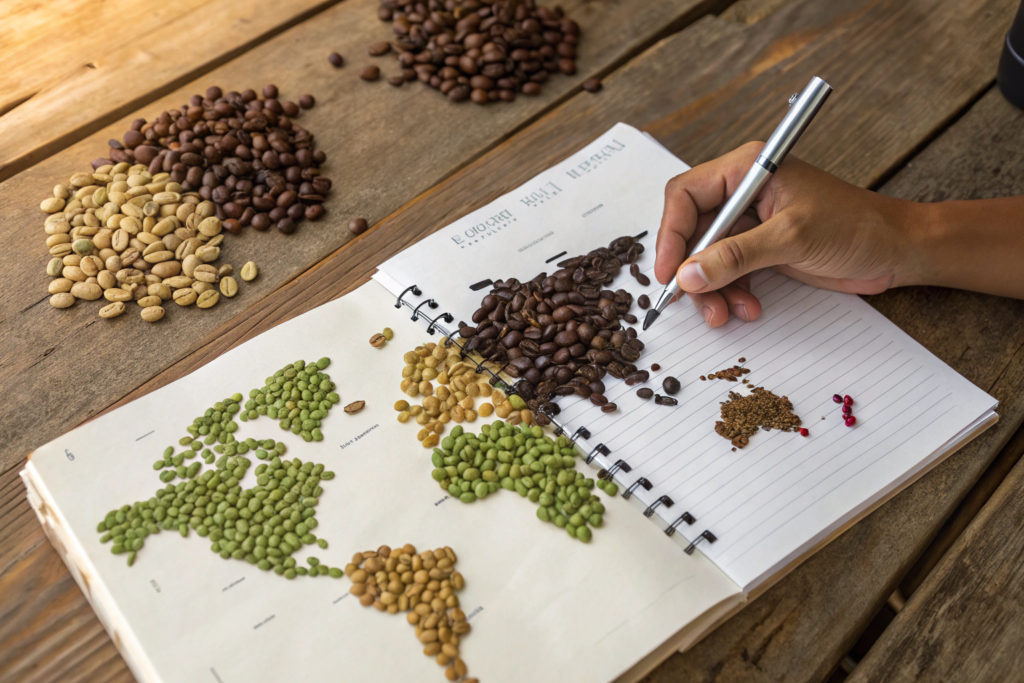
You can't swap a fruity Ethiopian natural for a washed Yunnan. That would ruin your blend. But you absolutely can swap a washed, nutty, chocolate-forward Central American with a washed Yunnan Arabica. The profiles are remarkably similar. We grow mostly Catimor here. It's a hybrid of Caturra and Timor Hybrid. It offers good body, low acidity, and a clean finish.
If your espresso blend is 40% Brazil natural and 60% washed Colombia, try this. Go 40% Brazil, 30% Colombia, and 30% washed Yunnan. You'll barely see the difference on your refractometer or your tasting wheel. But you might save 30 to 40 cents a pound during a spike. Here is a small detail. We process our Yunnan with a double-washed, extended fermentation method. It removes the earthy undertone that some older Asian coffees had. The result is a cup that's neutral, sweet, and very "safe" for a mass-market blend. It doesn't fight the other components.
How Can a Chinese Supplier Stabilize Your Supply Chain?
China is not a traditional coffee powerhouse. But that's changing fast. Our government supports the coffee sector in Yunnan province. The roads are new. The dry mills are modern. The banking system supports USD contracts. This means we can execute large FOB shipments with less political risk than some other origins.
A detail people sometimes overlook is China's container availability. China is the world's factory. We export everything. Empty containers are always flowing back into China. During the global container shortage in 2021, my clients in the US got their Yunnan coffee on time. Their Brazilian and Colombian shipments were delayed by six weeks because there were no empty boxes in Santos or Buenaventura. The shipping line from Shanghai to Long Beach is a highway. It rarely closes. Having a Chinese supplier is not just about the bean. It's about plugging into the world's most stable logistics chain.
What Are the Immediate Logistics Adjustments to Save Cash?
When the green bean cost jumps, you have to find the money somewhere else. You can't change the C-market. You can change the freight. Most roasters just auto-pilot their shipping. "Oh, my forwarder handles that." Big mistake. During a price spike, your freight terms, container consolidation, and inventory velocity become weapons. A 5% saving on logistics can offset a 10% spike on beans. It buys you time. It keeps your retail price stable.
The first adjustment is to switch from air freight for samples to air freight for pre-shipment samples only, and push for consolidated LCL (Less than Container Load) shipments if you normally buy full containers. At BeanofCoffee, we often help buyers combine their container with another roaster's order to split costs. The second adjustment is inventory velocity. Order smaller lots more frequently to reduce your cash-to-cash cycle. Don't sit on 6 months of inventory you bought at the peak. Buy 2 months' worth, wait for the spike to cool, and refill.
Also, look at the Incoterms. If you usually buy FOB (where I, the seller, deliver to the ship), maybe switch to EXW or FCA for a few shipments. You might have a better freight rate than I do. Your forwarder might have an empty back-haul container from Asia that's dirt cheap. Don't assume the old way is the best way. Price spikes are a good excuse to kick the tires on every single line item in your landed cost sheet.
How Can LCL Consolidation Reduce Inventory Risk?
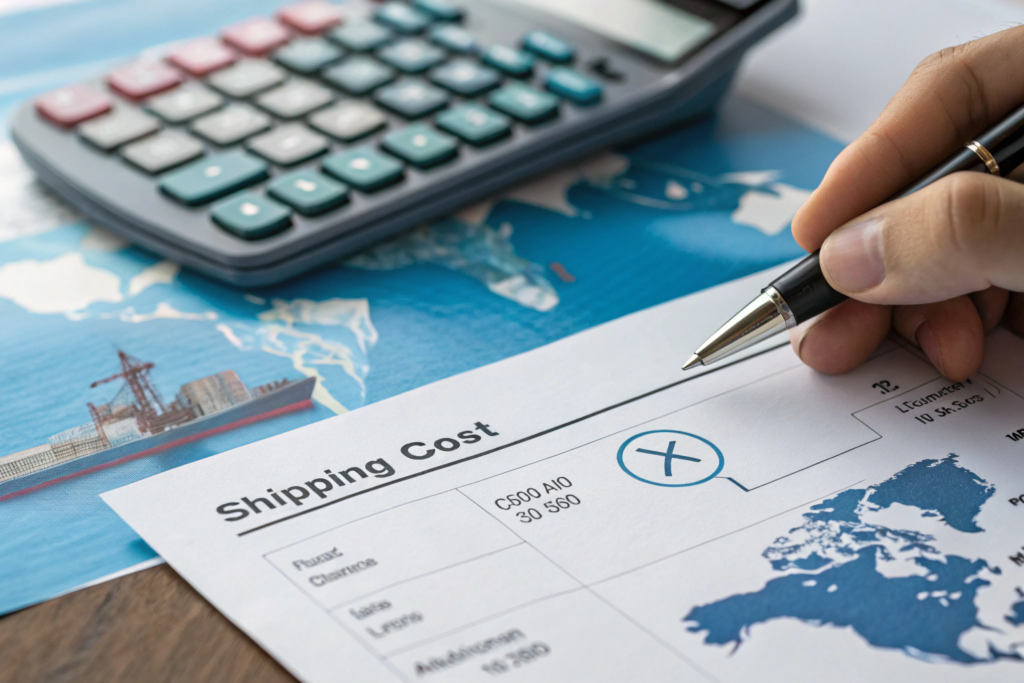
LCL is Less than Container Load. You're sharing a container. You only pay for the space you use. If you normally buy a full 20-foot container—that's 21 tons—you need a big chunk of cash. During a spike, that's even more cash.
By breaking your order down and sharing a container with another roaster, you bring in 5 or 10 pallets instead of 20. Your outlay is smaller. Your risk is smaller. If the market drops next month, you only overpaid on 5 pallets, not 20. Your blending cost averages down faster. Yes, the per-kilo freight rate is higher for LCL than FCL. But the cost of the capital tied up in the coffee is often higher than the freight penalty. Do the math. If the interest rate on your line of credit is 8% and the coffee sits for 3 months, sometimes paying a bit more for LCL shipping is cheaper than paying the bank interest on a huge bean loan.
What Is the Advantage of Cross-Docking at the Port?
Cross-docking means the coffee doesn't go to your warehouse. It goes from the ship directly to a truck heading to your customer. Or, it goes to a 3PL logistics center near the port.
The trucking from Port of Los Angeles to a warehouse in the Midwest is expensive. It can add 10-15 cents per pound. If you have a buyer on the West Coast, arrange a "pier pick-up." They grab the container at the port. They save the inland freight. You save the cash. During a spike, cash flow is king. Holding inventory is expensive. Move it fast. Another way to look at this is to use a public warehouse near the port for short-term storage. It's usually cheaper than trucking it inland immediately. Stage it there. Pull it as you need it. This reduces the lag time between you paying me in China and your customer paying you in the US. It's a cash flow hack.
Conclusion
So, a price spike hits. Your first move is not to panic-buy. It's to structure your contract for control—differentials and PTBF. It's to look at the map and ask, "Is there a stable Yunnan origin that can pad this blend?" It's to crack open the logistics bill and find the 5% waste you've been ignoring. The market will always be a rollercoaster. It can't be tamed. But your response can be tamed. It can be methodical, boring, and profitable. The roasters who survive the spikes are the ones who keep their heads when the ticker tape is screaming red.
If the current market volatility has your P&L looking stressful, reach out. I'm happy to walk through our current differentials for washed Arabica and Catimor. We can structure a PTBF contract that lets you sleep at night, even when the ICE exchange is on fire. Email our export manager, Cathy Cai, directly at cathy@beanofcoffee.com. We can run a sample, fix a differential, and build a shipping schedule that protects your cash flow. Don't ride the spike alone. Partner with a supplier who treats your budget like it's their own.