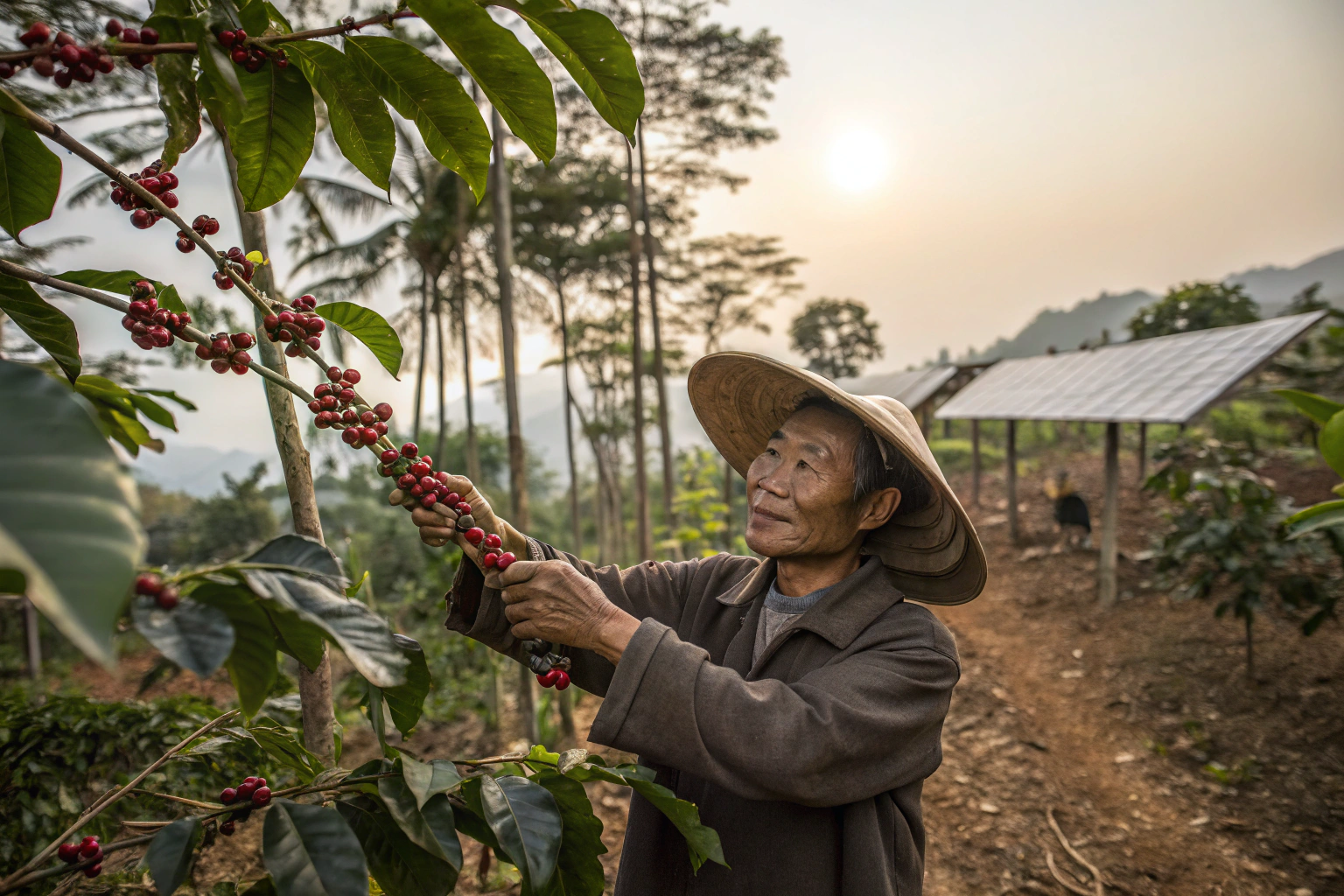
I remember my father burning the hillside. It was 1998. The old way was simple: slash the weeds, burn the stubble, plant more coffee. The soil was red and bare. When the monsoon rains came, half of it washed down into the river. My father wasn't a bad farmer. He was a practical one. He did what his father did. But that year, we lost a whole terrace. The coffee trees just slid away in the mud. That's when I knew—this way of farming wasn't just bad for the birds or the bees. It was bad for business. It was killing the land that was supposed to feed my children.
Chinese coffee farmers, especially here in Yunnan, are adopting sustainable methods because it's now a matter of economic survival, not just environmental ideology. The global buyers who pay the best prices—the specialty roasters in North America, Europe, and Australia—demand certified, traceable, and responsibly grown coffee. Without sustainable practices, we can't access those premium markets. At BeanofCoffee, our 10,000 acres use shade-growing, water recycling, and organic composting not to win awards, but to secure long-term contracts with buyers who audit our fields and pay a differential for the effort.
But there's another reason. One that doesn't show up on a marketing brochure. The weather. It's changing. The rainy seasons in Baoshan are not as predictable as they were 20 years ago. Sometimes the rain comes late. Sometimes it comes all at once in a violent storm. Sustainable farming—with its shade trees, its ground cover, its deep roots—is our shield against this chaos. It's not about being a "green" company. It's about staying in business for another generation. Let me explain what that actually looks like on the ground.
What Are the Economic Benefits of Sustainable Coffee Farming in China?
Let's talk money. Because if sustainable farming doesn't pay the bills, it's just a hobby for rich people. For a Yunnan coffee farmer, the math has to work. The average smallholder here has maybe 2 or 3 hectares. That's tiny. They can't afford to waste a single yuan on chemicals that might not improve the yield. So when we tell them to stop spraying pesticides and start planting shade trees, they ask the obvious question: "Will this put food on my table?"
The direct economic benefit comes from the premium price. Certified sustainable coffee—Rainforest Alliance, UTZ, or 4C—commands a differential of 15 to 30 cents per pound over conventional coffee. For a farm producing 10 tons of green coffee, that's an extra $3,000 to $6,000 USD annually. At BeanofCoffee, we share this premium directly with our partner farmers. But the indirect benefits are even bigger. Shade-grown trees live 20 years instead of 10. Soil that's not eroded keeps producing year after year. The long-term cost of replacing dead trees and buying synthetic fertilizer drops dramatically. Over a decade, a sustainable farm is almost always more profitable.
Here's a story. A farmer named Lao Li works with us. He switched to organic composting and shade-growing in 2018. He was scared. He thought the shade trees would compete with the coffee for nutrients. The first year, his yield dropped 10%. He was angry at me. But by year three, his yield was back—and the cherry quality was visibly better. The beans were denser, heavier. The cupping score jumped from 80 to 84. That jump took him from commodity pricing to specialty pricing. He earned more from 8 tons of specialty coffee than he ever did from 10 tons of commodity. That's the economic argument. It's a slow yes, not a fast no.
How Do Premium Prices from Western Buyers Incentivize Green Practices?
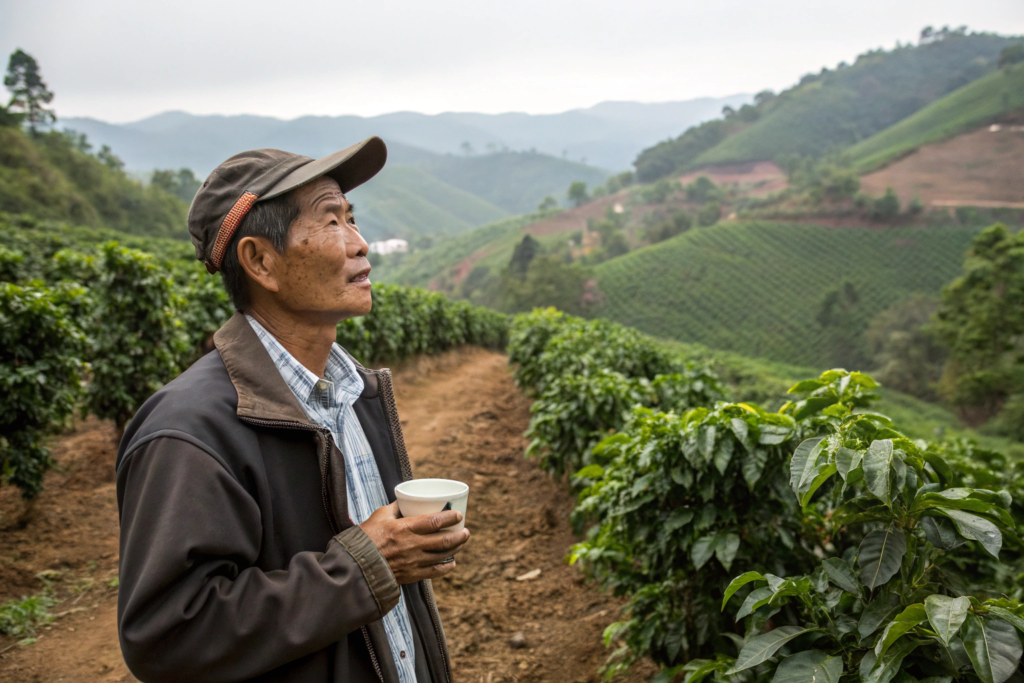
Western buyers—the Ron from Austin types—they don't just ask for a price. They ask for a story. They want a code on the bag that traces back to a specific hillside. They want a certificate that says no child labor, no deforestation. And they will pay for it.
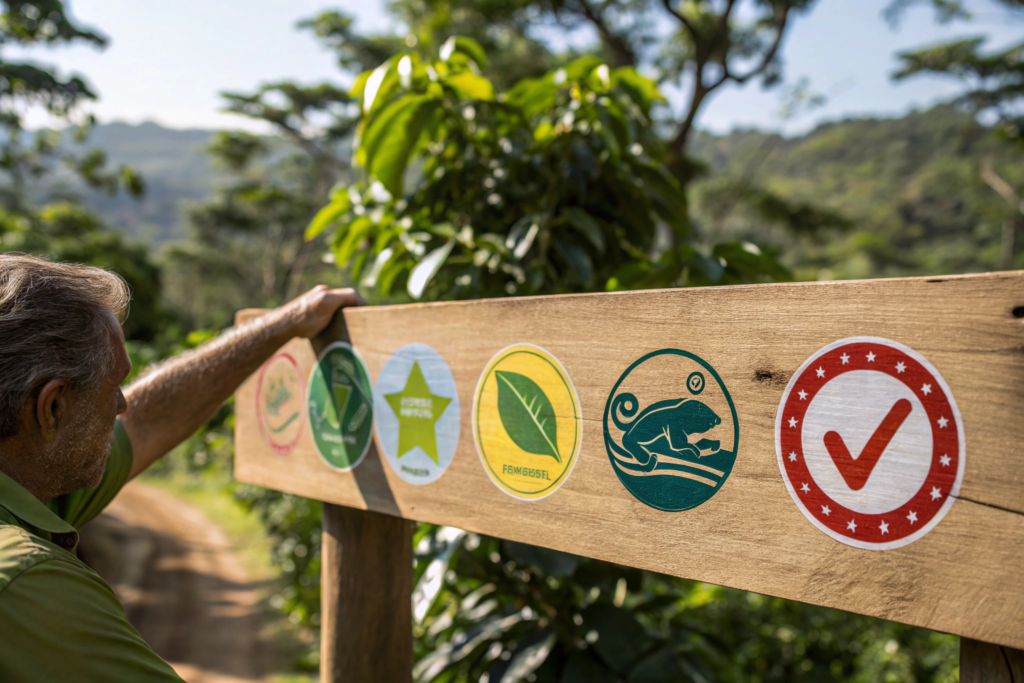
I've sat in meetings at trade shows in Berlin and Seattle. A buyer tastes our Catimor. It cups clean. They ask, "Is this Rainforest Alliance certified?" If I say no, the conversation ends. Or worse, they say, "We'll take it, but at the commodity price." If I say yes, they lean in. They ask about the fermentation process, the drying beds, the waste treatment. The certification doesn't make the coffee taste better. But it gives the buyer a marketing tool. They can put a little green frog seal on their bag. Their customers, in places like Portland or Melbourne, will choose that bag over the one next to it. So the buyer pays me more, and I pay Lao Li more. The premium trickles down. Not out of charity. Out of market demand.
What Is the True Cost of Chemical Fertilizers Over Time?
Chemical fertilizer is like a sugar rush for a coffee tree. It pushes a big harvest fast. The cherries swell. The branches hang heavy. But the soil pays for it. Synthetic nitrogen kills the microbial life in the soil. The little bacteria and fungi that naturally break down minerals and feed the roots? They starve. The soil becomes dead dust.
After five or six years of heavy chemical use, the yield crashes. The tree is addicted. You can't stop fertilizing because the soil has no natural fertility left. So your costs go up while your yield goes flat or down. It's a trap. We switched many of our farm blocks to a mix of composted coffee pulp and goat manure. The cost? Almost nothing. The pulp comes from our own processing station. The manure comes from a neighbor's goat farm. It's a closed loop. The first year after switching, the trees look a little shocked. By year two, the leaves are darker green. The root systems are deeper. The cherries ripen more evenly. The cost curve flips. Chemical farming is expensive in the long run. Organic composting is cheap. That's the math that matters to a farmer who can't read English but can read a balance sheet.
How Does Agroforestry Protect Coffee Farms in Yunnan?
Monoculture is lonely. Rows and rows of just coffee, baking in the sun. It looks tidy. It looks industrial. But it's fragile. A single pest—like the coffee berry borer—can sweep through a monoculture farm like a fire. There's nothing to stop it. No natural predators. No barrier. In Yunnan, we have an old saying: "Don't put all your eggs in one basket." Agroforestry is that saying applied to land.
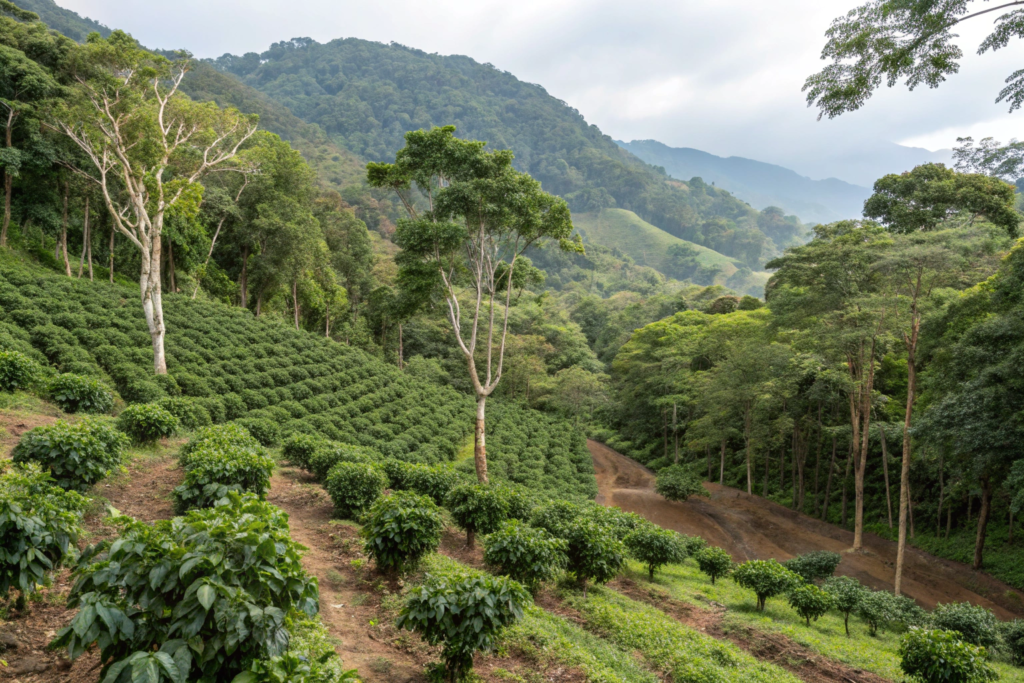
Agroforestry is the practice of planting coffee under a canopy of taller, native trees. It protects the farm in three ways. First, the shade slows the ripening of the cherry, which increases sugar development and bean density. Second, the tree roots hold the steep mountain soil in place during the monsoon, preventing landslides. Third, the diverse ecosystem hosts birds and insects that eat coffee pests. At BeanofCoffee, our Baoshan plantations are intercropped with macadamia trees, bananas, and nitrogen-fixing legumes. We don't just grow coffee. We grow a system.
This isn't just theory. In 2016, a hailstorm hit the western side of our farm. The blocks with heavy shade cover? They lost maybe 5% of their cherries. The leaves of the shade trees took the beating. The exposed sun-grown blocks? They were shredded. Defoliated. The next year's harvest was wiped out. The shade trees were an insurance policy we didn't even know we had purchased.
How Do Shade Trees Improve Coffee Quality and Yield Stability?
There's a beautiful piece of biology here. Coffee is originally an understory plant from the forests of Ethiopia. It evolved to live in the shade. When you blast it with full sun all day, it panics. It overproduces cherries to try to reproduce before it dies. That's why sun-grown coffee has big yields—for a while. But the cherries ripen fast and unevenly. The sugars don't have time to develop fully.
Under a canopy of 40% to 60% shade, the coffee tree is relaxed. The cherries mature slowly, taking an extra 2 to 4 weeks to fully ripen. This slower maturation packs the bean with complex sugars and organic acids. In the cup, that translates to more sweetness, more body, and a cleaner finish. It's the difference between a strawberry ripened on the vine and one ripened in a truck. The yield per tree might be slightly lower under shade, but the yield of specialty-grade cherry is higher. And since specialty pays double or triple the price, the farmer wins. The stability comes from the shade buffering temperature extremes. A shade canopy keeps the soil 5 to 10 degrees Celsius cooler on a hot day. Coffee flowers abort if it gets too hot. More flowers surviving means more cherries setting. It's a natural thermostat.
What Role Do Nitrogen-Fixing Plants Play in Soil Health?
Chemical nitrogen is a crutch. Nitrogen-fixing plants are a cure. These are plants like pigeon pea, sesbania, or certain types of clover that we plant between the coffee rows. They have a superpower. They partner with bacteria in their roots that pull nitrogen out of the air and turn it into a form the soil can use.
It's a free fertilizer factory. The plant grows, we slash it down, and the leaves and stems decompose into the soil. The nitrogen is released slowly, naturally, exactly where the coffee roots can reach it. No runoff. No pollution of the local streams. No dead zone in the river. We also use a plant called tithonia, a wild sunflower that grows like a weed here. Its biomass is incredibly high in phosphorus and potassium—two other key nutrients for coffee cherry development. We chop and drop tithonia twice a year. It's hard physical work. But the cost is zero compared to buying imported chemical blends from a factory in Kunming. And the soil texture visibly improves. It goes from hard, cracked clay to dark, crumbly loam that smells like a forest floor.
Why Is Water Conservation Critical for Yunnan Coffee Processing?
Water is the lifeblood of a washed coffee. You need it to float the cherries, to pulp them, to ferment them, to wash them. A typical washed process can use 40 to 60 liters of water per kilo of green coffee. In a place like Baoshan, where we have a distinct dry season, that water has to come from somewhere. The old way was to just take it from the stream, use it once, and dump the dirty, acidic wastewater directly back into the river. That killed the fish. It fouled the water for the villages downstream.
We now use closed-loop water recycling systems. The pulping water goes into sedimentation tanks where the solids settle out. The cleaner water is then filtered through gravel and reed beds—natural biofilters—and pumped back into the system. This cuts our freshwater usage by over 70%. At BeanofCoffee, we treat the leftover pulp and wastewater sludge in a biogas digester. The methane produced fuels the kitchen in our workers' dormitory. The leftover slurry is a potent fertilizer. Nothing is wasted.
A detail people sometimes overlook is the quality impact. Water that's recycled and clean actually produces better coffee. Dirty water, full of decomposing mucilage sugars, can introduce off-flavors during the fermentation and soaking stages. It can give the coffee a slightly fermenty, oniony note. Clean water, even if it's been recycled ten times, gives a clean parchment. A clean parchment gives a clean cup. So environmental compliance and quality control are the same thing here.
How Do Eco-Pulpers Reduce Water Usage Without Hurting Quality?
The old drum pulpers were water hogs. They needed a constant stream of water to push the cherries through and separate the skin from the bean. The new generation of eco-pulpers—like the ones from Colombia or Brazil—use mechanical pressure and a dry screw system.
They use almost no water for the actual pulping. The cherry is fed in dry. The machine squeezes the seed out of the skin. A small trickle of water is used only at the very end to help separate the floaters from the sinkers. This cuts the water use at the pulping stage by 90%. The quality is actually better because the mucilage stays dry and intact on the parchment. This is critical for controlled fermentation. If the mucilage is washed away by a flood of water, you lose the sugars that feed the fermentation microbes. A dry-pulped, demucilaged coffee ferments more evenly. The eco-pulper is a beautiful machine. It saves water, saves money, and saves the flavor profile all at once.
What Is a Biogas Digester and How Does It Benefit Farms?
The pulped skin—the coffee cherry husk—is a waste product. About 40% of the cherry's weight is skin and pulp. A big processing station can generate tons of it in a day. If you just pile it up, it rots. It smells like vinegar and rotten fruit. The acidic leachate seeps into the groundwater.
A biogas digester is a large, sealed concrete dome or a heavy-duty plastic bag. You feed the coffee pulp and wastewater into it. Inside, anaerobic bacteria break it down. They produce methane gas. We capture that gas in a simple pipe system. It runs to a stove in the workers' kitchen. Our staff cooks their lunch on a flame fueled by coffee pulp. It's a magical thing to see. The slurry that comes out the other end is sterile, odorless, and packed with nutrients. It's spread back onto the coffee fields as a liquid fertilizer. This closes the loop. The coffee cherry feeds the workers and then feeds the next year's crop. It also solves the biggest environmental headache of washed coffee—contaminated wastewater. A farm with a biogas digester has no polluted runoff. That's the gold standard.
What Certifications Do Chinese Sustainable Coffee Farms Hold?
You can say you're sustainable. But talk is cheap. A buyer in Hamburg can't walk your farm. They can't taste the soil. So they need a proxy. A certification body does the walking and the tasting for them. It's a third-party audit. Someone from Rainforest Alliance or UTZ comes to Yunnan. They check our payroll records to make sure no kids are working. They check our pesticide storage. They walk the streams to see if we're polluting them. They interview the workers privately.
The main certifications held by progressive Chinese coffee farms like ours are Rainforest Alliance, UTZ (now part of Rainforest Alliance), 4C Common Code, and increasingly, Organic USDA or EU Organic. At BeanofCoffee, our core plantation groups are audited annually for Rainforest Alliance and 4C. We are also converting a 500-hectare block to full organic certification, which takes three years of transition. These certifications are not cheap. But they are the passport to the premium shelf in a Western supermarket.
Getting certified in China used to be rare. The auditors didn't understand Chinese farming systems. Chinese farmers didn't understand Western paperwork. There was a huge cultural gap. That gap is closing. We now have local Chinese agronomists trained by Rainforest Alliance. They speak the local dialect. They understand that a farmer might not have a written contract with his seasonal pickers because the deal is sealed with a handshake and a shared meal. They help translate that traditional trust into documented evidence. It's hard work. But without that stamp, our coffee is just another commodity fighting for the lowest price.
What Is the 4C Code and Why Do Importers Require It?
4C stands for Common Code for the Coffee Community. It's the entry-level sustainability standard. Think of it as the baseline. It says, "This coffee was not produced using the worst practices." It bans forced labor, child labor, clearing of primary rainforests, and the most dangerous pesticides.
Many large commercial roasters—the ones buying thousands of tons—require 4C as a minimum. They don't need the coffee to be a fancy specialty grade. They need to know that if a newspaper journalist investigates their supply chain, they won't find a 10-year-old picking cherries or a burnt patch of Amazon rainforest. For a Chinese exporter, 4C is the first step on the ladder. It opens the door to volume buyers. It's less strict than Rainforest Alliance, so it's easier and cheaper to achieve for a smallholder group. But it forces a basic discipline. It forces us to keep records, to train our workers on safety, to build proper latrines and hand-washing stations. It's basic human dignity stuff. And it protects the buyer's brand.
How Does Organic Certification Differ from Rainforest Alliance?
Organic is about inputs. Rainforest Alliance is about the whole system. Organic says: no synthetic pesticides, no synthetic fertilizers, no GMOs. Period. You have to prove your land has been clean of these chemicals for three years. You have to have a buffer zone between your farm and your neighbor's conventional plot.
Rainforest Alliance is broader. It allows some targeted, safe chemicals as a last resort, but it focuses heavily on ecosystem conservation, worker welfare, and farm management. Rainforest Alliance demands shade trees. Organic doesn't necessarily, though it's good practice. Rainforest Alliance requires schools for workers' kids. Organic doesn't. For a farmer, Rainforest Alliance can feel like a bigger headache because of the social and record-keeping requirements. But for a roaster, Rainforest Alliance is a stronger marketing tool because it tells a human story, not just a chemical one. Some farms, including a section of ours, hold both. We have an organic block that is also Rainforest Alliance certified. That's the platinum level. The coffee sells itself at that point.
Conclusion
So why do Chinese coffee farmers use sustainable methods? Because the old way is bankrupt. It depletes the soil, poisons the water, and locks us into a race to the bottom against countries with lower labor costs. Sustainable farming—agroforestry, water recycling, organic composting, certification—is our escape route. It's how we get from selling a faceless commodity at $1.80 a pound to selling a traceable, premium product at $3.50 a pound. It's how we keep our kids on the farm instead of watching them move to the factories in Shenzhen. It's not about a green logo. It's about a future.
If you're a buyer who values transparency, quality, and long-term partnership, we should talk. I'm happy to share our audit reports, our cupping scores, and our exact agroforestry protocols. You want coffee that tastes good and does good? That's what we're building here in Baoshan, one shade tree at a time. Reach out to our export manager, Cathy Cai, at cathy@beanofcoffee.com. She can send you our current sustainability documentation and a sample of our certified lot. Let's build a supply chain you can be proud to put on your bag.