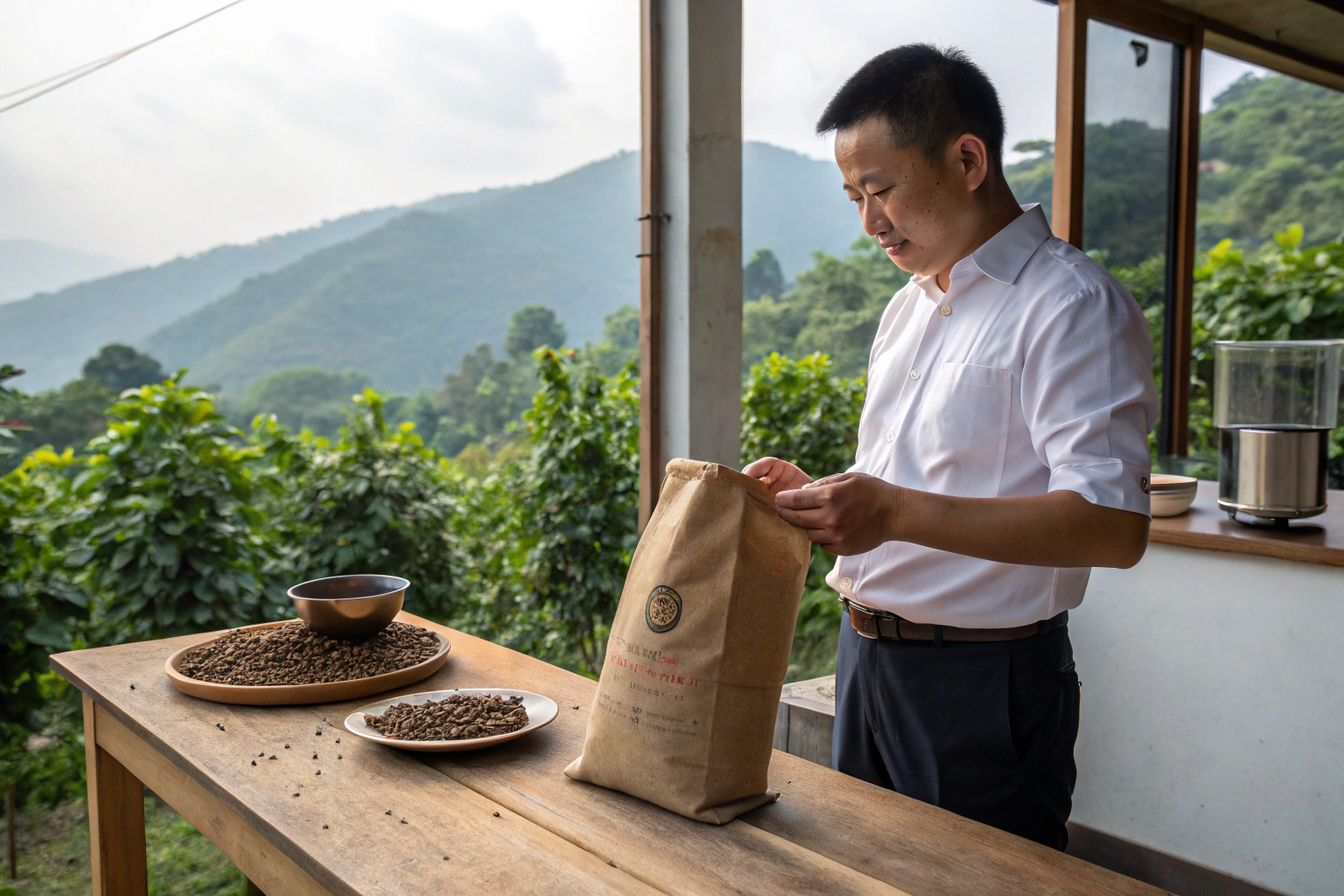
I have sat across from buyers who looked at me like I was selling them a used car. I get it. Chinese specialty coffee sounds odd to people who only know China for tea or cheap electronics. The first question is always the same: "Is it really specialty?" The second is usually about price. The third is silent doubt. That doubt is your real competitor, not Brazil or Colombia. It lives in your buyer's head. And if you do not kill it early, it grows.
Here is the honest answer: you pitch Chinese specialty coffee by leading with proof, not patriotism. Do not start with "China is great." Start with the cup score, the altitude, the moisture content, the price per pound landed. A skeptical buyer does not need a story. They need numbers that survive a spreadsheet. Then you can add the story. At BeanofCoffee, we own over 10,000 acres in Baoshan, Yunnan. I do not sell romance. I sell traceable lots with cupping scores and clean paperwork. Romance is for after the order.
But there is a second layer. Even with good data, a skeptic wants to know if Chinese exporters are reliable, if the coffee arrives on time, if the tariff math works. So you have to pitch the whole package: quality, logistics, and trust. That is what this article breaks down. I will show you how to handle the four biggest doubts: Is it good? Is it different? How do you present it? And what proof do you bring? By the end, you will have a pitch that does not beg for approval.
Is Yunnan Specialty Coffee Worth Buying?
You might have tried Chinese coffee five years ago and hated it. I do not blame you. A lot of early export lots were over-fermented or baked too dark. That memory sticks. Then a buyer tells me "I tried Yunnan once and it tasted like rubber." I do not argue. I pour a fresh cup. Taste changes faster than reputations. The question is whether today's Yunnan is worth a second look. It is.
Yunnan specialty coffee is worth buying if you choose the right farm and the right lot. Not all Yunnan coffee is specialty. The same is true for Colombia or Ethiopia. But top lots from Baoshan now cup at 84 to 87 points. That puts them solidly in specialty range. Prices are often 10 to 20 percent below similar Central American lots. For a roaster watching margins, that is real money. You just need to verify the lot, not the legend.
Dive deeper and the value becomes clearer. Baoshan sits between 1,200 and 1,600 meters. The dry season helps with even drying. Our own washed Arabica lots have clean citrus and brown sugar notes. They are not a copy of Ethiopia. They are their own thing. Here is a rough comparison I use when talking to skeptical buyers.
| Origin | Typical Specialty Cup Score | FOB Price Range (per lb) | Main Flavor Notes |
|---|---|---|---|
| Guatemala SHB | 84-86 | $4.20-$5.50 | Chocolate, apple, caramel |
| Colombia Excelso | 83-85 | $3.80-$4.80 | Caramel, red fruit, nuts |
| Yunnan Baoshan | 84-86 | $3.60-$4.60 | Brown sugar, citrus, black tea |
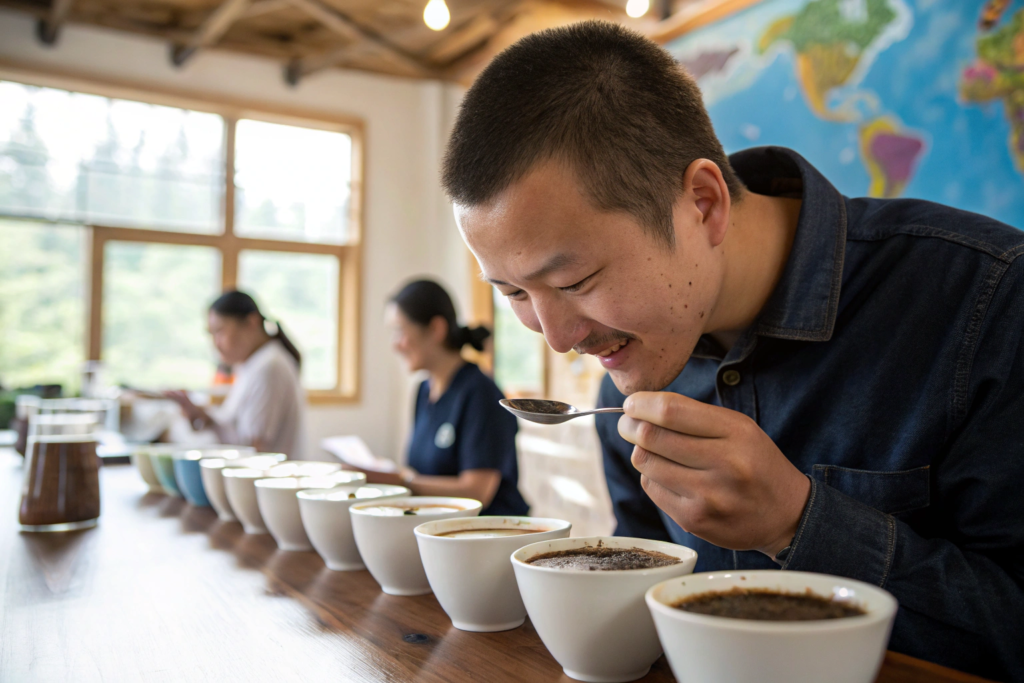
What Do Cupping Scores Show for Yunnan Arabica?
Cupping scores are the closest thing to an objective measure we have. The Specialty Coffee Association has a standard protocol. It scores fragrance, flavor, aftertaste, acidity, body, balance, and more. A score of 80 or above is specialty. Below 80 is commodity. I have seen our washed Arabica lots score 84, 85, even 86 on a good harvest. That is not my opinion. That is a Q grader's number. You can also check independent reviews on Coffee Review where some Yunnan lots have scored 90 or higher. The point is not to brag. The point is to ask your supplier for a recent cupping report from a certified Q grader. If they hesitate, walk away. If they send it, check the lot number matches the offer sheet. One small detail: ask for a water activity reading too. Scores mean nothing if the coffee was stored wet.
How Does Yunnan Coffee Compare to Central American Lots?
Flavor-wise, Yunnan Arabica is closer to a washed Central American coffee than to an African one. It has medium acidity, medium body, and a sweet finish. It does not have the wild fruit of a natural Ethiopia. But that is okay. Many roasters want a clean, predictable base for blends. Yunnan fits that. Price-wise, it is usually cheaper than Guatemala or Costa Rica at the same cup score. You can find detailed origin comparisons on Perfect Daily Grind and historical price data on the International Coffee Organization. The main thing to remember is that origin reputation is not fixed. Ten years ago, China was not on the specialty map. Now it is. That shift did not happen by accident. It happened because quality improved and buyers took a chance. You can be one of the early adopters or wait until everyone else catches up.
What Makes Chinese Arabica Coffee Different?
Every origin has a claim. Ethiopia has heirloom varieties. Colombia has high altitude. China has something else: speed and control. Most Chinese coffee farms are newer and smaller than the giant estates in Brazil. That means decisions happen fast. If I want to change a drying method or separate a micro-lot, I can do it in a day. On a huge farm, that takes a week of meetings. That agility is a real difference.
Chinese Arabica coffee is different because of its altitude, its dry winters, and its main variety, Catimor, which is often misunderstood. The altitude in Yunnan slows cherry ripening, which builds sweetness. The dry season allows consistent sun drying. And Catimor, while not beloved by all cuppers, can produce clean cups when grown at high elevation and processed carefully. The problem is not the variety. The problem is low-altitude, high-volume farms that pick everything at once. Do not judge all Catimor by the worst example.
Another difference is traceability. Because the industry is young, many farms are willing to document everything. We have GPS coordinates for each block, picking dates, processing logs, and moisture curves. That level of detail is harder to get from older, more fragmented supply chains. A skeptical buyer should not ask "why China?" They should ask "why this farm?" The answer is in the data.
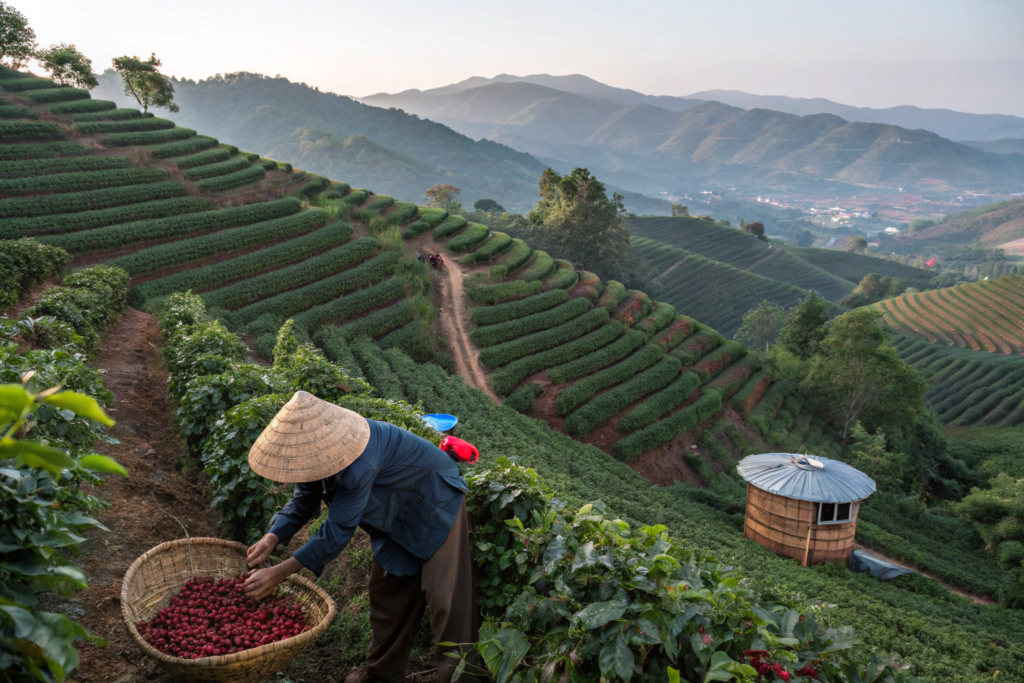
What Altitude and Climate Benefit Yunnan Coffee Farms?
Altitude does two things for coffee. It lowers the average temperature and slows the bean's development. That leads to denser beans and more complex sugars. Most of our farms sit between 1,200 and 1,600 meters. That is not as high as some Huila lots in Colombia, but it is enough. The climate is another factor. Yunnan has a clear dry season from November to April. That is perfect for harvesting and drying. You can see the country's agricultural profile on the USDA Foreign Agricultural Service and the Trade.gov China country guide. One thing buyers often miss is the latitude. Yunnan is at about 25 degrees north. That is similar to parts of India and southern Mexico. It is not the equator. But with high elevation, it works. The coffee does not overheat. It ripens evenly. That consistency shows up in the cup.
Why Do Catimor Varieties Get a Bad Reputation?
Catimor is a hybrid of Caturra and Timor. It was bred for disease resistance, not for cup quality. That is why many specialty buyers avoid it. But that reputation came from low-altitude farms where Catimor was grown like a commodity crop. At high elevation with careful picking, Catimor can score 84 or higher. It has a clean, tea-like body and moderate acidity. I have cupped our own Catimor lots next to Colombian Castillo and found them comparable. The World Coffee Research catalog has detailed genetic and agronomic info on Catimor and other varieties. The CBI coffee market information also explains how buyer perceptions are shifting. The lesson is simple: do not reject a variety by name alone. Ask for a sample. Let the cup decide.
How to Present Chinese Coffee with Confidence?
The worst pitch I ever gave started with "I know China has a bad reputation, but..." That is apologizing before you even start. I lost that buyer in the first minute. Then I changed my approach. I started with the coffee, not the country. I poured a sample and said, "This scored 85. Here is the report." That worked. Confidence comes from evidence, not from attitude.
To present Chinese coffee with confidence, lead with the cup, not the flag. Do not spend ten minutes explaining Chinese history. The buyer cares about one thing: can this coffee sell? So start with the cupping score, the price, the volume, the availability. Then add the story as a bonus. When you sound defensive, you invite doubt. When you sound factual, you invite trust. It is that simple.
But confidence is not arrogance. You also need to listen. A skeptical buyer may ask hard questions about tariffs, shipping delays, or traceability. Answer them directly. Do not wave them away. I have found that buyers respect a supplier who says "I do not know, but I will find out by tomorrow" more than one who pretends to know everything. That honesty is a form of confidence.
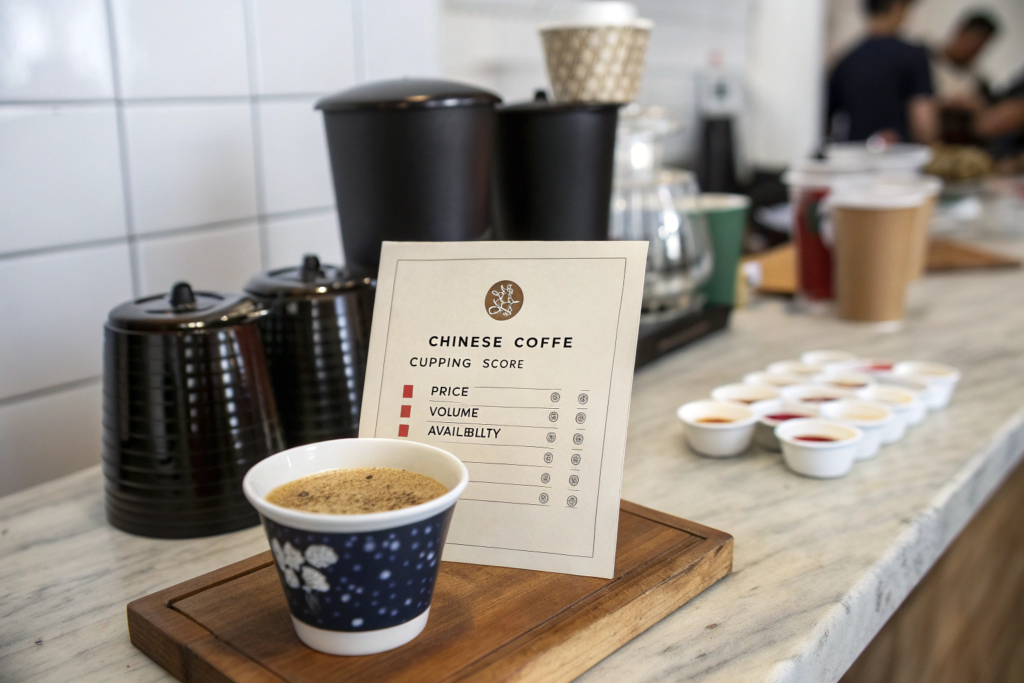
What Story Should You Tell About Chinese Coffee Origin?
The story should be specific, not generic. Do not say "Yunnan has a long history of tea." Say "This lot was picked at 1,450 meters on a single day in December, dried on raised beds for 18 days, and stored at 11 percent moisture." That is not a story. It is a record. And it is more convincing than any folklore. You can add human details: the farmer's name, the village, the processing method. Certifications like Rainforest Alliance or Fairtrade can also give the story some structure. But do not let the certification replace the facts. A buyer wants to know what makes this lot unique, not just that it passed an audit. So give them one or two concrete details that they can verify. That makes the story real. It also makes it harder for them to dismiss you as a marketing pitch.
How Do You Avoid Sounding Like a Salesperson?
Salespeople talk. Consultants ask. When a buyer says "I am skeptical about Chinese coffee," do not start pitching. Ask a question: "What specifically are you doubtful about? Quality, logistics, or price?" That shifts the conversation. Now you are solving a problem, not defending a product. I learned this from a mentor who told me, "The first one who asks a question controls the meeting." It works. You can also use data as a neutral third party. Instead of saying "our coffee is great," say "our last three lots scored 84, 85, and 84.5 on SCA forms." You are not selling. You are reporting. The Harvard Business Review has good articles on consultative selling. And Daily Coffee News often reports on how roasters evaluate new origins. The key is to stay calm, stay specific, and let the buyer draw their own conclusion. If you push too hard, you look desperate. If you provide evidence and step back, you look confident.
What Proof Do Buyers Need for Chinese Coffee?
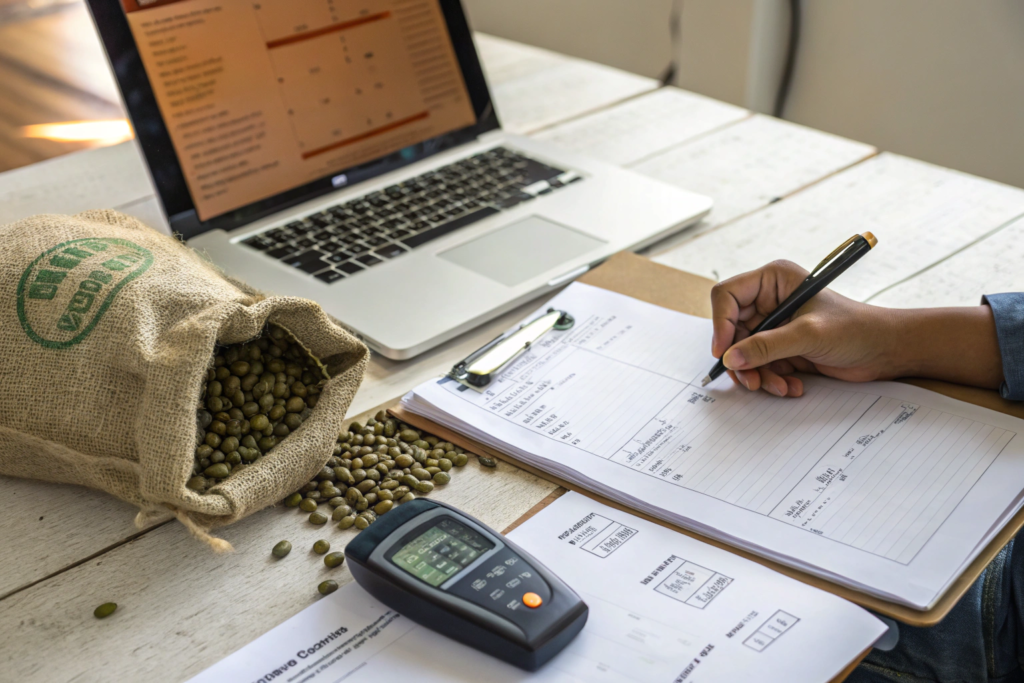
A skeptical buyer does not trust a handshake. They want paper. That is fair. When I export to the US, Europe, or Australia, I always prepare a file before the buyer asks. It includes the cupping report, the moisture analysis, the pesticide residue test, the phytosanitary certificate, and the bill of lading draft. If a buyer asks for something extra, I send it within a day. That speed is part of the proof.
The proof a buyer needs for Chinese specialty coffee is the same proof they would demand from any new origin: quality data, traceability records, and compliance documents. But because China is not yet a famous coffee origin, the bar feels higher. That is actually good for you. It forces you to be more organized than your competitors. At BeanofCoffee, we treat every inquiry as an audit. You should too.
The real question is which documents matter most to a buyer. I would rank them like this: cupping report, moisture and water activity, pesticide residue, and then anything else. If you can produce those four without hesitation, you are ahead of half the suppliers in the world. If you cannot, fix that before you pitch anyone.
What Certifications Matter for Chinese Coffee Exporters?
Certifications are not magic. They do not make bad coffee good. But they make good coffee easier to verify. The most common ones in coffee are organic, Rainforest Alliance, Fairtrade, and 4C. For Chinese exporters, organic certification can be a strong selling point because some buyers assume all Chinese agriculture is full of chemicals. That assumption is often wrong, but the certification silences it. You can learn more about 4C standards on the 4C Services website. The Organic Trade Association also explains what organic certification means for imported products. The key is not to collect every badge. Pick the ones your target buyers actually ask for. If you sell to EU roasters, they might ask for EU organic. If you sell to US specialty buyers, they might care more about cup score than any logo. So ask first. Then certify what matters.
How Can Traceability Data Win Over Skeptical Buyers?
Traceability is the strongest weapon against doubt. If I can show you the exact farm block, the picking date, the drying curve, the storage temperature, and the container number, you have no room to say "I don't know where this came from." That is why we keep logs for every lot. It costs time, but it saves deals. Platforms like Tridge show market and origin data for thousands of coffee lots. Companies like Oritain offer scientific origin verification using isotope testing. That might sound extreme for coffee, but it is becoming normal. A buyer in Melbourne once told me he would pay two cents more per pound just for a lot with full digital traceability. That is a small premium, but it proves the point. Skepticism is expensive to maintain. Data is the cheapest way to remove it.
Conclusion
Pitching Chinese specialty coffee to a skeptical audience is not about convincing anyone that China is perfect. It is about showing that a specific lot from a specific farm is worth their money. You do that with cupping scores, altitude data, processing logs, and honest answers. You do not do it with long speeches about national pride or ancient tea culture. The skeptic does not care about history. They care about their roastery, their margins, and their customers. So pitch to those concerns.
If you are reading this and thinking, "Okay, but can you actually deliver?" then you are asking the right question. At BeanofCoffee, we ship Catimor, Arabica, and Robusta from our own 10,000-acre farms in Baoshan, Yunnan. We work with buyers in North America, Europe, and Australia. We do not hide behind brokers or vague promises. If you want samples, cupping reports, or a landed cost quote, contact Cathy Cai at cathy@beanofcoffee.com. Tell her your target cup profile and your port. She will send you real data, not a sales letter. Then you can decide for yourself.