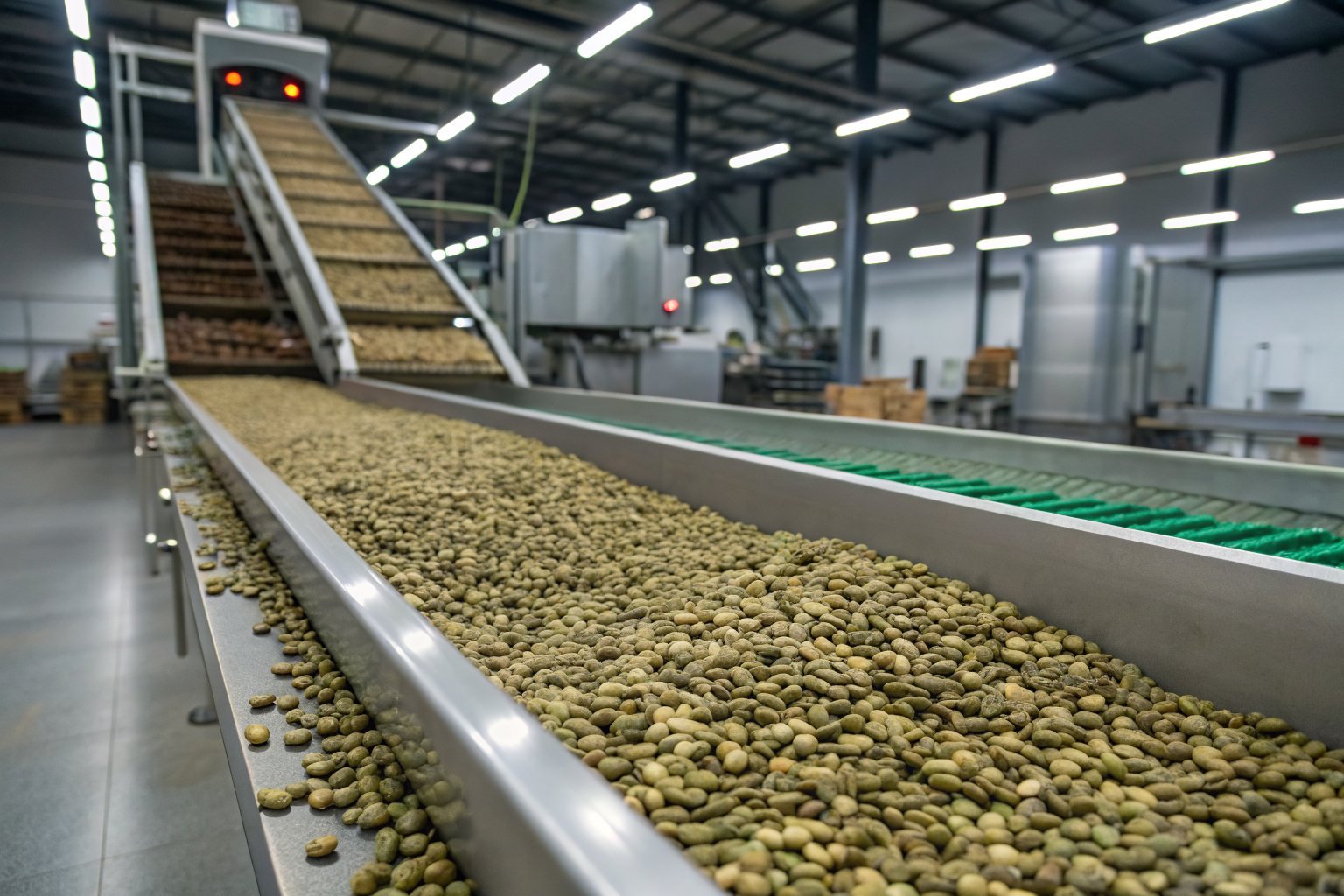
I still remember the call from a roaster in Chicago. He had just put 300 pounds of natural process Yunnan through his production grinder and heard a metallic crunch. A stone had made it through his supply chain and damaged a 12,000 dollar grinder burr set. The repair bill was 800 dollars, plus two days of downtime. The real cost was worse — he lost trust in his supplier. Stones in green coffee are more common than most buyers realize, especially when sourcing from regions where traditional sun-drying happens on patios. You need a systematic approach to remove them before they reach your production line. Let me walk you through the equipment and methods that actually work.
Why Do Stones End Up in Green Coffee Shipments?
If you have never found a stone in a bag of green coffee, you probably have not inspected enough bags. Stones enter the supply chain at multiple points — during harvest, drying, milling, and transport. Understanding where they come from helps you decide where to focus your removal efforts.
How Do Stones Get Mixed into Coffee During Harvest and Processing?
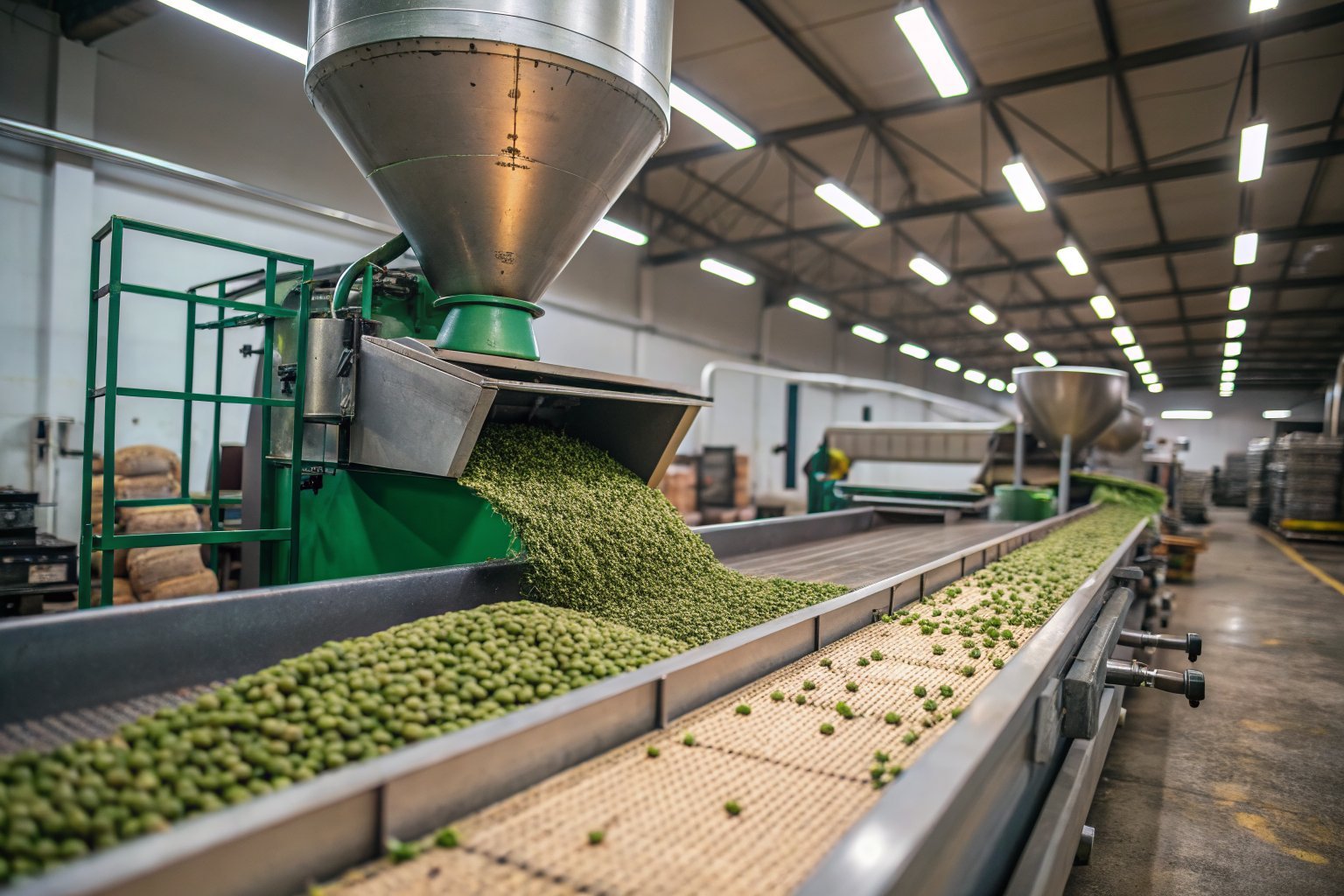
The most common source is the drying patio. In many origin countries, coffee cherries are spread on concrete patios or raised beds to dry under the sun. Stones from the patio surface, wind-blown debris, and gravel from nearby roads all settle into the drying coffee. When the dried cherries are raked and collected, stones go right into the sacks. At the dry mill, hulling machines remove the parchment but do not remove dense foreign objects. According to the Specialty Coffee Association's green coffee defect handbook, stones and foreign objects are classified as Category 1 defects — the most severe. A single stone in a container can be grounds for rejection under most green coffee contracts. The International Coffee Organization's quality standards report that an estimated 1 to 3 percent of green coffee shipments contain visible stones, with the highest rates in naturally processed coffees from regions using open-air drying.
Are Certain Origins or Process Methods More Prone to Stones?
Yes, and the pattern is straightforward. Natural process and honey process coffees have more stones than washed coffees because the cherries spend more time on drying patios. Coffees from regions with gravel or dirt drying surfaces are higher risk. The mechanical sifting at dry mills varies by country — some mills use gravity tables and density sorters, others rely on hand sorting alone. I have visited mills in Yunnan where Shanghai Fumao processes its beans, and they use a multi-stage cleaning system: pre-cleaning screens, destoners, and optical sorters in sequence. That is the gold standard. But not every supplier invests in that equipment. When you buy from a mill that only hand-sorts, your odds of finding stones go up significantly. Always ask your supplier what mechanical cleaning equipment they use before placing a large order.
What Equipment Is Most Effective for Removing Stones?
There are three main technologies for removing stones from green coffee, and the right one depends on your volume and budget. Gravity tables, destoner machines, and hand-sorting tables each have their place.
How Do Gravity Tables and Destoners Work?
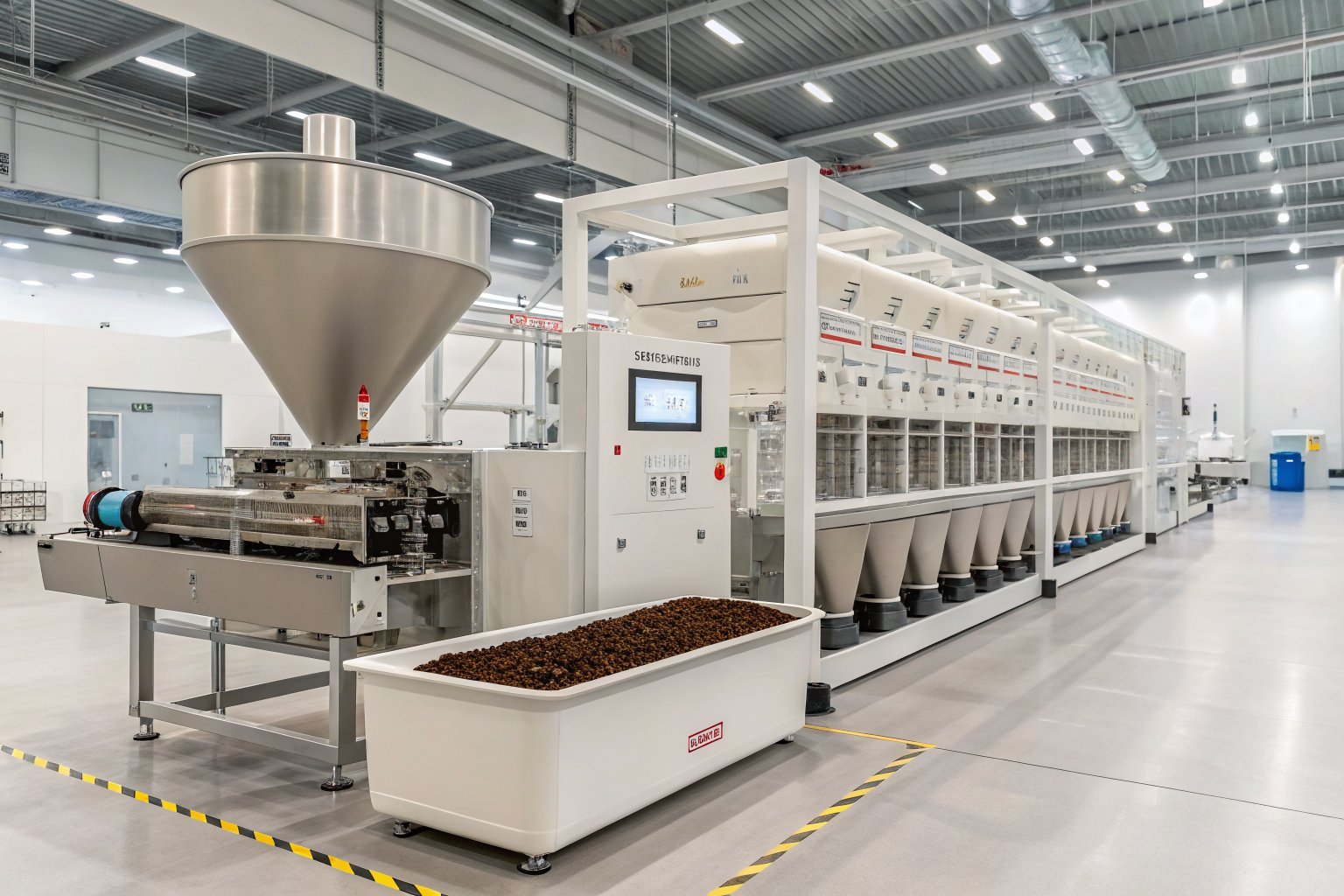
Gravity tables use air and vibration to separate materials by density. Coffee beans are lighter than stones, so when a vibrating deck shakes the mixture while air blows upward, the lighter beans float to the top and flow off one edge while the denser stones migrate to the top and discharge separately. A good gravity table can remove 95 to 99 percent of stones in a single pass. The Coffee Quality Institute's milling equipment guide states that gravity tables with adjustable air flow and deck angle are the most effective single piece of destoning equipment for green coffee. They cost 8,000 to 20,000 dollars for commercial models handling 500 to 2,000 pounds per hour. For smaller operations, a destoner machine — which uses a vibrating screen and controlled air flow — costs 2,000 to 5,000 dollars and handles 100 to 300 pounds per hour.
What About Optical Sorting Technology for Stone Removal?
Optical sorters take detection to another level. They use cameras and sensors to identify objects by color, shape, and reflectance, then fire a jet of air to eject them. Modern optical sorters can distinguish green coffee beans from stones of similar color, which gravity tables sometimes miss. The Roast Magazine's guide to optical sorting notes that multi-spectral cameras using both visible and near-infrared light can identify stones even when they are the same color as the coffee. These machines are expensive — 30,000 to 100,000 dollars — but for large importers and roasters processing millions of pounds annually, they pay for themselves by preventing equipment damage and quality claims. My recommendation: if you handle more than 500,000 pounds per year, invest in an optical sorter. Under that volume, a gravity table combined with visual inspection is sufficient.
How Can Visual Inspection Catch Stones That Machines Miss?
No machine is perfect. Even the best destoner or optical sorter can miss stones that are similar in density and color to coffee beans. That is why visual inspection remains a critical final step in any quality control process.
What Is the Best Method for Hand-Sorting Stones?
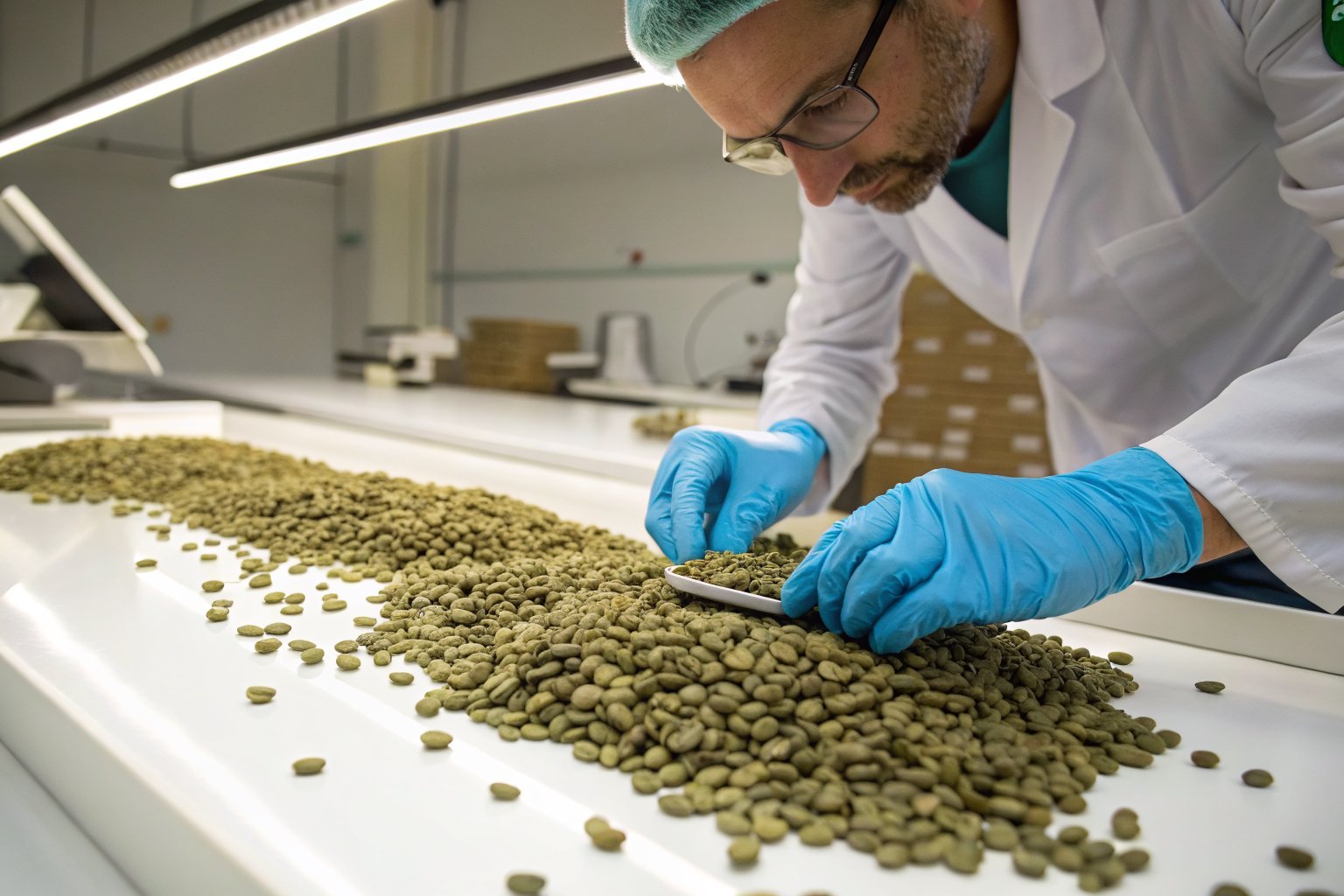
Hand-sorting is done on a conveyor belt or a sorting table under controlled lighting. The belt speed should be slow enough that a sorter can examine every bean — typically 3 to 6 inches per second. The lighting should be 1,000 to 2,000 lux, roughly equivalent to bright office lighting, and the background should be a neutral gray that contrasts with both coffee beans and stones. The Specialty Coffee Association's visual inspection standards recommend that sorters take a 10-minute break every hour to prevent eye fatigue, which is the leading cause of missed stones. A rested sorter catches 40 percent more defects than a fatigued one. At Shanghai Fumao, our sorting team rotates through three stations per shift to maintain focus, and each batch passes through two independent sorters before being bagged for export.
How Many Beans Should You Inspect Per Batch for Reliable Detection?
Statistically, to have 95 percent confidence that a batch contains fewer than 1 stone per 10,000 beans, you need to inspect a sample of at least 3,000 beans from each lot. For a 60-kilogram bag containing roughly 500,000 beans, that is a 0.6 percent sample rate. Most professional inspection protocols call for a 300-gram sample from each bag, or roughly 1,500 beans, which gives about 86 percent confidence. The Green Coffee Association's sampling protocol specifies a minimum of 300 grams from each bag in a 10-bag lot, combined into a composite sample of 3 kilograms. That composite is then spread on a sorting table and examined bean by bean. If 3 or more stones are found, the entire lot is flagged for re-cleaning. This system is practical and catches the majority of stone contamination issues before they reach your roaster.
What Are the Hidden Costs of Missing Stones in Your Supply Chain?
The obvious cost of stones is equipment damage — a stone hitting a grinder burr or a roller mill can cause thousands in repairs. But the hidden costs are often larger and harder to quantify.
How Much Does Equipment Damage Cost the Average Roastery?
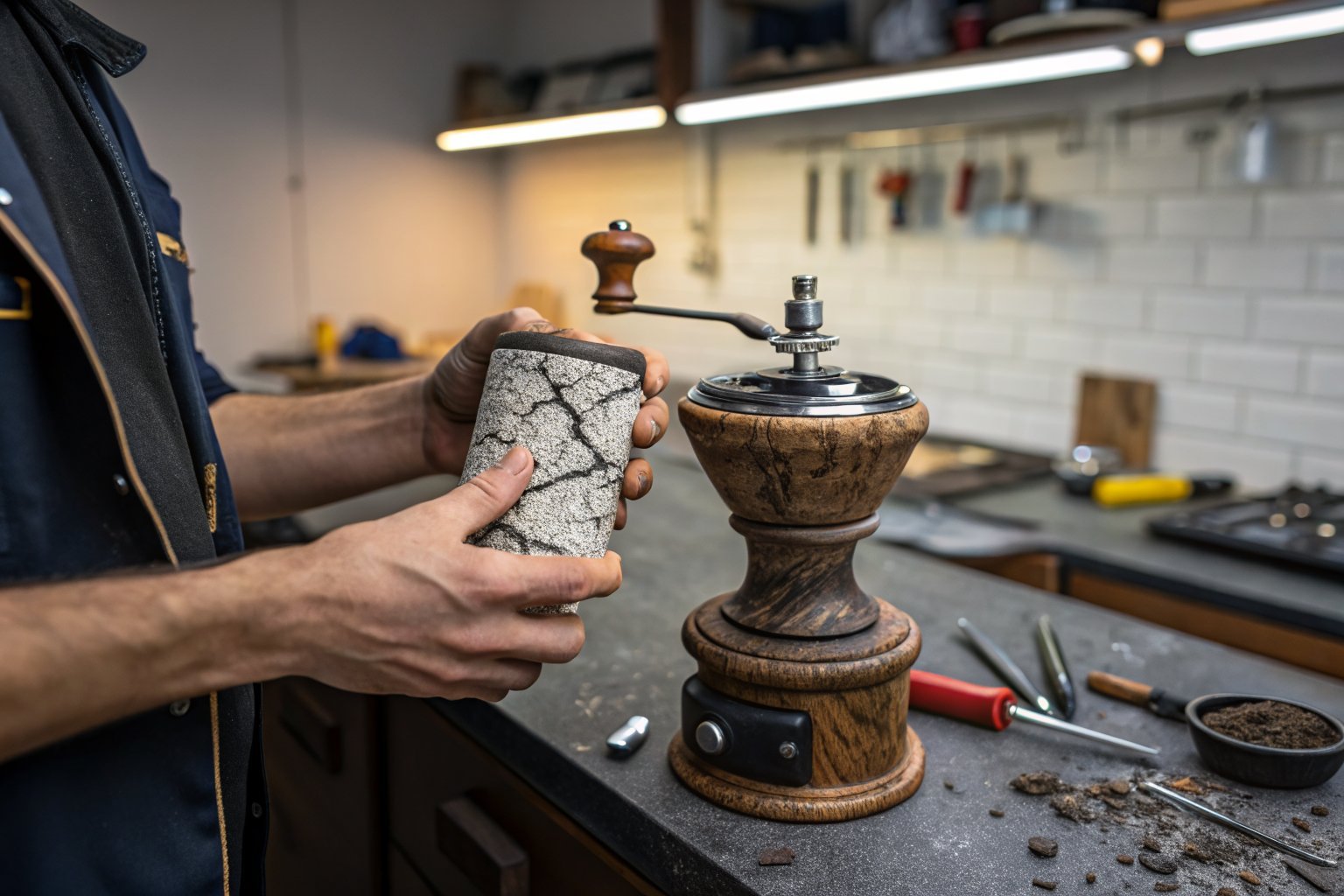
A single stone can destroy a set of espresso grinder burrs, which cost 150 to 400 dollars to replace. A production bulk grinder with 80-millimeter steel burrs costs 600 to 1,200 dollars for a replacement set. If the stone makes it past the grinder into a packaging line or a brewer, the damage multiplies. I know a roaster in Toronto who found a stone in a retail bag after a customer complained. The customer posted a photo on social media, and the roaster lost 12 wholesale accounts in two months. The National Coffee Association's equipment damage survey found that roasters who do not use destoning equipment report an average of 2.3 stone-related equipment failures per year, with an average repair cost of 740 dollars per incident. That is nearly 1,700 dollars per year in direct costs, plus lost production time. A 3,000 dollar destoner pays for itself in under two years just in avoided repairs.
How Do Stones Affect Your Brand Reputation and Customer Trust?
Finding a stone in coffee creates a visceral negative reaction. Customers do not forget it. A stone in a retail bag is a quality failure that undermines everything you have said about your brand's commitment to excellence. In wholesale, a single stone in a 5-pound bag delivered to a cafe can cost you that account permanently. The Coffee Quality Institute's buyer trust report found that 62 percent of wholesale coffee buyers who discovered foreign objects in a shipment switched suppliers within 12 months. Stones are not just a mechanical problem — they are a relationship problem. A supplier who delivers clean, stone-free coffee earns premium trust, and trust translates directly into long-term contracts and repeat orders. At Shanghai Fumao, our multi-stage destoning process is one of the key reasons buyers stick with us year after year.
Conclusion
Stones in green coffee are a preventable problem. The solution combines mechanical destoning equipment with methodical visual inspection and clear sampling protocols. A gravity table or destoner machine removes the bulk of stones, optical sorting catches the tricky ones, and trained visual inspection under proper lighting catches the rest. The investment in equipment and training pays for itself through avoided repairs, reduced downtime, and preserved customer trust. If you are sourcing green coffee from any origin, ask your supplier about their foreign-object removal process before you sign a contract. A supplier who can document a multi-stage destoning process is a supplier who values your equipment and your reputation as much as you do. At BeanofCoffee, we take stone removal seriously because we know what is at stake for our buyers. Contact Person: Cathy Cai Email: cathy@beanofcoffee.com