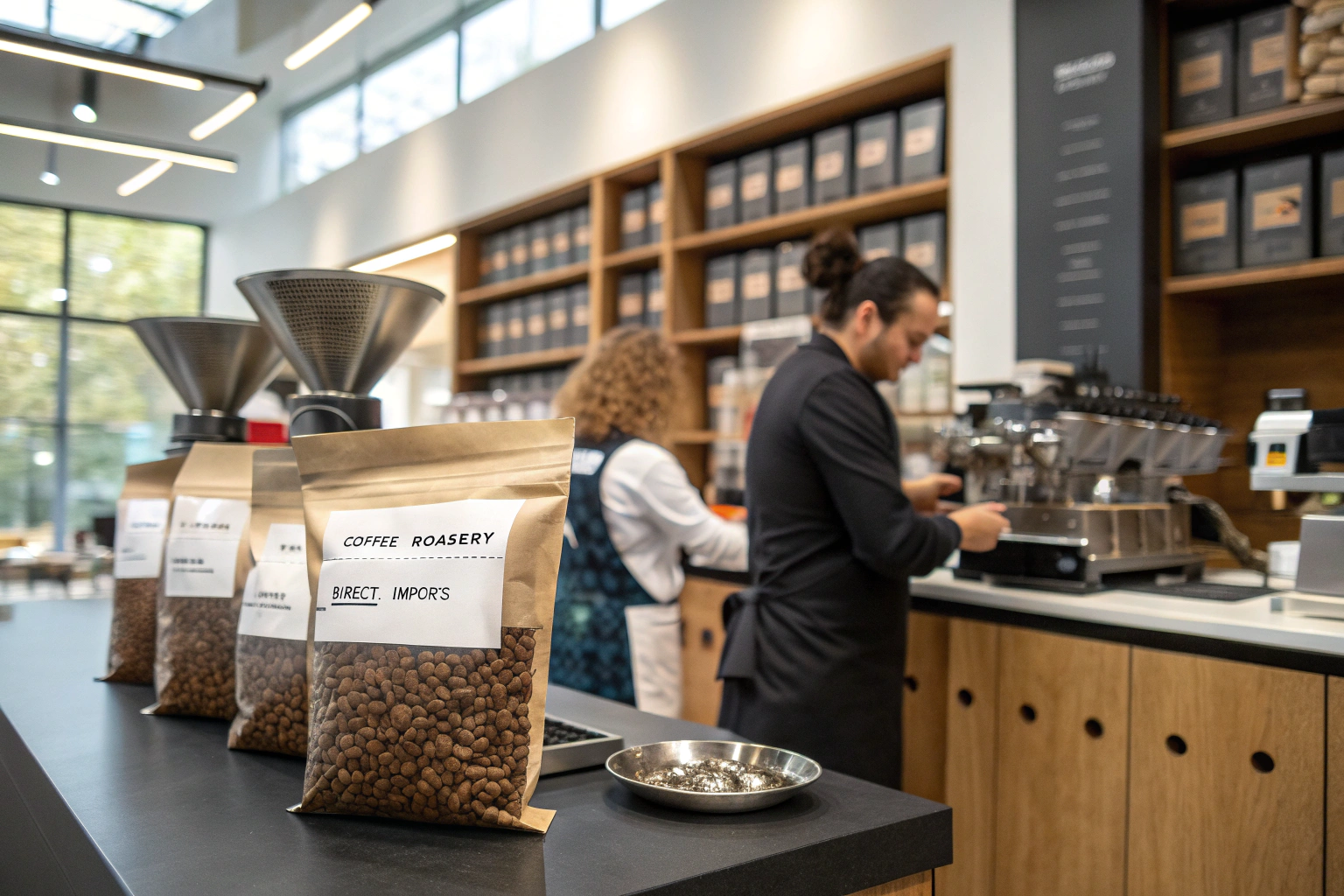
I was on a video call with a roaster from Portland last month. He told me he had just ended a five-year relationship with his green coffee importer. Not because of price. Not because of quality. He ended it because he asked the importer three times for the name of the farmer who grew his bestselling single-origin Yunnan, and the importer could not or would not tell him. He said, "I am selling a story to my customers about where their coffee comes from, and I realized I do not actually know where it comes from. That is not sustainable for my brand." He is not alone. That conversation is happening in roasteries across America right now.
The US coffee market is moving toward more direct imports because the traditional importer model is failing to deliver what modern specialty roasters and their customers increasingly demand: full supply chain transparency, verifiable origin stories, the ability to lock in specific lots and build multi-year brand narratives around them, and margin compression that comes from removing middle layers. The shift is accelerated by technology that makes direct communication with producers easier, logistics platforms that simplify international shipping for smaller buyers, and a cultural shift in consumer expectations toward knowing exactly where their food and beverages come from. This is not a fad. It is a structural change in how specialty coffee moves from farm to cup.
I have watched this shift from the producer side. When we started exporting from Baoshan fifteen years ago, almost every buyer was an importer. Today, a significant and growing percentage of our volume goes directly to roasters. The conversations are different. The relationships are different. The economics are different. Here is what is driving this shift, how it works in practice, and what it means for both roasters and producers.
What Are the Margin Benefits of Cutting Out the Middleman in Coffee Sourcing?
There is a reason the direct trade movement started, and it was not romance. It was math. The traditional specialty coffee supply chain has multiple layers: producer, exporter, importer, distributor, roaster. Each layer adds a margin. Each layer also adds value—financing, logistics, warehousing, quality control, market access—but it adds cost. For a roaster operating on thin margins and facing rising costs everywhere else, the green coffee cost line is one of the few places where significant savings are possible.
Removing the importer from the supply chain can reduce the roaster's green coffee cost by 15% to 30% on a per-pound basis, depending on the coffee, the origin, and the volume. The importer's margin, typically 10% to 20% over FOB price, is replaced by a direct relationship with the producer or exporter. The roaster captures that margin as either increased profit or a more competitive retail price. However, the roaster also takes on the responsibilities the importer previously handled: logistics coordination, quality verification upon arrival, inventory financing, and sometimes warehousing. The net margin benefit is real, but it must be weighed against the operational complexity the roaster is now absorbing.
I have walked through this math with dozens of roasters considering direct sourcing. A roaster buying 5,000 pounds of specialty Arabica per year through an importer at $4.50 per pound landed might pay the equivalent of $3.50 per pound FOB plus freight if they buy direct. On 5,000 pounds, that is a $5,000 annual saving. On 50,000 pounds, it is $50,000. That is real money that can fund a new hire, a marketing campaign, or simply a healthier bottom line. The savings are not hypothetical. They show up on the invoice.
How does direct sourcing change the cash flow and inventory financing model for a roaster?
When a roaster buys through an importer, the importer typically offers credit terms—net 30 or net 60 days—and holds the coffee in a local warehouse, releasing it in smaller quantities as needed. The roaster pays for what they take, when they take it. In a direct import model, the roaster often pays for the full container upfront or with a significant deposit, and waits 30 to 60 days for the coffee to arrive. The cash is tied up in transit inventory. The roaster also needs to store the full container upon arrival. This shift in working capital requirements is the biggest operational hurdle for roasters transitioning to direct imports. It can be managed with proper planning, a line of credit, or by starting with smaller consolidated shipments, but it cannot be ignored.
What cost savings are available for a roaster who combines multiple lots into a consolidated container?
A roaster who does not need a full container of one lot can work with an exporter to consolidate multiple lots into a single container. This achieves the volume needed for economical shipping while allowing variety in the roaster's offerings. The exporter manages the consolidation, documentation, and logistics for all lots. The roaster pays one freight bill instead of multiple LCL shipments. The per-pound freight cost on a full container is significantly lower than on smaller shipments. This model is an excellent entry point for roasters who want the margin benefits of direct importing without the volume commitment of a single-lot container. The Freightos shipping cost calculator provides real-time ocean freight estimates, and the International Chamber of Commerce's Incoterms guide is essential reading for understanding FOB, CIF, and other shipping terms.
Why Is Supply Chain Transparency Becoming a Consumer-Facing Requirement?
Five years ago, a bag of coffee that said "Single Origin, Yunnan, China" was enough. It told a story that felt specific and exotic. Today's specialty coffee consumer is more educated and more skeptical. They want to know the farm name, the farmer's name, the altitude, the varietal, the processing method, and the harvest date. They want to scan a QR code and see a photo of the trees. This is not a niche preference anymore. It is becoming table stakes for premium specialty coffee.
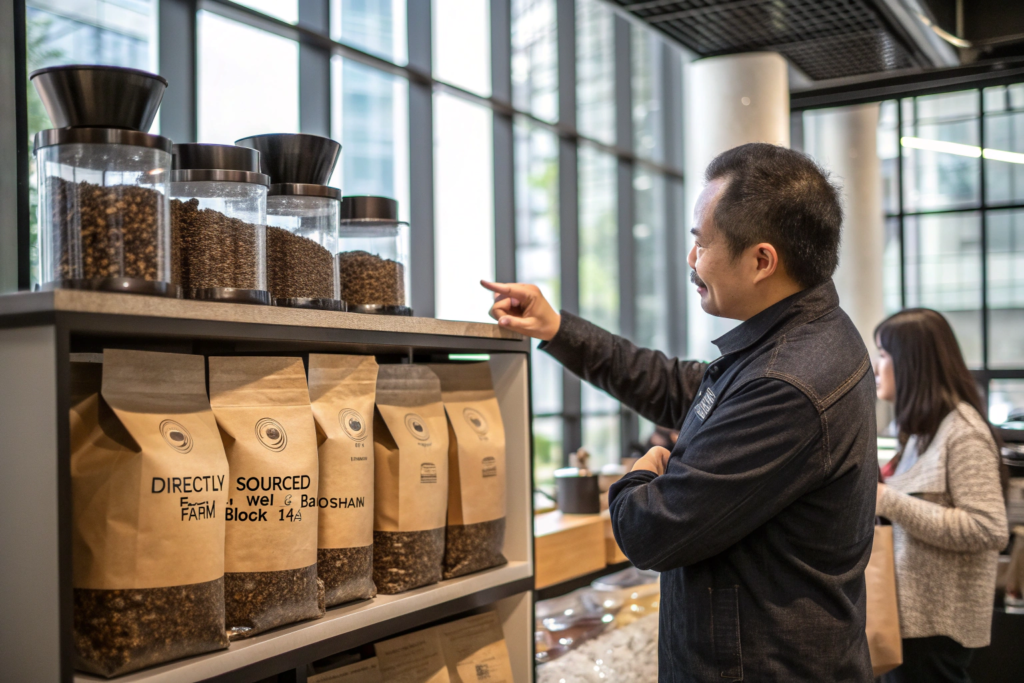
Consumers are demanding supply chain transparency because they have been burned by vague and sometimes misleading origin claims. The same consumer who reads ingredient labels on food and researches the sustainability practices of clothing brands applies that same scrutiny to coffee. A roaster who can say "we buy this coffee directly from Li Wei at Baoshan Farm Block 14-A" has a powerful competitive advantage over a roaster who can only say "imported from China." Direct trade makes that level of transparency possible. The importer model, while not inherently opaque, often adds enough distance that the producer's identity and story get lost in transit.
I have seen this play out in real time. A roaster client of ours added a QR code to their retail bags that linked to a page on our website showing the exact GPS coordinates of the farm block, the harvest date, the cupping score, and a short video of the picking team. They told me their whole-bean sales in specialty grocery stores increased measurably after the QR code was added. The coffee did not change. The packaging did not change. The transparency changed. And customers responded. The Specialty Coffee Association's sustainability and transparency resources provide a framework for understanding why this matters, and the Transparency in Coffee initiative tracks how different supply chain models perform on transparency metrics.
How does a direct relationship enable a verifiable farm-to-cup story?
When a roaster buys from an importer, the story is secondhand. The importer provides whatever information they received from the exporter, who received it from the producer. Each handoff is an opportunity for information to be simplified, exaggerated, or lost. In a direct relationship, the roaster can video-call the farmer. They can visit the farm. They can cup the specific lot with the producer and agree on quality parameters. They can take their own photos and collect their own stories. The story they tell their customers is firsthand, not filtered through two intermediaries. This authenticity is palpable to the consumer, and it is difficult to replicate in an indirect model.
Why are QR-code traceability features becoming standard on specialty retail bags?
A QR code is a bridge between the physical product and the digital verification of every claim on the bag. The bag says "Single Farm, 1,400 meters, Washed, Cupping Score 85." The QR code links to a page that proves each of those claims with data: the farm GPS coordinates, the altitude log, the processing records, and the cupping form signed by a Q-grader. This is not marketing. It is evidence. For a consumer who is skeptical of marketing claims, the ability to independently verify transforms the bag from a promise into a fact. Direct trade makes this level of verification possible because the roaster controls the relationship and the data flow, and can work with the producer to build the traceability infrastructure.
How Are Shifts in Specialty Coffee Culture Driving the Direct Trade Movement?
Go to a specialty coffee competition or a barista gathering today, and the conversation is different than it was ten years ago. Then, baristas talked about latte art and extraction theory. Today, they talk about visiting farms in origin countries, about the producers they have met, about the specific processing experiments they have cupped. Direct trade has become a marker of seriousness in the specialty coffee community. It signals that you are not just a coffee maker. You are a coffee professional who understands the entire chain.
Specialty coffee culture is driving direct trade by elevating the status of origin knowledge and producer relationships within the professional community. A roaster who has visited their supplier's farm, cupped at origin, and collaborated on a processing experiment has stories, insights, and credibility that a roaster buying off an importer's spot list simply does not have. This cultural capital translates into better wholesale relationships, more media coverage, and a stronger brand identity. In a crowded market where coffee quality is increasingly excellent everywhere, the story of how the coffee was sourced has become a critical differentiator.
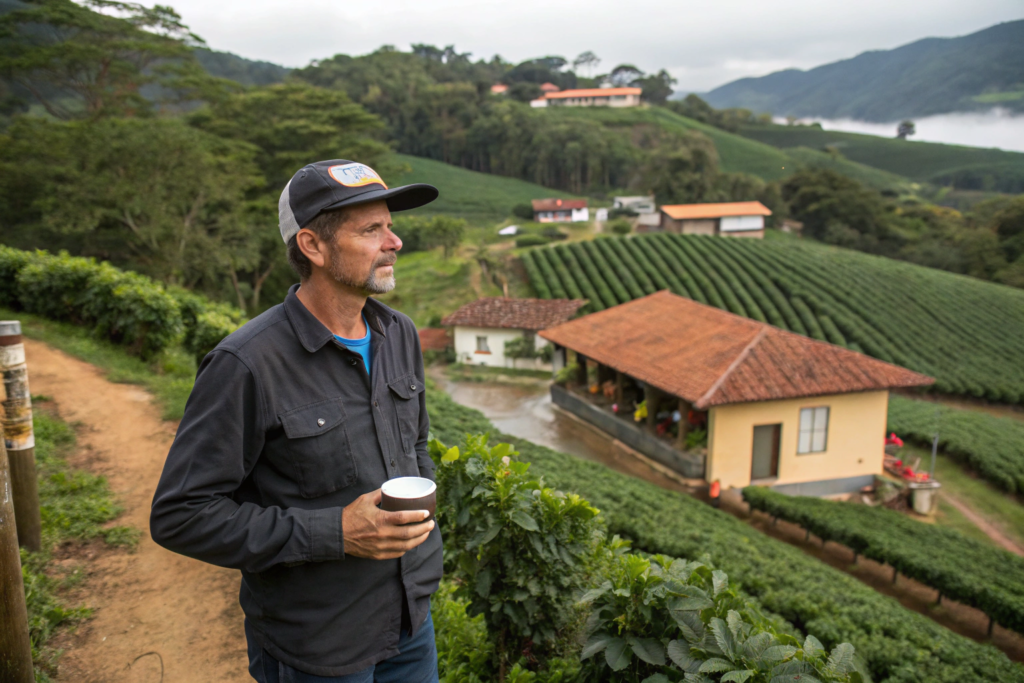
I have hosted dozens of roasters at our Baoshan farm over the years. Some come for a day, cup a few lots, take some photos, and leave. Others come for a week, walk every block, talk to every picker, and cup every lot blind. The roasters who invest the time leave with a fundamentally different understanding of our coffee. They return home not just with a supplier, but with a story, a partnership, and a connection that infuses every bag they sell. That investment in relationship is what defines the direct trade ethos. The World Coffee Events competition archive documents how origin stories and producer relationships are increasingly featured in winning barista routines, and the SCA's education programs increasingly include origin travel and direct trade as part of professional development.
Why does a "producer visit" matter so much to a roaster's wholesale accounts?
A roaster's wholesale accounts—the cafes and restaurants that serve their coffee—are constantly looking for ways to differentiate themselves. A cafe that can tell its customers, "Our roaster visited this farm in Yunnan last harvest and selected this lot specifically for us," has a story that a competitor serving a commodity single-origin cannot match. The roaster who has visited origin can train the cafe's baristas with firsthand anecdotes, photos, and sensory memories. This level of detail cascades through the supply chain and strengthens every link. The cafe owner is more loyal because the story is unique and hard for a competitor to replicate. The direct trade relationship becomes a competitive moat.
How does direct collaboration on processing methods create exclusivity and differentiation?
When a roaster works directly with a producer, they can collaborate on custom processing. A roaster might say, "I loved your natural Catimor last year. Can we try an anaerobic fermentation on a small lot this year and see what happens?" In an importer model, this kind of collaboration is nearly impossible because the roaster and the producer are separated by two layers of intermediation. Direct trade makes it possible. The resulting experimental lot is exclusive to that roaster, deeply differentiated from anything else on the market, and carries a premium price justified by its uniqueness. This is the cutting edge of specialty coffee differentiation.
What Logistics and Compliance Hurdles Do Direct Importers Need to Navigate?
Direct importing is not as simple as buying a plane ticket and a container. The logistics and compliance requirements are real, and they are the reason many roasters stick with importers despite the margin and transparency benefits. A roaster who wants to import directly must understand and manage ocean freight contracts, customs brokerage, FDA prior notice requirements for food imports, warehouse and fumigation regulations, and the financial instruments like letters of credit that govern international trade.
The logistics and compliance hurdles for direct coffee importing fall into five categories: shipping and freight management, US Customs and FDA clearance, warehousing and inventory management, quality verification and dispute resolution, and financial management including foreign exchange and trade credit. Each of these can be managed by the roaster directly, by hiring a logistics coordinator, or by working with a freight forwarder and customs broker. The challenge is not insurmountable, but it requires a deliberate investment in learning and systems. The roasters who succeed at direct importing treat it as a core competency, not a side project.
I tell every roaster considering direct sourcing the same thing: do not try to learn international logistics on a full container of your flagship coffee. Start small. Import a few pallets. Learn the paperwork. Build a relationship with a freight forwarder and a customs broker who understand coffee. Make your mistakes at low volume before you scale. The roasters who jump straight to full containers without building the logistics muscle first are the ones who end up with coffee stuck in customs, unexpected storage fees, and a stressful, expensive learning experience. For official guidance, the FDA's food facility registration and prior notice system is the primary compliance reference for US coffee imports. The US Customs and Border Protection harmonized tariff schedule provides the tariff codes and duty rates.
What is an FDA Prior Notice and why does it matter for coffee importers?
Every food product imported into the United States, including green coffee, requires a Prior Notice filed with the FDA before the shipment arrives. This is an electronic filing that includes the shipper information, the consignee information, the product description, the quantity, and the anticipated arrival details. If the Prior Notice is not filed, or is filed incorrectly, the shipment can be detained at the port, incurring storage fees and delays. A customs broker typically handles this filing, but the roaster is ultimately responsible for its accuracy. Understanding this requirement before your first shipment is essential.
How does a roaster build a reliable logistics team without hiring a full-time specialist?
Most small to mid-sized roasters cannot justify a full-time logistics coordinator. The solution is a combination of an experienced freight forwarder, a coffee-knowledgeable customs broker, and internal training. The freight forwarder handles the ocean freight booking and documentation. The customs broker handles the FDA filing and customs clearance. The roaster designates one internal person—often the owner or the head of operations—to manage the relationships with both, learn the process, and create a standard operating procedure document for each import. Over time, this internal person becomes the logistics expert, even if it is only part of their role. At Shanghai Fumao, we support our direct import clients by providing complete shipping documentation, recommended freight forwarders, and direct communication with our logistics team to smooth the process.
Conclusion
The US coffee market is moving toward direct imports because the economics, the culture, and the consumer expectations all point in the same direction. Removing the middle layer improves margins. Direct relationships enable genuine transparency and powerful brand storytelling. Specialty coffee culture rewards origin knowledge and producer collaboration. And while the logistics hurdles are real, they are manageable for roasters who invest in the learning curve. This is not a temporary trend. It is the maturation of specialty coffee into a market where the connection between producer and roaster is not a luxury. It is the foundation of a credible brand.
If you are a roaster considering direct sourcing, or if you have been frustrated by the opacity of the traditional importer model, we have been building direct trade relationships with roasters across North America for years. We can help you navigate the logistics, build the transparency story, and develop a partnership that goes beyond transactions. Contact Cathy Cai at cathy@beanofcoffee.com. She can walk you through our direct trade process, share sample lots, and introduce you to the farms and the people behind the coffee. Your customers are asking where their coffee comes from. We can help you give them an answer that is honest, specific, and worth sharing.