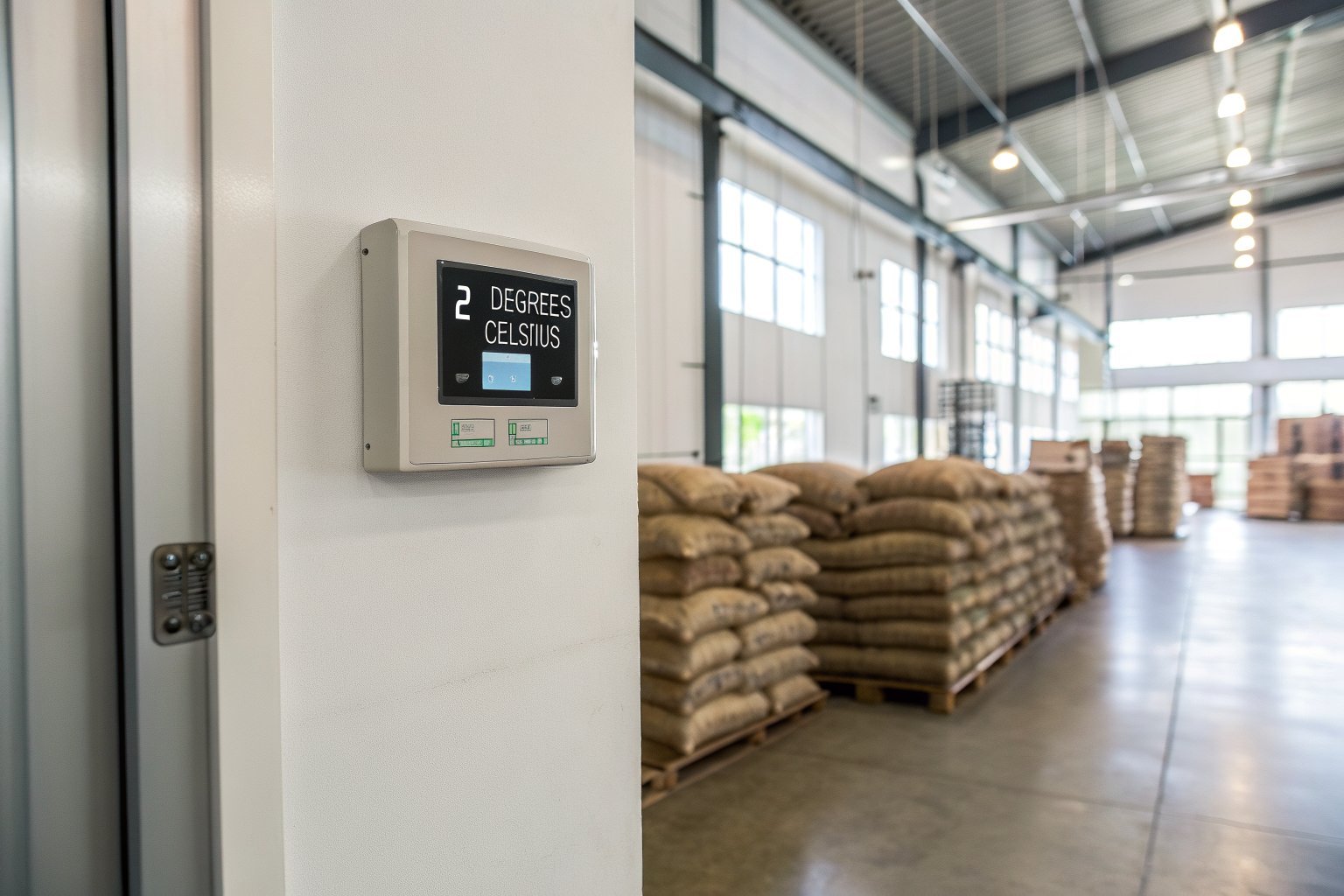
A buyer from Miami called me last year, panicked. He had stored 40,000 pounds of Yunnan Arabica in his Orlando warehouse for two months and opened a bag to find the beans smelling musty and looking dull. His warehouse temperature? Thirty-three degrees Celsius, with humidity at 75 percent. Those beans went from export-grade quality to commercial discount in eight weeks. Florida's subtropical climate is one of the toughest environments for green coffee storage in North America. If you are storing coffee in this state, the difference between a profit and a loss comes down to three numbers: your thermostat setting, your humidity target, and how often you check both. Let me walk you through the ideal conditions.
What Is the Best Temperature Range for Storing Green Coffee in Florida?
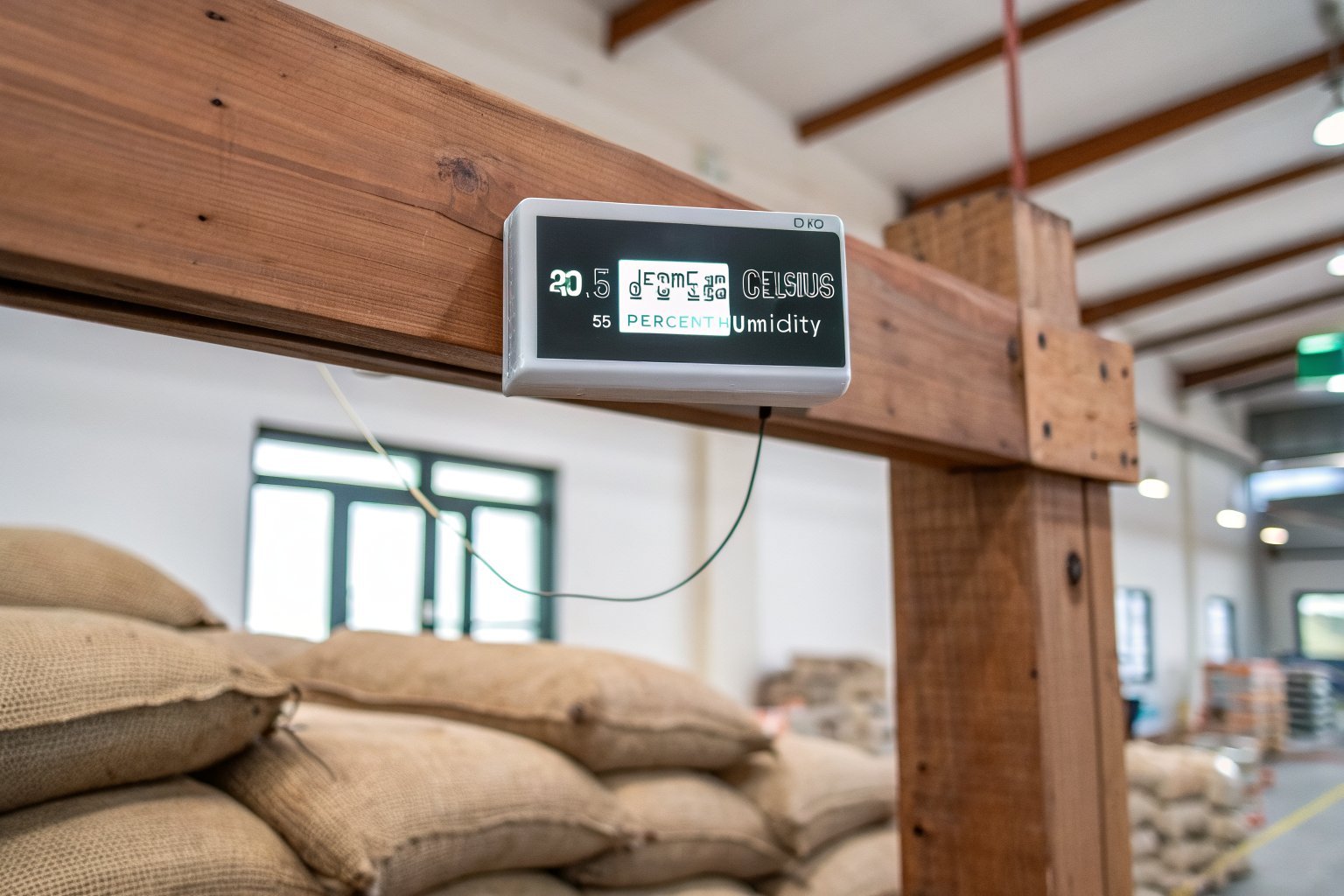
The answer is narrower than most buyers think. While general coffee storage guidelines say 15 to 25 degrees Celsius, Florida's high ambient humidity changes the equation. The ideal temperature for green coffee in Florida is 18 to 22 degrees Celsius — tightly controlled and never fluctuating more than 3 degrees in a 24-hour period.
Why Is 18 to 22 Degrees the Sweet Spot for Florida Warehouses?
At temperatures above 25 degrees Celsius, the chemical aging of green coffee accelerates dramatically. Chlorogenic acids break down faster, lipid oxidation increases, and volatile aroma compounds begin to degrade. A study from the University of California Davis Coffee Center found that green coffee stored at 30 degrees Celsius lost 40 percent of its volatile organic compounds in just 90 days, compared to only 8 percent loss at 20 degrees Celsius. Below 15 degrees Celsius, condensation becomes a serious risk. Florida's humidity is typically 60 to 90 percent year-round. When you cool a warehouse below the dew point — which at 70 percent humidity and 15 degrees Celsius is only 10 degrees — moisture condenses on the coffee bags. This surface moisture seeps into the beans and creates the perfect conditions for mold. I have seen containers from Shanghai Fumao arrive in perfect condition only to deteriorate in a buyer's warehouse that was kept at 14 degrees. The beans were fine on arrival, but the storage environment ruined them.
How Does Florida's Climate Differ from Other Coffee Storage Regions?
Florida is unique because it combines high year-round temperatures with extreme humidity. Compare this to the Pacific Northwest, where warehouses can rely on natural cool air for much of the year. In Florida, you cannot rely on passive cooling. A warehouse in Tampa or Jacksonville needs active refrigeration and dehumidification working together. The National Coffee Association's storage best practices note that warehouses in USDA Zone 9 or warmer — which includes all of Florida — require mechanical climate control for any storage period longer than 30 days. The cost of running a climate-controlled warehouse in Florida runs about 0.03 to 0.05 dollars per pound per month, which is a fraction of the loss you would incur from letting a container of coffee go stale. Many of our buyers at Shanghai Fumao factor this into their landed cost calculations and budget for it from the start.
What Humidity Level Should You Maintain Alongside Temperature?
Temperature alone does not protect green coffee. Humidity is the partner variable that determines whether your beans stay fresh or degrade. The ideal relative humidity for green coffee storage is 50 to 60 percent. Anything above 65 percent and you are inviting trouble.
Why Is 50 to 60 Percent Relative Humidity the Safe Zone?
Green coffee beans are hygroscopic — they absorb moisture from the air. At relative humidity above 65 percent, the equilibrium moisture content of the beans rises above 12.5 percent, which is the threshold where mold spores begin to germinate. Ochratoxin A, a mycotoxin regulated by the EU and FDA, develops in coffee stored above 70 percent relative humidity for extended periods. The FDA's mycotoxin guidance for importers sets strict limits on Ochratoxin A in imported coffee. If your storage conditions allow mold to develop, the entire lot could be condemned. I have seen a Florida buyer lose an entire 20-foot container worth 45,000 dollars because a dehumidifier failed over a long weekend and they did not notice until the beans had a visible white film. At Shanghai Fumao, we ship our beans with moisture content verified at 10.5 to 11.5 percent, but once they arrive, your storage conditions determine whether that quality holds.
What Equipment Is Essential for Controlling Florida Warehouse Humidity?
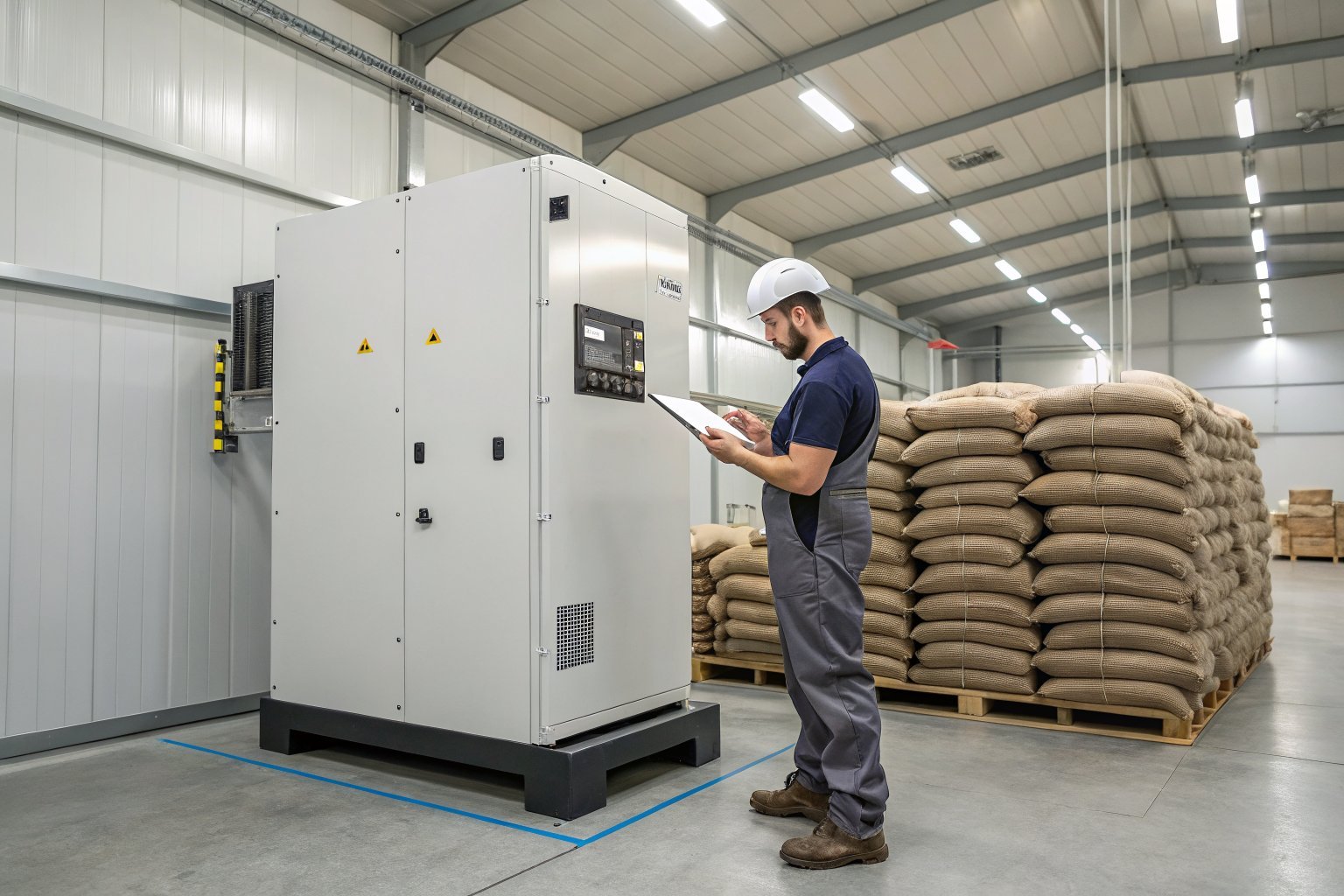
A standard air conditioning system is not enough. AC units remove some humidity as a byproduct of cooling, but they are not designed to maintain 50 to 60 percent relative humidity in a high-humidity climate. You need a dedicated dehumidification system — either a desiccant dehumidifier for warehouses over 5,000 square feet or a refrigerant-based dehumidifier for smaller spaces. The Coffee Roasters Guild's facility design guidelines recommend installing a humidistat with remote monitoring capability. A wireless sensor that sends alerts to your phone when humidity exceeds 65 percent costs about 50 dollars. That one device can save you tens of thousands of dollars in spoiled inventory. I know a distributor in Jacksonville who uses three sensors — one near the door, one in the middle of the warehouse, and one near the HVAC return — because humidity varies significantly across a large space.
How Do Temperature and Humidity Fluctuations Damage Coffee?
The worst enemy of green coffee is not high temperature or high humidity individually. It is fluctuation. A warehouse that swings between 18 degrees at night and 28 degrees during the day is more damaging than a warehouse that stays steadily at 25 degrees.
Why Is Daily Temperature Swing More Dangerous Than Steady Warmth?
When the temperature rises and falls in a 24-hour cycle, the air inside the coffee bags expands and contracts. This breathing action pulls humid air into the bag during the cooling phase and traps it during the warming phase. Over weeks, this gradually raises the moisture content of the beans even if the warehouse average temperature is acceptable. Research published in the Journal of the Science of Food and Agriculture shows that green coffee stored under fluctuating conditions of 10 degrees daily swing lost 25 percent more cup quality score over 6 months compared to coffee stored at a stable 20 degrees. The flavor notes flattened, acidity dropped, and the beans developed a papery, flat taste that roasters rated as significantly inferior. The damage is cumulative — each cycle pushes the beans further from their original quality profile.
What Can You Do to Stabilize Your Storage Environment?
The simplest fix is insulation. A well-insulated warehouse in Florida needs 30 to 40 percent less energy to maintain stable temperature and humidity. Adding insulation to the walls and ceiling pays for itself in under two years through energy savings alone. The second step is installing a vapor barrier on the exterior walls to prevent moisture from migrating through the concrete. Use slow-cycling refrigeration equipment rather than equipment that cycles on and off frequently. Constant-speed compressors create 3 to 5 degree temperature swings. Variable-speed or inverter-driven systems maintain temperature within 1 degree. The Refrigeration Institute's coffee warehouse guidelines state that a storage room with temperature variance under 2 degrees Celsius per day requires inverter technology. Yes, it costs more upfront. But when you are storing 50,000 dollars worth of green coffee, the premium is negligible insurance.
How Do You Monitor Warehouse Conditions Effectively?
You cannot control what you do not measure. Many Florida coffee buyers install basic thermostats and assume they are fine. They are not. Professional green coffee storage requires continuous monitoring with data logging and alerting.
What Sensors Should Every Coffee Warehouse Have?
At minimum, you need three types of sensors. The first is a digital temperature and humidity sensor inside the storage area, placed at bean level — not on the ceiling where the reading is always warmer. The second is a dew point sensor near the coffee bags to detect condensation risk. The third is an external sensor to track how outside conditions are affecting your HVAC load. Wireless monitoring systems like those recommended by the Coffee Storage Technology Association cost between 200 and 800 dollars and provide real-time data to your phone. They log every reading and can generate reports for auditors or insurance claims. If a shipment arrives damaged and you have six months of stable temperature data, you can prove the problem was not on your end. That documentation is worth its weight in coffee.
How Often Should You Inspect Stored Coffee in Florida?
Visual inspection every two weeks is the minimum. But the real check is physical: open a bag, feel the beans, and run a moisture meter test. If the beans feel soft or the moisture reading is 0.3 percent higher than when they arrived, you have a storage problem developing. Catch it early and you can adjust your HVAC, move the beans to a different zone, or sell the lot before quality declines. The Green Coffee Association's inspection protocol recommends monthly full-bag moisture checks on at least 5 percent of inventory. I tell our buyers at BeanofCoffee to mark a calendar reminder for every Friday morning — ten minutes to walk the warehouse, check the sensors, and feel a bag from each pallet. That habit costs nothing and has saved countless buyers from discovering a problem when it is too late to fix.
Conclusion
Florida's climate is a serious challenge for green coffee storage, but it is a manageable one if you get the fundamentals right. Keep your warehouse at 18 to 22 degrees Celsius with 50 to 60 percent relative humidity. Invest in insulation, a dedicated dehumidifier, and continuous monitoring sensors. Inspect your inventory biweekly with a calibrated moisture meter. And most importantly, stabilize the environment — smooth and steady beats perfect but fluctuating every time. The best way to protect your investment is to start with high-quality beans that arrive in good condition. At BeanofCoffee, we export green coffee with verified moisture content, GrainPro packaging, and full documentation. We do our part to deliver excellent beans. With the right storage conditions in Florida, you can keep them that way for months. Contact Person: Cathy Cai Email: cathy@beanofcoffee.com