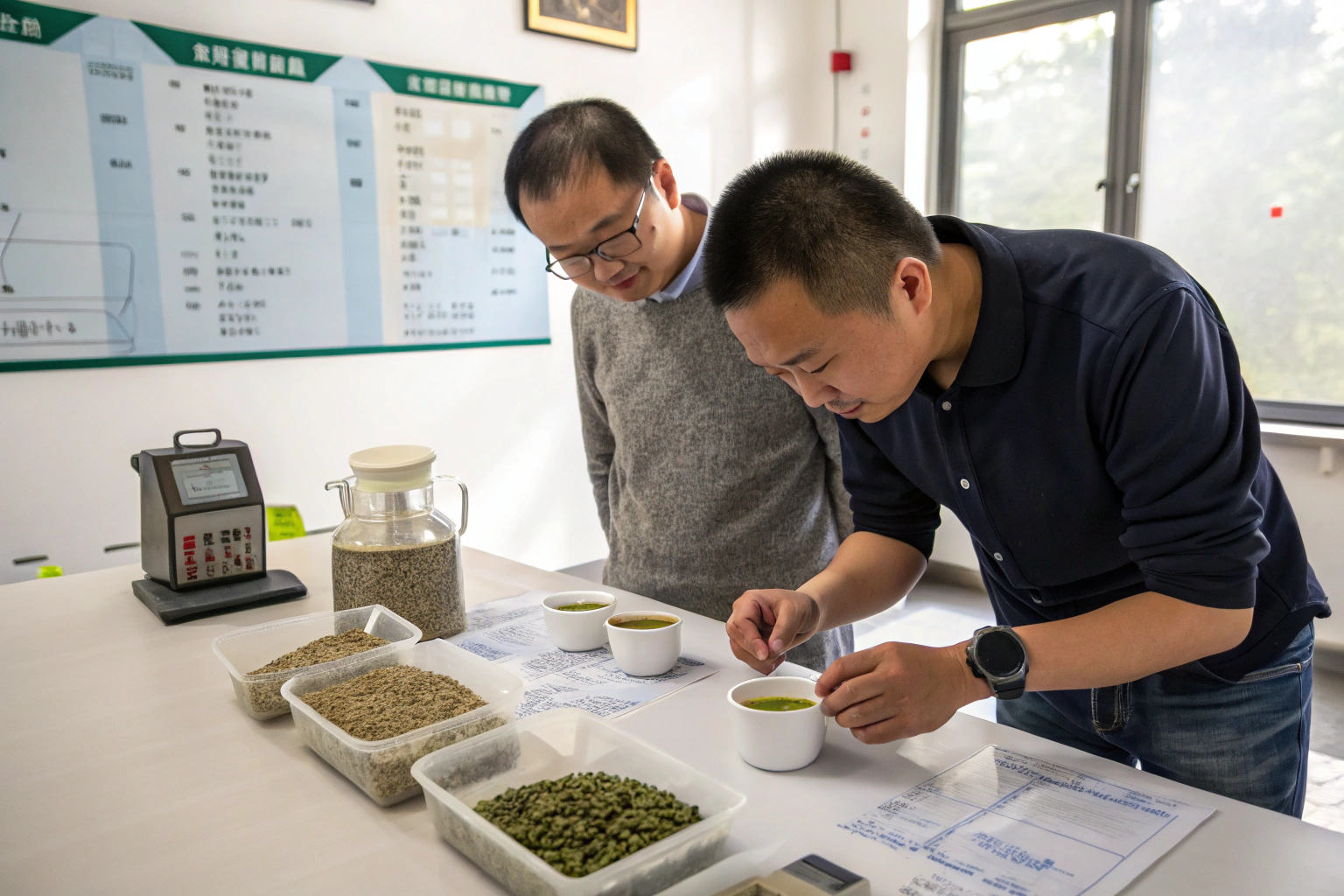
If you import coffee from China, you may get a bad surprise one day. The container arrives. The samples looked good. But the inspection fails. Maybe the moisture is too high. Maybe there are too many defects. Maybe the cup has a bad note. Ron, I know you care about quality, price, timeliness, and trust. A failed inspection hits all of these. You lose time. You lose money. You may lose your buyer. That is a hard moment.
If your coffee fails quality inspection, stay calm and follow a clear process. First, confirm the test method and the result. Second, document everything with photos and reports. Third, contact the supplier fast and in writing. Fourth, decide whether to reject, re-negotiate, rework, or accept with a discount. Fifth, file a claim if needed. Sixth, fix the root cause so it does not happen again.
This article will walk you through each step. I will share what I see as a Chinese coffee exporter. I will also show how we handle these problems at BeanofCoffee. Then you can protect your margin and your brand.
What Should You Do First After a Failed Test?
You may feel angry. You may feel rushed. That is normal. But do not send a strong email right away. Do not reject the lot before you check the facts. A failed test can have many causes. Some are the supplier's fault. Some are shipping issues. Some are lab errors. So, you need a clear first step.
After a failed quality test, first confirm the test method, the sample source, and the result. Check whether the lab used the right standard, the right sample, and the right equipment. Then ask for a second test if the result is unclear. Document everything before you contact the supplier.
At BeanofCoffee, we ask for the full report before we respond. We want to see the moisture number, the defect count, the cupping score, and the lab name. Then we compare it with our pre-shipment data. Sometimes the numbers match. Sometimes they do not. That tells us where the problem started.
| First Step | Why It Matters |
|---|---|
| Confirm method | Wrong method gives wrong result |
| Check sample | Old or wet sample fails unfairly |
| Review report | Full data shows the real issue |
| Take photos | Proof helps claims and talks |
| Ask for retest | A second test adds confidence |
How Do You Confirm the Test Method?
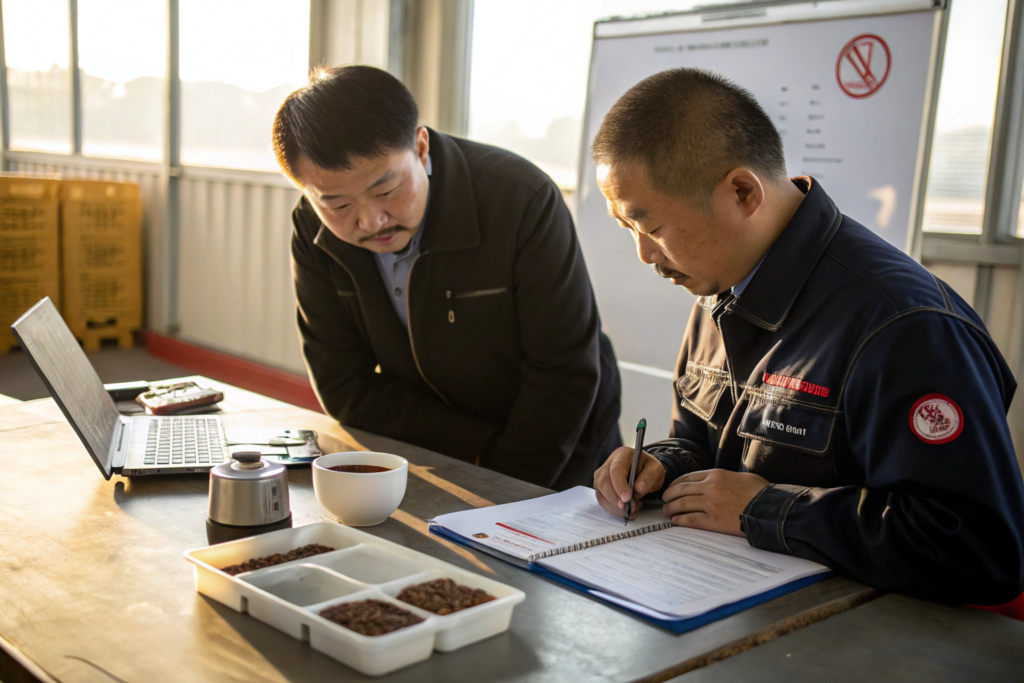
You confirm the test method by asking the lab for its standard. Green coffee moisture is often tested with a moisture meter or an oven method. Defect count follows a standard chart. Cupping follows a set protocol. The Coffee Quality Institute and the Specialty Coffee Association publish these standards. If the lab used a different method, the result may not be valid. For example, a moisture meter can read high if the sample is fresh from a humid room. A cupping score can drop if the water is bad. So, ask for the method. Ask for the calibration date. Ask for the water quality. These details matter. I have seen a lot fail because the lab used tap water with a strong smell. The coffee was fine. The water was not. So, check the method first. Then decide.
What Evidence Should You Collect?
You should collect several types of evidence. First, take photos of the bags, the labels, and the beans. Second, keep the original inspection report. Third, save all emails and messages with the supplier. Fourth, keep samples in a sealed bag. Fifth, record the date, time, and place of each test. The FDA and USDA give food safety guidance that can help you set a record system. Good evidence helps you in three ways. It helps you talk with the supplier. It helps you file an insurance claim. It helps you prove your case to your own buyer. Without evidence, the talk becomes "he said, she said." With evidence, the talk becomes a fact-based discussion. That is much better. So, collect proof before you act.
How Do You Handle Quality Claims with Suppliers?
You may now need to talk with your supplier. This is the hard part. You want a fair result. You also want to keep the relationship. A good supplier will work with you. A weak supplier will blame you. So, you need a clear claim process.
To handle a coffee quality claim, contact the supplier in writing within the claim window. State the problem, attach the report, and ask for a specific remedy. Common remedies include a replacement lot, a price discount, a refund, or a shared loss. Keep the tone professional and fact-based. Then agree on a fix in writing.
At BeanofCoffee, we prefer a fast and fair fix. We do not want a long fight. We want to keep buyers for years. So, we check the claim, talk with our team, and offer a clear option. Sometimes we replace the lot. Sometimes we give a discount. Sometimes we share the loss. It depends on the cause.
| Claim Remedy | Best Use |
|---|---|
| Replacement | Quality failed before shipping |
| Discount | Minor defect or small score drop |
| Refund | Major failure or food safety risk |
| Shared loss | Shipping or storage caused the issue |
| Credit note | Future order discount |
How Do You Write a Quality Claim?
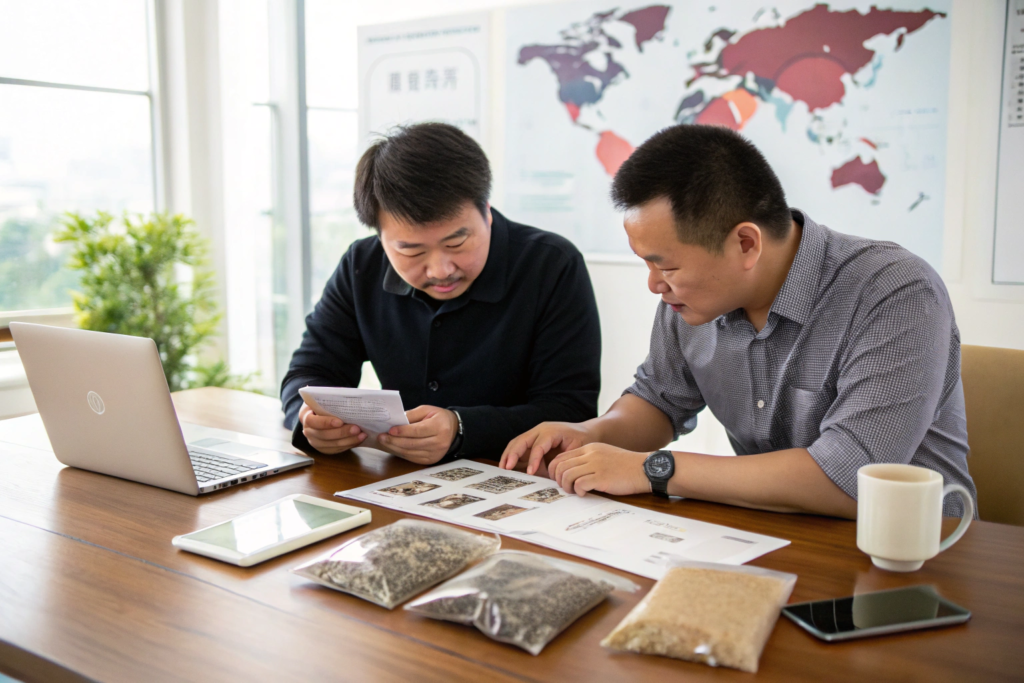
You write a quality claim with clear facts and a clear ask. Start with the contract number and the lot number. State the delivery date. State the test date. State the result. Attach the report and photos. Then say what you want. Do not write a long emotional letter. Keep it short. Keep it clear. For example: "Lot 24B failed moisture at 13.2%. The contract limit is 12.5%. Please replace the lot or give a 15% discount." That is clear. The Trade.gov and ICC Incoterms resources help you match the claim to the delivery term. If you bought CIF, the seller may cover more. If you bought FOB, you may carry more risk. So, check your terms first. Then write the claim.
What Remedies Can You Ask For?
You can ask for several remedies. A replacement lot is the strongest. But it takes time. A price discount is faster. But you still get the coffee. A refund is good if the lot is unusable. A shared loss works when both sides are partly responsible. A credit note helps future orders. The International Coffee Organization and FAO coffee track market conditions that affect these talks. I tell buyers to pick the remedy that protects their sales plan. If you have a launch coming, a fast discount may be better than a slow replacement. If you have time, a replacement may be better. So, match the remedy to your timeline. Do not just ask for the biggest number. Ask for the fix that keeps your business moving.
When Should You Reject or Re-negotiate a Lot?
You may face a choice. Should you reject the whole lot? Should you keep it and ask for a discount? This is not easy. A rejection is strong. But it also costs time and money. A re-negotiation is softer. But it may leave you with weak coffee. So, you need clear rules.
You should reject a coffee lot when it fails food safety, has mold or toxins, has a serious off-flavor, or fails the contract's core quality terms. You should re-negotiate when the failure is minor, when the coffee can be reworked, or when the delay would hurt your sales more than the defect. Always check your contract and your buyer's needs first.
At BeanofCoffee, we support both paths. We want buyers to get safe coffee. We also want to avoid waste. So, we look at the cause and the cost. Then we agree on a plan.
| Situation | Best Action |
|---|---|
| Mold or toxins | Reject immediately |
| High moisture only | Re-dry and re-test |
| Minor defects | Re-negotiate price |
| Off-flavor | Reject or blend with care |
| Late but good | Re-negotiate timing |
What Makes a Lot Unsafe to Sell?
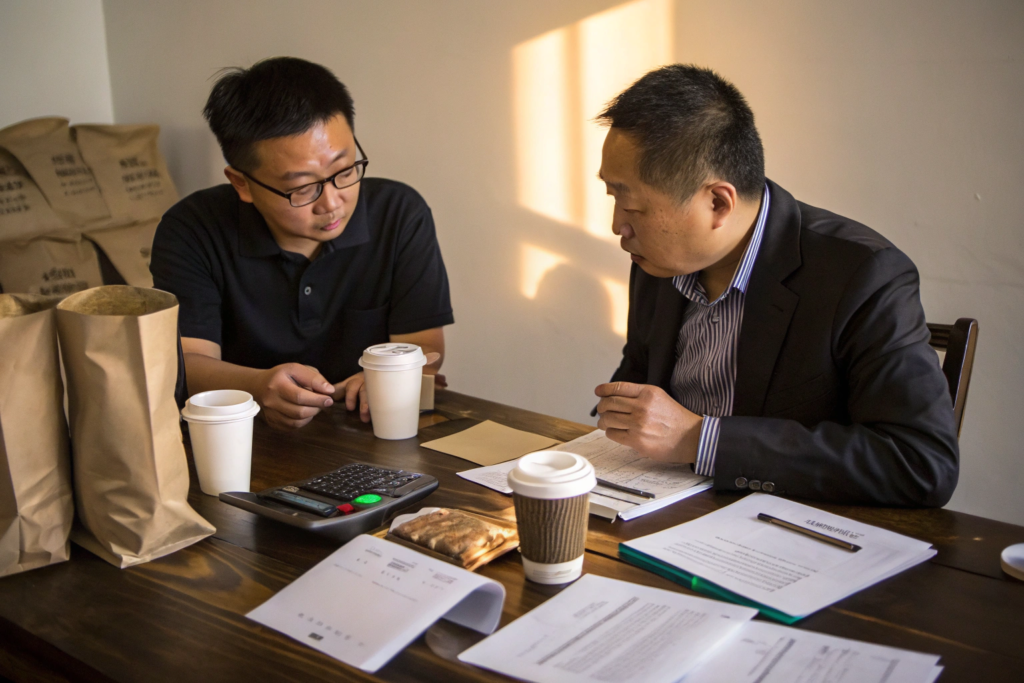
A lot is unsafe to sell when it fails food safety rules. Mold, mycotoxins, insect parts, chemical residue, and foreign matter are all serious. The FDA Food Safety Modernization Act and Codex Alimentarius set key standards. If a lot fails these rules, you must reject it. Do not try to fix it. Do not blend it. Do not sell it. The risk is too high. You could hurt consumers. You could face legal action. You could lose your brand. I have seen buyers try to save money by selling weak coffee. It always ends badly. So, put safety first. Then talk about money. A safe rejection is better than a risky sale.
How Do You Re-negotiate a Price?
You re-negotiate a price with data. First, find the cost of the defect. For example, if you must re-roast or re-pack, add that cost. Second, find the market price for a lower grade. Third, compare the two. Then ask for a discount that covers your extra cost and your risk. Use sources like Coffee Review and Daily Coffee News to check market levels. Also check Freightos for shipping costs if you need a new shipment. I tell buyers to write the new price into a short agreement. Then both sides sign it. Do not leave it as a verbal deal. A written deal stops future fights. It also helps your accountant and your customs broker. So, make it clear. Make it simple. Then move on.
How Can You Prevent Future Quality Failures?
You may fix this lot. But you do not want the same problem again. That is smart. A failed inspection is a lesson. If you learn from it, you get stronger. If you ignore it, you get the same problem next season. So, you need a prevention plan.
You can prevent future coffee quality failures by setting clear specs, testing before shipment, checking moisture and defects, using third-party inspection, planning shipping buffers, and reviewing supplier records. You should also train your team, track batch data, and review each claim for root causes. Prevention is cheaper than rejection.
At BeanofCoffee, we review every claim with our team. We ask why it happened. Then we change our process. That is how we improve. It is also how we keep buyers for the long term.
| Prevention Step | What It Does |
|---|---|
| Clear spec | Sets the target |
| Pre-ship test | Catches problems early |
| Third-party check | Adds independent proof |
| Shipping buffer | Reduces delay risk |
| Root cause review | Stops repeat failures |

What Pre-Shipment Checks Should You Require?
You should require several pre-shipment checks. First, check moisture. Second, check defect count. Third, check screen size. Fourth, check smell and color. Fifth, cup the coffee. Sixth, check the bags and the container. The Global Coffee Platform and World Coffee Research share useful farm and processing guidance. I tell buyers to ask for photos of each step. Then compare them with the contract spec. If something looks wrong, pause the shipment. It is easier to fix a problem at the factory than at the port. A small delay before shipping is better than a big loss after arrival. So, check early. Check often. Then ship with confidence.
How Do You Build a Better Supplier Relationship?
You build a better supplier relationship with clear talks and shared goals. First, share your spec. Second, share your sales plan. Third, share your feedback after each lot. Fourth, visit the farm or the warehouse if you can. Fifth, pay on time. The Rainforest Alliance and Fairtrade support long-term partnerships in coffee. I have seen buyers get better coffee when they treat suppliers as partners. A supplier will save the best lots for a buyer who communicates well and pays fairly. A supplier will also warn a good buyer about harvest problems. That warning can save your launch. So, do not just send orders. Send feedback. Ask questions. Build trust. That is how you avoid future failures. That is how you grow together.
Conclusion
A failed quality inspection is stressful. But it is not the end. Stay calm. Confirm the test. Collect evidence. Contact the supplier in writing. Ask for a fair remedy. Decide whether to reject or re-negotiate. Then fix the root cause. Use clear specs, pre-shipment checks, and third-party inspection. Build a strong supplier relationship. These steps protect your money and your brand. If you want a reliable coffee bean partner in China, please contact us at BeanofCoffee. We own over 10,000 acres of coffee bean plantations in Baoshan City, Yunnan Province. We export Catimor, Arabica, and Robusta. We support raw beans and processed, packaged products. For orders, samples, and export details, please contact Cathy Cai at cathy@beanofcoffee.com.