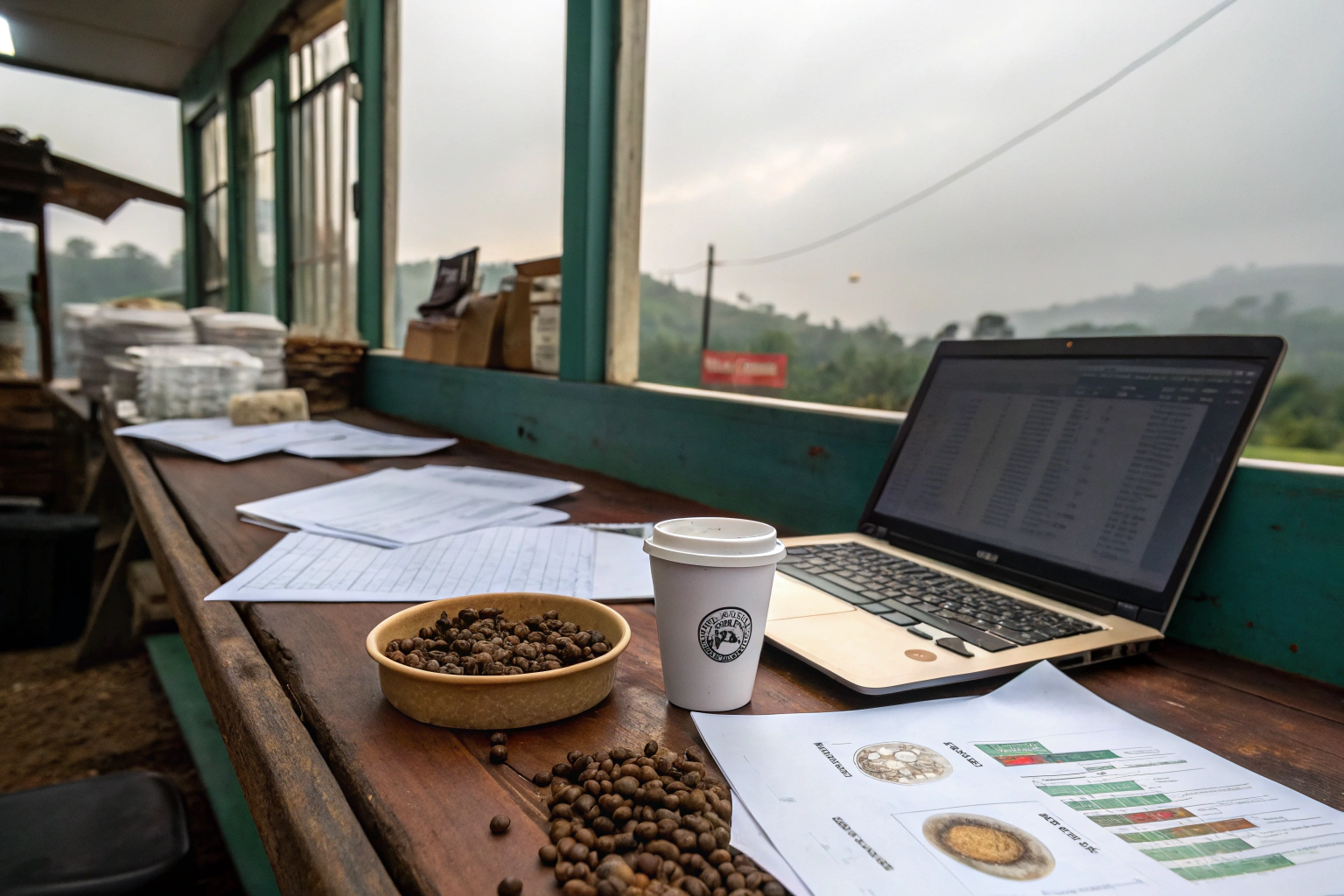
I remember the first time I tried to buy coffee directly from a farm. It was fifteen years ago. I wasn't a farmer yet—I was a small roaster in Kunming, trying to cut out the middlemen. I found a farm in Pu'er through a friend of a friend. The samples were gorgeous. We agreed on a price over WeChat. I wired the money. The coffee arrived three weeks late, in torn bags, with a cup score that tasted nothing like the sample. The farmer shrugged and said, "That's just the lot variation." I had no contract, no recourse, and no coffee I could sell. That failure taught me exactly what direct sourcing requires. It's not just about finding a farm and sending money. It's about building a system of verification, contracting, and logistics that protects both sides.
Sourcing coffee beans directly from farms means establishing a direct trade relationship with a verified producer-owner who controls the land, the processing, and the export license. The process involves vetting the farm through live video or third-party inspection, negotiating a fixed differential contract with clear quality specs, arranging payment terms that protect both sides, and managing the logistics from farm gate to your roastery door.
Direct sourcing is the holy grail for many specialty roasters. The promise is seductive: lower prices by cutting out middlemen, total transparency, a direct relationship with the farmer, and a story your customers will pay extra to hear. The reality is more complex. Done wrong, it's riskier than buying from an established importer. Done right, it's the most rewarding and cost-effective way to source coffee. I own 10,000 acres in Baoshan, Yunnan. I export directly to roasters in North America, Europe, and Australia. I've been the farmer in hundreds of direct-source negotiations. Let me walk you through the process from the farmer's perspective, so you know exactly what to demand and what to avoid.
What Does "Direct Trade" Coffee Sourcing Really Mean?
"Direct Trade" is a term that gets thrown around a lot, and frankly, it's been diluted. Some roasters use it to mean they visited a farm once. Some importers use it to mean they know the farmer's name. Neither of those is direct trade in the sense that matters for your business. Real direct trade has a specific meaning: you buy from the producer, not from an intermediary. The money goes to the person who owns the trees.
Direct trade means a roaster or a small importing group purchases green coffee directly from the farm that grew it, without passing through an exporter, a broker, or a large importer who takes title to the coffee. The transaction is between the producer and the end-buyer. The defining features are a direct financial relationship, a negotiated price based on quality rather than commodity markets, and full traceability to a specific piece of land.
The key difference from conventional sourcing is who holds the export license. In a conventional chain, a farmer sells parchment to a local trader. The trader sells to an exporter. The exporter sells to an importer. The importer sells to you. Each layer takes a margin. Each layer loses a bit of traceability. In true direct trade, the farmer is the exporter. The farmer has the export license, the quality control systems, and the logistics capability to containerize and ship directly to you. That's what we do at BeanofCoffee. We don't sell to an exporter. We are the exporter. You contract with us. We grow it, we process it, we mill it, we bag it, we load the container, and we ship it. There is no "BeanofCoffee sells to Trader X who sells to Importer Y who sells to Roaster Z." It's BeanofCoffee to Roaster Z, period. This vertical integration is what makes direct sourcing economically viable and qualitatively reliable. If the farmer doesn't have an export license, you're still dealing with a middleman, even if you're standing on the farm when you shake hands. The coffee still has to pass through a licensed exporter, who will take a cut. True direct trade requires the farm to be export-ready. That's a high bar, and most small farms can't meet it. That's why large, professionally managed estates like ours are the most reliable direct-source partners. We have the scale, the certifications, and the logistics infrastructure to bypass every intermediary.
How Does Direct Trade Differ from Fair Trade and Other Certifications?
Fair Trade, Rainforest Alliance, and Organic are certifications. They are labels awarded by third-party organizations that audit farms against specific standards—minimum prices, environmental practices, labor conditions. Direct trade is not a certification. There is no "Direct Trade" stamp or auditing body. It's a sourcing model, defined by the relationship, not by a standard.
Fair Trade focuses on ensuring a minimum price and a social premium for farmer cooperatives. It's a safety net designed primarily for smallholder farmers who are vulnerable to market exploitation. Direct trade focuses on quality and direct relationship. A direct trade buyer typically pays well above the Fair Trade minimum price because they are paying for cup quality, not social compliance. The premium is quality-driven, not standard-driven. A coffee can be both Fair Trade certified and direct trade sourced. Or it can be direct trade without any certification. The two are not mutually exclusive. Our coffee at BeanofCoffee is direct trade by definition—we're the farmer and the exporter. Some of our lots are also Organic certified and Rainforest Alliance certified. The certifications are an add-on for buyers who need them for their market. The direct trade model is the foundation. The advantage of direct trade over certifications alone is flexibility. A Fair Trade minimum price is fixed. A direct trade price is negotiated based on the specific quality of the specific lot. A great lot commands a higher price. A slightly lower-grade lot from the same farm can be priced accordingly. This quality-price linkage incentivizes the farmer to improve. Certifications alone don't always do that. The Fair Trade International standards document the minimum price and premium requirements. Direct trade has no such document—it's defined by the contract between you and the farmer.
What Are the Minimum Requirements a Farm Must Meet for Direct Export?
Not every farm can export directly. The capability gap between a smallholder with two hectares and an export-ready estate is massive. If you're looking to source directly, you need to verify that the farm has the legal, operational, and quality infrastructure to ship internationally.
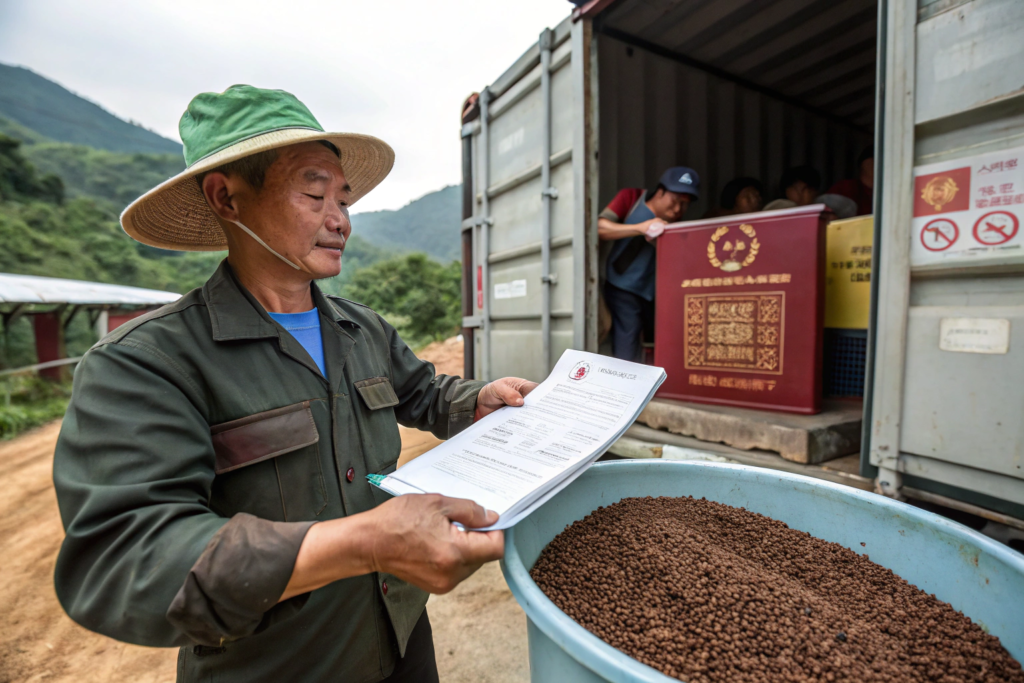
The minimum requirements are: First, an export license. In China, this is issued by the Ministry of Commerce. Without it, the farm cannot legally sell goods across borders. Second, FDA food facility registration. If you're importing into the US, the foreign manufacturer must be registered with the FDA. Third, phytosanitary capability. The farm must be able to obtain a phytosanitary certificate from the national plant protection authority for each shipment. Fourth, processing infrastructure. The farm must have its own wet mill, drying facilities, and dry mill, or access to a certified facility that can process to export-grade specifications. Fifth, quality control capability. The farm must have a cupping lab, trained cuppers, moisture meters, water activity meters, and defect-sorting equipment. Sixth, logistics capability. The farm must be able to containerize, seal, and deliver a container to a port, and produce the required shipping documents—bill of lading, commercial invoice, packing list, certificate of origin. If a farm lacks any of these, they cannot export directly to you. They will need to go through an exporter, at which point it's not direct trade. At BeanofCoffee, we meet all of these requirements and more. Our export license is active. Our FDA registration is current. Our phytosanitary certificates are issued without delay. Our mill is FSSC 22000 certified. Our cupping lab has three Q-graders on staff. Our logistics team books containers and produces documents within 48 hours of vessel departure. This is the infrastructure that makes direct sourcing possible and reliable.
How to Find and Vet Legitimate Farm-Owner Exporters?
Finding a farm that exports directly is harder than finding a trader who sources from farms. Traders market themselves. Farmers farm. The good ones are often less visible online because their expertise is agronomy, not digital marketing. But they are findable if you know where to look and what questions to ask.
Finding legitimate farm-owner exporters requires looking beyond B2B platforms and trade show directories. The best channels are: direct referrals from other roasters, origin-specific cupping events and competitions, LinkedIn searches for farm owners (not trading companies), and live video verification that proves the supplier is physically standing on their own plantation. Always verify farm ownership, not just physical presence.
A common trap: a trading company brings you to a farm they buy from, introduces you to the farmer, and lets you assume they own the land. They don't. They're renting the farmer's credibility for the day. The way to catch this is to ask for documentation that ties the supplier's company name to the land title or lease. In China, land use rights are documented. Ask for a copy of the land use certificate with the company name. If the supplier hesitates or says it's confidential, that's a red flag. Another approach is to ask who pays the workers. A farm owner has a payroll. A trader doesn't. Ask: "How many full-time employees do you have on the plantation? What's your monthly payroll?" A real farmer answers instantly with specific numbers. A trader fumbles. Also, check the export license. In China, the exporter of record is listed on the bill of lading and the phytosanitary certificate. Does that name match the farm's company name? If the exporter is "Yunnan Agricultural Products Trading Co." and the farm is "Baoshan Mountain Coffee Plantation," those are different entities. The farm is selling to a trader, who is exporting. That's not direct trade. True direct trade means the farm's company name is on the export documents. At BeanofCoffee, our export license is in our company name, and our bill of lading shows our company as the shipper. There's no intermediary. That's what you should demand.
What Questions Should You Ask During a Live Video Farm Tour?
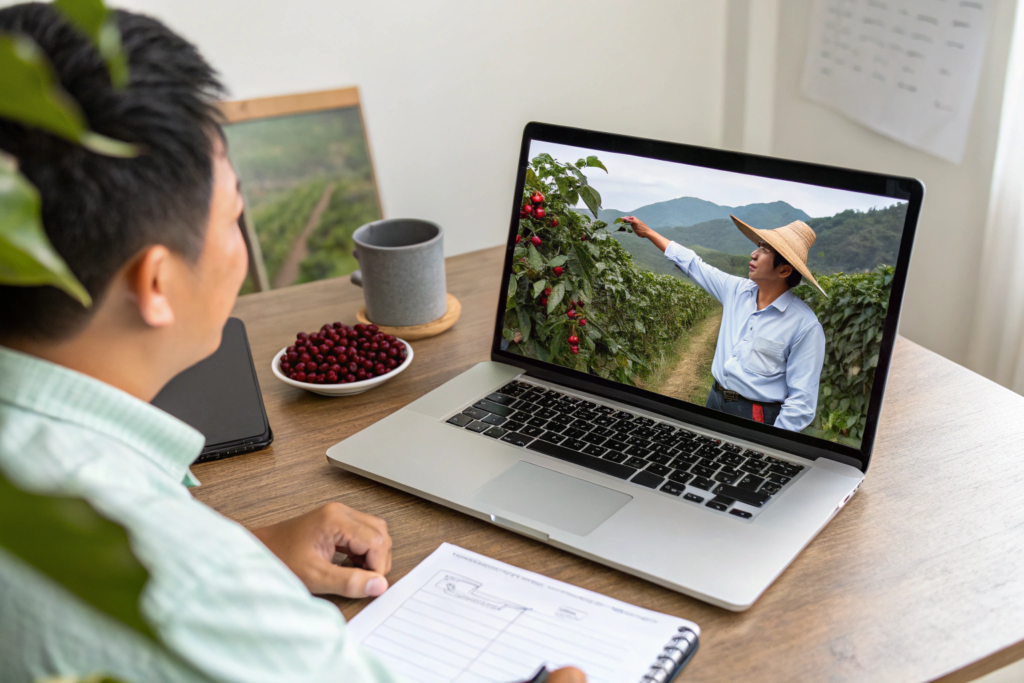
A live video call is the single most powerful verification tool short of an in-person visit. But it only works if you ask the right questions. A scripted tour can hide a lot. An unscripted, investigative call reveals everything.
I encourage buyers to video call me without scheduling weeks in advance. A spontaneous call is the best audit. Here's the checklist. First, ask to see the farm manager's office. Is there a whiteboard with harvest schedules, picking logs, Brix readings? A real farm has operational data visible. A fake setup has an empty, staged office. Second, ask to walk to the processing mill. During harvest season, it should be wet, active, with pulp being moved. During off-season, it should be clean and maintained, not abandoned. Third, ask to see the drying beds. Are they raised African beds or concrete patios? Are they clean? Are they in use or do they look like they haven't seen coffee in months? Fourth, ask to see the warehouse. How is the parchment stored? In GrainPro bags or open jute? What's the temperature and humidity? A real farm monitors storage conditions. Fifth, ask a surprise agronomy question: "What variety is planted on your north-facing slope? What was the Brix reading on this lot at harvest? What's your fertilization schedule this year?" A real farmer answers these questions in detail without pausing. A trader or a fake farm owner will give vague answers or change the subject. Finally, ask to cup the current lot on camera. Have them brew a sample and describe the flavor notes. If they can't cup, they're not a quality-focused producer. At BeanofCoffee, I welcome these calls. I've done them at 7 AM my time to accommodate a buyer's time zone. The more scrutiny, the more trust is built.
How to Use Third-Party Verification and Lab Testing?
Live video is great. But you might also want professional, independent verification. Third-party inspection services and independent lab testing add a layer of legal-grade certainty to your vetting process.
Services like SGS, Bureau Veritas, or coffee-specific auditors can visit the farm, audit the facility, verify the stock, and even supervise the container loading. They work on your behalf, not the supplier's. You commission the inspection. You define the scope. The inspector visits the farm, takes photos, draws samples, and sends a report. This costs a few hundred dollars and is worth every cent for a first-time transaction with a new supplier. For quality verification, always request a pre-shipment sample and send it to an independent cupping lab. Don't rely solely on the supplier's cupping score. A reputable supplier will have no problem with this. I actively encourage it. The sample should be a composite drawn by the inspector or by a mutually agreed protocol, not a hand-picked "best of the lot" that the supplier selects. For species verification, if you're concerned about Arabica-Robusta mixing, a lab can test for 16-O-methylcafestol, a compound present in Robusta but not Arabica. It's a definitive chemical test. For mycotoxin testing, if you're concerned about ochratoxin A or aflatoxins, an ISO-accredited lab can test a sample. This is especially important for naturally processed coffees. The lab report is your insurance policy. If the coffee doesn't meet spec, you have documented evidence to reject the shipment or renegotiate the price. A supplier who welcomes third-party verification is a supplier with nothing to hide. The SGS coffee services page outlines the specific inspection and testing services available for green coffee.
How to Negotiate a Direct Farm Contract That Protects Both Sides?
A direct relationship doesn't mean a handshake deal. The most successful direct trade relationships I've had are the ones with clear, detailed contracts. A contract isn't a sign of distrust. It's a tool for clarity. It defines what happens when things go right, and more importantly, what happens when things go wrong.
A fair direct farm contract includes: a clear specification of the coffee (origin, variety, grade, screen size, moisture, cup score), the quantity and delivery schedule, the price structure (fixed differential with a cap is ideal), payment terms (30/70 T/T is standard), quality dispute resolution procedures, and force majeure clauses. Both parties should have their own legal review.
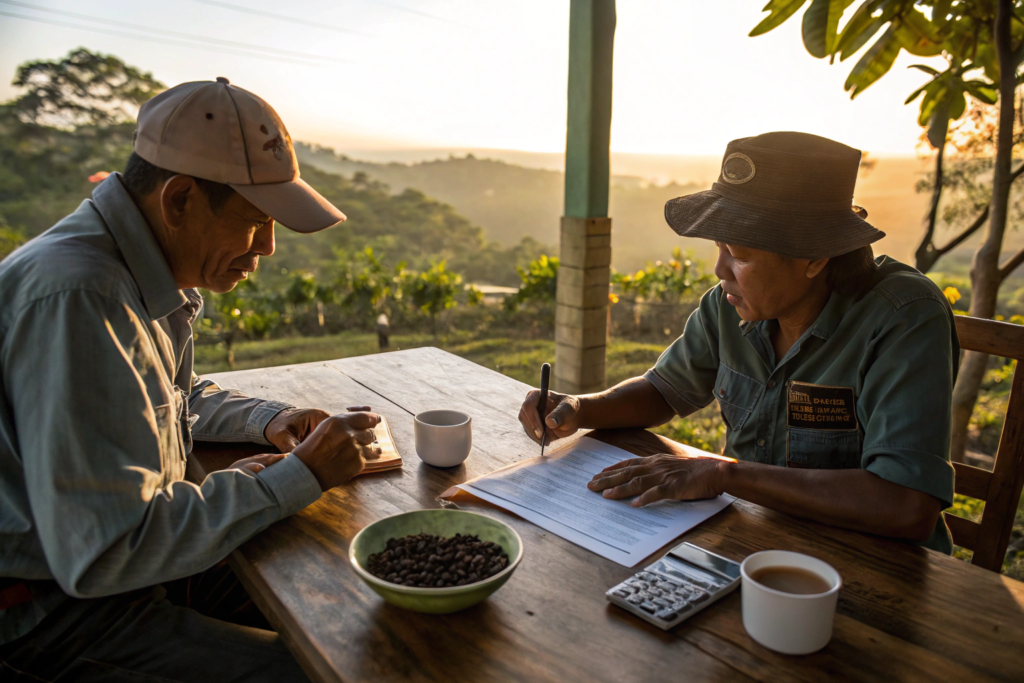
The most important clause is the quality specification. It should state: "Arabica Catimor, washed, Grade 1, Screen 17/18, moisture 10-12%, water activity below 0.60, cup score minimum 84 points by SCA protocol." If the delivered coffee doesn't meet this spec, the contract should define the remedy—a price discount, replacement coffee, or contract cancellation. Without this clause, a quality dispute becomes a messy argument. The price clause should define whether the price is fixed or floating. A fixed price is simple: "$3.20/lb FOB Shenzhen." A floating price is structured as a differential: "C-price for September delivery plus $0.40/lb, capped at $3.60/lb total." I recommend the capped differential for long-term contracts. It's fair in both directions. The payment clause should define the deposit (30% is standard), the final payment trigger (against scanned bill of lading), and the payment method (T/T wire). For a first transaction, consider using Alibaba Trade Assurance or a Letter of Credit for added security. The force majeure clause should cover events beyond either party's control—natural disasters, port strikes, pandemics, government export bans. It defines whether the contract is delayed or canceled and how deposits are handled. A good contract protects the buyer from receiving sub-spec coffee and protects the farmer from being stuck with coffee if the buyer disappears. At BeanofCoffee, I use a standardized contract that I've refined over years of export transactions. I'm happy to share a template with a serious buyer.
What Price Structure Works Best for Direct Farm Sourcing?
The price structure is the heart of the contract. It determines how market risk is shared. A structure that's unfair to one side will eventually break the relationship. The farmer will deliver late or the buyer will walk away from the contract.
The fixed differential with a cap is the structure I recommend for most direct trade relationships. Here's how it works. You and the farmer agree on a differential—say, +$0.40/lb over the C-market price for the delivery month. If the C-market is $3.00 when the contract is signed, the initial price is $3.40. But the price isn't locked. It floats until you decide to "fix" it, or until a pre-agreed date. You, the buyer, can watch the market and fix the price when it's favorable. If the C-market drops to $2.80, you fix, and your price is $3.20. The farmer gets the $0.40 differential regardless. The cap protects you from a runaway market. If the contract says "capped at $3.80 total," and the C-market spikes to $3.60, your price is capped at $3.80, not $4.00. The farmer absorbs the excess. In return for the cap, the farmer gets a guaranteed volume commitment. This structure aligns incentives. The farmer is motivated to produce quality coffee to justify the differential. The buyer is motivated to commit to volume to get the cap protection. The alternative—a purely fixed price—is simpler but riskier. If you fix at $3.40 and the market drops to $2.50, you're overpaying. If you fix at $3.40 and the market rises to $4.00, the farmer is losing money and may be tempted to breach the contract and sell to someone else at the higher spot price. A differential with a cap prevents both scenarios. The ICE coffee futures settlement prices are the reference for the differential. You and the farmer agree which delivery month's contract to reference.
How to Handle Quality Disputes Without Damaging the Relationship?
Disputes happen. A container arrives, you roast a sample, and the cup doesn't match the pre-shipment sample you approved. It's a gut-punch moment. How you handle it determines whether the relationship survives.
The first rule: don't accuse. Start with curiosity, not blame. Call or email the farmer and say, "We cupped the arrival sample and it's tasting a bit different from the pre-shipment. Can we talk through what might have happened?" Maybe the container got hot during transit and the coffee faded. Maybe the lot was mislabeled at the mill. Maybe your cupping protocol had a variable you didn't notice. The key is to have a procedure defined in the contract before this happens. The contract should state: "In the event of a quality dispute, both parties shall submit samples to a mutually agreed independent Q-grader for binding evaluation." The cost of the evaluation is split. If the independent cupping confirms the coffee is below spec, the contract should define the remedy: a price reduction, a credit on the next shipment, or return of the coffee at the farmer's expense. If the independent cupping confirms the coffee meets spec, the buyer accepts the lot and pays the agreed price. This procedure removes emotion from the process. It's data-driven. I've had one quality dispute in the last three years of exporting. The independent evaluation showed a slight deviation from spec—not a disaster, but not what was promised. I issued a credit on the next shipment. The buyer was satisfied. We're still working together. The relationship survived because the contract had a clear process. The CQI Q-grader directory lists certified cuppers who can provide independent evaluations. Identify one in advance and include their name in the contract if you want an extra layer of specificity.
How to Manage Logistics from Farm to Roastery?
You've vetted the farm. You've signed the contract. You've wired the deposit. Now the physical coffee has to move from their mill to your roastery. This is the phase where direct sourcing gets real, and where inexperienced buyers can lose money. The logistics chain has multiple links, and each one is your responsibility to understand, even if the farmer is managing some of them.
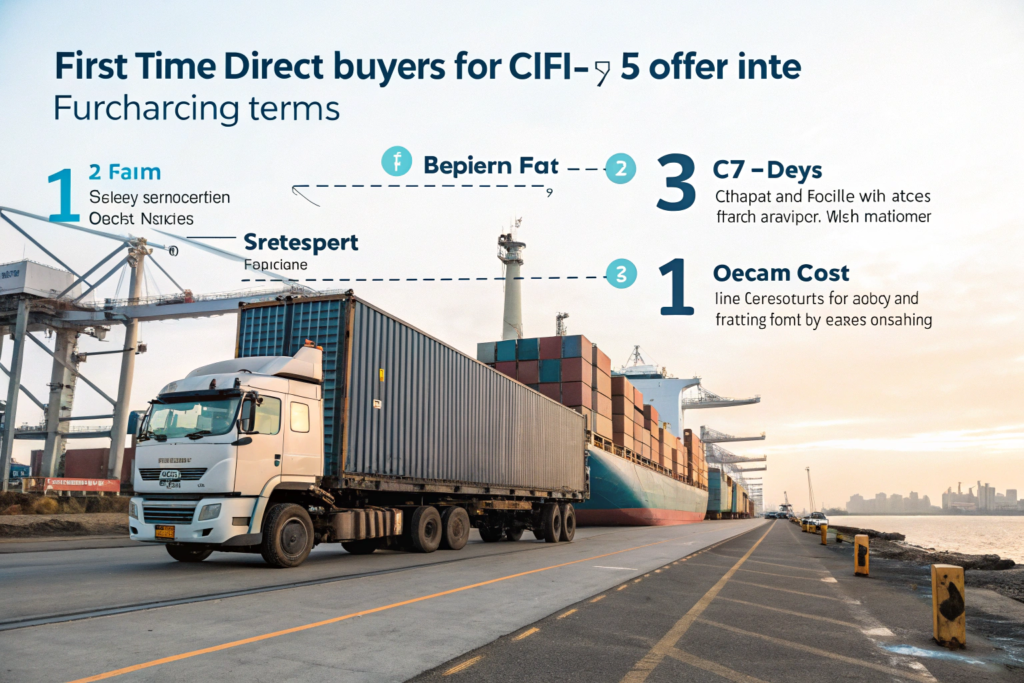
Managing direct farm logistics requires a clear division of responsibility defined by Incoterms. Most direct trade shipments use FOB or CIF terms. The farmer handles farm-to-port logistics, containerization, and export documentation. The buyer handles ocean freight, insurance, customs clearance, and domestic trucking. Communication at each handoff point is critical.
For first-time direct buyers, I recommend CIF terms. CIF means Cost, Insurance, and Freight. I, as the farmer-exporter, pay for the coffee, the transport to the port, the export clearance, the ocean freight to your destination port, and the marine insurance. You pay for the customs clearance and the trucking from the port to your roastery. CIF gives you one price per pound delivered to Long Beach, Oakland, Newark, or wherever your port is. You don't have to negotiate with shipping lines or arrange insurance. I handle it because I do it every week and have volume discounts. FOB means the farmer's responsibility ends when the container is on the ship. You pay the freight and insurance. Choose FOB if you have a strong relationship with a freight forwarder and want to control the shipping line. But for your first direct container, CIF is simpler. The logistics timeline from our farm in Baoshan to a US West Coast port is typically: 2-3 days truck to Shenzhen, 5-7 days at port before sailing, 14-18 days ocean transit, 2-5 days customs clearance and availability. Total: 23-33 days. Build a two-week buffer into your planning. At BeanofCoffee, we provide a container tracking link so you can see where your coffee is at all times. You get notifications at key milestones: container loaded, vessel departed, vessel arrived, customs cleared. No mystery. No radio silence.
What Are the Best Incoterms for Direct Farm Shipments?
Incoterms define the handoff point where the risk and cost transfer from seller to buyer. Choosing the wrong Incoterm for your situation can cost you money and create confusion. For direct farm sourcing from China, three terms matter: FCA, FOB, and CIF.
FCA is Free Carrier. The farmer delivers the container to a carrier you nominate at a named place, usually the port terminal. The farmer handles export clearance. Risk transfers to you when the container is handed to your carrier. FCA is useful if you want to control the entire logistics chain from the port gate onward, but it requires you to have a freight forwarder who can manage the Chinese-side handoff. FOB is Free On Board. The farmer loads the container onto the vessel you nominate. Risk transfers to you when the container is on the ship. The farmer pays all costs up to that point, including terminal handling charges. FOB is the most common term for green coffee exports. CIF is Cost, Insurance, and Freight. The farmer pays for the coffee, transport, export clearance, ocean freight, and marine insurance to your destination port. Risk transfers to you when the container is on the ship, but the farmer is paying the freight. This is the "easy button" for most roasters. You get one price per pound, delivered to your port. I handle the shipping because I have volume contracts with carriers. DAP and DDP—where the farmer delivers to your roastery door—are rare in direct coffee sourcing. I don't recommend DDP. I don't know your local trucking market, and I'd just mark up a local trucker. You can arrange the last-mile delivery cheaper and better yourself. The ICC Incoterms 2020 rules define each term precisely. FOB and CIF are the two you'll use 90% of the time.
How to Ensure Proper Packaging for Ocean Freight?
Packaging is where direct sourcing can go wrong in a way that doesn't show up until the container is opened in your roastery. Jute bags alone are not sufficient for a 30-day ocean voyage. The coffee will absorb moisture, lose freshness, and potentially develop mold.
The standard for specialty green coffee is GrainPro bags inside jute bags. The GrainPro liner is a multi-layer, airtight plastic bag that seals the green beans from moisture, oxygen, and external odors. The jute outer bag provides physical protection and handles for moving. Each bag should be clearly labeled with the lot number, grade, and weight. At BeanofCoffee, all our specialty-grade coffee is packed in GrainPro as standard. We also use container desiccants—large moisture-absorbing poles hung along the interior walls of the container—to capture any ambient humidity before it condenses. We use plastic pallets, not wood, to avoid the need for a fumigation certificate and to prevent wood-borne pests. The container itself must be food-grade. We inspect every container before loading: check the roof for pinhole leaks, check the door seals for gaps, check the interior for odors. A container that previously carried chemicals, leather, or strong-smelling foods is rejected. Coffee absorbs odors. A single container that carried garlic will ruin the entire load. The loading pattern matters too. We leave an air gap between the coffee bags and the container walls to prevent condensation transfer. The bags are stacked tightly so they don't shift during the voyage. These are details that a professional farmer-exporter handles as routine. A less experienced supplier might cut corners. Ask your supplier: "What type of bags do you use? Do you use desiccants? Do you inspect containers before loading?" The answers will tell you a lot about their professionalism. The GrainPro packaging solutions explain the science behind hermetic storage for green coffee.
Conclusion
Sourcing coffee directly from a farm is the most rewarding way to buy green coffee, but it's not a shortcut. It's a commitment to due diligence. You need to verify that the farmer actually owns the land, holds the export license, and has the processing and logistics infrastructure to ship specialty-grade coffee internationally. You need a contract with a clear quality spec, a fair price structure, and a dispute resolution process. You need to manage the logistics from farm to roastery, understanding Incoterms, packaging, and transit timelines. And you need to build a human relationship that survives the inevitable small problems. When it works, direct sourcing eliminates the middleman markup, gives you total traceability, and connects your customers to a real farmer and a real place.
At BeanofCoffee, we've built our entire business model around direct farm export. We own 10,000 acres in Baoshan, Yunnan. We have the export license, the FSSC 22000 certified mill, the cupping lab, and the logistics team to ship a container directly to your roastery. No traders. No importers. Just us, the farmers, and you, the roaster.
If you're ready to explore direct sourcing from China, my export director, Cathy Cai, can set up a live video tour of our farm, send you a pre-shipment sample of our current harvest, and prepare a draft contract for your review. Email her at: cathy@beanofcoffee.com.