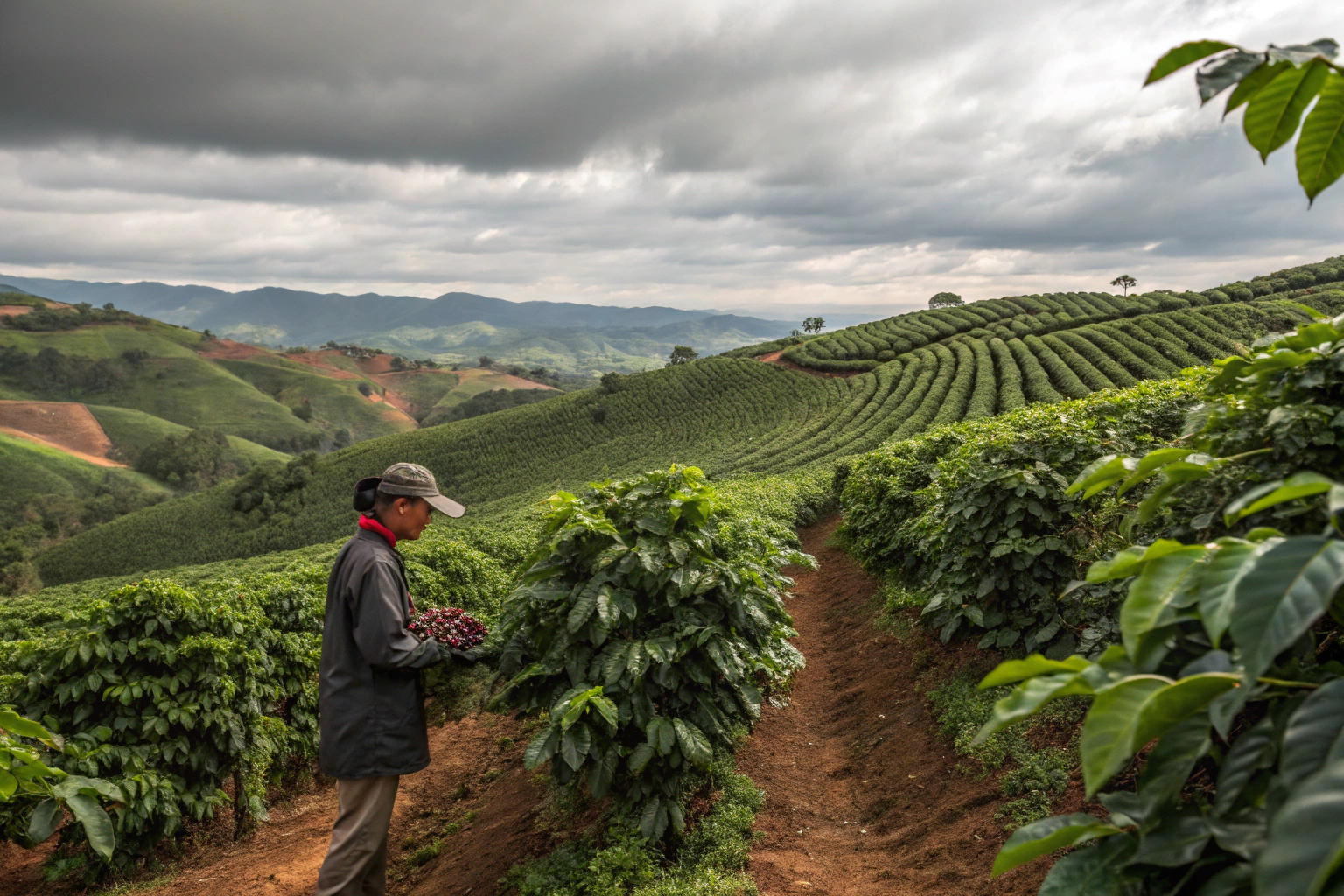
You want to cut out the middlemen, connect with the origin, and secure the best possible beans from China's premier coffee region. The idea of sourcing directly from Yunnan plantations is compelling—more control, better traceability, potentially better prices. But is it as simple as flying to Kunming and driving into the hills? Having built our business on these very plantations, I can tell you it's possible, but it requires a strategic approach to navigate the unique landscape of Yunnan's coffee industry.
Sourcing coffee beans directly from Yunnan plantations is most effectively achieved by identifying and partnering with large-scale, integrated producers or export-oriented cooperatives that have the infrastructure, quality control, and export licenses to handle international transactions. The process involves thorough due diligence, on-site verification (physical or virtual), and establishing clear contracts that cover quality specifications, logistics, and payment terms. For most international buyers, a direct partnership with a professional plantation-export company offers a more reliable and efficient "direct from origin" experience than dealing with fragmented smallholders.
That's the core strategy. However, "direct" doesn't always mean dealing with a single family farm. In Yunnan, the most practical and scalable direct model often involves partnering with an entity that consolidates quality from its own vast estates or a tightly managed network of smallholders. Let's map out the route.
What is the Structure of Coffee Farming in Yunnan?
Understanding who grows the coffee is the first step. Yunnan's coffee agriculture is a mix of models, and each requires a different sourcing approach.
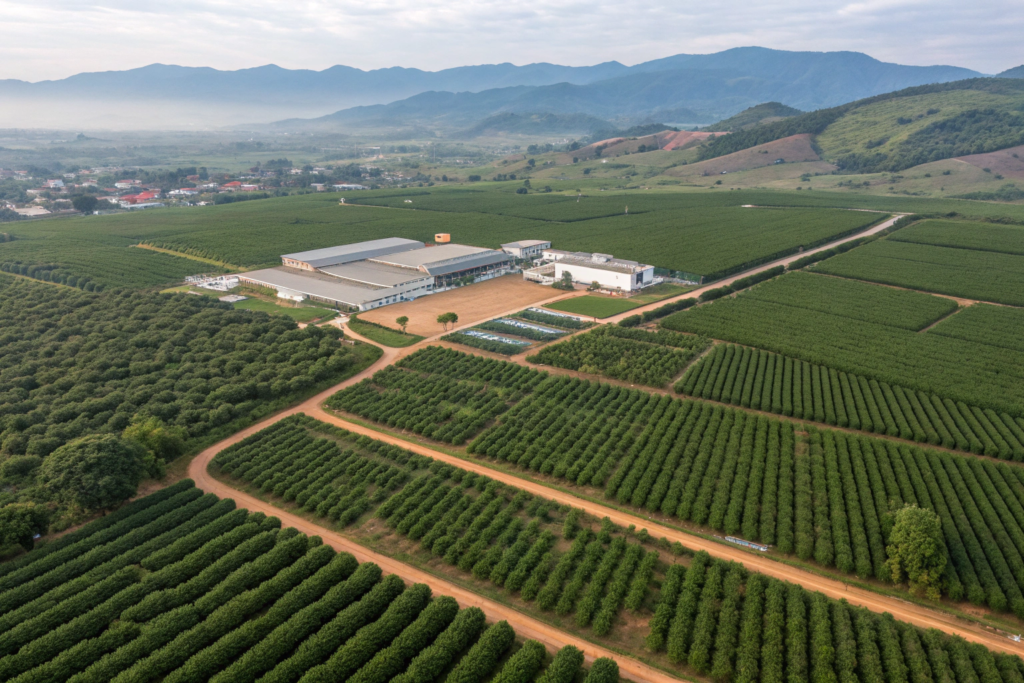
- Large-Scale Commercial Plantations (Our Model): Entities like Shanghai Fumao own and operate thousands of contiguous acres (we have over 10,000 acres in Baoshan). These are vertically integrated: they control farming, processing, milling, and export. This is the simplest point of direct contact for a foreign buyer seeking volume, consistency, and full traceability to a single managing entity.
- Company + Smallholder Cooperative Models: A company or cooperative provides seeds, training, and buys cherry from hundreds or thousands of smallholder families (often with farms under 2 hectares). They process centrally. This model can produce excellent quality but requires the buyer to partner with the central processor, not individual farmers.
- Independent Smallholders: Individual families farming small plots. Sourcing directly from them is logistically challenging for any meaningful volume due to aggregation, quality variance, and export paperwork hurdles.
For an importer, the most viable "direct" partnerships are with Category 1 (Large Plantations) or Category 2 (Professional Cooperatives/Processors). These entities function as your "direct source" while providing the professional interface and volume you need.
Why is Partnering with an Integrated Exporter More Efficient?
Think about the supply chain steps: farming, cherry picking, processing (wet mill), drying, hulling (dry mill), grading, sorting, storage, export documentation, logistics. An integrated exporter manages all these steps under one roof. If you try to source from smallholders, you would need to coordinate or provide each of these services yourself—a massive undertaking from overseas. The efficiency gain and risk reduction of a single-point partner are enormous. This integration is what allows us to guarantee stable, reliable, and traceable supply.
What are the Key Coffee Growing Regions in Yunnan?
Your sourcing should be region-specific, as profiles differ:
- Baoshan (Our Base): Known as the birthplace of Yunnan coffee. Often produces cups with balanced body, nutty/chocolate notes, and lower acidity. Home to many large estates.
- Pu'er: The largest producing area. Coffees can have more citrusy acidity and tea-like body. A mix of large farms and smallholders.
- Dehong: Borders Myanmar. Known for floral and fruity profiles in higher altitude micro-lots.
Knowing the region helps you target the cup profile you want and communicate more effectively with potential partners.
How to Find and Vet Potential Plantation Partners?
You can't visit every farm. Your search must be targeted and your vetting rigorous. The goal is to find partners who are both capable and credible.
Finding Partners:
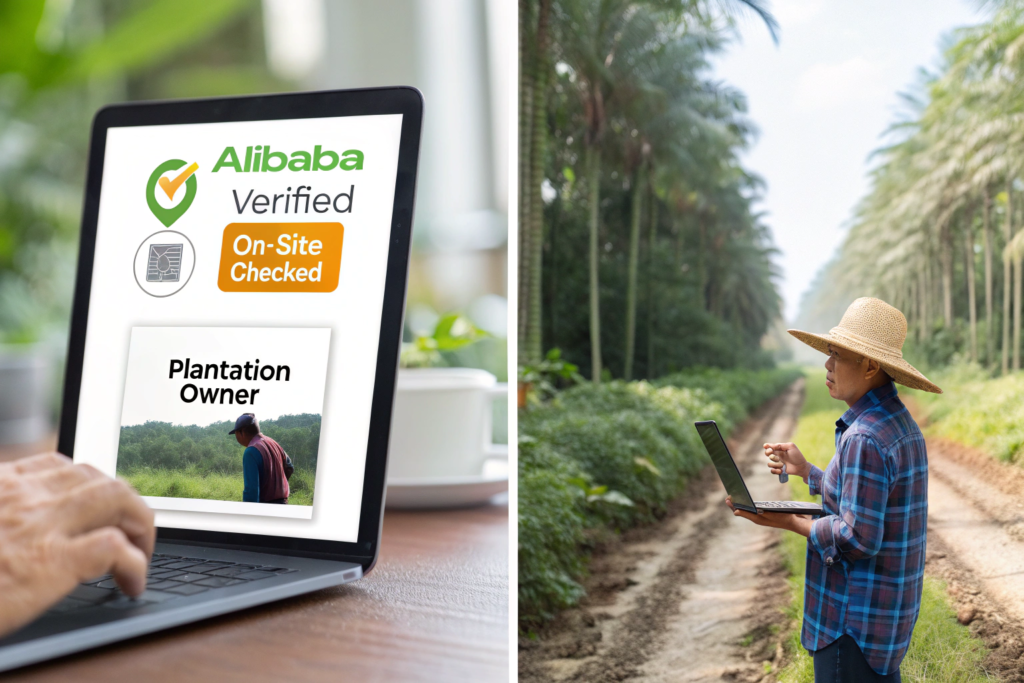
- Industry Platforms: Use B2B sites like Alibaba, but filter aggressively. Search for "Yunnan coffee plantation owner" or "Yunnan coffee manufacturer." Look for verified suppliers with on-site check badges. Our company profile, for instance, clearly states we are a plantation owner/manufacturer.
- Trade Shows: Attend major Asian coffee expos like the Yunnan Coffee Expo (in Kunming) or Hotelex Shanghai. Producers and exporters exhibit there.
- Professional Networks: Leverage LinkedIn to find export managers or quality control directors at Yunnan-based coffee companies.
- Government & Trade Associations: Contact the Yunnan Provincial Department of Commerce or the Yunnan Coffee Association for referrals to reputable, export-ready companies.
Vetting Partners:
- Request Documentation: Ask for business license, export license, farm ownership or long-term lease documents, and certifications (Organic, Rainforest Alliance, FDA registration, HACCP/ISO 22000 for processing).
- Verify Scale and Infrastructure: Request GPS coordinates of farms, photos/videos of processing facilities (wet mill, dry mill, sorting lines, warehouses). Ask about annual production volume.
- Check Quality Systems: Do they have a QC lab? Do they employ Q Graders? Can they provide sample analysis reports (moisture, density, water activity, screen size)?
What are the Red Flags When Evaluating a "Direct" Supplier?
- Unwillingness to Share Location Details: "Our farms are around Pu'er" is not specific enough.
- No Processing Facilities: If they only sell cherry or parchment, they are not a direct plantation source for export-ready green beans.
- Inability to Discuss Quality Metrics: If they can't talk about screen size, density, or processing methods in detail, they are likely traders.
- Pressure for Large Upfront Payments: Standard terms are 30% deposit, 70% against shipping documents for new relationships.
Is an On-Site Visit Necessary?
It is highly recommended for large, strategic partnerships. Nothing replaces seeing the operation, meeting the team, and cupping coffee on the farm. However, a comprehensive virtual audit (live video tour, document sharing) can be a very effective preliminary step, especially for initial sampling and smaller orders. We regularly host virtual tours for overseas buyers to showcase our Baoshan operations from soil to warehouse.
What are the Critical Steps in Negotiating Terms and Contracts?
Once you've identified a credible partner, the negotiation must lock in clarity and protect both parties. Ambiguity is the enemy of direct trade.
Your contract or purchase agreement must clearly specify:
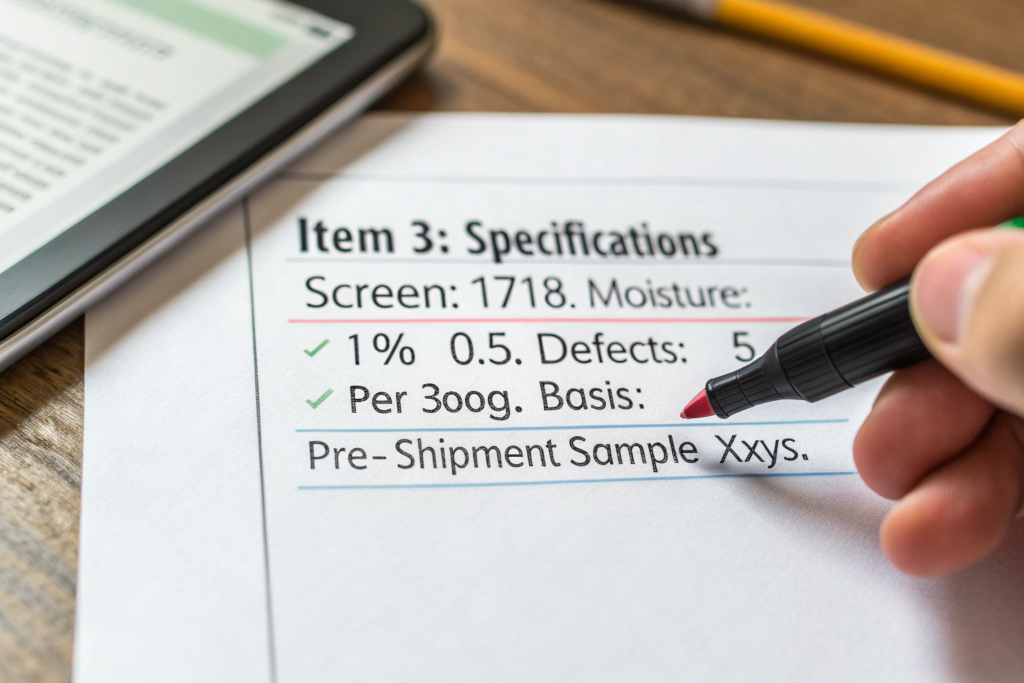
- Product Specifications: Exact grade (e.g., Yunnan AA), screen size (e.g., 95% on 17/18), moisture content (10-12%), water activity (<0.60), maximum defect count, and processing method (washed, natural, honey).
- Quality Benchmarking: The contract should be based on a pre-shipment sample that you have approved. State: "Quality of the shipment must match the approved pre-shipment sample within a 2-point cupping score tolerance."
- Incoterms: Typically FOB Shanghai or CIF [Your Port]. FOB gives you control over shipping but requires you to manage logistics. CIF simplifies it for you, as the exporter handles ocean freight.
- Payment Terms: Common for new relationships: 30% TT deposit, 70% TT against copy of Bill of Lading. For established partners, this can evolve.
- Delivery and Force Majeure: Agree on a shipment window. Include clauses for delays due to weather or events beyond either party's control.
- Inspection & Claims: Specify the right to inspect upon arrival and the process for filing a claim if specs are not met.
How to Handle Quality Disputes with a Direct Supplier?
The contract is your shield. If a shipment arrives and fails to meet the agreed spec (e.g., higher defect count, different cup profile), you must:
- Document Immediately: Take photos/videos, draw samples from multiple bags, and have them cupped/scored by a third party if possible.
- Formal Communication: Notify the supplier in writing with evidence.
- Refer to Contract: Outline the discrepancy versus the agreed terms.
A professional supplier will seek an amicable solution—a discount, replacement, or in extreme cases, a return. The clarity of your initial contract makes this process factual, not emotional.
What are the Advantages of CIF Terms When Sourcing Directly?
For a direct import, CIF (Cost, Insurance, and Freight) terms offered by a capable exporter provide significant advantages:
- Predictable Landed Cost: You get one all-in price to your port. The exporter bears the volatility of ocean freight.
- Simplified Logistics: They handle everything from the processing facility to the port of destination.
- Leveraged Freight Rates: Large plantation-exporters like us have annual contracts with shipping lines, securing better rates than you might as a one-off importer.
This turns a complex international shipment into a simpler domestic delivery upon arrival, which is a major benefit of a true direct partnership.
What Logistics and Documentation are Unique to Direct Sourcing from China?
The export process from China is professionalized but has specific requirements. Your direct partner should guide you through it, but you need to understand the key elements.
Key Logistics Steps Your Partner Manages:
- Inland Transportation: Trucking from the plantation/mill in Yunnan to the port (Shanghai, Ningbo, or Shenzhen).
- Booking and Customs Export Declaration: The supplier handles all Chinese export customs, which requires their export license.
- Providing Export Documents: They are responsible for producing the core documents: Commercial Invoice, Packing List, Bill of Lading, and most critically, the Phytosanitary Certificate (for green beans) and Certificate of Origin.
Key Documents You Will Receive (for your import clearance):
- Commercial Invoice & Packing List: Must be perfectly consistent.
- Bill of Lading: The title document.
- Phytosanitary Certificate: Issued by Chinese Customs (GACC). Mandatory for green bean import into most countries.
- Certificate of Origin (Form A or COO): Can help you claim preferential tariff rates in your country.
- Optional: SGS or Inspection Report: If you contracted for a pre-shipment independent inspection.
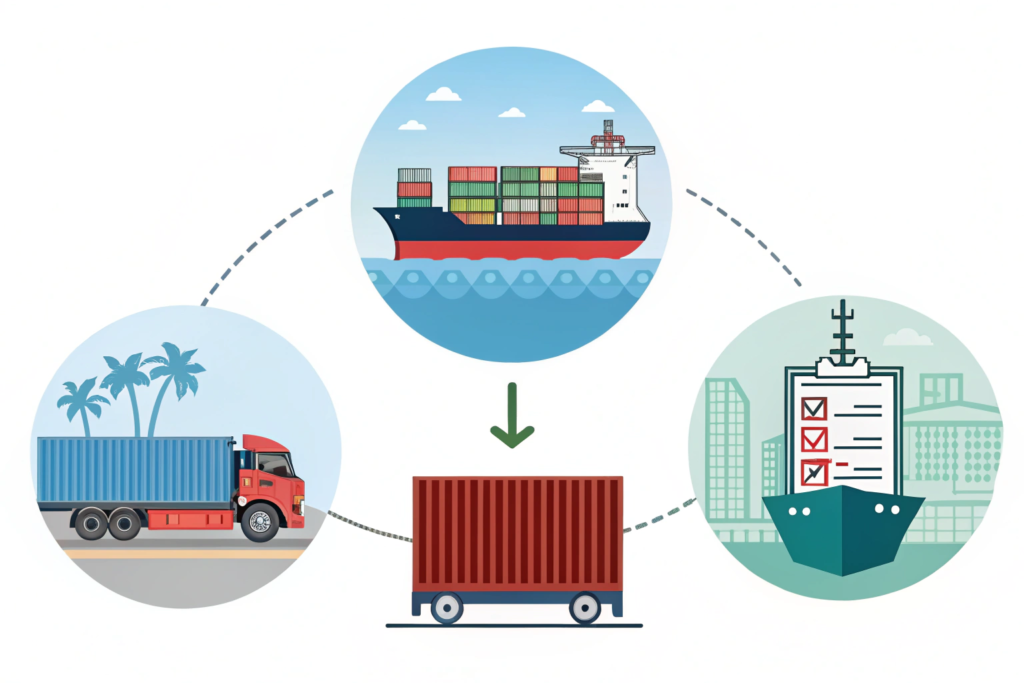
How Does the Phytosanitary Certificate Process Work in China?
For green coffee, this is mandatory. The exporter must apply to the local branch of the General Administration of Customs China (GACC). An inspector may visit the warehouse to check the lot before issuance. The certificate proves the coffee is free from quarantine pests and soil. The process takes several days, so it must be factored into the shipping timeline. A reliable supplier manages this seamlessly as part of their export procedure.
What are the Common Shipping Routes and Transit Times?
From Shanghai/Ningbo:
- To US West Coast (LA/Long Beach): Approximately 14-18 days.
- To Europe (Rotterdam/Hamburg): Approximately 30-35 days via Suez Canal.
- To Australia (Sydney/Melbourne): Approximately 12-16 days.
Your partner should provide a realistic schedule and keep you updated on the container's status. This timeliness and communication are part of a professional direct relationship.
Conclusion
Sourcing directly from Yunnan plantations is less about finding an individual farmer and more about forging a strategic partnership with a capable, integrated producer-exporter. This model delivers the core benefits of direct trade—transparency, traceability, quality control, and cost efficiency—while providing the professional reliability and scale that importers need.
The path involves targeted sourcing, meticulous due diligence, crystal-clear contracts, and leveraging your partner's expertise in logistics and export regulations. When done correctly, it creates a stable, trustworthy, and mutually beneficial supply chain that connects your roastery directly to the fertile soils of Yunnan.
If you are ready to explore a true direct partnership with a Yunnan plantation source that controls the entire chain, we invite you to begin the conversation with us.
To initiate a direct sourcing relationship, request a virtual tour of our Baoshan plantations and processing facilities, or receive our detailed capability profile, please contact our Head of Sales, Cathy Cai, at cathy@beanofcoffee.com. Let's build a direct line from our fields to your roast.