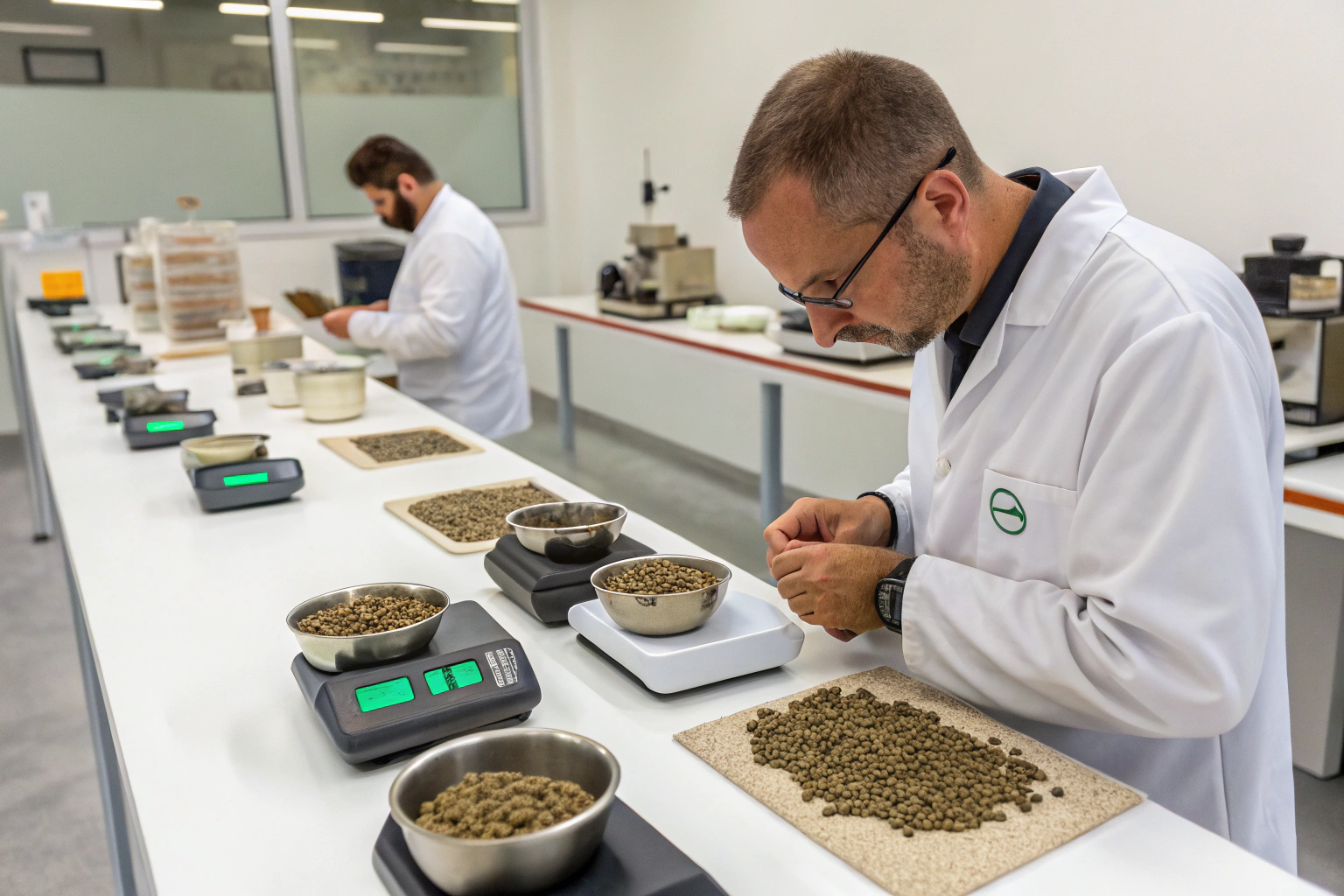
You're ready to import. You have supplier lists, price quotes, and samples on the way. But when those green beans arrive, how do you truly know if they're high quality? The difference between a profitable season and a warehouse full of mediocre coffee often comes down to your evaluation skills before the contract is signed. As an exporter who has seen thousands of lots, I can tell you that quality is a mosaic—you need to examine every piece.
Identifying high-quality green coffee beans for import requires a multi-sensory, data-driven approach that goes beyond a basic visual check. You must systematically evaluate: physical specifications (screen size, density, moisture), visual and olfactory cues (color, smell, defect count), and most critically, the roasted cup profile. True quality is confirmed in the cup, but it is predicted by rigorous physical and documentary analysis.
That's your roadmap. But rushing to the cupping table without checking the fundamentals is like judging a book by its last page. Let's build your evaluation protocol, step by step.
What Are the Non-Negotiable Physical Specifications to Check?
Before you even smell the beans, you need data. These are the objective metrics that form the foundation of quality and stability. They tell you if the coffee was processed and stored correctly.
- Moisture Content: The single most important storage stability factor. Ideal range is 10-12%. Below 10%, beans are brittle and stale; above 12%, they are prone to mold and rapid degradation. A precise moisture meter reading is essential.
- Water Activity (Aw): Even more critical than moisture content. This measures the available water for microbial growth. For safe storage and transport, Aw must be below 0.60. Above 0.65, there is a serious risk of mycotoxin development. Demand this test result from your supplier.
- Bean Density: Measured in grams per liter (g/L) or via a simple water displacement test. Higher density (e.g., 680-720 g/L) typically indicates higher altitude growth and a harder bean, which often correlates with greater potential for complex sugar development during roasting. Low density beans bake easily.
- Screen Size & Uniformity: Consistent size is paramount for even roasting. A lot graded as "Screen 17/18" with 90% uniformity is better than a mixed bag of larger beans. Size indicates potential, but uniformity delivers it in the roaster.
A professional exporter will provide a specification sheet or pre-shipment sample analysis report with these metrics. If they can't, it's a major red flag about their quality control processes. At Shanghai Fumao, this document is standard for every lot we offer.
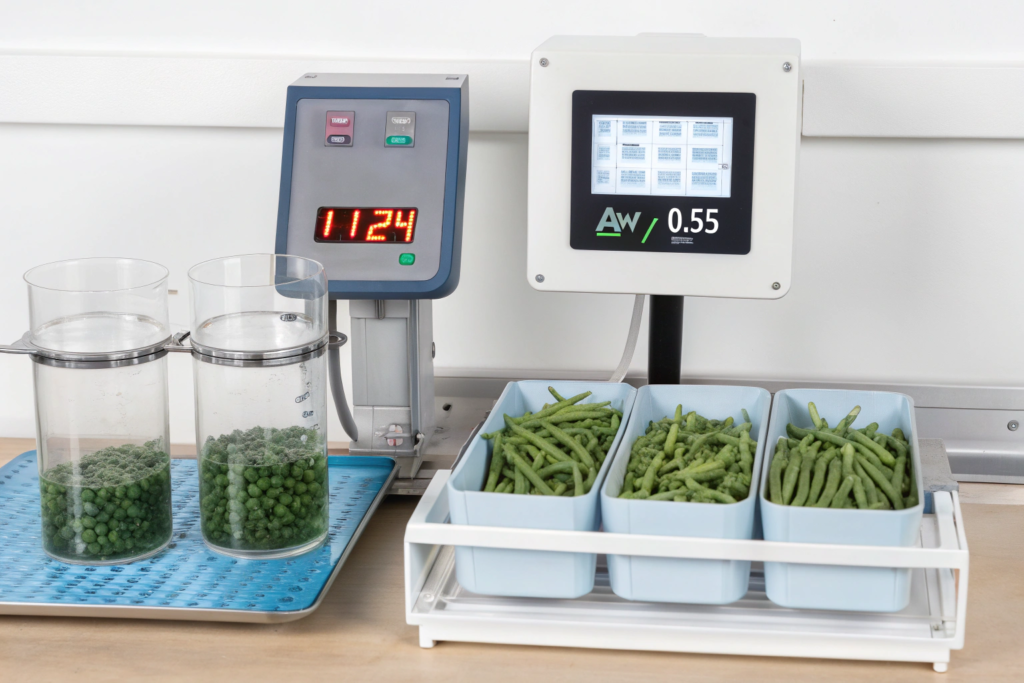
How to Perform a Simple Water Displacement Test for Density?
You don't always need a lab. A quick field test:
- Take a 100g sample of green beans.
- Fill a graduated cylinder with 500ml of water.
- Gently submerge the beans (remove air bubbles).
- Note the new water level. If it rises to 625ml, the beans displaced 125ml of water.
- Density = Mass (100g) / Volume (0.125 L) = 800 g/L. This is a very high, excellent density.
This test gives you a tangible feel for the bean's hardness and potential.
Why is Water Activity (Aw) a Deal-Breaker?
Moisture content tells you how much water is present; Aw tells you what that water is doing. An Aw above 0.60 means that water is free enough to support mold and bacterial growth, even if the moisture content seems okay. It's a direct safety and stability metric. Importing a container of coffee at 0.70 Aw is like importing a time bomb—it will degrade in transit and could be unsafe. Never compromise on this.
How to Conduct a Visual and Olfactory Pre-Screening?
Your eyes and nose are powerful first-pass filters. Train them to spot the signs of good and poor processing.
What to Look FOR (Good Signs):
- Consistent Color: Beans within a lot should have a uniform bluish-green or greenish-blue hue (for washed Arabica). Variation suggests inconsistent drying or mixing of lots.
- Clean Appearance: The surface should be free of excessive silver skin (chaff) and dust.
- Intact Shape: Beans should be whole, not broken or chipped.
What to Look FOR (Bad Signs - DEFECTS):
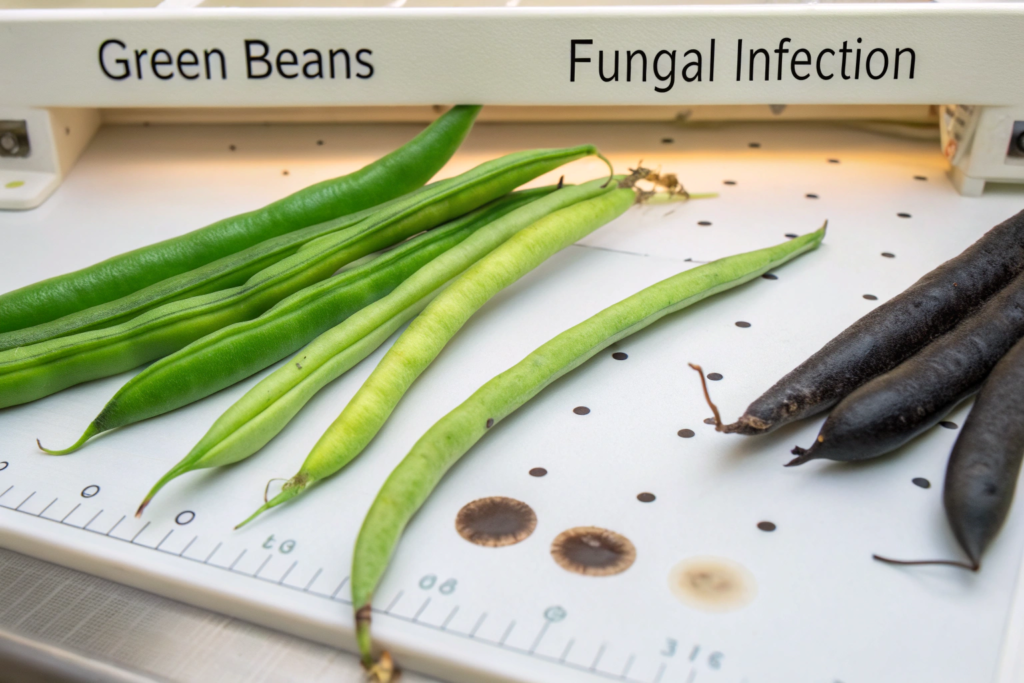
- Black Beans: Fully black, oil-stained beans. A major defect, sour and rotten.
- Sour Beans: Yellowish or reddish-brown, often with a puckered appearance. Taste fermenty.
- Insect Damage: Small, neat holes bored into the bean.
- Quakers: Light, blonde, undeveloped beans that won't roast properly. Taste baked and grassy.
- Fungus/Mold: Any visible white, green, or blue fuzz.
The Smell Test: Place a handful of beans in a clean cup, cover with your hand, and shake for 10 seconds. Uncover and take a deep sniff. It should smell fresh, sweet, and grassy—like hay or fresh-cut grass. Red flags: A musty, earthy, or chemical odor indicates poor storage, mold, or pesticide contamination. A neutral smell suggests age and staleness.
What is the SCA Defect Classification and How to Use It?
The Specialty Coffee Association (SCA) has a standardized defect classification system. In a 300g sample:
- Primary Defects (e.g., full black, full sour, severe insect damage): Each counts as 1 defect.
- Secondary Defects (e.g., partial black, broken/chipped beans): Several count as 1 defect.
For specialty grade, the maximum is 5 total defects per 300g sample. Count the defects in your sample. More than 5, and the coffee is not "specialty grade," regardless of how it cups. This objective count protects you.
Can You Judge Quality by Color Alone?
No. Color is a clue, not a verdict. Altitude, variety, and processing method all affect color. A Yunnan Catimor might be paler than a Kenyan SL28. The key is uniformity within the lot. Also, beware of beans with a glossy, oily sheen at room temperature—this often indicates age or high-temperature drying, which has already degraded the oils. The ideal bean has a matte finish.
Why is the Roasted Sample Cupping the Ultimate Test?
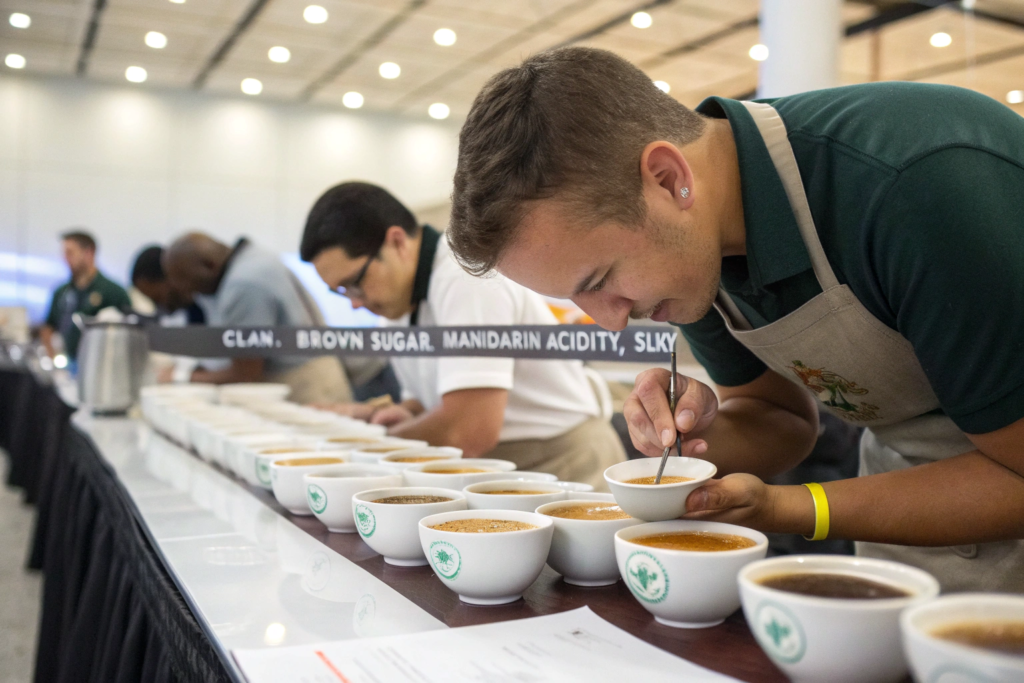
All the previous steps merely qualify the coffee for the final exam: the cupping. Physical specs promise potential; the cup delivers the truth. This is where you evaluate flavor, acidity, body, balance, and aftertaste—the very reasons you're importing.
You must cup the sample yourself, under controlled conditions. Follow the SCA Cupping Protocol:
- Roast the sample to a medium-light Agtron scale color (around #65) within 24 hours of cupping.
- Grind and smell the fragrance.
- Pour hot water and evaluate the aroma.
- Break the crust and smell.
- Slurp after 12-15 minutes, scoring based on SCA forms.
Look for:
- Clean Cup: No off-flavors (mold, ferment, phenol, rubber).
- Sweetness: A foundational quality. Is it present?
- Acidity: Is it pleasant and bright (citric, malic) or harsh and sour?
- Mouthfeel: Does it have a pleasing body?
- Flavor & Aftertaste: Are the flavors distinct, pleasant, and persistent?
- Balance: Do all elements work together?
What if the Sample Cups Well But the Shipment Doesn't?
This is the core risk in importing. Mitigate it by:
- Ordering a Pre-Shipment Sample: The sample you cup should be taken from the actual lot to be shipped, not a "representative" type sample.
- Stipulating a Tolerance in Contract: Your contract should state, "The delivered coffee must cup within a 2-point score variance of the pre-shipment sample."
- Hiring Third-Party Inspection: For large shipments, companies like SGS or Bureau Veritas can pull samples at origin before loading and perform analysis, sealing the samples for arbitration.
- Cupping Upon Arrival: Always cup samples from multiple bags upon arrival at your warehouse. This is your final quality gate.
How to Evaluate for Your Specific Market (Espresso vs. Filter)?
Your end-use matters. A coffee that's brilliant as a light filter roast might be too acidic for a standalone espresso. When cupping:
- For Espresso: Pay extra attention to body, sweetness, and bitterness balance. Look for chocolaty, nutty, or caramel base notes. Test it as an espresso shot.
- For Filter/Brew: Prioritize clarity, acidity complexity, and flavor notes. Look for floral, fruity, or tea-like characteristics.
Roast and brew the sample in the way you intend to use it. This is practical quality assessment.
How to Verify Supplier Claims and Documentation?
Trust, but verify. A supplier's claims about grade, origin, and processing need to be backed by evidence. Your due diligence here builds a reliable partnership.
- Traceability: Can they provide the farm/village/cooperative name? GPS coordinates? Harvest date? True traceability is a hallmark of quality-focused suppliers.
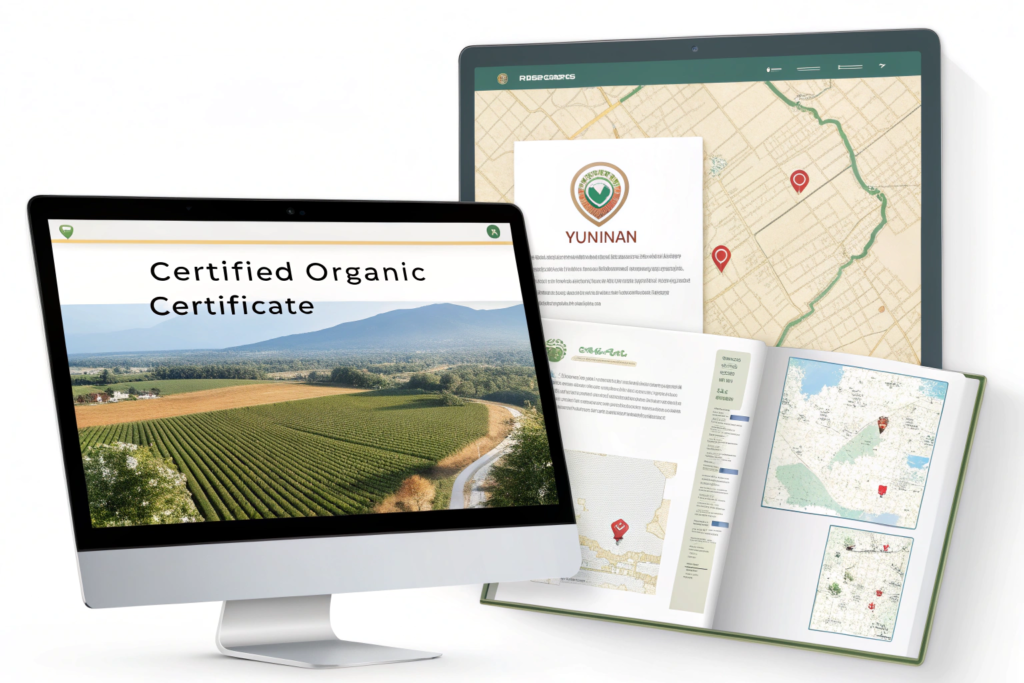
- Certifications: Are claims of Organic, Fair Trade, or Rainforest Alliance backed by valid, scoped certificates? Verify the certificate number and validity period online if possible.
- Processing Details: Was it washed, natural, honey? If "double fermented," ask what that means exactly. Ambiguity hides flaws.
- Facility Audit Reports: For food safety, ask if their milling station has HACCP, ISO 22000, or a recent third-party audit report. This is crucial for safe and trustworthy sourcing.
- Transaction History: On platforms like Alibaba, check their transaction history for similar products. Consistent, positive feedback is a social proof.
What Are the Red Flags in Supplier Communication?
- Evasion on Details: "It's from Yunnan" vs. "It's from Baoshan, Yunnan, harvested March 2024, from the XX cooperative."
- Pressure to Skip Steps: "The sample is the same, no need to test the shipment."
- Unrealistic Prices: Quality has a cost. A price far below market for a stated grade is a near-guarantee of a problem.
- Inability to Provide Basic Docs: No spec sheet, no phytosanitary certificate example, no business license.
A professional supplier understands this process and is prepared for it. We expect and welcome these questions at Shanghai Fumao because they differentiate us from traders.
How Does a Supplier's Infrastructure Reflect on Bean Quality?
Visit if you can, or take a virtual tour. A supplier with:
- Modern, Clean Drying Beds (raised, shaded) vs. concrete patios.
- Color-Sorting and Electronic Density Sorters.
- Climate-Controlled Warehousing.
...is investing in quality preservation at every step. This infrastructure directly translates to more consistent, defect-free coffee in your bag. It's the physical manifestation of their commitment to being a stable long-term partner.
Conclusion
Identifying high-quality green coffee beans is a discipline that blends science, sensory skill, and commercial due diligence. It moves from hard data (moisture, Aw, density) to visual defect screening, and culminates in the irreplaceable evidence of the cupping table. Each step filters out risk and brings you closer to a coffee that will delight your customers and sustain your business.
The process also identifies the right partner. A supplier who provides transparent data, welcomes scrutiny, and stands behind their product with clear contracts is as valuable as the coffee itself. This rigorous approach is what turns importing from a gamble into a strategic, repeatable, and profitable component of your business.
If you are developing your green coffee evaluation protocol and would like to see examples of our full lot documentation, from spec sheets to cupping scores, we are ready to provide them.
To receive a complete evaluation kit for our current lots—including physical sample, full analysis report, and traceability information—please contact our Head of Sales, Cathy Cai, at cathy@beanofcoffee.com. Let's build your import strategy on a foundation of verified quality.