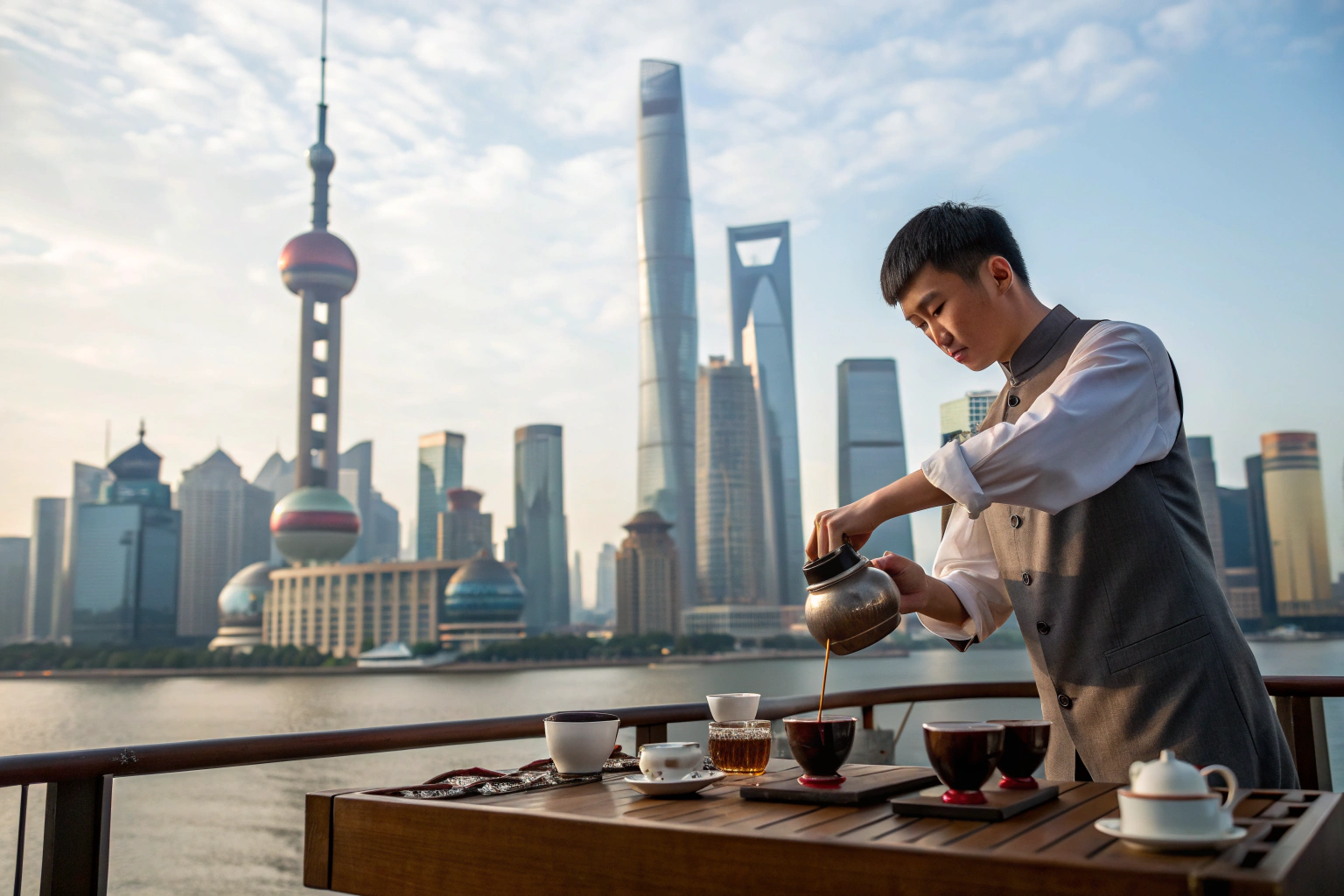
As a Western coffee professional, you look at China and see a tantalizingly huge market. You see Starbucks opening a new store every few hours. But you're like my client, Ron; you're a savvy businessperson, and you know the real opportunity lies beneath the surface. You're asking, "What is really happening with coffee in China? Is it just a copy of Western culture, or is something unique emerging?" You're worried that without understanding the cultural nuances, your product, brand, or marketing will completely miss the mark.
Let's be clear: to understand Chinese coffee culture, you must first understand that it is not a monolith. It's a complex tapestry woven from threads of ancient tea traditions, modern aspirations for a global lifestyle, and a rapidly developing, uniquely Chinese appreciation for specialty coffee. The key nuances are the role of coffee as a "social space" and status symbol, the preference for sweeter and more innovative flavor profiles, the explosive growth of a digitally-native coffee consumer, and the burgeoning pride in local, high-quality Chinese beans.
From my vantage point on our 10,000-acre coffee estate in Yunnan, I'm not just watching this culture evolve; I'm actively participating in it. We are providing the very beans that are fueling this revolution. In this article, I will guide you through these subtle but powerful currents, offering you an insider's map to one of the most exciting coffee markets on the planet.
Why is the "Third Space" Concept So Foundational?
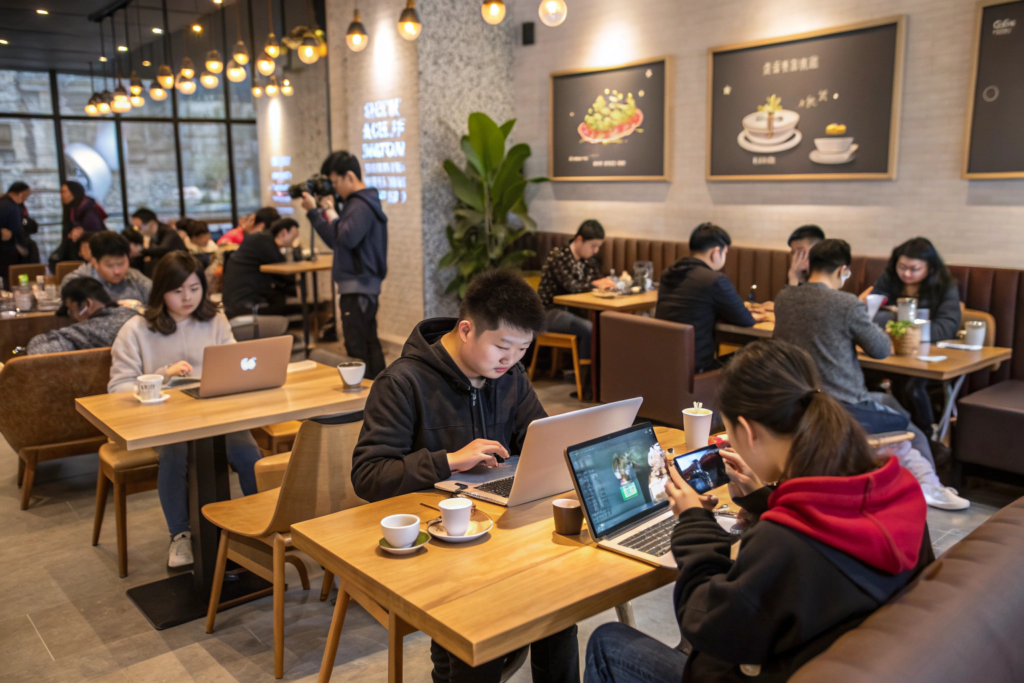
In the West, coffee is often a utilitarian fuel for a busy morning. The "grab-and-go" culture is dominant. In China, while this exists, the foundational concept introduced by brands like Starbucks is coffee as a "Third Space"—a place that is not home (the first space) and not work (the second space).
This is a critical nuance. For many Chinese consumers, the experience of being in the coffee shop is as important, if not more so, than the coffee itself. It is a clean, quiet, and aspirational environment to meet friends, conduct informal business meetings, have a date, or simply have a personal space to work or study outside of a crowded apartment. The coffee is the ticket of entry to this space. This is why the design, ambiance, and "Instagrammability" of a cafe are paramount. This concept is so powerful that it has been a core part of global marketing strategy, as detailed by business publications like the Harvard Business Review.
This means that for a brand to succeed, it must consider the entire environment. It's not just about serving a good cup; it's about creating a desirable social stage.
How Does This Affect the Coffee Itself?
Because the social function is so important, the coffee often needs to be approachable and visually appealing. This has led to the popularity of lattes with beautiful art, colorful flavored drinks, and less emphasis on challenging, highly acidic black coffees in the mass market. The drink is an accessory to the social experience.
Is This Changing with Specialty Coffee?
Yes. While the 'Third Space' concept—those cozy, inviting havens between home and work that foster connection and comfort—remains a cornerstone for the mass market, the ascent of specialty coffee is forging a new breed of consumer: one who is 'destination-driven.' These discerning patrons don't merely seek a place to sip; they actively hunt down specific cafes, their hearts and palates set on the exceptional quality of its beans and the artistry of its brewing. It's not just about grabbing a quick cup; it's an experience—a pilgrimage to savor the nuanced flavors of single-origin coffees, the rich aroma of freshly ground beans, and the skillful hands of baristas who treat each brew as a craft. This trend, where the journey to the cafe is as significant as the drink itself, weaves a tapestry of anticipation and satisfaction, and it is this evolving landscape of coffee connoisseurship that we will delve into later.
How Do Flavor Preferences Differ from the West?
If you offer a standard Western menu in China, you will miss a huge opportunity. The Chinese palate, shaped by a rich and diverse culinary history, has different preferences. You're worried your standard latte or cappuccino might be seen as boring. You're right to be.
The most significant difference is a general preference for more complex textures and a balance of sweet, savory, and fruity notes. A straight, bitter espresso or a highly acidic black coffee can be challenging for a palate unaccustomed to it. This has led to incredible innovation:
- Fruit-Infused Coffees: Americanos or lattes infused with fruit flavors like coconut, peach, or grapefruit are wildly popular. Luckin Coffee's "Coconut Cloud Latte" became a viral sensation, selling millions of cups.
- Textural Innovations: The "Cheese Tea" trend has crossed over into coffee, leading to "Cheese Foam" cold brews, where a savory, slightly salty cream cheese foam is layered on top of the coffee.
- Dairy Alternatives: While oat milk is popular in the West, in China, a wider variety of plant-based milks, including nut milks and the aforementioned coconut milk, are used to create unique flavor profiles.
Understanding and catering to this desire for innovation and a sweeter, more complex flavor profile is essential for any brand wanting to capture the mainstream Chinese consumer.

What About Traditional Coffee Flavors?
Flavors like caramel, hazelnut, and mocha are still very popular, but they are now considered the "classics." The growth and excitement are in the more innovative flavor combinations. This trend is pushing the boundaries of what coffee can be.
How Does This Impact Bean Choice?
It makes bean choice very strategic. A roaster might choose a coffee with a lower acidity and a strong chocolatey base, like a good Catimor from our farm, as the perfect canvas for these creative flavor additions. The coffee needs to be a team player, not a soloist.
How is Digital Culture Shaping Coffee Consumption?
You cannot understand modern China without understanding its digital ecosystem. The way consumers interact with brands is fundamentally different from the West. You might be thinking about a loyalty card or a simple website, but the reality is far more integrated.
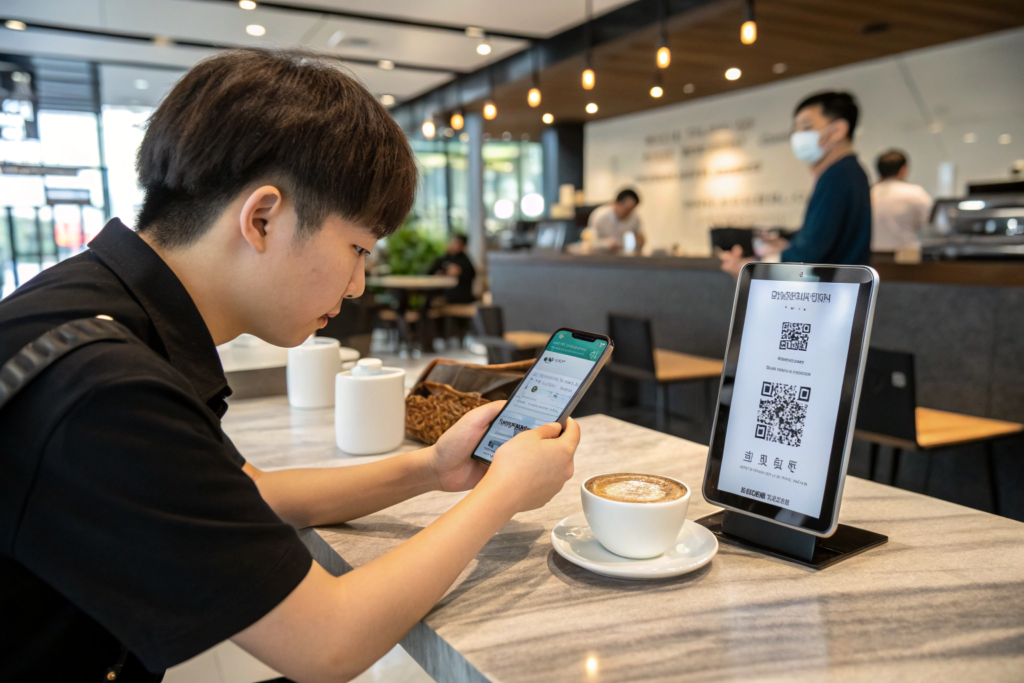
The Chinese coffee consumer is digitally native. The entire experience, from discovery to payment, happens on their smartphone, primarily within super-apps like WeChat.
- Discovery and "Daka": Consumers discover new cafes on social lifestyle apps like Xiaohongshu (Little Red Book). Visiting a trendy cafe and posting a photo is a form of social currency known as "daka" or "punching the card."
- Ordering and Payment: Ordering is often done via in-app "mini-programs," not by talking to a barista. Payment is almost exclusively done via WeChat Pay or Alipay. Cash is a rarity.
- Delivery Dominance: The convenience of hyper-efficient food delivery platforms like Meituan and Ele.me is non-negotiable. A huge portion of coffee sales, even for premium brands, comes from delivery orders.
Any coffee business in China that does not have a seamless digital strategy, from social media marketing to integrated ordering and delivery, is effectively invisible to the modern consumer.
What is a "Mini-Program"?
A mini-program is a lightweight app that runs inside a larger app like WeChat. It allows a brand to have its own ordering, payment, and loyalty platform without forcing the user to download a separate, standalone app. It's a core part of Chinese digital commerce.
How Does This Affect Competition?
It has enabled the rise of digitally-native, delivery-focused brands like Luckin Coffee, which built its entire business model around a mobile-first, discount-driven strategy, challenging the physical-store-focused model of Starbucks.
What is the "Return of the Origin" and Pride in Chinese Coffee?
For decades, "good coffee" in China meant "imported coffee." There was a cultural cringe associated with local products. But this is perhaps the most exciting and recent nuance: a dramatic shift towards pride in and appreciation for high-quality, locally grown Chinese coffee.
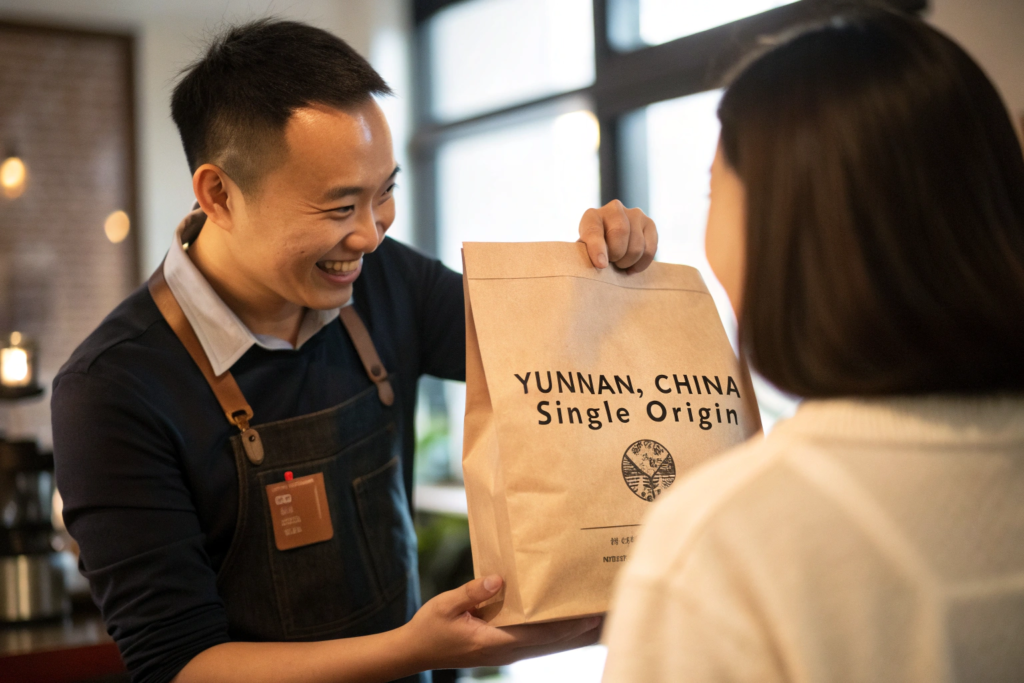
This is being driven by a new generation of specialty coffee professionals and consumers who are discovering that beans from regions like Yunnan can be exceptional. They are tired of the generic taste of mass-market blends and are seeking the unique flavor profiles that our local terroir can offer. This "return of the origin" is a powerful form of culinary patriotism. Cafes are now proudly advertising "Yunnan Single-Origin" on their menus. Roasters are traveling to Yunnan to import directly from farms like ours.
This trend is creating a premium, domestic market for our best beans. It also presents a huge opportunity for international brands to show their respect and understanding of the local culture by incorporating and celebrating high-quality Chinese coffee in their offerings.
How Can a Foreign Brand Participate in This?
A foreign brand that opens a roastery in China and prominently features a "Yunnan Reserve" coffee, or a global brand that creates a special blend using Yunnan beans, sends a powerful message of respect and integration. It shows they are not just imposing a foreign culture, but are actively engaging with the local one.
Is Yunnan Coffee Really World-Class?
Yes. While the industry is young, the best lots from Yunnan are now competing and winning on the world stage. The unique flavor profiles, often with notes of dark chocolate, black tea, and stone fruit, are distinct from other origins, making them a valuable and exciting addition to any roaster's portfolio.
Conclusion
Understanding Chinese coffee culture requires looking past the familiar facade of Western-style cafes. It means appreciating the deep-seated importance of the "Third Space," embracing a palate that craves innovation and textural complexity, mastering a completely digital consumer journey, and, most recently, celebrating the rise of China as a quality coffee origin in its own right.
It is a culture of "both/and." It is both social and utilitarian. It is both global and fiercely local. It is both a nod to tradition and a sprint into the future. For any business looking to succeed here, ignoring these nuances is not an option. You must engage with this unique culture on its own terms.
As producers at the heart of China's coffee origin, we are more than just suppliers; we are cultural interpreters. We are proud to be a part of this story and to help our international partners navigate this exciting landscape. If you are ready to explore how high-quality Chinese coffee can be a part of your strategy, please reach out to my colleague, Cathy Cai, at cathy@beanofcoffee.com.