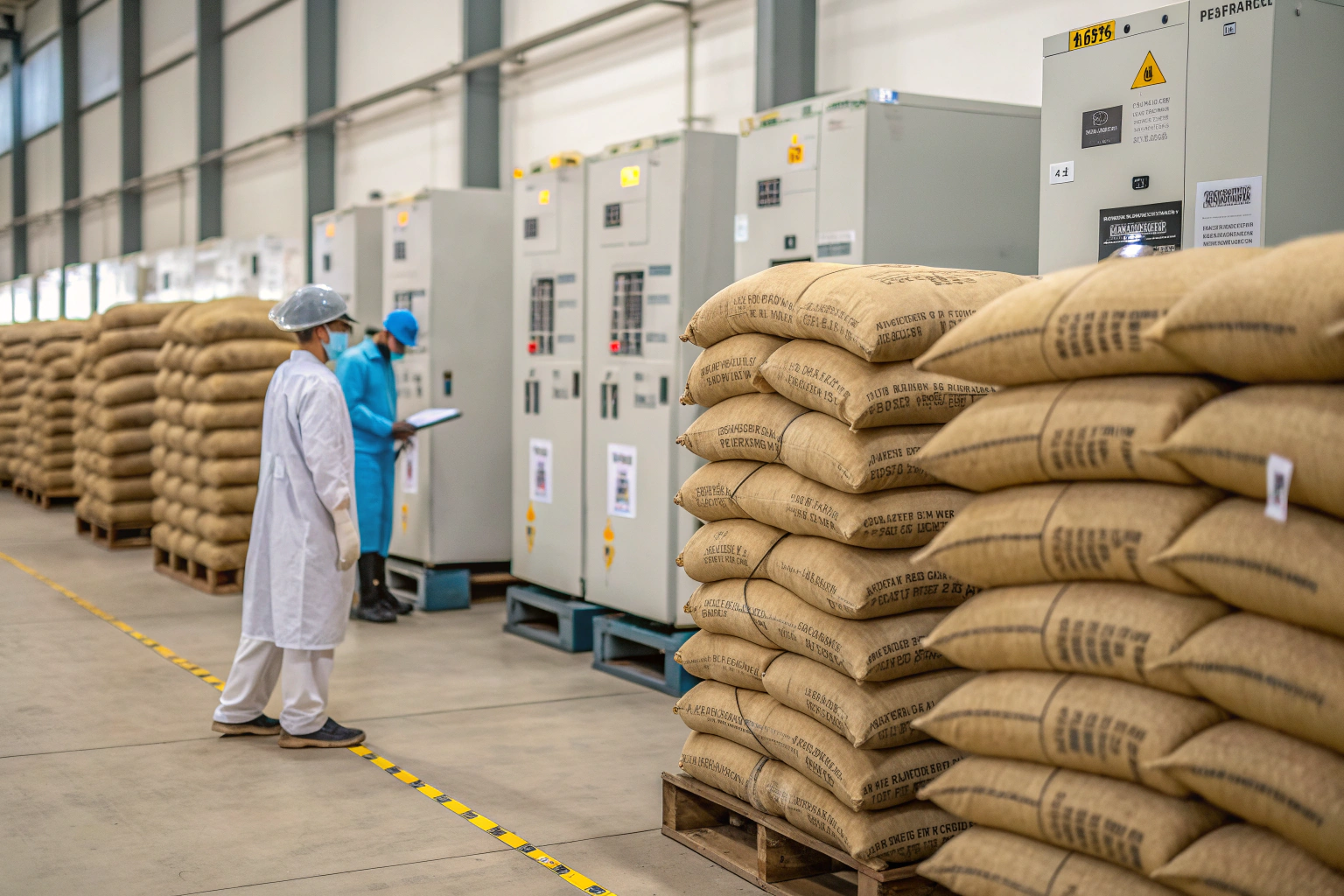
You've invested in a perfect lot of green beans. The roast profile is dialed in, and the flavor is exceptional. Then, a few weeks later, the coffee tastes flat, or worse, musty. Often, the culprit isn't time—it's an invisible enemy in your storage environment: humidity. As an exporter, we don't just ship coffee; we obsess over preserving its quality from our warehouse to yours. Controlling humidity is one of the most critical, yet overlooked, factors in that chain.
The best humidity level for long-term green coffee bean storage is 50-60% Relative Humidity (RH) at a stable temperature of 15-20°C (59-68°F). This range minimizes the risk of mold growth (which thrives above 65% RH) and prevents excessive moisture loss and staling (which occurs below 45% RH). For roasted coffee, the target is even stricter: <60% RH is essential to preserve freshness and prevent rapid oxidation.
That's the target range. But simply knowing the number isn't enough. You need to understand the why and the how—the science of water activity and the practical steps to achieve stability. Let's dive into the details that separate proper storage from degraded inventory.
Why is Controlling Humidity More Critical Than Just Temperature?
Many focus on keeping coffee "cool," but humidity control is the real guardian of quality. Here’s why: coffee beans are hygroscopic, meaning they actively absorb and release moisture from the surrounding air. This exchange isn't passive; it drives chemical reactions that define shelf life.
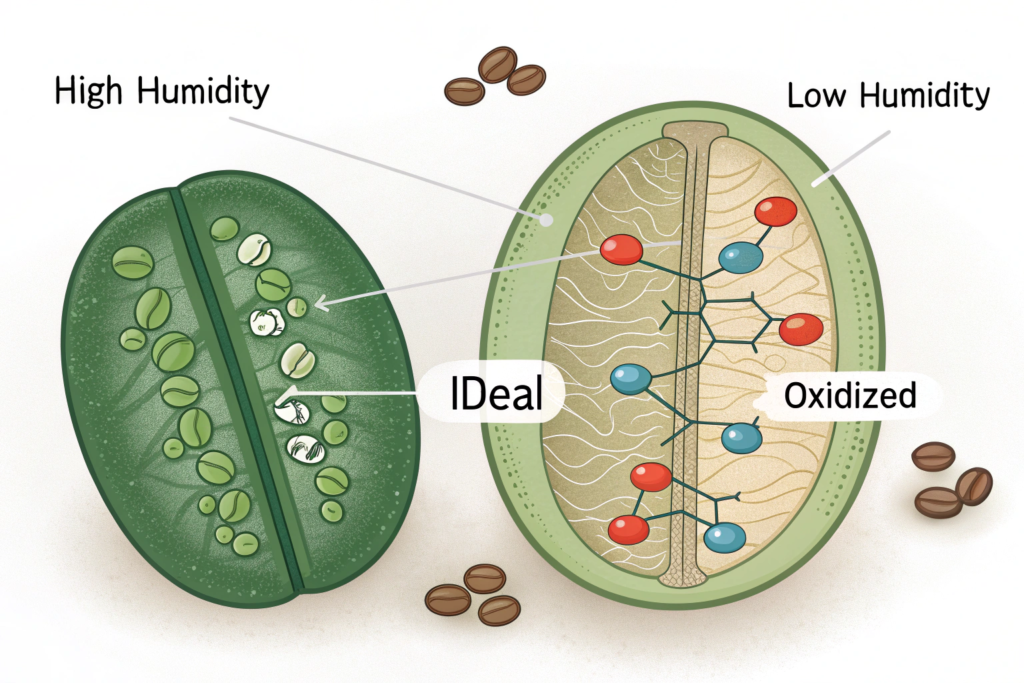
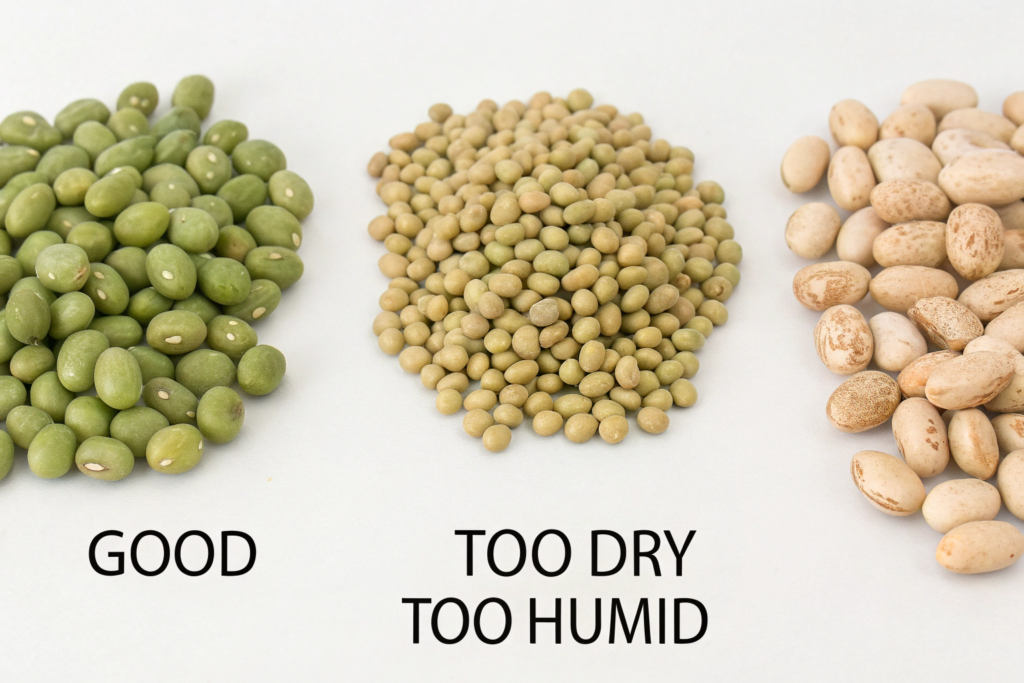
At high humidity levels (above 65% RH), beans absorb excess moisture. This creates the perfect breeding ground for mold and mycotoxins (like Ochratoxin A), which are serious food safety hazards. It also accelerates staling and can lead to "baggy" or musty off-flavors. At low humidity levels (below 45% RH), beans lose moisture too quickly. This causes them to become brittle, lose mass (affecting your yield), and leads to accelerated oxidation and flavor loss—the coffee tastes stale and papery long before its time. Stable, moderate humidity keeps the bean in a state of equilibrium, slowing down all these degrading reactions.
What is Water Activity (Aw) and Why is it a Better Metric Than RH?
While Relative Humidity (RH) measures the air, Water Activity (Aw) measures the water inside the bean that is available for microbial growth and chemical reactions. It's a more direct indicator of stability.
- Aw Range for Green Coffee: 0.50 - 0.60 Aw is the gold standard for safe storage and transport. At this level, mold cannot grow, and enzymatic reactions are greatly slowed.
- The Link to RH: Beans seek equilibrium with their environment. At a constant temperature, a 60% RH environment will eventually bring the beans to an Aw of approximately 0.60. That's why controlling the room's RH is the practical way to control the bean's Aw.
A professional exporter will measure and document the Aw of each lot before shipment. We do this because it's a non-negotiable quality control and safety checkpoint. Receiving beans at 0.55 Aw means they were stored correctly; receiving them at 0.70 Aw is a major red flag.
How Does Improper Humidity Directly Damage Flavor Compounds?
The damage is chemical and irreversible.
- High Humidity/Moisture: Promotes hydrolytic reactions that break down sucrose (sweetness) and chlorogenic acids (contributing to acidity and complexity). It also allows for the growth of microbes that produce earthy, musty taints.
- Low Humidity/Dryness: Accelerates the oxidation of lipids (fats) and volatile aromatic compounds. This is the primary driver of staling—the loss of the bright, fruity, and floral top notes that define fresh coffee.
Maintaining the 50-60% RH sweet spot is essentially pushing the pause button on these destructive processes, preserving the good quality you paid for.
What Are the Specific Storage Guidelines for Green vs. Roasted Coffee?
While the fundamental principle of stability applies to both, green and roasted coffee have different vulnerabilities and therefore slightly different ideal conditions.
Green Coffee Bean Storage:
- Target: 50-60% RH, 15-20°C (59-68°F).
- Primary Goal: Preserve seed viability and slow aging over months or even years. Green coffee is a living seed; it respires very slowly. The right humidity keeps this respiration minimal.
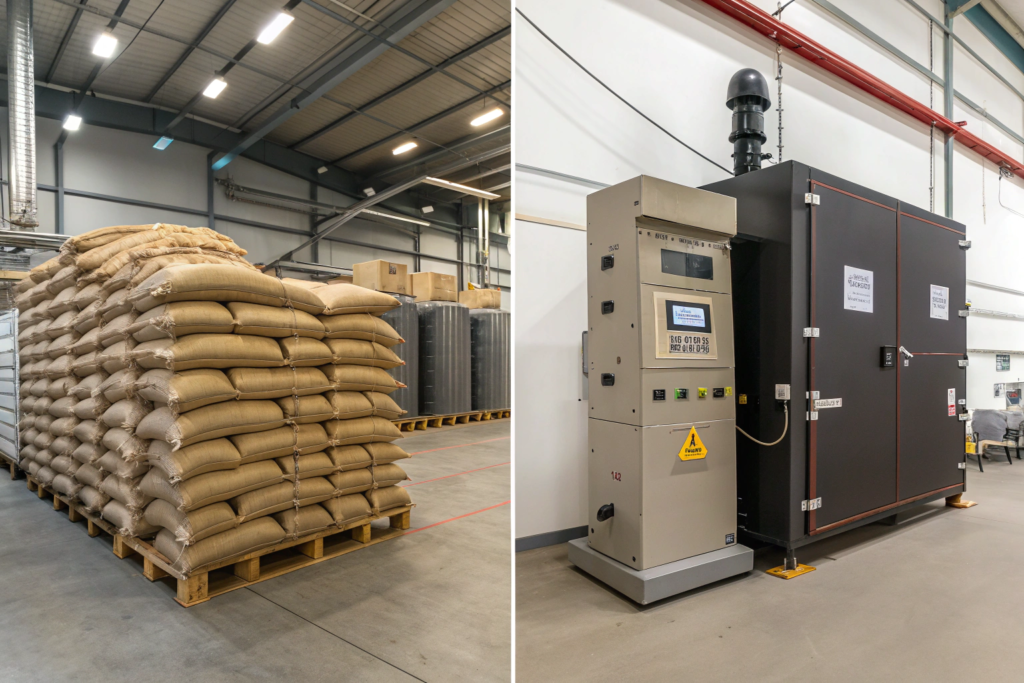
- Packaging: Should be stored in breathable bags (like traditional jute or sisal) within a controlled warehouse. Hermetically sealed bags or containers can trap moisture if the beans are not at perfect equilibrium, creating localized "microclimates" of high humidity that spur mold. Our export warehouses in Yunnan are climate-controlled to maintain these parameters before your beans ever leave China.
Roasted Coffee Storage (Whole Bean):
- Target: Below 60% RH, ideally 50-55%, at a cool temperature (18-22°C).
- Primary Goal: Prevent oxidation and staling over days and weeks. Roasted coffee is far more fragile. Its cellular structure is opened, oils are migrated to the surface, and it releases CO2 aggressively (degassing). This makes it incredibly susceptible to oxygen and moisture.
- Packaging: Must be in airtight, opaque containers with one-way degassing valves. The valve allows CO2 out without letting humid air in. Never store roasted coffee in the refrigerator or freezer unless it's in a truly vacuum-sealed bag, as condensation upon removal introduces liquid water, which is catastrophic for flavor.
How Long Can You Safely Store Coffee at These Humidity Levels?
- Green Coffee: Under ideal conditions (55% RH, 18°C), high-quality Arabica can maintain its peak potential for 12-18 months after harvest. Some dense, hard beans can last longer. Robusta and lower-density beans have a shorter shelf life, typically 9-12 months.
- Roasted Coffee (Whole Bean): Once roasted, the clock speeds up dramatically. In an airtight container at <60% RH, whole bean coffee has a "best by" period of 3-5 weeks for optimal freshness. Ground coffee deteriorates in minutes to hours.
What Common Mistakes Should Be Avoided When Storing Green Coffee?
Storing green coffee beans is a delicate process that requires careful attention to environmental conditions, as improper handling can lead to the degradation of their quality, aroma, and flavor potential. To ensure that these raw, unroasted treasures retain their full character until they are ready for roasting, several common mistakes should be strictly avoided.
First and foremost, exposure to excessive moisture is a cardinal sin in green coffee storage.
What Are the Practical Tools for Monitoring and Controlling Humidity?
You can't manage what you don't measure. For any serious storage space, from a small roastery backroom to a large import warehouse, basic tools are essential.
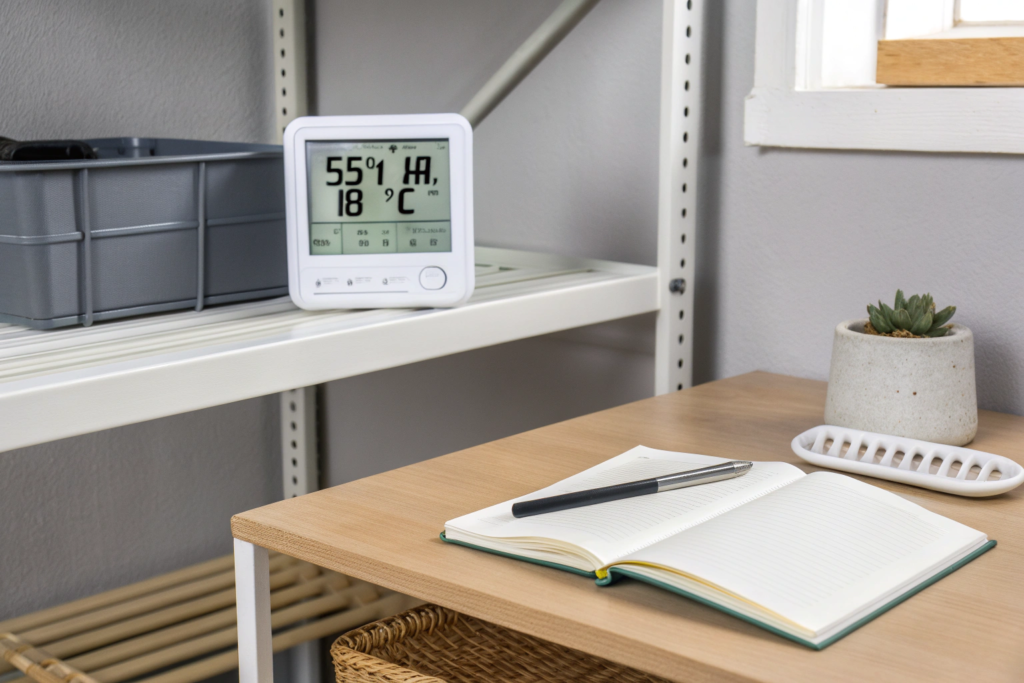
- Digital Hygrometer/Thermometer: This is your first, non-negotiable purchase. Get one with a memory function to track highs and lows over 24 hours. Place it at bean level, not on the wall. Data loggers are even better.
- Dehumidifier: For most climates, this is the key piece of equipment. A quality, compressor-based dehumidifier is necessary to actively pull moisture from the air to maintain 50-60% RH. Size it appropriately for your storage volume.
- Humidifier (Less Common): In very arid climates or in winter with dry indoor heating, you may need a humidifier to raise the RH above 45%. Use caution to avoid creating wet conditions and use one with a built-in hygrostat.
- Air Conditioning / Insulation: Temperature stability aids humidity control. Warm air holds more moisture, so temperature swings cause RH swings. Insulating your storage space and using mild cooling in summer creates a stable baseline.
How Should You Set Up a Storage Room for Optimal Conditions?
- Location: Choose an interior room without exterior walls, away from loading docks, bathrooms, or any source of steam or humidity.
- Shelving: Use pallet racks to keep bags off the floor (concrete sweats) and allow for air circulation around all sides of the bags.
- Airflow: Gentle, consistent air circulation (from a small fan, not pointed directly at bags) prevents stagnant, humid pockets from forming. It helps the dehumidifier work evenly.
- Monitor and Log: Check and record humidity and temperature at least twice daily. This log is your quality assurance record and helps you identify problems (e.g., a dehumidifier failing overnight).
This systematic approach is what makes a supply chain reliable and trustworthy. We apply these same principles at Shanghai Fumao to ensure your beans arrive in the same condition they left our facility.
What is the "Bag Within a Bag" Method for Small Quantities?
For roasters or cafes storing prized small lots (e.g., 5-70kg bags), the most effective method is the GrainPro-style bag (a high-barrier, hermetic bag) placed inside the standard jute bag. The GrainPro bag is sealed after the green coffee's moisture has stabilized at the correct level. This creates a mini-climate that is virtually impervious to external RH fluctuations during transport and storage. It's a game-changer for preserving freshness. We offer this as a standard option for all our specialty-grade shipments.
What Are the Clear Signs of Humidity Damage in Coffee?
Knowing what to look for can save you from roasting a compromised batch.
Signs of Excessive Humidity/Mold:
- Visual: Visible white, green, or blue fuzzy growth on beans. Clumping of beans inside the bag.
- Olfactory: A distinct, damp, musty, or cellar-like smell. Loss of the coffee's origin aroma.
- Tactile: Beans feel spongy or leathery, not hard and brittle.
- In the Cup: Muddy, flat flavors with pronounced earthiness, mustiness, or a lack of clarity and sweetness.
Signs of Excessive Dryness:
- Visual: Beans may appear excessively pale or bleached. Increased chaff (silverskin) detachment.
- Tactile: Beans are extremely brittle and crack easily. They lose mass.
- In the Cup: The coffee tastes papery, cardboard-like, or hollow. Rapid staling after roasting, with all origin character fading quickly.
Can You Salvage Coffee That Has Been Stored at Wrong Humidity?
The short answer is: Proceed with extreme caution.
- Slightly Out of Range: If beans were briefly at 65% RH but show no mold, they may have lost some shelf life but are likely safe to roast. Cup thoroughly.
- Visible Mold: Do not roast. Mycotoxins are heat-stable and will survive the roasting process. The lot must be discarded. This is a safety issue, not just a quality one.
- Over-Dried Beans: You cannot rehydrate them to restore flavor. The oxidative damage is permanent. You may blend a small percentage into a blend, but it will be a deficit, not a neutral component.
Prevention is infinitely better than any attempted cure. This is why the storage investment pays for itself.
How Does This Impact Your Contracts and Supplier Agreements?
A professional buying contract should specify the acceptance criteria for moisture and water activity. For example: "Green coffee shall be delivered at a moisture content of 10-12% and a water activity (Aw) not exceeding 0.60." This gives you a contractual right to reject or renegotiate a shipment that arrives in an unstable condition due to poor storage in transit. It holds everyone in the chain accountable for preserving quality. We provide this data upfront because we stand behind our stable and safe storage protocols.
Conclusion
The best humidity level for coffee storage—50-60% RH for green, <60% for roasted—is the cornerstone of quality preservation. It is a non-negotiable parameter that protects your investment from biological hazards, chemical staling, and flavor degradation. Understanding and controlling humidity through measurement, proper equipment, and smart storage practices is what separates professionals from amateurs in the coffee trade.
For an importer or roaster, this means equipping your storage space as seriously as you equip your roastery. For an exporter like us, it means building climate-controlled logistics into our promise of quality. From our warehouses in Yunnan to the documentation we provide, we ensure the chain of custody respects the science of preservation.
If you are building or auditing your storage facility and have questions about best practices, or if you want to know more about the specific Aw and moisture specs of our lots, we are here to share our experience.
For detailed storage guidelines or to request the moisture and water activity analysis for our current Yunnan Arabica, Catimor, or Robusta listings, please contact our sales lead, Cathy Cai, at cathy@beanofcoffee.com. Let's ensure the journey of your coffee ends as wonderfully as it began.