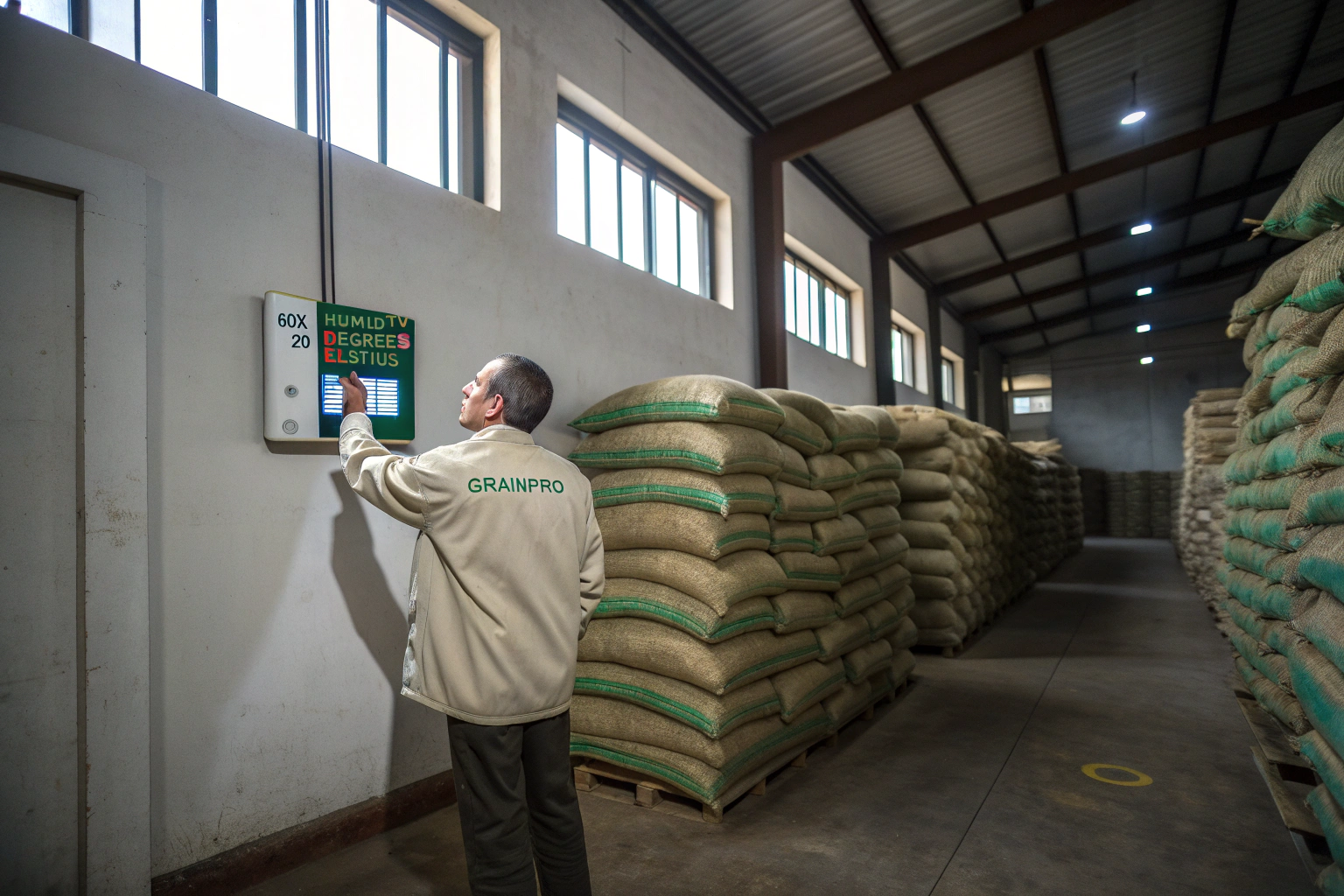
A roaster friend in Texas called me last summer, frustrated. He had bought a beautiful 86-point Ethiopian natural. He stored the bags in a corner of his roastery, right next to the cooling tray. Three months later, he roasted a batch. The blueberry notes were gone. Replaced by a flat, papery taste. He had killed a premium coffee with bad storage. And he didn't even know it until the customer complained.
Green coffee beans must be stored in a cool, dark, and dry environment with stable temperature around 20°C and relative humidity below 60%, protected inside hermetic bags like GrainPro, and kept away from strong odors, direct heat, and fluctuating conditions. Correct storage preserves the bean's cellular structure and volatile aroma precursors for up to twelve months.
The mistake most people make is treating green coffee like a dry good that never changes. It's not a rock. It's a seed. A living, breathing seed with about 11% moisture inside. That moisture wants to move. It wants to equalize with the air around it. If the air is dry, the bean dries out and dies. If the air is damp, the bean molds. Your storage strategy is literally life support for the bean.
What Is the Ideal Environment for Green Coffee Storage?
Environment is everything. You can buy the most expensive specialty coffee in the world, but if you drop the bags in a hot, humid garage, you will lose the value within weeks. I learned this the hard way in the early days of our farm. We stored a batch in a tin shed. The roof heated up to 45 degrees in the afternoon sun. The beans inside cooked. The cupping score dropped ten points.
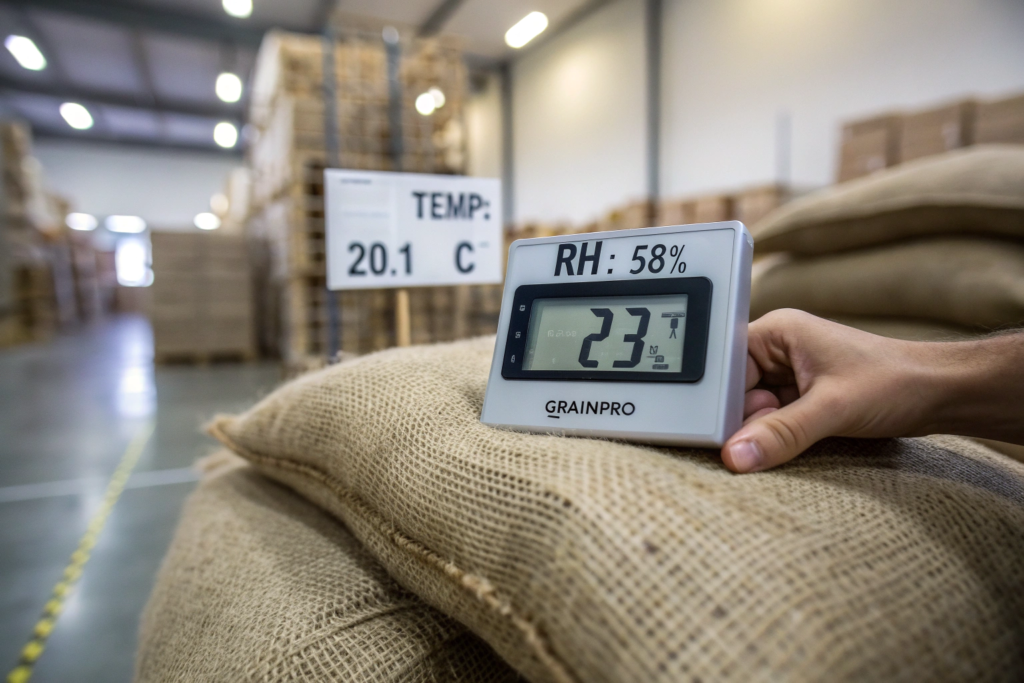
The ideal storage environment for green coffee maintains a steady temperature between 15°C and 22°C, relative humidity between 50% and 60%, zero direct sunlight, and complete isolation from strong odors like smoke, fuel, or cleaning chemicals.
Why these numbers? The water activity inside the bean seeks equilibrium with the surrounding air. If the storage room humidity is 70%, the bean absorbs moisture. Water activity rises above 0.60. Mold spores activate. If the room humidity drops to 30%, the bean loses moisture. The cellular membranes break down. The enzymatic activity that creates flavor precursors stops. You end up with a "faded" cup that tastes hollow, like old newspaper smells. Temperature fluctuations are just as bad. When the temperature swings 10 degrees between day and night, the bean expands and contracts. Micro-cracks form in the cell walls. Oxygen sneaks in and oxidizes the lipids. The coffee goes rancid.
Why Does Temperature Stability Matter More Than the Exact Number?
You might think hitting exactly 20 degrees is the goal. It's not. Stability is the goal. A constant 22 degrees is better than a day-night cycle that bounces between 18 and 24 degrees. The bean can adapt to a stable condition. It cannot adapt to constant change.
Every time the ambient temperature shifts, condensation risk appears. Warm air holds more moisture. When warm air hits a cool bean surface, water droplets form. That's dew point physics. Even a microscopic layer of condensation on the bean hull triggers mold growth. This is why basements, which seem cool, are often terrible. They stay at 18 degrees, which is fine, but the concrete walls sweat with groundwater. The humidity spikes to 80% at night. A roaster who stored bags directly on a concrete floor in a basement once sent me pictures of the bottom bags. They were furry with white mold. The top bags were fine. The lesson: stable temperature prevents invisible condensation events.
How Does Light Exposure Damage Raw Coffee Beans?
Light is energy. Ultraviolet light, specifically, breaks chemical bonds. The same UV rays that fade your sofa cushions will degrade the lipids in a green coffee bean. The coffee oils, even inside the raw bean, are vulnerable to photo-oxidation.
I visited a roaster in California who had a beautiful glass-front storage room. The customers could see the jute sacks. It looked great for the brand. But the beans within six inches of the glass were bleaching. The color shifted from vibrant blue-green to a dull, yellowish white. We cupped them against beans from the same bag stored in darkness. The light-exposed beans had lost all their acidity and tasted woody. The fix was simple: tinted UV-blocking film on the glass, or better yet, no windows at all. Green coffee should live like a vampire. In the dark, permanently. Even fluorescent lighting in a warehouse emits some UV. Keep the bags covered or the lights off when the space is not in use.
What Are the Best Bags for Preserving Green Coffee Freshness?
The bag is not just a container. It is the barrier between the bean and the enemy. The enemy is oxygen and moisture. A traditional jute sack is beautiful. It photographs well. It's part of coffee's romance. But as a storage device, it's terrible. Jute breathes too much.
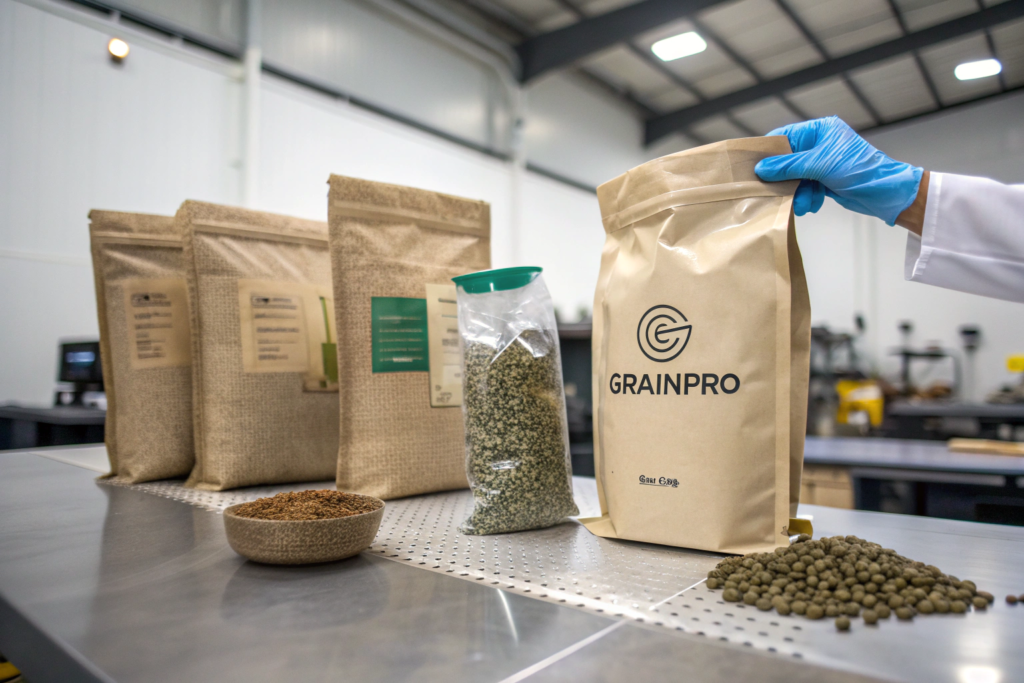
The best bags for preserving green coffee freshness are multi-layer hermetic bags like GrainPro or equivalent, which create a gas-tight and moisture-tight barrier. Vacuum-sealed plastic liners are a close second. Traditional jute sacks are only acceptable for short-term storage in a perfectly climate-controlled room.
We ship all our export-grade Baoshan Arabica in GrainPro bags inside the jute. The jute is just the outer skin for mechanical protection. The GrainPro is the actual preservation technology. It's a polyethylene-based barrier with an ethylene vinyl alcohol layer that blocks oxygen transmission. The bag is flushed with nitrogen or simply sealed after the beans cool from drying. The bean continues to respire after bagging. It consumes oxygen and releases CO2. Inside a sealed GrainPro, the oxygen level drops quickly, and the CO2 level rises. This natural modified atmosphere puts the bean into a kind of hibernation. Metabolic activity slows down. The staling clock almost stops.
Can You Reuse GrainPro Bags After Opening?
Yes, but with care. The zipper seal on a standard GrainPro bag is robust, but it's not indestructible. When a roaster opens a bag to take out 20 kilos for a batch, they must squeeze the remaining air out and re-seal the zipper immediately. Do not leave the bag open for an hour while you roast.
I recommend a simple trick. After re-sealing, roll the empty portion of the bag down tightly, like a dry bag for kayaking, and tape it closed. This minimizes the headspace and limits the volume of air the bean has to fight. If the zipper fails, transfer the remaining beans to a food-grade plastic bucket with an airtight lid and a rubber gasket. Do not pour the beans into a cardboard box. Cardboard is a moisture sponge. It wicks water from the air and transfers it directly to the beans. An often overlooked detail is the static charge of GrainPro bags. They attract dust. Wipe the seal area with a dry cloth before closing it. A single coffee chaff stuck in the seal breaks the hermetic barrier.
What About Using Pallets and Airflow Under the Bags?
This is a storage fundamental that even experienced buyers forget. Never place green coffee bags, not even GrainPro bags, directly on a concrete floor. Concrete is cold and holds moisture. Even in an air-conditioned room, the floor temperature is often 5 degrees lower than the air temperature. That temperature difference creates a micro-condensation zone under the bag.
The fix is standard warehouse practice. Stack bags on wooden or plastic pallets. The pallet creates an air gap of about 10 to 15 centimeters. Air circulates under the bags and prevents moisture buildup. There is a secondary benefit too. Pallets allow you to visually inspect the floor under the bags for signs of pest activity. If beetles or rodents are present, you will see frass or droppings on the floor beneath the pallet. Without pallets, the infestation stays hidden until it's too late. We also insist on leaving a gap of at least 30 centimeters between the bag stack and any exterior wall. Walls sweat. Keep the coffee away from that sweat zone.
What Are the Common Enemies of Green Coffee in Storage?
Storage is a defensive battle. You are guarding your investment against four main attackers: mold, insects, odors, and oxygen. The sad part is that most storage losses are preventable. I've seen entire pallets of coffee dumped because someone left a bag next to a barrel of cleaning solvent. The beans absorbed the chemical smell and were ruined forever.
The common enemies of green coffee in storage are fungal mold from high humidity, insect infestation like the coffee berry borer, cross-contamination from strong external odors, and oxidative rancidity from prolonged air exposure. Each of these threats can be managed with monitoring and good practices.
Coffee is a sponge. It absorbs volatile organic compounds from its surroundings. If you store your green beans in the same room where you roast, the smoke particles and roast exhaust settle on the bags. The beans inside absorb that smokey, burnt character. When you later roast those beans, they taste ashy, not because of the roast profile, but because the green had been pre-loaded with smoke taint. This is a subtle defect that ruins a batch, and the roaster blames the farm, not the storage.
How to Monitor Water Activity Without a Lab?
You don't need a $3,000 water activity meter to get a useful reading. A simple moisture meter, the kind used for grain or wood, costs under $50 and gives you a rough percentage. Green coffee should sit between 10% and 12% moisture. If you test a sample and see 14%, you have a problem.
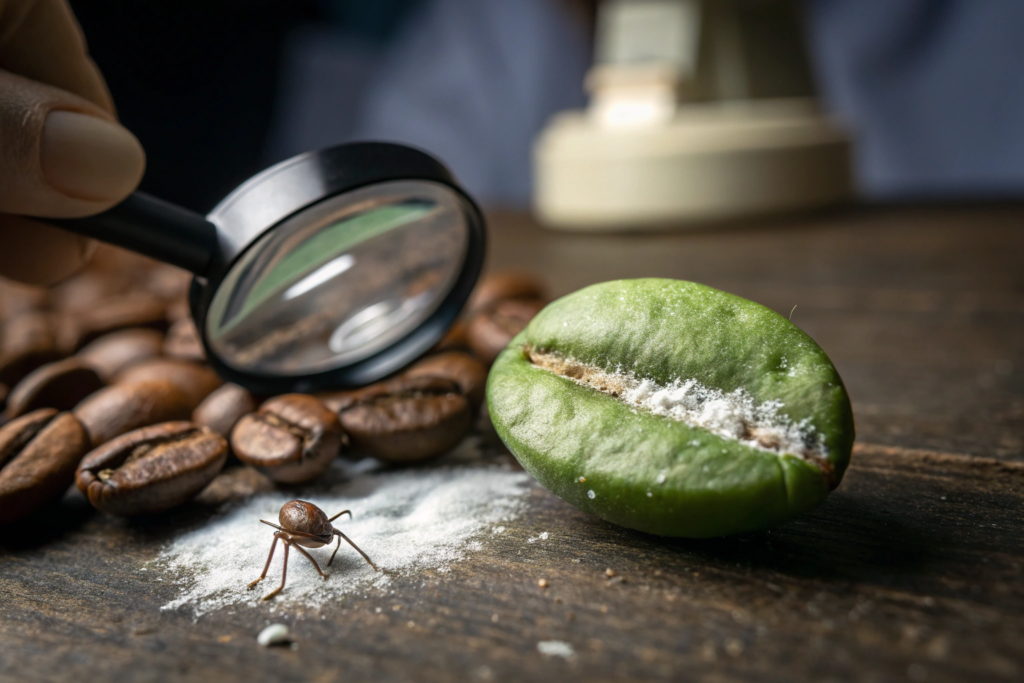
But here is a simple field test. Take a handful of green beans and squeeze them hard in your fist. If the beans feel soft and rubbery, moisture is too high. If they shatter like glass when you bite one, moisture is too low. The ideal bean has a slight give when you bite it, with a clean snap. Another indicator is the color. Fresh, well-stored beans have a muted green, blue-green, or olive hue depending on the process. If the color is fading to a dusty white or yellow, the beans are drying out or oxidizing. If you see brown spots on the surface, that is mold damage or insect boring. Open a few bags and look at the beans under good light. Your eyes are a surprisingly good instrument.
Can You Store Green Coffee in a Refrigerator or Freezer?
I get this question a lot from nano-roasters and home enthusiasts. The answer is no, for almost everyone. A commercial walk-in cooler is fine, if you can control the defrost cycle. A standard kitchen refrigerator is a disaster.
Why? A refrigerator cycles cold air, which is very dry. The humidity inside a fridge is often below 30%. It will suck the moisture right out of the beans. Worse, when you take the cold beans out into a warm roastery, condensation forms on every single bean surface instantly. It's like spraying your coffee with a water bottle before roasting, but uncontrolled. The freezer is even worse. Ice crystals can form inside the bean's porous structure, rupturing cell walls. I've cupped frozen green beans. They brew a cup that tastes thin and metallic. The only exception is if you have a professional-grade freezer that holds a steady minus-20 degrees with no automatic defrost cycle, and you package the beans in perfectly sealed, vacuum-bagged portions. But for a commercial roastery, just use a cool, dry cupboard. Keep it simple.
How Long Can Green Coffee Be Stored Before Quality Drops?
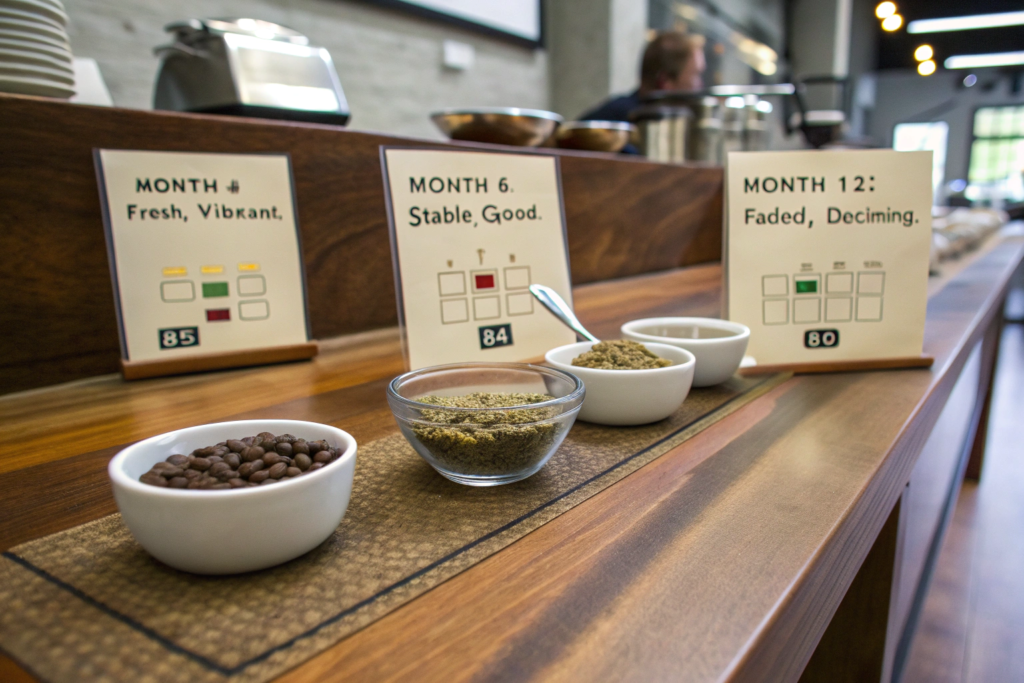
Coffee is not wine. It does not get better with age. With each passing month, the volatile aromatic compounds inside the bean slowly degrade. The bright acidity softens. The distinct origin character fades into a generic "baggy" taste. Time is a slow thief, and storage is just the lock on the door.
Green coffee stored in optimal hermetic conditions retains its peak specialty character for about 6 to 9 months, remains commercially acceptable up to 12 months, and should be considered past crop after 18 months for most Arabica origins, though high-altitude dense beans age slower than lower-grown lots.
There is a phenomenon we call "past crop" flavor. It's a flat, woody, papery taste with no sweetness. The coffee is not rotten. It's not moldy. It's just... empty. That emptiness is the absence of the volatiles that once gave it life. A roaster can mask it slightly with a darker roast, adding roast character to fill the void. But a light roast of a past-crop bean is a brutal exercise in honesty. It shows everything the bean has lost.
Do Different Processing Methods Age Differently?
Yes, and this matters for inventory rotation. Washed coffees, with their clean, bright acidity, tend to fade faster. The acidity is the first thing to go. A washed Yirgacheffe might peak at 3-6 months and then start losing its floral edge. Naturals and honey-processed coffees, with their heavier body and fermented fruit notes, often hold their character longer.
The extra mucilage sugars on a natural bean may act as a protective coating, slowing oxygen penetration into the interior. I've cupped a two-year-old natural processed coffee, stored perfectly, that still had prominent blueberry notes. The same age washed coffee tasted like cardboard. This doesn't mean naturals are immortal. It just means the degradation curve is different. An often overlooked factor is the initial moisture content at bagging. If a farmer dried a bean too fast, the seed coat is cracked. That bean stales rapidly, regardless of processing method. If the drying was slow and steady, the seed coat is intact and acts as a natural hermetic barrier.
What Is the Shelf Life of Vacuum-Sealed Green Coffee?
Vacuum sealing changes the game. Pulling a hard vacuum removes oxygen, which drives oxidative rancidity. A vacuum-sealed bag of green coffee, stored in a cool dark place, can hold its quality for 18 to 24 months. I've seen emergency reserve stocks opened after two years that cupped at 83 points, only a point or two below their original score.
The critical requirement is that the vacuum must hold. A cheap vacuum bag with a micro-leak is worse than a good GrainPro bag. It creates a false sense of security. If the bag is soft when you pick it up, air has entered. Use it immediately. For long-term storage beyond two years, some specialists use nitrogen flushing combined with vacuum sealing. The nitrogen replaces the residual oxygen in the bean's pores. This is the best preservation technology commercially available. However, for a working roastery that turns over inventory every few months, standard GrainPro storage is sufficient. The key is matching the packaging to the expected hold time. Don't over-engineer. Just use the right tool for the timeline.
Conclusion
Green coffee storage is not complicated, but it is unforgiving. The bean is alive, and it wants to degrade. Your job is to slow that process down. You control the four horsemen of coffee death: heat, moisture, oxygen, and light. Keep the temperature stable and cool, not cold. Keep the humidity moderate, not damp. Seal the beans in a hermetic bag and put them on a pallet away from the wall. Check the bags every month. Open one, smell it, look at the beans, bite one. Use your senses.
If you do these simple things, the 86-point lot you bought in January will still cup at 85 in September. That consistency is what your customers pay for. They don't want a coffee that changes every week. They want the same delicious experience they fell in love with.
For roasters sourcing directly from our farm in Baoshan, storage quality begins before the container even leaves China. We pack every bag with the long journey in mind, using hermetic liners and palletized container loading to protect the beans from port heat and sea air. If you want to experience how freshly stored Yunnan Arabica cups against your current inventory, reach out to Cathy Cai at cathy@beanofcoffee.com. She can send you a sample directly from our climate-controlled warehouse, and you can taste the difference that proper storage makes from seed to roast.