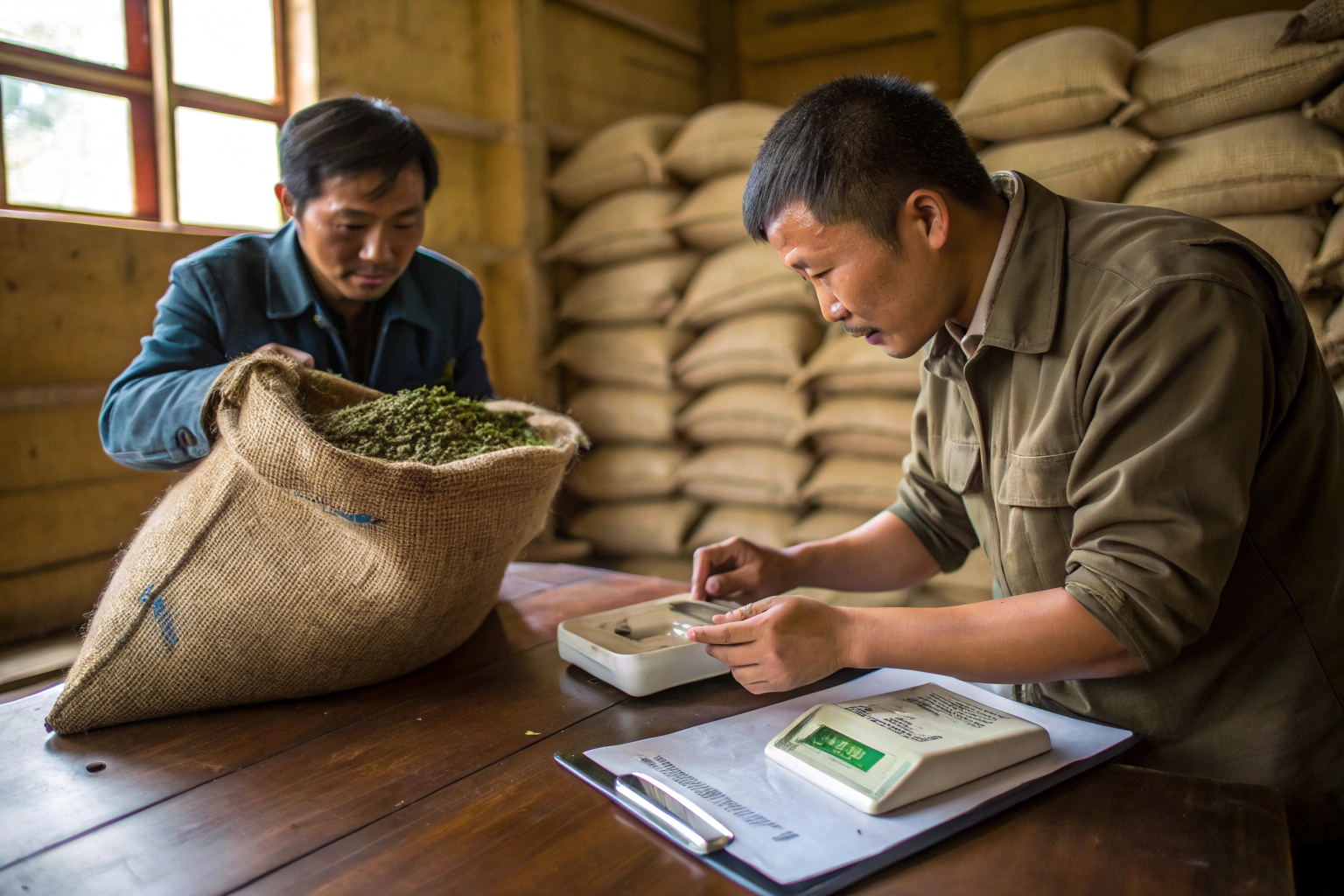
You ask a simple question: "Can I see the farm?" The reply takes two days. Then it is a photo of a hillside that looks like it came from a stock library. You ask for the block number. They send a PDF with no block number. That is when the doubt starts. I have heard this story from buyers in Texas, Melbourne, and Hamburg. It is the same story every time.
You tell if a supplier is actually a middleman by asking for farm-level details that only an owner would know: block numbers, GPS coordinates, wet mill location, and picking dates. A real farm owner answers in minutes. A middleman has to ask someone else, so the answers come back vague, slow, or copied from a brochure. At BeanofCoffee, we own over 10,000 acres in Baoshan, Yunnan. I answer those questions myself, usually before lunch.
But this is not just about catching a liar. Some middlemen are honest and useful. The problem is when a middleman pretends to be a farm. That changes the price, the traceability, and the risk. So let me show you the signs, the documents, and the questions that separate the two. I will keep it practical. No theory. Just what I have seen from my side of the export desk.
What Are the Signs of a Coffee Middleman?
I once lost a deal to a trading company that quoted $0.40 per pound below my cost. The buyer was happy for three months. Then the coffee arrived with a different moisture reading and a cupping score two points lower. The trader blamed the farm. The farm blamed the trader. The buyer lost money and time. That is the hidden cost of a middleman who hides his role.
The main signs of a coffee middleman are slow answers about origin, no access to a mill or warehouse, prices that move without a market reason, and paperwork that lists a different company name than the one on the offer sheet. A real producer has a fixed address, a processing site, and a lot code system. A middleman has a phone and a freight forwarder.
Dive deeper and you notice something else. Middlemen often avoid video calls from the farm. They prefer email. They send photos without timestamps. They talk about "our partner farms" instead of "our farm." That language is a clue. It is not always a lie, but it is always worth a follow-up question. Here is a table of signs I have collected over years of competing with traders.
| Sign | What a Middleman Does | What a Real Farm Owner Does |
|---|---|---|
| Farm visit request | Delays, changes topic | Sends coordinates and a date |
| Lot code question | Sends a generic PDF | Names the block and picking week |
| Video call from mill | Avoids or reschedules | Walks you through the drying beds |
| Price change | Blames "market" without data | Shows the new harvest cost |
| Company name | Different on invoice vs offer | Same name on both documents |
Does Your Supplier Have a Real Farm Address?
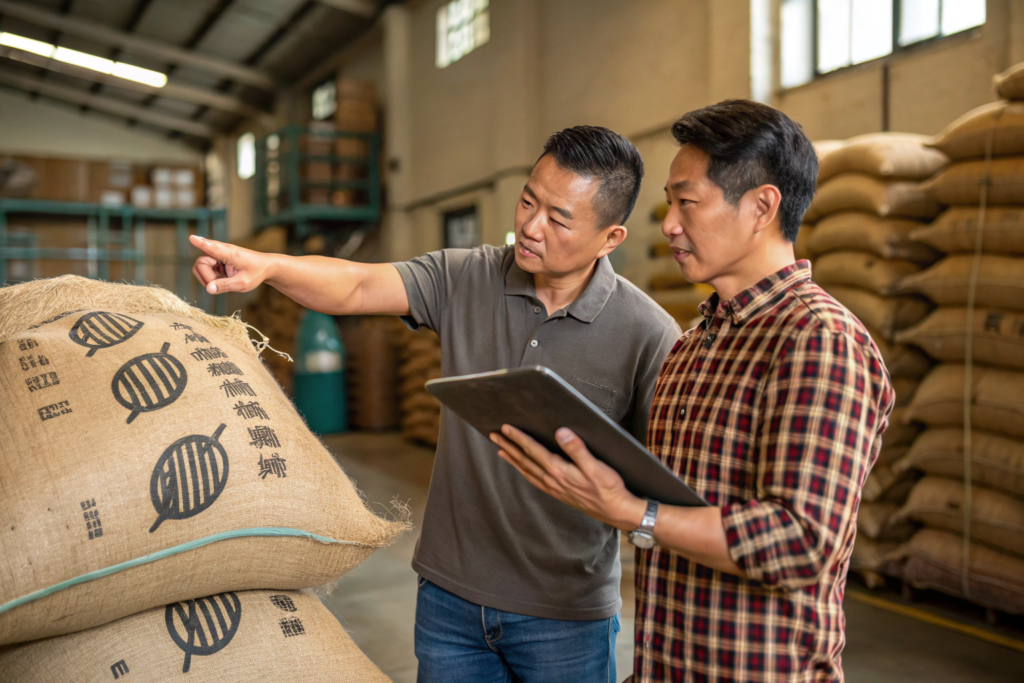
Ask for the address in Chinese characters and the English translation. Then check it. A real farm has a village name, a township, and a county. A middleman often gives a city office address in Kunming or Shanghai. That is not proof of fraud, but it is a gap. The Food and Agriculture Organization explains how origin and location affect agricultural product quality. The World Coffee Research catalog also shows why altitude and soil matter for cup profile. If a supplier cannot tell you the village, they probably cannot tell you the cup either. I send my buyers a map pin and a short video of the gate. It takes two minutes. There is no reason to hide it.
Why Do Middlemen Avoid Farm Visit Requests?
A farm visit costs time and money for everyone. But a serious buyer who wants a container should be welcome to visit. A middleman avoids the visit because he cannot arrange it. He does not control the farm. He might not even know the farmer's name. The International Trade Centre has guides on supplier verification for agricultural imports. The CBI coffee market information also notes that traceability is a growing buyer requirement in Europe and North America. When I get a visit request, I say yes. Sometimes the buyer never comes. That is fine. The fact that I said yes and sent directions already tells them something. A middleman cannot do that without making three phone calls.
How to Verify If a Supplier Owns Coffee Farms?
You do not need to fly to China to check. You need documents and a few smart questions. I have helped buyers verify my farm from 8,000 miles away. It took one email and one video call. The process is not hard. It just requires the supplier to be willing.
You verify farm ownership by checking the business license, the land lease or land rights certificate, the export license, and the processing facility registration. Then you compare the company name on all four documents. If the names do not match, ask why. A real farm owner can explain. A middleman usually cannot.
Dive deeper: In China, land is owned by the state or collective, and farmers hold management rights. So you will not see a Western-style deed. You will see a land management rights certificate or a lease contract. That is normal. The key is consistency. If the supplier's business license says "Trading Co., Ltd." and the land document says a different name, that is a flag. Here is a table of the documents I send to new buyers.
| Document | What It Proves | Red Flag If Missing |
|---|---|---|
| Business license | Legal entity exists | Name differs from invoice |
| Land rights or lease | Control of coffee land | No village or county named |
| Export license | Legal right to export | Supplier uses a third party |
| Mill registration | Owns processing site | No address for the wet mill |
| Phytosanitary certificate | Compliance with import rules | Cannot show a recent copy |
What Documents Prove Farm Ownership in China?
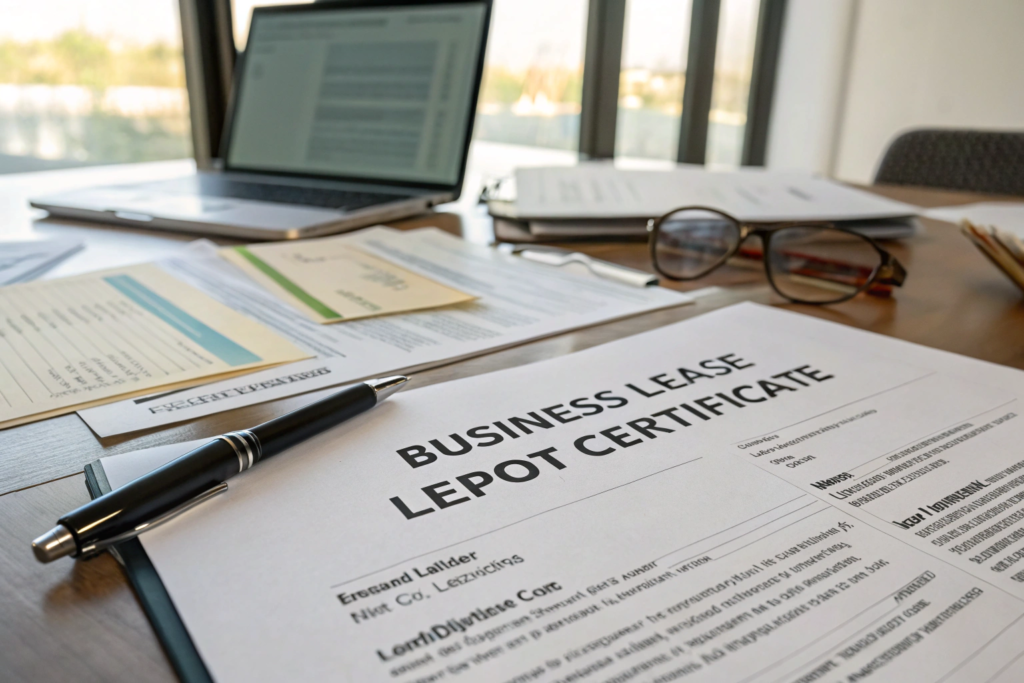
The strongest document is the land management rights certificate, sometimes called a rural land contract management right certificate. It lists the location, the area, and the term. A business license alone does not prove farm ownership. It only proves a company exists. The USDA Foreign Agricultural Service publishes reports on China's agricultural structure that explain these land rules. The Trade.gov China country commercial guide also covers business registration and trade practices. I send redacted copies of our certificates to serious buyers. I black out personal ID numbers, but I leave the location and area visible. That is enough to verify. If a supplier refuses to show anything, that is your answer.
Can You Check a Supplier's Export License?
Yes. In China, an exporter needs a registration with customs and a foreign trade operator record. You can ask for the customs registration number and the company's unified social credit code. A buyer can verify the company name against public records. The General Administration of Customs of China is the official source for customs registration. The International Chamber of Commerce also has guidance on verifying trade partners. I give my customs code to buyers who ask. It is not a secret. A middleman who rents someone else's export license will hesitate here. He may say "our partner handles that." That is a soft way of admitting he is not the exporter. You should know that before you send a deposit.
Why Do Middlemen Hide Their Real Role?
Not every middleman is a villain. Some provide real value: consolidation, financing, and logistics. The problem is when they hide it. Hiding creates two risks. First, you pay a farm price for a trader service. Second, when something goes wrong, the middleman cannot fix it because he does not control the mill.
Middlemen hide their role because farm-direct stories sell better and command higher trust. A buyer who thinks he is talking to the farm will accept a higher price and a longer payment term. A buyer who knows he is talking to a trader will ask for a commission breakdown and a shorter chain. So the incentive to hide is strong. That is why you must ask.
In coffee, the chain can have four or five layers. Farmer, collector, processor, trader, exporter. Each layer takes a margin. That is not always bad. In remote areas, collectors provide a service by moving small volumes to a mill. The issue is transparency. You should know how many hands touched the coffee and what each hand cost. The International Coffee Organization publishes reports on coffee value chains and margins. The World Bank commodity markets also tracks price spreads between origin and export. If a supplier cannot explain the chain, you are probably paying for a layer you do not need.
How Do Middlemen Make Money on Coffee?
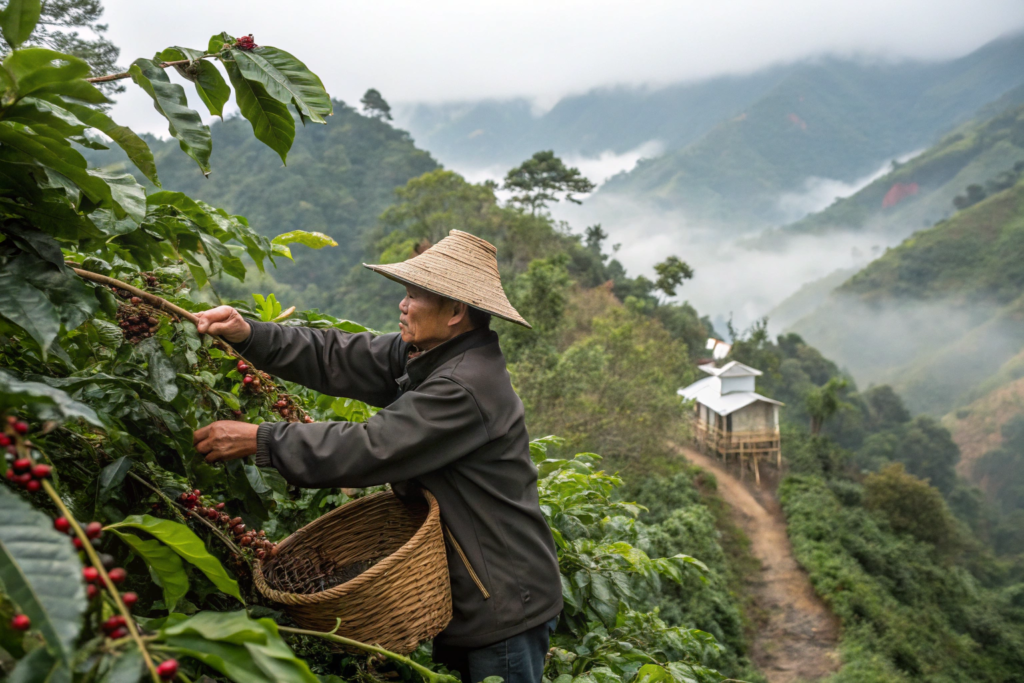
A middleman makes money on the spread between the farm price and the export price. Sometimes that spread is $0.10 per pound. Sometimes it is $0.50. It depends on how much information the buyer has. If you do not know the local farm price, the spread can be large. The Tridge platform shows origin price data for many countries. The Perfect Daily Grind often explains how traders add margin in specialty coffee. I am not against margin. I am against hidden margin. If a trader tells me his fee is 5 percent and he handles logistics and financing, I respect that. If he calls himself a farm and charges 30 percent, that is a different business.
Is It Always Bad to Buy from a Middleman?
No. A good middleman can solve real problems. He can consolidate small lots, arrange financing, and handle export paperwork when a farm cannot. The Harvard Business Review supply chain topic has articles on when intermediaries add value. Supply Chain Dive also covers the role of brokers in global trade. The question is not "middleman or farm?" The question is "what does this partner actually do, and what does it cost?" If the answer is clear, you can decide. If the answer is fuzzy, walk away. A transparent trader is better than a dishonest farm. But a transparent farm is better than both.
What Questions Expose a Coffee Middleman Quickly?
I love this part. You can learn a lot in five minutes with the right questions. Do not ask "are you a middleman?" Nobody says yes. Ask operational questions instead. Middlemen can talk about markets. Farmers talk about weather, cherries, and drying beds.
You expose a coffee middleman quickly by asking three things: how many bags came from block X last week, what the moisture reading was before bagging, and who runs the wet mill. A real farm owner answers with numbers and names. A middleman answers with general statements or asks to get back to you.
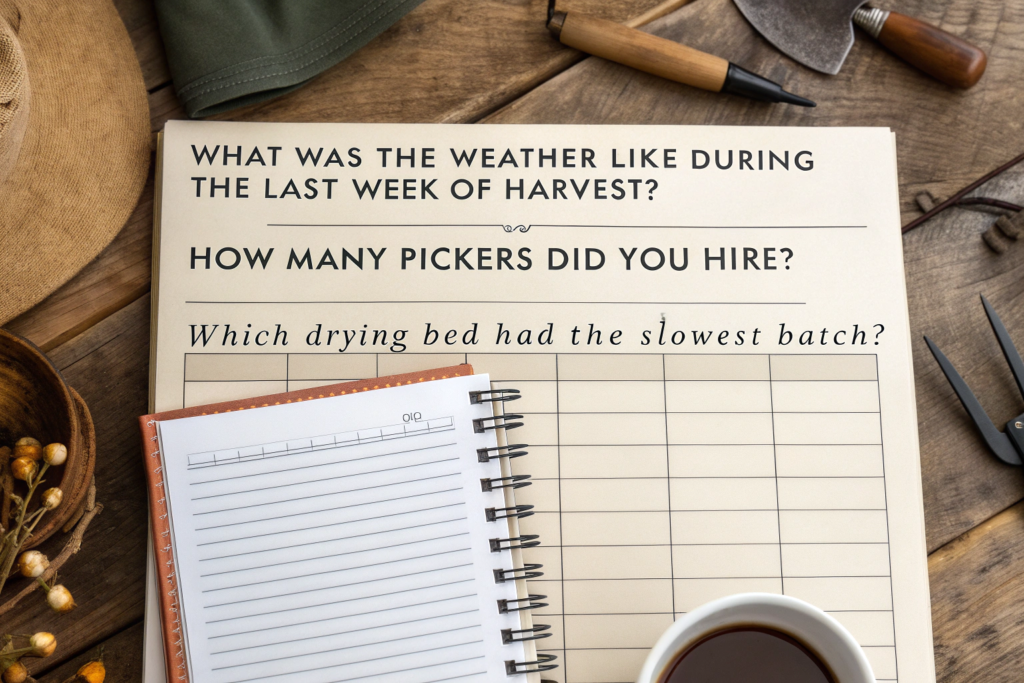
The best questions are the ones that require a specific memory. "What was the weather like during the last week of harvest?" "How many pickers did you hire?" "Which drying bed had the slowest batch?" These are not trick questions. They are normal questions for someone who lives on a farm. If the supplier cannot answer any of them, you are not talking to the farm. Here is a table of questions and the typical response from each type.
| Question | Middleman Response | Farm Owner Response |
|---|---|---|
| How many bags from block 7? | "I will check with the farm" | "About 120 bags, two weeks ago" |
| What was last week's moisture? | "Around 12 percent, I think" | "11.2 to 11.4 on Wednesday" |
| Who runs the wet mill? | "Our team" | "Mr. Li, he has been there 8 years" |
| What was harvest weather? | "Normal" | "Dry until the 14th, then rain" |
| Can I see the drying beds? | "I will send photos" | "Here is a video from this morning" |
What Should You Ask Before Signing a Contract?
Before you sign, ask for the lot code, the farm block, the moisture certificate, the cupping report, and the name of the person who will load the container. Then ask for a video call from the warehouse during loading. The Specialty Coffee Association recommends traceability as a core practice for specialty coffee. The Coffee Review also shows how independent cupping scores can verify quality claims. If a supplier cannot provide these before the contract, they will not provide them after. I have signed contracts where the buyer asked for a loading video. We did it. It took ten minutes. The buyer slept better, and so did I.
How Do You Test a Supplier with a Small Order?
Order a small lot first. Ten to twenty bags. Do not start with a full container. A small order tests everything: communication, documentation, quality consistency, and shipping speed. The National Coffee Association has resources on green coffee purchasing and quality checks. The CBI coffee market information also explains how European importers use trial orders to vet new suppliers. I always tell new buyers to start small. If the trial lot matches the sample and the documents are clean, scale up. If it does not, you lost a little on freight but avoided a container-sized mistake. That is the cheapest due diligence you can buy.
Conclusion
A middleman is not always a problem. A hidden middleman is. You deserve to know who grows your coffee, who processes it, and who puts it on the vessel. That knowledge changes your price, your traceability, and your risk. The signs are not hard to spot once you know what to look for: slow answers, vague locations, missing lot codes, and a different company name on every document.
If you want a supplier who answers those questions without hesitation, talk to us at BeanofCoffee. We own over 10,000 acres in Baoshan, Yunnan, and we export Catimor, Arabica, and Robusta to North America, Europe, and Australia. We will send you our documents, our lot codes, and a video from the drying beds. Then you can decide for yourself. Contact Cathy Cai at cathy@beanofcoffee.com. Tell her your volume and your target cup. She will reply within one business day with a clear answer and a real next step. No games. Just coffee and the truth behind it.