You're building an espresso program. The coffee tastes good in the cup, but the crema is thin, pale, and disappears in seconds. For your customers, that visual signal of quality is missing. In the competitive world of cafes, a weak crema can undermine perceived value before the first sip is taken. It's not just about aesthetics—a rich, stable crema traps aromas and contributes to the mouthfeel of the drink. So, how do you, as a buyer or roaster, scientifically evaluate a bean's crema potential before you commit to a large contract? You need a method beyond just pulling a hopeful shot.
Testing crema potential is a systematic process that starts with understanding the beans' intrinsic properties and ends with controlled, repeatable brewing tests. At BeanofCoffee, we don't just sell beans; we provide data for our wholesale partners, because we know a great espresso service is built on predictability. Crema is primarily a function of carbon dioxide (CO2) trapped in the bean's cellular structure, oils, and fine particles created during grinding and brewing. The key factors you can test are: bean freshness (age/degassing), roast profile, bean variety/blend composition, and grind/extraction parameters. The goal is to isolate these variables to find a bean that consistently delivers that coveted, tiger-striped foam.
So, if you're tired of inconsistent crema from batch to batch, you need to move from art to science. Let's define a clear testing protocol that will give you the confidence to select the right beans for your espresso machine.
What are the Key Bean Properties That Influence Crema?
Crema doesn't magically appear. It's a physical reaction with clear inputs. Before you even roast or grind, you can predict a bean's crema potential by examining its core attributes. Think of it as the raw material's recipe for foam.
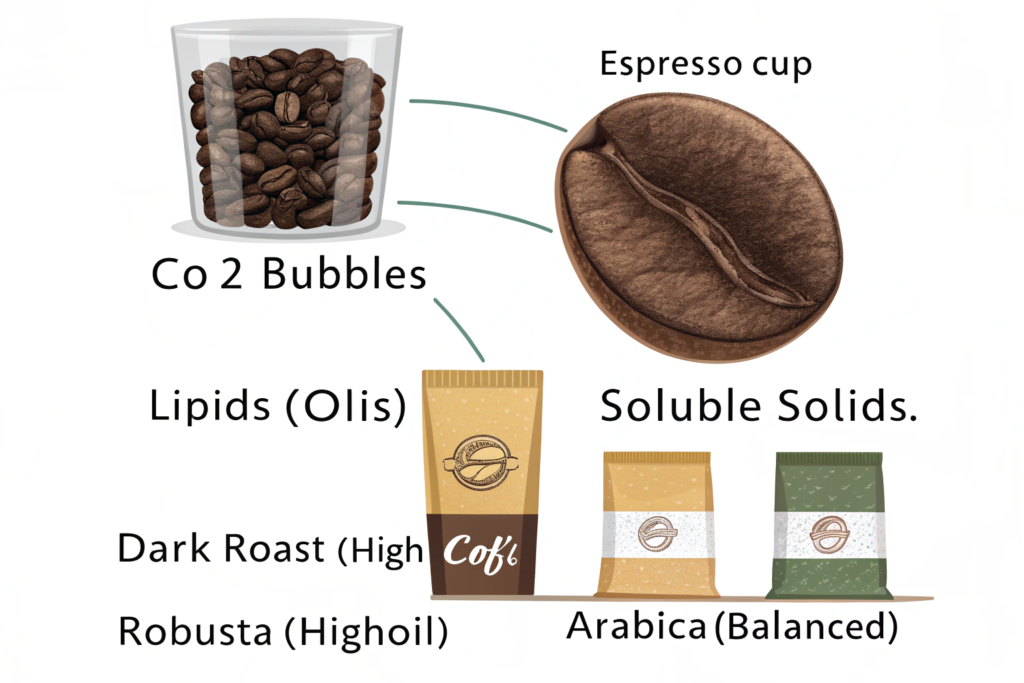
First and foremost is bean variety. Robusta beans are the undisputed champions of crema production. They contain almost twice the lipids (oils) and more soluble solids than Arabica, and their cell structure releases CO2 more readily under pressure. A blend with 10-20% high-quality Robusta, like our Yunnan Robusta, will guarantee a thicker, more persistent crema. Second is the roast profile. A darker roast generally produces more crema because the longer roasting process creates more CO2 and brings more oils to the surface. However, roasting too dark can make the crema bitter and bubbly. A medium-dark roast is often the "sweet spot." Finally, freshness is non-negotiable. Crema comes from CO2, and CO2 dissipates over time. Beans need to be rested post-roast (typically 5-10 days for espresso) to degas slightly, but used within their optimal freshness window (often 3-6 weeks from roast date). Stale beans have lost their gas and will produce little to no crema.
How does bean density and hardness affect crema?
This is a subtle but important point. Denser, harder beans (often high-altitude Arabicas) require more energy to grind and extract. This can lead to a finer grind and more cell fracturing, which in theory can release more solids to stabilize crema. However, if they are too hard and under-roasted, they may not release enough CO2 and oils. Softer, less dense beans (like some Robustas or lower-altitude beans) fracture more easily, releasing gases and oils quickly. A professional roaster can manipulate roast development to optimize the bean's hardness for extraction. When we provide sample roasts to espresso clients, we target a specific bean hardness (measured by an Agtron or similar spectrophotometer) that our tests show yields the best balance of flavor and crema.
Why are processing methods (natural vs. washed) a factor?
Processing impacts sugar content and oil migration. Naturally processed beans, dried inside the fruit, tend to have higher residual sugar content. These sugars caramelize during roasting, potentially contributing to a sweeter, sometimes more voluminous crema that is slightly darker in color. Washed processed beans often yield a cleaner, more consistent crema with finer bubbles. For espresso blends, a mix of both can be used strategically. For example, a base of our washed Yunnan Catimor for clarity, blended with a natural-processed Arabica for sweetness and crema volume, and a touch of Robusta for structure. This is the kind of blend engineering we assist our clients with.
How to Design a Standardized Espresso Test Protocol?
Consistency is king. To compare different beans or blends fairly, you must eliminate as many variables as possible. This means creating a fixed, repeatable test protocol in your lab or cafe. The goal is to test the bean, not your barista's skill on that particular day.
The Standard Test Protocol:
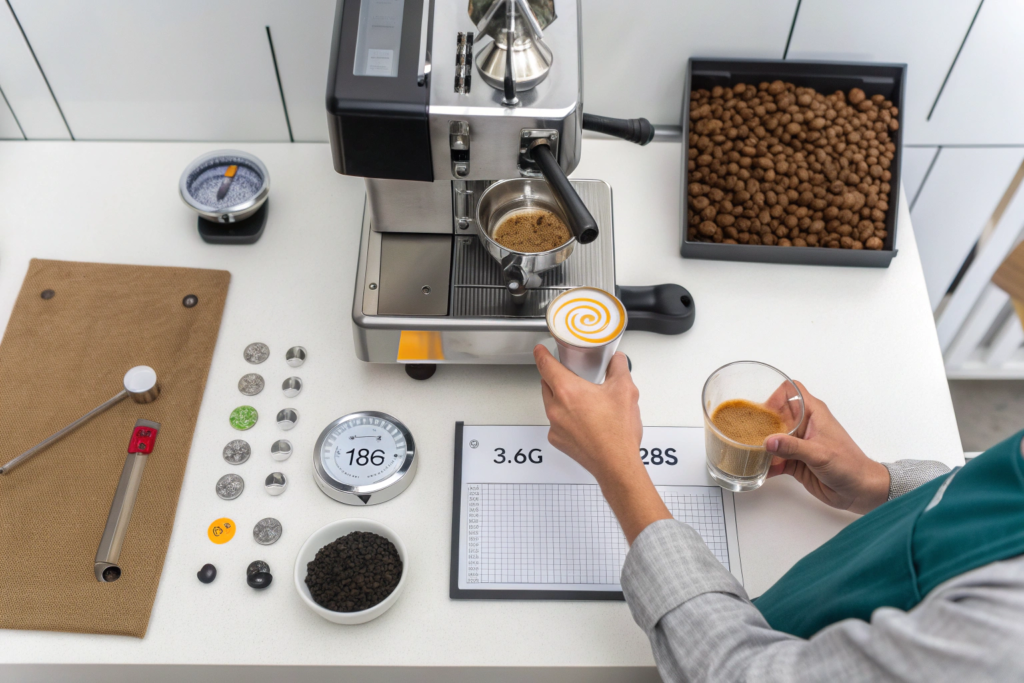
- Equipment Calibration: Use the same grinder (burrs cleaned), same espresso machine (stable temperature and pressure, e.g., 9 bar), and same portafilter basket for all tests.
- Parameter Lock: Fix your key brew variables. A common starting point is: Dose: 18.0g, Yield: 36g (a 1:2 ratio), Time: 25-30 seconds.
- Grind Adjustment: For each new bean, adjust only the grind size to hit the target yield within the target time. Do not change dose, yield, or time.
- The Pull & Observation: Pull the shot into a clear demitasse or a shot glass with measurement markings. Observe immediately.
What to Measure & Record:
- Crema Thickness: Measure the depth of the crema layer as a percentage of the total liquid height (e.g., 10mm crema in a 40mm shot = 25%).
- Crema Color: Note the hue—from pale tan (likely under-developed roast or stale) to dark reddish-brown with tiger striping (ideal, fresh, well-roasted).
- Crema Persistence: Time how long it takes for the crema to start breaking apart or for clear liquid to appear at the edges. Good crema should last at least 2-3 minutes.
- Texture & Bubbles: Look for fine, velvety bubbles. Large, fast-popping bubbles indicate issues with freshness, grind, or distribution.
How to use a "crema ring test" for quick evaluation?
This is a simple field test. After pulling a shot, gently spoon out some of the crema and place it on the saucer. Use the back of the spoon to smooth it into a ring. Wait 60 seconds. High-quality, stable crema will hold its ring shape. Weak crema will collapse and become watery. This test isolates the crema's structural integrity from the liquid below and is a great quick check for freshness and bean oil content.
What role does water chemistry play in crema formation?
Water is 98% of your espresso. Its mineral content is critical. Water that is too soft (low in calcium and magnesium) will struggle to extract flavors and can result in flat, poorly structured crema. Water with moderate hardness (around 50-100 ppm) helps with extraction and contributes to a more stable crema. If you are seriously testing beans, you must use your cafe's standard filtered water or a controlled water recipe (like Third Wave Water) to ensure the test reflects real-world conditions. Inconsistent water is a major hidden variable.
How to Evaluate Crema Stability and Flavor Integration?
A thick crema that tastes bitter or vanishes quickly is useless. The true test is how the crema performs in the cup over time and how its flavor integrates with the espresso. This evaluation moves beyond measurement to sensory analysis.
After your standardized pull, perform this integrated evaluation:
- Visual Stability Over Time: Don't just watch it sit. Gently swirl the cup after 1 minute. Does the crema integrate back into a smooth surface, or does it completely break apart? Stable crema will re-form.
- Aroma from the Crema: Before breaking the crema, lean in and smell. The crema should release a concentrated, pleasant aroma of the coffee's core notes (e.g., nuts, chocolate, caramel). If it smells grassy, sour, or ashy, it indicates under-extraction or a roast defect.
- Taste the Crema Alone: Take a small spoon and taste just the foam. It should be sweet, creamy, and flavorful, not just bitter or hollow.
- Taste the Integrated Espresso: Finally, stir the crema into the espresso and taste. The crema should enhance the mouthfeel, giving a creamy, velvety texture. It should not leave a harsh, astringent aftertaste. The sign of a great bean is that the crema contributes positively to the overall flavor profile, not detracts from it.
This process tells you if the crema is a quality indicator or a misleading facade. At Shanghai Fumao, when we develop espresso blends for clients, this is the exact tasting protocol we follow. We need to know that the visual promise matches the taste experience.

What are the visual signs of crema defects and their causes?
- Pale, Thin, Fast-Disappearing Crema: Usually indicates stale beans, under-roasted beans, or beans with very low oil content (e.g., a light roast 100% Arabica).
- Very Dark, Bubbly, Bitter-Tasting Crema: Often a sign of over-roasting (beans are burnt, creating large CO2 bubbles and ashy flavors).
- Crema with Giant, Uneven Bubbles: Typically caused by poor puck preparation (channeling) or an uneven grind distribution, not the bean itself. This is why standardizing your prep is crucial during testing.
- Greasy, Oily Film on Top: Can indicate a very dark roast where oils have migrated heavily to the surface. These beans may clog grinders faster.
How should you log your test results for comparison?
Create a simple spreadsheet or scoring sheet. For each bean sample, record:
- Bean Origin/Blend (e.g., BeanofCoffee Yunnan 80/20 Arabica/Robusta)
- Roast Date & Profile (e.g., Medium-Dark, Agtron #55)
- Test Parameters (Dose, Yield, Time, Grind Setting)
- Crema Score (e.g., Thickness: 8/10, Color: 9/10, Persistence: 7/10)
- Flavor Notes (Aroma, Taste of crema alone, Integrated taste)
- Overall Espresso Score
This data allows you to make objective comparisons and track performance across different shipments from the same supplier, ensuring consistency.
How Can Your Coffee Supplier Support Your Crema Testing?
Your supplier should be an active partner in your quest for the perfect espresso. They shouldn't just send a sample; they should provide the contextual data and tailored products that make your testing meaningful and efficient. This is where a technical exporter differentiates itself.
When you approach us at BeanofCoffee for an espresso-focused product, here’s what we provide:
- Pre-Configured Espresso Samples: We don't send raw green beans unless requested. We send sample roasts that are specifically profiled for espresso (medium-dark development, optimized for crema and solubility).
- Blend Consultation: Based on your crema and flavor goals, we can propose custom blend ratios using our portfolio (e.g., "For maximum crema with moderate caffeine, try our 70/30 Arabica/Robusta blend. For a balanced approach, our 90/10 blend.").
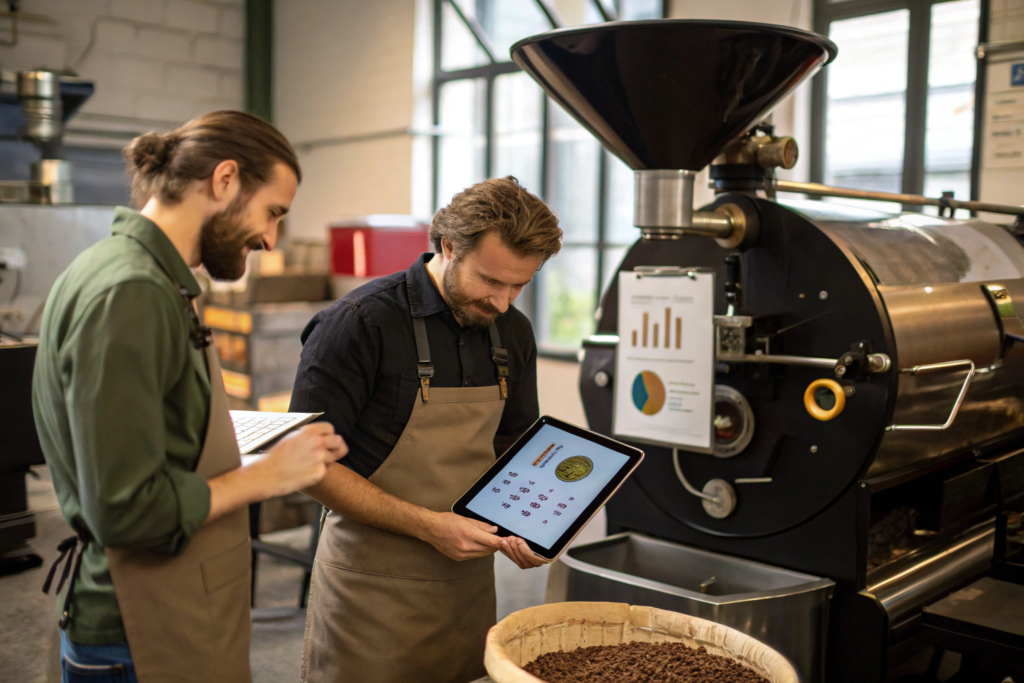
- Technical Data: We provide roast curves, density measurements, and suggested starting grind ranges (based on our own test shots) with our samples.
- Consistent Supply: Crema potential depends on consistent green bean quality. Our large-scale plantation control ensures that the Catimor or Arabica you test in the sample is the same as what arrives in your 50-bag shipment. This addresses the core pain point of quality stability.
What questions should you ask a potential espresso bean supplier?
To gauge their expertise and compatibility, ask:
- "Do you offer sample roasts optimized for espresso service?"
- "Can you provide a technical data sheet for your espresso blends, including roast profile, density, and suggested brew parameters?"
- "What is your typical crema yield (as a percentage) in your internal quality control tests for this blend?"
- "How do you ensure batch-to-batch consistency in roast color and development?"
- "Can you create a custom blend based on my target flavor profile and crema requirements?"
Their answers will separate commodity sellers from true partners in product development.
Why is single-origin espresso from a large estate an advantage for testing?
For pure, traceable quality, a single-origin espresso from a large controlled estate offers unmatched consistency. When you test our single-origin Yunnan Arabica lot #A-101, you are testing a product from one farm, one harvest period, processed one way. There is no blending to mask inconsistencies. This gives you a clear baseline. If it performs well, you can reorder with the confidence that the next lot from the same estate will behave very similarly, making your dial-in process predictable and saving you time and wasted coffee. This reliability is a form of cost savings and quality assurance.
Conclusion
Testing the crema potential of coffee beans is a disciplined blend of science and sensory evaluation. It requires controlling variables, understanding bean chemistry, and implementing a repeatable protocol. The reward is the ability to select beans that will consistently deliver the visual and textural hallmark of a premium espresso—a rich, stable, flavorful crema—day after day, building your cafe's reputation.
Ultimately, your success depends on sourcing from a supplier who understands these mechanics and provides the consistent, high-quality raw materials and data to support your testing and service.
Stop guessing about crema. Partner with BeanofCoffee for espresso beans and blends engineered for performance. We provide technical sample roasts, blend consulting, and the plantation-level consistency your espresso program needs. Contact Cathy Cai to request our espresso sample kit and technical data sheets: cathy@beanofcoffee.com. Pull the perfect shot, every time.