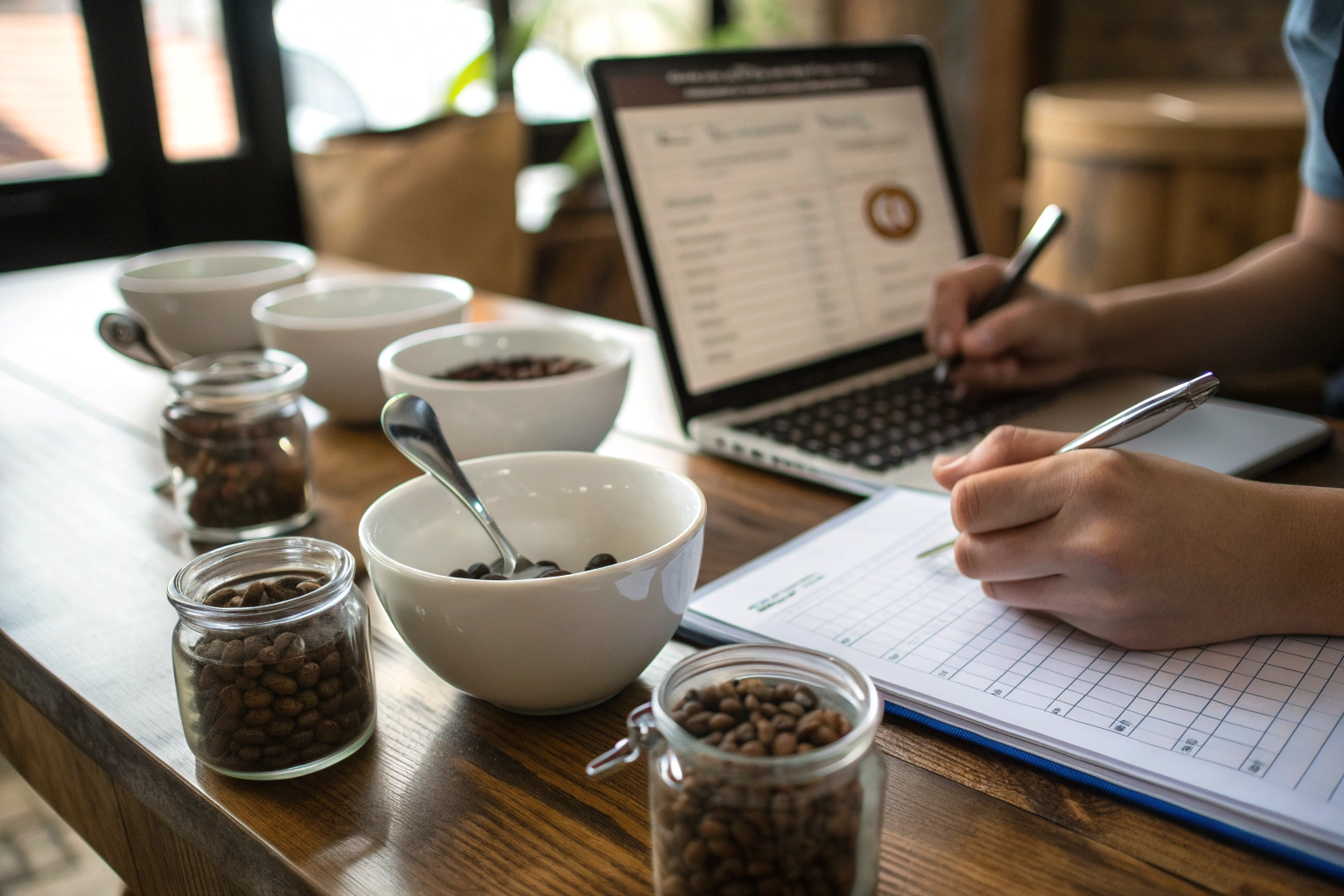
A buyer in Portland once told me he had a great Yunnan coffee that he could not move. The bag said "Catimor, 1500m, washed, 84 points." He said customers looked at it and walked past. That is not a quality problem. It is a translation problem. Cupping notes are written for cuppers. Customers do not speak that language. I saw the same coffee sell out six months later when the story changed. Same beans. Different words.
The direct answer is this: translate cupping notes into marketing stories by picking one dominant sensory note, connecting it to a specific human moment, and using the score as proof in the background, not as the headline. For example, "brown sugar and black tea" becomes "a slow morning cup that feels like the hills after rain." You do not list all ten notes. You choose the one that makes the customer feel something. The numbers stay on the back label.
This is not about lying or making up stories. It is about making the truth easier to feel. At BeanofCoffee, I have learned this from shipping Yunnan coffee to America, Europe, and Australia. The coffee is real. The story just has to be real too. Let me show you how I do it.
What Do Cupping Notes Actually Tell a Coffee Buyer?
Cupping notes are a type of shorthand. They compress a three-minute tasting into a handful of words like "milk chocolate, red apple, clean finish." A Q grader knows what that means. A consumer does not. I have sent cupping reports to buyers who then copy the entire line onto their retail bag. It looks like a lab report. That is fine for a green coffee buyer, but it does not sell roasted coffee.
Cupping notes tell a buyer about acidity, body, sweetness, and defects. They do not tell the buyer how to sell the coffee. A score of 85 with notes of caramel and red apple means the coffee is clean and balanced. It does not mean the customer will feel anything. That gap is where marketing stories live. If you fill the gap with more data, you lose the customer. If you fill it with a small, true story, they remember.
The deeper point is that cupping notes are objective, but buying coffee is subjective. A buyer wants confidence. A customer wants a reason. The same note can be read two ways. "Citrus acidity" can sound sharp or bright depending on the words around it. So the cupping note is not the message. It is the raw material for the message.
| Cupping Attribute | What It Tells a Buyer | What a Customer Might Feel |
|---|---|---|
| Bright acidity | Clean, lively cup | A fresh, energetic morning |
| Medium body | Balanced, not thin | A comfortable, smooth sip |
| Brown sugar sweetness | Well-developed sugars | A gentle, familiar sweetness |
| Black tea finish | Clean, slightly dry | A calm, lasting aftertaste |
Why Do Some Cupping Notes Fail to Sell Coffee?
Cupping notes fail when they stay too technical or too vague. "Stone fruit acidity with a syrupy body" does not help a home brewer choose a Sunday coffee. It sounds like a wine exam. At the same time, "smooth and rich" is too empty. Everyone says that. I once asked a buyer in Chicago why he changed his label from "caramel, red apple, 84 points" to "a warm cup for cold mornings." He said sales went up 20 percent. The data did not change. The message did. Sources like Coffee Review show how professional cuppers describe coffee in detail. And Perfect Daily Grind often writes about how to use cupping language in marketing. The lesson is clear: notes are a starting point, not a final label.
How Do Buyers Read Between the Lines of a Cupping Score?
A score of 84 tells me the coffee is specialty. An 86 tells me it is very good. But scores do not tell you if the coffee fits your brand. A bright, floral 85 might be perfect for a filter roaster and wrong for an espresso blend. I always ask buyers to look past the number. What is the body? What is the aftertaste? How does it taste at different temperatures? The Specialty Coffee Association explains the full cupping form and what each attribute means. The World Coffee Research catalog shows how variety and altitude affect those attributes. So the score is useful, but only when you read the lines around it.
How to Turn Flavor Notes into a Coffee Story?
Start with one note. Do not try to stuff five flavors into one sentence. Pick the note that matches the feeling you want to sell. If the coffee has a strong cocoa note, sell comfort. If it has a citrus note, sell energy. I have a washed Yunnan Arabica that cups with brown sugar and a light black tea finish. My story is not "brown sugar and black tea." It is "the quiet hour after a Yunnan rain." That is more specific and more human.
The direct way to turn flavor notes into a story is this: choose one dominant sensory note, pair it with a time of day or a mood, and add one concrete farm detail. For example, "brown sugar sweetness from slow-dried cherries in Baoshan" is a story. "Brown sugar, caramel, dark chocolate" is a list. The first one creates a picture. The second one creates a menu. You want the picture.
Another way to look at this is to ask what the coffee does, not what it is. Instead of "this coffee has notes of red apple," say "this coffee starts crisp and ends soft, like biting a cold apple in October." The verb gives it motion. The sensory note gives it shape. The farm detail gives it truth.

What Is the Best Structure for a Coffee Marketing Story?
A simple structure works best: note + context + human detail. Example: "This lot cups with a clean cane sugar sweetness. It comes from our Baoshan farm at 1,500 meters. One of our pickers told me the dry wind makes the cherries dry slowly." That is three sentences. It tells you the taste, the origin, and the hands behind it. The National Coffee Association has consumer research showing that origin stories increase perceived quality. The CBI coffee market information notes that European buyers respond well to short, authentic producer stories. So keep it short. If you need three paragraphs, you are writing a novel, not a label.
How Do You Choose Which Flavor Note to Lead With?
Lead with the note that is most memorable and easiest to imagine. That is usually the sweetest or the most familiar note. Brown sugar is easier to imagine than stone fruit. Milk chocolate is easier than bergamot. I taste our coffee with a small group before choosing the lead note. If three out of five people say "that reminds me of honey," I use honey. The Tridge platform shows how consumer preferences differ by market. The International Coffee Organization reports that clean, sweet coffees tend to trade well in North America and Europe. So match the note to the market. A citrus note may work better for a summer blend. A cocoa note may sell better in winter.
How Can Roasters Use Cupping Notes to Build Brand Trust?
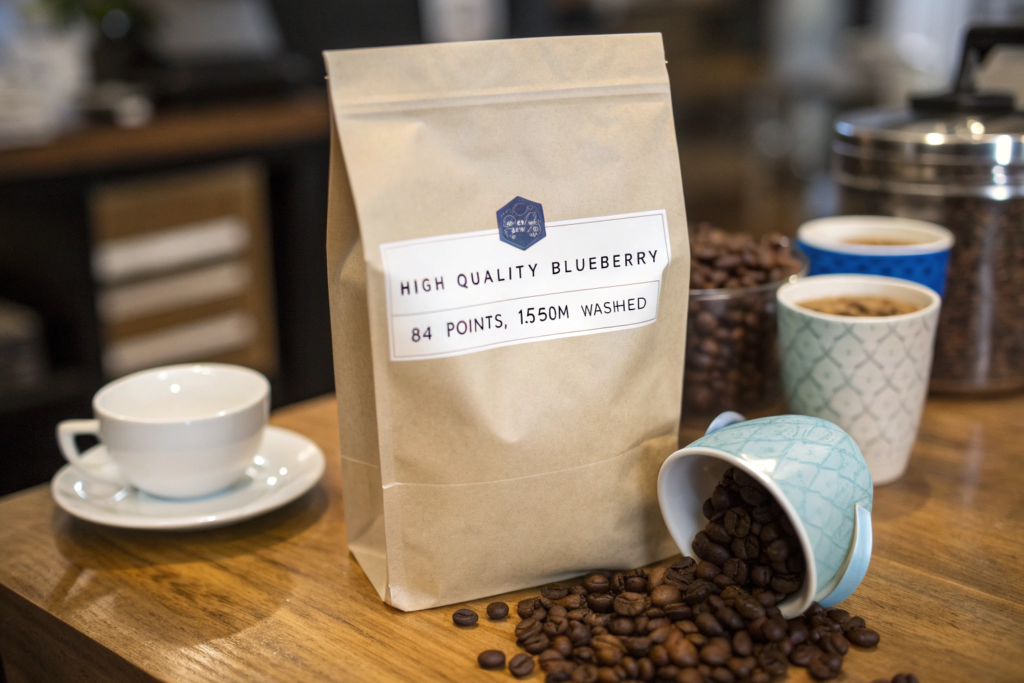
Customers are skeptical. They have been burned by coffee bags that promise "blueberry explosion" and taste like cardboard. So you cannot just tell a story. You have to show the evidence. That does not mean printing the cupping form on the bag. It means placing a small line of proof near the story. "84 points, 1,500m, washed" next to a short narrative gives the customer permission to believe the story.
The best way to use cupping notes for trust is to put the data where it can be found, but not where it dominates. Put the story on the front of the bag. Put the score and farm details on the back or on a small card. When a customer sees both, the story feels earned. The data validates the story. The story humanizes the data. That combination is powerful.
At BeanofCoffee, I encourage buyers to ask for the full cupping report and then use only two or three facts from it. You do not need to show all ten attributes. You need to show the two that matter: the score and the farm altitude. Everything else is for the green buyer, not the retail customer.
How Do You Include Cupping Scores Without Boring Customers?
Use the score as a quiet proof, not a loud claim. Instead of writing "84 points" in big letters on the front, write "a clean, balanced cup from a single Yunnan farm" on the front and put "cupped at 84 by a Q grader" on the side. The customer feels the quality without being lectured. I have seen this work with roasters who use Daily Coffee News for market trends and Trade.gov for import guidance. The rule is simple: the story sells, the score reassures. Do not reverse them.
What Role Does Traceability Play in Coffee Marketing Stories?
Traceability is the backbone of trust. If you say the coffee comes from a small farm, the customer should be able to see that farm. Our bags have a lot code. Scan it and you see the block, the picking date, and the drying method. That turns a marketing claim into a verifiable fact. The Food and Agriculture Organization promotes transparent supply chains. The Rainforest Alliance certifies farms that meet traceability standards. A story without traceability is just an ad. A story with traceability is a promise you can keep.
What Are the Common Mistakes When Translating Cupping Notes?
The biggest mistake is overpromising. If the coffee has a hint of jasmine, do not claim it will transport you to a garden. Customers are not stupid. They taste the gap between the story and the cup. And once they catch you exaggerating, they stop believing everything else you say. I have lost buyers this way. Not because the coffee was bad, but because the story made it sound like something it was not.
Common mistakes include listing every note, using vague adjectives like "smooth" or "rich" without context, and ignoring the customer's actual drinking moment. The fix is to be specific and modest. A small, true story beats a big, false one. If the coffee tastes like honey and toast, say that. Do not say "a symphony of golden sweetness." That is noise.
Another mistake is losing the coffee in the story. The customer still wants to know what they are buying. If the bag talks only about the farmer's grandmother, they may not remember it is coffee. Balance the human detail with the sensory note. One without the other feels incomplete.

Why Do Vague Descriptors Hurt Coffee Marketing?
Vague descriptors like "smooth," "rich," and "bold" do not help because every coffee claims them. They are filler words. A customer scanning a shelf sees "smooth" on ten different bags. It means nothing. Specific notes like "brown sugar" or "black tea" are different. They create a distinct memory. The Harvard Business Review has published studies on how specific sensory language increases purchase intent. The World Bank commodity markets shows that differentiated products command higher prices. So being specific is not just good writing. It is good business.
How Can You Test a Coffee Story Before Launching It?
Test it on real people. Give them a cup and read the story out loud. Then ask: "Does this match what you tasted?" If they hesitate, the story is too big. If they nod and smile, you are close. I do this with every new lot from Baoshan. I read three versions of the story to three different friends. The one that feels most natural wins. You can also check consumer reactions on platforms like Supply Chain Dive for broader retail insights or USDA Foreign Agricultural Service for country-specific coffee reports. The point is to get outside your own head. You wrote the story, so you are biased. Your customer is not.
Conclusion
Cupping notes are the bones. The story is the skin. You need both. Too much data and the coffee feels like a lab sample. Too much story and it feels like a fairy tale. The right balance is a short, specific, true story with a quiet proof of quality behind it. That is how you turn "84 points, brown sugar, black tea" into a coffee people remember and buy again.
If you want to taste Yunnan coffee and see how a real story starts, let us talk. At BeanofCoffee, we export Catimor, Arabica, and Robusta from our own 10,000 acres in Baoshan. We will send you samples, cupping reports, and the farm details you need to build an honest story. Contact Cathy Cai at cathy@beanofcoffee.com. Tell her your target market and your brand style. She will help you choose the right lot and the right angle. No fluff. Just coffee and the truth behind it.