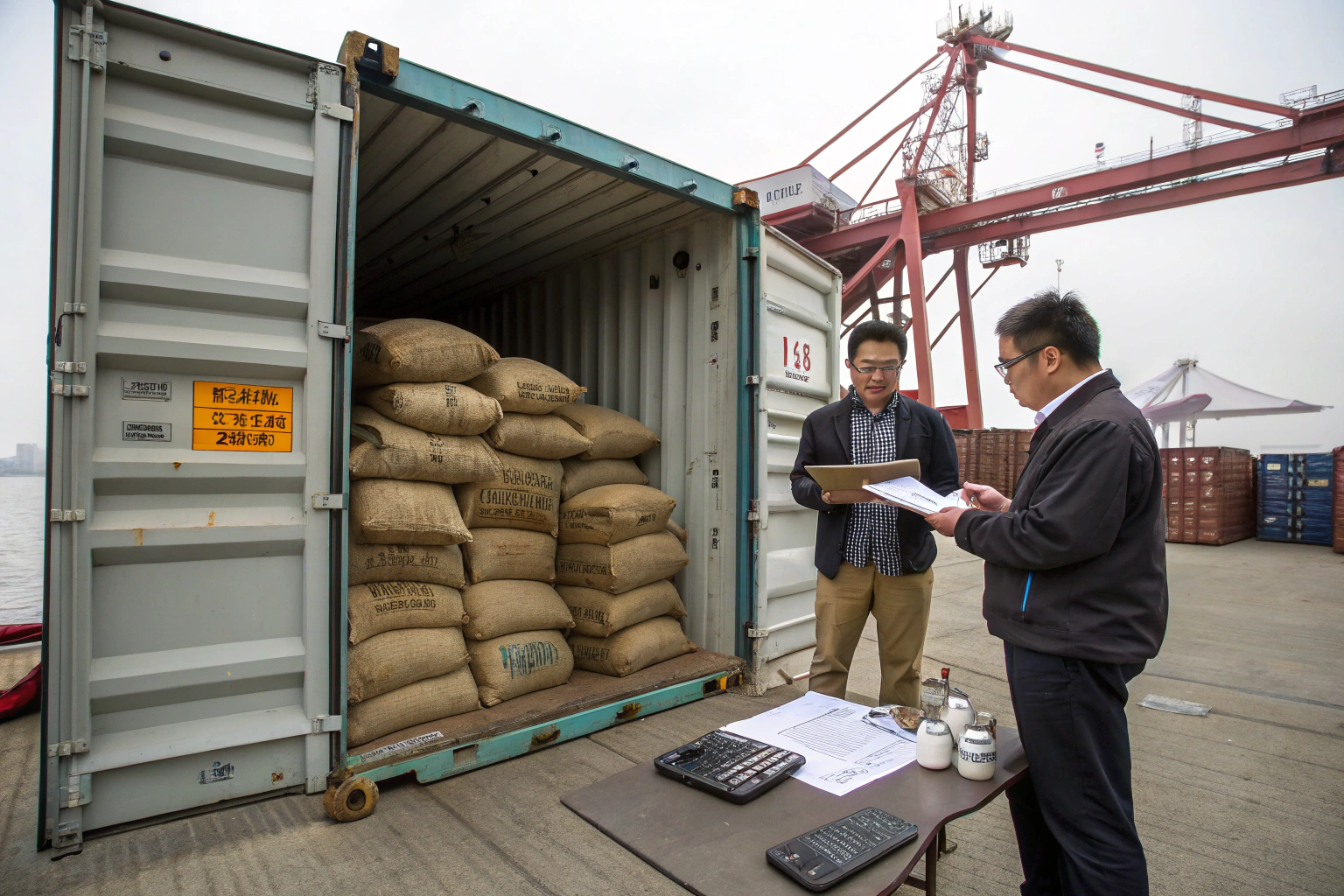
You see a price on a quote and think that is the cost. Then the invoice arrives. There is a fuel surcharge. A port fee. A customs bond. A trucking charge. Suddenly the number is 30 percent higher. I have watched buyers go from calm to furious in one email. It is not their fault. The freight business is built to hide the real number until the last minute. I run BeanofCoffee, and I have shipped enough containers to know exactly where the money goes.
The real cost of a 40-foot coffee container is never just the coffee price plus the ocean freight. You must add origin charges, export documentation, insurance, import duties, port handling, and inland delivery. For a container of green coffee from China to the US East Coast, the total landed cost typically ranges from $48,000 to $72,000 depending on coffee grade, current freight rates, and tariff treatment. A West Coast delivery can be $3,000 to $6,000 cheaper. That is the honest math.
Let me walk you through every line item. I will show you what is negotiable and what is not. I will also show you where buyers lose money without knowing it. If you are serious about importing coffee, this is the article you need to read before you sign anything.
How Much Does a 40-Foot Coffee Container Cost from China to the USA?
You ask for a quote. I send you a number. You compare it with another supplier. That is normal. But two quotes can look the same and be completely different. One includes everything. The other hides five charges. I learned this the hard way as a buyer before I became an exporter. Now I list every charge on the first page. It costs me some deals because my number looks higher. But it saves me arguments later.
A 40-foot coffee container from China to the USA costs roughly $4,000 to $9,000 in total freight and logistics charges, excluding the value of the coffee itself. The range depends on the destination port, the shipping line, the season, and whether the canal routes are running normally. For the coffee beans themselves, a full 40-foot container holds about 19,000 to 21,000 kilograms of green coffee, so the bean cost can be anywhere from $55,000 to $90,000. Add those together and you get the true pre-tariff cost.
Dive deeper and you find that the freight quote is only half the story. There are origin charges at the port in Shanghai or Shenzhen. There is a bill of lading fee, a customs clearance fee, a trucking fee from the warehouse to the port. Then on the US side, you pay the terminal handling charge, the pier pass, the customs broker, and the drayage to your roastery. Here is a table I use when explaining the breakdown to new buyers.
| Cost Item | Typical Range (40ft Container) | Notes |
|---|---|---|
| Ocean freight (China to US West Coast) | $2,800-$5,500 | Varies weekly, check spot rates |
| Ocean freight (China to US East Coast) | $4,500-$8,500 | Higher due to canal or Cape route |
| Origin charges (China port) | $500-$900 | Includes THC, docs, trucking to port |
| Destination charges (US port) | $800-$1,500 | Terminal, customs, pier pass |
| Insurance (marine cargo) | $150-$300 | Usually 0.2%-0.4% of cargo value |
What Is the Average Ocean Freight for a 40-Foot Container from Shanghai to Los Angeles?
The average ocean freight for a 40-foot container from Shanghai to Los Angeles fluctuates between $2,800 and $5,500 in 2026. That number changes every week, sometimes every day. The best way to track it is to check the Freightos Baltic Index or the daily spot rates published by Maersk. These are not fixed contract rates, but they give you a benchmark. When a carrier adds a peak season surcharge, the spot rate jumps. That is why I tell my buyers not to book a container based on a quote from three months ago. It will be wrong.
How Do Port Charges and Inland Trucking Add to the Total Cost?
Port charges are the quiet killers. In Los Angeles, the terminal handling fee, the clean truck fee, and the customs exam fee can add up to $900 or more. If the container is selected for a random inspection, that is another $500 to $1,200. Inland trucking from the port to a warehouse in Chicago can cost $1,200 to $2,000. I have seen buyers forget this and blow their budget. The National Customs Brokers and Forwarders Association of America has good resources on these fees. The Trade.gov logistics page also explains port charges for importers. Always ask your forwarder for an all-in destination quote before you commit. A cheap ocean rate means nothing if the destination charges are double.
What Affects the Price of a 40-Foot Coffee Container?
Freight rates are not like coffee prices. Coffee prices move based on supply and demand. Freight prices move based on fear and greed. A storm in the Atlantic, a labor strike at a port, or a canal closure can push rates up 30 percent in a week. It feels random. But underneath the chaos, there are patterns. Once you understand the main drivers, you can time your bookings better.
The price of a 40-foot coffee container is affected most by bunker fuel costs, container equipment availability, seasonal demand, and route disruptions like the Panama Canal restrictions. Other factors include currency swings, carrier alliances, and port congestion. At any given moment, two or three of these are active. That is why the market never sits still. You cannot control them, but you can watch them.
Dive deeper: The biggest single factor is not the canal. It is equipment. When empty containers are stuck in the wrong place, carriers raise rates to reposition them. That is why a container from Shanghai to Los Angeles can cost $2,800 one week and $4,200 the next. The UNCTAD publishes reports on global container shortages and their impact. The Baltic Exchange tracks dry bulk and container rates daily. I check those before I quote a new buyer. Here is a simple table of the factors I track and how much they can swing the price.
| Cost Driver | Typical Impact on Freight Rate | How to Monitor |
|---|---|---|
| Bunker fuel price | 10%-20% change | Check Brent crude oil futures |
| Peak season surcharge | $300-$800 per container | Ask carrier for surcharge list |
| Panama Canal slot reduction | 15%-25% on East Coast routes | Check Panama Canal Authority daily transits |
| Port congestion | $200-$500 extra in demurrage | Watch port call data from Seatrade Maritime News |
Why Do Freight Rates Fluctuate So Much?
Freight rates fluctuate because the supply of container space is fixed in the short term, but demand changes with seasons and shocks. Around the Christmas shopping period, importers rush to ship goods. That pushes rates up. During Chinese New Year, factories close, so rates fall. Then a canal gets restricted and everything goes up again. It is a roller coaster. The International Trade Centre has trade data that shows these seasonal patterns clearly. The World Bank also tracks shipping costs as part of global inflation. I have learned to book early and avoid the peak if possible. One buyer who ships every January saves about $800 per container just by avoiding the August rush.
How Does the Panama Canal Situation Impact 40-Foot Container Costs?
The Panama Canal situation directly raises the cost of any 40-foot container moving from China to the US East Coast or Gulf. When the canal restricts daily transits, ships must wait longer or take a longer route around the Cape of Good Hope or through Suez. That adds 10 to 20 days and thousands of dollars in fuel. Even if you ship to the West Coast, the global shortage of containers created by longer routes can push your rate up. The Panama Canal Authority publishes the current number of daily slots. I check it every morning. When the number drops below 30, I know East Coast rates will spike within two weeks. Then I advise my buyers to consider landing in Los Angeles and trucking east, which can be cheaper even with the extra mileage.
How to Calculate Landed Cost for a Full Coffee Container?
FOB is a dangerous number. It stands for Free on Board, which means the seller pays everything up to loading on the vessel. After that, you pay. Many buyers compare FOB prices and think they are comparing total costs. They are not. A coffee that costs $4.00 per pound FOB can end up costing more than a coffee at $4.30 per pound FOB if the freight and import fees are higher. I always tell new buyers to calculate landed cost before comparing anything.
Landed cost is the total you pay to get the coffee to your door. The formula is simple: FOB price + ocean freight + insurance + import duties + customs fees + port charges + inland trucking. For a 40-foot container of Yunnan Arabica from China to Chicago, a realistic landed cost per pound might be $0.70 to $1.10 above the FOB price. That means if you pay $3.80 per pound FOB, your landed cost could be $4.50 to $4.90 per pound. It adds up fast.
Dive deeper with a real example. Let us say you buy a 40-foot container with 19,500 kilograms of green coffee at $3.80 per pound. That is about $163,000 for the beans alone. The freight and fees might be $7,500. The import duty on green coffee into the US is currently zero for most origins, but if tariffs change, that number changes too. Here is a simple table for a West Coast shipment.
| Line Item | Amount (USD) | Notes |
|---|---|---|
| Coffee FOB cost (19,500 kg) | $163,000 | At $3.80/lb |
| Ocean freight (Shanghai to LA) | $4,200 | Subject to change |
| Marine insurance | $250 | 0.15% of cargo value |
| Destination port and customs fees | $900 | Includes terminal handling |
| Inland trucking (LA to Chicago) | $1,800 | Can vary by fuel |
| Total landed cost | $170,150 | Excluding any tariff |
What Hidden Fees Should Coffee Importers Expect?
Hidden fees are not actually hidden. They are just not on the first quote. Expect a customs bond, a merchandise processing fee, a harbor maintenance fee, and a possible exam fee. If your container is selected for a VACIS or X-ray exam, that is another $300 to $600. The US Customs and Border Protection website lists current user fees. The Federal Maritime Commission also regulates detention and demurrage charges, which can explode if you do not pick up the container within the free time. I tell my buyers to budget an extra 5 percent on top of the quoted landed cost for surprises. That buffer has saved more than one friendship.
How Can Buyers Reduce Landed Cost on a 40-Foot Container?
You can reduce landed cost by buying direct from the farm, like BeanofCoffee, which removes the broker margin. You can also negotiate an all-in freight quote instead of a base rate plus surcharges. Consolidating two smaller orders into one 40-foot container lowers the per-pound freight cost. If your roastery is near a less congested port, use it. Savannah can be cheaper than New York. The USDA Agricultural Marketing Service has reports on shipping and logistics that can help. The Supply Chain Dive often covers cost-saving strategies for importers. One buyer in Texas saved $1,200 by switching from Houston to New Orleans and trucking the coffee north. Small changes add up.
Is It Cheaper to Ship a 20-Foot or 40-Foot Coffee Container?
You might think a 20-foot container costs half as much as a 40-foot. It does not. The ocean freight for a 20-foot is usually 60 to 75 percent of the 40-foot rate. That means the per-pound freight cost is higher in a 20-foot container. But if you do not have enough coffee to fill a 40-foot, the smaller box can still make sense. The math depends on your volume and your cash flow.
A 40-foot container is generally cheaper per kilogram of coffee than a 20-foot container, but only if you can fill it. A 40-foot holds about 19,000 to 21,000 kilograms. A 20-foot holds about 9,500 to 10,500 kilograms. The ocean freight difference is often only $1,500 to $2,500. So the 40-foot gives you almost double the capacity for a small extra cost. That is why most serious importers use 40-foot boxes.
Dive deeper: The break-even point is usually around 12,000 to 14,000 kilograms. If your order is above that, a 40-foot container is almost always cheaper per pound. Below that, a 20-foot container avoids paying for empty space. Here is a quick comparison using typical rates.
| Container Size | Capacity (kg) | Typical Ocean Freight (China to LA) | Freight Cost per kg |
|---|---|---|---|
| 20-foot | 10,000 kg | $2,800 | $0.28/kg |
| 40-foot | 20,000 kg | $4,200 | $0.21/kg |
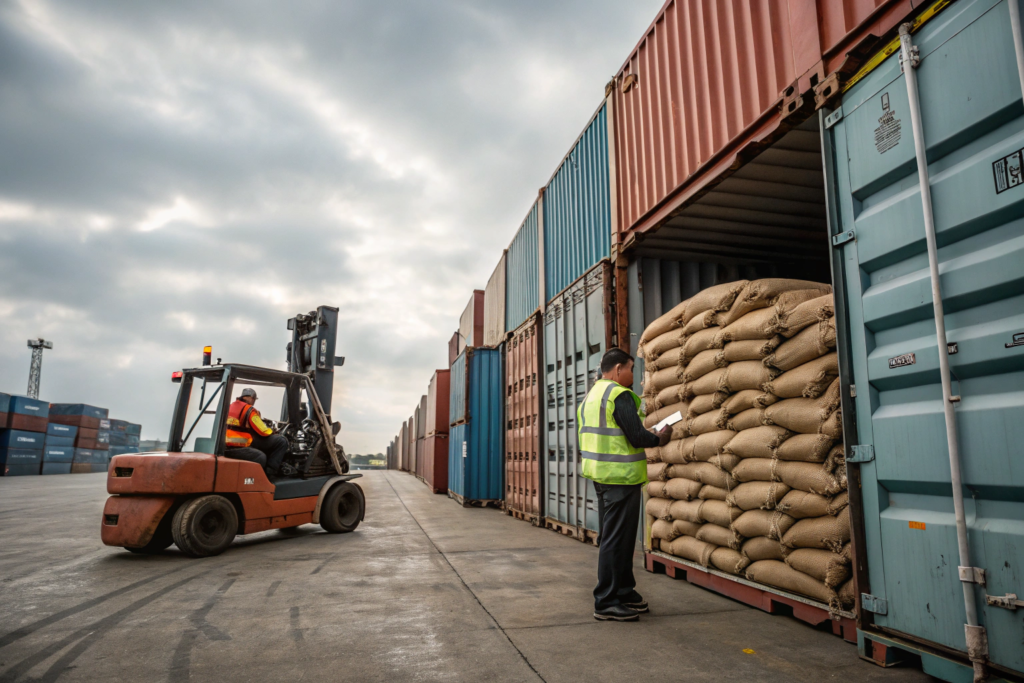
What Is the Break-Even Volume for a 40-Foot Container?
The break-even volume is the point where the per-kilogram freight cost of a 40-foot container equals that of a 20-foot. Using the numbers above, a 20-foot at $2,800 for 10,000 kg costs $0.28 per kg. A 40-foot at $4,200 would cost $0.28 per kg if you load 15,000 kg. So if your order is 15,000 kg or more, the 40-foot is cheaper per kg. Below that, the 20-foot is better. You can track current freight rates on the Freightos platform or the Maersk rate finder. But remember, the freight rate changes. The break-even point moves with it. Recalculate for every order.
When Does a 20-Foot Container Make More Sense for Coffee Buyers?
A 20-foot container makes sense when you are a new roaster testing Yunnan coffee, or when your warehouse space is limited, or when you want to split a shipment between two ports. It is also useful if you are shipping a small micro-lot of high-scoring Arabica that you plan to sell quickly. The Specialty Coffee Association often talks about micro-lots and the need for smaller shipments. The CBI coffee market information also notes that smaller European roasters often start with 20-foot containers. I have shipped many 20-foot boxes to first-time buyers. It is a good way to test our quality without locking up too much cash.
Conclusion
The real cost of a 40-foot coffee container is not a mystery. It is a list. Once you see the list, you can control it. You control the coffee grade, the origin port, the destination port, the timing, and the negotiation. You do not control the canal, the fuel price, or the carrier's mood. But you can plan around them. The key is to ask for an all-in landed cost, not just an FOB quote. That single habit will save you thousands of dollars and many headaches.
If you are ready to get a real landed cost for Yunnan coffee, talk to us at BeanofCoffee. We ship Catimor, Arabica, and Robusta from our own 10,000 acres in Baoshan. We will give you a transparent quote with every line item listed. No hidden fees. No surprises. Contact Cathy Cai at cathy@beanofcoffee.com. Tell her your port, your target volume, and your cup profile. She will send you a realistic number within one business day. Then you can compare it with anyone.