
Here's a scene that used to make my stomach turn. I'd wake up at 6 AM in Baoshan, grab my phone, and check the C market. If the chart was deep red? My day was already ruined before my first cup of Yunnan Arabica. A 3-cent drop on the screen meant a buyer in Seattle might send me an email asking to "renegotiate" a contract we signed two weeks ago. That happened. More than once. And here's the thing most people don't say out loud: the C market isn't just a number on a screen. It's a psychological battlefield.
The C market, formally known as the Intercontinental Exchange Coffee "C" futures contract, is the global benchmark for Arabica coffee pricing. It sets the foundation price upon which all physical coffee contracts are built. However, it reflects speculative fund movements and macro-economic weather just as much as—if not more than—actual coffee supply and demand.
Now, I'm not a Wall Street trader. I'm a farmer with dirt under my fingernails. But after shipping thousands of bags from our 10,000-acre farm in Baoshan to North America and Europe, I've had to learn how this abstract financial tool literally pays for the fertilizer, the pickers, and the diesel for the dryers. So, let's talk about it plainly. Not in financial jargon, but in the language of a producer who has to make this system work for actual coffee buyers like you.
What Is the Coffee C Market and How Does It Set Prices?
I had a client in Melbourne ask me once, "Why can't you just give me a fixed price like my packaging supplier does?" A fair question. But coffee isn't cardboard. It trades on the ICE exchange in New York. A lot of people think the C market is a place where coffee is bought and sold. It's not. It's a place where risk is bought and sold.
The Coffee C market is a futures exchange where contracts for the future delivery of washed Arabica coffee are traded. These contracts represent 37,500 pounds of coffee. The price discovered on this exchange becomes the global "C" price. Almost every physical coffee contract in the world uses this price as a baseline, then adds a "differential" based on the specific origin and quality of the actual beans.
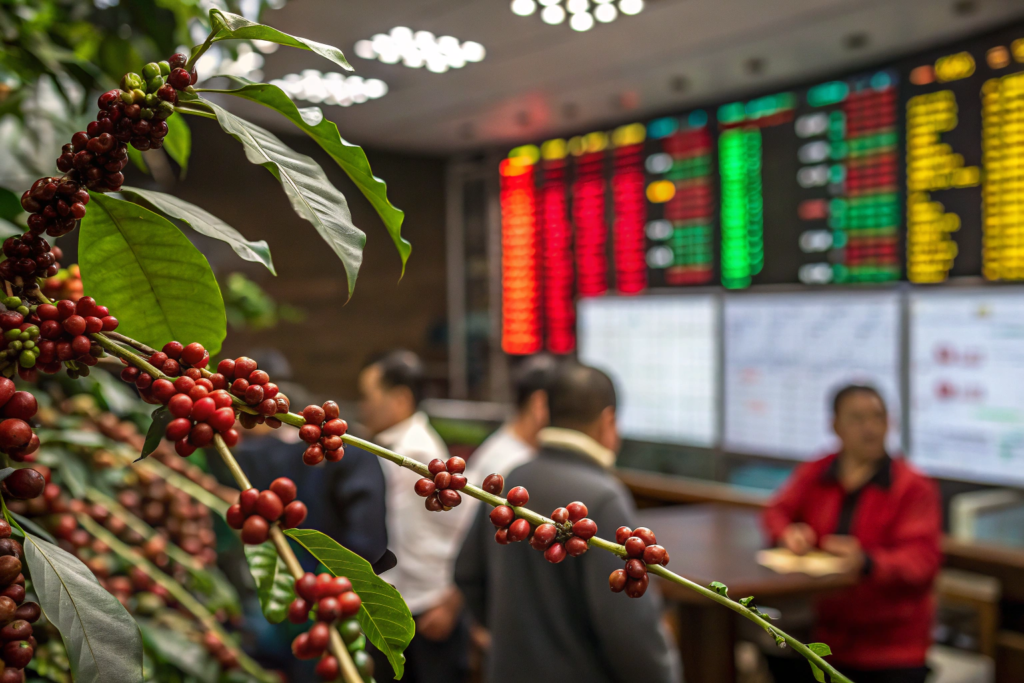
Why Do Speculators Influence Your Coffee Price More Than Farmers?
This part frustrates me. But it's true. The vast majority of trades on the C market never result in actual coffee changing hands. These are paper trades. Hedge funds, algorithms, and speculators are moving billions of dollars based on things that have zero to do with coffee farming.
Things like the US Dollar strength, interest rate decisions by the Fed, or even energy prices. I've watched the C market drop 8 cents in a single day because a jobs report in Washington came out strong. My farm didn't change that day. Our Catimor was still growing fine. The pickers were still working. But the "value" of my inventory just evaporated—digitally.
For a buyer like you, this matters. You might be getting a cheap price not because there's a bumper crop in Brazil, but because a macro hedge fund in New York decided to short coffee. That's a fragile low price. It can spike right back up just as fast. One small detail: when prices are driven by funds, they disconnect from reality. You can't plan a roasting business based on speculator mood swings.
How Does the Futures Contract Translate to Physical Beans?
Let's make this real. You want to buy a container of our washed Arabica from Baoshan. I quote you "C + 18." What does that even mean?
The "C" is the front-month futures price on the ICE exchange. Let's say that price is 190.00 cents per pound. The "+ 18" is the differential—the premium you pay for our specific Yunnan coffee. This differential covers the quality, the altitude, the processing, and the fact that it's not just generic Brazilian coffee. Your final price is 208.00 cents per pound.
Here's a basic table showing how a single contract breaks down:
| Component | Value | Meaning for You |
|---|---|---|
| C Market Price | 190.00 c/lb | Global washed Arabica baseline |
| Differential (Origin) | + 18.00 c/lb | Yunnan Baoshan quality premium |
| Final FOB Price | 208.00 c/lb | What you pay for the bean at origin |
| Container Weight | ~42,000 lbs | Standard 20ft container load |
| Total FOB Value | ~$87,360 | Landed cost before freight, insurance |
You see, the C market fixes the base, but the diff tells the real story. When I negotiate with buyers in North America, they focus a lot on the diff. Because the C market moves for everyone. Your competitive advantage as a roaster comes from locking in a good differential with a reliable producer like us.
How Does the C Market Affect Small to Medium Roasters Directly?
You might think, "I run a 10,000-pound-a-month roasting operation. Why do I care about hedge funds in New York?" I used to think the same thing about my farm. Until the volatility nearly wiped out a harvest season. Small to medium roasters are the most exposed to C market swings. You don't have the capital buffer that a giant brand has.
For a small or medium roaster, the C market directly dictates the cost of green coffee—which is 60% to 70% of their total product cost. A volatile C market forces difficult choices: absorb the cost, raise retail prices and risk losing customers, or buy cheaper, lower-quality beans and compromise the brand. It's a constant survival puzzle.
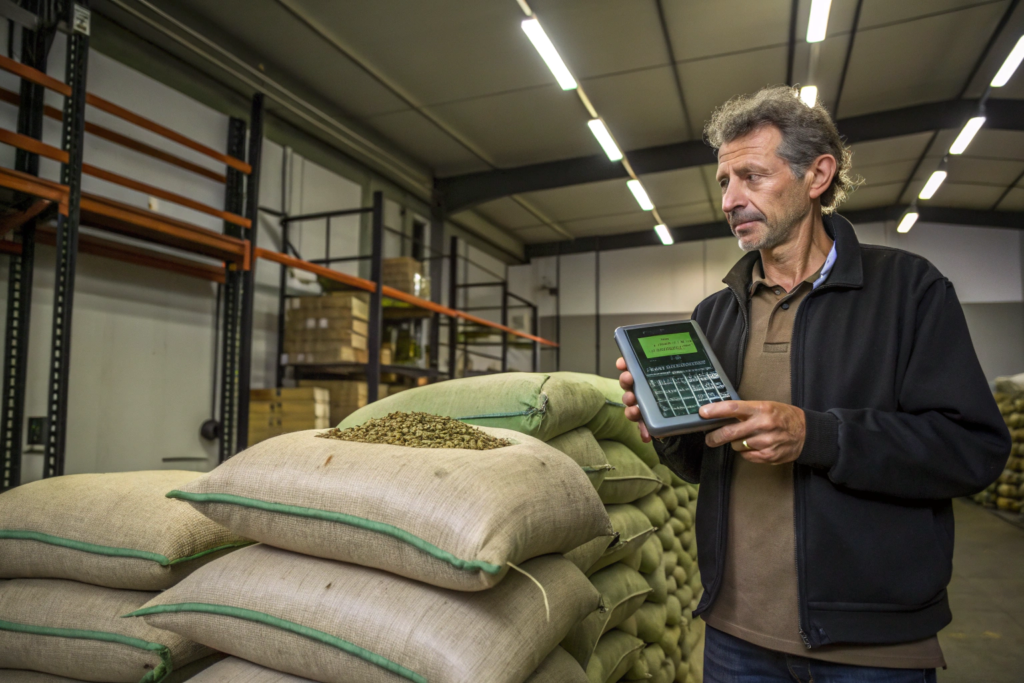
What Happens to Your Roasting Contract When the Market Crashes?
Let's say the C market drops from 200 to 170 cents. You, as a roaster, might feel great. "Cheaper coffee!" But hold on. What about the 200 bags you bought last month at 200? That inventory is now overvalued. Your competitor, who waited, can now buy coffee 30 cents cheaper.
I've seen roasters immediately demand that I re-price their existing contracts. It's a tough spot. My costs—labor, fertilizer, transport—didn't drop 30 cents. They rarely drop at all. If I agree to re-price, I'm basically eating the loss. If I don't, I risk the relationship. My approach? Honesty before the crash.
With long-term partners, we sometimes negotiate a "call protection" or a mutual risk-sharing window. The key is to talk about it before the volatility hits. Don't just fix a price and forget it. Agree on what happens if the market moves beyond 15% either way. That conversation saves friendships. And money.
Can Fixed-Price Contracts Protect Your Coffee Business?
Fixed-price contracts sound like a safety blanket. For a roaster, knowing your green bean cost for six months is powerful. You can set wholesale menus and retail bags with confidence. No surprises.
But here's the flip side. A fixed price is a bet. If you fix the price at C + 15, and the C market then crashes to 150? You're stuck paying above market. If the market spikes to 220? You're the hero. You're getting a great deal while others pay high prices.
I offer fixed-price contracts on our Catimor and Arabica for periods up to 12 months. But I always tell my buyers: understand this is a hedge, not a guarantee of the lowest possible price. It's an insurance policy against spikes. You're buying budget certainty. For a smaller roaster with tight cash flow, that certainty can be worth more than the potential missed savings. It lets you sleep at night. And honestly, in this business, that's a luxury.
How Should Coffee Buyers Use the C Market to Their Advantage?
So, the C market looks like chaos. But you can use that chaos. You just can't play by Wall Street's rules. You need to play by a roaster's rules. I've worked with buyers who panic at every blip, and buyers who strategically use the dips. The second group sleeps better and pays less over time.
Smart coffee buyers treat the C market not as a price to chase, but as a range to work within. They use dollar-cost averaging for their contracts, lock in differentials with trusted producers when the base price dips, and avoid the panic of buying at market peaks out of fear of missing out.

When Is the Best Time to Negotiate a Differential with a Producer?
The differential is where the human conversation happens. It's not a blinking number on a screen. It's a negotiation based on the quality, the logistics, and the relationship.
The best time to negotiate a diff isn't when the C market is crashing. Why? Because when the market crashes, every roaster in the world is calling producers asking for low prices. I'm suddenly busy. And honestly? I'm less interested in giving away discounts when I'm already stressed about the board price.
The sweet spot is when the market is quiet. Stable. When there's no headline news. I'm more open to a reasonable conversation about a long-term diff when I can plan my farm costs predictably. You want a good diff? Call me in the off-cycle. Not when there's a hurricane in Brazil. That's when I'm on defense. Another thing—commit to volume. If you tell me, "I want 300 bags next year, can we agree on a diff now?" I'm much more flexible. I can budget my milling and picking based on that commitment.
How Do You Build a Flexible Pricing Model With Your Supplier?
One size of contract does not fit all. I've learned this over a decade of export. A rigid contract breaks. A flexible one bends.
I try to build what I call a "bracket" system with some of my European buyers. We agree that the base price will be the C market average of a specific two-week window before shipment. If the market spikes 20 cents above the average, we split the difference. If it drops 20 cents below, same thing. The differential stays locked.
Here's a simple breakdown of models I've used:
| Pricing Model | Risk for Buyer | Risk for Seller | Best Use Case |
|---|---|---|---|
| Flat Fixed Price | Locked; market risk | Locked; opportunity risk | Stable budgets, new relationships |
| C + Fixed Diff | Market moves; diff safe | Market moves; diff fixed | Long-term quality contracts |
| Average of Period | Smoothed volatility | Smoothed volatility | High-volume, routine shipments |
| Capped Range (Collar) | Protected from spike | Protected from crash | Risk-averse, mid-sized roasters |
This isn't just theory. I've done "capped range" contracts with a Danish buyer where we set a floor of 180 and a ceiling of 220. If the C market goes below 180? I get 180. If it goes above 220? He pays 220. We both win, we both lose a little. But it's fair. And "fair" keeps a supply chain alive for ten years.
What Is the Real Difference Between C Market Price and the Cost of Production?
This is the conversation that keeps me up at night. The C market can scream "cheap coffee." But the cost of actually growing that coffee? It only goes one way: up. Labor costs in Yunnan have tripled in the last 10 years. Fertilizer isn't getting cheaper. And the weather? Don't get me started on the weather.
The C market price is a global speculative benchmark. The cost of production is a local, physical reality. There is often a dangerous disconnect between the two, where the futures price drops below what it actually costs a farmer to grow, harvest, and process the coffee. This creates long-term supply risks for buyers.
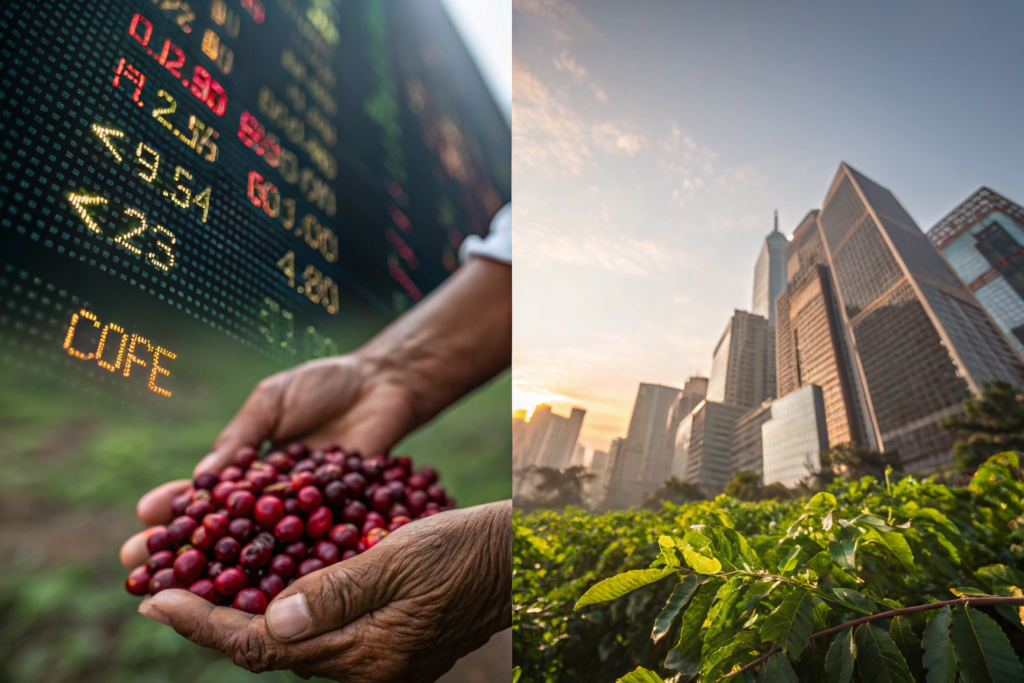
Why Doesn't a Low C Market Always Mean Cheap Coffee for You?
I'll give you a real scenario from 2023. The C market was hovering low, around 150. A potential buyer from Texas called me. He expected a cheap price for our specialty Catimor. He said, "The market is at 150, why is your diff 30?"
I had to explain: the C market price doesn't reflect the cost of growing at 1,400 meters in Baoshan. It reflects the cost of the most basic, commercial-grade Arabica in the world. My cost to produce that bag of high-altitude, hand-picked, double-washed Arabica was higher than 150. The differential isn't just "extra profit." It's the cost of reality.
For you, the buyer, a low C market combined with a high diff just gets you back to the real price. You're not getting ripped off. You're paying for the actual bean. If you see a price that's too cheap, ask yourself: how did they do that? Did they underpay the farmer? Did they skip the quality sorting? The C market is just a piece of the puzzle. The rest is human work.
How Is the Yunnan Coffee Production Cost Built?
Let me pull back the curtain. Here's where your money goes when you buy from our farm. I'm not talking about global averages. I'm talking about real numbers from our fields in Baoshan.
We have to pay pickers by the kilogram. During harvest, labor can be 40% of our total cost. For specialty lots, selective hand-picking is slow. A good picker might get 80 kilos of cherry a day. That's about $15 to $20 in wages. Fertilizer, organic compost mostly, runs us about $500 per hectare. Transport from the high mountain roads to the wet mill? Fuel and vehicle maintenance—another hidden bite.
Here's a rough map of where each dollar goes, per pound of green export-ready coffee:
| Cost Element | Approx. % of Cost | Stable or Volatile? |
|---|---|---|
| Farm Labor (Picking) | 35% | Rising steeply |
| Fertilizer & Inputs | 20% | Linked to oil prices |
| Wet & Dry Milling | 15% | Stable |
| Export Logistics | 20% | Very volatile |
| Certifications (Organic, etc.) | 10% | Fixed annual cost |
So, when a New York speculator shorts the market because of a dollar move, think about this table. The farmer who grew your coffee can't short the price of lunch. The real impact isn't on a trading screen. It's on whether a family in Baoshan can afford to send their kids to school next year.
Conclusion
Understanding the C market is less about predicting the next big price swing and more about grasping its limits. It's a tool. A noisy, often irrational tool, but the only global yardstick we have. It sets the base, but it doesn't grow the cherry, and it sure doesn't guarantee the quality in your cup. For a serious coffee buyer, mastering this means knowing when to lock a differential, when to share the risk with a producer, and when to ignore the daily noise of the hedge funds.
The real impact is this: the C market, when used wisely, can give your business stability. Used blindly, it can wreck your margins and your relationships. I've been on the farming end of this wild ride for years, and the best partnerships I have are with roasters who see the price screen as a starting point for a conversation—not the final word. If you want to have that conversation, to build a pricing model that works for both of us using real beans from our 10,000 acres in Yunnan, please reach out. Contact my export manager, Cathy Cai, at cathy@beanofcoffee.com. Let's talk about a contract that actually makes sense on the ground, not just on a screen.