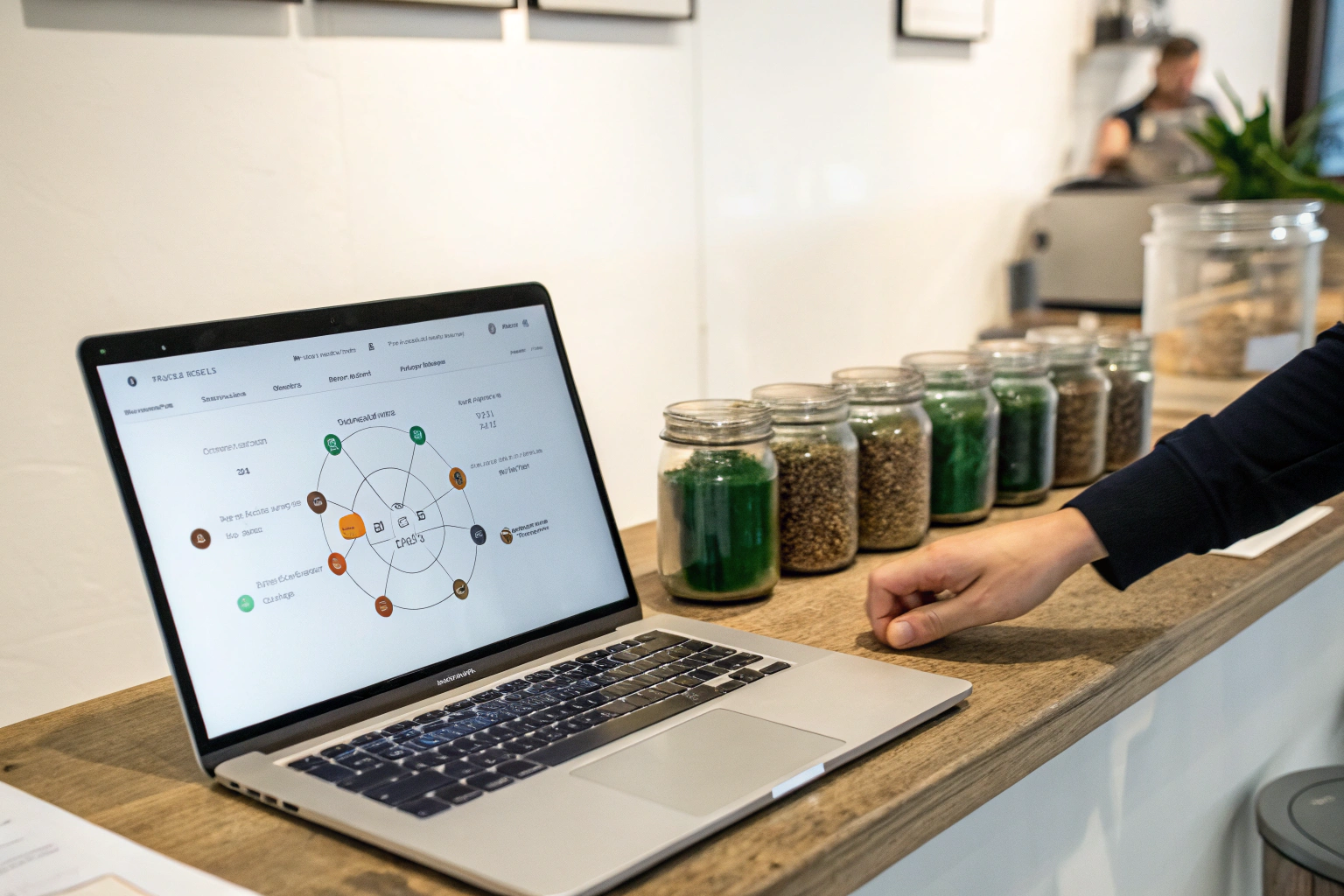
I closed my first Alibaba trade back in 2015. A small roaster from Florida bought two pallets of our Yunnan Catimor. I remember the thrill—digital B2B actually worked. Fast forward to today, and that landscape is almost unrecognizable. Honestly, a buyer like you now holds more power in your smartphone than I had in my entire office a decade ago. But here's the kicker: more power also means more noise. If you're a serious buyer—say, a CEO sourcing 20 tons a year—you're probably drowning in digital options while still struggling to find a partner you actually trust.
The newest trends in coffee e-commerce B2B are defined by a shift away from static catalog listings toward immersive, data-rich verification. Buyers now expect live video tours of mills, blockchain traceability records, AI-driven sample matching, and hybrid trade show experiences that combine digital efficiency with physical trust signals.
I run a farm in Baoshan. I'm not a tech guru. But I've had to learn these tools to keep my 10,000-acre operation connected to the world. When I'm talking to buyers from America or Australia, I'm not just competing on quality anymore. I'm competing on digital transparency. Let me show you what's actually changing on the ground—and what's just hype.
How Is Digital Verification Replacing Physical Sample Requests in B2B Coffee?
Sending physical samples used to be the only way. I'd roast, vacuum-pack, and ship 50-gram bags to a dozen countries. It was slow. It was expensive. And half the time, the samples got stuck in customs. Today, I'm doing things I never imagined five years ago.
Digital verification is rapidly supplementing—and in some cases replacing—the initial physical sample request. Tools like live video cupping sessions, 360-degree farm mapping, and moisture meter data sharing allow buyers to pre-qualify a lot before a single gram of coffee is shipped. This slashes lead times and eliminates unqualified suppliers early in the sourcing funnel.
Can Live Video Cupping Sessions Replace Physical Samples?
Not completely. Let me be upfront about that. You can't taste a screen. But can live video sessions filter out 80% of the bad options before you waste money on couriers? Absolutely.
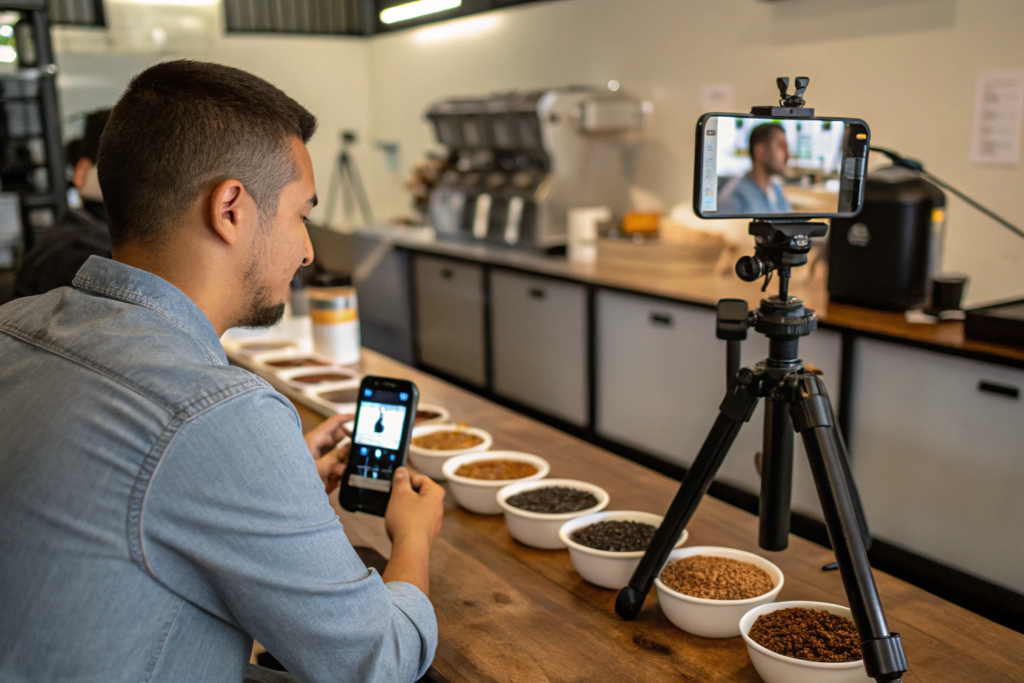
Here's how I do it with a client in Australia. We schedule a Zoom call. I set up our cupping table in the Baoshan lab. A second camera focuses on the roasting log and the moisture meter. I cup the coffee live. I describe the fragrance, the acidity, the body. The buyer watches me break the crust, slurp, and spit. They see my reaction. They hear my honest assessment.
Is it perfect? No. But it builds trust faster than an email. You see the lab. You see the dirt on the patio through the window. You see I'm not in a fake studio. One small detail: I always pan the camera to the lot number written on the grain bag. Transparency isn't just saying things. It's showing things. And honestly? A buyer who watches me cup live is much more likely to trust the physical sample when it arrives.
What Role Does Blockchain Traceability Play in Digital Trust?
I'll be honest. I was skeptical about blockchain. It sounded like a buzzword for tech conferences, not a real tool for a farm in Yunnan. Then a large European buyer told me they'd only place the order if we integrated with a traceability platform like Farmer Connect.
Now, I'm a convert. Here's why it matters for you as a buyer. You can scan a QR code on a bag of our washed Arabica and see the entire journey. The GPS coordinates of the plot where the cherry was picked. The date it arrived at the wet mill. The drying bed number. The parchment rest period. The shipment date from Shanghai.
This isn't marketing fluff. It's auditable data. For a roasting brand selling to consumers who care about ethics, blockchain is a competitive weapon. It lets you prove your "direct trade" story. For me, it forces discipline. I can't fudge the dates. I can't hide a processing delay. The ledger is immutable. It's a little scary. But it's also the future of trust.
What Are the Best B2B E-Commerce Platforms for Wholesale Green Coffee Today?
Platform choice matters more than most people admit. I've been on Alibaba for years. I've tried niche platforms. I've had buyers find me through LinkedIn DMs and close a $50,000 deal without a single platform click. The landscape is messy. And for a company owner like you, picking the wrong channel is a waste of time and money.
The best B2B e-commerce platforms for wholesale green coffee today are not one-size-fits-all. Large, generalist platforms like Alibaba offer scale and payment protection. Niche, industry-specific platforms like Algrano offer curated quality and origin transparency. The smartest buyers maintain a presence on multiple channels while using their own website as the central hub of credibility.
Should You Source Coffee From General Marketplaces Like Alibaba?
Alibaba is a double-edged sword. On one hand, it has buyer protection. It has Trade Assurance. It handles the logistics integration. For a first-time buyer testing the waters with Chinese coffee, it's a lower-risk entry point. I built half of my early customer base there.
On the other hand, Alibaba is crowded. You'll find 200 suppliers claiming to have "the best Yunnan Arabica." Some are factories. Some are trading companies that have never set foot on a farm. Some will list a price that's below my production cost. You know? That should be a red flag. If it's too cheap, the beans are old or the grade is lower.
My advice for using general marketplaces: use them to vet, not to instantly trust. Check how many years the supplier has been on the platform. Ask for a live video tour of the farm within 24 hours of connecting. A real farmer can do that. A middleman will make excuses. Also, read the reviews carefully. A verified buyer from your own country leaving a detailed review about the cup quality is worth more than 100 generic five-star ratings. Platforms like this can work, but you have to be a detective.
Are Niche B2B Coffee Platforms Worth the Higher Cost?
Platforms like Algrano or the Specialty Coffee Association's marketplace are a different game. They're built for coffee people, by coffee people. The suppliers are vetted. The listings include cup scores, not just weight and price. The shipping is often consolidated.
The catch? The differentials can be higher. You're paying for curation. Is it worth it? For a buyer who doesn't have a sourcing department, absolutely. These platforms handle a lot of the discovery work. You can filter by flavor profile—say, "medium body, red fruit notes"—and see which producers globally match.
For me, as a producer, these platforms push me to be better. They force me to articulate what makes our Baoshan Arabica different from a Colombian Huila. I can't just say "good quality." I have to prove it with a cupping score and a detailed processing story. If you, as a roaster, value differentiation and want beans that tell a story on your packaging, a niche platform often filters out the generic stuff automatically. The higher cost upfront might save you from buying a bland container that you struggle to market.
How Can AI and Automation Improve Your B2B Coffee Sourcing Strategy?
AI in coffee still feels strange to talk about. It's not a robot picking cherries. Not yet, anyway. It's more subtle. It's a tool that helps you, the buyer, make faster decisions by cutting through the clutter. And in a world where you're getting 50 supplier emails a week, fast decisions are money.
AI and automation are transforming B2B coffee sourcing from a manual, relationship-only process into a hybrid model. Automated sample scoring using computer vision, predictive pricing algorithms, and AI-matchmaking between a roaster's flavor needs and a producer's lot profile are reducing the time from initial search to signed contract.
Can AI Green Grading Speed Up Your Quality Assessment?
Physical green grading is slow. A human inspector looks at a 300-gram sample, counts the primary defects, the secondary defects, the quakers. It takes time, and it's subjective. My "slight insect damage" might be your "mild coffee borer."
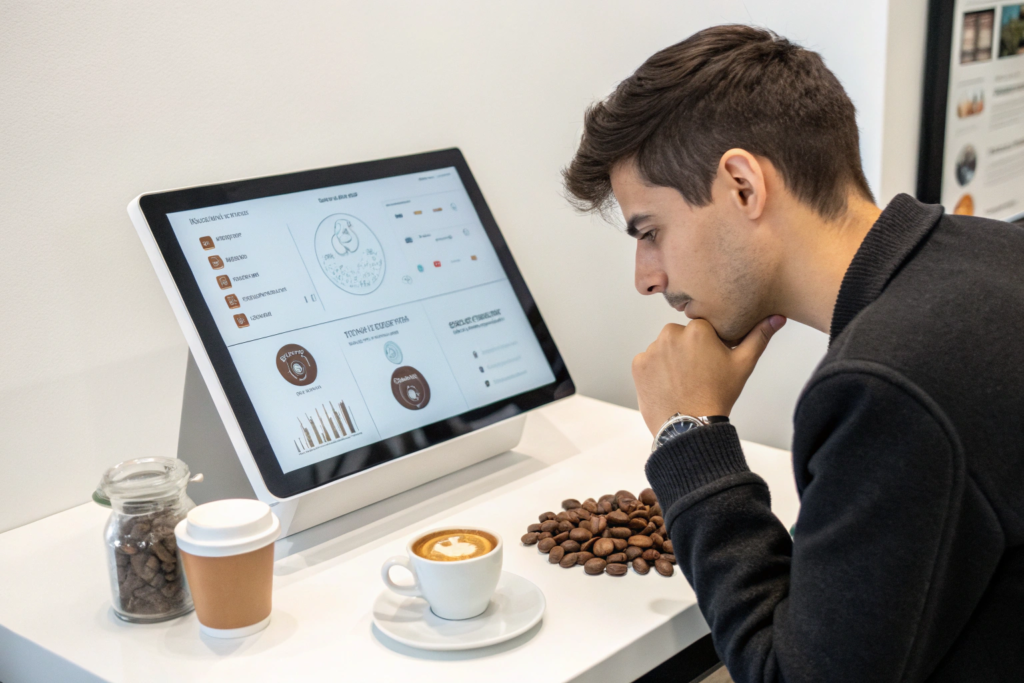
New AI tools are changing this. Systems like Csmart and others use computer vision. You pour a sample onto a tray, an app scans it with a smartphone camera, and the AI identifies defects by shape, color, and size. It's trained on millions of bean images. It doesn't get tired. It doesn't have a bad day.
I've been using a basic version of this for our pre-shipment grading. It's not replacing our human QC team entirely. But it adds a layer of objective consistency. For a buyer sourcing remotely, this is powerful. You can ask your supplier to run the AI grading live on a video call and send you the report instantly. It's a fast, hard-data checkpoint before you even pay for a courier sample. The tech isn't perfect—it struggles with oddly shaped peaberries sometimes—but it's getting sharper every year.
How Do Predictive Analytics Help You Time Your Coffee Purchases?
Timing is everything. You know this. Buy too early, your cash is tied up. Buy too late, the fresh crop is gone or the shipping costs have spiked. In the past, I'd just rely on instinct and a calendar. Not very scientific.
Now, there are services that aggregate data. They look at historical C market trends, BRL-USD forex movements, weather patterns in coffee-growing regions, and global shipping index data. They feed it into a model and spit out a simple signal: "Favorable buying window likely in Q2" or "Supply tightness risk in Q4."
For a medium-sized roaster in the U.S., this kind of analytics used to be reserved for the big boys. Now, it's becoming democratized. You don't need an in-house analyst. You just need to know where to look. I sometimes share these insights with my long-term partners. If I see a forecast suggesting the dollar will weaken against the real, I might nudge a client to lock in their differential before the Brazilian market adjusts. It's not insider trading. It's just paying attention to the right data streams. Automation turns that data into a simple nudge on your phone.
What Is the Future of Virtual Trade Shows for Coffee Importers?
I was supposed to be at the SCA Expo in Portland in 2020. We all know what happened. The show went virtual. And I thought, "This is going to be terrible." But it forced an evolution that's actually stuck around. Virtual and hybrid trade shows aren't just a pandemic hangover. They're a permanent layer now.
The future of virtual trade shows for coffee importers is hybrid and data-driven. It's no longer about replacing the physical event but extending its lifespan. Digital matchmaking before the show, live-streamed cupping sessions during the event, and on-demand sample ordering after the show create a year-round sourcing cycle instead of a three-day sprint.
How Do Hybrid Trade Shows Reduce Travel Costs Without Losing Connection?
Travel is expensive. A trip from Chicago to Shanghai for a trade show can easily cost a buyer $4,000 in flights, hotels, and time. A hybrid setup changes the math.
Here's the model I've seen work. The big shows now have a digital platform running parallel to the physical floor. Weeks before the event, you can browse digital booths, watch producer videos, and book sample shipments. You arrive at the show with a tight schedule of physical meetings, not just wandering around hoping to bump into someone interesting.
After the show, the platform stays live. You missed a cupping session because your flight was late? It's recorded. You can watch the head roaster talk through the lot from your desk. For me, this model is perfect. I can send a smaller team to the physical booth but still present our premium Baoshan lots virtually to buyers who couldn't make the trip. It saves everyone money and surprisingly, it can create deeper pre-connection. The physical handshake isn't dead—it's just better prepared.
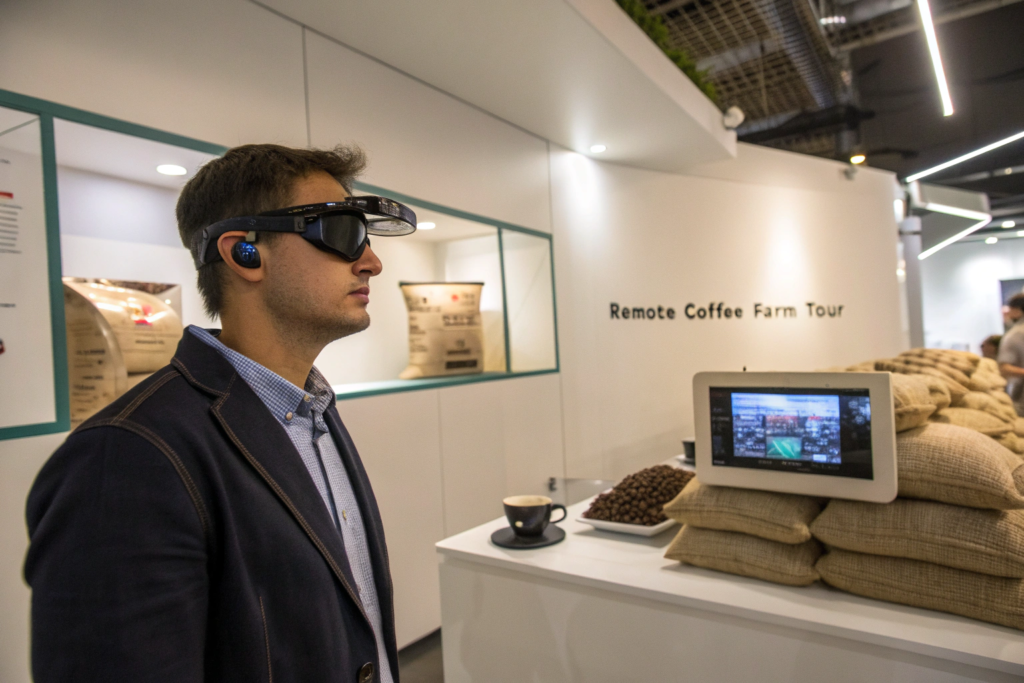
Can a Virtual Farm Tour Build as Much Confidence as a Physical Visit?
This is the big question. Can a screen replace a plane ticket? I've wrestled with this because I want you to visit Baoshan. I want you to walk the terraces, smell the fermentation tanks, and share a meal with the picking crew. It's a beautiful place. But I'm also realistic. Most buyers can't come every year.
A well-executed virtual farm tour is 80% as good for building initial trust. I'm not talking about a shaky phone video. I'm talking about a scheduled, guided walkthrough using a quality camera and a stable internet connection. I walk you through the nursery, the composting area, the drying beds, the warehouse.
The trick is interactivity. Can you stop me and ask, "Show me the underside of those drying beds?" Can you ask to zoom in on the parchment lot number? If the answer is yes, the virtual tour becomes a genuine audit. It's not just a marketing video. I've had a buyer from London spot a minor improvement we could make to our ventilation, just from a virtual tour. He was happy he saw it. I was happy to fix it. That's real connection. It's not the same as being here, tasting the mountain air, but it's a powerful, practical step that fits the speed of modern e-commerce.
Conclusion
The digital shift in B2B coffee isn't coming. It's here, right now, in the way we verify quality, build trust, and close deals. From live video cupping labs and blockchain-backed transparency to AI grading tools and hybrid trade shows that turn a three-day event into a year-long conversation—these aren't gimmicks. They're the new infrastructure of trust. But here's what hasn't changed: coffee is still a relationship business. A digital tool is just a bridge to a human decision.
The buyers who win will be the ones who use these trends to get faster, smarter, and closer to producers who actually grow great beans. And on the other side, a farm like ours in Baoshan can now tell its story directly, without going through five layers of middlemen. If you're looking to source Yunnan coffee in a way that's modern, transparent, and built on a real partnership, let's connect. Reach out to Cathy Cai at cathy@beanofcoffee.com. We'll set up a virtual tour, share our live grading data, and figure out a sourcing plan that makes sense for your business. No smoke and mirrors. Just good coffee and the tools to prove it.