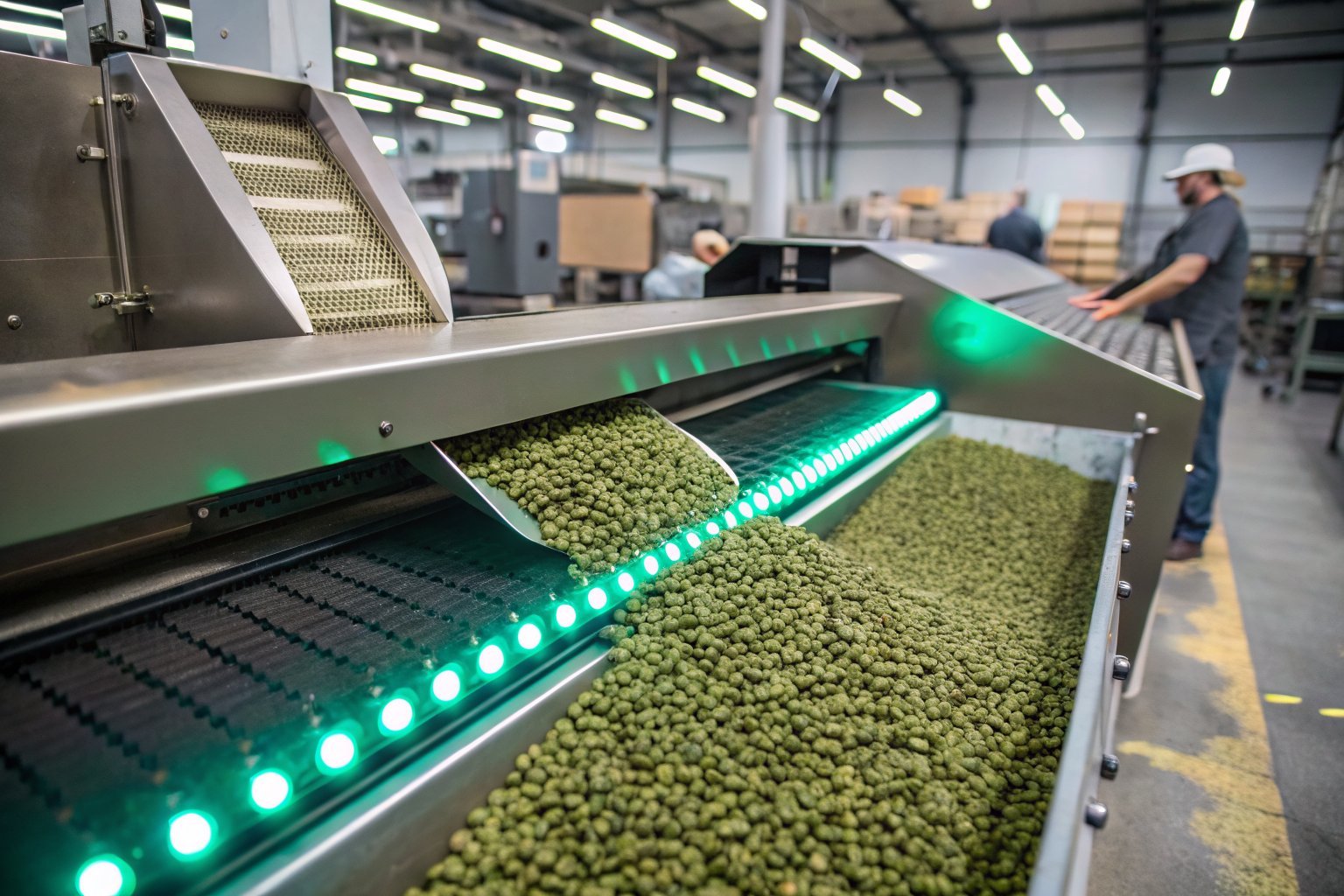
A buyer from a Japanese trading company visited our facility last year and spent an hour watching our color sorter in action. He told me that his company had reduced their defect rate from 8 percent to 1.5 percent in a single year by upgrading to a newer generation optical sorter. Color sorting is the most effective technology for removing defective beans from green coffee before export. A good color sorter can remove 95 to 99 percent of visible defects in a single pass. If you are buying green coffee, understanding how color sorters work helps you evaluate whether your supplier is using the right technology to deliver clean, consistent coffee. Let me walk you through the technology and what to look for.
How Does a Color Sorter Work for Green Coffee?
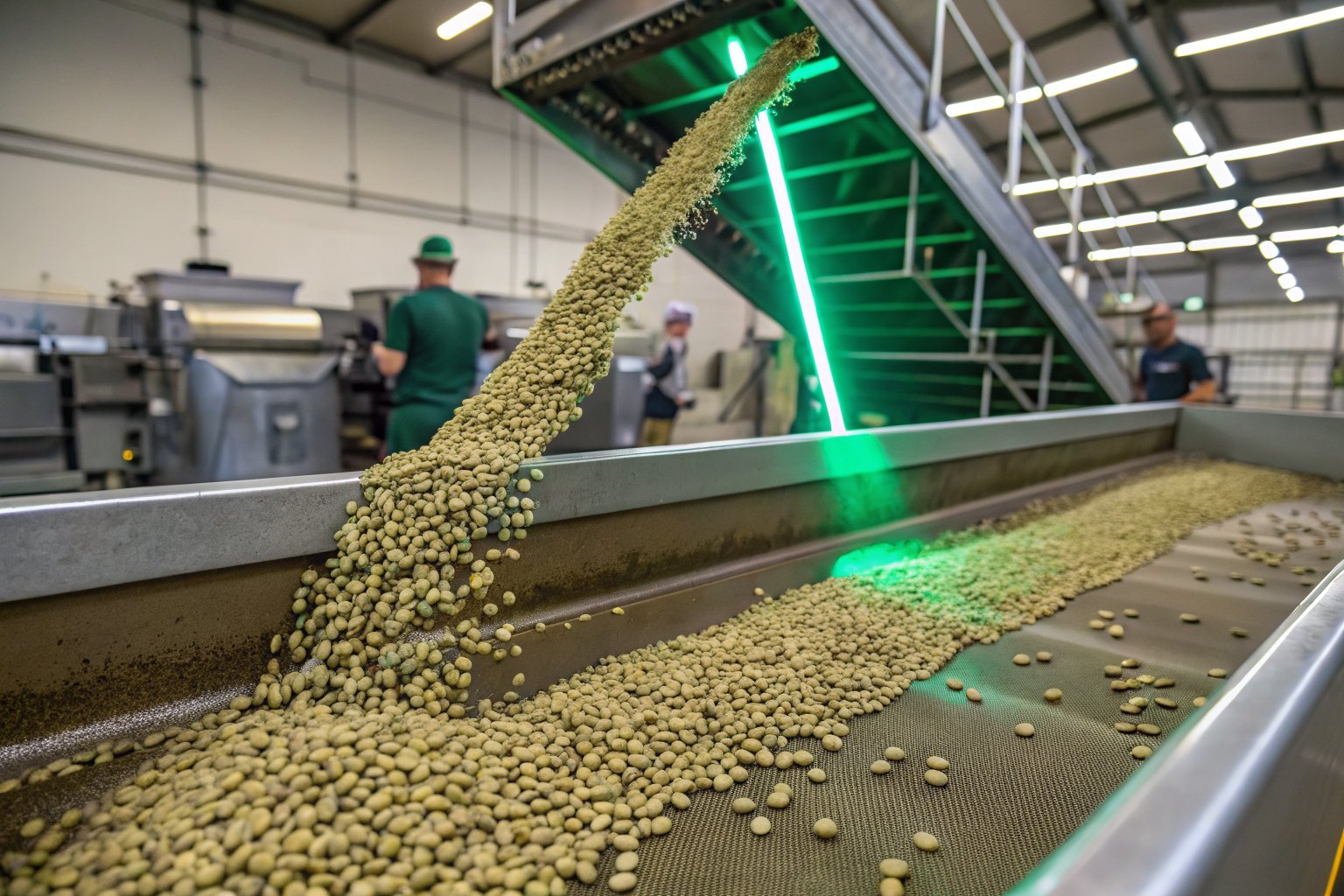
A color sorter uses high-speed cameras and air jets to identify and remove defective beans. The beans flow through the machine in a single layer, pass under the cameras, and the machine fires a precise air jet to eject any bean that falls outside the acceptable color range.
What Types of Defects Can a Color Sorter Remove?
A color sorter can remove black beans, sour beans, insect-damaged beans, broken beans, and most foreign matter. The machine detects color differences that the human eye can see — and some that it cannot. Modern sorters use multi-spectral cameras that see in visible and near-infrared light, which allows them to identify defects that are the same color as healthy beans but have different chemical compositions. The World Coffee Research color sorting study found that a modern optical sorter with NIR capability removed 97 percent of black beans, 94 percent of sour beans, and 91 percent of insect-damaged beans in a single pass. At Shanghai Fumao, we use a dual-pass sorting system — the first pass removes the obvious defects, and the second pass catches the subtle ones that the first pass missed.
What Is the Difference Between Basic and Advanced Color Sorters?
Basic color sorters use visible-light cameras only and can distinguish about 16 color levels. Advanced sorters use multi-spectral visible and NIR cameras with 256+ color levels and shape recognition. The advanced sorters can distinguish between a healthy bean and a bean with a tiny insect hole that is nearly invisible to the human eye. The Coffee Quality Institute's sorter technology comparison recommends that specialty-grade coffee producers use at least a mid-range sorter with 128 color levels and basic shape recognition. For commercial-grade coffee, a basic 64-level sorter is sufficient.
What Is the Impact of Color Sorting on Export Grade?
The difference between a single-sorted and double-sorted coffee is measurable in both physical defect count and cupping score.
How Much Does Color Sorting Reduce Defect Count?
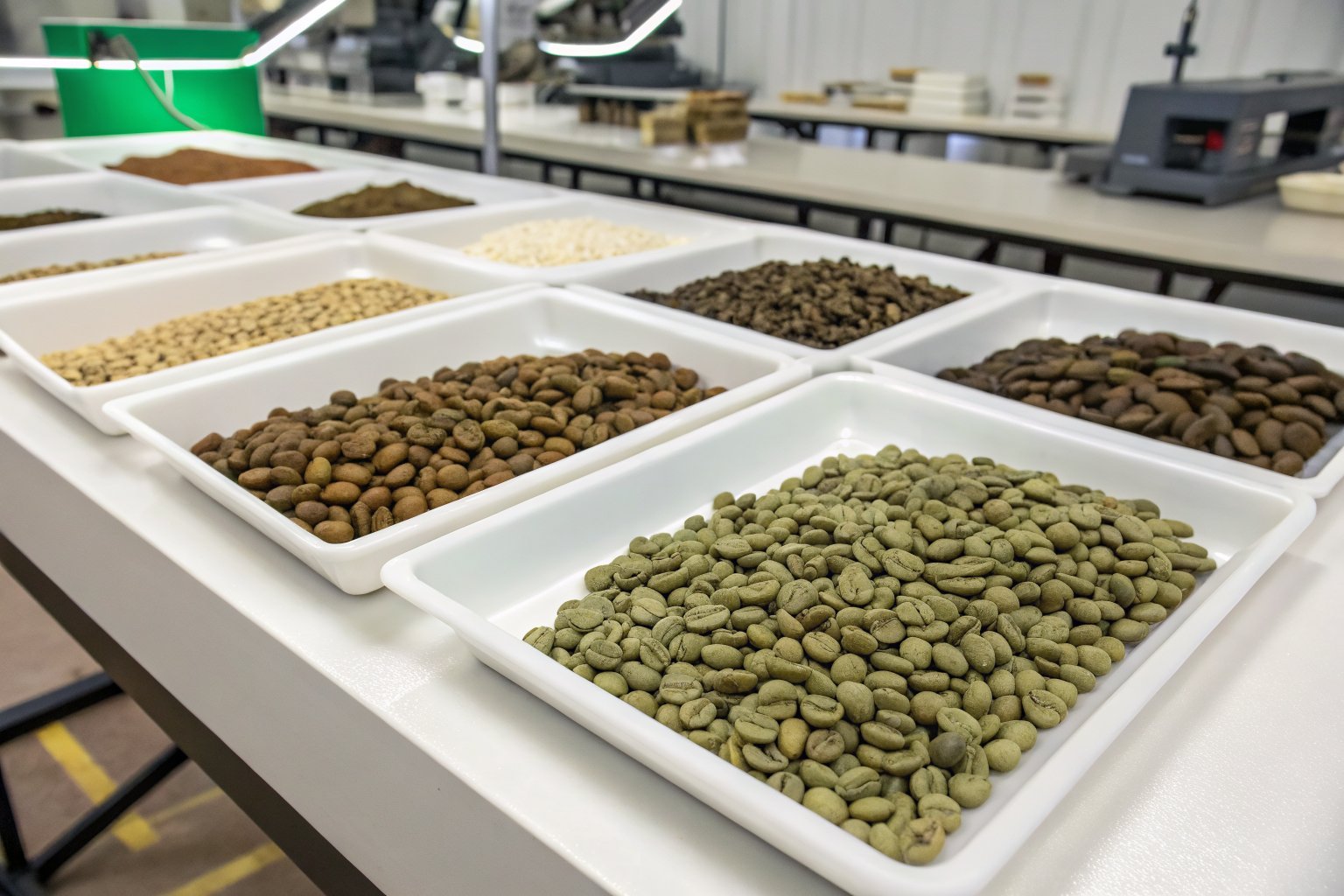
A single pass through a mid-range color sorter reduces the defect count by 70 to 85 percent. Two passes reduce the count by 90 to 97 percent. Three passes can approach 99 percent removal, but the yield loss from over-sorting starts to become uneconomical. The Specialty Coffee Association's sorting grade standards specify that specialty-grade coffee should have fewer than 5 full defects per 300 grams after sorting. A single-pass sorter on a typical commercial lot will achieve 8 to 12 defects. Two passes will bring it to 3 to 5 defects. At Shanghai Fumao, our double-sorted Yunnan Catimor consistently tests at 2 to 3 defects per 300 grams.
Does Color Sorting Improve Cupping Scores?
Yes, but the improvement is not dramatic. The primary benefit of color sorting is consistency, not flavor enhancement. Removing defective beans prevents off-flavors from contaminating the batch. A color-sorted lot will have a higher average cupping score and a much narrower standard deviation than an unsorted lot. The Roast Magazine's color sorting cupping study found that double-sorted coffee scored an average of 1.2 points higher than single-sorted coffee from the same lot, and 2.8 points higher than unsorted coffee. The improvement came primarily from the absence of defect flavors rather than enhancement of positive attributes.
How Do You Verify That Your Supplier Uses Effective Color Sorting?
Not all color sorters are the same, and not all suppliers maintain their sorters properly. You need to verify that the equipment is adequate and the settings are correct.
What Questions Should You Ask About Your Supplier's Sorter?
Ask four questions. What model and generation of sorter do you use? How many passes does the coffee go through? What rejection threshold do you use — how aggressive is the sorter set? And how often do you calibrate the sorter — daily, weekly, or monthly? The Green Coffee Association's sorter verification checklist provides a detailed evaluation form. The rejection threshold is the most important question. A sorter set too aggressively will reject 5 to 10 percent of good beans along with the defects. Set too conservatively, it will let through 2 to 5 percent of defects.
How Can You Test Sorter Effectiveness on the Coffee You Receive?
Take a 300-gram sample from the lot you receive and hand-sort it to count the defects. If the defect count is more than 5 full defects for a specialty-grade claim, the sorter is either underperforming or not being used for that lot. Compare the defect count to the supplier's claimed sorter specifications. At Shanghai Fumao, we provide pre-sort and post-sort defect counts for every lot. Buyers can see exactly how many defects were removed by the sorter and how many remain. This transparency helps build trust in the sorting process.
Does Color Sorting Eliminate the Need for Hand Sorting?
No. Even the best color sorter cannot catch every defect. Hand sorting remains necessary as a final quality control step, especially for specialty-grade coffee.
What Defects Do Color Sorters Miss?
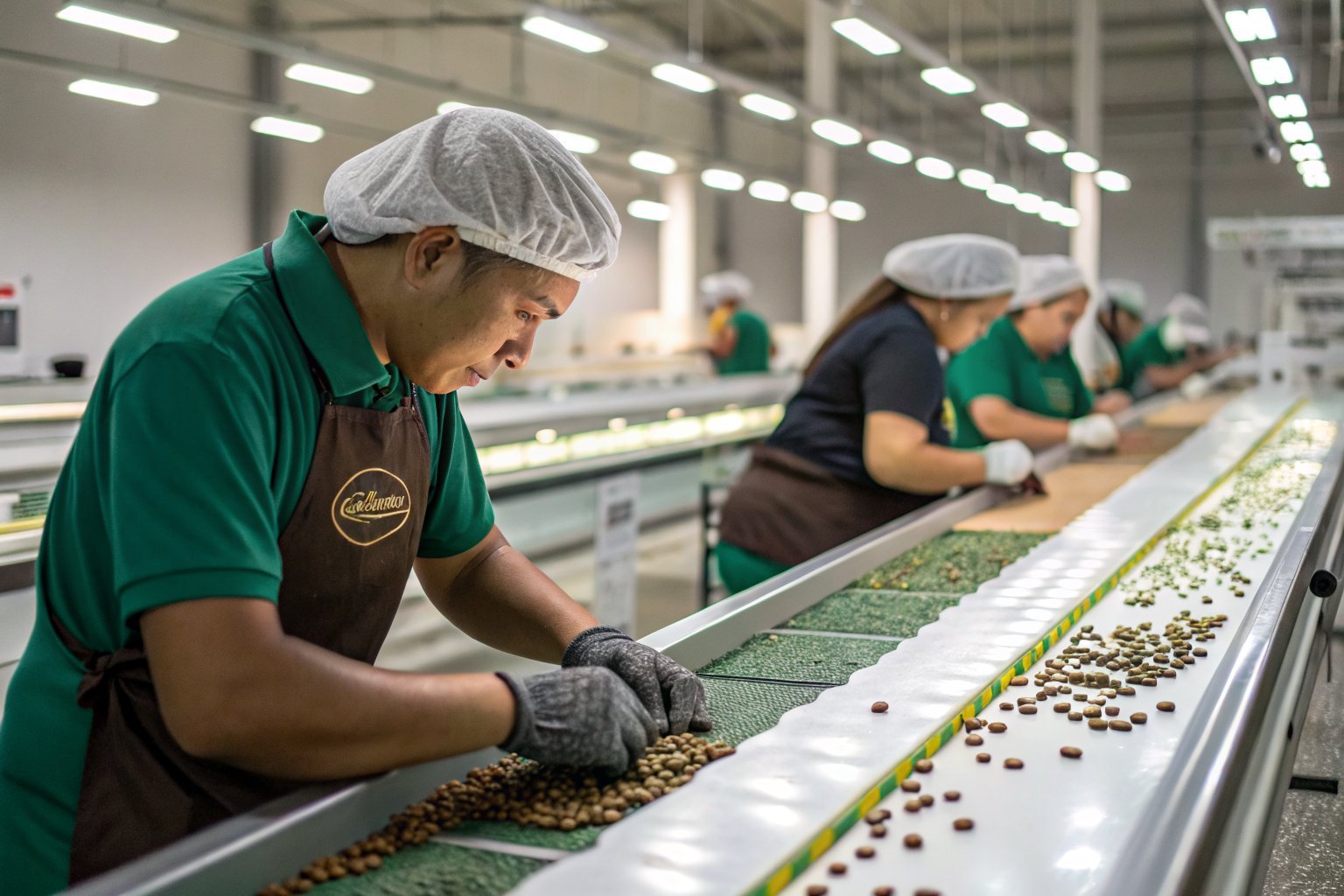
Color sorters struggle with defects that are the same color as healthy beans. Immature beans that are pale green but otherwise healthy-looking are the most common miss. Quakers — underripe beans that do not brown during roasting — are also difficult to detect because their green color is similar to normal beans. The Coffee Quality Institute's sorter limitation study found that even the best NIR sorters miss 3 to 7 percent of immature beans and 10 to 15 percent of Quaker-prone beans. Hand sorting after the sorter catches most of these. At Shanghai Fumao, our specialty-grade lots pass through the sorter twice and then through a hand-sorting station where trained sorters inspect every bean on a conveyor belt.
What Is the Right Balance Between Machine Sorting and Hand Sorting?
The optimal balance for specialty-grade coffee is two machine passes followed by one hand-sorting pass. The machine removes the bulk of defects efficiently. Hand sorting removes the subtle defects that the machine misses. For commercial-grade coffee, one machine pass with no hand sorting is sufficient for most markets. The International Coffee Organization's sorting cost analysis found that the combination of two machine passes and one hand pass is 30 to 40 percent more cost-effective than three machine passes alone, because hand sorting catches the defects that would require a third machine pass with diminishing returns.
Conclusion
Color sorters are the most effective technology for removing defective beans from green coffee. A modern optical sorter with NIR capability can remove 95 to 99 percent of visible defects in two passes. The impact on export grade is dramatic — defect counts drop from 15 to 20 per 300 grams to 2 to 5 per 300 grams. Verify your supplier's sorter specifications, ask about rejection thresholds and calibration frequency, and test the finished product with a hand-sort defect count. At BeanofCoffee, we use a dual-pass multi-spectral color sorter followed by a hand-sorting station for all our specialty-grade lots. When you receive a container from us, the defect count is guaranteed to meet specialty-grade standards. Contact Person: Cathy Cai Email: cathy@beanofcoffee.com Website: https://beanofcoffee.com/