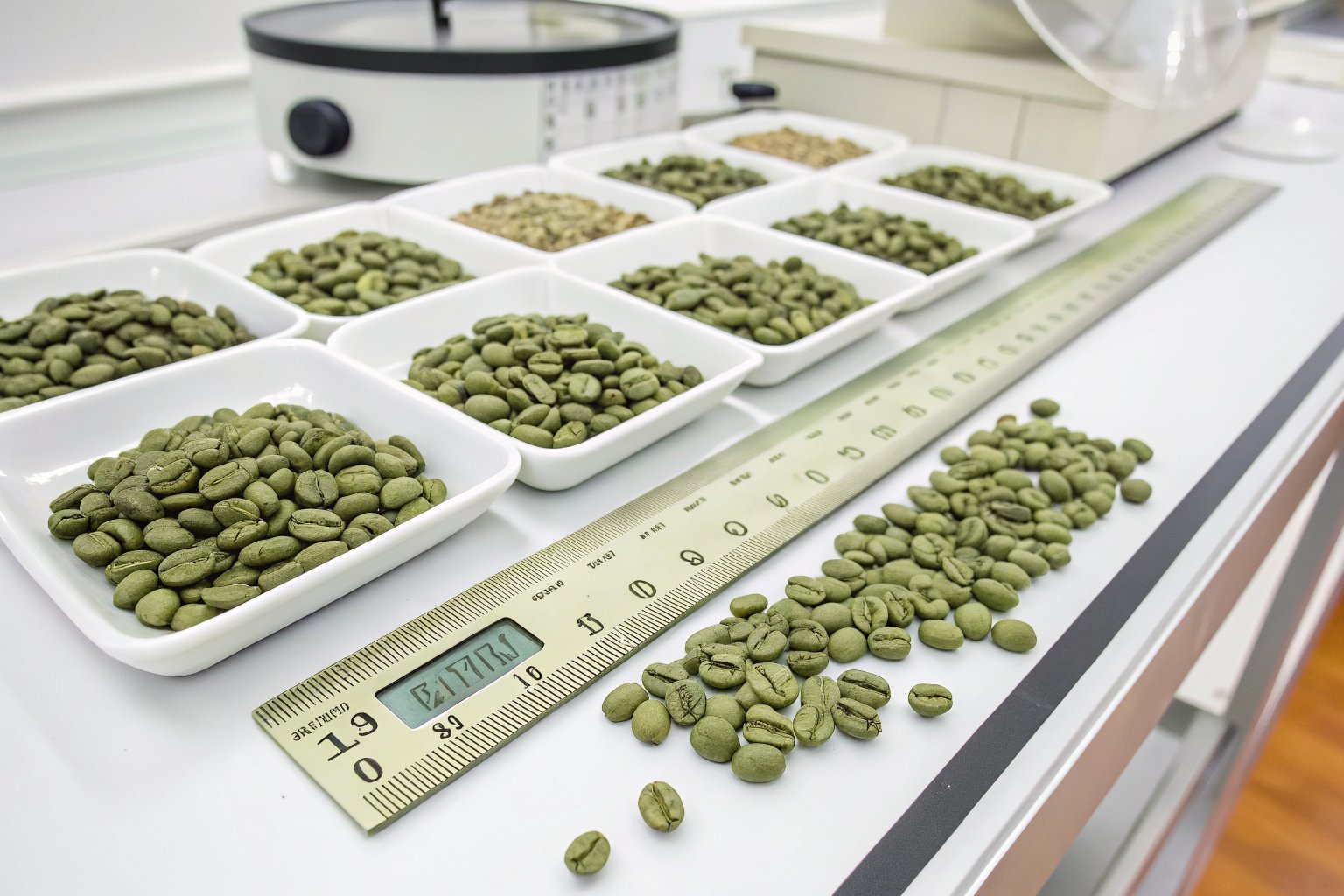
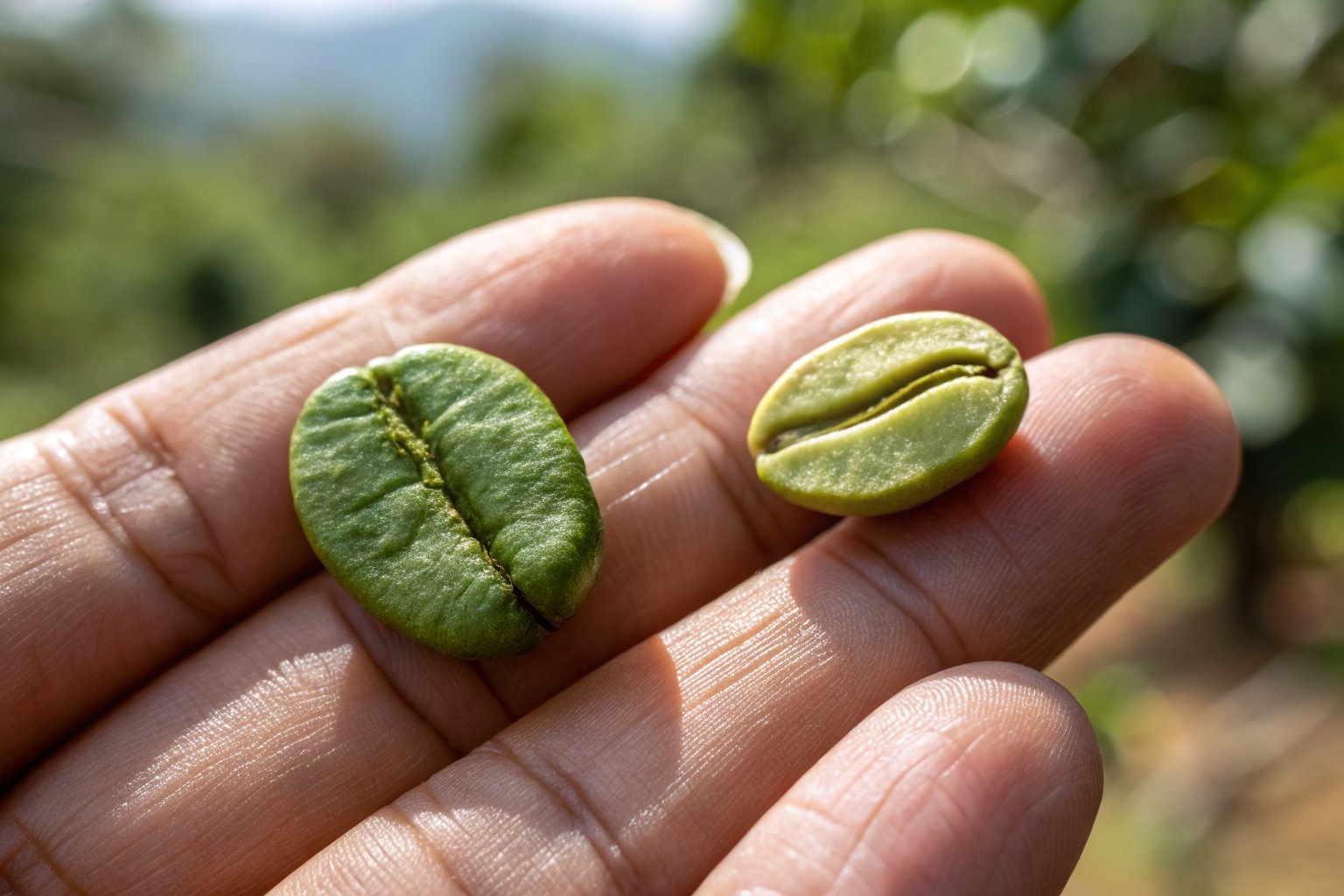
A buyer from a cold brew company in Texas asked me a question that most coffee people get wrong. He wanted to know whether larger coffee beans contain more caffeine than smaller beans. The common assumption is yes — bigger bean, more caffeine. But the reality is more nuanced. Caffeine content is not directly proportional to bean size. It depends on the variety, growing conditions, and the density of the bean. In fact, smaller beans from high-altitude farms can have higher caffeine concentration than larger beans from lower altitudes. Let me walk you through the real relationship between bean size and caffeine.
Does Bean Size Directly Correlate with Caffeine Content?
The short answer is no. Bean size and caffeine content have a weak negative correlation in most studies. Smaller beans within the same variety and lot tend to have slightly higher caffeine concentration than larger beans. The reason is that caffeine is concentrated in the outer layers of the bean, and smaller beans have a higher surface-area-to-volume ratio.
What Determines Caffeine Content in Coffee Beans?
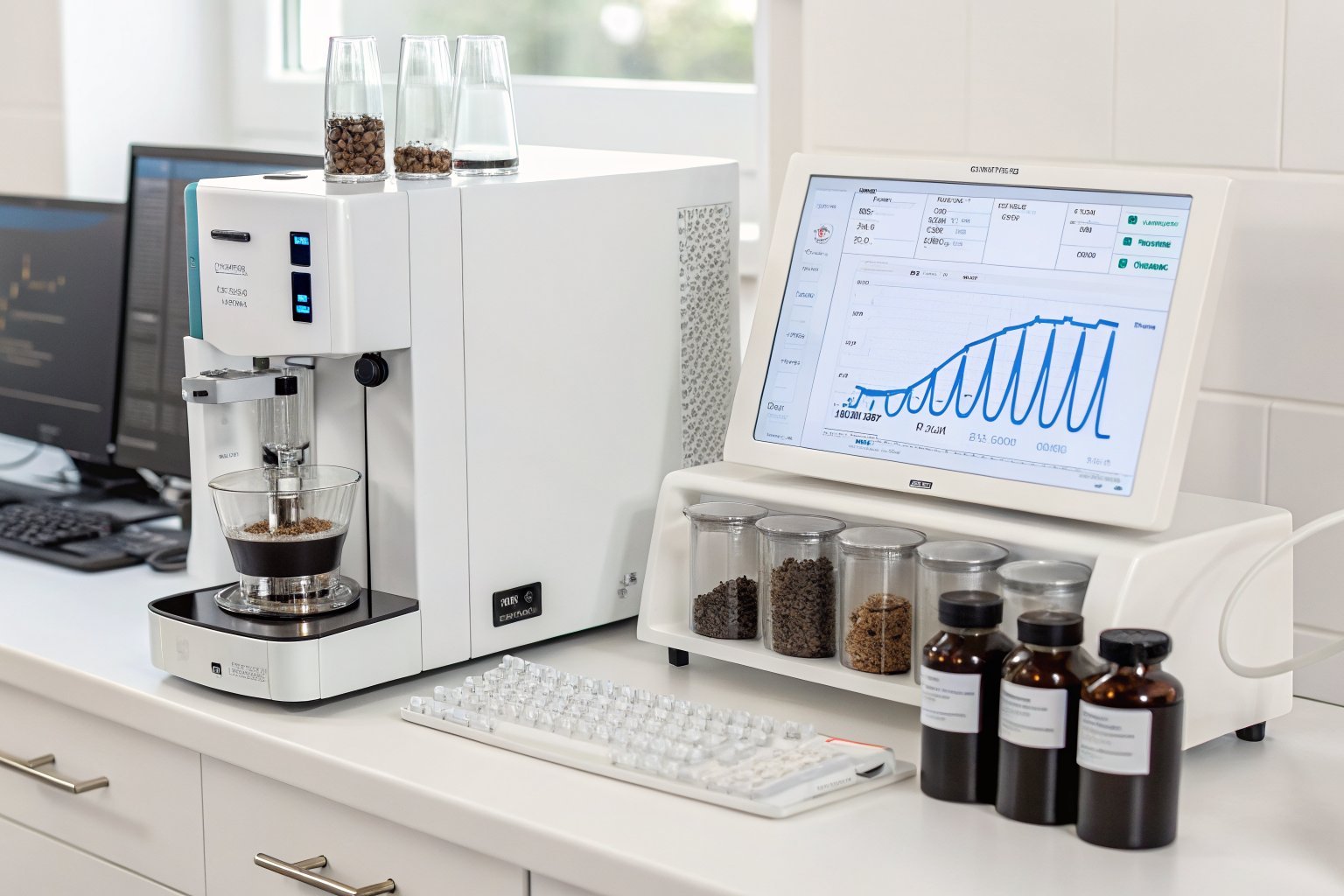
Caffeine content is primarily determined by the coffee variety. Robusta contains approximately 2.2 to 2.7 percent caffeine by dry weight, while Arabica contains 1.0 to 1.5 percent. Within Arabica, the caffeine content varies by variety: Typica and Bourbon average 1.2 percent, Catimor averages 1.3 percent, and some Ethiopian heirloom varieties can reach 1.5 percent. The World Coffee Research caffeine content database shows that variety accounts for approximately 70 percent of the variation in caffeine content. Growing conditions — altitude, soil, rainfall — account for 20 percent. Bean size accounts for less than 10 percent. At Shanghai Fumao, our Catimor averages 1.3 percent caffeine regardless of screen size, which is consistent with the scientific literature.
Why Do People Think Larger Beans Have More Caffeine?
The misconception comes from the fact that a larger bean contains a larger absolute amount of caffeine — more total milligrams per bean. But the concentration is roughly the same or slightly lower. A screen 18 bean might contain 1.6 milligrams of caffeine while a screen 15 bean from the same lot contains 1.3 milligrams. The larger bean has more total caffeine because it is physically bigger, but the coffee brewed from it will not be more caffeinated by weight. The Specialty Coffee Association's caffeine education guide explains that when you measure caffeine per gram of roasted coffee, the difference between screen 15 and screen 18 from the same lot is typically less than 5 percent. This is well within the natural batch-to-batch variation.
How Does Altitude Affect the Bean Size-Caffeine Relationship?
Altitude complicates the relationship because it affects both bean size and caffeine content in opposite directions.
Do High-Altitude Beans Have More or Less Caffeine?
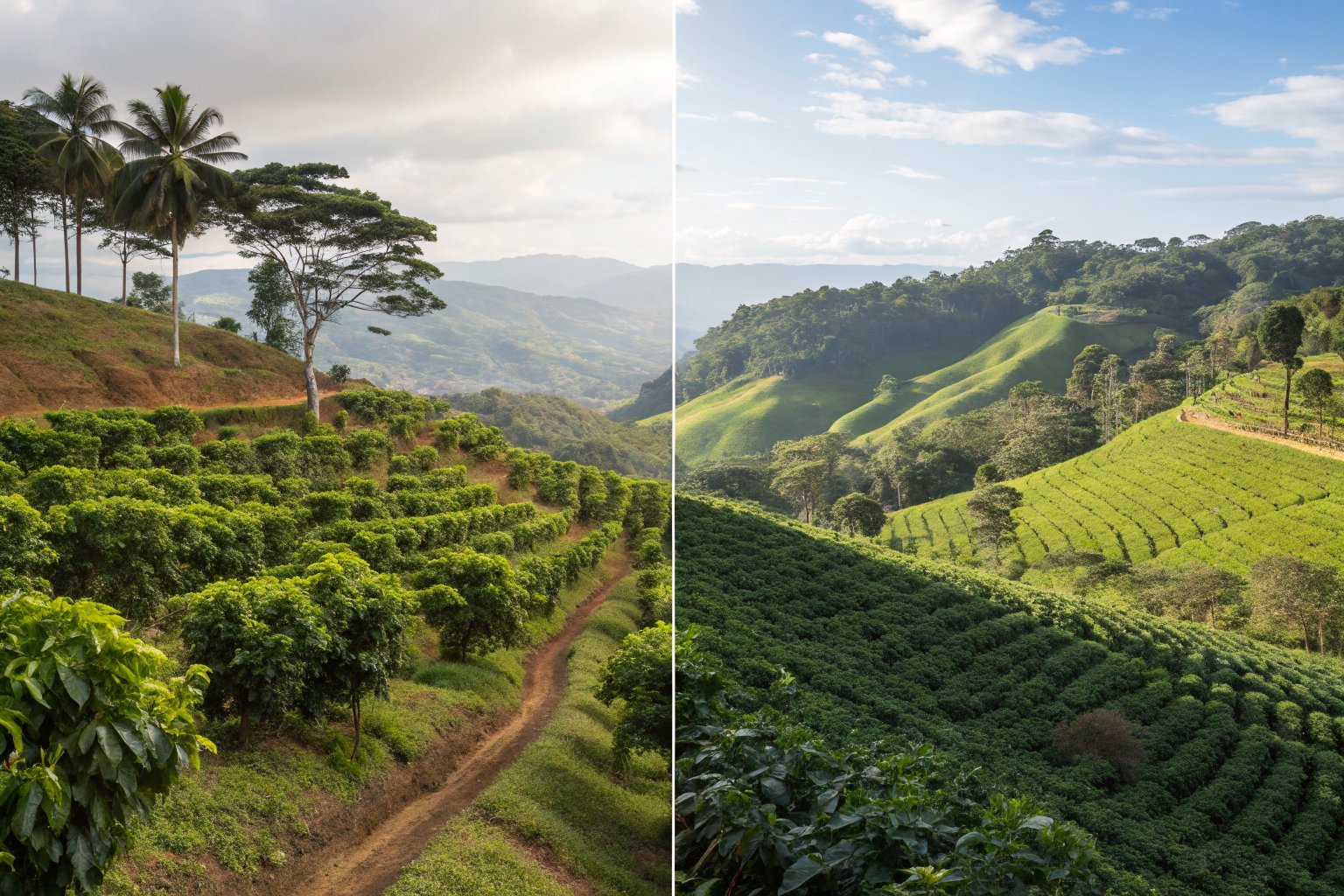
High-altitude coffee beans are smaller but denser, and they often have slightly higher caffeine concentration. The plant produces caffeine as a natural pesticide. At higher altitudes, the plant faces more UV stress and insect pressure, which triggers higher caffeine production. The same bean that is smaller at 1,600 meters than it would be at 800 meters may actually have a higher caffeine percentage. The Coffee Quality Institute's altitude-caffeine study found that Arabica grown above 1,400 meters contained an average of 1.35 percent caffeine, compared to 1.15 percent for the same variety grown below 800 meters. The higher-altitude beans were 10 to 15 percent smaller in screen size but 17 percent higher in caffeine concentration.
Should You Choose Smaller Beans for Higher Caffeine Brews?
If maximum caffeine is your goal, choose Robusta over Arabica — it has roughly double the caffeine. Within Arabica, choose high-altitude lots regardless of screen size. A screen 15 high-altitude bean will have more caffeine per gram than a screen 18 low-altitude bean from the same variety. At Shanghai Fumao, our high-grown Yunnan Catimor at 1,400 meters tests at 1.35 percent caffeine, while our lower-grown lots at 900 meters test at 1.2 percent. The difference is consistent and measurable. For buyers who need maximum caffeine in their cold brew or espresso blends, we recommend our high-altitude lots.
How Does Caffeine Content Affect Extraction and Flavor?
Caffeine contributes to the bitterness and body of coffee. Understanding how bean size affects caffeine extraction helps you optimize your brewing.
Do Smaller Beans Extract Caffeine Faster?
Yes. Caffeine is highly soluble and extracts quickly — typically 80 to 90 percent of the caffeine is dissolved within the first 30 seconds of brewing. Smaller beans have more surface area per gram, which means the caffeine is more accessible to the water. The difference is measurable but small: a finer grind from smaller beans extracts caffeine 5 to 10 percent faster than a coarser grind from larger beans. The Roast Magazine's caffeine extraction study found that espresso ground from screen 15 beans reached peak caffeine extraction in the cup approximately 8 percent faster than espresso from screen 18 beans of the same lot, given identical grind settings. For a 30-second shot, the difference was approximately 3 percent more caffeine in the cup from the smaller beans.
Does Caffeine Content Affect the Perceived Bitterness of Brewed Coffee?
Yes, but the effect is smaller than most people assume. Caffeine contributes roughly 10 to 15 percent of the total bitterness in brewed coffee. The rest comes from chlorogenic acid lactones and Maillard reaction products. A 20 percent difference in caffeine content would change the perceived bitterness by only 2 to 3 percent — barely detectable to most drinkers. The Journal of Agricultural and Food Chemistry's bitterness source analysis quantifies the contribution of each bitter compound. For a cold brew or iced coffee where bitterness is less desirable, choosing a lower-caffeine Arabica variety makes a small but noticeable difference.
How Do You Use Bean Size and Caffeine Data in Sourcing?
If you are sourcing coffee for a specific caffeine target — low-caffeine for evening blends or high-caffeine for energy drinks — the data is useful.
What Caffeine Information Should You Request from Suppliers?
Ask for the caffeine content as a percentage of dry weight, tested by HPLC or UV-Vis spectrophotometry. This is more useful than the total milligrams per bean because it scales with your recipe. A coffee at 1.3 percent caffeine will deliver 13 milligrams of caffeine per gram of roasted coffee, regardless of bean size. The International Coffee Organization's caffeine testing standards specify that HPLC is the reference method with an accuracy of plus or minus 0.05 percent. At Shanghai Fumao, we test caffeine content on our premium lots using HPLC and provide the data on request.
Can You Blend for a Target Caffeine Level?
Yes, and this is a common practice in the commercial coffee industry. Blend a high-caffeine Arabica or Robusta with a standard Arabica to hit a specific caffeine target. The formula is simple: the blend's caffeine content is the weighted average of the components. For a 2.0 percent caffeine target, blend 70 percent standard Arabica at 1.2 percent with 30 percent Robusta at 2.5 percent to get approximately 1.6 percent. The Green Coffee Association's caffeine blending guide provides a calculator for determining blend ratios.
Conclusion
Bean size is a poor predictor of caffeine content. Variety and altitude are the primary drivers. Smaller high-altitude beans often have higher caffeine concentration than larger low-altitude beans. Within the same lot, screen 15 and screen 18 beans differ in caffeine per bean but not significantly in caffeine per gram. If you need high caffeine, choose Robusta or high-altitude Arabica. If you need low caffeine, choose low-altitude Typica or Bourbon. At BeanofCoffee, we provide caffeine content data for all our premium lots. Whether you need high-caffeine beans for cold brew or low-caffeine beans for evening blends, we can help you select the right lot. Contact Person: Cathy Cai Email: cathy@beanofcoffee.com Website: https://beanofcoffee.com/