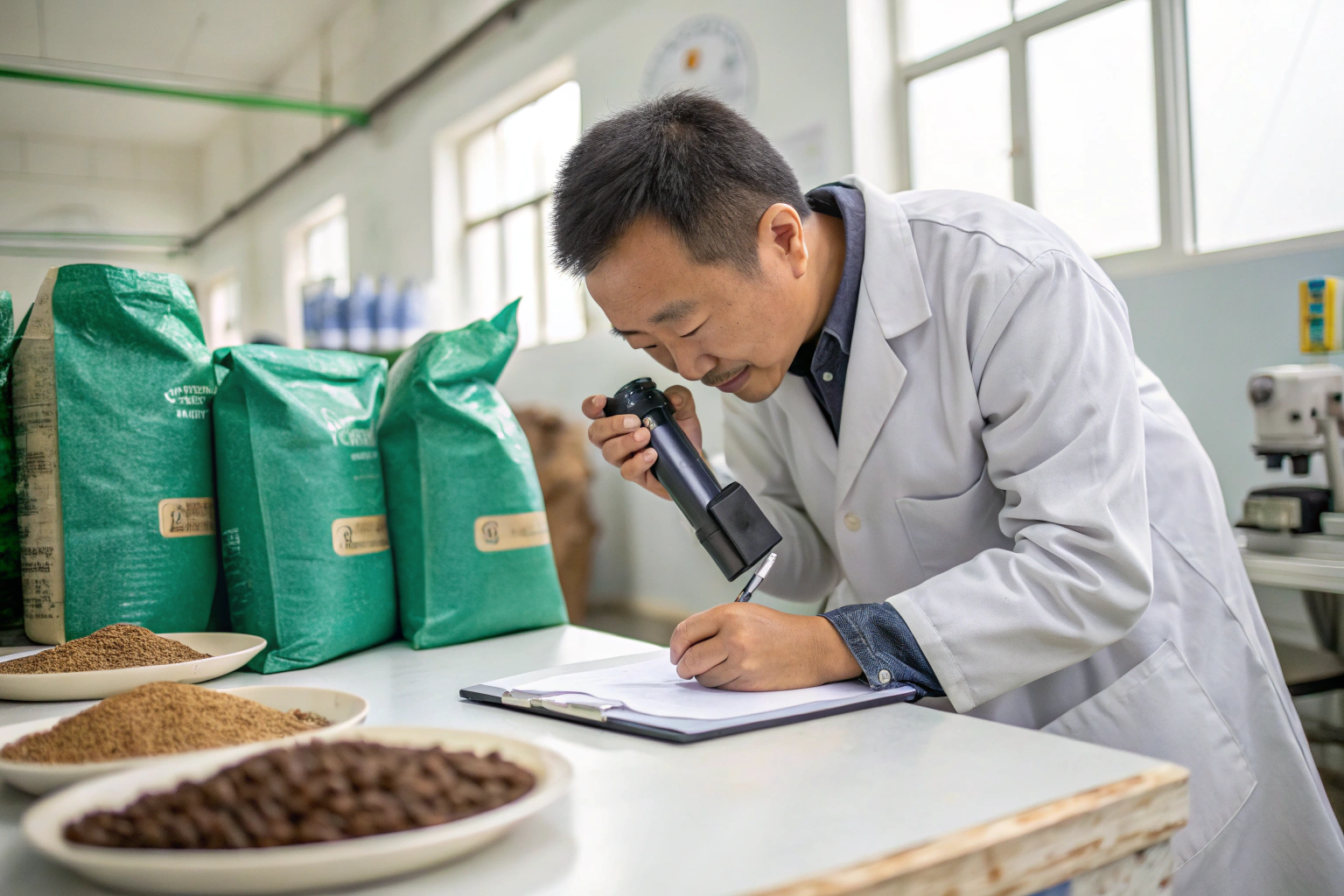
You buy green coffee. You want to know if it is good. You cup it. You check moisture. You check screen size. But you still wonder. Will this lot roast well? Will it taste sweet? Will it hold up in a blend? A refractometer can help you answer those questions. But most people use it wrong. They think it measures green beans. It does not. Let me show you how it really works.
A refractometer measures dissolved solids in brewed coffee, not in green beans. To understand green bean potential, you roast a small sample, brew it in a controlled way, measure the TDS, and calculate extraction yield. A high extraction at a normal brew ratio suggests good solubility and sugar development. A low extraction suggests dense, underdeveloped, or uneven beans. At BeanofCoffee, we test sample roasts from our Yunnan lots this way before we ship.
So, what does this mean for your buying decisions? It means you can add one more data point. Not a perfect one. But a useful one. Let me walk you through the whole method.
What Does a Refractometer Actually Measure?
You may have seen a refractometer in a cafe. The barista puts a few drops of coffee on the glass. They press a button. A number appears. That number is TDS. Total dissolved solids. It tells you how much of the coffee dissolved into the water.
A refractometer measures the refractive index of a liquid, which converts to total dissolved solids, or TDS. In coffee, TDS tells you the strength of the brew. It does not measure the green bean. It measures the brewed liquid. So, to judge green bean potential, you must first roast and brew the bean, then measure the result.
Another way to look at this is simple. The refractometer is a scale. It weighs what is in the cup. It does not weigh what is in the bag. So, what does this mean? It means the reading is only useful if you control the roast and the brew. If your roast is uneven, the reading is noisy. If your brew is sloppy, the reading is wrong. So, control comes first. Measurement comes second.
| What It Measures | What It Does Not Measure |
|---|---|
| TDS in brewed coffee | Green bean moisture |
| Brew strength | Bean density directly |
| Extraction yield (with math) | Farm practices |
| Consistency across lots | Cup score by itself |
Can a Refractometer Measure Green Coffee Directly?
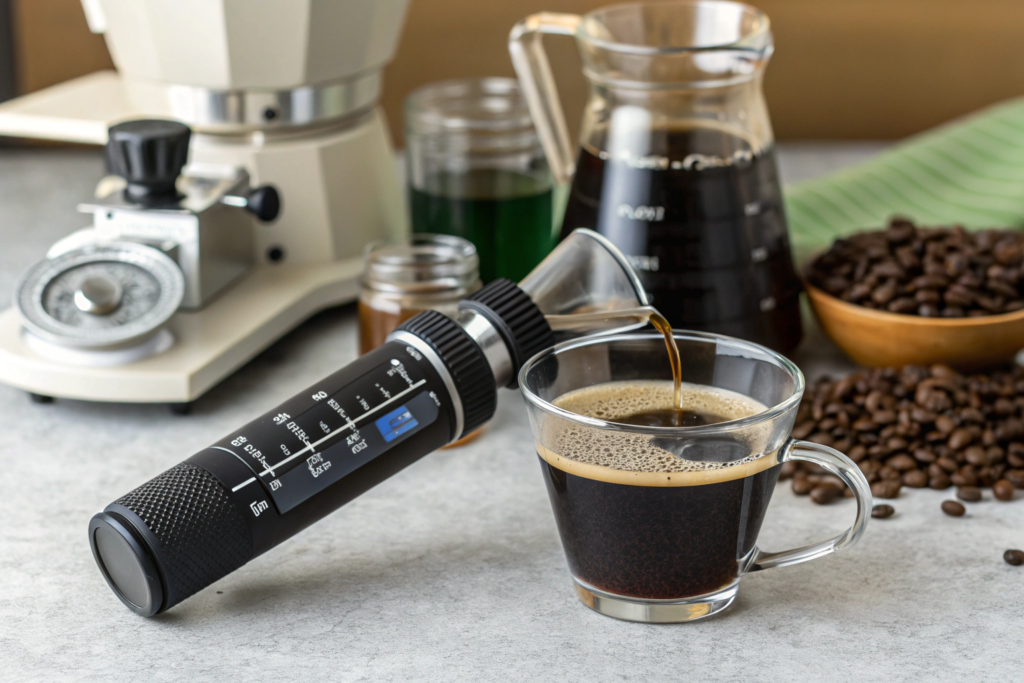
No, it cannot. This is the most common mistake. Some buyers think they can put a green bean on the glass and get a number. That does not work. The Specialty Coffee Association explains refractometer use for brewed coffee. The Coffee Institute also shares research on green coffee measurement. A green bean is solid. It has no liquid to refract. You need to extract the coffee first. So, the refractometer is a tool for the cup, not the bag. Once you accept that, the method becomes clear. Roast a sample. Brew it. Measure it. Then judge.
What Is TDS and Why Does It Matter?
TDS stands for total dissolved solids. It is shown as a percentage. A typical filter coffee reads 1.15% to 1.45% TDS. Espresso reads 8% to 12% TDS. The number tells you how strong the brew is. If it is too low, the coffee tastes weak. If it is too high, the coffee tastes heavy or bitter. The National Coffee Association explains coffee basics for buyers and roasters. TDS matters because it connects to extraction. If you know the TDS and the brew ratio, you can calculate how much of the coffee actually dissolved. That number is the extraction yield. And that number tells you about the bean.
How Do You Test Green Beans With a Refractometer?
You have a new lot. You want to know its potential. You cannot test the green bean directly. So, you build a small test. It takes about an hour. It gives you real data. Let me show you the steps.
To test green bean potential, roast a 100 to 200 gram sample to a medium level, rest it for 8 to 24 hours, brew it with a fixed recipe, measure the TDS with a refractometer, and calculate extraction yield. Compare the result to a reference lot. Higher extraction at the same recipe often means better solubility and sweetness potential.
I do this for every new lot from Yunnan. I use the same roaster. I use the same brew recipe. I use the same water. That control makes the comparison fair. If I change the recipe, the data means nothing. So, what does this mean? It means consistency in your test matters more than the refractometer brand. A cheap device with a good method beats an expensive device with a bad method.
How Do You Prepare a Sample for Testing?
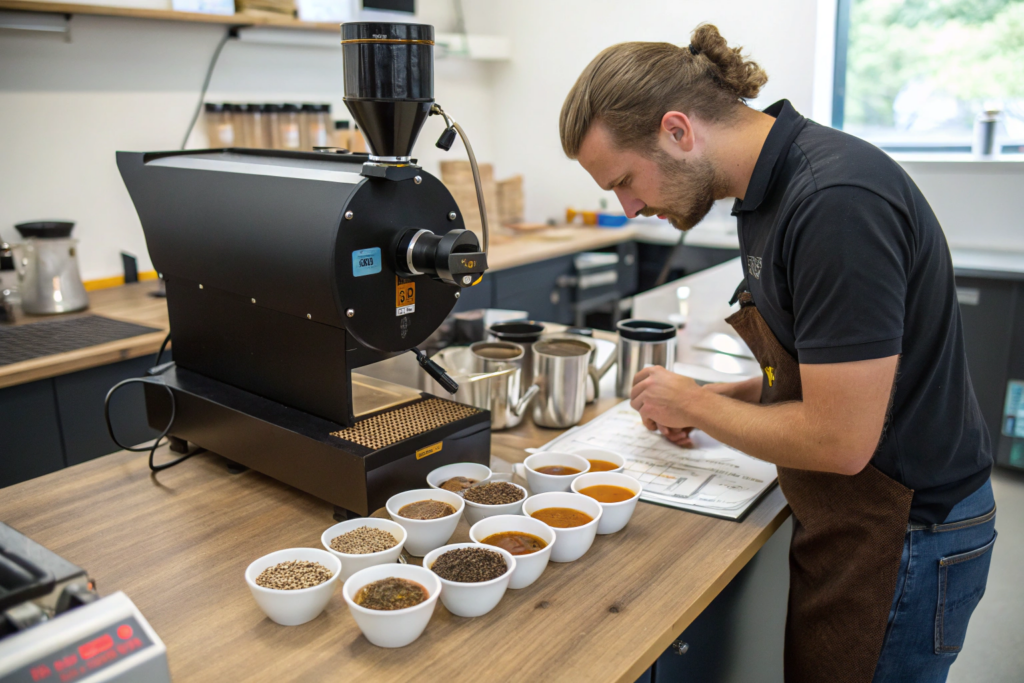
Start with a clean green sample. Remove defects. Weigh 100 to 200 grams. Roast to a medium level. Aim for a development time that matches your normal profile. Let the beans rest for 8 to 24 hours. Then grind them the same way every time. The Perfect Daily Grind explains sample roasting and resting. The Roast Magazine covers roast development and its effect on solubility. I write down every step. Roast date. Roast level. Rest time. Grind setting. Water temperature. If I skip a note, I lose the comparison. So, keep a log. It is boring. It works.
What Brewing Method Gives the Clearest Data?
Use a simple method. A pour-over or a French press works well. I use a fixed ratio. For filter, I use 60 grams of coffee per liter of water. I use water at 92 to 94 degrees Celsius. I keep the brew time the same. Then I stir and let it settle. Then I take a clean sample. The Barista Magazine shares brewing and measurement tips. The Coffee Review publishes cupping and tasting methods. A clean method gives a clean reading. A messy method gives noise. So, keep it simple. Do the same thing every time. That is the whole trick.
| Test Step | Fixed Setting |
|---|---|
| Sample size | 100-200 g |
| Roast level | Medium |
| Rest time | 8-24 hours |
| Brew ratio | 60 g/L |
| Water temp | 92-94°C |
Can Refractometer Data Predict Roast Quality?
You may hope the refractometer can tell you everything. It cannot. It is one tool. It does not replace cupping. It does not replace your nose. But it can support your decisions. It can help you compare lots. It can help you spot problems early. So, how far can you trust it?
Refractometer data can support roast quality decisions, but it cannot predict flavor by itself. It helps you compare lots, check consistency, and spot uneven extraction. A high extraction yield often links to sweetness and balance. A low yield often links to density, underdevelopment, or grind issues. Use it with cupping, not instead of cupping.
I learned this the hard way. I once rejected a lot because the extraction was low. Then I cupped it. It tasted great. The problem was my grind, not the bean. So, I changed the grind and tested again. The extraction jumped. The lesson was clear. The refractometer measures the brew. It does not measure the bean alone. So, what does this mean? It means you should use it as a guide. Not as a judge.
How Do TDS and Extraction Yield Connect to Flavor?
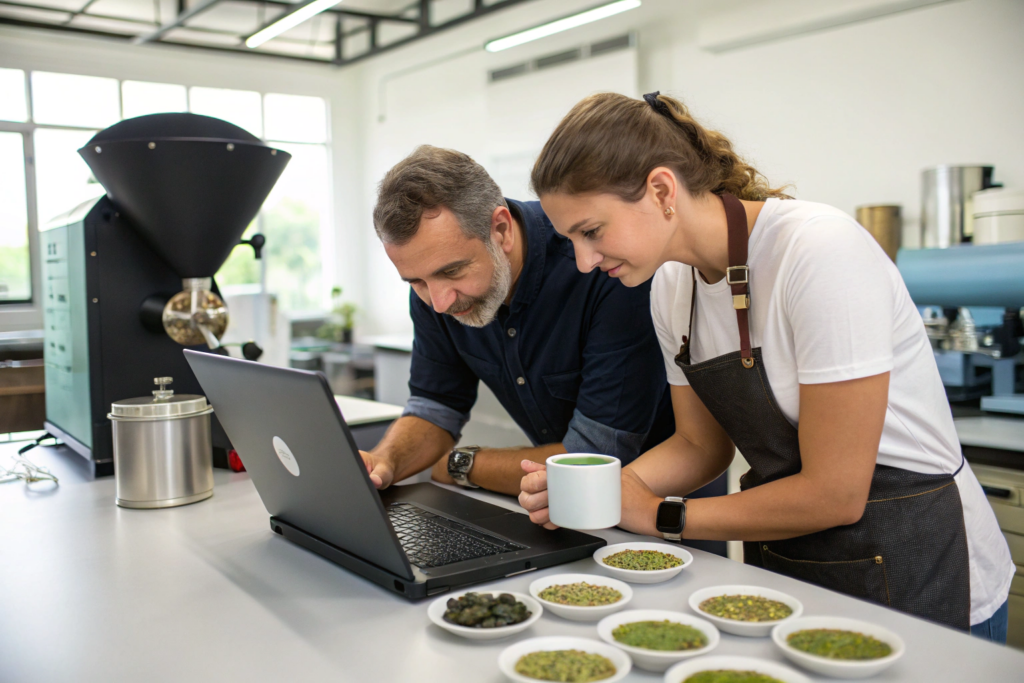
They connect in a simple way. Extraction yield is the percentage of coffee that dissolved into the water. For filter coffee, a good range is 18% to 22%. Below 18%, the coffee may taste sour or weak. Above 22%, it may taste bitter or dry. The Daily Coffee News covers extraction research and brewing science. The Tea & Coffee Trade Journal reports on quality control practices. A sweet, balanced cup often sits in that 18% to 22% window. So, when a lot hits that window easily, it has good potential. When it struggles, you may need a different roast or grind. That is useful information before you buy 20 tons.
Can You Predict Roast Profile From Refractometer Data?
You can get hints, but not a full picture. A dense bean often extracts slowly. A less dense bean extracts fast. A well-developed roast extracts evenly. An underdeveloped roast extracts unevenly. The National Coffee Association explains roast development basics. Sprudge covers specialty coffee trends and tools. I use extraction data to adjust my sample roast. If the extraction is low, I try a slightly longer development. If it is high, I check for overdevelopment. This back-and-forth teaches me about the lot. It does not replace cupping. But it speeds up my learning. So, use it as a compass. Not as a map.
What Are the Limits of Refractometer Readings?
You may want a simple number. One number to rule them all. That is not how coffee works. The refractometer is useful, but it has limits. If you ignore those limits, you will make bad decisions. Let me be honest about them.
Refractometer readings have real limits. They depend on grind, water, temperature, filter, and technique. They can be off by 0.1% or more. They do not measure aroma, sweetness, or body directly. They also do not replace cupping. So, use them as one data point among many. Never buy or reject a lot based on TDS alone.
Another way to look at this is simple. A refractometer is a thermometer for coffee. It tells you the temperature. It does not tell you if the patient is happy. You still need to taste. You still need to smell. So, what does this mean? It means the tool supports your senses. It does not replace them. Keep your palate sharp. Keep your records clean. Then the data becomes useful.
| Limit | Why It Matters |
|---|---|
| Grind changes reading | Same bean, different number |
| Water quality matters | Minerals shift TDS |
| Filter type matters | Paper vs metal |
| Technique matters | Stir, time, temp |
| Flavor is not measured | Cupping still needed |
What Mistakes Distort Refractometer Readings?
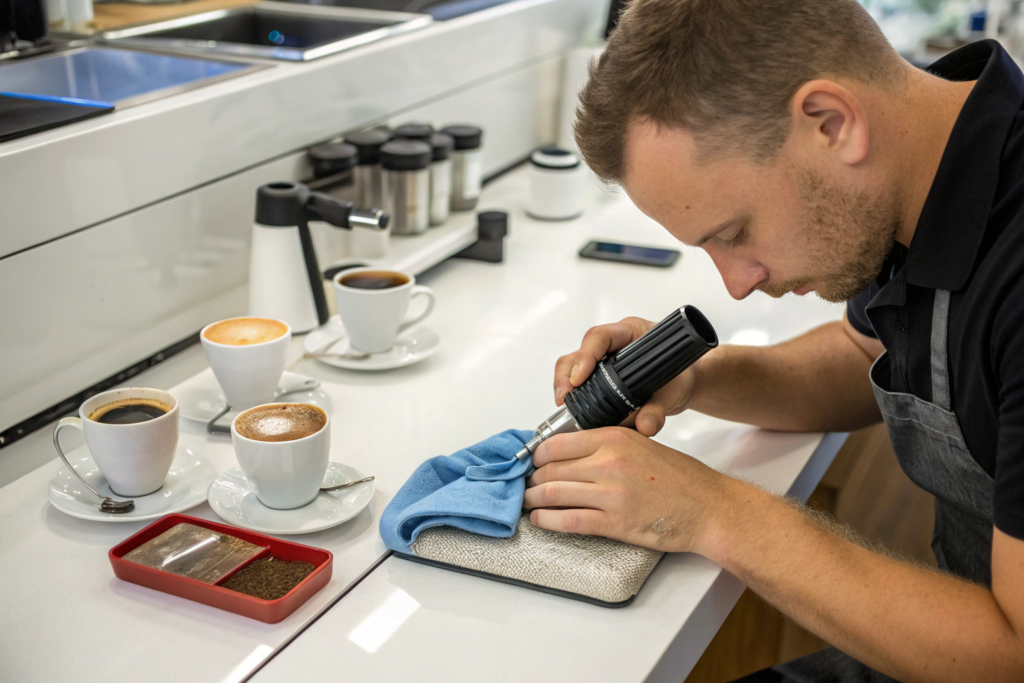
Several mistakes distort readings. First, dirty glass. A dirty prism gives a wrong number. Second, hot sample. Let the coffee cool to room temperature. Third, poor mixing. Stir the brew before you take a sample. Fourth, wrong calibration. Use distilled water to zero the device. The International Coffee Organization tracks quality standards for coffee trade. The Food Dive covers food and beverage quality trends. I check my refractometer every morning with distilled water. It takes 30 seconds. It saves bad data. So, build a simple routine. Clean. Cool. Stir. Calibrate. Then measure.
How Should You Compare Multiple Lots?
Compare lots with the same method. Same roast. Same rest. Same brew. Same grind. Same water. Then line up the numbers. The Mordor Intelligence reports on coffee market and quality trends. The Global Coffee Platform promotes good sourcing practices. I use a simple table. Lot name. Moisture. Extraction yield. Cup score. Notes. Then I rank them. A lot with high extraction and a good cup score moves to the top. A lot with high extraction but a bad cup score gets a second look. Maybe the roast was off. Maybe the storage was bad. So, the table helps me ask better questions. That is the real value. Not the number itself. The question it creates.
Conclusion
A refractometer is a useful tool for coffee importers and roasters. It does not measure green beans directly. It measures brewed coffee. But when you control the roast and the brew, it can tell you about a lot's potential. It can show solubility, consistency, and extraction behavior. Use it with cupping. Use it with moisture data. Use it with your own palate. Then you can buy with more confidence and fewer surprises.
If you want a supplier who tests every lot before shipping, contact us. BeanofCoffee owns over 10,000 acres in Baoshan, Yunnan. We export Catimor, Arabica, and Robusta to North America, Europe, and Australia. We can share moisture reports, cupping notes, and sample roast data. For orders or questions, email Cathy Cai at cathy@beanofcoffee.com. She will help you find the right lot for your roastery.