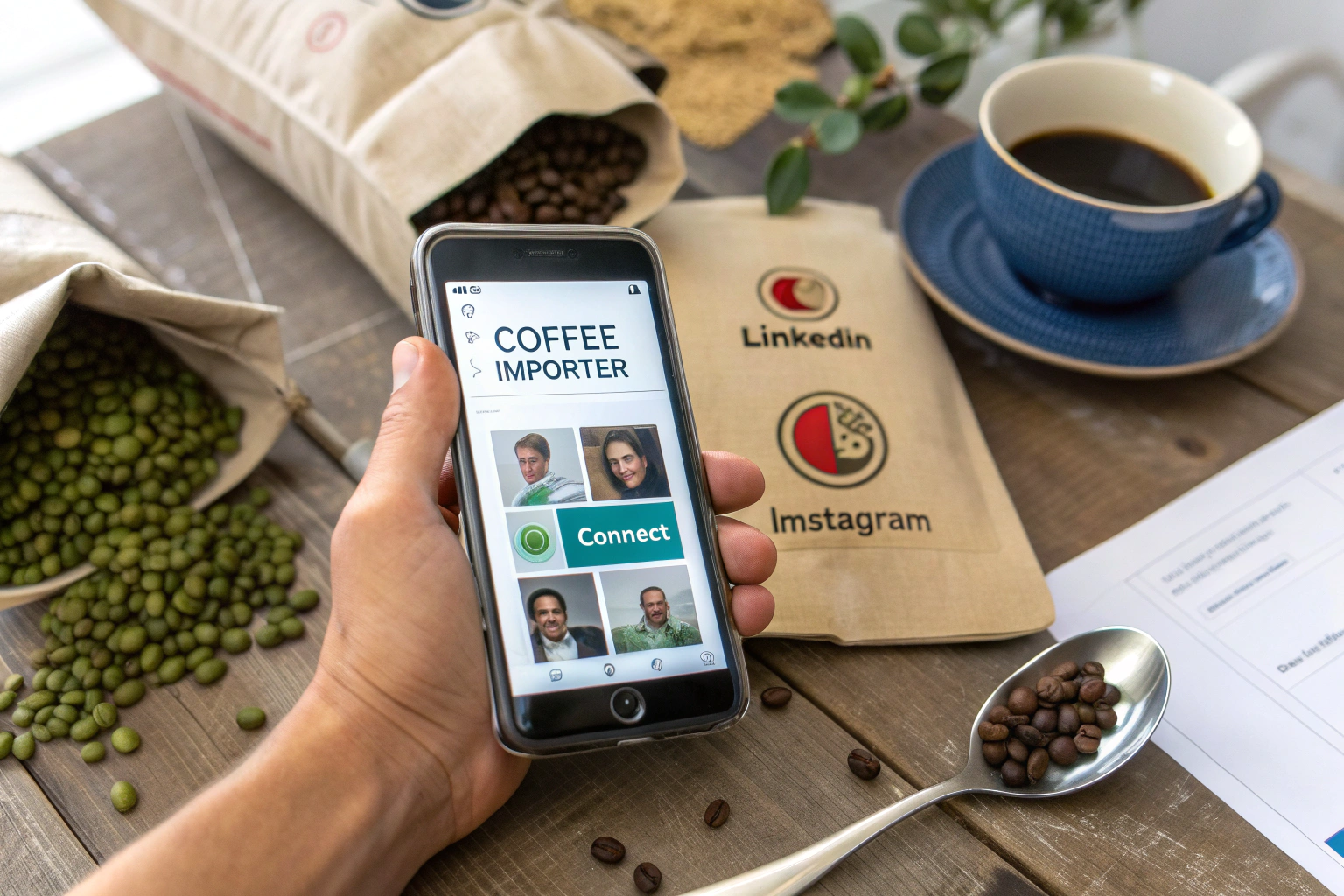
I found my biggest Australian client on Instagram. I'm almost embarrassed to admit it. For years, I thought social media was for teenagers and latte art photos. It wasn't for serious business. Real coffee traders made deals at trade shows, over dinner, through decades-old relationships. Then my son, who manages some of our digital presence, showed me something. He had been posting daily photos from our farm—the harvest, the drying beds, the cupping lab. Just simple, honest content. One day, a buyer from a major Australian roastery commented: "Can you ship to Melbourne?" That comment turned into a sample request. The sample turned into a pallet order. The pallet turned into a container. Now they buy ten containers a year. They found me. I didn't find them. That's the power of social media used correctly.
You use social media to find coffee importers by positioning yourself not as a salesperson broadcasting pitches, but as a credible, transparent, and accessible origin partner sharing valuable content. LinkedIn is the primary platform for direct B2B outreach and professional networking. Instagram is the platform for visual storytelling and brand building. Facebook groups host active, engaged communities of coffee professionals. The strategy on each platform is different: LinkedIn for targeted connection requests and value-driven messaging, Instagram for farm transparency and visual proof of quality, Facebook for community participation and peer recommendations. The goal is not to sell directly. It is to earn attention, build trust, and start conversations that lead to sample requests.
Social media has democratized access to the global coffee trade. Fifteen years ago, a small farmer in Yunnan had no way to reach a buyer in Melbourne or Chicago. Today, that farmer can share a photo of the morning harvest, and within hours, a potential buyer can see it, comment on it, and start a relationship. The distance has collapsed. The gatekeepers have been bypassed. Let me walk you through how to use these tools effectively, from my own experience.
Why Is LinkedIn the Most Effective Platform for B2B Coffee Sourcing?
When I think about finding serious buyers—the Rons of the world, company owners and purchasing managers—LinkedIn is the first tool I reach for. It's not the most glamorous platform. It doesn't have the beautiful photos of Instagram. But it has the decision-makers. It has their job titles, their company names, their professional histories. It's a searchable database of exactly the people an exporter needs to reach.
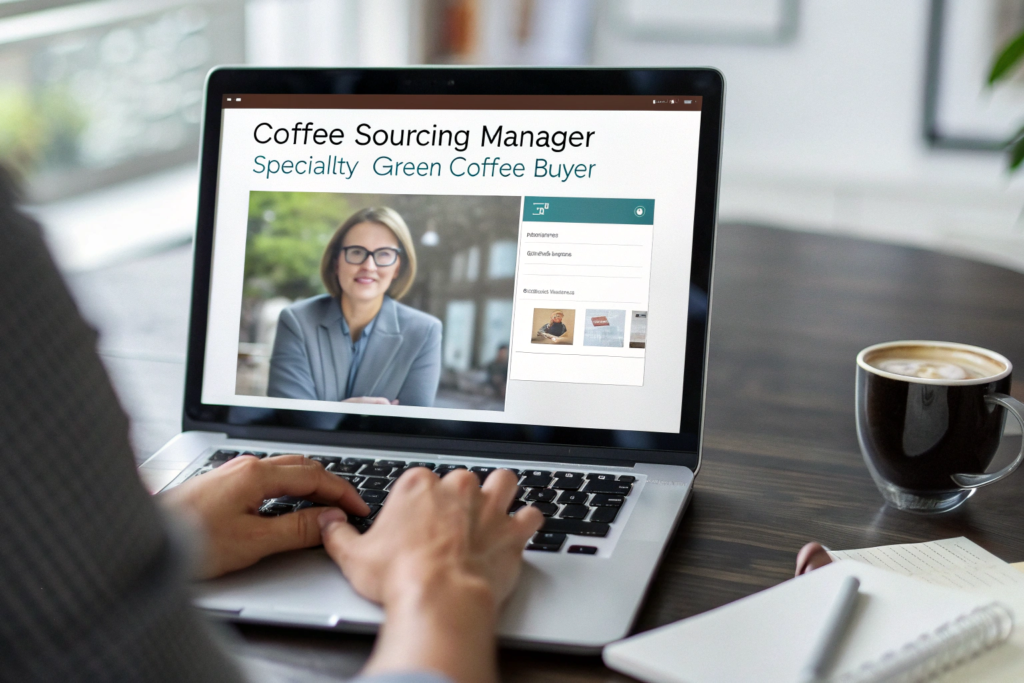
LinkedIn is the most effective B2B platform for coffee sourcing because it allows precise targeting by industry, job title, company size, and geography. You can search for "Green Coffee Buyer" or "Sourcing Manager" at companies in your target market. You can see their professional background, their previous roles, and their activity. You can join industry-specific LinkedIn groups where importers discuss market trends and supply challenges. The platform is designed for professional networking, so a well-crafted, respectful connection request is expected and welcomed, not intrusive.
How Do You Craft a Connection Request That Gets Accepted?
A generic "I'd like to add you to my professional network" is lazy. It gets ignored. A connection request that mentions something specific about the person's work, their company, or a recent post they shared, demonstrates genuine interest.
Before sending a request, I research the person. I look at their profile. I read their recent posts. I find a point of genuine connection. Then I write a short, personalized note.
For example: "Hi Ron, I noticed your post about cold brew sourcing challenges. I'm a coffee grower in Yunnan, China, and we've been supplying low-acid Arabica for cold brew programs in the US. No pitch, just wanted to connect and learn more about what you're looking for. Thanks for considering."
This message is specific, respectful, and focused on learning, not selling. It acknowledges their expertise. It's not a template. It gets accepted because it's human.
What Content Should You Post on LinkedIn to Attract Importers?
Your LinkedIn profile and your posts are your passive sales pitch. They work for you 24 hours a day, even when you're sleeping in Baoshan.
Post content that demonstrates your expertise and your credibility. Share photos of your farm with detailed captions about the varietal, the altitude, and the processing method. Share cupping results and harvest updates. Write short posts about challenges you've solved—a processing innovation, a logistics hurdle.
Avoid pure sales posts. "Buy my coffee!" is a turnoff. "Here's how we solved a moisture inconsistency problem during the rainy season" is valuable. It shows an importer that you are a serious, problem-solving producer, not just a seller.
One of our posts about our optical color sorter generated a direct message from a buyer in Germany. He wasn't interested in the machine. He was interested in the fact that we had invested in one. It signaled quality commitment.
How Can Instagram Showcase Your Farm's Authenticity?
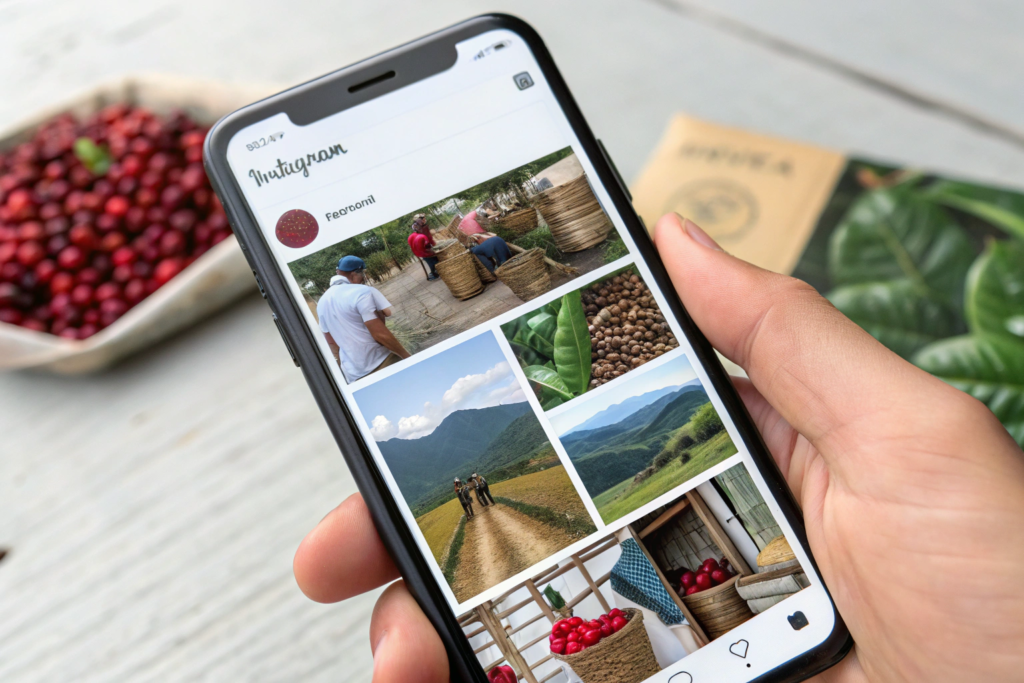
Instagram is the visual proof platform. A buyer can read a hundred emails about your farm's quality, but one photo of your actual drying beds, with your actual workers, under your actual Yunnan sky, is worth more than all those emails combined. Instagram removes the veil of distance. It makes the farm real.
Instagram showcases your farm's authenticity by providing a visual, daily window into your operation. Through consistent, high-quality photos and short videos, you can demonstrate your processing infrastructure, your harvesting practices, your team, and your terroir. Importers use Instagram to verify that a supplier is a real producer, not a virtual trading company. They look for specific details: Are the drying beds raised or on concrete? Are the cherries hand-sorted? Does the wet mill look clean and modern? An authentic Instagram presence answers these questions instantly.
What Types of Photos Build Importer Confidence?
Not all photos are equal. A beautiful sunset over the mountains is nice, but it doesn't build confidence. A photo of your moisture meter reading, with the lot number visible, builds confidence.
Photos that show process are the most valuable. Workers sorting cherries on a conveyor belt. A cupping session in progress. A container being stuffed with GrainPro bags. A calibration certificate for a moisture meter.
Photos that show scale and infrastructure matter too. A wide shot of your raised drying beds, full of cherries. Your warehouse, with pallets stacked and labeled. Your quality control lab. These photos answer the importer's unspoken question: "Can this supplier actually handle my volume and my quality standards?"
Photos should be well-lit, in focus, and composed with some care. They don't need to be professional studio shots. They need to be honest. An honest photo of a real farm is more effective than a polished stock photo.
How Do You Use Instagram Stories and Reels for Business?
Stories and Reels are the tools for showing the living, breathing, daily reality of the farm. They're less formal than feed posts. They're ephemeral. They feel more intimate.
A Story can be a 15-second video walking through the fermentation tanks, showing the temperature gauge. A Reel can be a 30-second montage of a day's harvest, set to music, with text overlays explaining each step.
These short-form videos are highly engaging. They give an importer a sense of being there, of knowing the operation. They build familiarity and trust over time. An importer who has watched your Stories for a month feels like they know you, even if they've never messaged you. When they are ready to source, your name will be top of mind.
What Role Do Facebook Groups Play in Coffee Networking?
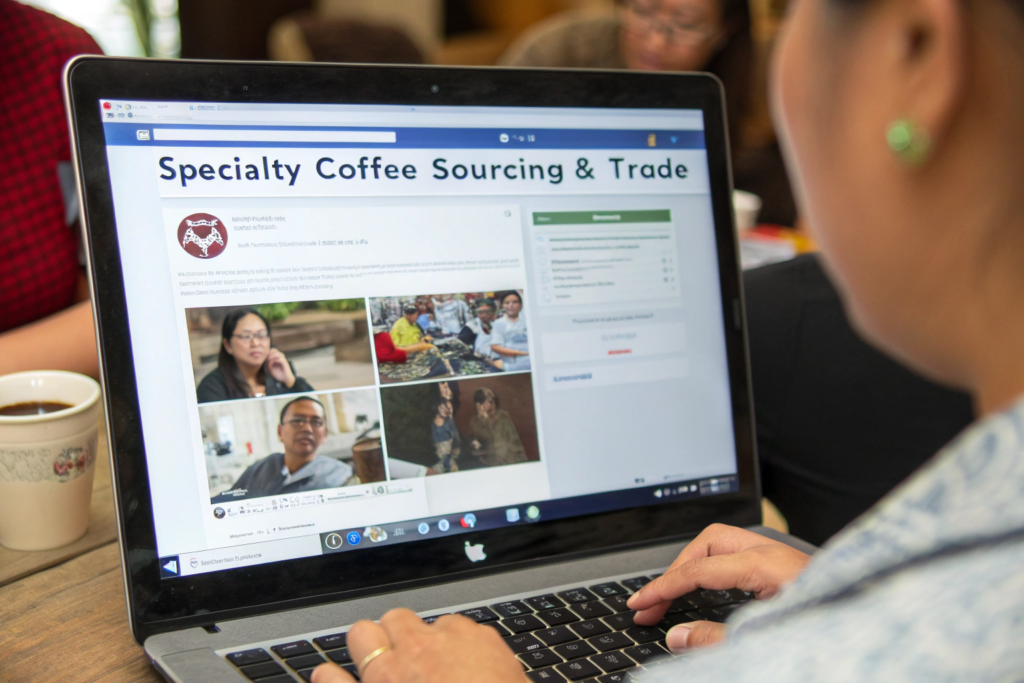
Facebook might feel old-fashioned, but the coffee industry has vibrant, active, and incredibly valuable communities there. These groups are where importers, exporters, roasters, and traders share market information, ask for supplier recommendations, and discuss industry trends. Being a helpful, knowledgeable participant in these groups can open doors.
Facebook Groups function as the digital equivalent of the trade show floor or the industry conference hallway. They are spaces where coffee professionals gather to talk shop. Groups like "Coffee Importers and Exporters," "Specialty Coffee Association Members," and "Green Coffee Buyers" have thousands of members, including decision-makers at importing companies. The key to success in these groups is to provide value before you ask for anything. Answer questions. Share your expertise. Offer help. Build a reputation as a knowledgeable, generous member of the community. The business inquiries will follow naturally.
Which Specific Groups Are Worth Joining?
There are many groups. Some are spam-filled ghost towns. Others are goldmines. Focus on the goldmines.
"Specialty Coffee Association Members" is the official SCA group. "Coffee Roasters & Coffee Shop Startups" has a large, active membership. "Green Coffee Importers & Exporters" is a dedicated trade group. "Coffea" is a more technical, quality-focused group.
Spend time in each group before posting. Observe the culture. Who are the respected voices? What kind of content gets engagement? What questions are being asked repeatedly?
Once you understand the group's norms, start contributing. If someone asks, "Has anyone tried Yunnan Arabica recently?" and you have genuine insight, share it. Don't pitch your farm. Just share your knowledge. Your profile, which should clearly identify your role and company, will do the pitching for you.
How Do You Convert a Group Interaction into a Business Lead?
The transition from group participant to business contact must be handled delicately. Aggressive pitching will get you banned from the group and damage your reputation.
When someone engages with your comment—likes it, replies with a follow-up question—that's an invitation to deepen the conversation. You can reply with more detail. You can offer to continue the conversation via direct message if it's getting too detailed for the group thread.
A direct message should not be a cold pitch. It should be a natural continuation of the conversation. "Hi, saw your question about Yunnan Arabica in the group. I'm a grower in Baoshan. Happy to share more details about our processing and cupping profiles if you're interested. No pressure."
The offer is open. The value is clear. The choice is theirs.
How Do You Convert a Social Media Connection into a Sample Request?
A connection is not a customer. A like is not an order. The goal of social media activity is not to accumulate followers. It's to start real-world, physical-coffee relationships. The bridge between the digital interaction and the commercial relationship is the sample request. Every action on social media should be designed to lead, eventually, to this moment.
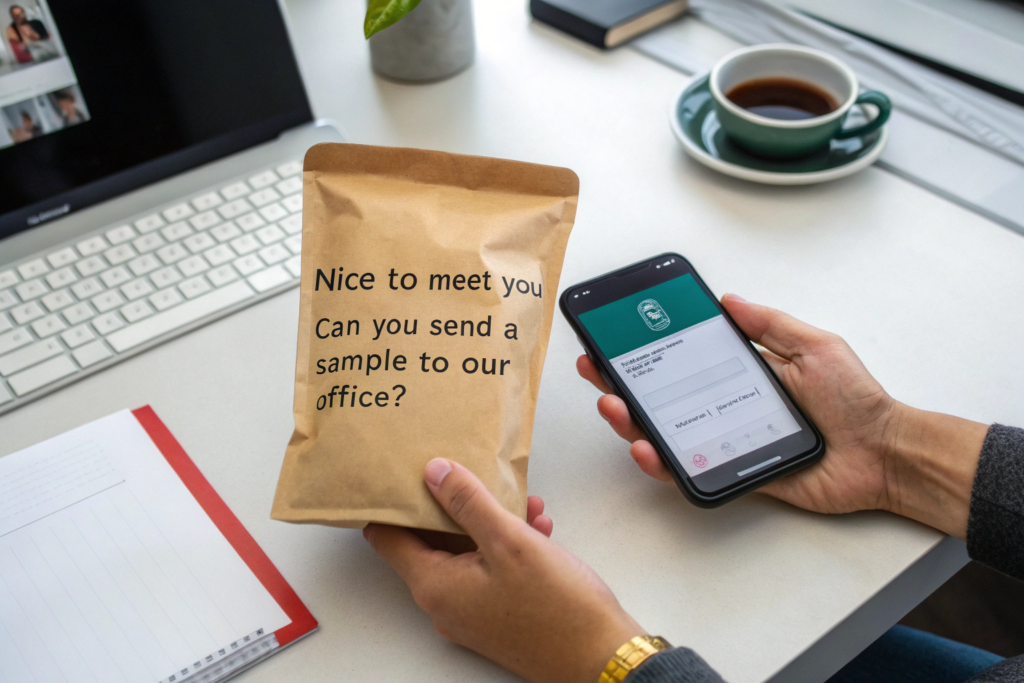
Converting a social media connection into a sample request requires a deliberate, low-pressure progression through four stages: visibility, credibility, engagement, and invitation. Visibility means they see your content regularly. Credibility means your content demonstrates expertise and quality. Engagement means they interact with your content—a like, a comment, a message. Invitation means you offer, or they request, a physical sample. The invitation should be natural, not forced. After a meaningful interaction, a simple message works: "I'd love to send you a sample of our current harvest if you're cupping new origins. No cost, no commitment. Just honest feedback."
What Is the Right Time to Offer a Sample?
Timing is everything. Offering a sample too early feels desperate. Offering it too late misses the window of interest.
The right time is after the buyer has shown genuine engagement. They've commented on your posts. They've replied to your messages. They've asked a question that indicates sourcing interest. "What's your FOB pricing?" or "Do you ship to the UK?"
That's the signal. That's when you offer the sample. Not before. A sample offer before the buyer has shown interest is a cold pitch. A sample offer after the buyer has asked about pricing is a helpful response.
How Do You Follow Up After Sending a Sample?
The sample is sent. The tracking number is shared. Now the waiting begins. This is where many relationships die from neglect.
Don't let the relationship go cold. Send a gentle follow-up message when the tracking shows delivery. "Hi, tracking shows the sample arrived yesterday. No rush to cup it. Just wanted to make sure it got there safely. Let me know if you have any questions about the lot details."
Then, give them space. Don't message every day. A week later, a brief check-in is appropriate. "Hope the cupping went well. Curious to hear your thoughts when you have a moment."
The tone is patient, professional, and low-pressure. You are a partner, not a pursuer.
Conclusion
Social media has transformed the coffee trade. It has flattened the world. A farmer in Baoshan can now connect directly with an importer in Chicago, a roaster in Melbourne, a distributor in London. The tools are free. The access is unprecedented. But the tools are only as effective as the strategy behind them.
LinkedIn is for professional targeting and direct outreach. Instagram is for visual proof and brand building. Facebook groups are for community engagement and reputation building. The common thread across all platforms is authenticity, value, and patience. Don't sell. Share. Don't pitch. Prove. Don't demand attention. Earn it.
The Australian client who found me on Instagram didn't respond to an ad. He responded to a photo of our drying beds, posted on a Tuesday morning, with a caption about the weather. It was honest. It was specific. It was real. That's what works.
If you're an importer or roaster reading this, and you've found us through social media—welcome. You're exactly who this article is for. If you're a producer reading this, wondering where to start, start with your phone. Take a photo of your farm tomorrow morning. Post it. Write a sentence about what's happening. You just started.
For anyone who wants to take the next step, to move from digital connection to physical sample, we're here.
Reach out to Cathy Cai. She manages our sample program and can have a 200-gram sample of our current harvest on its way to your cupping table within a week.
Email: cathy@beanofcoffee.com. The internet brought us together. The coffee will seal the deal.