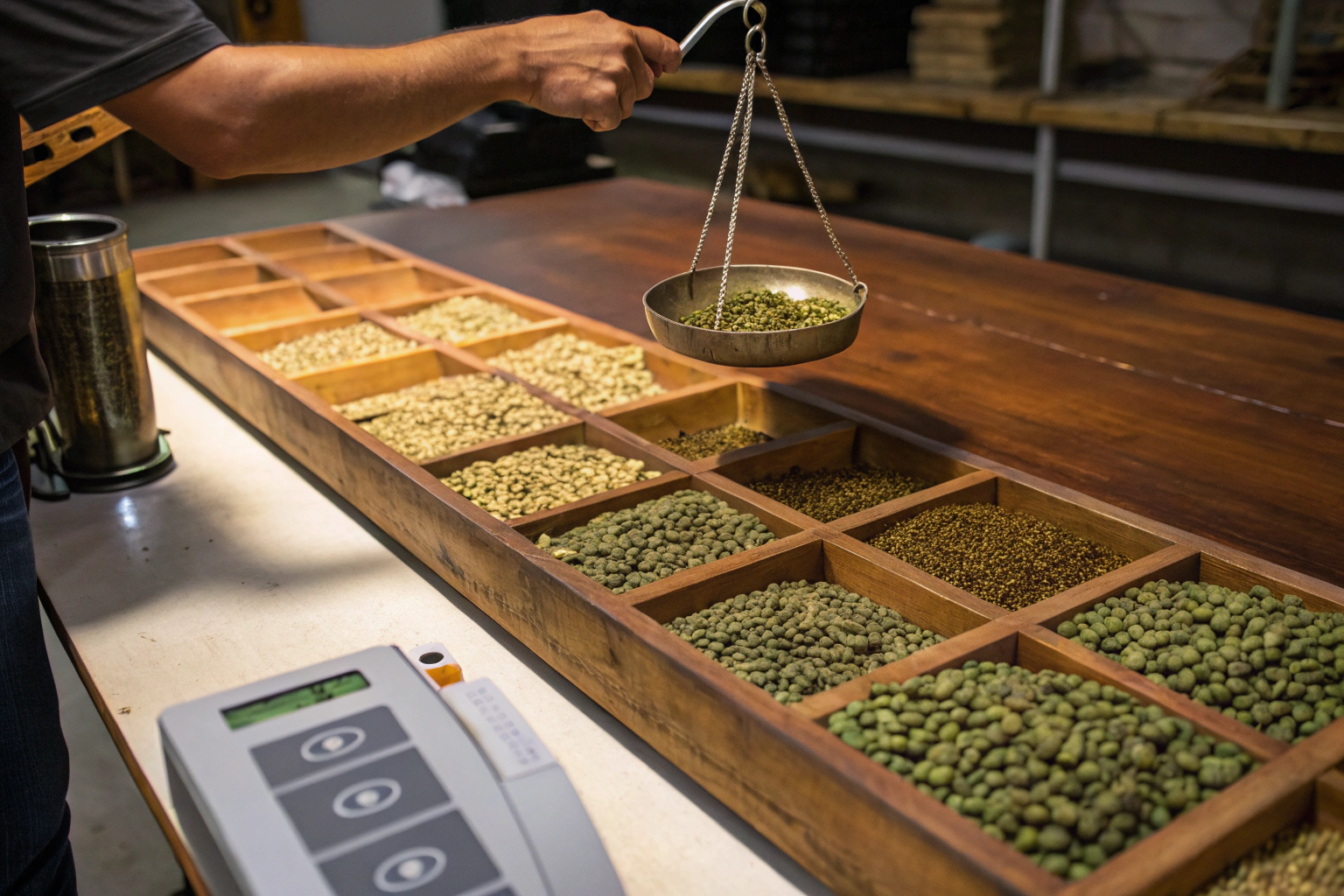
I once lost a buyer over three defective beans. Three. Out of a 350-gram sample, which is about 2,500 beans. My grading report said zero primary defects. His grading report, upon arrival in Antwerp, said three full black beans. He claimed the lot was below specialty grade and demanded a 15% discount. I was furious. I had personally supervised the sorting. But when I reviewed our process, I found the problem. My grader had used an old, scratched defect mat with poor lighting. The black beans, already dark, had blended into the shadows. Three beans. $4,500 lost. A relationship damaged. The lesson was searing: grading is not a formality. It is the absolute foundation of trust in wholesale coffee.
Proper grading is crucial in wholesale coffee because it is the universal language of quality that replaces subjective opinion with objective, verifiable data. A professional grade report—specifying screen size, defect count by category, moisture content, and water activity—transforms coffee from an ambiguous agricultural product into a precisely defined commodity. This allows buyers and sellers to trade across vast distances, different languages, and different legal systems with a shared understanding of what is being bought and sold. Without proper grading, every transaction is a gamble. With it, every transaction is a contract.
Grading is not glamorous. It's not the romance of the farm or the artistry of the roast. It's the unglamorous, meticulous, scientific backbone of the entire coffee trade. It's what allows a buyer in Hamburg to purchase a container from a farmer in Baoshan without ever seeing the coffee in person. Let me explain why this invisible infrastructure matters so much, and what happens when it fails.
What Are the Two Pillars of Coffee Grading?
Coffee grading is not one thing. It's two distinct but interconnected evaluations. The physical grade assesses what the bean is. The sensory grade assesses what the bean tastes like. Both are essential. A coffee can look perfect and taste terrible. It can look rough and taste incredible. Only by evaluating both dimensions can you understand the true quality of a lot.
The two pillars of coffee grading are physical grading and sensory cupping. Physical grading evaluates the green coffee's size, density, color, and defect count against a standardized system. It answers the question: is this coffee well-processed and free of contaminants? Sensory cupping evaluates the roasted coffee's aroma, flavor, acidity, body, and aftertaste against the SCA cupping form. It answers the question: does this coffee taste good? Together, these two pillars provide a complete quality profile.
What Does Physical Grading Measure?
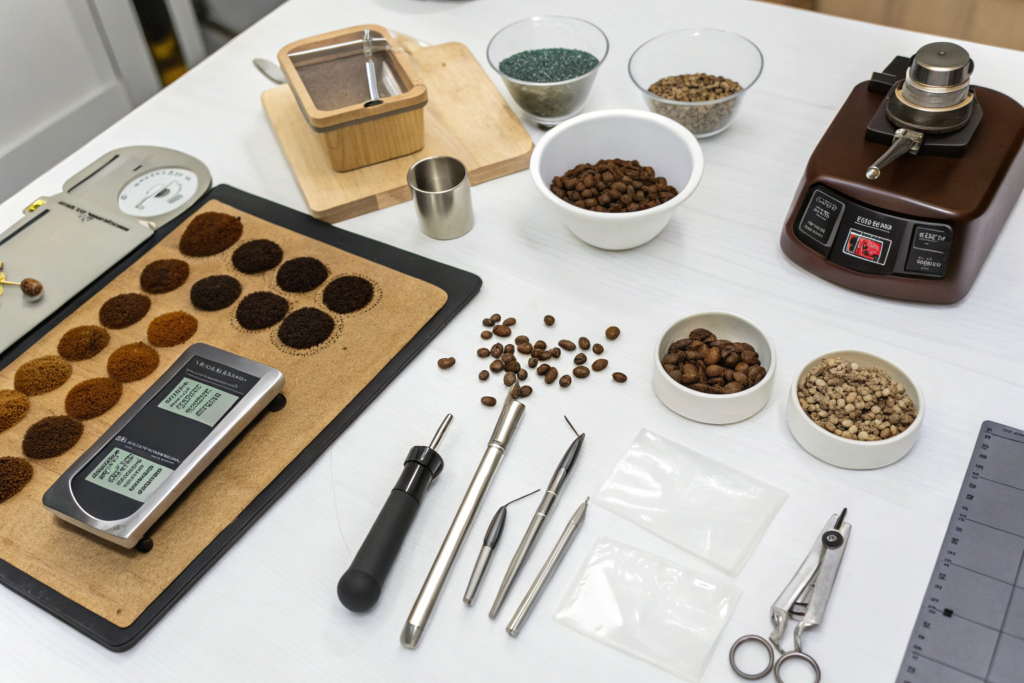
Physical grading is the objective, quantifiable half of the equation. It involves taking a 350-gram sample of green coffee and analyzing it with precision tools.
Screen size analysis uses nested sieves to determine the distribution of bean sizes. A lot might be classified as "Screen 16, 90% above," meaning 90% of the beans are larger than 16/64 of an inch.
Defect analysis involves spreading the sample on a black mat and, under bright light, using tweezers to pick out every single defective bean. The defects are categorized as primary or secondary, according to the SCA Green Arabica Grading System. A full black bean is a primary defect. Three insect-damaged beans equal one secondary defect. The counts are tallied, and the lot is classified as specialty grade, premium grade, or below.
Moisture content and water activity are measured with calibrated meters. These numbers predict the coffee's shelf life and shipping stability. A moisture reading above 12.5% is a red flag for mold risk.
What Does Sensory Cupping Evaluate?
Sensory cupping is the subjective, qualitative half of the equation—but it is structured to be as objective as possible.
The cupper evaluates ten specific attributes: fragrance/aroma, flavor, aftertaste, acidity, body, balance, uniformity, clean cup, sweetness, and overall impression. Each attribute is scored on a standardized scale. The scores are added to produce a total cupping score, with 80 points as the threshold for specialty grade.
The cupping must be performed under controlled conditions. The water temperature, the grind size, the coffee-to-water ratio, the steeping time—all are standardized. The cupping room is quiet, well-lit, and free of distracting odors. The cupper's palate is calibrated through regular practice.
The Specialty Coffee Association publishes the official cupping protocol that is used globally. A Q-grader certification ensures that a cupper has demonstrated proficiency in this protocol.
How Do Grading Standards Differ Between the US and Europe?
Coffee is a global commodity, but grading standards are not perfectly harmonized. The United States and Europe, the two largest consuming markets, have their own grading traditions, terminology, and tolerance levels. A lot that grades as "specialty" under one system might be "premium" under another. An exporter who doesn't understand these differences is setting themselves up for disputes.
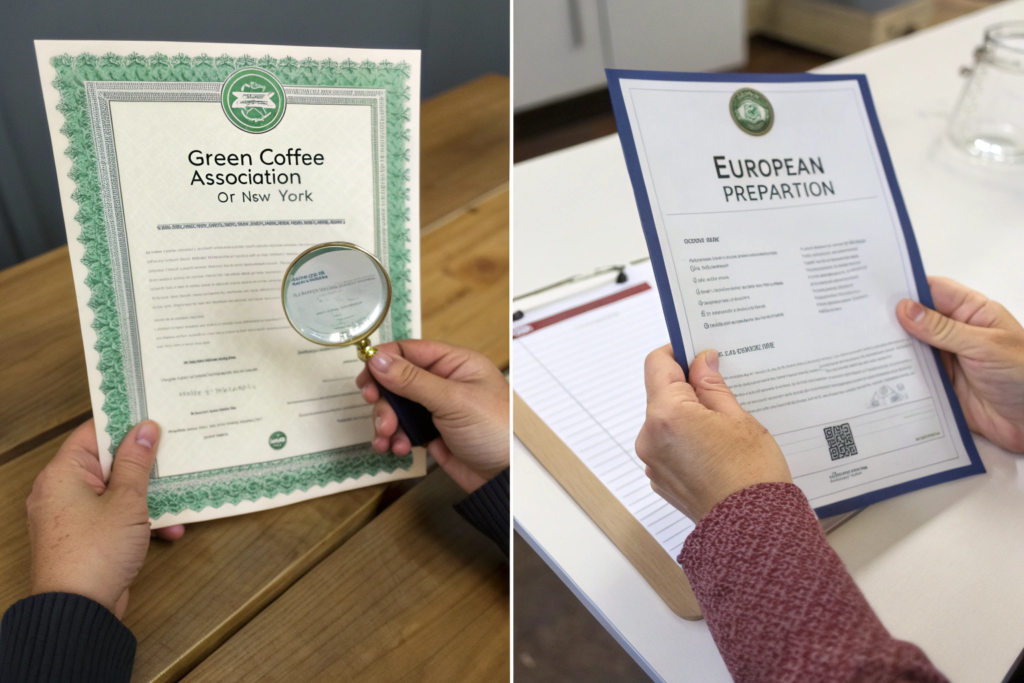
The primary grading standards in the US are governed by the Green Coffee Association of New York, while Europe relies on a combination of national standards and the "European Preparation" specification. The key difference is in defect tolerances and screen size expectations. European Preparation typically specifies a higher minimum screen size—often Screen 16 or even Screen 17—and stricter limits on certain secondary defects. US standards, while also rigorous, may have slightly different counting methods for specific defect categories. A wholesale contract should always specify which grading standard applies to avoid ambiguity.
What Is "European Preparation"?
European Preparation is not a formal legal standard, but a widely understood commercial specification. It generally means the coffee has been sorted to a higher physical standard than the default.
Typically, European Preparation specifies a minimum of Screen 16, with a tolerance for only a very small percentage of beans below that screen. It specifies strict limits on black beans, sour beans, insect damage, and broken beans. It implies a level of care in processing that goes beyond basic commodity grade.
When a European buyer requests "European Preparation," they are signaling that they expect a clean, well-sorted, high-physical-quality coffee. The exporter must ensure their grading and sorting processes meet this expectation.
How Does the Green Coffee Association Contract Define Grade?
In the US, many wholesale contracts reference the Green Coffee Association standard contract terms. These terms define specific grade classifications: Specialty Grade, Premium Grade, Exchange Grade, and Below Standard Grade.
Each classification has precise defect tolerances. Specialty Grade allows zero primary defects and a maximum of five secondary defects in a 350-gram sample. Premium Grade allows up to eight secondary defects. Exchange Grade allows up to 23 secondary defects.
The contract also specifies the sampling and grading methodology to be used in the event of a dispute. This legal framework provides a clear, enforceable basis for resolving quality disagreements. The Green Coffee Association publishes these standard contract terms.
What Equipment Is Essential for Accurate Grading?
Grading is a scientific discipline. It requires proper instruments. You cannot accurately grade coffee with your eyes and a kitchen scale. The right equipment, properly maintained and calibrated, is the foundation of a reliable grade report.
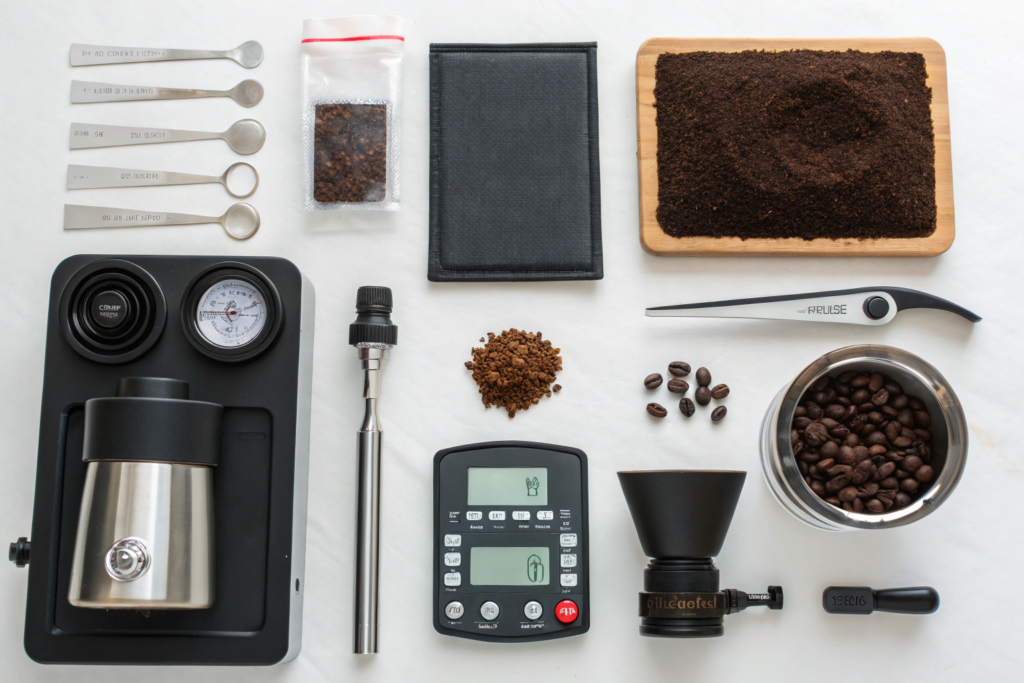
The essential equipment for accurate coffee grading includes a calibrated moisture meter, a water activity meter for stability analysis, a set of SCA-standard grading screens for size analysis, a precision gram scale accurate to 0.1 grams, a large black defect mat for visual inspection under bright, shadowless light, a sample trier for pulling representative samples from bags, and stainless steel tweezers for handling individual beans. A sample roaster and cupping equipment are needed for sensory evaluation. This equipment represents a significant investment, but it is the cost of being a credible, professional coffee supplier.
How Do You Maintain and Calibrate Grading Equipment?
A moisture meter that drifts out of calibration by 0.5% can turn a safe, stable coffee into a "wet" coffee on paper, causing unnecessary rejection. Or worse, it can pass a truly wet coffee as dry, setting up a mold disaster.
Calibration must be regular and documented. Moisture meters should be checked against the oven-drying reference method at least monthly. Gram scales should be checked with certified calibration weights before each use. Grading screens should be inspected for dents or warping that could affect the hole size.
Equipment maintenance records are part of a professional grading program. If a dispute arises, these records demonstrate that the grade was produced with properly maintained instruments, conducted by a trained professional following a documented procedure.
Why Is Lighting Critical for Defect Detection?
The human eye can only see what the light reveals. Grading under dim, yellow warehouse lights is a recipe for missed defects.
The ideal grading light is bright, diffuse, and color-neutral. It casts no shadows. It reveals the true color of every bean. A full sour bean, with its subtle yellow-brown mottling, is invisible under poor light. Under a proper grading lamp, it's unmistakable.
We invested in color-corrected, high-CRI LED lighting for our grading stations. The difference in defect detection accuracy was immediate and significant. A well-designed grading environment is as important as the tools used within it.
How Does Grading Affect Contract Negotiations and Pricing?
The grade report is not just a quality document. It's a pricing document. It determines the value of the coffee. A lot that grades as 86-point specialty with zero defects commands a premium. A lot that grades as 80-point with five secondary defects is priced differently. The grade is the evidence that justifies the price.
Grading directly affects contract negotiations and pricing by establishing the coffee's position in the quality hierarchy. A higher grade—larger screen size, lower defect count, higher cupping score—commands a higher price. The differential above the C-market price is negotiated based on the grade. A lot with a verified 86-point score and perfect physical grade might command a differential of +$1.00 or more. The same origin, the same farm, but with an 82-point score and some secondary defects, might command only +$0.20. The grade is the objective justification for the premium.

How Does the Grade Determine the Differential?
The differential is the premium or discount applied to the C-market price. It reflects the specific quality of the lot.
A buyer evaluating two lots from the same origin will compare the grading reports. The lot with the higher screen size, the lower defect count, and the higher cupping score will command the higher differential. It's a competitive process. If an exporter claims a high grade but cannot back it up with a verifiable report, the buyer will discount the coffee.
This is why a credible, third-party-verified grade report is so valuable. It moves the negotiation from a subjective argument about quality to an objective discussion of data. At BeanofCoffee, we provide a full grading report with every offer. It's our evidence of quality.
What Happens When the Grade Is Disputed?
A grade dispute occurs when the buyer's arrival grading report differs significantly from the exporter's pre-shipment report. This is a stressful and potentially costly situation.
The resolution process is typically defined in the contract. It often involves sending a sealed, jointly witnessed reference sample to an independent third-party grader for arbitration. The arbitrator's grade is binding on both parties.
The cost of arbitration, the delay, and the damaged trust are all consequences of a grading dispute. The best strategy is to prevent disputes by having rigorous, transparent, well-documented grading processes on both sides. A reputable exporter will share their grading methodology and invite scrutiny.
Conclusion
Grading is the invisible infrastructure of the wholesale coffee trade. It's the system of standards, tools, and protocols that allows a buyer in one hemisphere to purchase a container of coffee from a farmer in another, with confidence that the product will match the description. It transforms coffee from an agricultural commodity into a tradable, gradeable, bankable good.
Without proper grading, the specialty coffee industry would not exist. There would be no way to differentiate an 86-point micro-lot from an 80-point commercial lot. No way to justify the premium. No way to resolve disputes fairly. Grading is the foundation of trust.
I learned the hard way that cutting corners on grading is the most expensive mistake an exporter can make. Since losing that buyer in Antwerp, we've invested in better equipment, better lighting, better training, and better documentation. Our grade reports are now bulletproof. Our buyers trust them. And my sleep is no longer interrupted by nightmares of three black beans.
If you're sourcing wholesale coffee, insist on a complete, verifiable grading report. If you're curious about the level of detail we provide with every lot we export, we're happy to share a sample report.
For sample grading reports, quality specifications, or to discuss our grading protocols in detail, reach out to Cathy Cai.
Email: cathy@beanofcoffee.com. The truth is in the numbers, and we have the numbers.