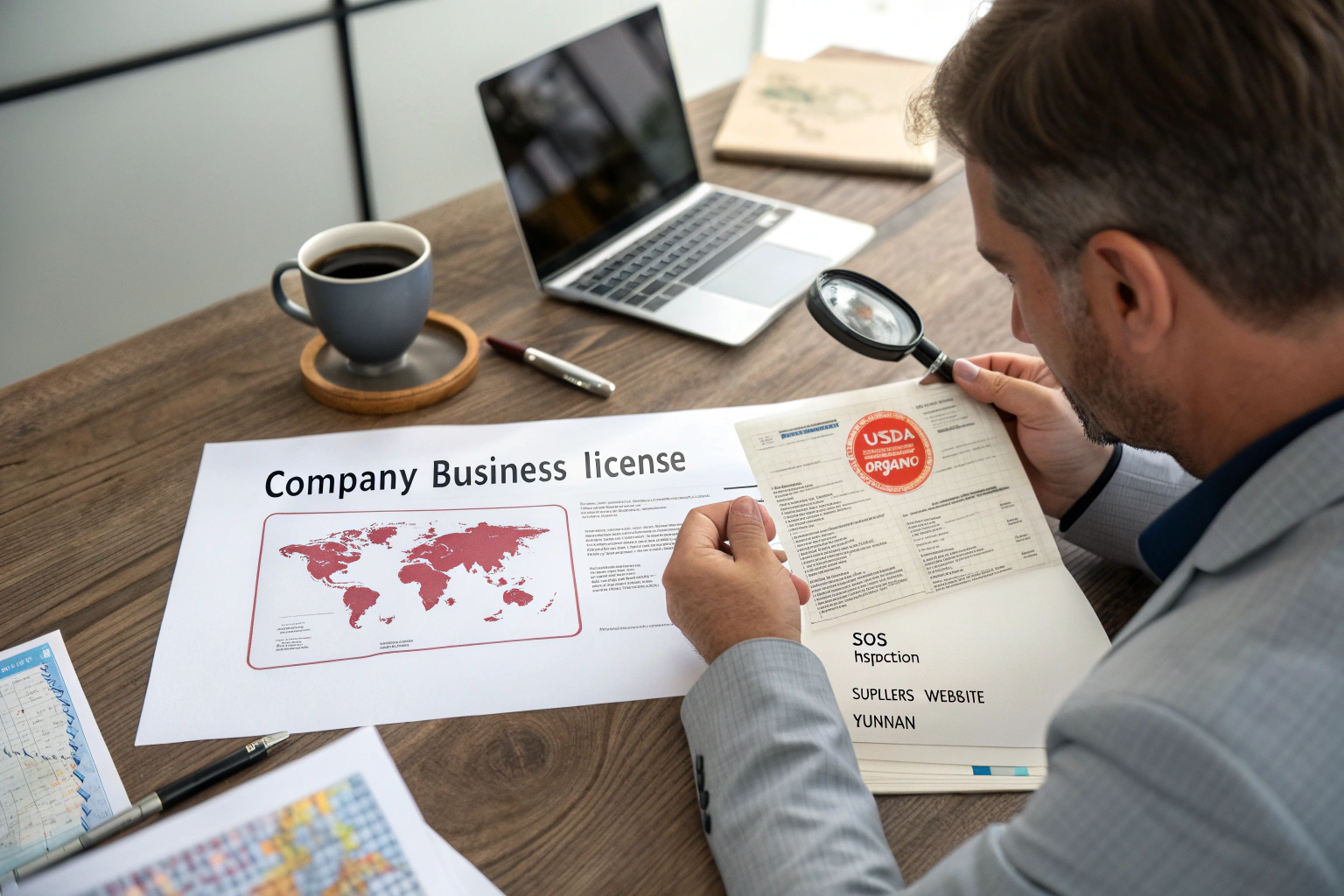
A buyer I know lost $12,000 last year. He found a "Yunnan coffee exporter" on Alibaba with great prices and a slick website. The samples were good. The communication was fast. He wired a 30% deposit for a container. The shipment date came and went. The supplier's phone went dead. The website disappeared. He hired a lawyer. The company registration was fake. The samples were probably bought from a real farm and repackaged. He was not dealing with a coffee farmer. He was dealing with a fraudster who knew how to look legitimate.
To verify a Chinese coffee supplier's credentials, you must independently confirm their business license through government databases, request third-party audit reports from recognized bodies like SGS, demand direct video verification of the farm and processing facility, and check trade references by contacting their existing export customers directly.
The Chinese coffee industry has matured rapidly. There are genuine, professional, high-quality exporters like us. But the growth has also attracted bad actors who exploit the distance and language barrier between Chinese suppliers and Western buyers. Due diligence is not optional. It is the price of entry for safe direct sourcing.
What Official Documents Prove a Chinese Coffee Exporter Is Legitimate?
China has a structured, government-regulated system for export companies. A legitimate exporter will have a paper trail of registrations and licenses. A fake one will hesitate when you ask for these documents. The documents themselves are not secrets. They are public records that you can verify independently.
The foundational documents proving a Chinese coffee exporter's legitimacy are the Business License with a unified social credit code, the Customs Registration Certificate, the Export Food Producer Filing Certificate, and the Inspection and Quarantine Registration Certificate. Each of these can be cross-checked against official government databases.
The Business License is the company's birth certificate. Every legal business in China has one. It shows the company's full Chinese name, its unified social credit code, its legal representative, its registered capital, its establishment date, and its business scope. Look carefully at the business scope. It must explicitly include "import and export" and food or agricultural products. If the scope only mentions "domestic trade" or unrelated industries, the company is not legally authorized to export coffee.
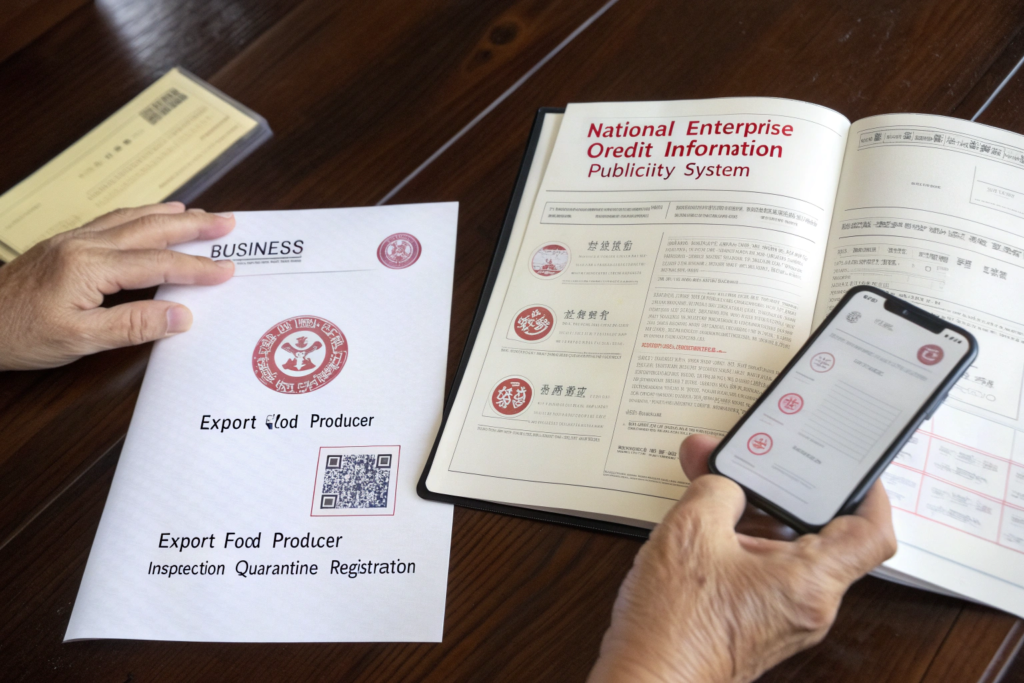
How to Verify a Chinese Business License Online?
The National Enterprise Credit Information Publicity System is the official government database. It is free to use. The interface has an English option. You enter the company's unified social credit code or its full Chinese name. The system returns the company's current registration status.
Do not accept a scanned copy of a license at face value. Take the code. Go to the website. Look it up yourself. Check that the company status is "active" or "in business." Check that the registered address matches the address on the supplier's website. Check that the business scope covers what they claim to do. Check the registered capital. A company claiming to export thousands of tons of coffee but registered with capital of $10,000 is a red flag. The registered capital reflects the financial commitment of the owners. Also, look at the "administrative penalties" and "abnormal operation" records. A clean record is not a guarantee, but a record of fines or sanctions is a clear warning.
What Customs and Food Safety Registrations Are Required?
Exporting coffee from China is not just about having a business license. The company must be registered with China Customs and with the food safety authorities. These registrations are specific to exporting food products.
Ask for the Customs Registration Certificate. It has a 10-digit customs code. This code is used on every export declaration. You can ask your freight forwarder or customs broker to verify that the code is active and belongs to the named company. Also ask for the Export Food Producer Filing Certificate. This is issued by the local Entry-Exit Inspection and Quarantine bureau. It confirms that the company's processing facility has been inspected and approved for food export. If the supplier claims to be the producer, not just a trader, this certificate is essential. A trading company that does not own a processing facility should have a different type of filing. If they claim to be a plantation owner but cannot produce a producer filing, they are likely just a middleman.
How to Use Third-Party Inspection and Certification to Verify Quality Claims?
Certificates are easy to fake with Photoshop. A PDF of an organic certificate can be created in ten minutes. The way to avoid being fooled is to demand verification from an independent third party, not from the supplier's own files.
Third-party inspection reports from recognized international agencies like SGS, Bureau Veritas, or Intertek provide independent verification of a Chinese coffee supplier's quality claims, including cup score, moisture content, defect count, and food safety parameters. These reports cannot be faked because the buyer can verify the report number directly with the issuing agency.
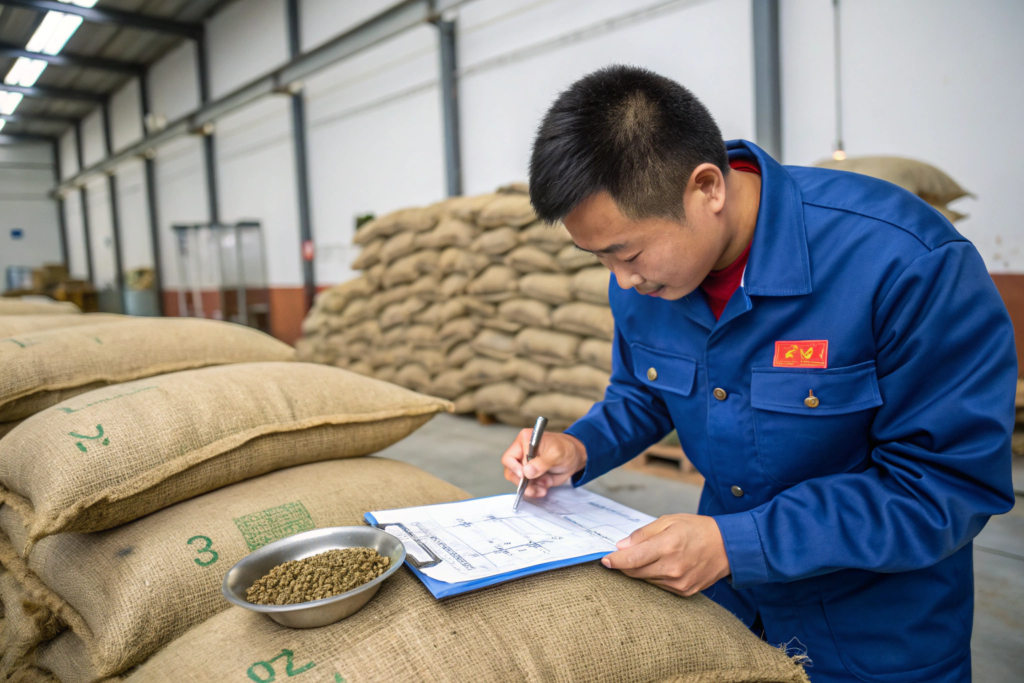
We use SGS for our export inspections. When we ship a container, an SGS inspector comes to our warehouse. They pull samples according to a standardized protocol. They test moisture, water activity, screen size, and defect count. They send a sample to an SGS lab for aflatoxin and pesticide residue testing. The final report has a unique reference number. You, the buyer, can contact SGS directly and validate that the report is genuine and corresponds to the lot you are buying.
How to Authenticate an Organic or Fair Trade Certificate?
Organic and Fair Trade certifications are issued by accredited certifiers. Each certificate has a unique certification number, a validity period, and a scope that lists the specific products and facilities covered.
Ask the supplier for a copy of the full certificate, not just the logo. Then, go to the certifier's website. Most major certifiers, like Ecocert, CERES, or the USDA Organic Integrity Database, have online search tools. Enter the certificate number or the company name. Verify that the certificate is current and that the scope includes green coffee from the specific origin the supplier claims. Check the expiration date. A certificate that expired six months ago is worthless. Also, check the "certified products" list on the certificate. It must explicitly state "green coffee" or "coffee beans." A general organic certificate for "agricultural products" without coffee specified is a gap.
What Does a Pre-Shipment Inspection Report Actually Cover?
A pre-shipment inspection is the last line of defense before the container is sealed. The inspector visits the warehouse after the coffee is milled, bagged, and ready for loading. The report covers both quantity and quality.
The quantity check verifies the number of bags, the weight per bag, and the total consignment weight. The quality check covers visual appearance, screen size analysis, moisture content, water activity, and defect count per the SCA Green Arabica Defect Handbook. The inspector also checks the bag markings, the container cleanliness, and the stuffing process. Some reports include a cupping score from an independent lab. A full pre-shipment inspection report is a thick document with photographs, data tables, and a pass/fail conclusion. If a supplier resists a pre-shipment inspection, or insists on using their own "trusted" inspector, treat that as a serious red flag. Legitimate exporters welcome independent inspection. It protects us as much as it protects you. If a quality dispute arises later, the independent report is the reference.
How to Conduct a Virtual or On-Site Supplier Audit from Overseas?
Nothing replaces a physical visit. Walking the farm, smelling the drying parchment, cupping in the lab. But a physical visit costs thousands of dollars and a week of travel. A virtual audit, done rigorously, is the next best thing. And it has one advantage a physical visit does not: it is harder to fake in real-time.
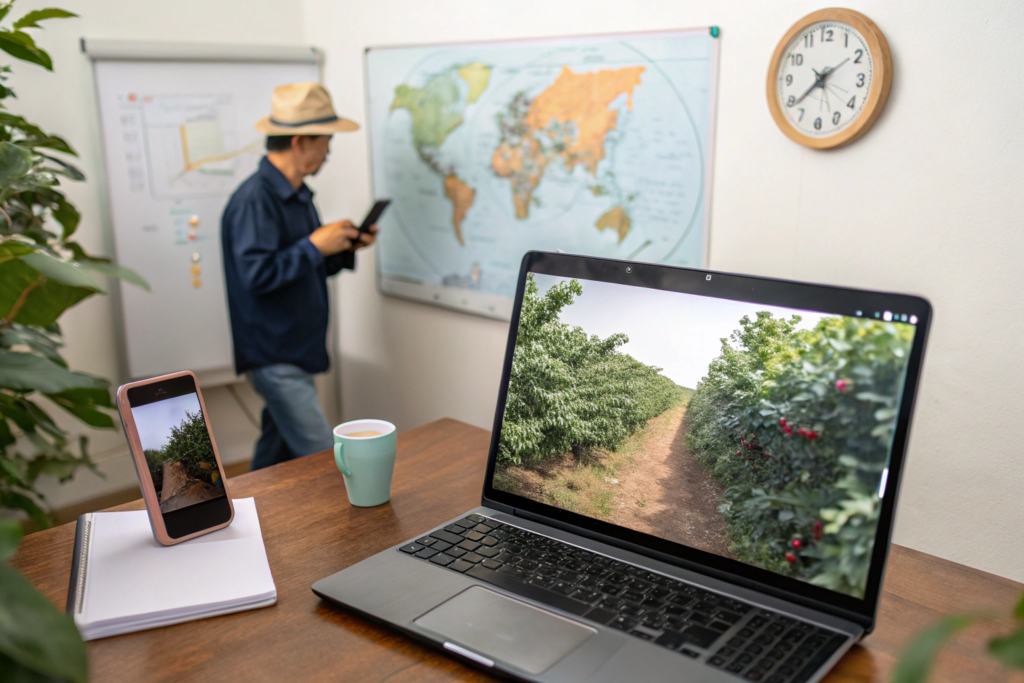
A virtual supplier audit should include a live video walkthrough of the plantation, the processing mill, and the warehouse, with the supplier responding to spontaneous requests to zoom in on specific details. The buyer should also request a live cupping session where the supplier brews and tastes the coffee on camera, discussing the flavor notes in real-time.
The key to a virtual audit is spontaneity. Do not let the supplier send you a pre-recorded video. Schedule a live video call. Ask them to walk to a specific block of the farm that you choose during the call. Ask them to show you the weather that day. Is it consistent with the harvest season they claim? Ask them to show you the inside of the fermentation tanks. Are they clean or stained with old mucilage? Ask them to open a random bag from the warehouse and show you the beans inside. Does the color and size match the sample they sent you? A legitimate supplier can do all of this without preparation. A fraudulent one will make excuses.
What Questions Should You Ask During a Live Farm Walkthrough?
The questions matter more than the video quality. You want questions that reveal operational knowledge, not scripted answers. Do not ask: "Do you have quality control?" Every supplier says yes. Ask instead: "What was the moisture content of the parchment coming off the drying beds yesterday?" A real farmer knows the number. A trader pretending to be a farmer stumbles.
Ask about the current harvest. "How many kilos of cherry did this block yield per tree this year? Is that up or down from last year? Why?" Ask about labor. "How many pickers do you have on the farm today? What is the daily wage? Where do they come from?" Ask about challenges. "What was the biggest problem you faced this harvest season?" A real farmer has a specific answer: a two-week dry spell in August, a labor shortage during the Mid-Autumn Festival, a batch of fermentation that went slightly over. A fake supplier gives a generic answer about "market conditions." The details are the fingerprints of authenticity.
How to Request and Verify Trade References?
Trade references are past or current customers who can vouch for the supplier. A legitimate supplier should be willing to provide contact information for two or three reference buyers, with their permission.
When you receive the references, contact them directly. Do not just send an email. Get on a call. Ask specific questions. "How many containers have you bought from this supplier? Did the shipped quality match the pre-shipment sample? Was the documentation accurate and on time? How did they handle any problems that arose? Would you buy from them again?" Listen for hesitation. A reference who pauses before answering "yes" is telling you something. Also, verify that the reference is a real company. Look up their website. Check their social media. A fake reference is sometimes part of the fraud. Cross-reference the reference's company name with the supplier's claimed export destinations. If the supplier says they export to Germany, but their reference is a shell company in a different country with no online presence, be suspicious.
What Are the Red Flags of a Fraudulent Coffee Supplier in China?
Fraudsters follow patterns. They use the same tactics because the tactics work on unprepared buyers. Recognizing these patterns before you send money is the difference between a successful partnership and a costly lesson.
Red flags of a fraudulent Chinese coffee supplier include a mismatch between the company name on the license and the brand name used in communication, reluctance to provide the unified social credit code for independent verification, use of fake or expired third-party certificates, refusal to conduct a live video audit of the farm and facility, and high-pressure sales tactics demanding immediate deposit payments.
One of the most common tricks is the "clone" company. A fraudster copies the name, address, and website of a real, registered coffee company. They change one character in the email address or use a slightly different domain. The buyer checks the company online, finds the real company's good record, and assumes the fraudster is that company. The solution is simple: always initiate contact through the official channels listed on the verified business license, not through the contact details provided in an unsolicited email or a too-good-to-be-true Alibaba listing.
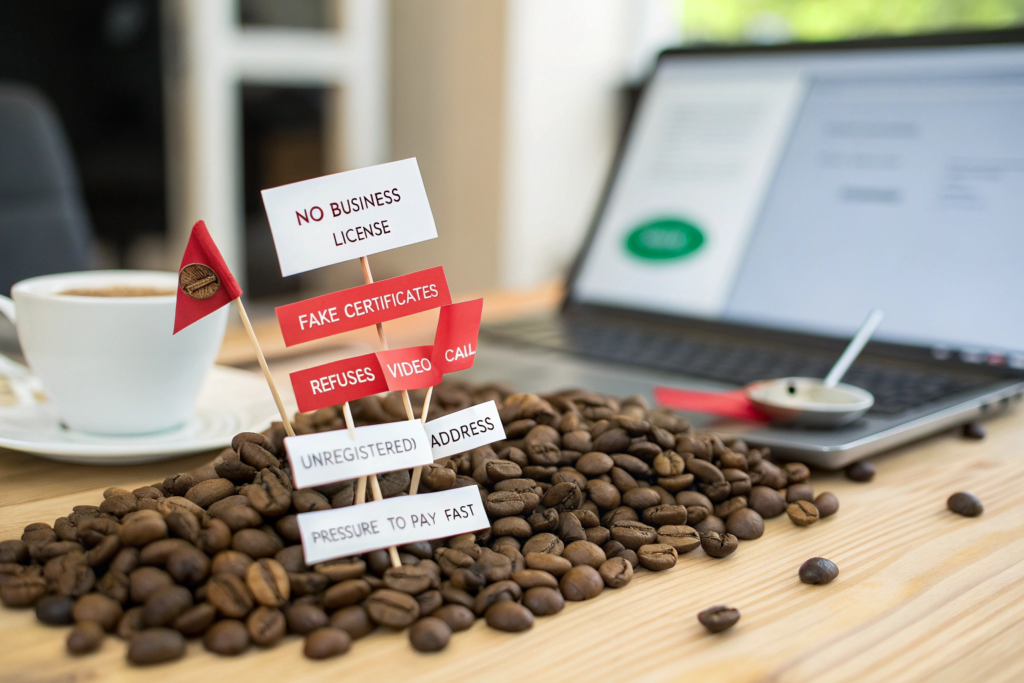
Why Is a Refusal to Share the Business License a Dealbreaker?
There is no legitimate reason for a Chinese company to refuse to share its business license. The license is a public document. It is displayed in the company's office. It is searchable online. If a supplier hesitates, claims it is "confidential," or sends a blurred or partial image, the conversation ends.
The business license is your anchor document. Without it, you cannot verify anything else. You cannot confirm the company exists. You cannot check the legal representative. You cannot verify the business scope. A supplier who refuses to provide the license is not just being cautious. They are hiding something. Maybe they are not a registered company at all. Maybe they are an individual posing as a corporation. Maybe their license has been revoked. Whatever the reason, the refusal is a terminal red flag. Walk away.
What Payment Methods Protect You from Supplier Fraud?
The payment method is your last and strongest leverage. Once the money is sent, recovering it from a fraudulent overseas supplier is extremely difficult. The payment structure should protect you from day one.
Never pay 100% upfront to a new supplier. A standard, safe structure is a 30% deposit against the proforma invoice, with the 70% balance paid against a copy of the shipping documents, including the bill of lading. The bill of lading proves the container has been loaded onto the ship. The supplier cannot change the destination or redirect the container after a negotiable bill of lading has been issued. For a first order with an unproven supplier, consider using a Letter of Credit issued by your bank. The bank guarantees payment only when specific, verifiable documents are presented. This is more expensive and complex, but it eliminates the risk of outright fraud. Also, insist on paying to a corporate bank account in the company's registered name. Do not pay to a personal account, a Hong Kong shell company account, or an account in a different name. If the supplier asks for payment to a third-party account, the fraud probability approaches 100%.
Conclusion
Verifying a Chinese coffee supplier's credentials is not a matter of trust. It is a matter of process. A legitimate supplier will not be offended by your due diligence. I welcome it. When a buyer asks me for our business license, our SGS reports, our organic certificate, and a live video walk of the farm, I know I am dealing with a professional. The buyers who ask no questions are the ones who get burned.
The steps are clear. Verify the business license independently. Demand third-party inspection reports and validate them with the issuing agency. Conduct a live video audit and ask specific operational questions. Check trade references by calling them directly. And structure your payment to protect your funds until the coffee is on the water.
If you want to apply this verification process to us, please do. We will provide every document, every certification, and every reference you need. We will walk you through the farm on a video call. We will cup the coffee with you live. We have nothing to hide because we are a real farm with real coffee. Contact Cathy Cai at cathy@beanofcoffee.com to begin your due diligence. We will make it easy for you.