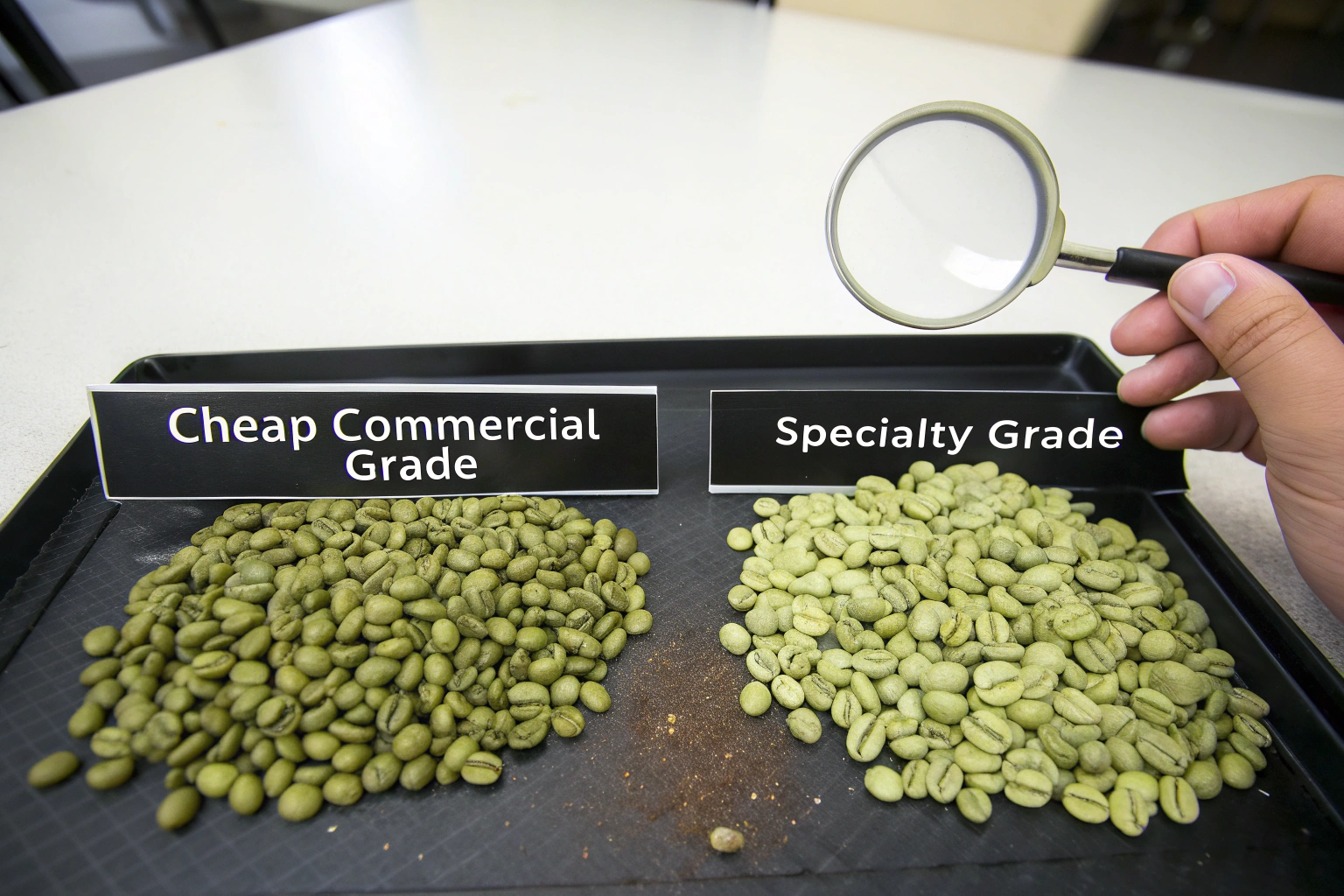
I got a panicked call from a roaster in Phoenix last fall. He had bought a container of "discount Arabica" from a trader he found online. The price was $1.80 per pound FOB. The sample was decent. The container arrived, and when he opened the first bag, the smell hit him. Musty. Like a damp basement. He pulled samples from ten different bags. The moisture content was all over the place. Some bags had 14% moisture and were already molding. Others were bone dry at 8% and the beans shattered when he bit them. He paid $40,000 for a container he could not use. The trader disappeared. The cheap price was not a bargain. It was a trap.
Buying cheap coffee beans exposes you to hidden quality defects like mold and insect damage, inconsistent roasting performance due to uneven bean size and moisture, potential food safety violations from mycotoxin contamination, unreliable supply chains with fake certifications, and long-term brand damage when your customers taste the poor quality in the cup.
The price tag on a bag of green coffee tells you almost nothing by itself. A low price can mean you found an undervalued gem from an emerging origin. Or it can mean you bought garbage that will cost you more in waste, customer complaints, and brand erosion than you saved on the invoice. The difference is knowing what risks hide behind the number.
What Hidden Quality Defects Come with Low-Cost Green Coffee?
Cheap coffee is cheap for a reason. Someone along the supply chain cut corners. The farmer skipped a round of picking and stripped the branch, mixing unripe and overripe cherries with the ripe ones. The processor rushed the drying. The mill skipped the optical sorting. The exporter blended a good lot with a rejected lot to stretch the volume. Every cut corner leaves a trace in the bag.
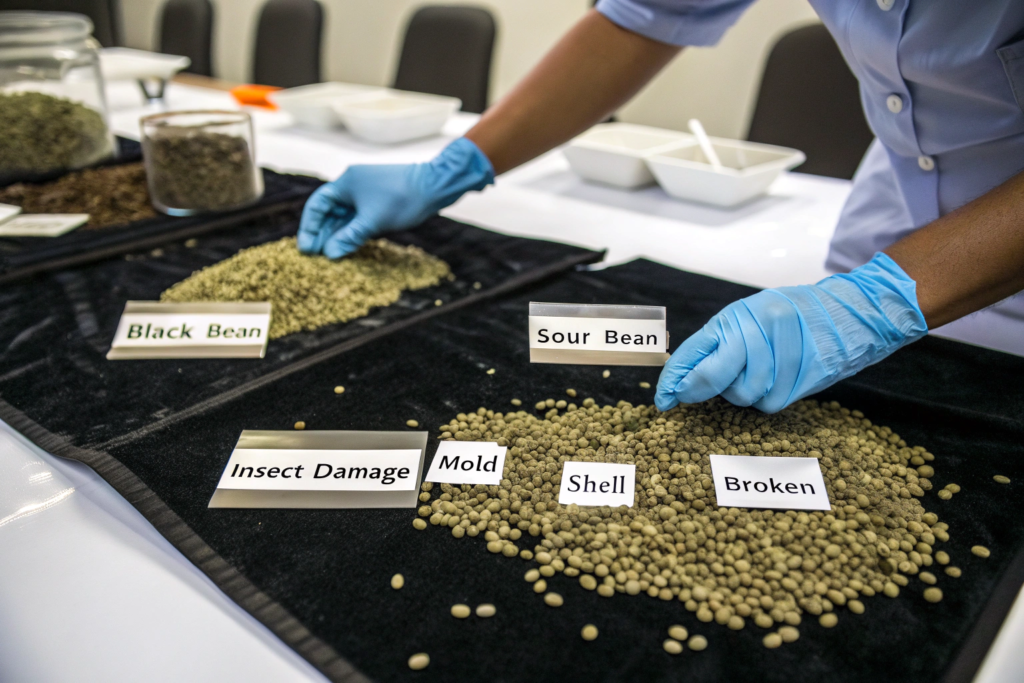
The hidden quality defects in low-cost green coffee include primary defects like full black beans and severe insect damage that impart foul, ashy flavors, secondary defects like partial sours and chipped beans that cause uneven roasting, and inconsistent moisture content across bags that leads to unpredictable roast development and rapid staling.
A full black bean is a cherry that died on the tree or fermented in the processing tank. When roasted, it turns to carbon and tastes like burnt rubber. One black bean in a 350-gram sample disqualifies the lot from specialty grade. But cheap commercial coffee can have dozens per sample. The same for insect-damaged beans. A tiny hole from a coffee berry borer lets in mold spores and oxygen. The bean oxidizes and develops a rancid, fermented flavor. In a cheap lot, you are not buying coffee. You are buying a mixture of coffee and defect-derived off-flavors.
How Do Physical Defects Translate to Cup Defects?
Every physical defect has a sensory consequence. The relationship is direct and scientifically established. A sour bean, caused by over-fermentation or contaminated water, produces a sharp, vinegar-like acidity that no roasting profile can mask. A moldy bean, even in small quantities, imparts a musty, earthy taint that spreads through the whole batch.
The problem multiplies when you roast. Defective beans have different density and chemical composition than sound beans. A black bean is less dense and heats faster. It scorches on the outside while the inside stays raw. The scorched exterior adds bitter, ashy notes to the brew. An insect-damaged bean has a compromised cell structure. The heat penetrates differently. The roast is uneven at the bean level. You end up with a cup that is simultaneously burnt and underdeveloped. A cheap lot with a 5% defect rate means one out of every twenty beans is adding an off-flavor. That is enough to ruin the cup for a discerning customer.
Why Is Inconsistent Moisture Content a Roaster's Nightmare?
Moisture content is the single most important physical parameter for roasting. The moisture inside the bean conducts heat during the early stages of the roast. If moisture content varies bag to bag, or worse, within a single bag, the roaster cannot establish a consistent profile.
A bag with 14% moisture requires more energy and a longer drying phase to reach the first crack. A bag with 9% moisture races through the drying phase and cracks early. If a roaster blends beans from both bags into one batch, the high-moisture beans are still drying while the low-moisture beans are already into development. The result is a roast with scorched and underdeveloped beans mixed together. The flavor is a mess. Cheap suppliers often blend lots from different farms, different harvests, and different drying protocols without homogenizing moisture content. The price was low because the supplier did not invest in moisture stabilization. The roaster pays for that omission in wasted batches and frustrated customers.
Can Cheap Coffee Beans Contain Harmful Contaminants?
Food safety is the invisible risk. A coffee can look acceptable and still be dangerous. Mycotoxins, pesticide residues, and heavy metals are invisible to the eye. They do not change the bean's color or the dry fragrance. They only show up in a laboratory test, or worse, in a customer's illness.
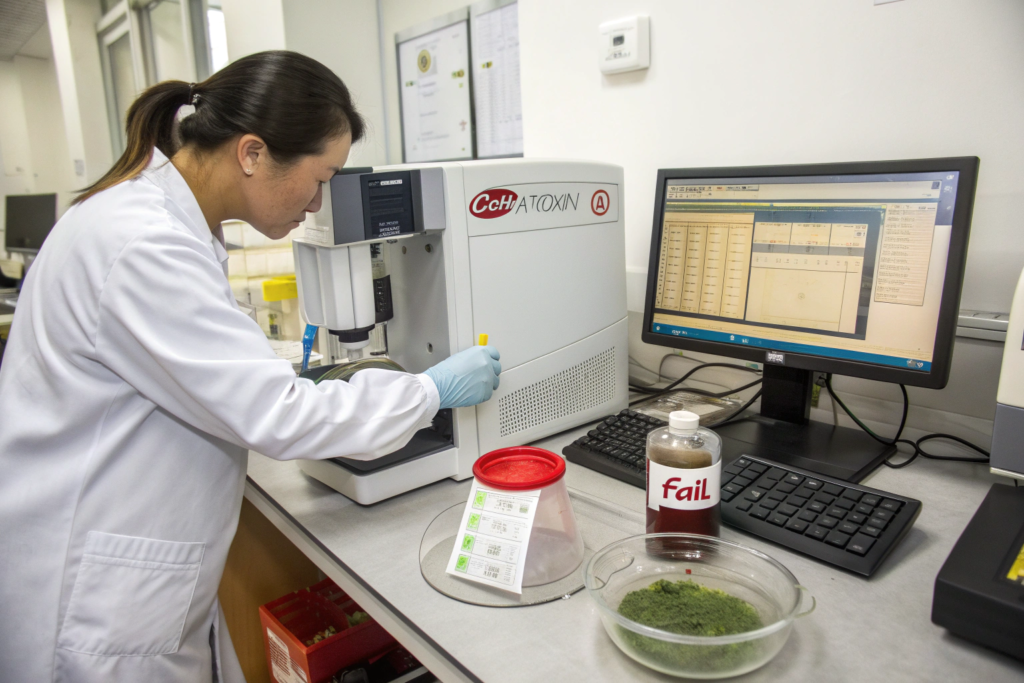
Cheap coffee beans carry an elevated risk of mycotoxin contamination, particularly Ochratoxin A and Aflatoxin, which are produced by molds that thrive in improperly dried and poorly stored coffee. Without third-party lab testing, these carcinogenic compounds can enter the food supply undetected.
Mycotoxins are not a theoretical risk. They are regulated in most developed markets. The European Union has strict maximum limits for Ochratoxin A in roasted coffee and instant coffee. A shipment that tests above the limit is rejected at the border. The importer pays for destruction or re-export. A cheap supplier who does not invest in proper drying, hermetic storage, and lab testing is gambling with your import license. The money you saved on the bean price disappears in a single rejected container.
What Is Ochratoxin A and Why Should Roasters Test for It?
Ochratoxin A, or OTA, is a mycotoxin produced by Aspergillus and Penicillium molds. It is nephrotoxic, meaning it damages the kidneys. It is also classified as a possible human carcinogen by the International Agency for Research on Cancer.
OTA forms when coffee cherries or parchment are dried too slowly in humid conditions, or when dried coffee is re-wetted during storage. The mold grows, and the toxin accumulates. Roasting reduces OTA levels but does not eliminate them entirely. The only way to know if a lot is contaminated is to test it. A reputable supplier tests every export lot and provides the certificate. A cheap supplier skips the $200 lab fee. The buyer assumes the risk. I have seen OTA test results from cheap commercial lots that exceeded the EU limit by a factor of three. That coffee was destined for a supermarket private label. If it had not been caught by the importer's quality control, it would have ended up on a shelf.
How Do Pesticide Residues End Up in Cheap Green Coffee?
Pesticides are a cost. A farmer who uses no pesticides, or only organic-approved ones, spends more on labor for manual weeding and pest management. A farmer who uses cheap, broad-spectrum chemical pesticides spends less on labor and gets a higher yield. That cost saving translates into a lower bean price.
The problem for the buyer is that many chemical pesticides are not approved for use in coffee-importing countries. Maximum Residue Limits are set low. A lot with excessive pesticide residue is legally adulterated. The buyer who imports it faces regulatory action. Cheap suppliers often source from multiple small farms where pesticide use is not monitored. The aggregation process mixes compliant and non-compliant beans. Without a pesticide residue test from an accredited lab, the buyer has no idea what is in the bag. I know a roaster whose entire container was seized by FDA because a random sample tested positive for a banned organophosphate. The supplier had vanished. The roaster ate the loss.
How Does Inconsistent Supply Quality Damage Your Brand?
Your brand is a promise. When a customer buys your coffee, they expect the same experience they had last time. The same aroma. The same body. The same finish. They do not care about your green cost. They care about the taste in their cup. If that taste changes, your promise is broken.
Inconsistent supply quality from cheap coffee sources damages your brand by forcing you to constantly adjust your roast profile, rename or re-blend your offerings, and explain to wholesale cafe clients why their espresso suddenly tastes different. The accumulated erosion of customer trust costs far more than the per-pound savings.
I have watched roasters chase cheap spot prices and drift from supplier to supplier. Their single-origin Colombia tastes different every three months because the beans come from a different farm each time. Their loyal customers notice. They stop buying the subscription. They try a different roaster. Losing a loyal customer over a $0.50 per pound saving is a bad trade. The cost of acquiring a new customer in specialty coffee is high. The cheap beans that saved $2,000 on a container might have cost $20,000 in lost lifetime customer value.
Why Do Cheap Suppliers Often Blend Lots from Unknown Sources?
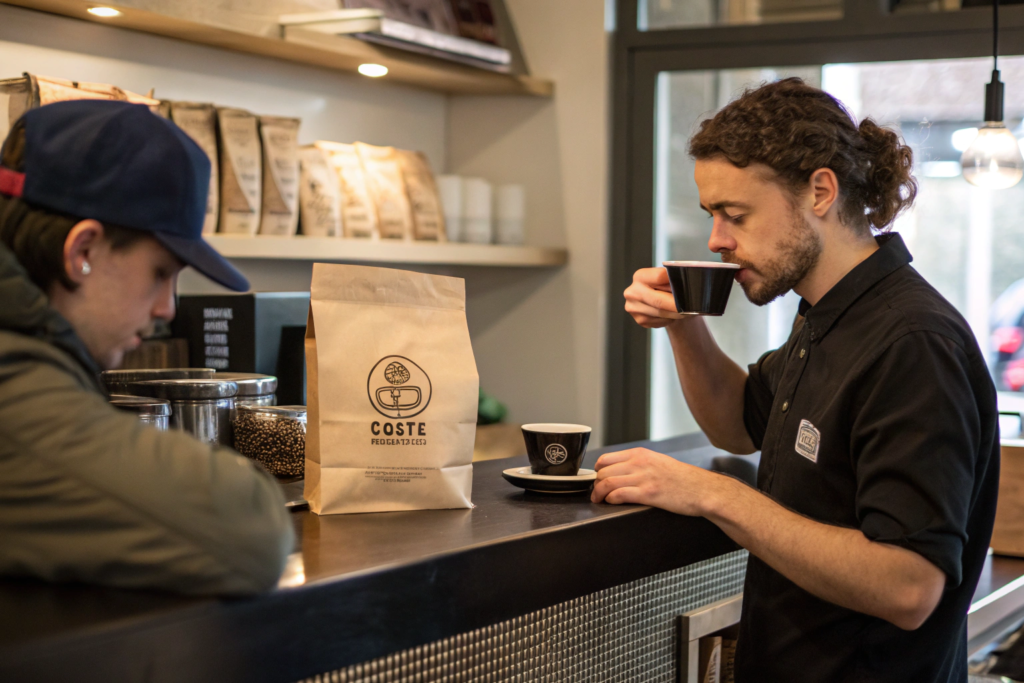
A cheap supplier's business model depends on buying low and selling low. They source coffee wherever it is cheapest on any given day. They do not have long-term relationships with specific farms. They buy surplus lots, rejected lots, and ungraded parchment from collectors.
When these mixed lots arrive at the supplier's warehouse, they are blended to create a uniform product that matches a generic specification. The blend might contain beans from a dozen different farms across multiple regions. The traceability is zero. The flavor profile is an average of whatever went into the mix. The problem for a roaster is that the blend composition changes constantly based on what is cheap that week. The supplier's "Yunnan Arabica Grade 2" might be 80% Pu'er and 20% Baoshan in January, and 60% Lincang and 40% Vietnamese border coffee in March. The name on the bag is the same. The contents are different. The roaster who does not cup every single shipment is in for a surprise.
How Does a Poor-Quality Batch Affect Wholesale Client Relationships?
A wholesale client is a cafe or restaurant that serves your coffee to their customers. They trust you to deliver consistency. Their baristas are trained on your specific bean and roast profile. Their menu describes specific flavor notes.
When a bad batch slips through, the consequences cascade. The barista notices the extraction is off. The dial-in takes longer. The shots run inconsistent. The milk drinks taste different. The cafe owner calls you, frustrated. They might ask for a credit or a replacement. They might start sampling competitors. If the problem happens more than once, they leave. A wholesale account might represent 500 pounds of coffee per week. Losing that account because you bought a cheap batch that did not perform is a direct hit to revenue. The $1,000 you saved on the green coffee cost you $50,000 in annual wholesale revenue. The math is brutal and clear.
What Are the Long-Term Costs of Choosing the Cheapest Supplier?
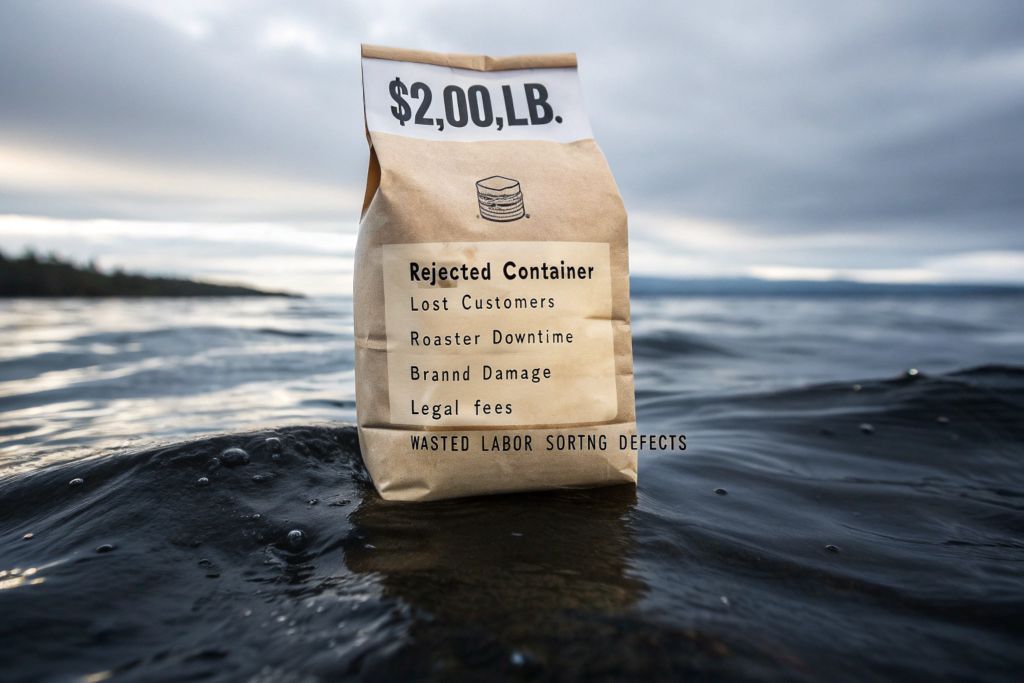
The price on the invoice is not the cost of the coffee. It is the down payment. The real cost is everything that happens after the bags enter your warehouse. The extra labor to sort out defects. The wasted roast batches that go to compost. The customer refunds. The lost accounts. The sleepless nights.
The long-term costs of choosing the cheapest supplier include the cumulative labor expense of defect sorting, the waste from roast batches that fail quality control, the inventory write-offs from rejected or aged-out stock, the customer churn from inconsistent quality, and the opportunity cost of not building a premium brand that commands higher retail prices.
I visited a roaster in the UK who had been buying cheap Brazilian commercial grade for his espresso blend. His team spent two hours every day hand-sorting defects out of the green beans before they hit the hopper. Two hours of labor, every day. At a living wage, that was over £15,000 a year in labor cost. He was spending more on sorting the cheap beans than he would have spent buying specialty grade that needed zero sorting. He had never done the math. When I showed him the numbers, he switched suppliers immediately.
How Much Waste Do Defective Beans Create in a Roastery?
Waste is a silent margin killer. A cheap lot with a 5% visible defect rate means 1,500 pounds of waste in a full container load. That is 1,500 pounds you paid for, shipped, and stored, but cannot roast. The actual waste is higher because you also discard beans that are borderline.
Then there is roast waste. A batch that comes out uneven because the cheap beans had inconsistent moisture or density is a wasted batch. The roaster dumps it, cleans the drum, and starts over. The green coffee is lost. The gas or electricity is lost. The production time is lost. A roaster I know tracked his waste over six months while using a cheap supplier. His total waste, including green sorting, roast rejects, and customer returns, was 8% of his green coffee purchases. For a small roaster buying 20,000 pounds a year, that is 1,600 pounds in the bin. At $3.00 per pound landed, that is $4,800 thrown away. The "cheap" coffee was actually 8% more expensive than the invoice suggested.
What Is the Opportunity Cost of Not Selling Premium Specialty Coffee?
Every roaster has a finite amount of production capacity, shelf space, and brand equity. If you fill that capacity with cheap, commodity-grade coffee, you cannot fill it with premium, high-margin specialty coffee.
Cheap coffee sells at a low retail price. The margin per bag is thin. Premium specialty coffee sells at a higher price. The margin per bag is larger. The customer who buys a $12 bag of cheap coffee is not the same customer who buys an $18 bag of single-origin specialty. The specialty customer is more loyal, more likely to buy a subscription, and more likely to tell their friends. By choosing cheap beans, a roaster caps their brand's earning potential. They position themselves in the discount segment, competing with supermarket brands on price. The opportunity cost—the revenue and profit that could have been earned by selling premium coffee instead—is the biggest hidden cost of all.
Conclusion
Buying cheap coffee beans is not a strategy. It is a gamble. Sometimes you win. A cheap lot cups clean and the savings boost your margin. But the odds are stacked against you. The defects that hide in the bag, the mycotoxins that hide in the lab report you did not request, the inconsistency that hides until your customer complains, the waste that hides in your production log. These risks are not priced into the invoice. They come due later, with interest.
The smart buyer does not ask "What is the cheapest coffee I can find?" They ask "What is the best value coffee for my business?" Value includes quality, consistency, safety, traceability, and partnership. It includes the peace of mind that the container you ordered is the container you will receive. That value costs more per pound on the invoice, and less per pound in the long run.
If you want to experience the difference between cheap coffee and value coffee, we can send you a sample of our specialty Baoshan Arabica. Cup it against your current inventory. Compare the defect count. Compare the consistency. Then do the math on your true cost per pound, including waste and customer retention. Contact Cathy Cai at cathy@beanofcoffee.com. She will put together a sample kit with full quality documentation so you can make the comparison yourself.