
A bad contract can turn good coffee into a bad memory. I have seen buyers lose money because the delivery window was vague. I have seen sellers get stuck because the quality spec was not clear. The problem is never the coffee. The problem is the paper. And too many people sign it without reading past the price. That is how disputes are born.
A winning coffee bean purchase contract is one that removes ambiguity. It spells out the exact coffee, the exact quality, the exact delivery window, the payment terms, and what happens if something goes wrong. It is not a weapon. It is a map. Both sides should know where they are going. At BeanofCoffee, we export Catimor, Arabica, and Robusta from our own farms in Baoshan, Yunnan. I have written and signed dozens of these contracts. I will tell you what works and what does not.
But before you draft a contract, you need to understand that every clause is a trade-off. A clause that protects the buyer often costs money. A clause that protects the seller often shifts risk. The trick is to find the balance that keeps the deal alive without leaving either side exposed. This article breaks down the four areas that matter most: essential clauses, Incoterms, quality specs, and payment terms. You will finish with a clear idea of what to ask for before you sign.
What Are the Essential Clauses in a Coffee Purchase Contract?
Many buyers think the price is the contract. It is not. The price is one line. The rest of the contract is what happens before you pay and after you receive. If you do not define those steps, you are relying on luck. I have had buyers call me after a delay and say, "But I thought the ship date was guaranteed." It was not, because the contract did not say it was.
The essential clauses in a coffee purchase contract cover product description, quantity, price, delivery terms, quality specifications, payment terms, inspection rights, and dispute resolution. Every one of those needs a clear, measurable standard. For example, "Arabica, Grade 1, 84+ cupping score, moisture 10.5%-11.5%." Not just "good quality." The more specific you are, the less room there is for an argument later. That is the whole point of the contract.
Dive deeper: A contract is only as strong as the definitions inside it. If you write "delivery within 30 days," you must also say whether that means 30 days from contract signing, from deposit payment, or from the date the coffee is ready. I have seen a whole shipment fall apart because the buyer and seller had different calendars in their heads. So let me give you a table of the clauses I always include when I draft an export contract for BeanofCoffee.
| Contract Clause | What It Must Define | Common Mistake |
|---|---|---|
| Product description | Variety, grade, crop year, screen size | "Arabica" only |
| Quantity | Net weight, bag size, tolerance | No tolerance for short weight |
| Delivery terms | Incoterm, port, latest ship date | "FOB" without port |
| Quality specs | Cupping score, moisture, defect count | Vague sensory words |
| Payment terms | Deposit %, balance trigger, bank details | No late fee clause |
| Inspection | Who samples, when, who pays for re-test | No pre-shipment sample rule |
| Dispute resolution | Governing law, mediation or arbitration | No mechanism at all |

What Is a Force Majeure Clause and Why Does It Matter for Coffee Contracts?
A force majeure clause excuses performance when an extraordinary event happens. For coffee, that could be a port strike, a canal closure, a pandemic, or a flood at the warehouse. The clause says neither side is liable if the event was outside their control. The International Chamber of Commerce has model force majeure clauses you can adapt. The United Nations Commission on International Trade Law also publishes guidance on international contract law. In my experience, buyers sometimes resist force majeure because they want certainty. But certainty does not exist in ocean freight. The clause actually protects both sides from being blamed for things they cannot control. Without it, a Panama Canal restriction could force you into a legal battle while your coffee sits at anchor.
How Do You Define Delivery Windows in a Coffee Contract to Avoid Disputes?
A delivery window must include three things: the earliest ship date, the latest ship date, and the port of loading. If you write "shipment in March 2026," that is too broad. Write "vessel sailing from Shanghai no earlier than March 10, 2026 and no later than March 25, 2026." That gives both sides a clear target. You can also add a clause that the buyer must be notified of the vessel name and estimated arrival date within 48 hours of loading. The Freightos platform shows how transit times vary by route. The Panama Canal Authority posts daily transit updates that can affect your arrival date. If the contract says "on or about," you are inviting a fight. Use exact dates. It feels strict, but it saves friendships.
How Do Incoterms Affect a Coffee Purchase Contract?
Incoterms are the three-letter codes that decide who pays for what. FOB, CIF, DDP. Buyers often pick one without thinking. Then the invoice arrives and they ask, "Why am I paying for terminal handling?" The answer is in the Incoterm they agreed to. It is not a hidden fee. It is a cost they already accepted.
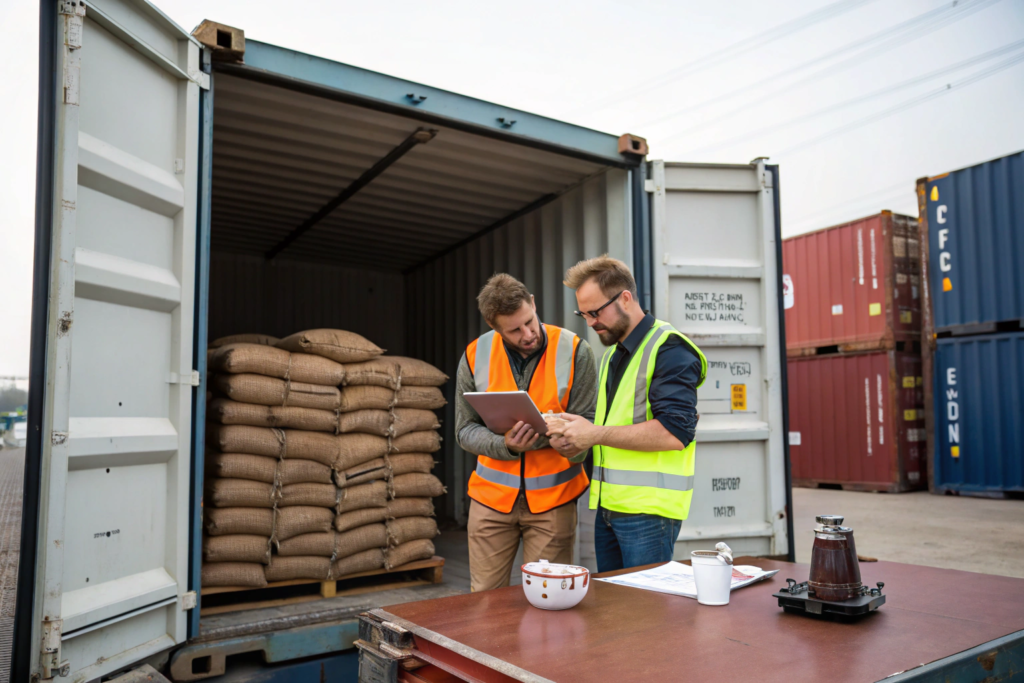
Incoterms affect a coffee purchase contract because they allocate freight, insurance, and risk between the seller and the buyer. FOB Shanghai means the seller is responsible until the coffee is loaded on the vessel. CIF Los Angeles means the seller pays freight and insurance to the destination port, but the risk transfers earlier. DDP means the seller handles everything, including import duties. Each term changes the price and the responsibility. Choose the one that matches your appetite for control.
Dive deeper: Many buyers think CIF is always better because the seller arranges shipping. That is true, but you pay for that convenience. The seller will add a margin to the freight. You also lose some control over the shipping line and the schedule. With FOB, you book the freight yourself, which gives you more visibility but also more work. Here is a table comparing the main Incoterms for coffee shipments from China to the US.
| Incoterm | Seller Responsibility | Buyer Responsibility | Risk Transfer Point |
|---|---|---|---|
| EXW Baoshan | Make coffee available at warehouse | Everything else | At seller's warehouse |
| FOB Shanghai | Load coffee onto vessel | Ocean freight, insurance, import | When goods cross ship's rail |
| CIF Los Angeles | Pay freight and insurance to LA | Import clearance, inland trucking | When goods pass ship's rail |
| DDP Chicago | Deliver to buyer's door, duties paid | Unload and receive | At named destination |
Which Incoterm Is Best for a First-Time Coffee Buyer from China?
For a first-time buyer, I usually recommend FOB or CIF. FOB lets your freight forwarder handle the ocean leg, which gives you more control and often a better rate. CIF is simpler because the seller manages everything, but you pay a premium. The International Chamber of Commerce publishes the official Incoterms rules. The USDA Foreign Agricultural Service has country-specific shipping guides that explain how Chinese exporters typically quote. I always tell new buyers to ask for both prices. Compare the FOB price plus your own freight quote against the CIF price. The difference is the seller's freight margin. If it is small, CIF is worth the convenience. If it is large, take FOB and book yourself.
How Do Incoterms Interact with Marine Insurance in a Coffee Contract?
Marine insurance is often forgotten until something goes wrong. Under CIF, the seller must provide insurance, but only at the minimum level, usually 110% of the invoice value. Under FOB, the buyer arranges insurance, so you can choose the coverage. The International Union of Marine Insurance provides statistics on cargo claims. The Lloyd's Market Association has standard policy wordings. I once had a container that got wet from a leak. The buyer had his own insurance under FOB, and he was paid within three weeks. If it had been CIF with minimum cover, he might have gotten less. So do not treat insurance as a checkbox. Know what the Incoterm includes and top it up if needed.
What Quality Specifications Should a Coffee Contract Include?
You can taste a great sample, but that sample is not the contract. The contract is the promise that the next 300 bags will taste the same. Without a quality spec, that promise is empty. I have seen buyers approve a sample and then reject the container because it did not match. They were right to reject. But the contract did not define what "match" meant. So the seller argued it was the same lot. The buyer said it was not. Both lost time and money.
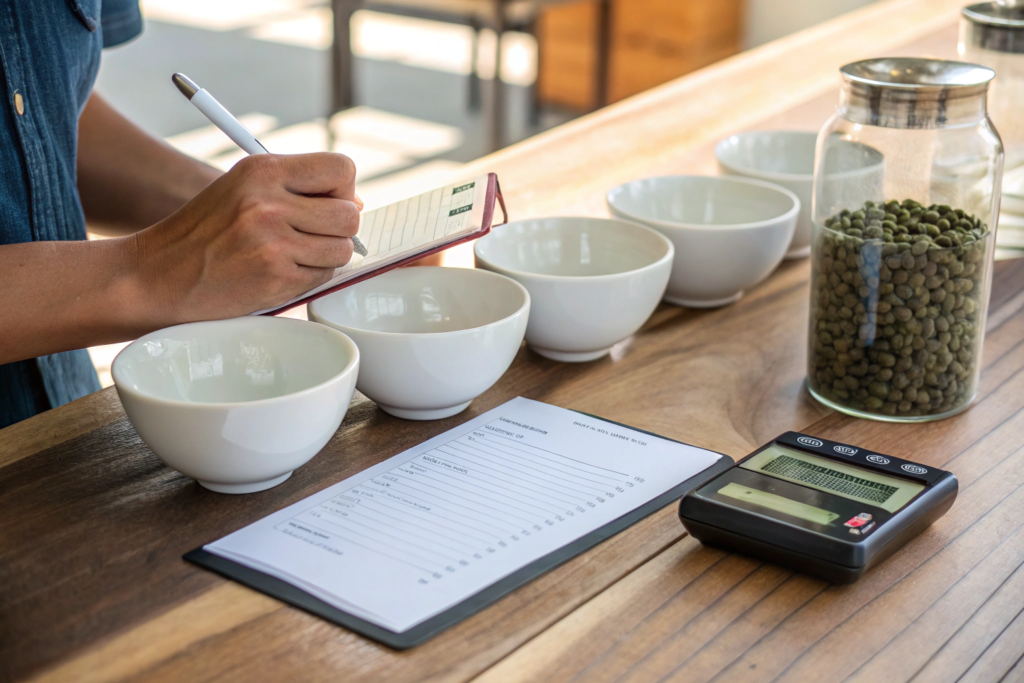
A quality specification in a coffee contract should include the cupping score, the moisture range, the defect count, the screen size, and the acceptable flavor notes. For example, "84+ SCA score, moisture 10.5%-11.5%, no primary defects, screen 15 and above, notes of brown sugar and black tea." That is measurable. A Q grader can verify it. The Specialty Coffee Association has standard cupping forms and green grading protocols. The World Coffee Research catalog gives variety-specific quality data. Use those as reference points. Do not rely on adjectives like "smooth" or "rich." Those are opinions, not specs.
Dive deeper: The hardest part is the sensory language. One buyer's "citrus acidity" is another buyer's "sour." That is why a numeric score is more useful than a flavor list. But even a score has a margin of error. A cupper can score the same coffee 84 one day and 83 the next. So the contract should include a tolerance. For example, "if the actual score is within 1 point of the target, the buyer accepts at the contract price; if more than 2 points below, the buyer may reject or renegotiate." That removes the drama from the cupping table. Here is a simple quality tolerance table I suggest.
| Quality Parameter | Contract Target | Acceptable Tolerance | Rejection Trigger |
|---|---|---|---|
| Cupping score | 84 points | 83-85 | Below 82 |
| Moisture | 11.0% | 10.5%-11.5% | Above 12.0% |
| Defect count (per 300g) | 6 defects | 4-8 | More than 12 |
| Screen size | 15+ | 90% above screen 15 | Less than 80% above |
How Do You Handle Pre-Shipment Samples in a Coffee Contract?
The pre-shipment sample is your last chance to stop a bad container before it sails. The contract should say that the seller will send a sample of the actual lot after bagging, and the buyer has a set number of days, usually 5 to 7, to approve or reject it. If the buyer does not respond, the seller can ship. But that default should be written down. The International Trade Centre has model contracts for coffee that include pre-shipment sample clauses. The CBI coffee market information states that European buyers increasingly require pre-shipment approval. I always send a sample by DHL with the lot code written on the bag. That way there is no confusion about which coffee is being shipped.
What Happens If the Coffee Fails Quality Inspection Upon Arrival?
The contract must define the consequences of a failed inspection. Can the buyer reject the whole container? Can they demand a price reduction? Who pays for the return freight? These are hard questions, and they are easier to answer before money changes hands. A common approach is to give the buyer the right to reject if the coffee is more than 2 points below the contract score. The seller then has the option to replace the lot or refund the deposit. The United Nations Convention on Contracts for the International Sale of Goods provides default rules, but a specific clause is better. I have only had one container rejected in my years exporting, and we resolved it within a week because the contract already had a clear path. Without that clause, it would have taken months and lawyers.
How to Negotiate Payment Terms in a Coffee Contract?
Payment is the moment of truth. You want the coffee, but you do not want to pay before it ships. I want the money, but I do not want to ship without a guarantee. This tension is normal. The solution is not to pick the most aggressive option. It is to find a structure that lets both sides sleep at night. A good contract makes that structure explicit.
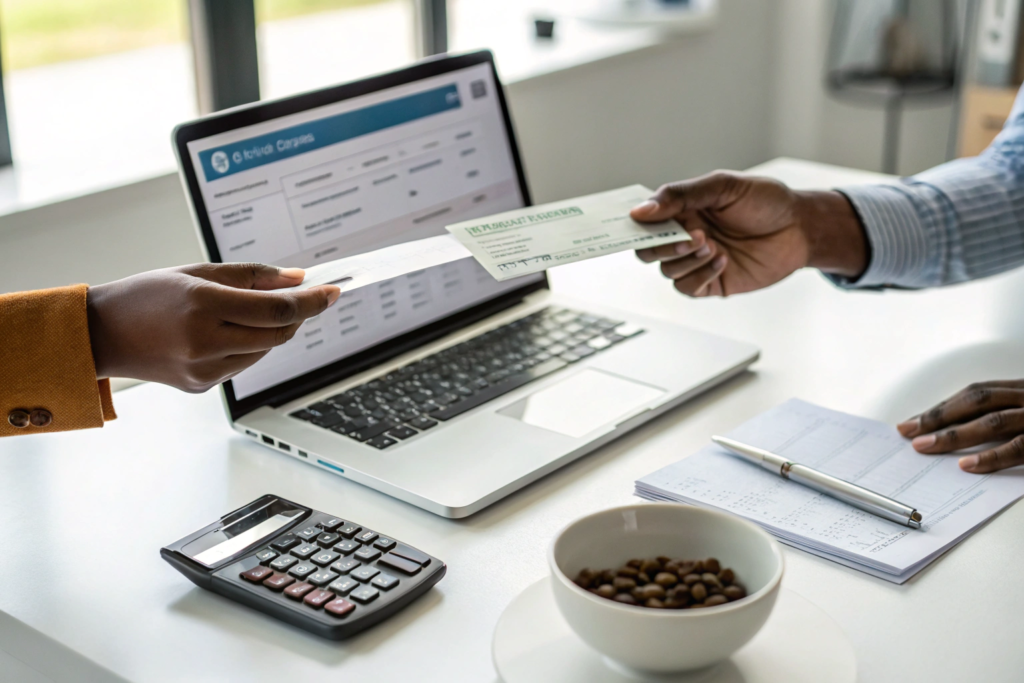
The most common payment terms in coffee trade are 30% deposit and 70% against a copy of the bill of lading. That means the buyer pays a deposit to confirm the order, and the balance only after the coffee is on the vessel. For larger orders or new relationships, a letter of credit adds bank protection. For repeat buyers with a strong record, open account terms may be possible. The key is to match the payment risk to the trust level. At BeanofCoffee, we offer flexible terms because we own the farms and the coffee. That gives us more room to negotiate.
Dive deeper: But flexibility has limits. I will not ship a container to a new buyer on open account. That is not personal. It is just risk management. The buyer might be honest, but what if they go bankrupt before the coffee arrives? A letter of credit protects me. A deposit protects me. You need to understand what each option costs you, not just what it gives you. Here is a table of common payment structures and who bears what risk.
| Payment Term | Buyer Risk | Seller Risk | Best For |
|---|---|---|---|
| 100% upfront | Seller fails to ship | None | Small samples, new supplier |
| 30% deposit, 70% against B/L | Deposit lost if no ship | Balance not paid after loading | Standard container orders |
| Letter of credit at sight | Bank fees, document risk | Bank handles payment | New relationships, large orders |
| Open account (30-60 days) | None | Buyer fails to pay | Established, trusted partners |
What Is a Letter of Credit and When Should a Coffee Buyer Use It?
A letter of credit, or LC, is a bank guarantee. Your bank promises to pay my bank once I present documents that match the LC terms, like the bill of lading, the commercial invoice, and the quality certificate. It protects you because I only get paid if the documents are correct. It protects me because the bank's promise is stronger than yours. The International Chamber of Commerce publishes the UCP 600 rules for LCs. The Export-Import Bank of the United States has guides for US importers on using trade finance. I recommend an LC for first orders above $50,000. The bank fees are a small price for the security. But be careful: an LC is only as good as the documents you ask for. If you ask for a vague document, the bank will accept a vague one. So specify exactly what you need, and have your bank review the draft before it is issued.
How Can a Coffee Contract Structure Payment to Reduce Risk for Both Sides?
The best contracts build payment around milestones, not just dates. For example, 20% deposit on signing, 30% when the coffee is bagged and sampled, and 50% against a copy of the bill of lading. That spreads the risk. The buyer is not putting all the money up front. The seller gets cash to cover processing costs before the container leaves. You can also add a clause that the balance must be paid within 3 business days of receiving the B/L copy, otherwise storage fees apply. The Trade.gov China country commercial guide notes that Chinese exporters often prefer milestone payments. The Supply Chain Dive has covered how payment terms affect supplier relationships. Milestones work because they align incentives. Both sides are invested at every step.
Conclusion
A winning coffee purchase contract is not the one that gives you the lowest price. It is the one that gives you the clearest path from farm to roastery. It defines the coffee, the quality, the delivery, the Incoterms, and the payment in plain language. It leaves no room for "I thought you meant." That clarity costs nothing, but it saves everything. I have built my export business on that principle. We farm coffee, we process it, and we write contracts that make sense to both sides.
If you are ready to put that principle to work, contact us at BeanofCoffee. We export Catimor, Arabica, and Robusta from our 10,000 acres in Baoshan, Yunnan. We will send you a sample, a clear quote, and a draft contract that you can review line by line. Talk to Cathy Cai at cathy@beanofcoffee.com. Tell her your volume, your target quality, and your payment comfort zone. She will get back to you within one business day with a straight answer. No boilerplate. No nonsense. Just coffee and a contract you can trust.
)