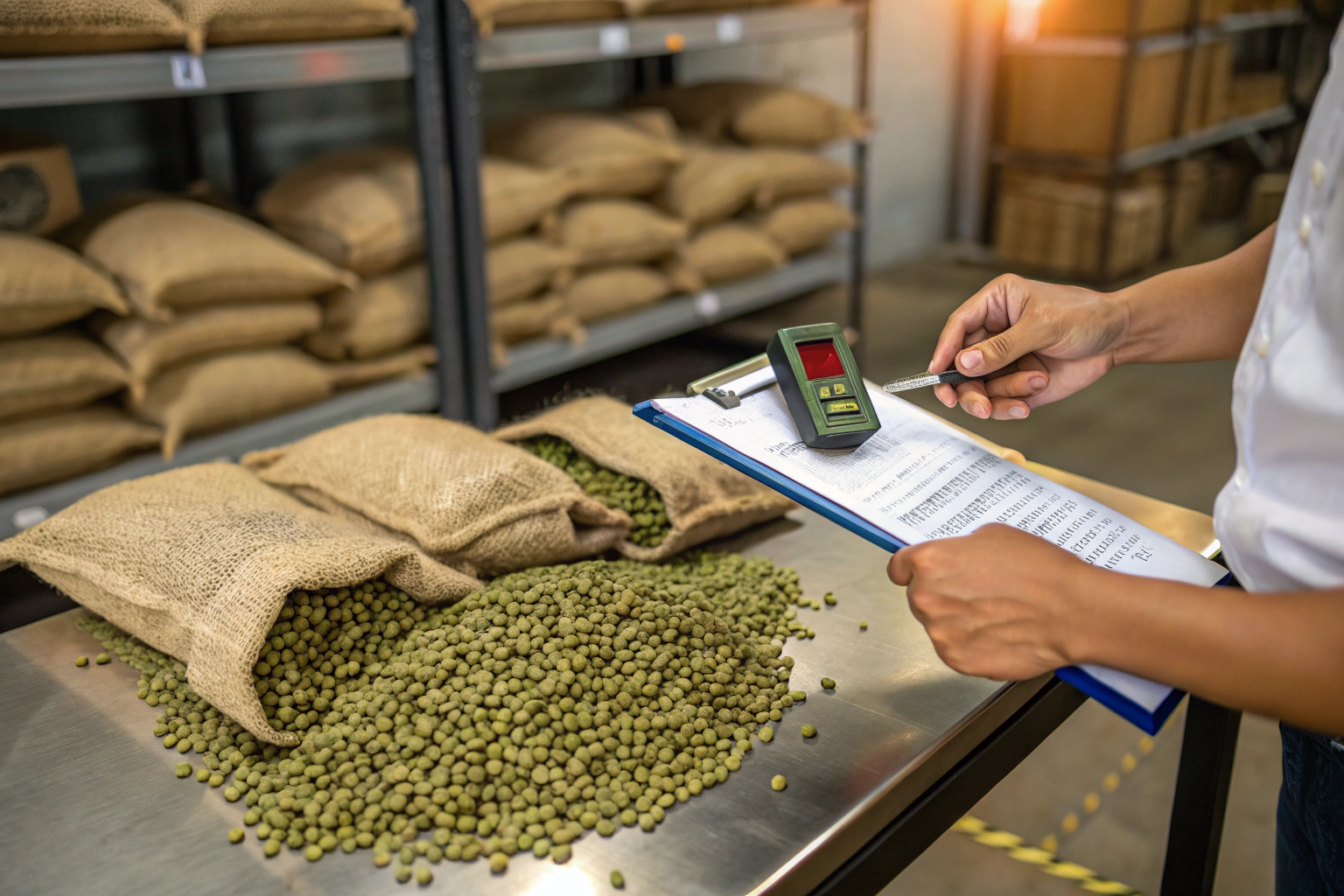
A buyer in Florida called me angry last year. His container had arrived, and the top bags smelled like a wet basement. He said the coffee was ruined. I asked him to check the moisture reading. It was 13.8 percent. That is too high. The coffee did not start that way. It gained moisture during the long ocean trip because the container was not sealed right. That one problem cost him money and cost me a good customer. I do not want that to happen again.
Green bean moisture must stay below 12.5 percent to prevent mold growth, protect the cupping score, and keep the beans from losing weight or developing musty flavors. At BeanofCoffee, we set our own target even lower, usually between 10.5 and 11.5 percent. That gives us a safety buffer for long transit and storage. A coffee that leaves our Yunnan farm at 11 percent can handle a few weeks at sea. One that leaves at 13 percent cannot.
You need to understand this number if you buy green coffee from any origin, not just China. It affects your profit, your reputation, and your customer's trust. I will walk you through what happens above 12.5 percent, how to measure it correctly, how to store it, and how it changes the cup. No jargon. Just the facts I use every day in Baoshan.
What Happens When Green Coffee Moisture Exceeds 12.5 Percent?
I have seen a single wet bag ruin an entire container. The moisture spreads through the jute, the humidity rises, and the beans start to sweat. You do not see it until you open the doors. Then the smell hits you. It is not always visible mold. Sometimes it is just a flat, papery taste that did not exist at the cupping table. That is the danger of high moisture: quiet damage.
When green coffee moisture goes above 12.5 percent, the water activity rises to a level where mold and bacteria can grow. The beans can also start to ferment, especially if the container gets warm. The result is musty, earthy, or sour flavors that no roaster can fix. You lose the sweetness and the clean finish. If a buyer rejects the container, the seller has to pay for return freight or destroy the coffee. Both sides lose.
Dive deeper into the numbers. Coffee is a hygroscopic product. It absorbs water from the air. The safe upper limit is not an opinion. It is based on water activity, which measures how much water is available for microbes. A moisture content of 12.5 percent roughly corresponds to a water activity of 0.65 to 0.70, depending on temperature. Above that, mold spores wake up. Here is a simple table I share with my export team.
| Moisture Content | Water Activity | Main Risk | Cup Impact |
|---|---|---|---|
| 10.5%-11.5% | 0.55-0.62 | Low | Clean, sweet |
| 11.6%-12.4% | 0.63-0.68 | Moderate | Slight fade |
| 12.5%-13.5% | 0.69-0.75 | High | Musty risk |
| Above 13.5% | Above 0.75 | Severe | Mold, sour |
Why Does Mold Grow in High-Moisture Green Coffee?
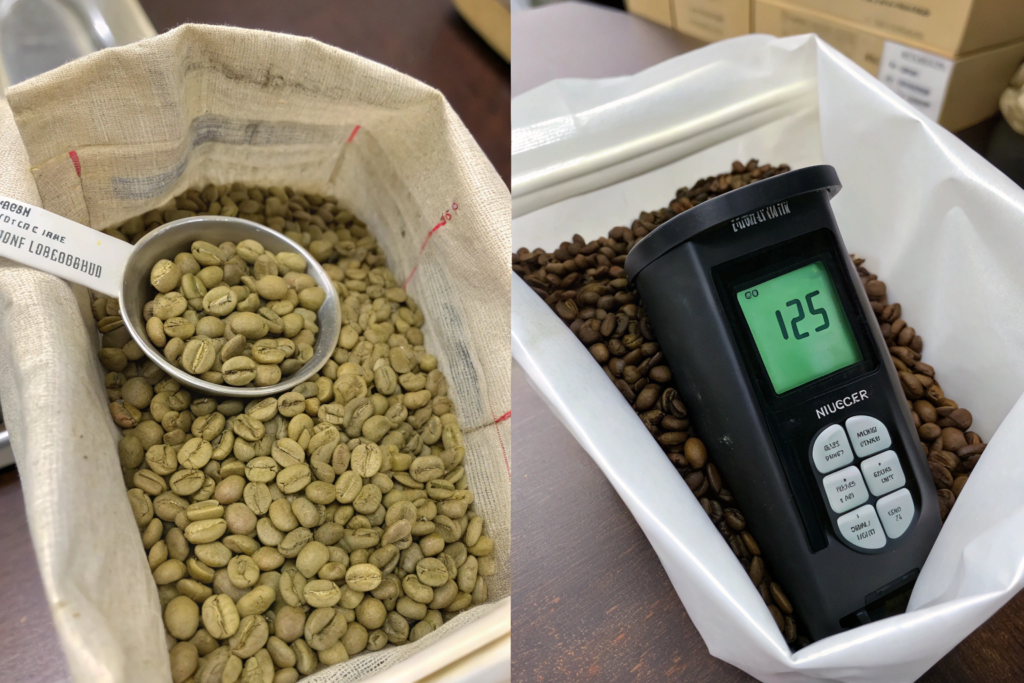
Mold needs three things: moisture, warmth, and time. A container at sea provides all three. Green beans above 12.5 percent moisture give mold the water it needs to germinate. The Specialty Coffee Association notes that green coffee should be stored below 12 percent to prevent mold and quality loss. The CBI coffee market information also warns that high moisture during transport is a leading cause of claims between buyers and sellers. I have had to open a container at the port and pull out five wet bags from the top row. The rest of the coffee was saved, but those bags were gone. Prevention is cheaper.
How Does Excess Moisture Affect Green Bean Weight and Price?
High moisture adds water weight, which sounds good until you realize you are paying for water. A container with coffee at 13 percent moisture contains more water than one at 11 percent. That means the buyer gets less dry matter. The International Coffee Organization tracks how moisture differences affect trade weights and contract terms. The Perfect Daily Grind has explained that importers often adjust the price based on moisture readings. If you buy 20,000 kilograms at 13 percent moisture, you may be paying for 400 kilograms of water. That is real money. A good contract will state the moisture range and the price adjustment if it goes outside.
How Do Exporters Measure Green Bean Moisture Accurately?
I learned early that a cheap moisture meter can lie. It gives you a number that looks fine, but the coffee is wet. Then you load a container and find out three weeks later. Accurate measurement is not hard. It just needs a good tool and a consistent method. You cannot test one bean and call it a day. You have to sample from different bags, at different depths, and average the results.
The most accurate way to measure green bean moisture is the oven-dry method, where you weigh a sample, dry it at 105 degrees Celsius, and weigh it again. The weight loss is the moisture content. But that takes hours. For daily checks, a calibrated electronic moisture meter is good enough. The key is to calibrate the meter against the oven method at least once a month. At BeanofCoffee, we use a meter from a brand that is standard in the coffee industry, and we check it every Monday morning before the first test.
Dive deeper into the practical side. Different meters can give different readings on the same sample. Bean density, temperature, and even the variety can affect the result. That is why you should always record the meter brand and the calibration date. Here is a table of the measurement tools I have used.
| Method | Time Needed | Accuracy | Best Use |
|---|---|---|---|
| Oven-dry (ISO 6673) | 4-6 hours | High | Calibration, final export check |
| Capacitance moisture meter | 10 seconds | Medium-high | Daily mill checks |
| Infrared moisture meter | 5 seconds | Medium | Quick screening |
| Manual squeeze test | 1 second | Low | Field estimate only |
What Moisture Meter Is Best for Green Coffee Export?
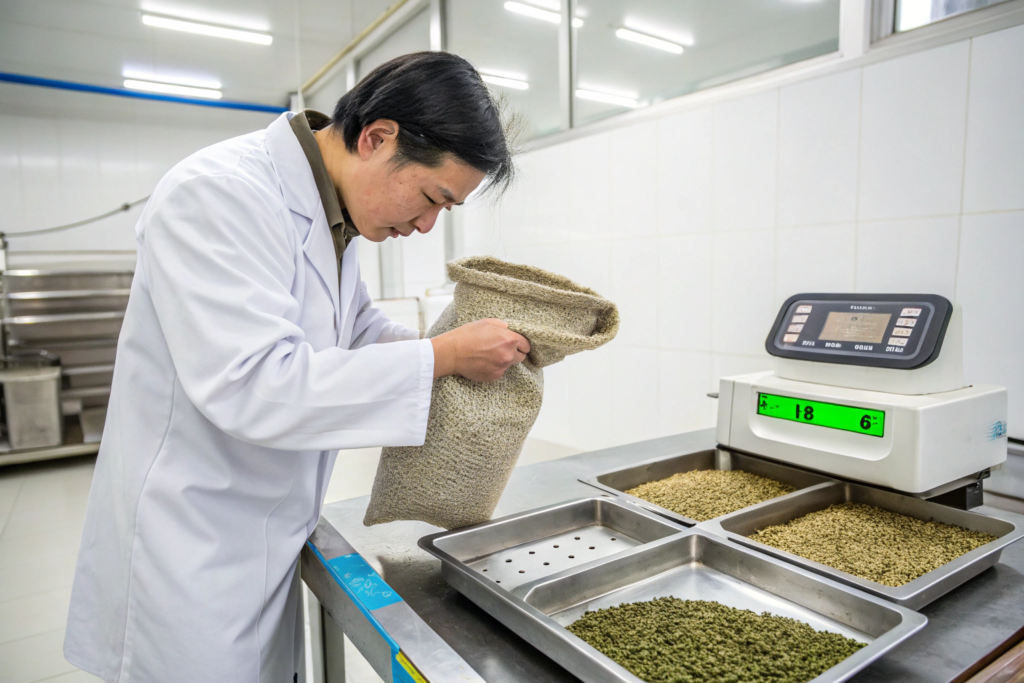
For export, you want a meter designed for green coffee, not for grain or wood. Coffee has a specific density and oil content that generic meters misread. The World Coffee Research has tested several meters and published guidance on moisture measurement. The National Coffee Association also recommends using a calibrated meter and checking it against a reference sample. I use a meter that gives a reading in 0.1 percent increments. That precision matters when you are deciding between 11.8 and 12.3. A meter that only shows whole numbers is not good enough for specialty coffee.
How Often Should You Test Moisture Before Loading a Container?
You should test at least three times: once after milling, once after bagging, and once right before stuffing the container. If the weather is humid or the bags have been stored for weeks, test again. The International Trade Centre advises exporters to create a moisture log for every lot. The USDA Foreign Agricultural Service also provides guidance for coffee exporters on quality control before shipment. I test every batch during harvest, and I pull a composite sample from the top, middle, and bottom of each pallet before loading. That way no bag goes into a container with a hidden wet pocket.
What Is the Ideal Moisture Range for Green Coffee Storage?
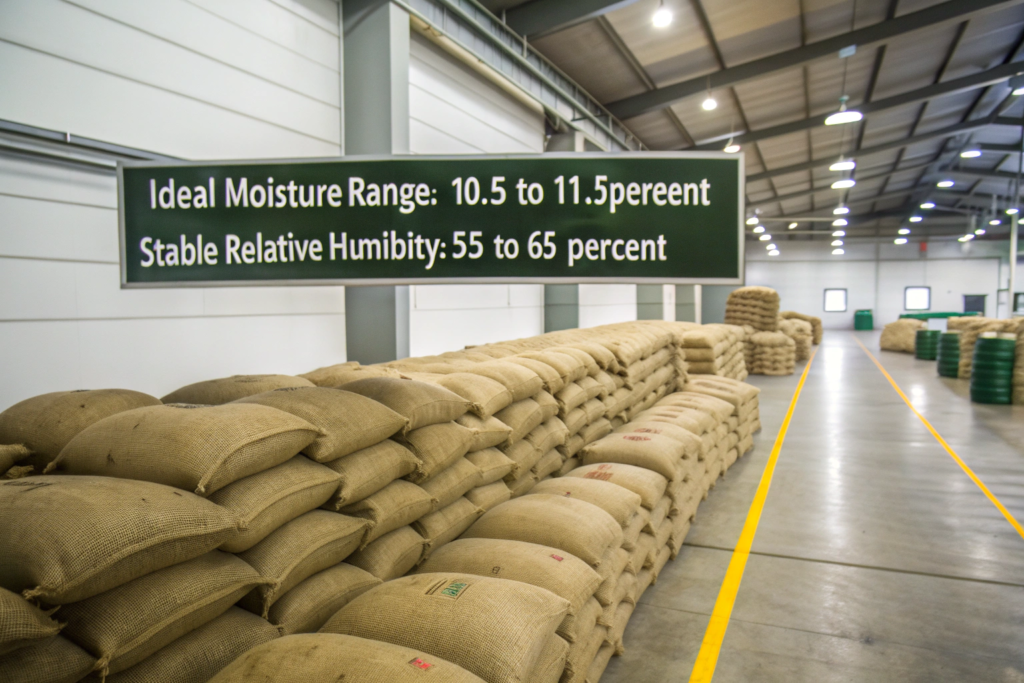
Most buyers think the moisture only matters at the port. That is wrong. Storage is where coffee can quietly gain or lose water. If you store beans in a damp warehouse for two months, even coffee that left the mill at 11 percent can climb to 13. That is why I watch the storage conditions as closely as the drying beds. The ideal moisture range for green coffee storage is 10.5 to 11.5 percent, with a stable relative humidity of 55 to 65 percent. Anything higher and the beans slowly absorb moisture. Anything lower and they become brittle and lose aroma.
The deeper reason is that coffee is not dead. It is a seed. It respires, it exchanges gas, and it responds to its environment. A bean stored at 11 percent in a dry room will stay fresh for months. The same bean stored at 12.5 percent in a humid port warehouse will start to fade within weeks. Here is a simple table of storage conditions I recommend to my buyers.
| Storage Condition | Ideal Range | Risk If Outside Range |
|---|---|---|
| Bean moisture | 10.5%-11.5% | Mold above 12.5%, aroma loss below 9% |
| Relative humidity | 55%-65% | Damp bags above 70%, cracking below 50% |
| Temperature | 15-25°C | Fermentation above 30°C, condensation below 10°C |
| Ventilation | Constant low airflow | Musty pockets in still air |
How Does Storage Humidity Affect Green Bean Moisture Over Time?
Coffee beans act like a sponge. If the air is more humid than the bean, the bean absorbs water. If the air is drier, the bean gives up water. That is why you cannot just set the moisture once and forget it. The Food and Agriculture Organization explains that proper warehouse management is essential for preserving grain and coffee quality. The Tridge platform tracks how storage conditions affect coffee trade values. I keep a hygrometer in every storage bay. If the reading goes above 65 percent, we turn on dehumidifiers or move the coffee. It costs a little electricity, but it saves bags.
Can You Re-Dry Green Coffee That Has Gained Moisture?
Yes, but it is risky. You can re-dry coffee on raised beds or in a mechanical dryer, but the cup is usually not the same. The bean has already started to stress. The Coffee Review has documented how re-dried coffees often taste flat or woody. The Rainforest Alliance recommends preventing moisture gain rather than trying to fix it. If a lot tests at 13 percent before export, I will reject it for specialty and sell it as commodity. Better to lose a few points than to send a container that gets rejected at the destination. Re-drying is a last resort, not a standard step.
How Does Moisture Affect Coffee Cup Quality and Shelf Life?
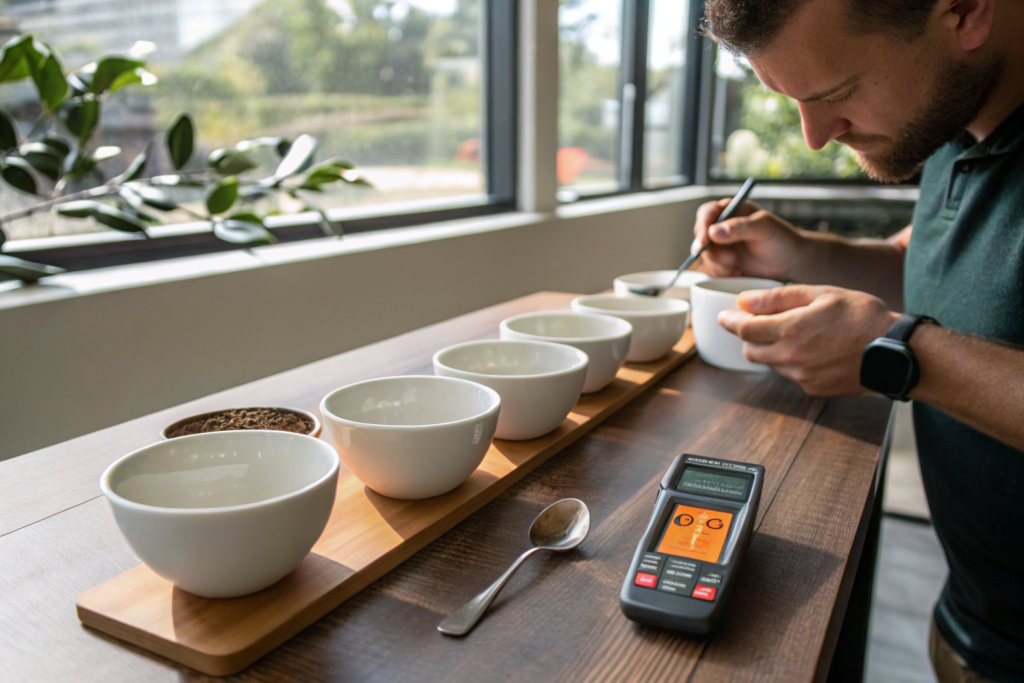
You can taste moisture before you measure it. A coffee that is too wet will cup flat, papery, and thin. The sweetness drops. The acidity turns dull. Sometimes there is a slight musty note that reminds you of old books. That is not a processing defect. That is a moisture defect. It happens after the coffee was already good, and then water got in. That is the frustrating part. The coffee was fine at the mill. Then a humid container or a leaky warehouse ruined it.
High moisture shortens shelf life and flattens the cup. The beans age faster because the extra water speeds up chemical reactions. A coffee at 12.8 percent might taste fine in week one, but by week six it can develop a stale, papery character. A coffee at 11 percent will hold its sweetness and brightness much longer. That is why I tell buyers to check the moisture on arrival, not just before loading. The journey matters as much as the origin.
Dive deeper into the sensory side. Cupping is the final test. If a coffee scores 85 at origin with 11 percent moisture, the same coffee at 13 percent might score 82 or lower. Here is a rough table of how moisture changes what I taste.
| Moisture Level | Typical Cup Character | Aroma | Aftertaste |
|---|---|---|---|
| 10.5% | Bright, sweet, clean | Strong, floral/fruity | Long, clear |
| 11.5% | Balanced, mild sweetness | Moderate, cocoa/nut | Medium, clean |
| 12.5% | Dull, slightly flat | Weak, papery | Short, dry |
| 13.5% | Musty, earthy, sour | Old wood, wet hay | Harsh, lingering |
What Sensory Defects Appear in High-Moisture Green Coffee?
The most common defects are musty, baggy, and sour notes. Musty comes from mold. Baggy comes from jute fibers that got wet. Sour comes from fermentation inside the bag. These are all considered secondary defects in the SCA cupping protocol. The Agricultural Marketing Service of the USDA has standards for green coffee defects that include moisture-related damage. The Trade.gov China country commercial guide notes that US importers often request a sensory evaluation for any shipment with moisture above 12 percent. A buyer can reject a lot on sensory grounds even if the moisture is only slightly high. So do not gamble.
How Does High Moisture Shorten Green Coffee Shelf Life?
The science is simple. Water is a solvent. More water means faster chemical reactions, including oxidation and lipid breakdown. That leads to rancidity and flavor fade. A coffee stored at 11 percent and 20 degrees Celsius can stay fresh for 12 to 18 months. The same coffee at 13 percent might start to fade in 6 months. The Supply Chain Dive has covered how moisture management affects perishable cargo shelf life. The Freightos blog explains how container condensation can raise effective humidity and shorten shelf life. If you are buying coffee for a program that runs all year, you need that shelf life. Every extra percent of moisture steals weeks from your selling window.
Conclusion
Moisture is not a boring quality metric. It is the difference between a coffee that sings and a coffee that smells like a cellar. Keeping green beans below 12.5 percent protects your money, your cup, and your customer's trust. At BeanofCoffee, we do not guess. We measure, we log, and we control every step from the drying bed to the container door. That is how we protect the coffee we export from Baoshan, Yunnan.
If you want to know more about our moisture protocols or see a sample with a moisture certificate, contact us at BeanofCoffee. We export Catimor, Arabica, and Robusta from our own 10,000 acres. We ship to North America, Europe, and Australia. Send a note to Cathy Cai at cathy@beanofcoffee.com. Tell her your volume and your cup target. She will reply within one business day with a clear moisture number and a real next step. No vague promises. Just dry, stable coffee.