I have been in the coffee business long enough to know that freshness is everything. You can source the best green beans. You can roast them perfectly. But if the coffee goes stale before it reaches your customer, all that work is wasted. I have seen roasters lose business because of this. They send out a bag. The customer opens it a few weeks later. And it is flat. No aroma. No life. The customer does not blame the roaster's skill. They blame the brand. And they do not come back. So, how do you stop this from happening? One of the most effective tools we have today is nitrogen flushing. It sounds technical. But it is actually a simple concept. You replace the oxygen inside the coffee bag with nitrogen. Oxygen is the enemy of freshness. Nitrogen is an inert gas. It does not react with the coffee. It keeps the coffee in a state of suspended animation.
Nitrogen flushing dramatically extends the shelf life of roasted coffee. It preserves the aroma, flavor, and oils that make your coffee special. When you remove oxygen, you stop the oxidation process. Oxidation is what makes coffee go stale. It is what turns those bright, vibrant flavors into flat, cardboard-like tastes. With nitrogen, you can keep your coffee fresh for months instead of weeks. This gives you more time to sell it. It gives your customers more time to enjoy it. And it protects your brand reputation.
So, why does this matter for your business? Let me walk you through it. I will explain the science in simple terms. I will show you how it impacts your bottom line. And I will tell you what I have learned from watching my clients use this technology to grow their businesses. Whether you are a small roaster or a large brand, this is something you need to understand.
Understanding Oxygen's Impact on Roasted Coffee
Before we talk about the solution, we have to understand the problem. Oxygen is everywhere. It is in the air. And it is the natural enemy of roasted coffee. I remember when I first started exporting, I did not think much about it. I thought, "Coffee is coffee. It will be fine." I was wrong. I sent a sample to a potential buyer in Europe. It took three weeks to arrive. When they cupped it, they said it was dead. The flavor was gone. I lost that opportunity. That was when I started learning about oxidation.
What happens to coffee when oxygen gets in?
Let me break this down. When you roast coffee, you create thousands of chemical compounds. These compounds give the coffee its flavor and aroma. They are what make a cup of coffee taste like berries, or chocolate, or nuts. But these compounds are volatile. They are reactive. When oxygen hits them, a chemical reaction starts. That reaction is oxidation.
Oxidation does a few things. First, it breaks down the aromatic compounds. The smell that hits you when you open a fresh bag? That is the coffee releasing its volatile compounds. But when those compounds react with oxygen, they change. They become less volatile. That means they do not release as easily. So the coffee smells less.
Second, oxidation affects the oils in the coffee. Roasted coffee has oils on the surface. These oils contain a lot of flavor. When oxygen reacts with those oils, it can create rancid flavors. You know that stale, cardboard taste? That is oxidized oils.
Third, oxygen speeds up the release of carbon dioxide. Fresh roasted coffee releases CO2 for days after roasting. This is normal. But oxygen exposure accelerates the process. And when the CO2 is gone, the coffee becomes more vulnerable. It is like a shield that disappears.
A coffee roaster in Seattle once told me something that stuck. He said, "Oxygen is like a thief. It steals the life out of your coffee one molecule at a time." He was right. The process is gradual. But it is constant. From the moment you grind the beans, the clock is ticking. But even whole beans are not safe. Oxygen can penetrate the bag. It can find small gaps. It can slowly degrade the coffee over weeks.
This is why timing matters. If you are a roaster, you need to get your coffee into a protective environment quickly. The longer it sits exposed to air, the more quality you lose. That is where nitrogen flushing comes in. It stops the thief.
How long does roasted coffee stay fresh without protection?
This is a question I get all the time. The answer depends on a few things. But let me give you a general idea. Without any protection, roasted coffee starts to lose its peak flavor within days. I am not saying it becomes undrinkable. But it is not at its best. If you leave it in an open bag, you might have two weeks before you notice a real decline.
With a standard bag that has a one-way valve, you do better. The valve lets CO2 out. But it does not keep oxygen out completely. Oxygen can still seep in over time. In that type of bag, you might get four to six weeks of good freshness. After that, the flavor starts to fade. The aroma becomes weaker. The complexity is lost.
Now, compare that to nitrogen flushing. When you do it right, you can extend that window to six months or even longer. I have tested this myself. We sent samples of our coffee from our farms in Yunnan to clients in Australia. The coffee was roasted, flushed with nitrogen, and sealed. It took three weeks to arrive. They cupped it. It tasted fresh. Then they held some back. Six months later, they cupped it again. The difference was minimal. The coffee still had good aroma. It still had flavor.
A client in Chicago told me about his experience. He was using standard bags for his wholesale customers. He had a 30-day window to sell and ship his coffee. After that, he felt the quality was not good enough for his brand. He switched to nitrogen flushing. Now he has a 90-day window. This changed his business. He could roast larger batches. He could ship to customers further away. He could take on more wholesale accounts because he was not rushing to get coffee out the door.
The bottom line is this: without protection, your coffee has a short life. With nitrogen, you buy time. And time is valuable. It gives you flexibility. It reduces waste. It allows you to serve customers in different time zones and different distances. It is a simple tool, but it has a huge impact on your operations.
The Core Benefits of Nitrogen Flushing for Your Business
Now let us talk about the benefits. I want to be practical here. You are a business owner. You care about quality. But you also care about your bottom line. Nitrogen flushing helps with both. It is not just a fancy packaging trick. It is a tool that can make your business stronger.
How does nitrogen preserve flavor and aroma?
Let me explain the mechanism. Nitrogen is an inert gas. That means it does not react with other substances. When you fill a bag with nitrogen, you push out the oxygen. The coffee is now in an environment that is about 99% nitrogen. There is almost no oxygen left to cause oxidation.
This is important because oxidation is a chain reaction. Once it starts, it continues. By removing the oxygen at the source, you stop the chain before it begins. The volatile compounds that give coffee its character stay intact. The oils do not turn rancid. The aroma stays locked in.
I have a story about this. We have a client in London. He runs a specialty coffee subscription service. He was having trouble with customer complaints. People said the coffee was not as good in the third week of the month as it was in the first week. He was shipping in standard bags. We suggested he try nitrogen flushing. He was skeptical at first. He thought it was an extra cost he did not need.
He tried it on one of his subscription tiers. After two months, he called me. He said the complaints stopped. His customers were happy. And here is the kicker: he said his retention rate improved. People stayed subscribed longer because the coffee stayed fresh all month. He was spending a little more on packaging. But he was making more money from longer customer lifetimes.
Another way to think about this is the "first cup" experience. When a customer opens a bag for the first time, they get a blast of aroma. That is a moment of delight. It sets the tone for their entire experience. If that moment is weak, they start with disappointment. Nitrogen flushing ensures that first moment is strong. It delivers that "wow" factor every time.
We also see this with our own exports. When we send green coffee beans to roasters, we recommend they use nitrogen flushing for their roasted products. One roaster in Canada told me that his wholesale clients started commenting on the freshness. They said his coffee stayed vibrant longer on their shelves. That feedback helped him win more accounts. The nitrogen flush became a selling point for him.
What does nitrogen flushing do for your brand reputation?
Your brand is built on trust. Your customers trust that when they buy your coffee, it will taste good. If they get a stale bag, that trust is broken. It does not matter if the stale bag was their fault for storing it too long. They will still associate the bad experience with your brand.
Nitrogen flushing helps you control that. It gives you a wider margin for error. Your coffee stays fresh longer on the shelf. It stays fresh longer in the customer's pantry. This means fewer bad experiences. Fewer bad experiences mean better reviews. Better reviews mean more sales.
I have seen this happen with a client in Texas. He was a small roaster. He sold mostly to local cafes. He decided to expand into e-commerce. But he was worried about shipping. He was afraid customers far away would get stale coffee. He invested in a nitrogen flushing system. He started shipping nationwide. Within a year, his e-commerce sales were bigger than his wholesale business. He told me that the trust he built came from the freshness guarantee. He could confidently say, "Our coffee stays fresh for three months." That gave his customers peace of mind.
Another angle is the premium positioning. Nitrogen flushing is associated with quality. When you put a nitrogen-flushed bag in front of a customer, it looks different. It is puffed up. It looks fresh. It looks professional. It signals that you care about the details. This matters, especially if you are selling to higher-end cafes or specialty stores. They look for these details. They want to work with roasters who take freshness seriously.
I also want to mention that nitrogen flushing can help you enter new markets. If you are exporting, shipping times are long. A container from Shanghai to New York takes weeks. If you are not protecting your coffee, it will arrive stale. But with nitrogen flushing, you can ship with confidence. You can sell to customers on the other side of the world. This is how we help our clients at Shanghai Fumao. We export to North America, Europe, and Australia. Our coffee is roasted and packed in nitrogen-flushed bags. It arrives fresh. That is how we build long-term partnerships.
Practical Considerations for Implementing Nitrogen Flushing
Now, you might be thinking, "This sounds great. But can I do it? What does it cost? Is it complicated?" These are fair questions. I want to give you a realistic picture. Nitrogen flushing is not magic. It is a process. It requires some equipment and some know-how. But it is accessible. You do not need to be a huge operation to do it.
What equipment do you need to get started?
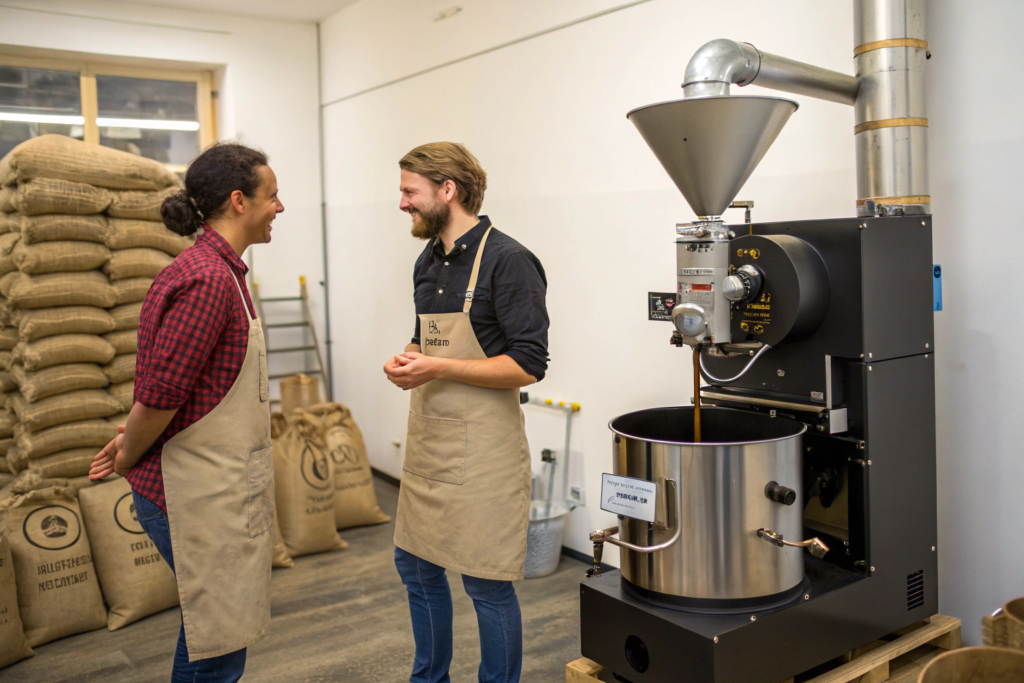
There are different ways to do nitrogen flushing. The simplest is a handheld system. This is often used by small roasters. It is a small machine that injects nitrogen into the bag before you seal it. You can do it manually. It takes a little extra time per bag. But it is affordable. You can get a setup for a few hundred dollars.
The next level is a semi-automatic system. This is common for medium-sized roasters. The machine does the injection and the sealing. You load the bag. It does the rest. This speeds up the process. It also ensures consistency. Every bag gets the same amount of nitrogen. The cost is higher. You might spend a few thousand dollars. But if you are packing hundreds of bags a week, it is worth it.
The top level is a fully automated system. This is for large operations. It is integrated into your packaging line. Bags move through automatically. They are filled, flushed, and sealed. This is efficient. But it is also expensive. It is for roasters who are doing high volume.
A client of mine in Oregon started with a handheld system. He was roasting 200 pounds a week. He spent an extra hour on packaging day doing the nitrogen flush. It was worth it to him because he could sell to cafes that were 100 miles away. The shipping time did not worry him anymore. As he grew, he upgraded to a semi-automatic machine. He said it paid for itself within six months because he reduced waste. He was not throwing away stale coffee anymore.
One thing to consider is the bag itself. You need bags that are designed for nitrogen flushing. They need to have a one-way valve. They also need to be strong enough to hold the pressure. The bag will puff up. That is normal. But if the seal is weak, it can burst. So, you need good quality bags. We work with several packaging suppliers. I can tell you from experience: do not cheap out on the bag. A bad bag will ruin your nitrogen flushing.
Also, consider your partner in the supply chain. If you are working with a fulfillment center, they need to be set up for nitrogen flushing. Not all fulfillment centers have this capability. If you outsource your packing, you need to ask. We have a partnership with Shanghai Fumao that helps us manage this for our clients. They have the equipment and the expertise. This is something to think about if you are scaling.
How does nitrogen flushing affect your cost and pricing?
Let us talk money. Adding nitrogen flushing will increase your cost per bag. You have the cost of the equipment. You have the cost of the nitrogen gas. You have the cost of the special bags. And you have the time cost.
But you have to look at the bigger picture. What does it save you? It saves you waste. If you are throwing away stale coffee, you are losing money. It saves you rush shipping costs. If you are rushing to get coffee out before it goes stale, you might be paying for expedited shipping. It saves you lost customers. A customer who gets stale coffee may never come back.
One of our clients in Australia did a cost analysis. He calculated that his waste from stale coffee was about 8% of his roasted production. That was money he was literally throwing in the trash. He switched to nitrogen flushing. His waste dropped to below 2%. The cost of the nitrogen system was less than the money he saved on waste. And that does not even count the value of improved customer retention.
Another client in California used nitrogen flushing to change his pricing model. Before, he had to sell his coffee within 30 days. He was under pressure. He often discounted bags that were getting close to the 30-day mark. After switching to nitrogen flushing, he had a 90-day window. He stopped discounting. He sold more at full price. His average selling price went up. The nitrogen flushing paid for itself many times over.
I also want to mention the value of consistency. When your coffee stays fresh longer, you can roast in larger batches. This is more efficient. You can run your roaster less often. You save on energy and labor. You have a more predictable schedule. These are hidden savings. They add up over time.
If you are exporting, the math is even clearer. The shipping time from China to the US is at least three weeks. Without nitrogen flushing, you are already at the edge of freshness before the coffee even arrives. With nitrogen flushing, you have a buffer. You can offer a product that arrives fresh and stays fresh. This allows you to command a better price. It also allows you to build a reputation for quality in markets that are far away.
Nitrogen Flushing and Your Supply Chain Strategy
I want to zoom out for a moment. Nitrogen flushing is not just about the bag. It is about your entire supply chain. It affects how you source, how you roast, how you store, and how you ship. When you understand this, you can use it to build a more efficient and resilient business.

How does nitrogen flushing enable longer shipping distances?
Let me start with a simple fact. The further your customer is, the longer your coffee is in transit. That is just geography. If you are only selling to customers in your city, freshness is easier. But if you want to grow, you need to reach people far away. You need to ship across the country. Or maybe you want to export to another continent. This is where nitrogen flushing becomes essential.
Think about a customer in New York buying from a roaster in Los Angeles. Ground shipping takes five to seven days. By the time the coffee arrives, it has already lost some freshness. If the customer does not open it right away, it gets worse. With nitrogen flushing, that five to seven days is no longer a problem. The coffee is protected. It arrives in the same state it left.
Now think about international shipping. A container from Shanghai to Rotterdam takes about 30 days. That is a long time. Without nitrogen flushing, that coffee would be well past its peak by the time it arrives. With nitrogen flushing, it is still fresh. This is how we export our Arabica coffee to Europe. We work with roasters who trust that the coffee we send them will arrive in good condition.
I have a client in Berlin. He buys our green beans. He roasts them in Germany. Then he ships his roasted coffee to customers all over Europe. He uses nitrogen flushing for all his roasted products. He told me that this allows him to compete with local roasters in other countries. His coffee arrives fresh. The shipping time does not hurt him. He has built a loyal customer base across the continent.
Another way to think about this is inventory strategy. If you can ship further, you can centralize your roasting. Instead of having small roasting operations in different cities, you can have one central facility. You roast in one place. You ship to everyone. This can lower your overall costs. You buy equipment once. You have one team. You have one quality control system. Nitrogen flushing makes this possible.
How can you integrate nitrogen flushing with your sourcing?
This is something I think about a lot. As a coffee grower and exporter, I see the whole chain. The decisions you make about packaging affect your sourcing. And the decisions you make about sourcing affect your packaging. They are connected.
If you are using nitrogen flushing, you can buy green coffee in larger quantities. You are not as worried about the roasted coffee sitting on your shelf. You can take advantage of bulk pricing. You can buy a whole container of green beans instead of buying pallet by pallet. This lowers your cost per pound. And that saving can help pay for the nitrogen flushing.
I have a client in Seattle who does exactly this. He buys our Catimor coffee in full container loads. He roasts it in large batches. He nitrogen flushes it. He sells it over a three-month period. He told me his cost per pound for green coffee is 15% lower than when he was buying in smaller quantities. The nitrogen flushing adds a small cost per bag. But the savings on green coffee more than cover it. He is making more profit per bag than before.
Another connection is with your supplier relationship. When you commit to larger volumes, you become a more important customer to your green bean supplier. You get better service. You get better pricing. You get better communication. At BeanofCoffee, we treat our long-term partners differently. We give them priority on our best lots. We work with them on payment terms. We help them plan their inventory. Nitrogen flushing, by enabling larger batch sizes and longer sales windows, can help you build that kind of relationship with us.
There is also a sustainability angle. When you reduce waste, you are being more sustainable. Less coffee ends up in the trash. Less energy is wasted on roasting coffee that will not sell. This matters to your customers. They care about sustainability. They want to buy from roasters who care about the environment. Nitrogen flushing helps you tell that story. You can say, "We use nitrogen flushing to reduce waste and ensure every bean is enjoyed."
Conclusion
Freshness is the foundation of a good coffee business. Without it, nothing else matters. You can have the best beans. You can have the best roast. But if the coffee is stale when it reaches your customer, you have failed. Nitrogen flushing is one of the most effective tools we have to solve this problem.
It works by removing oxygen. Oxygen is the enemy. It steals flavor. It kills aroma. It turns vibrant coffee into flat, lifeless product. Nitrogen flushing stops that process. It preserves the coffee in a near-perfect state. It gives you weeks or months of extra freshness. This means less waste. It means happier customers. It means you can sell to people far away. It means you can build a brand that people trust.
We talked about the science of oxidation. We looked at how long coffee lasts with and without protection. We discussed the benefits for flavor, aroma, and your brand reputation. We went through the practical side of equipment and costs. And we explored how nitrogen flushing fits into your broader supply chain strategy. Each of these pieces matters. Together, they form a complete picture.
At Shanghai Fumao, we take freshness seriously. Our own farms in Yunnan produce high-quality Arabica and Catimor. But we know that the story does not end at the farm. It continues through the roast, the packaging, and the shipping. That is why we work with partners like Shanghai Fumao to ensure that every bag we export is handled with care. We understand the challenges you face as a roaster. We know that your reputation depends on what ends up in your customer's cup.
If you are thinking about adding nitrogen flushing to your operation, I encourage you to do it. Start small if you need to. Test it. See the difference for yourself. And if you need a reliable source of green coffee to go with it, we are here to help.
Reach out to Cathy Cai. She is our export manager. She works with roasters all over the world. She can help you find the right coffee for your business. She can also talk to you about our packaging and logistics support. Her email is cathy@beanofcoffee.com. Send her a message. Let us talk about how we can help you keep your coffee fresh and your customers happy.