I run BeanofCoffee, a coffee exporter in Yunnan, China. We own more than 10,000 acres in Baoshan City. We ship Catimor, Arabica, and Robusta to North America, Europe, and Australia. Every week, a buyer asks me the same question: “What HTS code do I use for green coffee?” It sounds simple. It is not. One wrong number can slow customs. It can add extra tariffs. It can cause storage fees. It can even get a shipment held. Ron, a 44-year-old American company owner, cares about price and timeliness. He is right to care. A clean HTS code is part of both.
The current base HTS code for green coffee is 0901.11.00. This covers coffee that is not roasted and not decaffeinated. The common 10-digit line used by many importers is 0901.11.0010 for green coffee beans. The general duty rate is usually Free. But importers must also check Chapter 99 for extra tariffs, such as Section 301 or other trade measures. The final code depends on the product, the packaging, and the current USITC HTS.
So, what does this mean for you? It means you should not copy an old code from a past shipment. You should check the current HTS. You should ask your customs broker. You should keep your commercial invoice, packing list, and certificate of origin clean. At BeanofCoffee, we prepare export documents before the container leaves Yunnan. We do not guess. We check. That habit saves time at the port.
What Is the HTS Code for Green Coffee?
The HTS is the Harmonized Tariff Schedule of the United States. It is used to classify imported goods. The code tells customs what the product is. It also tells customs what duty rate applies. For green coffee, the main chapter is 09. Coffee, tea, maté, and spices. The heading is 0901. That heading covers coffee, whether or not roasted or decaffeinated. It also covers coffee husks, skins, and coffee substitutes that contain coffee. So the first step is to find the right subheading. Green coffee is not roasted. If it is not decaffeinated, it falls under 0901.11. If it is decaffeinated, it falls under 0901.12. That is the basic rule.
The HTS code for green coffee is 0901.11.00. The full 10-digit code often used is 0901.11.0010. This code is for coffee that is not roasted and not decaffeinated. The general rate of duty is Free. But the 10-digit suffix can change based on how customs classifies the product. Always verify the current code on the USITC HTS website before you file.
Another way to look at this is to compare HTS codes to an address. The first digits are the country. The next digits are the city. The last digits are the street. If you stop at the city, the package may still arrive. But it may go to the wrong door. So use the full 10-digit code when you can. Use the 8-digit code for duty rate. Use the 10-digit code for statistical reporting. That is how the system works.

Is 0901.11.00 the Correct Code for Raw Beans?
Yes, 0901.11.00 is the correct base code for raw green coffee beans that are not roasted and not decaffeinated. I use this code when we prepare export documents for U.S. buyers. You can check the current line at USITC HTS. You can also search past customs rulings at CBP CROSS. These tools help you confirm the code. They also show how CBP has treated similar products. Do not rely on a blog alone. Use the official source.
A common mistake is to use a roasted coffee code for green coffee. That is wrong. Roasted coffee is under 0901.21 or 0901.22. Green coffee is under 0901.11. Another mistake is to use a decaffeinated code for regular coffee. That is also wrong. Decaffeinated green coffee is under 0901.12. So read the product description carefully. Ask your supplier for the process method. Ask if the coffee is decaffeinated. Ask if it is roasted. These questions matter. They change the code.
Do 10-Digit Statistical Suffixes Matter?
They do. The 10-digit suffix is used for statistical reporting. It helps the U.S. government track imports. It also helps customs process the entry. For green coffee, the common suffix is 0010. But the suffix can vary. You can search the current HTS database at USITC HTS Query. You can also review tariff and trade data at USITC. These sources show the current structure. They also show if a line has changed.
I tell buyers to put the full 10-digit code on the commercial invoice. I also tell them to keep a copy of the HTS page with the shipment file. That way, if customs asks a question, the broker has the answer. It is a small step. But it prevents a big delay. Ron likes this because he wants a clean entry. A clean entry means faster release. Faster release means happier customers. That is the goal.
Are Green Coffee Imports Duty Free?
Duty free sounds simple. But it is not the whole story. The general duty rate for green coffee is often Free. That means no normal customs duty. But other charges may apply. You may pay merchandise processing fees. You may pay harbor maintenance fees. You may pay extra tariffs under Chapter 99. You may pay state or local taxes. So the landed cost is more than the duty rate. You must add all the costs. Ron cares about the final number. He should. A free duty rate does not mean a free shipment.
Green coffee imports are generally duty free under HTS 0901.11.00. The general rate of duty is Free. However, additional tariffs may apply. Chapter 99 of the HTS can include Section 301 tariffs, safeguard tariffs, or other trade measures. The country of origin matters. For Chinese coffee, importers should check the current Section 301 list and any new trade actions. Always confirm with CBP and your customs broker.
So, what should you do? First, check the current HTS line. Second, check Chapter 99. Third, check the country of origin. Fourth, check the product description. Fifth, ask your broker for a landed cost estimate. Do not assume. A small extra tariff can change your margin. A missing document can change your timeline. Both hurt.
What Does the General Duty Rate Say?
The general duty rate for 0901.11.00 is Free. You can see this on the USITC HTS. The special rates may also be Free for certain trade partners. But China is not in a special free trade agreement with the U.S. for this product. So the general rate applies. The CBP basic import and export page explains how duty rates work. It also explains entry procedures. I use these pages when I train our export team. They are clear and official.
Do not confuse “Free” with “no paperwork.” You still need an entry. You still need an invoice. You still need a packing list. You still need a bill of lading. You still need a certificate of origin. The duty rate is only one part. The documents prove the product and the value. If the documents are wrong, the entry can be delayed. So treat the duty rate as a starting point. Then build the full file.
Do Additional Tariffs Apply to Chinese Coffee?
They can. The United States has used additional tariffs on many Chinese goods. These are often under Section 301. The list changes. The rates change. So you must check the current rules. The USTR publishes trade policy information. The Federal Register publishes official notices. These are the sources to watch. Do not rely on old news. Do not rely on a rumor from a trade group. Check the official notice.
For green coffee, the base HTS code may be duty free. But an additional tariff could still apply if the product is on a list. The code in Chapter 99 may be added to the entry. Your customs broker should know how to handle this. If your broker does not know, find a new broker. A good broker checks Chapter 99 every time. A weak broker only checks the base code. That difference can cost you money.
How Do You Classify Organic Green Coffee?
Organic coffee is still coffee. The HTS code does not change just because the coffee is organic. That surprises some buyers. They think organic must have a different tariff line. It usually does not. The product is still green coffee, not roasted, not decaffeinated. So the base code is still 0901.11.00. The difference is in the documents. You need proof of organic certification. You need a clean supply chain. You need to meet USDA organic rules. So the code stays the same. The paperwork grows.
Organic green coffee usually uses the same HTS code as regular green coffee: 0901.11.00. The organic status does not create a new tariff line. However, organic imports must meet USDA National Organic Program rules. They need a valid organic certificate and an import certificate. The HTS code identifies the product. The organic documents prove the claim. Both are needed for a smooth entry.
Another way to look at this is to separate identity from quality. The HTS code identifies the product. It says “this is green coffee.” The organic certificate identifies the process. It says “this coffee was grown and handled under organic rules.” Customs cares about both. FDA cares about food safety. USDA cares about organic claims. So you may need several documents. That is normal. Plan for it early.
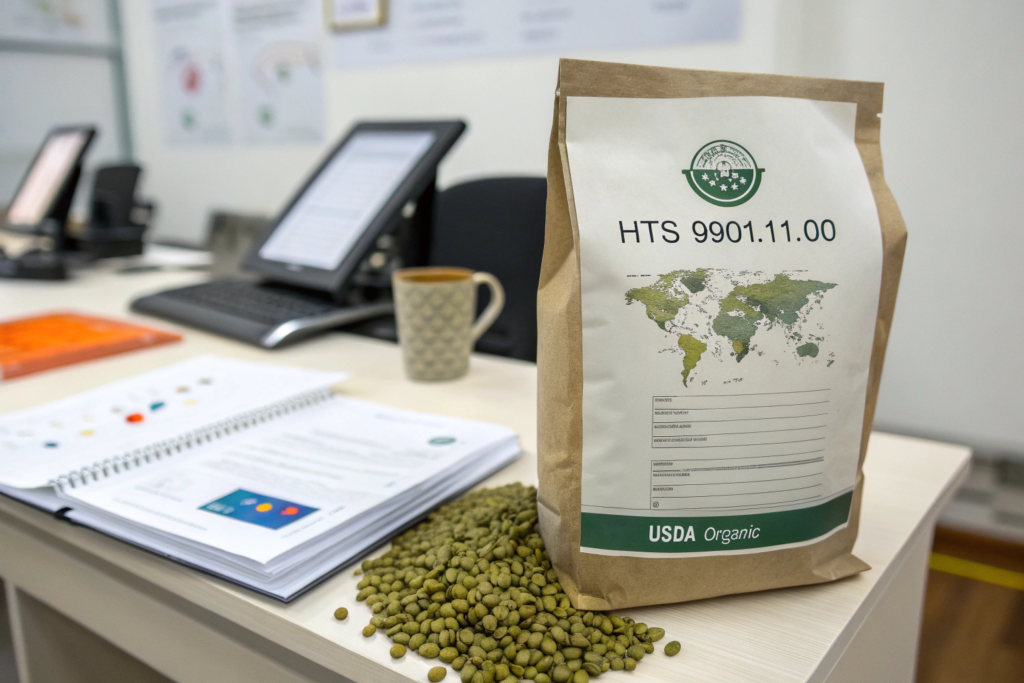
Does Organic Certification Change the HTS Code?
No, organic certification does not usually change the HTS code. The code is based on the product type. Green coffee is green coffee. You can check the USDA organic rules at USDA AMS Organic. You can also read the organic regulations at eCFR. These sources explain what organic means in the U.S. They also explain what importers must do. I use them when we prepare organic lots. They help us avoid claims that we cannot prove.
Some buyers ask for a separate organic line on the invoice. That is fine. But the HTS code should still match the product. Do not invent a new code for organic coffee. That can cause confusion. Instead, put the organic certificate number on the invoice. Attach the certificate to the entry. Keep the lot number on all documents. That way, the broker can match the coffee to the certificate. A clean match prevents delays.
How Do You Prove Origin and Certification?
You prove origin and certification with documents. You need a certificate of origin. You need an organic certificate if the coffee is organic. You need a phytosanitary certificate. You may need an FDA prior notice. The FDA prior notice page explains the U.S. food import rule. The USDA AMS imports and exports page explains agricultural trade rules. These are useful for buyers and suppliers.
At BeanofCoffee, we keep these documents in one file. We check the names, dates, and lot numbers. We send the file to the buyer before the container arrives. That gives the broker time to review. It also gives the buyer time to ask questions. Ron likes this because he wants no surprises. A surprise at customs is expensive. A clear file is cheap. So we choose the clear file every time.
What Documents Need the HTS Code?
The HTS code does not live alone. It appears on several documents. It appears on the commercial invoice. It appears on the packing list. It appears on the entry summary. It may appear on the certificate of origin. It may appear on the bill of lading. If the code is wrong on one document, the broker may need to correct it. Corrections take time. Time costs money. So the code must match across all documents. This is a basic rule. But many shippers miss it.
The HTS code is needed on the commercial invoice, packing list, entry summary, and sometimes the certificate of origin and bill of lading. The code must match on every document. If one document shows a different code, customs may hold the shipment. A customs broker can help file the entry and check the code. Good documents prevent delays and extra fees.
So, what should you do? First, confirm the code with the supplier. Second, confirm it with the broker. Third, put it on every document. Fourth, check the spelling and numbers. Fifth, keep a copy of the HTS page in the file. This process is not exciting. But it works. It protects your shipment. It protects your margin. It protects your customer relationship.
How Do You Avoid Customs Delays?
You avoid customs delays by using the right code, the right documents, and the right broker. You should also check the current HTS before every shipment. The CBP trade page explains entry requirements. The CBP rulings page explains how to request a ruling. If you are unsure about a product, you can ask CBP for a ruling. That takes time. But it gives you a clear answer. For a large contract, a ruling can be worth it.
I also tell buyers to avoid last-minute changes. If the product description changes, the code may change. If the packaging changes, the code may change. If the origin changes, the tariff may change. So tell your supplier early. Tell your broker early. Do not wait until the container is at the port. A small change early is easy. A small change late is a problem.
Can a Customs Broker Help With Coffee?
Yes, a customs broker can help with coffee. A good broker knows HTS codes, Chapter 99 tariffs, FDA rules, and USDA rules. A good broker also knows how to file an entry and how to respond to a customs question. The Trade.gov website offers export and import guidance. The WCO explains global customs standards. These resources can help you understand the broker’s work. But they do not replace a good broker. Use both.
At BeanofCoffee, we work with brokers who know coffee. We send them our documents early. We ask them to review the HTS code. We ask them to check Chapter 99. We ask them to confirm the FDA prior notice. This teamwork prevents surprises. It also builds trust. If you want a supplier who understands U.S. import rules, talk to us. We are not customs brokers. But we know how to prepare a clean file.
Conclusion
The current base HTS code for green coffee is 0901.11.00. The common 10-digit line is 0901.11.0010. The general duty rate is usually Free. But importers must also check Chapter 99 for extra tariffs. They must check the country of origin. They must check organic rules. They must check FDA prior notice. They must use the code on every document. A wrong code can cause delays, fees, and lost sales. A right code keeps the shipment moving. That is why this small number matters so much.
At BeanofCoffee, we take HTS codes seriously. We own more than 10,000 acres in Baoshan City, Yunnan. We export Catimor, Arabica, and Robusta. We work with large buyers, brand owners, distributors, and trading companies. We prepare commercial invoices, packing lists, certificates of origin, and test reports. We can help you check the code before the coffee leaves China. If you want a smooth import, please contact Cathy Cai at cathy@beanofcoffee.com. She will help you with samples, pricing, specifications, and shipping documents. You can also visit BeanofCoffee to learn more. Let us make your next coffee shipment clean and simple.