I remember a call from a new client in Vancouver. He was ready to place his first container order of our Yunnan Arabica. He had his financing, his warehouse space, and his roasting schedule all planned. But then his voice got hesitant. "Cathy," he said, "I've been staring at the Canadian tariff schedule for an hour, and I'm still not 100% sure what the duty rate is. The last thing I need is a surprise bill of thousands of dollars from the CBSA at the port." He was a victim of the complex, often intimidating language of trade. The truth, for his relief and for you, is remarkably simple. The pain of a misclassified shipment is a costly and entirely avoidable border delay.
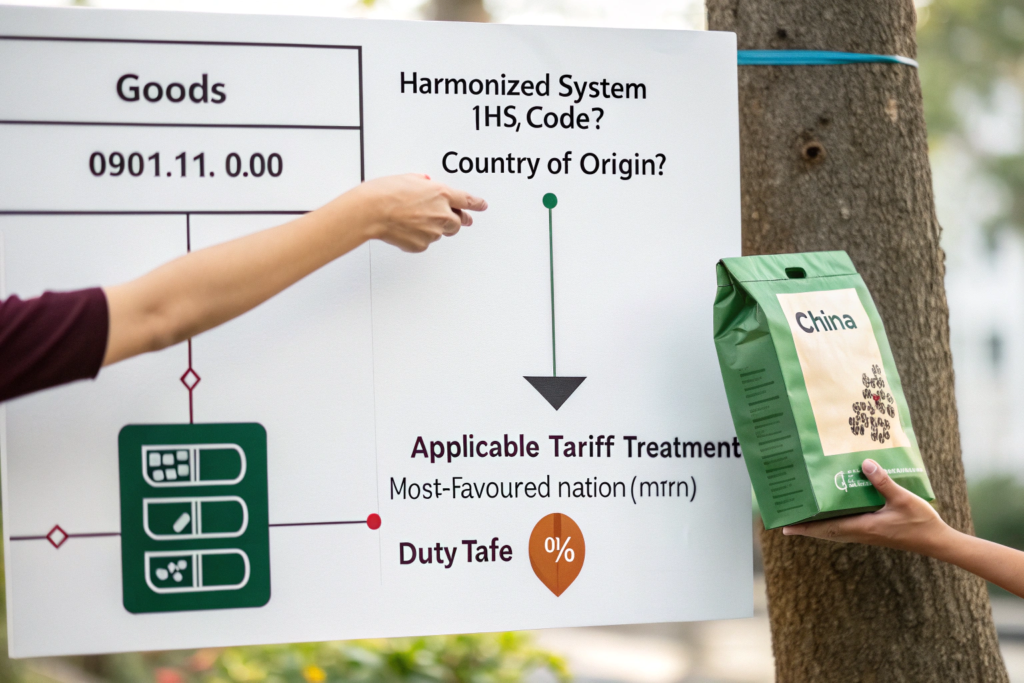
The duty rate for green coffee beans entering Canada in 2026 is 0% under the Most-Favoured-Nation (MFN) tariff, provided the coffee is correctly classified under the specific Harmonized System (HS) code 0901.11.00 for "Coffee, not roasted, not decaffeinated," regardless of whether it is Arabica or Robusta.
This is not a loophole or a complex trade agreement. It is the standard, baseline tariff. Let me explain the simple law, the one critical detail you must get right on your documentation, and how to ensure a perfectly smooth clearance. At Shanghai Fumao, we ensure our documentation is flawless for every destination, as detailed on our Logistics & Planning page.
What Is the MFN Tariff for Green Coffee and How Is It Applied?
The word "tariff" sounds intimidating. But for an honest importer of a simple raw commodity like green coffee, the system is logical and, in Canada's case, benevolent. The Canadian duty rate is not a mystery, nor is it a heavy burden. It is a straightforward decision tree based on two things you already know: the correct classification code for your product and its country of origin.
Canada applies a Most-Favoured-Nation (MFN) tariff of 0% to all properly classified green coffee imports, a policy designed to ensure a cost-effective supply of this raw material for its domestic roasting industry. There is no duty on green coffee, period.
This is a deliberate economic policy to support Canadian coffee roasters. The government does not tax a raw material that is not grown domestically. So, the answer to the duty question is easy. The real work is ensuring your shipment is correctly classified to receive this free rate without any bureaucratic friction. This policy is set by the Canada Border Services Agency (CBSA), and is publicly available in the Canadian Customs Tariff.
Why Is HS Code 0901.11.00 the "Golden Ticket" for Zero Duty?
The Harmonized System (HS) is the universal language of customs authorities worldwide. It is a six-to-ten-digit code that classifies every traded product. For your shipment, the specific code is the single most powerful string of numbers on your invoice. An incorrect code is the single most common cause of a costly and stressful customs hold.
For your green coffee to clear customs at a 0% duty rate, it must be declared under the specific Canadian HS code 0901.11.00. This specific code tells the CBSA officer exactly what is in the container: "Coffee, not roasted, not decaffeinated." If your coffee is green, Arabica, and has not been decaffeinated, this is the only correct code. There is no separate rate for Robusta. Using this code is not a choice; it is the legal requirement for your product. It is the "golden ticket" because it automatically triggers the free MFN rate. For the most current official tariff, you can also use the Canada Tariff Finder tool.
What Happens If You Misclassify the Coffee as "Roasted" or "Processed"?
This is the most common and easily avoided mistake that can cost you thousands of dollars in unnecessary fees. The HS system differentiates between raw agricultural products and processed foods. A simple error in your product description can trigger an incorrect, much higher duty rate.
If your invoice vaguely describes the product as "coffee beans" or, worse, the customs broker accidentally uses the code for roasted coffee (HS 0901.21), the system will calculate a different, non-zero duty rate. This could result in an immediate, surprise tax bill of several thousand dollars upon entry. Worse, it will flag your shipment for a manual review, leading to costly port storage delays. This is why we are so meticulous about our documentation. The correct description, as we explain in our guide on How to Avoid Customs Delays with Proper Coffee Bean Invoice Declarations?, is "Green Coffee Beans, Arabica, Not Roasted, Not Decaffeinated." This specific phrase legally secures your 0% duty rate.
Are There Any Other Taxes or Fees Beyond the Basic Duty?
Your relief at discovering the 0% duty rate is understandable. It means a major cost barrier does not exist. However, a successful import budget must account for other standard government taxes and commercial logistics fees that are a normal part of bringing any commercial good into Canada. A zero duty rate is not a total exemption from all costs. The key is knowing which ones apply.
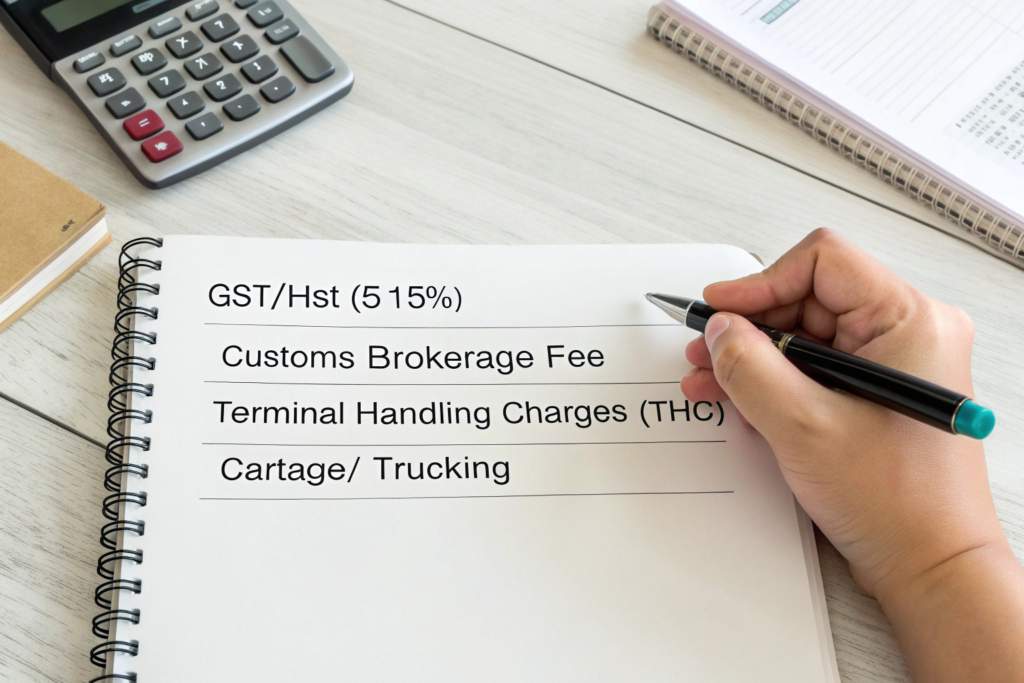
Beyond the 0% MFN duty, a green coffee importer into Canada must account for the federal Goods and Services Tax (GST) or Harmonized Sales Tax (HST) on the total landed value, and while there is no excise tax on the product itself, you should also confirm all standard logistics fees with your customs broker, such as brokerage fees, terminal handling charges, and inland trucking.
Your customs broker is your best resource for an accurate, door-to-door landed cost model. They will break down every single charge for you.
How Is GST/HST Calculated on a Green Coffee Shipment?
The Goods and Services Tax (GST) is a federal sales tax applied to most goods and services in Canada. It is not a duty, but a consumption tax, similar to a VAT. It is calculated on the total "value for tax" of your imported coffee, and it is almost always payable at the time of import.
The tax is calculated on the sum of the transaction value of the coffee (the price you paid us) plus any applicable duty (which, in this case, is $0.00) plus the international freight and insurance costs to get the coffee to Canada. Let's say this total "landed" value is CAD $50,000. The CBSA will then apply the 5% GST, which would be CAD $2,500. If you are importing into a province with an HST, the applicable provincial portion will also be applied. This is a standard, predictable cost that your customs broker will calculate for you on their entry form.
Why Is the Correct "Country of Origin" Declaration Legally Mandatory?
A zero duty rate is a privilege, not a right. To legally claim the free MFN rate, you must provide a valid, official proof of the coffee's country of origin. The country of origin is not just a line on a form; it is a legal declaration backed by an official government document.
The document you need is the Certificate of Origin, specifically the Form E, issued by China Customs. This certificate is the official, government-verified proof that the coffee was grown in China, not just shipped from there. Your customs broker must submit this form to the CBSA to secure your 0% duty rate. Without it, the officer may apply a different tariff treatment, potentially with a higher rate, to the shipment. The declaration of origin is your legal affirmation, and the Form E is the proof. For official documentation standards, you can review guidance from the International Chamber of Commerce (ICC).
What Import Documentation Is Required for a Smooth CBSA Clearance?
A 0% duty rate and a correct HS code are a great start. But to translate this into a smooth, delay-free port clearance, your shipment must be accompanied by a complete and perfectly consistent set of documents. Canadian border control is highly automated, and the computer systems are unforgiving. A single mismatch is an instant red flag for a manual hold. You need the right paperwork, with no errors.
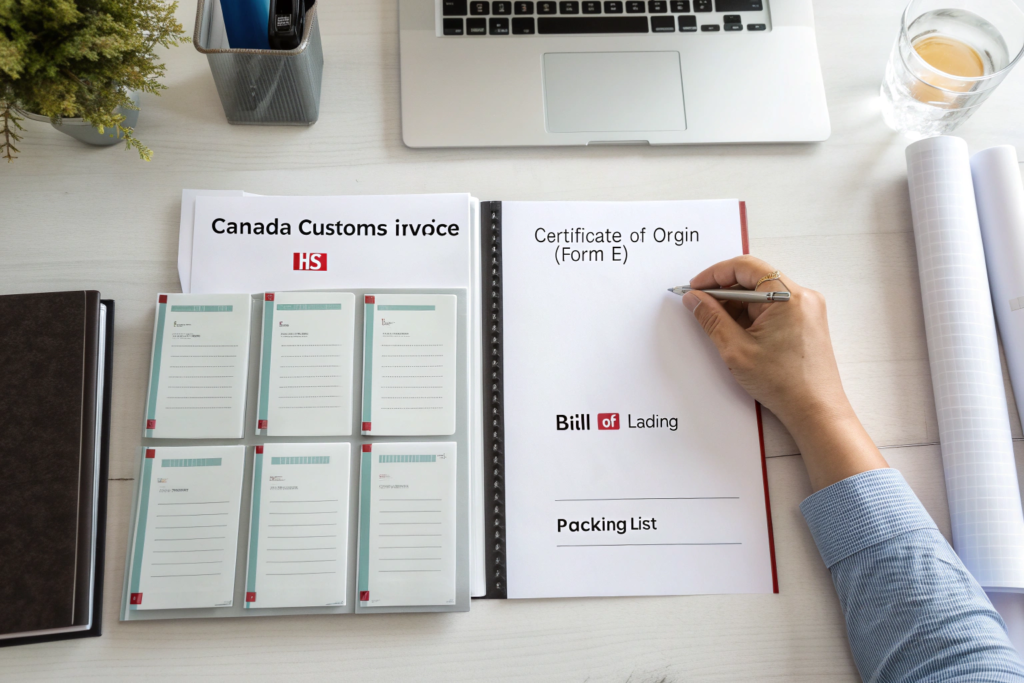
A smooth CBSA clearance requires a perfectly consistent document package, centered on a Canada Customs Invoice that declares the correct HS code 0901.11.00, and accompanied by a valid Certificate of Origin (Form E), the Bill of Lading, and the Phytosanitary Certificate, with all data—names, weights, and descriptions—exactly matched across every single page.
This is the discipline of professional importing. A good supplier makes this easy. At Shanghai Fumao, we provide all of these documents in a pre-audited package.
What Specific Information Must Be on the Canada Customs Invoice?
The Canada Customs Invoice (CCI) is not optional. It is a specific, mandatory form required by the CBSA for all commercial shipments valued over a certain threshold. It is more detailed than a standard commercial invoice, and it must be filled out with perfect accuracy.
The form requires the full legal names and addresses of both the vendor (us) and the purchaser (you). It must include the precise and complete product description, "Green Coffee Beans, Arabica, Not Roasted, Not Decaffeinated." It must declare the correct HS Code (0901.11.00) and the Country of Origin (China). It must state the currency of settlement and the total transaction value. Any error, such as a missing business number or a vague description, can trigger a hold. Your customs broker uses this exact form to file the entry, so it must be perfect. This is part of the precise documentation package we provide to all our partners.
How Do "Form E" and Other Certificates Prove the Origin for the 0% Duty?
The claim for the free MFN rate is only as valid as the proof. The CBSA will not take your word for it. You must provide a specific, internationally recognized document that has been certified by the exporting country's government. This is the legal linchpin of your entire duty-free import.
The "Form E" Certificate of Origin is the definitive document for this purpose. Issued by China Customs, it is the official, verifiable proof that the coffee was grown in China. It must be the original, signed, and stamped document. This certificate, along with the Phytosanitary Certificate (which proves the coffee is a safe agricultural product), completes the legal package. Providing this complete and consistent suite of documents to your broker is the guarantee of a smooth, duty-free clearance.
Conclusion
Importing green coffee beans into Canada in 2026 is a remarkably favorable proposition. The baseline Most-Favoured-Nation duty rate for green coffee is a flat 0%. There is no hidden tariff. This policy is a deliberate gift to the Canadian coffee industry.
The entire process, therefore, is not about negotiating a complex trade deal, but about practicing disciplined, accurate documentation. Your responsibility is to ensure your coffee is correctly classified under HS code 0901.11.00, that you budget for the standard GST/HST and logistics fees, and that you present a flawless package of documents to the CBSA, led by the Canada Customs Invoice and the Form E Certificate of Origin. At BeanofCoffee, we do all the hard work on this side, so your border crossing is boringly perfect.
If you are planning your first import or want to ensure your next shipment is handled with absolute precision, let's talk. We can provide a sample documentation package for your review. Email Cathy Cai. Ask for a "Sample Canada Customs Clearance Document Pack." Contact Cathy at: cathy@beanofcoffee.com